10 Best Places to Visit in Morocco for a First Trip (2026)
By The Atlas & Route team · Updated October 6, 2026 (first published September 27, 2026) · Morocco
This post contains affiliate links. We may earn a commission if you book through them, at no extra cost to you. Disclaimer.
The best places to visit in Morocco on a first trip are Marrakech, the Sahara dunes at Merzouga, Fes, Chefchaouen and Essaouira, with the High Atlas, Aït Benhaddou and the Dades and Todra gorges as stops on the way. With 7 to 10 days, combine Marrakech, a three-day desert loop to Merzouga and Fes. With two weeks, add Chefchaouen and either Essaouira or Rabat.
Morocco packs snow-capped mountains, Sahara dunes, Atlantic fishing ports and some of the oldest walled cities in the world into a country you can cross by train and road in two weeks. That's exactly what makes choosing the best places to visit in Morocco hard: everything looks worth seeing, and the distances between the highlights are bigger than they appear on a map. The desert alone is a nine-to-ten-hour drive from Marrakech.
This guide is organised by place. For each one you'll find what it's actually like, how long it deserves, and how it connects to the next stop, plus a realistic route, transport prices checked in September 2026, and the practical details that trip people up on a first visit. Looking for activities rather than places? See our guide to the best things to do in Morocco.
The best places to visit in Morocco at a glance
| Place | Best for | How long |
|---|---|---|
| Marrakech | Souks, gardens, riads, a first taste of Morocco | 2 to 3 days |
| High Atlas (Imlil) | Berber villages, day hikes, the Toubkal trek | 1 to 2 days |
| Aït Benhaddou & Ouarzazate | A fortified mud-brick ksar and film locations | Half a day, en route |
| Dades & Todra gorges | Canyon scenery on the desert road | Overnight, en route |
| Merzouga (Erg Chebbi) | Sahara dunes and a night in a desert camp | 1 to 2 nights |
| Fes | The largest, most intact medieval medina | 2 to 3 days |
| Chefchaouen | The blue town in the Rif mountains | 1 to 2 days |
| Rabat | A calm, walkable capital | 1 day |
| Tangier | Gateway to the north and Spain | 1 day |
| Essaouira | A breezy walled port on the Atlantic | 2 days |
Our short version: with 7 to 10 days, do Marrakech, a 3-day desert loop via Aït Benhaddou to Merzouga, and finish in Fes. With two weeks, add Chefchaouen and either Essaouira or Rabat. Don't try to fit in everything; the long drives are where rushed Morocco trips fall apart.
1. Marrakech
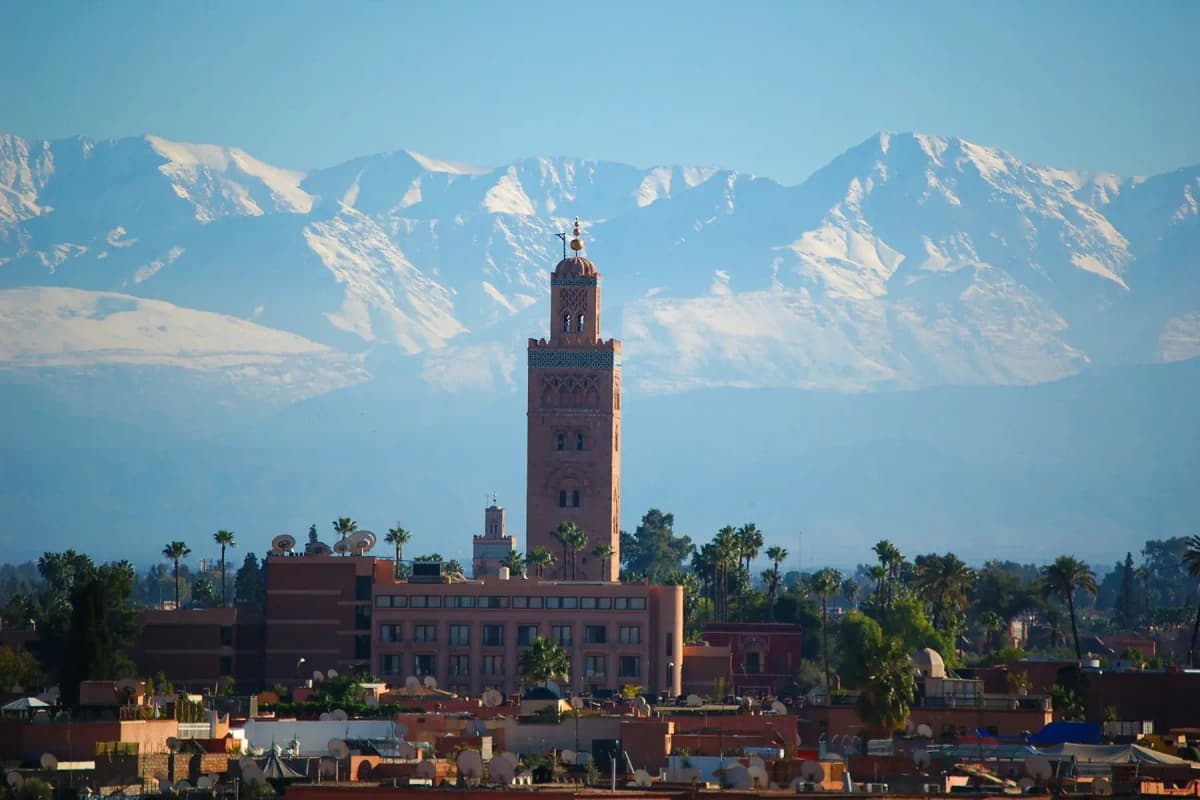 Photo: Paul Macallan on Unsplash
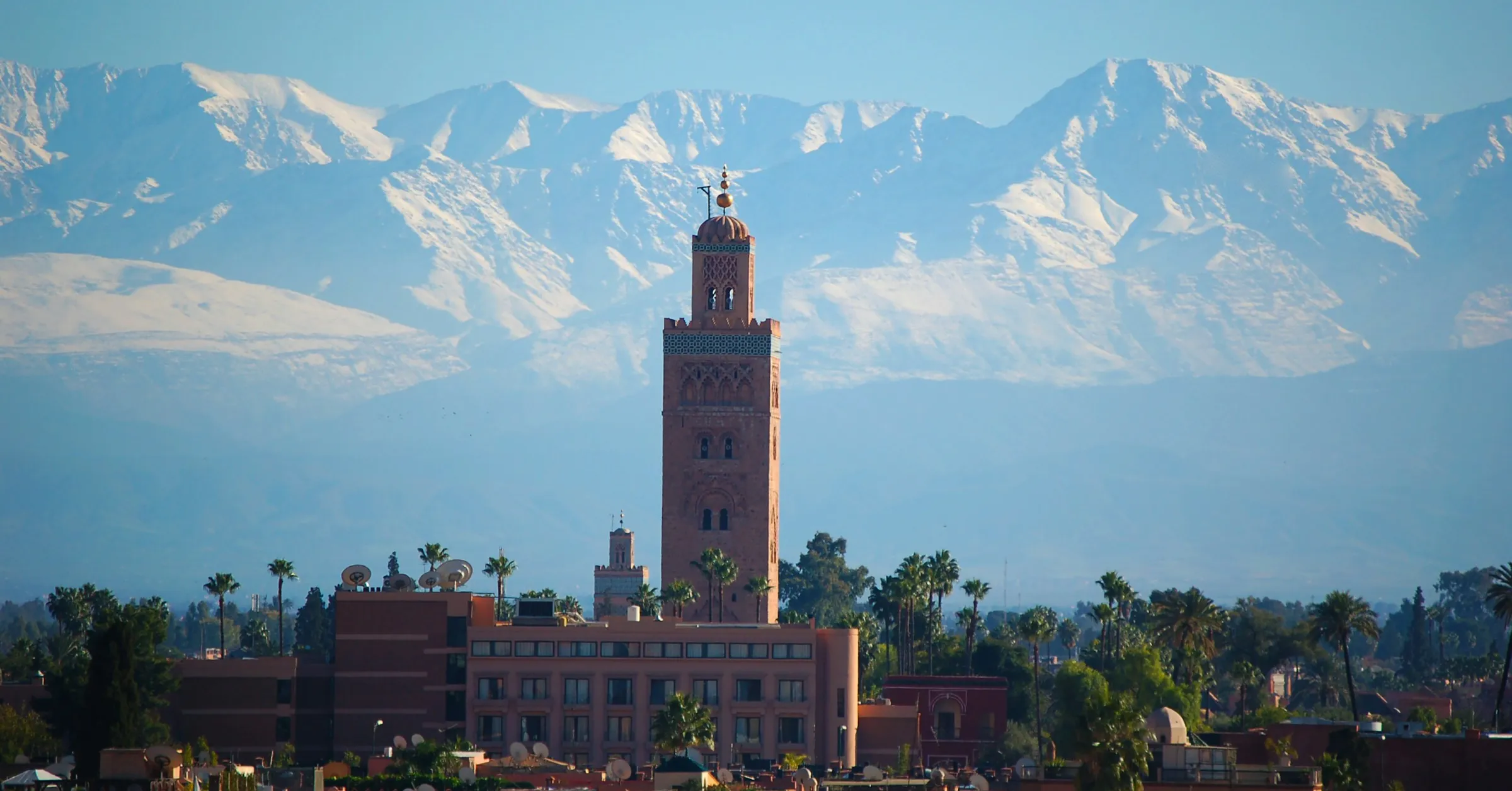
Most first trips to Morocco start in Marrakech, and it's the right place to begin. The medina, a UNESCO World Heritage Site since 1985, is dense, loud and disorienting on day one and far easier by day two. The Koutoubia Mosque's minaret is the landmark to navigate by, and Jemaa el-Fnaa, the main square beside it, changes character through the day: orange-juice stalls and snake charmers in the morning, smoking food stalls and musicians after dark.
The two big paid sights are worth planning around:
- Bahia Palace: 100 MAD per adult, cash only, open 9:00 to 17:00. Go at opening time; tour groups arrive mid-morning.
- Jardin Majorelle: 170 MAD, and tickets must be bought online in advance at the official ticket site for a 30-minute entry slot. You can't just turn up. Open 8:00 to 18:30, last entry 18:00.
Stay in a riad inside the medina if you want the full experience: courtyard houses with rooms around a central garden or fountain, often with a roof terrace. Stay just outside it (Gueliz or Hivernage) if you'd rather have quieter nights and taxis to the door. Our guide to where to stay in Marrakech compares each area in detail.
- How long: 2 to 3 days, plus a day trip if you have it. Our guide to the best things to do in Marrakech has a full list and a 3-day plan.
- Watch out for: unofficial "guides" offering to walk you somewhere, and anyone saying a street is "closed". It rarely is.
Arriving at Marrakech Menara Airport (RAK): the airport is close to the city, but taxis to the medina are a common first-hour hassle over price, and cars can't reach most riads anyway. A pre-booked transfer agrees the fare up front; ask your riad where the driver should drop you and whether someone can meet you there to walk you in.
2. The High Atlas and Imlil
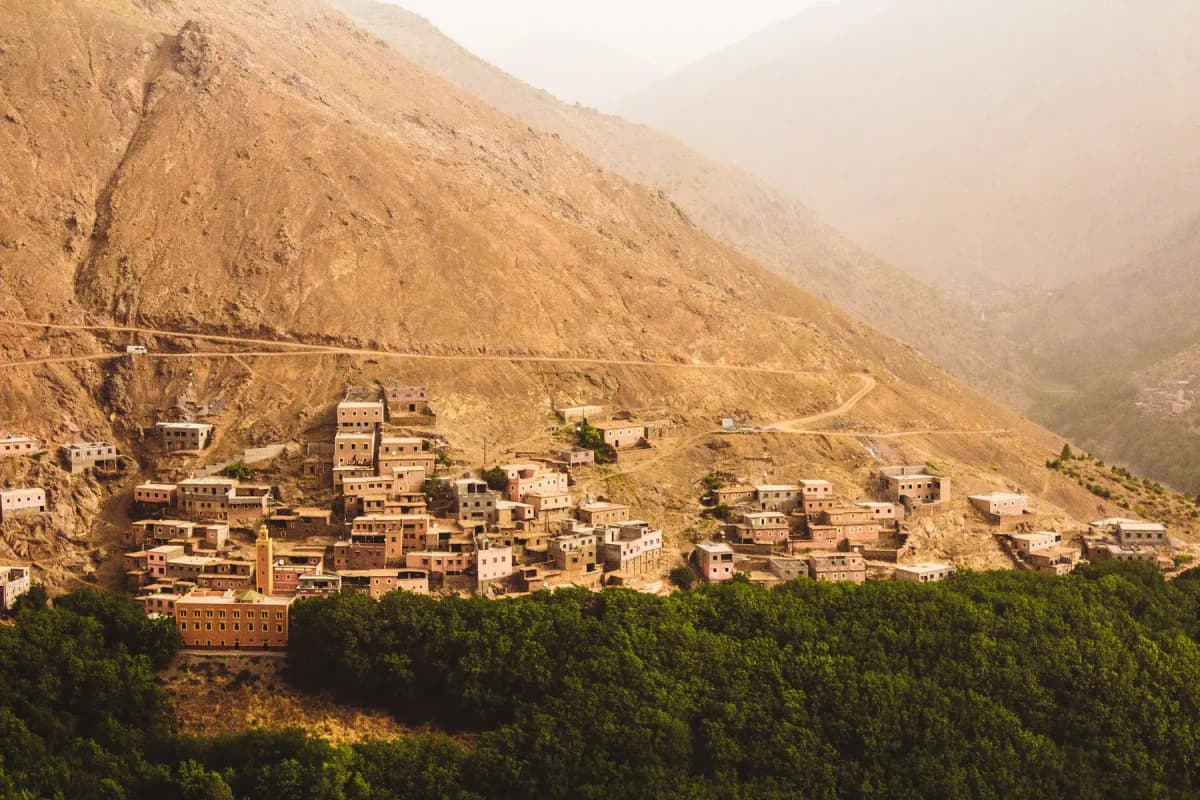 Photo: Louis Hansel on Unsplash
About 65 km and roughly 1.5 hours' drive south of Marrakech, the village of Imlil sits at the head of a valley of walnut groves and terraced fields, with mud-brick Berber villages stacked up the hillsides. It's the easiest way to see the High Atlas, either as a day of walking between villages or as the starting point for Jebel Toubkal (4,167 m), North Africa's highest peak.
Toubkal is usually done as a 2-day trek, sleeping at the refuge below the summit. A licensed local mountain guide is mandatory for Toubkal and other High Atlas treks, and there are police checkpoints on the way up, so arrange a guide through a registered operator or your guesthouse before you go.
- How long: a long day trip, or 1 to 2 nights in a mountain guesthouse.
- Good for: a break from the city, hiking, cooler air in summer.
3. Aït Benhaddou and Ouarzazate
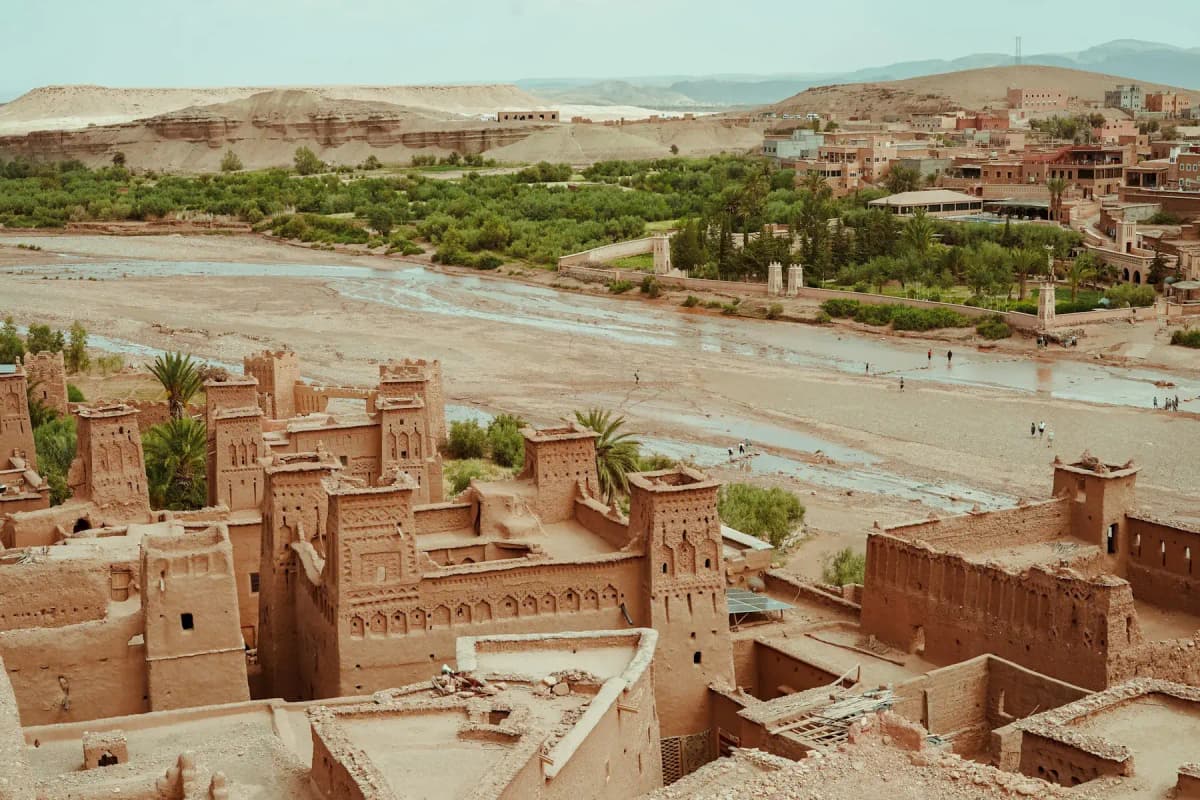 Photo: Toa Heftiba on Unsplash
Aït Benhaddou is a ksar, a fortified village of earthen houses and towers climbing a hill above a river, on the old caravan route between the Sahara and Marrakech. It's been a UNESCO World Heritage Site since 1987 and a film location for decades, which is why it looks familiar even if you've never been. Nearby Ouarzazate is the practical town for the area, known for its film studios.
The drive from Marrakech crosses the High Atlas over the Tizi n'Tichka pass, so Aït Benhaddou almost always comes as the first stop on a desert tour rather than a separate trip. If you're short on time and can't do the Sahara, a full-day tour from Marrakech to Aït Benhaddou and Ouarzazate covers the pass, the ksar and the town in one (long) day.
- How long: a couple of hours at the ksar; most people overnight nearby or continue east.
- Tip: cross the river and climb to the granary at the top of the hill for the classic view back over the village.
4. The Dades and Todra gorges
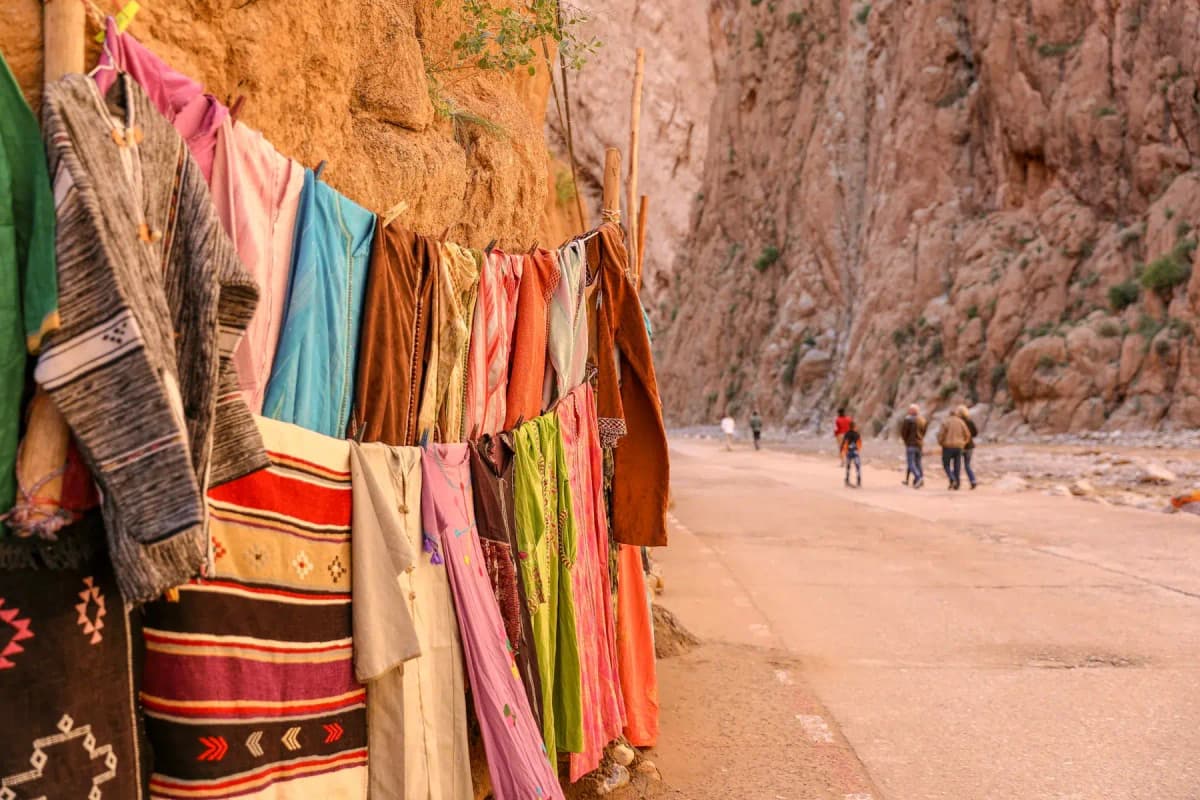 Photo:
Between Ouarzazate and the desert, the road runs past two canyon systems that break up the long drive. The Dades Gorge is known for its winding switchback road and red rock formations; the Todra Gorge, near the town of Tinghir, narrows to a slot between sheer walls you can walk through in a few minutes. Neither is a destination on its own for most first-timers, but they're the reason the classic desert tour takes three days instead of two: most itineraries overnight in the Dades valley.
- How long: one overnight on the way to Merzouga.
5. The Sahara at Merzouga
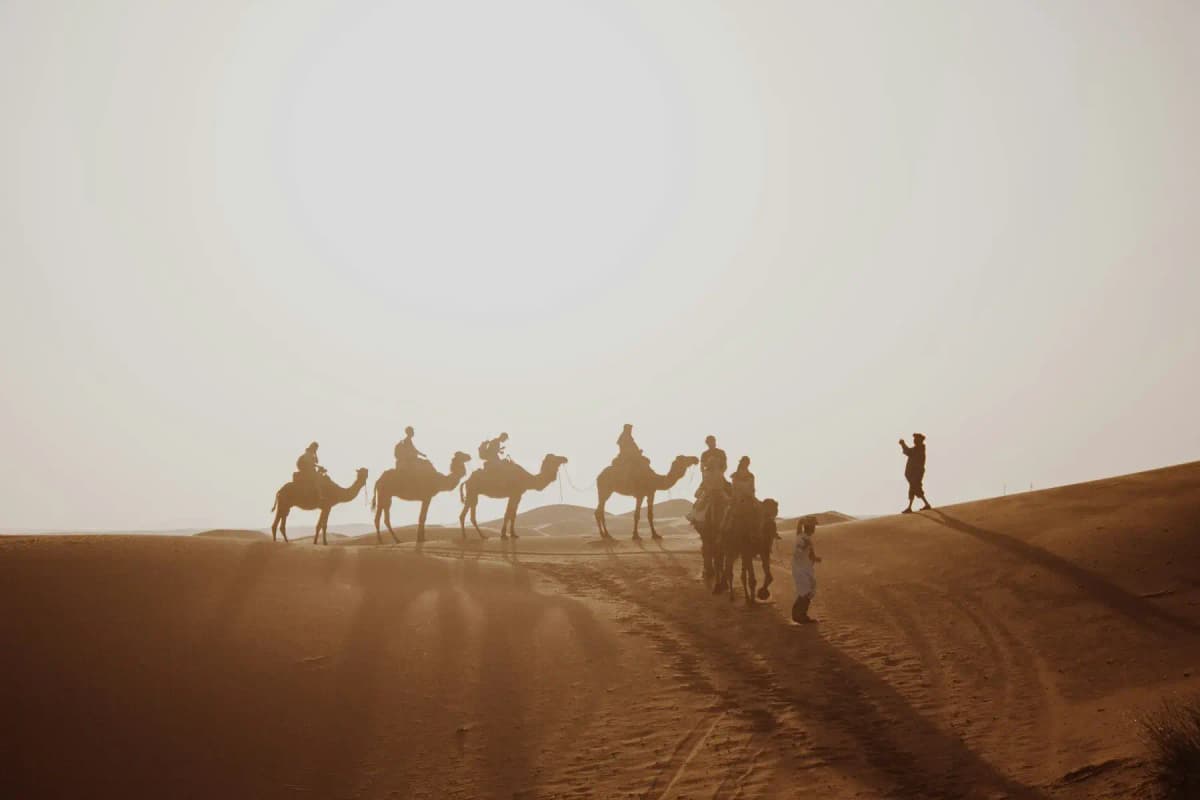 Photo: Dan Calderwood on Unsplash
The dunes of Erg Chebbi, rising behind the village of Merzouga, are the Sahara most people picture: tall, orange and rippled. A camel ride out at sunset and a night in a desert camp is the experience many travellers remember most from Morocco.
The catch is distance. Merzouga is about 560 km from Marrakech, 9 to 10 hours of driving, so 3 days is the realistic minimum for a desert trip; anything shorter is mostly time in a van. The standard route goes Marrakech → Aït Benhaddou → Dades or Todra → Merzouga, then either back to Marrakech or on to Fes. That makes it one of the few places in Morocco where a tour is simpler than going independently:
- If you're returning to Marrakech: a 3-day Merzouga and Erg Chebbi desert tour from Marrakech.
- If you're continuing north (our recommended route): a 3-day tour from Marrakech that ends in Fes via Merzouga, which saves you the long drive back.
Both include the night in a desert camp; check what's covered (meals, camel ride, hotel standard) before you book.
- How long: 1 night in the desert (2 if you want a slower pace).
- Watch out for: summer heat. Merzouga's July highs are around 41°C or more; spring and autumn are far more comfortable, and desert nights get cold in winter.
6. Fes
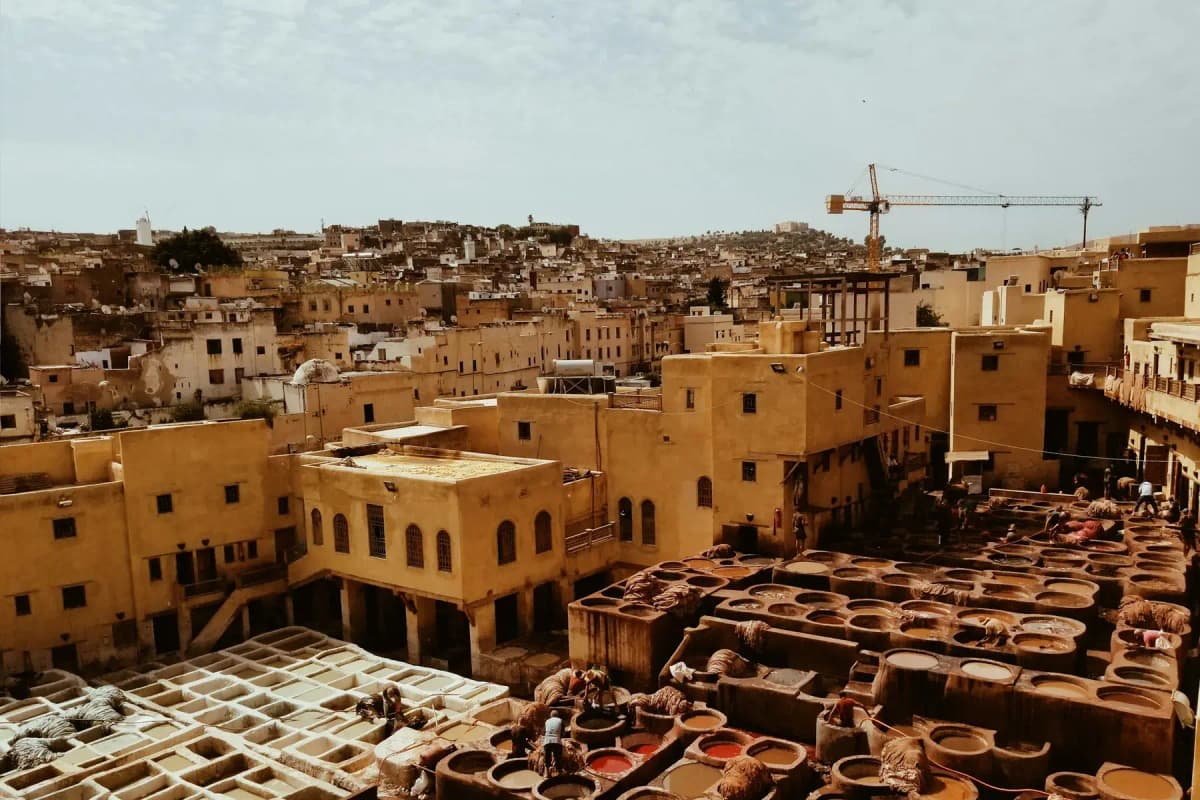 Photo:
If Marrakech is Morocco's most famous city, Fes is its most historic. The old medina, Fes el-Bali, has been a UNESCO World Heritage Site since 1981 and is one of the largest car-free urban areas anywhere: donkeys and handcarts still move goods through lanes too narrow for anything else. It feels less geared to visitors than Marrakech, and more like a working medieval city.
The Chouara tannery, where leather is still dyed in stone vats, is the best-known sight; you view it from the terraces of the surrounding leather shops. Beyond that, the pleasure is in the craft workshops, madrasas and food stalls along the main lanes. Our guide to the best things to do in Fes covers them one by one.
- How long: 2 to 3 days.
- Tip: hire an official guide for your first morning. The medina has thousands of dead-end lanes, and a few hours with someone who knows it makes the rest of your stay far easier to navigate alone.
Getting there by train: most Marrakech to Fes journeys change at Casablanca on ONCF's classic Al Atlas trains, and the trip takes roughly 6.5 to 7 hours, from about 204 MAD in second class to around 460 MAD in first (checked September 2026). Book on ONCF's official site; tickets open 3 months ahead.
7. Chefchaouen
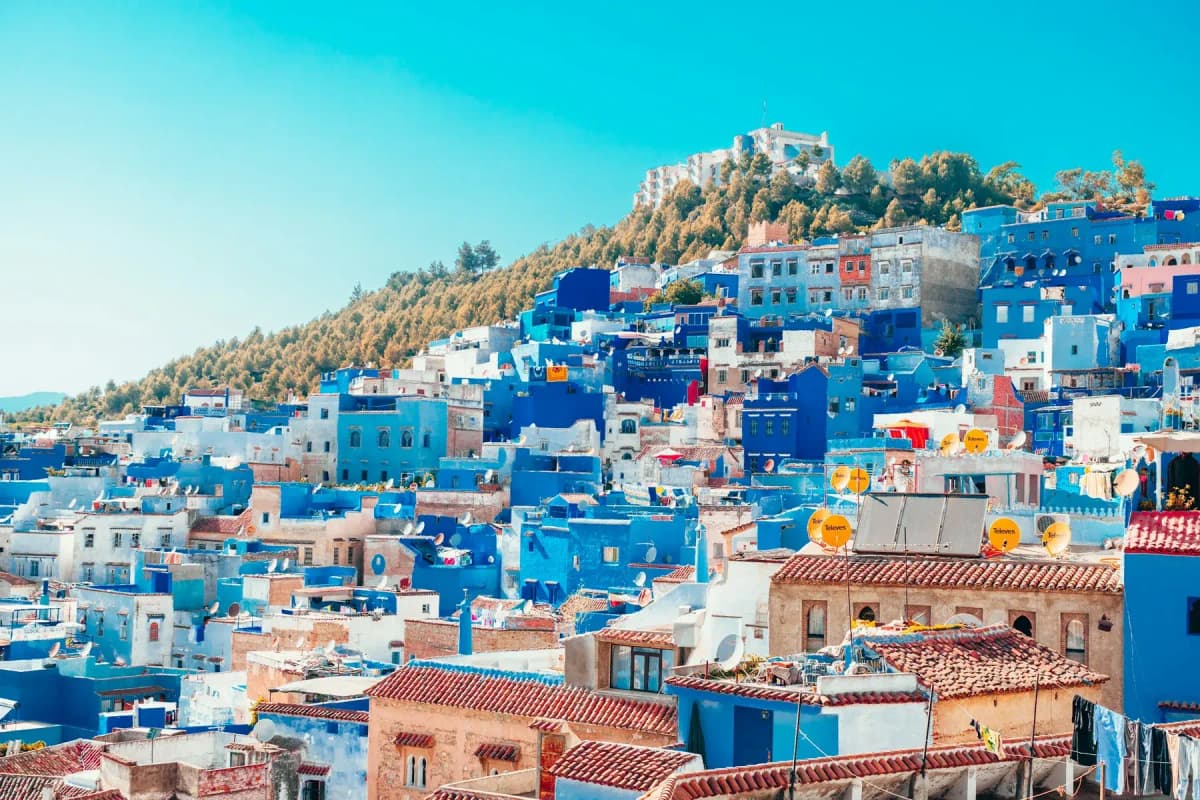 Photo: Pretty Pink on Unsplash
Chefchaouen, in the Rif mountains of the north, is the "blue town": nearly every wall, step and doorway in the medina is washed in shades of blue. It's small, hilly and noticeably calmer than the big cities, which makes it a good place to slow down for a couple of nights. The walk up to the Spanish Mosque on the hill east of town is the classic sunset view back over the rooftops. For the full list, see our best things to do in Chefchaouen.
There's no train to Chefchaouen. From the north, our guide to getting from Tangier to Chefchaouen compares the bus, shared taxis and private transfers. The CTM bus from Fes takes about 4 to 4.7 hours and costs roughly 80 to 140 MAD (checked September 2026). Book a day or two ahead in busy months.
- How long: 1 to 2 nights.
- Good for: photography, easy walks, a quieter pace.
8. Rabat
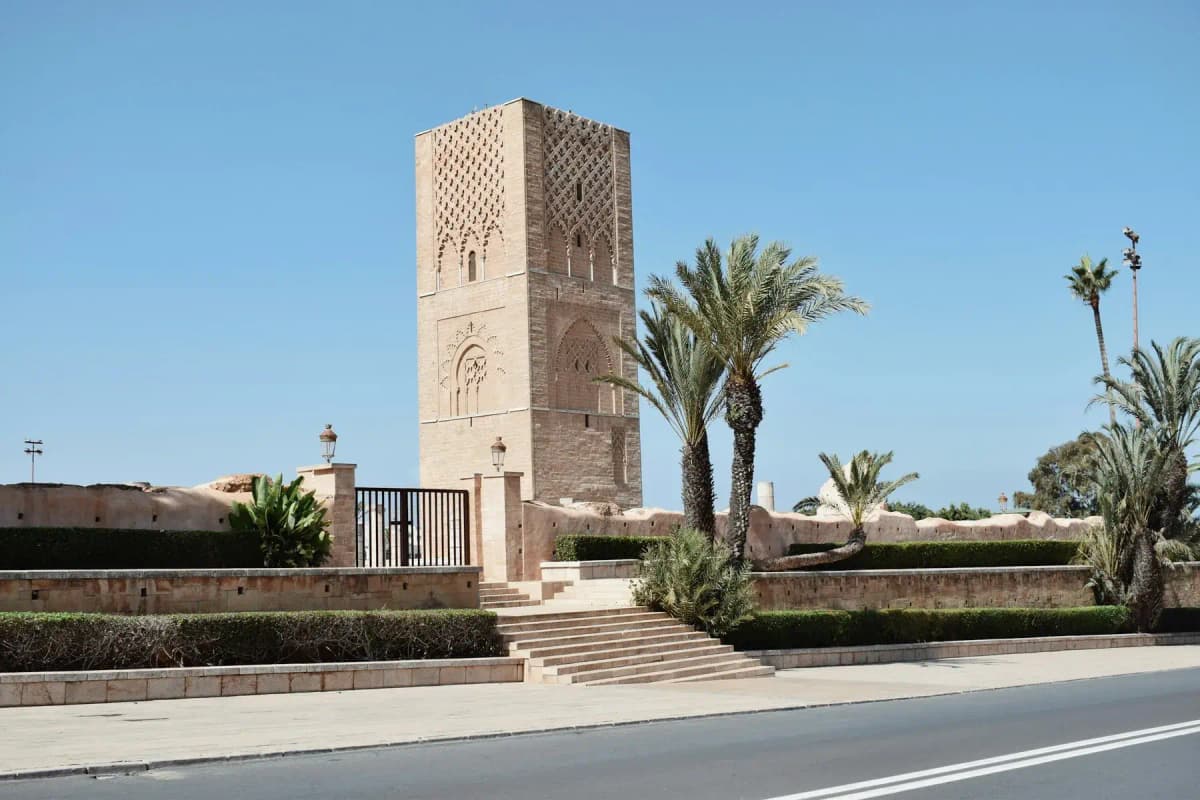 Photo:
Morocco's capital is often skipped, and it shouldn't be if you're passing through on the train. Rabat is clean, relaxed and easy to walk, and its historic core has been a UNESCO World Heritage Site since 2012. The highlights are the Kasbah of the Udayas, a small white-and-blue quarter above the ocean; the Hassan Tower, the unfinished 12th-century minaret in the photo above; and the Mausoleum of Mohammed V beside it.
- How long: 1 day, or a night between Fes and the coast.
- Good for: a break from medina hustle; hassle levels are much lower here.
9. Tangier
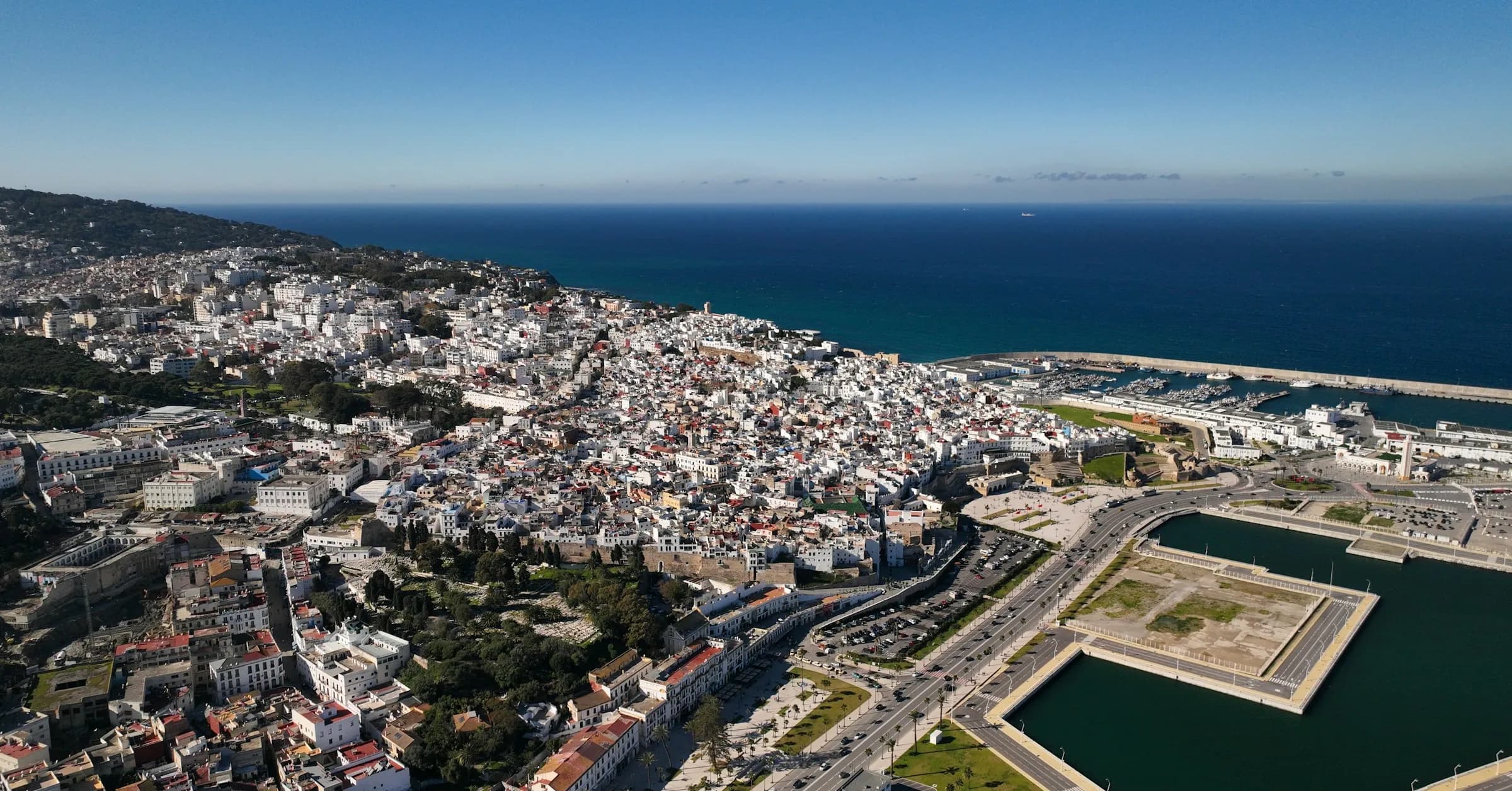
Tangier sits on the Strait of Gibraltar, the ferry gateway to Spain and the northern terminus of Al Boraq, Africa's first high-speed train. Al Boraq reaches Casablanca in about 2 hours 10 minutes, from 99 to 224 MAD in second class and 129 to 292 MAD in first (checked September 2026), with a stop in Rabat on the way. The city has a hilltop kasbah, a revived medina and a long literary history, and it works well as the start or end of a trip that combines Morocco with Spain or Portugal.
- How long: 1 day, or a night if you're arriving by ferry. See our guide to the best things to do in Tangier for what to see.
10. Essaouira
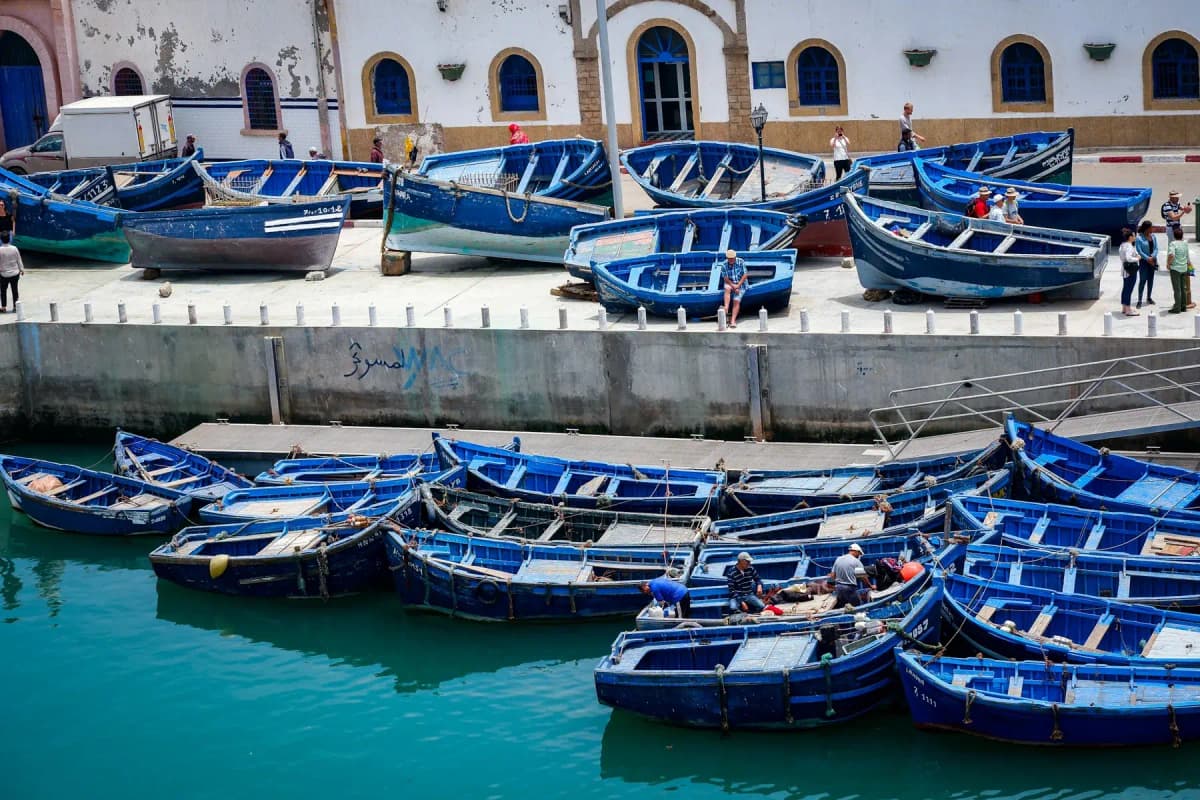 Photo: Emma Van Sant on Unsplash
On the Atlantic coast west of Marrakech, Essaouira is where many people end their Morocco trip. Its 18th-century walled medina (UNESCO-listed since 2001) is compact and easy-going, the harbour is full of blue wooden fishing boats, and the stalls by the port grill the day's catch. The steady wind keeps it cool in summer and makes the beach better for kitesurfing than sunbathing. See our guide to the best things to do in Essaouira for prices and a two-day plan.
The Supratours bus from Marrakech takes about 3 hours and costs roughly 110 to 140 MAD (checked September 2026).
- How long: 2 days.
- Good for: winding down at the end of a trip, seafood, the ramparts at sunset.
If you have more time
- Volubilis and Meknes: the best-preserved Roman ruins in Morocco, next to the imperial city of Meknes. Both are UNESCO-listed and an easy day trip from Fes.
- Ouzoud Falls: a tall, multi-tiered waterfall in the Middle Atlas, a popular long day trip from Marrakech.
- The Ourika Valley: a shorter, gentler taste of the Atlas than Imlil, a common half-day or day trip from Marrakech. See our guide to the best day trips from Marrakech for how to visit.
A realistic 10-day Morocco route
| Days | Route | Getting there |
|---|---|---|
| 1 to 3 | Marrakech, with a day in Imlil or the Ourika Valley | Fly into Marrakech (RAK) |
| 4 to 6 | Aït Benhaddou → Dades → Merzouga (desert camp) → Fes | 3-day desert tour ending in Fes |
| 7 to 8 | Fes | Already there |
| 9 to 10 | Chefchaouen, then back to Fes or on to Tangier | CTM bus (about 4 to 4.7 h) |
With 14 days: add Rabat on the train north and finish in Essaouira, or start with 2 days in Essaouira before the desert. Fly out of Fes or Tangier rather than backtracking to Marrakech if you can. Our Morocco itinerary for 7, 10 and 14 days maps out each version day by day.
Getting around Morocco
- Trains (ONCF) connect Tangier, Rabat, Casablanca, Fes and Marrakech. They're comfortable, cheap and run to schedule. Casablanca to Marrakech takes about 2 hours 40 minutes to 3 hours; fares now vary with demand, so book early. Al Boraq's high-speed track currently ends at Kenitra, with trains continuing to Rabat and Casablanca on the classic line; an extension to Marrakech is under construction, targeted for around 2029 to 2030.
- Buses (CTM and Supratours) cover places the train doesn't: Chefchaouen, Essaouira and the south.
- Tours are the practical choice for the desert, where the distances make independent travel slow without a car.
- Rental cars make sense for the south and the Atlas if you're a confident driver; they're more trouble than they're worth inside the big cities.
Staying connected: a local SIM or eSIM makes maps, ride apps and messaging your riad much easier. An Airalo Morocco eSIM can be installed before you fly so it's working when you land.
Travel insurance: long drives, desert nights and mountain hikes are all part of a Morocco trip, so it's worth having medical cover before you go. You can compare EKTA travel insurance plans and buy online in a few minutes. Our guide to travel insurance for Morocco covers what desert and mountain trips need.
If you're still choosing dates, compare flights into Marrakech, Fes and Tangier before you fix your route; open-jaw tickets (in one city, out of another) often save a full day of backtracking:
Best time to visit Morocco
Spring (March to May) and autumn (September to October) are the best times for a first trip: warm days in the cities, comfortable desert temperatures and green valleys in the Atlas. Summer is very hot inland (Merzouga regularly passes 41°C in July) but pleasant on the coast at Essaouira. Winter is mild in Marrakech during the day but cold at night, with snow on the high Atlas passes. For temperatures in every month and region, see our full guide to the best time to visit Morocco.
Ramadan in 2027 is expected to run from about 8 February to 9 March (exact dates depend on the moon sighting). Travelling then is fine and can be memorable, but many cafés close during daylight and opening hours shift, so plan around it.
Practical tips for a first trip
- Entry: US citizens can visit visa-free for up to 90 days; your passport must be valid for at least 6 months. The US State Department rates Morocco at Level 2 ("exercise increased caution"). Check travel.state.gov or your own government's advice before you go.
- Money: the currency is the dirham (MAD). Carry cash for souks, small restaurants, taxis and some sights (Bahia Palace is cash-only); cards are accepted mainly at hotels and larger shops.
- Dress: loose clothing that covers shoulders and knees is comfortable in the heat and respectful, especially outside tourist areas.
- Haggling: expected in the souks, not in shops with fixed prices. Decide what something is worth to you before you ask the price.
- Taxis: in cities, insist on the meter in petit taxis or agree the fare before you get in.
Frequently asked questions
What is the most beautiful place in Morocco? It depends what you're after, but for most first-time visitors it's a night in the Erg Chebbi dunes at Merzouga. For towns, Chefchaouen's blue medina and the view over Aït Benhaddou are the most photographed.
How many days do you need in Morocco? Seven to ten days covers Marrakech, a 3-day desert loop and Fes at a reasonable pace. Two weeks lets you add Chefchaouen, Rabat or Essaouira without rushing.
Is Marrakech or Fes better? Marrakech is easier for a first visit, with more hotels, restaurants and gardens. Fes is older and more intact, and feels less built around tourism. If you have time, do both: they're the two anchors of most Morocco routes.
Can you do the Sahara from Marrakech in one day? No. Merzouga is about 9 to 10 hours' drive each way. "One-day desert" trips from Marrakech go to the Agafay stone desert nearby, which is a different, much flatter landscape. For real dunes, plan at least 3 days.
Is there a train from Marrakech to Fes? Usually with a change in Casablanca, and the full trip takes around 6.5 to 7 hours. Many travellers go via the desert instead and end their tour in Fes.
How we researched this guide
Train times and fares were checked against ONCF and the independent rail guide The Man in Seat 61; UNESCO listing dates against the UNESCO World Heritage List; Jardin Majorelle's price, hours and booking rules against its official site; and entry requirements against the US State Department. Bus fares and sight prices were cross-checked across several recent sources in September 2026. Prices and timetables in Morocco change often, so confirm before you travel. Found something out of date? Let us know.
Planning more of Morocco? Browse all our Morocco guides, or pick your experiences from our list of things to do in Morocco. Combining Morocco with Europe? Tangier is a short ferry ride from Spain, and flights to Lisbon and Paris are short and often cheap from Marrakech.