18 Best Things to Do in Fes, Morocco (2026 Guide)
October 3, 2026 · Morocco
This post contains affiliate links. We may earn a commission if you book through them, at no extra cost to you. Disclaimer.
Most of the best things to do in Fes are inside one place: Fes el-Bali, the walled old city founded more than 1,200 years ago and still lived and worked in today. There are no cars. Goods arrive by donkey and handcart, craftsmen hammer copper and dye leather in the open, and the lanes are so tangled that you will lose your way at least once, however good your map.
That is what makes Fes different from Marrakech. It has fewer big-ticket sights and less polish, and a much stronger sense that daily life here carries on whether visitors turn up or not. This guide covers 18 things to do in Fes, with entry prices and practical details checked in October 2026, how to fit them into one, two or three days, and the day trips worth leaving the medina for.
Things to do in Fes at a glance
| Thing to do | Area | Price (2026) | Time needed |
|---|---|---|---|
| Walk the medina (Fes el-Bali) | Old city | Free; guide from about 200 MAD | Half a day or more |
| Chouara tannery | East medina | Free, 10–20 MAD tip | 30–45 minutes |
| Bou Inania Madrasa | Near Bab Boujloud | About 20 MAD | 30–45 minutes |
| Al Attarine Madrasa | Central medina | About 20 MAD | 30 minutes |
| Nejjarine Museum | Central medina | About 20 MAD | 45 minutes |
| Dar Batha Museum | Near Bab Boujloud | About 60 MAD | 1 hour |
| Jnan Sbil gardens | Between the two medinas | Free | 45 minutes |
| Royal Palace gates and the Mellah | Fes el-Jdid | Free | 1–2 hours |
| Marinid Tombs at sunset | Hill north of the medina | Free | 1 hour |
| Volubilis and Meknes | 1–1.5 hours west | Tour or driver | Full day |
Prices for the smaller monuments are low and change without notice, so treat them as a guide and carry small notes.
1. Get lost in Fes el-Bali
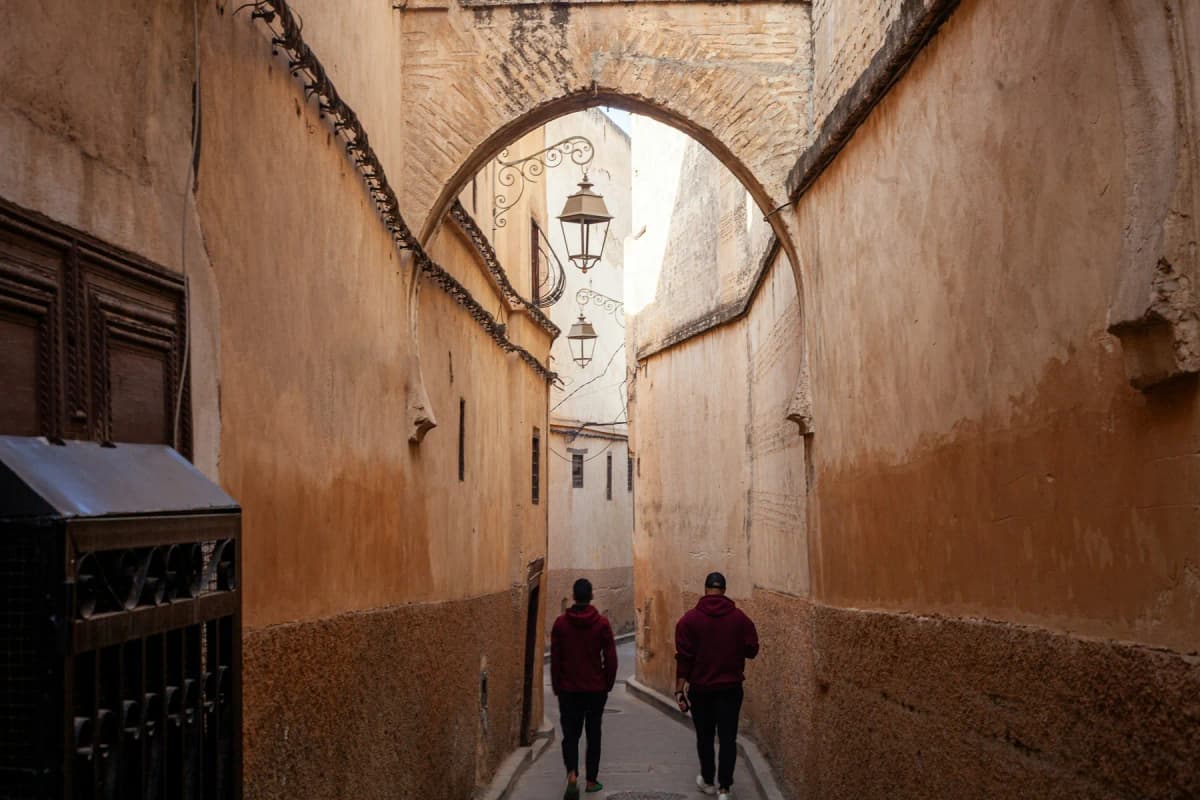 Photo: Ayoub Allaoui on Unsplash
Fes el-Bali has been a UNESCO World Heritage Site since 1981 and is often described as the largest car-free urban area in the world. It holds thousands of lanes, many of them dead ends, along with hundreds of mosques, fountains, workshops and caravanserais. Simply walking through it is the main thing to do in Fes.
Two main streets make it manageable. Talaa Kebira and Talaa Seghira both run downhill from Bab Boujloud towards the Qarawiyyin Mosque at the bottom of the valley. If you're lost, walking uphill will usually bring you back to the gate. Listen for the shout of "balak!", which means a loaded donkey or cart is coming through and you need to step aside.
- Cost: free. A licensed guide typically costs 200 to 400 MAD for a half day.
- Tip: hire an official guide for your first morning. They carry a badge issued by the tourism ministry, and a few hours with one makes the rest of your stay far easier. This half-day guided tour of the medina, Al Attarine Madrasa and the tanneries covers the main sights in one walk.
- Watch out for: young men who tell you a street is closed or offer to show you the way. Say a polite "no, thank you" and keep walking.
2. Walk through Bab Boujloud, the Blue Gate
Bab Boujloud is the main western entrance to the medina and the natural starting point for any visit. Despite its medieval look, it was built in 1913. The outer face is covered in blue tiles, the traditional colour of Fes pottery, and the inner face in green, the colour of Islam. Through the arch you can see the minaret of the Bou Inania Madrasa framed in the opening.
The small square just inside is lined with cafés and simple restaurants whose roof terraces are good for a first look over the rooftops.
- Cost: free.
- Tip: come back in the early evening, when the gate is lit and the square fills with locals.
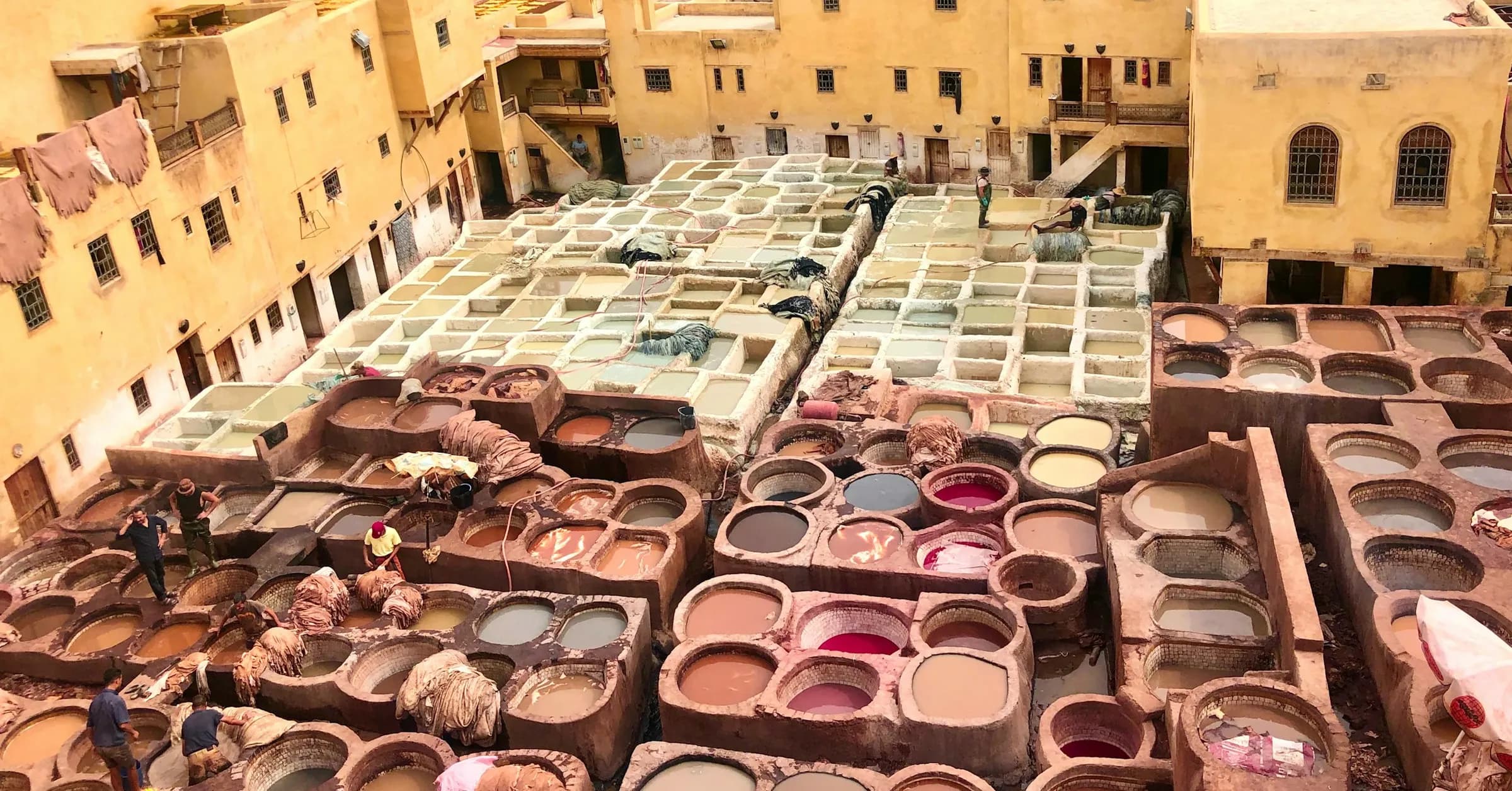
3. See the Chouara tannery from above
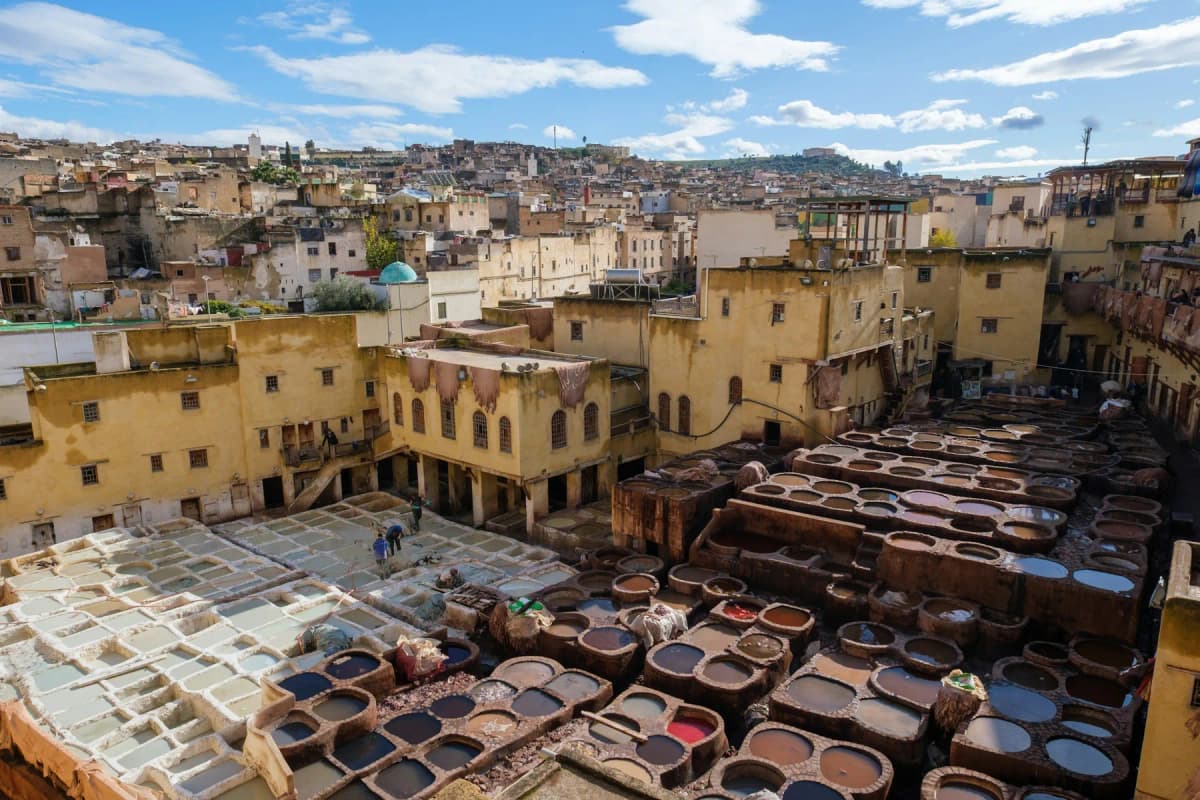 Photo: Nichika Sakurai on Unsplash
The Chouara tannery is the most famous sight in Fes and one of the oldest working tanneries in the world. Hides are soaked in pale vats of limestone and pigeon droppings to soften them, then moved to rows of stone vats of dye, where men work them by hand and foot, much as they have for centuries.
You can't walk in among the vats. Instead you view the tannery from the terraces of the leather shops around it. Someone at the door will hand you a sprig of mint to hold under your nose, and you'll need it, especially in summer.
- Cost: there's no ticket. The shops let you up for free in the hope that you'll buy, and a tip of 10 to 20 MAD is fair if you don't.
- Best time: the morning, when the vats are full and the colours are strongest.
- Watch out for: "guides" on the lanes nearby who insist on leading you there and then ask for money. The shops are signed with numbers, and you can walk into any of them yourself. There's no obligation to buy, and prices for leather start high, so bargain if you do.
4. Admire the Bou Inania Madrasa
Built between 1350 and 1355 under the Marinid sultan Abu Inan Faris, the Bou Inania Madrasa is the finest of the city's old religious colleges. Every surface of its marble courtyard is decorated: zellige tilework at the base, carved plaster above, and carved cedar at the top. It is also the only madrasa in Fes with its own minaret, because it served as a Friday mosque too.
It's one of the few religious buildings in Fes that non-Muslims can enter, which makes it the best place to see this style of architecture up close.
- Cost: about 20 MAD, cash.
- Hours: roughly 9:00 to 18:00 daily. It can close to visitors for a short time during prayers.
- Tip: go early. The courtyard is small, and tour groups fill it from mid-morning.
5. Visit the Al Attarine Madrasa
Smaller and a little older than Bou Inania, the Al Attarine Madrasa dates from the 1320s and sits beside the spice and perfume market that gave it its name. Its courtyard is exquisite, and here you can also climb to the students' rooms on the upper floor: bare cells with small windows looking down onto the tilework.
- Cost: about 20 MAD, cash.
- Hours: roughly 9:00 to 18:00 daily.
- Tip: Bou Inania is at the top of the medina and Al Attarine at the bottom, so visit one at the start of your walk and the other at the end.
6. Look into Al Qarawiyyin and watch the coppersmiths at Place Seffarine
The Al Qarawiyyin Mosque and University was founded in 859 by Fatima al-Fihri, the daughter of a wealthy merchant, and is often cited as the oldest continuously operating university in the world. Non-Muslims can't go inside, but several of its doors are left open, and you can look in at the white courtyard, the fountains and the green-tiled roofs.
A minute's walk away, Place Seffarine is a small square where coppersmiths beat pots, trays and huge cauldrons into shape under an old tree. It's one of the most atmospheric corners of the medina and a good place to sit with a mint tea.
- Cost: free.
- Tip: for a view over the mosque's roofs and courtyard, go up to one of the roof terraces nearby. The Al Attarine Madrasa and several shops and cafés around it have them.
7. See the Nejjarine fountain and museum
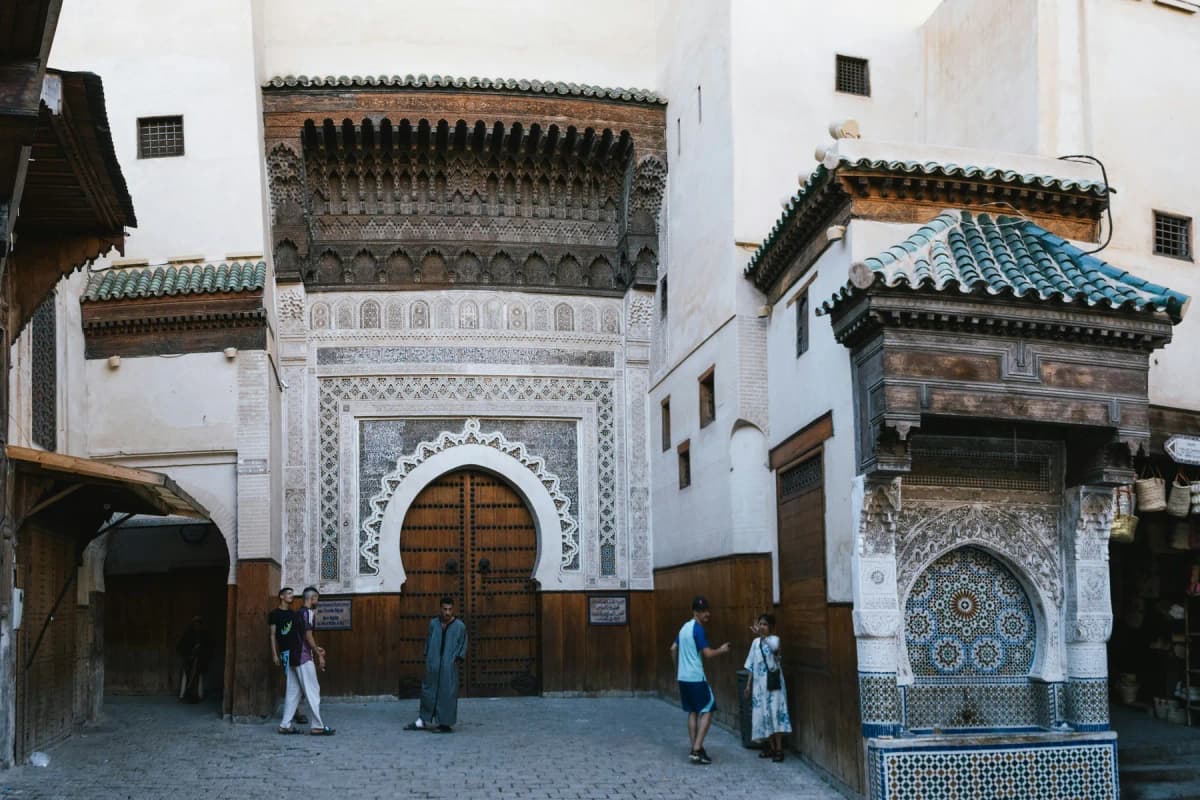 Photo: othmane ferrah on Unsplash
Place Nejjarine, the carpenters' square, has one of the prettiest fountains in Morocco, covered in zellige and sheltered by a carved cedar canopy. Beside it stands the Nejjarine Museum of Wooden Arts and Crafts, housed in a beautifully restored 18th-century fondouk, an inn where travelling merchants once slept above their animals and goods.
The exhibits of carved doors, chests and instruments are modest. The building itself, three galleried floors around a courtyard, is the reason to go in, along with the roof terrace café and its view across the medina.
- Cost: about 20 MAD.
- Tip: photography of the exhibits isn't always allowed, but the courtyard and terrace are fine.
8. Browse the souks around the Zaouia of Moulay Idriss II
The lanes between Place Nejjarine and the Qarawiyyin Mosque are the commercial heart of the medina. Each trade has its own street: the henna souk with its pottery and cosmetics, the Attarine spice market, and the Kissaria, a covered grid of stalls selling cloth, slippers and embroidery.
In the middle of it all is the Zaouia of Moulay Idriss II, the shrine of the ruler who made Fes his capital in the early 9th century and one of the holiest places in Morocco. Non-Muslims may not enter, but you can look through the doorways at the richly decorated interior. A wooden bar across the surrounding lanes, at head height, marks the edge of the sacred area.
- Cost: free.
- Tip: many medina shops close on Friday around midday prayers, and some stay shut all day. Plan your shopping for another day.
9. Visit the Dar Batha Museum
The Dar Batha Museum of Islamic Arts occupies a late 19th-century royal palace a few minutes from Bab Boujloud. It reopened in 2025 after a long restoration and now presents one of the best collections of Moroccan arts in the country: carved wood and plaster, astrolabes, manuscripts, embroidery, and above all the blue-and-white ceramics that Fes is known for.
The Andalusian-style garden in the central courtyard is a calm place to rest after the crush of the souks.
- Cost: about 60 MAD.
- Hours: closed on Tuesdays. Check locally, as hours have changed since the reopening.
10. Rest in the Jnan Sbil gardens
Between Fes el-Bali and Fes el-Jdid, Jnan Sbil is the oldest public garden in the city, laid out in the 19th century and reopened around 2011 after a careful restoration. It has palm-lined avenues, fountains, a bamboo grove and a small lake, and it's where Fassi families come for an afternoon walk.
After a morning in the medina, half an hour here feels like a different city.
- Cost: free.
- Hours: closed on Mondays.
11. See the Royal Palace gates and the Mellah
Fes el-Jdid, "New Fes", was added by the Marinid dynasty in 1276, which makes it new only by the standards of the old city. Its centrepiece is the Royal Palace (Dar el-Makhzen). The palace is closed to the public, but its seven brass doors on Place des Alaouites, surrounded by zellige and carved cedar, are among the most photographed sights in Fes.
Next to the palace is the Mellah, founded in the 15th century and considered the first Jewish quarter in Morocco. Its main street has houses with open wooden balconies facing the street, quite unlike the inward-looking houses of the Muslim medina. The restored Ibn Danan Synagogue and the white tombs of the Jewish cemetery can both be visited for a small fee.
- Cost: the gates are free. Expect to pay around 20 MAD each at the synagogue and cemetery.
- Tip: take a petit taxi to Place des Alaouites, then walk back to Bab Boujloud through the Mellah and Jnan Sbil in about 30 minutes.
12. Watch the sunset from the Marinid Tombs
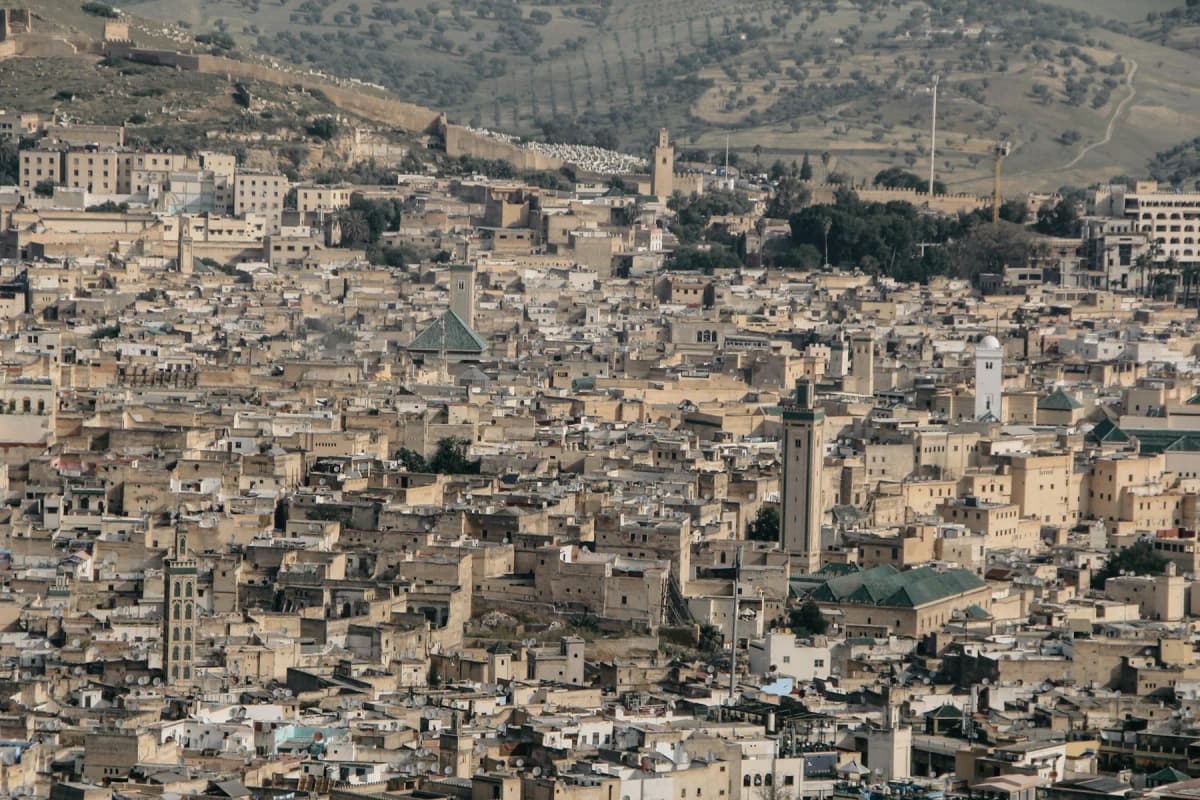 Photo:
 On a hill just north of the medina stand the ruins of the Marinid Tombs, built in the 14th century for the dynasty that gave Fes its finest monuments. Little is left of the tombs themselves. People come for the view: the whole of Fes el-Bali laid out in the valley below, with hundreds of minarets and satellite dishes and the hills beyond.
At sunset the call to prayer starts from one mosque and spreads across the city until it comes from every direction at once. It's the single best moment of a visit to Fes.
- Cost: free.
- Getting there: a petit taxi from Bab Boujloud takes five minutes, or you can walk up in 20 to 25 minutes from Bab Guissa.
- Good to know: restoration work has restricted access to the ruins at times since 2025. The viewpoint on the hillside beside them is open either way.
- Watch out for: the hill is isolated after dark. Go with others and head down soon after sunset.
13. Visit Borj Nord
Just below the tombs, Borj Nord is a fortress built in 1582 by the Saadian sultan Ahmad al-Mansur to keep watch over the city. It now houses a museum of arms, with weapons from across Morocco and beyond, including a very large 16th-century cannon. The rooftop gives another fine view over the medina.
- Cost: a small entry fee, which has varied between 20 and 60 MAD in recent reports.
- Tip: combine it with the Marinid Tombs. Visit the fort in the late afternoon, then walk up for sunset.
14. See how zellige and pottery are made
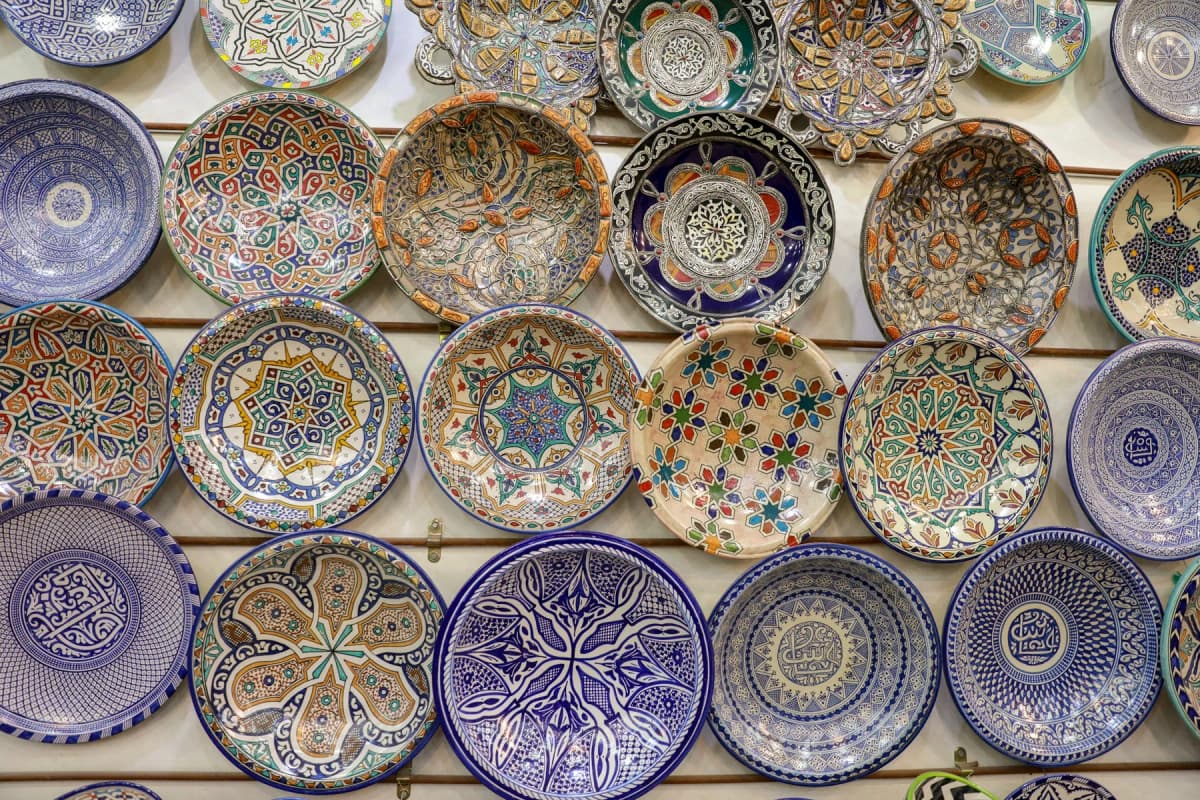 Photo:
 Fes is the home of Moroccan ceramics, and its cobalt Fes blue pottery is sold across the country. The workshops moved out of the medina years ago to the potters' quarter of Ain Nokbi, about ten minutes east by taxi. Several cooperatives there give free tours, where you can watch clay being thrown, plates painted by hand, and craftsmen chipping tiny shapes from glazed tiles to assemble into zellige mosaics, face down, from memory.
- Cost: tours are free. They end in a showroom, with fixed prices that are fair for the quality but not cheap.
- Tip: the cooperatives will ship large pieces abroad. Ask for the shipping cost in writing before you pay.
15. Eat your way through the medina
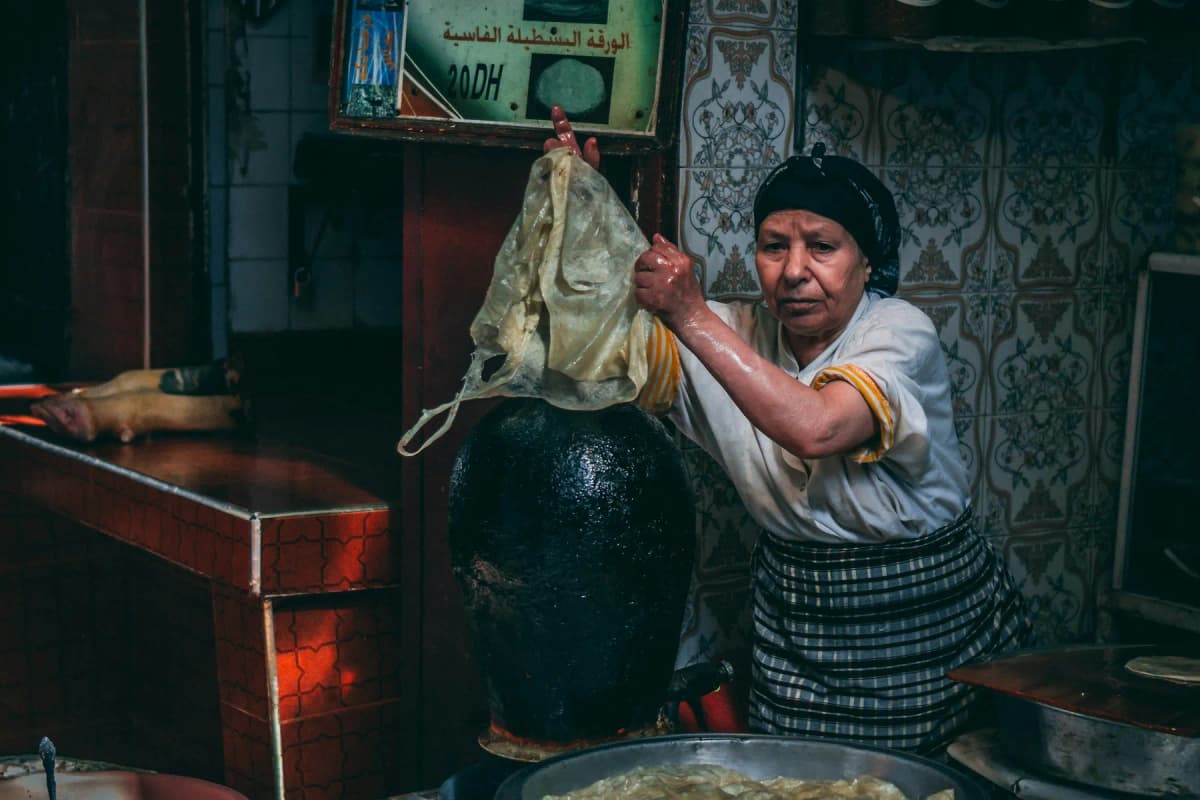 Photo: Andrew Slifkin on Unsplash
Fes is widely seen as the culinary capital of Morocco. Its signature dish is pastilla, a pie of paper-thin pastry filled with pigeon or chicken, almonds and spices, and dusted with sugar and cinnamon. The mix of sweet and savoury surprises most people, and most people finish the plate.
On the street, look for bissara (a thick broad bean soup with olive oil and cumin, eaten for breakfast), harira, grilled brochettes, and fresh bread from the neighbourhood ovens. The upper part of Talaa Kebira and the market at R'cif are the best places to graze.
- Cost: a bowl of soup costs 5 to 10 MAD, a simple tagine in a medina restaurant 40 to 70 MAD, and a multi-course dinner in a riad 150 to 300 MAD.
- Tip: most medina restaurants don't serve alcohol. Hotels and restaurants in the Ville Nouvelle do.
16. Scrub up in a hammam
After a day of dust and walking, a hammam is the right way to end it. Neighbourhood hammams in the medina cost very little, but you bring your own soap, scrubbing glove and towel and follow what the locals do, with separate hours or sections for men and women. Many riads have a small private hammam where a scrub and massage can be booked in advance, at a much higher price.
- Cost: around 15 to 30 MAD for a public hammam, plus a tip if someone scrubs you. Riad and spa hammams usually start at about 250 MAD.
- Tip: ask your riad which local hammam they recommend and what time to go.
17. Take a day trip to Volubilis, Moulay Idriss and Meknes
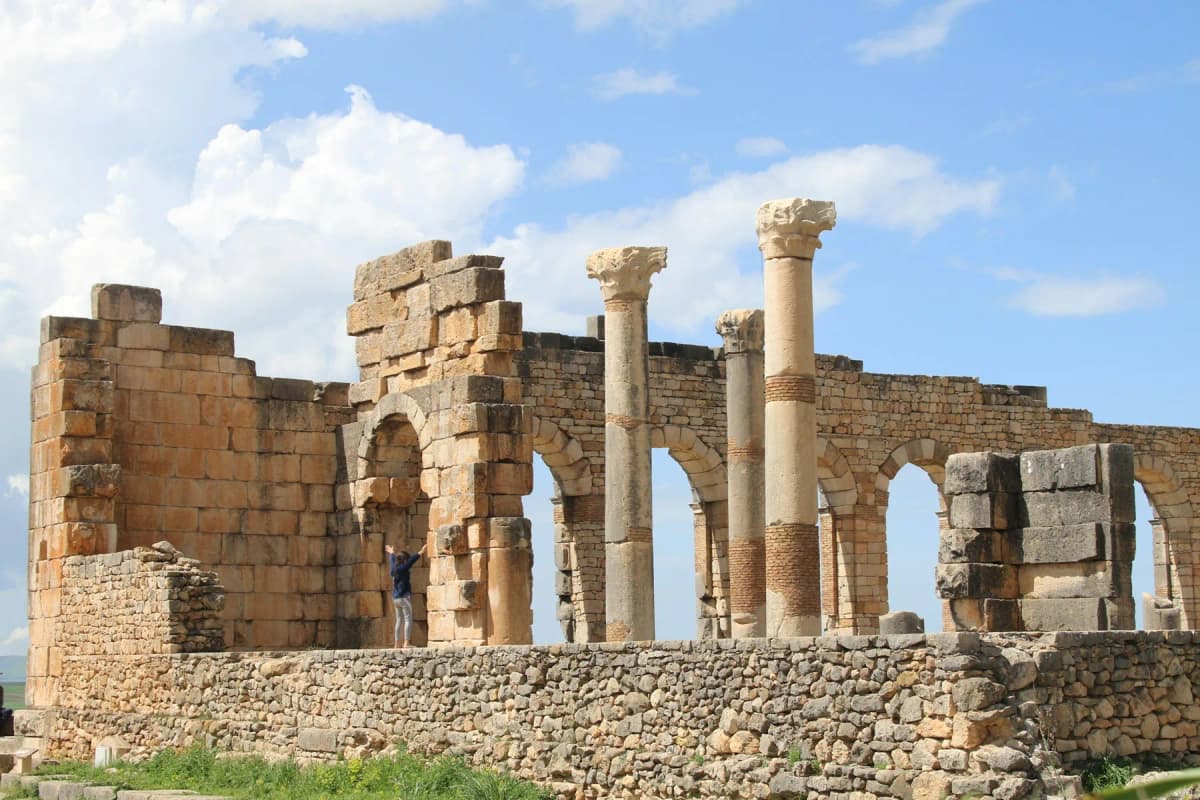 Photo: Morocco Magic on Unsplash
The classic day out from Fes takes in three places to the west. Volubilis is the best-preserved Roman site in Morocco, a UNESCO-listed city of columns, a triumphal arch and floor mosaics still lying where they were laid, in open farmland. Nearby, the white hill town of Moulay Idriss Zerhoun holds the tomb of the founder of Morocco's first dynasty. Meknes, the 17th-century capital of Sultan Moulay Ismail, has monumental gates, vast granaries and a much quieter medina than Fes.
Meknes is easy to reach by train in about 40 minutes, but Volubilis has no public transport, so most visitors take a tour or hire a driver. This day tour to Volubilis, Moulay Idriss and Meknes from Fes covers all three.
- Cost: entry to Volubilis is about 70 MAD.
- Tip: there is almost no shade at Volubilis. Bring water and a hat, and in summer ask to visit it first.
18. Go further: Chefchaouen and the Middle Atlas
Two more trips are possible from Fes if you have the time.
Chefchaouen, the blue-painted town in the Rif mountains, is about 200 km north. It can be done as a day trip, but it means seven or eight hours on the road, so it's far better as an overnight stop on the way to Tangier. The CTM bus takes around four hours.
The Middle Atlas is closer. Ifrane, an hour south, is a 1930s hill station with sloping roofs that looks more Alpine than Moroccan, and the cedar forest near Azrou just beyond is home to troops of wild Barbary macaques. It makes an easy half-day or full-day drive and a cool escape in summer.
- Tip: if you're heading to the Sahara, Fes is one end of the classic desert route. Travellers coming the other way can take a 3-day desert tour from Marrakech that ends in Fes, which avoids doubling back.
Free things to do in Fes
Much of what makes Fes special costs nothing:
- Walking the medina, from Bab Boujloud down to Place Seffarine and R'cif.
- The Chouara tannery terraces (a small tip is appreciated).
- Looking into Al Qarawiyyin and the Zaouia of Moulay Idriss II from their doorways.
- Jnan Sbil gardens.
- The Royal Palace gates and the streets of the Mellah.
- Sunset from the Marinid Tombs.
- Pottery and zellige workshops at Ain Nokbi.
How to spend 1, 2 or 3 days in Fes
One day. Start at Bab Boujloud at 9:00 with a guide. See the Bou Inania Madrasa, walk down Talaa Kebira to Place Nejjarine, the souks, Al Attarine and the Qarawiyyin doors, then Place Seffarine and the Chouara tannery. After a late lunch, take a taxi up to the Marinid Tombs for sunset.
Two days. Add Fes el-Jdid on the second morning: the Royal Palace gates, the Mellah and Jnan Sbil, then the Dar Batha Museum. Spend the afternoon at the pottery workshops or in a hammam, and have dinner in a riad.
Three days. Use the third day for Volubilis, Moulay Idriss and Meknes, or for Ifrane and the cedar forest.
For how Fes fits into a longer route, see our Morocco itinerary and our guide to the best places to visit in Morocco.
Getting there and around
Fes-Saïss Airport (FEZ) is about 15 km south of the city, roughly 25 to 30 minutes by road. Airport taxis charge a set fare of around 150 to 200 MAD to the medina, more at night. Confirm the price before you get in. Most riads can arrange a driver who will also walk you to the door, which is worth it on arrival.
By train, Fes is linked by ONCF to Meknes (about 40 minutes), Rabat (around 3 hours), Casablanca (around 4 hours) and Tangier (4 to 5 hours). From Marrakech the journey takes roughly 6.5 to 7 hours, usually with a change in Casablanca. The station is in the Ville Nouvelle, a 10 to 15 minute ride from Bab Boujloud in one of the city's red petit taxis, which should cost about 15 to 25 MAD on the meter.
Inside the medina you walk. Cars can only reach the gates, so ask your riad which gate is nearest and whether someone can meet you. A Morocco eSIM helps a great deal with maps, though GPS can be unreliable in the narrowest lanes. Travel insurance from a provider such as EKTA is sensible for any trip to Morocco.
Still comparing dates? Check flight prices to Fes here:
Best time to visit Fes
April, May and October are the most comfortable months, with average highs of 22°C to 26°C. Summer is hot, with highs around 35°C in July and August, and the tannery is at its most pungent. Winter is colder and wetter than Marrakech: January averages 16°C by day and 4°C at night, and riads can be chilly, so check for heating. The Fes Festival of World Sacred Music, usually held in late spring, fills the city's hotels. Our guide to the best time to visit Morocco has month-by-month figures.
Tips for visiting Fes
- Carry cash and small notes. Monuments, taxis, tips and street food are cash only.
- Dress modestly. Fes is more conservative than Marrakech. Covered shoulders and knees are appreciated for both men and women.
- Ask before photographing people, especially craftsmen at work. Some will expect a small tip.
- Use licensed guides only. Unofficial guides are illegal, and many steer visitors to shops for commission.
- Stay near a gate. A riad close to Bab Boujloud, Batha or R'cif is much easier to reach with luggage than one deep in the medina.
- Plan around Friday. Many shops and workshops close for part or all of the day.
Frequently asked questions
Is Fes in Morocco worth visiting? Yes. Fes has one of the largest and best-preserved medieval cities in the Arab world, the country's finest madrasas and its most famous tannery. It suits travellers who enjoy history, crafts and wandering more than those looking for resorts and nightlife.
How many days in Fes is enough? Two days is enough for the medina, Fes el-Jdid and a sunset at the Marinid Tombs. Add a third for a day trip to Volubilis and Meknes. One full day covers the highlights if you use a guide.
What is Fes known for? Its car-free medina, the Chouara tannery, Al Qarawiyyin (often called the world's oldest university), blue-and-white pottery, zellige tilework, and the red felt hat that takes its name from the city.
Is Fes nicer than Marrakech? They're different. Fes is older, more traditional and less shaped by tourism, with a more intense medina. Marrakech is easier, with more hotels, gardens, restaurants and day trips. See our guide to the best things to do in Marrakech to compare, and do both if you can.
Is Fes safe for tourists? Generally yes. Violent crime against visitors is rare. The usual annoyances are false guides, pushy shop touts and petty theft in crowded lanes. Stick to the main streets after dark and take a taxi back from the Marinid Tombs.
Do you need a guide in Fes? You don't need one, but a licensed guide for the first half day is well worth the cost in a medina this confusing. After that, most people are comfortable exploring alone along the two main streets.
What can you do in Fes at night? Watch the sunset from the Marinid Tombs or a roof terrace, eat dinner in a riad, and walk around Bab Boujloud, which stays lively in the evening. The deeper medina goes quiet after the shops close, around 20:00 to 21:00.
Is Fez the oldest city in the world? No. Fes was founded around 789 and is the oldest of Morocco's four imperial cities, but many cities are far older. Its claim to fame is that its medieval core has survived almost intact.
How we researched this guide
This guide is based on research using official sources such as the UNESCO World Heritage listing for the Medina of Fez, the Moroccan National Tourist Office and ONCF for train times, plus current traveller feedback and search trends. Entry prices for the smaller monuments aren't published officially, so they were cross-checked across several recent visitor guides in October 2026 and may change. Found something out of date? Let us know.
Planning the rest of your trip? See all our Morocco guides, our 20 best things to do in Morocco, and, if you're starting in the south, our guide to where to stay in Marrakech.