Is Tangier Safe? What Tourists Should Know in 2026
October 7, 2026 · Morocco
This post contains affiliate links. We may earn a commission if you book through them, at no extra cost to you. Disclaimer.
Yes, Tangier is safe for most tourists. Violent crime against visitors is uncommon, the medina and seafront are busy and well policed, and the main problems are petty ones: pickpockets, unofficial guides and the occasional taxi driver who will not use the meter. The official travel advisories from the United States, the United Kingdom and Canada all ask travellers to take extra care in Morocco as a whole, mainly because of a general terrorism risk, and none of them singles out Tangier as a place to avoid.
So is Tangier safe enough for a first trip to Morocco, a solo trip or a family holiday? For almost everyone, yes, as long as you know what the hassle looks like before you step off the ferry or the train. This guide covers what the advisories say in October 2026, the scams you are most likely to meet, which areas are fine by day and by night, how to use taxis and the port without being overcharged, and specific advice for women, families and LGBTQ+ travellers.
Is Tangier safe? The short answer
| Question | Short answer |
|---|---|
| Overall | Safe with normal big-city precautions |
| Official advisory level | US: Level 2 of 4 (exercise increased caution). Canada: exercise a high degree of caution. Both apply to all of Morocco |
| Violent crime against tourists | Uncommon |
| Most likely problem | Pickpocketing, fake guides, taxi overcharging |
| At night | Fine on busy, lit streets; avoid empty medina lanes, the port edges and beaches after dark |
| Solo women | Generally safe; expect some unwanted comments |
| Tap water | Treated, but most short-stay visitors drink bottled or filtered water |
| Emergency numbers | Police 19 (190 or 112 from a mobile), ambulance and fire 15 (150 from a mobile), Gendarmerie 177 |
The main points, in the order they tend to matter:
- Petty theft is the real risk. Keep your phone and wallet zipped away in the souks, around the Grand Socco and at the port.
- Unofficial guides are the main annoyance. A firm, polite "no thank you" and walking on is usually enough.
- Use metered petit taxis inside the city and agree the fare first for anything else.
- Stay on lit, busy streets at night and take a taxi back if your riad is deep in the medina.
- Dress modestly in the old town. It is respectful and it cuts down on attention.
- Know the law. Drugs are illegal, alcohol is only for licensed venues, and same-sex relations are criminalised.
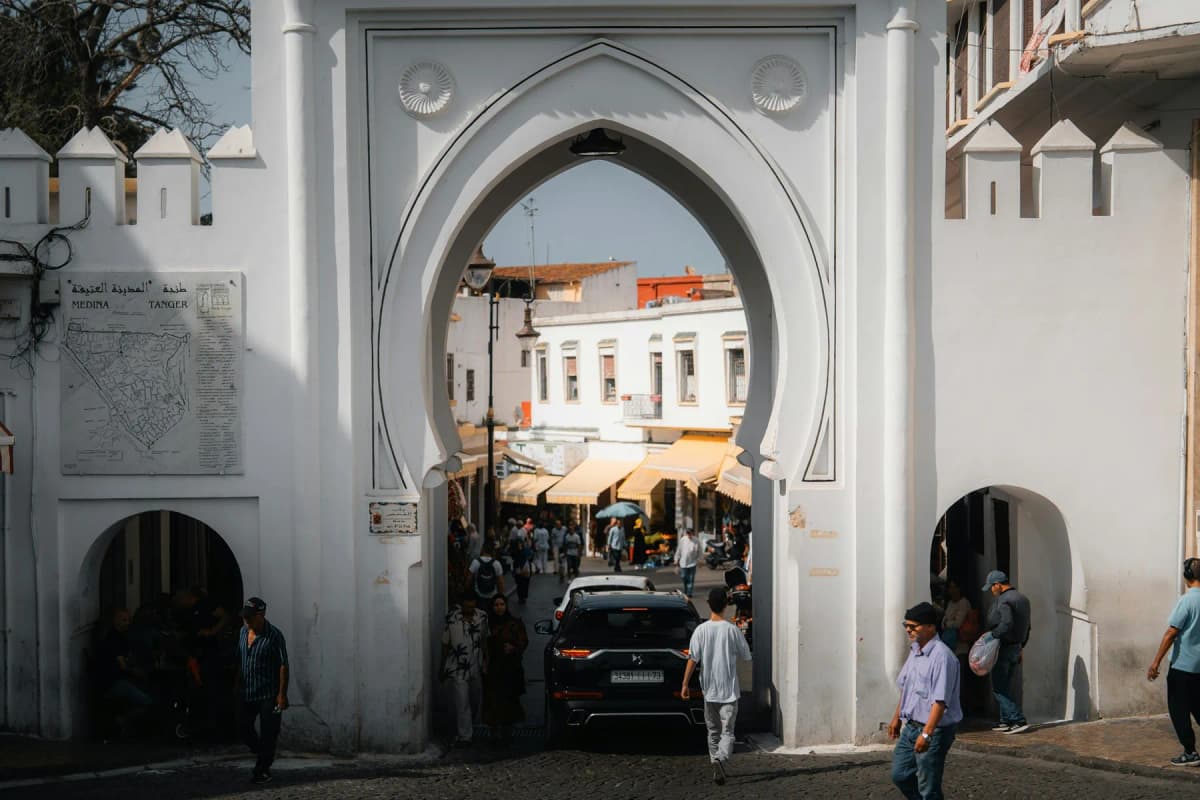
Photo: Othman Alghanmi on Unsplash
Is it safe to go to Tangier now? What the advisories say
It is safe to go to Tangier now by the standards of the main government advisories, which were all in force and unchanged in tone when we checked them in October 2026. None of them advises against travel to Tangier, and none describes a specific threat in the city.
Here is what each one says about Morocco as a whole:
| Country | Advice for Morocco | Main reason given |
|---|---|---|
| United States | Level 2: exercise increased caution (reissued September 2026) | Terrorism |
| Canada | Exercise a high degree of caution (updated May 2026) | Terrorism |
| United Kingdom | Lists terrorism, protests, petty crime and scams as the things to know about | Terrorism, crime |
Level 2 is the second-lowest of the four US levels. Much of western Europe, including France, Spain and the UK, has sat at the same level in recent years, so it is a reminder to stay alert, not a warning to stay away.
Three points from those pages are worth knowing:
- Terrorism. The advisories say attacks are possible anywhere in Morocco and could target tourist sites, transport hubs and crowded places. Moroccan security services are very active, and Global Guardian's analysts note that there has been no major attack in a Moroccan city since 2011. In practice this means staying aware in crowds, not changing your plans.
- Demonstrations. Protests happen from time to time in the larger cities, usually near government buildings. They are generally peaceful, but all three governments advise walking away from any political gathering.
- Earthquakes. The 2023 earthquake that killed almost 3,000 people struck the High Atlas, several hundred kilometres south of Tangier. The north has had damaging earthquakes in the past, so it is worth knowing where your hotel's exits are, as you would anywhere.
Advisories change, so check your own government's page in the week before you travel: the US State Department, the UK Foreign Office or Travel Canada.
Is Tangier safe for tourists? Crime in plain terms
Tangier is safe for tourists in the sense that matters most: visitors are very rarely the victims of violent crime. What does happen is opportunistic theft. Global Guardian, a security firm that publishes country risk guides, rates Tangier as safe with normal precautions and notes that it has a higher pickpocket threat than other Moroccan cities.
That makes sense when you look at the map. Tangier is a port of about 1.3 million people, the ferry from Spain lands a few minutes' walk from the medina, and day-trippers arrive in groups with cameras out and bags open. The UK and Canadian advisories describe the same pattern across Morocco:
- Pickpocketing and bag snatching in medinas, markets and on beaches.
- Snatch theft from motorbikes, aimed at phones, handbags and visible jewellery.
- Card fraud and ATM theft. Use machines inside or attached to a bank, in daylight.
- Aggressive begging near cash machines and at the port.
Canada's advisory also mentions robberies at knifepoint in Morocco and advises handing things over instead of resisting. These are rare for visitors, and they happen in the places you would expect: empty streets late at night.
What works:
- Carry a cross-body bag that zips, worn to the front in the souks.
- Keep your phone in a front pocket or in your hand on the building side of the pavement, not the road side.
- Leave your passport in the riad safe and carry a photo of it.
- Take only the cash you need for the day.
Common scams in Tangier and how to avoid them
Most of what goes wrong in Tangier is not crime at all. It is hustle, and it is concentrated in three places: the ferry exit, the Grand Socco and the lanes around the Petit Socco.
| Scam | How it works | What to do |
|---|---|---|
| The fake guide | A friendly man falls into step beside you, says the medina is impossible alone, and leads you to a shop that pays him commission. He may ask for 100 to 200 MAD at the end | Say "la, shukran" (no, thank you) once and keep walking. Do not explain where you are going |
| "It's closed today" | Someone tells you the kasbah, museum or street ahead is closed and offers another route | It is almost never true. Carry on and check for yourself |
| The shop detour | A paid tour or a helpful stranger ends in a carpet or argan shop with a long sales pitch | You never have to buy. Thank them and leave |
| The menu without prices | A restaurant brings food you did not order, or the bill does not match | Ask for the menu with prices before you sit down |
| The taxi with no meter | The driver quotes a flat fare several times the metered price | Ask for the meter ("le compteur") or take the next taxi |
| The port helper | A man in a hi-vis vest offers to handle your ferry ticket, forms or parking | Nobody at the port needs to be paid apart from the ferry company's own desk |
Unofficial guides are illegal in Morocco, and the UK advisory notes that genuine guides carry an official badge. If you would like someone to show you round, book a licensed guide through your riad or a reputable operator before you arrive. A guide also solves the hustle problem, because nobody approaches a visitor who already has one.
Two more habits help. Download an offline map so you are not standing still with your phone out at every junction. And if someone has been genuinely helpful, a tip of 10 to 20 MAD is normal; you do not owe more because it is demanded.
Which areas of Tangier are safe?
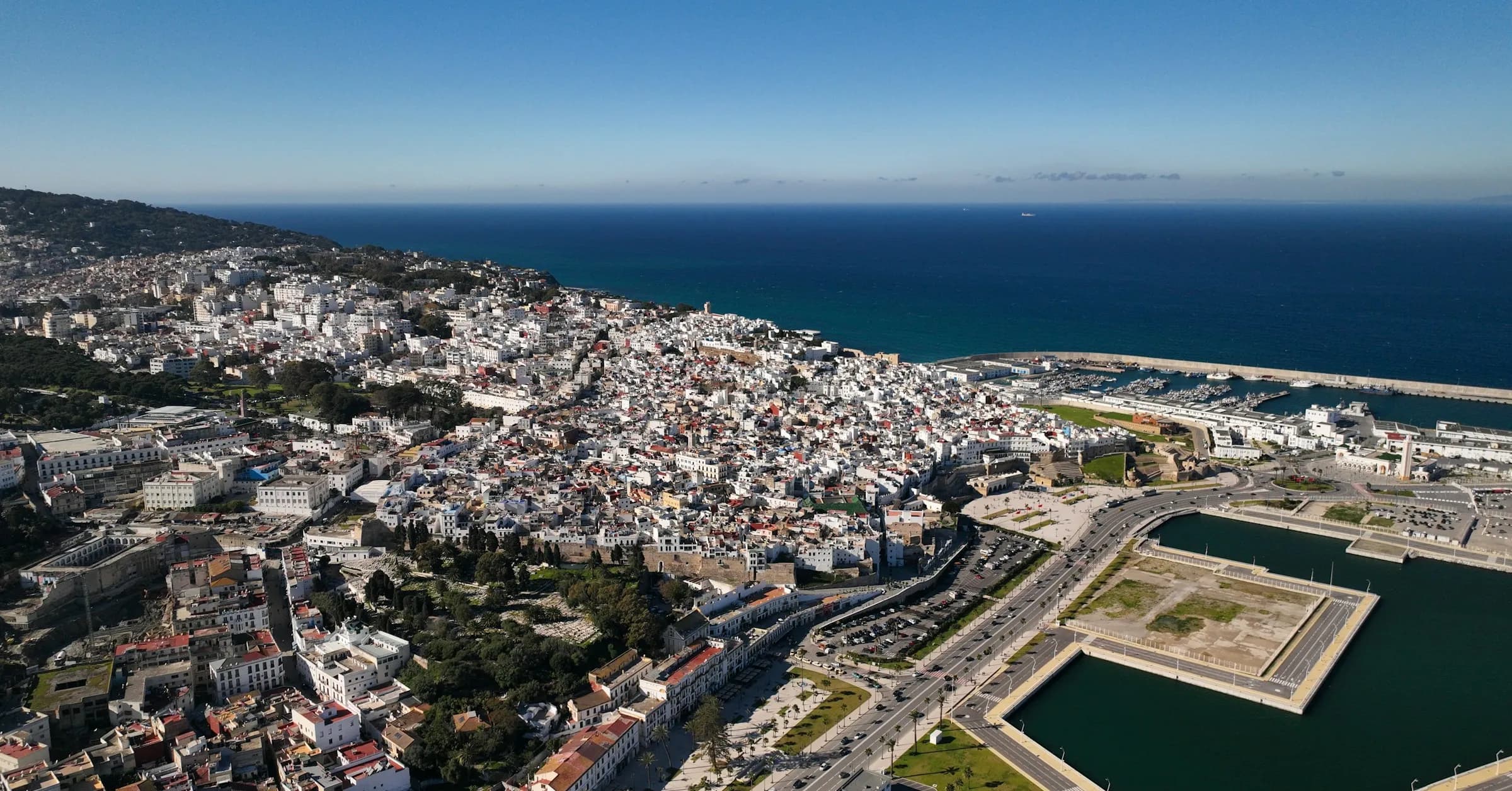
The parts of Tangier that visitors use are safe by day, and most are fine in the evening as well. The city is compact: the medina and kasbah sit on a hill above the port, the new town spreads out to the south-west, and the beach and corniche curve away to the east.
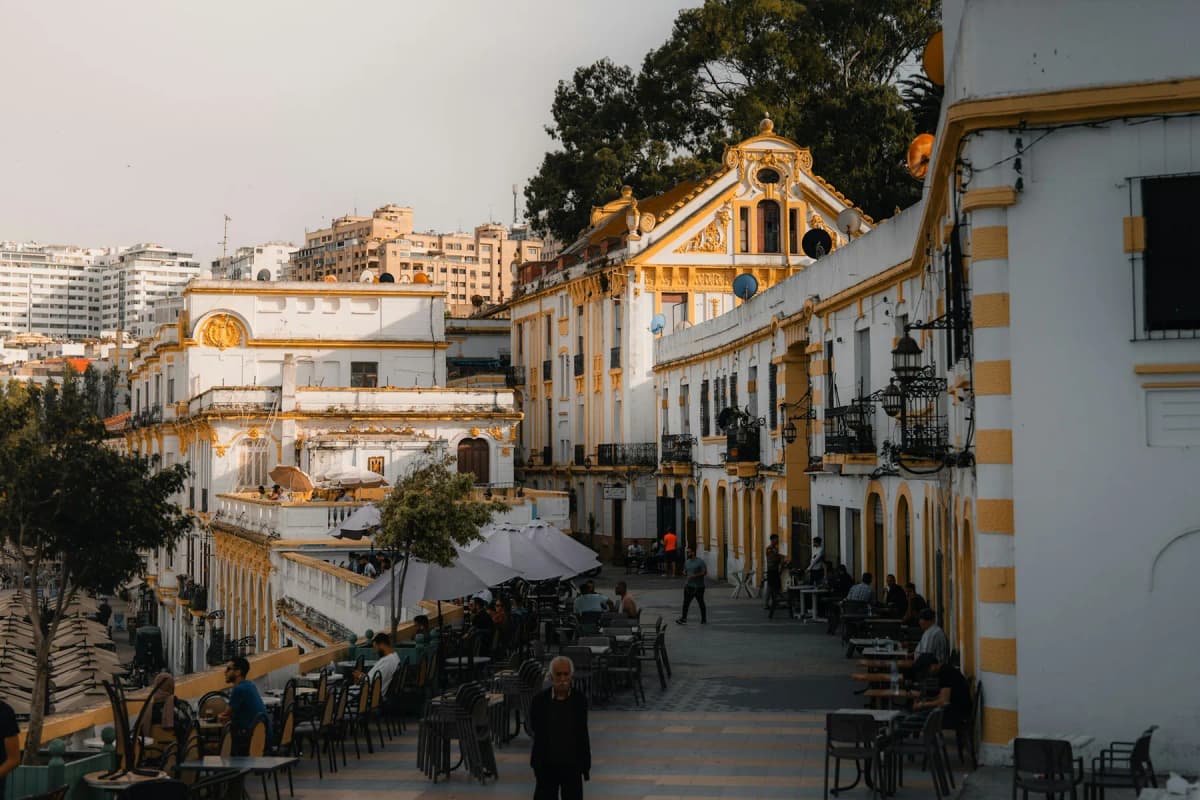
Photo: Othman Alghanmi on Unsplash
| Area | By day | After dark |
|---|---|---|
| Kasbah | Calm, residential, few touts | Quiet; fine on the main lanes, but they empty early |
| Medina and Petit Socco | Busy; watch your pockets | Main lanes are fine until shops close; avoid dark side alleys |
| Grand Socco (Place du 9 Avril) | Busy; the main spot for touts | Lively and well lit in the evening |
| Ville Nouvelle (Boulevard Pasteur, Place de France) | Easy and relaxed | The best area for an evening walk and dinner |
| Corniche, marina and Malabata | Wide, open seafront promenade | Busy with families until late in summer; quieter in winter |
| Ferry port and its approaches | Fine, with persistent touts | Avoid the empty stretches away from the terminal |
| City beach | Fine in daylight; do not leave bags unattended | Avoid once it is dark |
If you want the least hassle, stay in the kasbah or the new town. If you want atmosphere and do not mind a few approaches a day, a riad in the medina is the classic choice. Ask your riad to send someone to meet you at the nearest gate on arrival, because finding a door in an unsigned lane with a suitcase is exactly when the "helpers" appear.
The outer residential districts have nothing for visitors and there is no reason to go there.
Is it safe to walk around Tangier at night?
It is safe to walk around Tangier at night if you keep to the streets where other people are walking. The Grand Socco, Boulevard Pasteur, the terrace by Place de France and the corniche all stay busy into the late evening, especially from June to September, when local families come out after dinner.
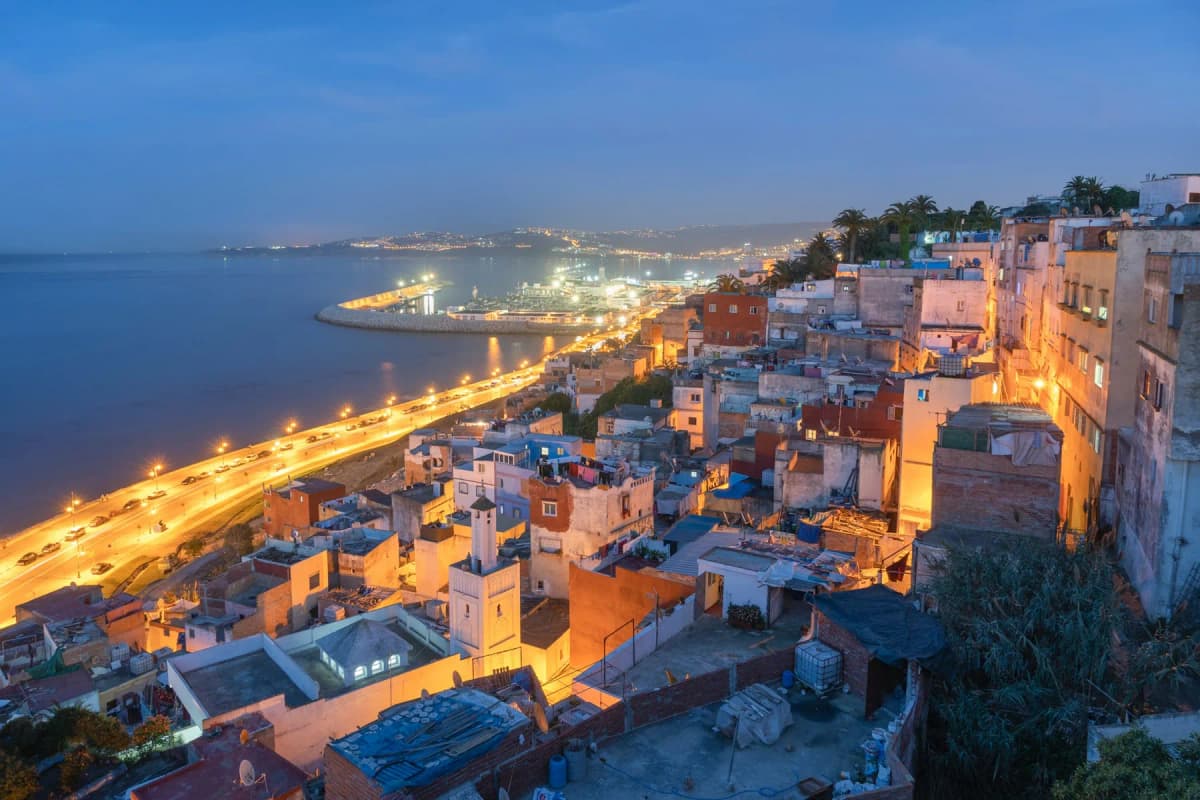
Photo: Raúl Cacho Oses on Unsplash
The places to avoid after dark are the ones that empty out:
- Narrow, unlit lanes in the medina. The main routes are fine while shops are open. Once the shutters come down, usually around 21:00 to 22:00, the side alleys are deserted.
- The edges of the port. The terminal itself is staffed, but the roads around it are not places to wander.
- The beach. Fine for a sunset walk, not for a midnight one.
- Parks and viewpoints away from the centre.
Practical points for the evening:
- If your riad is deep in the medina, learn the route in daylight and ask the owner which gate to use at night.
- Take a petit taxi back from the new town. A cross-town ride is cheap, and a night surcharge of about 50% is normal and legal.
- Bars are mostly inside hotels and on a few streets of the new town. Watch your drink, as you would anywhere.
Getting around safely: taxis, the port and the station
Transport in Tangier is safe, and most complaints about it are to do with price, not danger.
Petit taxis. In Tangier these are turquoise with a yellow stripe. They take up to three passengers, run only inside the city and are metered. Most rides across the centre cost roughly 10 to 25 MAD on the meter. Drivers may pick up other passengers going the same way, which is normal. If a driver refuses the meter, get out and take the next one.
Grand taxis. These are larger cream or beige cars that run fixed routes out of the city, including to the airport. Fares are set per trip, not metered, so agree the price before you get in.
Tangier Ibn Battouta airport is about 12 to 15 km south-west of the centre. Taxi fares are posted at the rank, and recent reports put the ride to the medina at roughly 150 to 250 MAD, more at night. Check the board and confirm the price with the driver. If you land late or would prefer a fixed price and a name board, a pre-booked transfer removes the negotiation.
The ferry. There are two ports, and mixing them up is the most common mistake:
- Tanger Ville is the city port, a short walk below the medina. Fast ferries from Tarifa in Spain arrive here in about an hour.
- Tanger Med is a large commercial port about 45 km east of the city. Ferries from Algeciras arrive here, and you then need a bus or a grand taxi into town.
At either port, walk straight through the arrivals area without stopping. Change a small amount of money at an official desk or use a bank ATM in town.
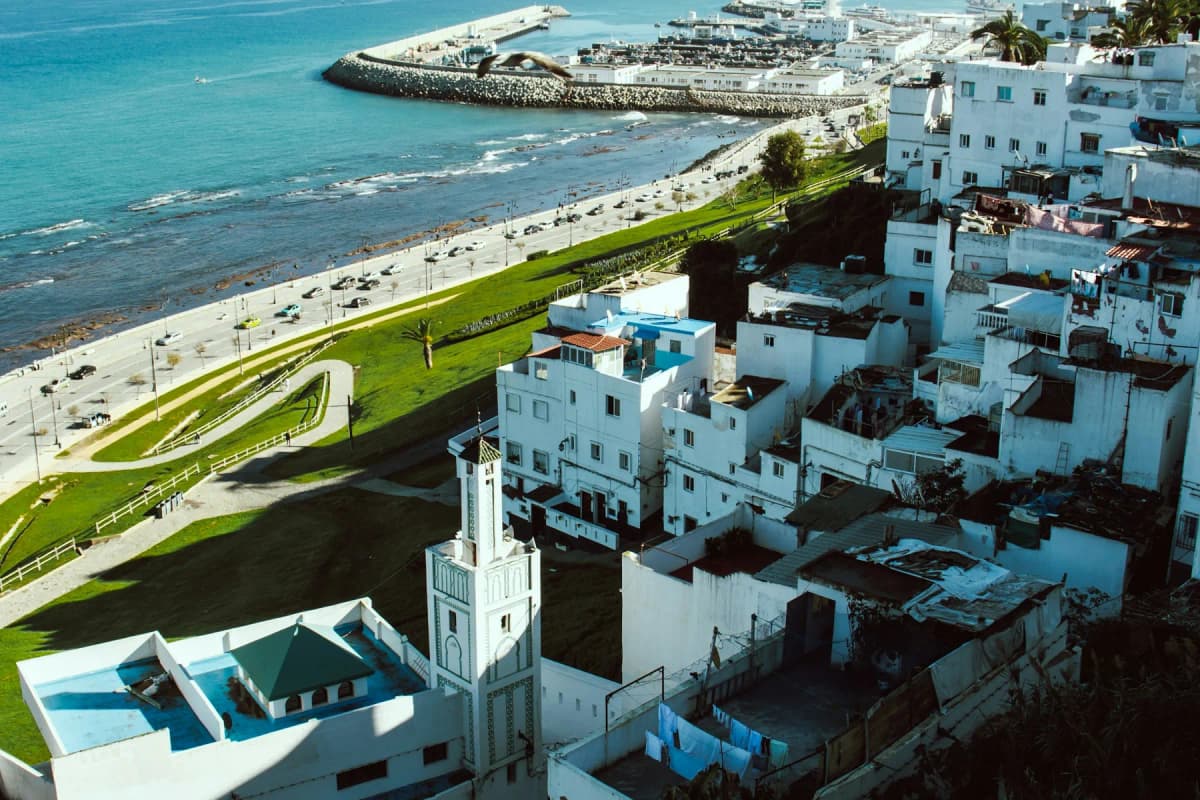
Photo: othmane ferrah on Unsplash
The train. Tanger Ville station, in the new town about 3 km from the medina, is modern and well staffed. The Al Boraq high-speed train to Rabat and Casablanca is safe and comfortable, with assigned seats. Petit taxis wait outside.
Driving. Road accidents are a bigger risk in Morocco than crime. Canada's advisory recommends not driving at night. If you hire a car for Chefchaouen or the coast, plan to arrive before dark.
Phones. Mobile data makes all of this easier, from checking a taxi route to calling your riad. A Morocco eSIM can be set up before you leave, so you have maps working as you walk off the ferry.
Still choosing dates? Compare flights into Tangier here:
Is Tangier safe for women?
Tangier is generally safe for women, including women travelling alone, but unwanted attention is part of the picture. The UK and Canadian advisories both say that women in Morocco, especially those on their own, may be followed, stared at or spoken to in the street. It is usually verbal and stops when ignored, but it is tiring.
What helps:
- Dress to blend in. Loose clothes that cover shoulders, chest and knees are the norm in the medina. A scarf is useful, not required.
- Do not engage. No eye contact, no reply, keep walking. Sunglasses help.
- Step into a shop or café if someone will not leave you alone. Shopkeepers will often tell a pest to move on.
- Sit inside or on family terraces at traditional cafés, which can be all-male at street level. The new town has plenty of mixed cafés.
- Take taxis at night instead of walking through empty lanes.
- Book your first night ahead and arrange to be met, so you are not looking for a riad in the dark.
A hammam, a cooking class or a guided walk are easy ways to spend time with local women and get a different view of the city.
Is Tangier safe for families, Americans and LGBTQ+ travellers?
Families. Tangier is an easy city with children. Moroccans are warm towards kids, the corniche is wide and traffic-free, and the kasbah is quiet. The practical risks are traffic (drivers do not always stop at crossings), the sun and stomach upsets. Carry water and hand gel, and choose busy restaurants.
Americans. There is no specific risk for US citizens in Tangier. The city has one of the oldest American ties in the world: the Tangier American Legation, in the medina, was the first American public property abroad and is now a museum. The State Department suggests enrolling in its free STEP programme to receive alerts.
LGBTQ+ travellers. Same-sex sexual relations are illegal in Morocco under Article 489 of the penal code, with penalties of up to three years in prison. The UK advisory adds that public displays of affection can lead to prosecution and that dating apps carry legal and safety risks. Many LGBTQ+ travellers visit Tangier without problems by being discreet in public. Hotels in the international category are used to couples sharing a room.
Public affection of any kind is frowned on in Morocco, particularly near mosques, so the same discretion applies to everyone.
Laws and customs that catch visitors out
Most trouble with the law in Tangier is avoidable. These are the rules visitors most often get wrong:
- Drugs. The Rif mountains behind Tangier are one of the world's biggest cannabis-growing regions, and you may be offered hashish in the medina. Possession is illegal and penalties are severe. The UK advisory describes Morocco's approach as zero tolerance. Say no and walk on.
- Alcohol. It is legal in licensed hotels, bars, restaurants and some supermarkets. Drinking in the street or anywhere unlicensed can lead to arrest.
- Photography. Do not photograph police, soldiers, the port's security areas or government buildings. Ask before taking pictures of people.
- Ramadan. Eating, drinking and smoking in public during daylight is disrespectful and can cause problems. In 2027 Ramadan runs from about 8 February to 9 March.
- Drones. Bringing a drone into Morocco without prior permission is not allowed, and customs will confiscate it.
- Religion. Non-Muslims cannot enter most mosques in Morocco.
Health, water and the beach
Water. Tap water in Tangier is treated and chlorinated. Tour operators such as Intrepid still advise short-stay visitors to drink bottled or filtered water, because unfamiliar water can upset your stomach. Brushing your teeth with tap water is fine for most people.
Food. Eat where it is busy, and choose food that is cooked in front of you. Canada's health notes list hepatitis A and typhoid as risks in Morocco, so check your vaccinations are up to date.
Animals. Tangier is full of street cats, and there are stray dogs on the outskirts. Rabies exists in Morocco. Do not touch them, and see a doctor promptly after any bite or scratch.
Sun and heat. The sea breeze keeps Tangier cooler than Marrakech or Fes, with summer highs usually in the high 20s°C, but the sun is strong from May to September. Our guide to the best time to visit Morocco has the month-by-month detail.
Swimming. The UK advisory warns that many Moroccan beaches have no lifeguards or warning flags and that currents can be strong. That applies most on the Atlantic side, around Cap Spartel and the beaches near the Caves of Hercules. Swim where others are swimming and stay close to shore.
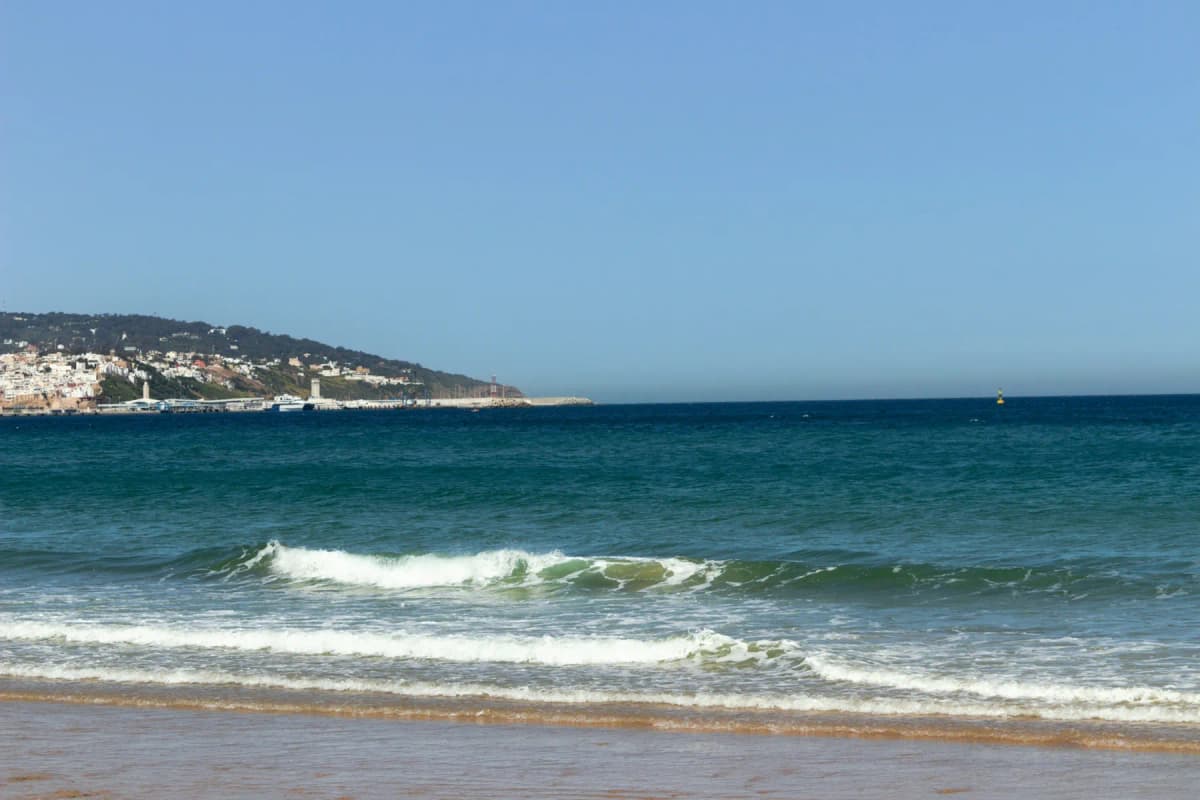
Photo: Trippers El on Unsplash
Medical care. Private clinics in Tangier are the better option for visitors and usually expect payment up front. Pharmacies are everywhere and are a good first stop for minor problems. Make sure your policy covers medical treatment and evacuation; you can compare EKTA travel insurance plans before you go.
Emergency numbers in Tangier
| Service | From a landline | From a mobile |
|---|---|---|
| Police (in the city) | 19 | 190 or 112 |
| Ambulance and fire | 15 | 150 |
| Royal Gendarmerie (outside the city) | 177 | 177 |
Morocco also has a tourist police unit (the brigade touristique) that patrols the medinas of the main tourist cities, including Tangier. If something is stolen, you will need a police report for your insurance claim; your riad can tell you where the nearest station is and may send someone with you to translate. Operators generally speak Arabic and French.
12 quick safety tips for Tangier
- Book your first night and arrange a meeting point before you arrive.
- Walk through the port or station exit without stopping.
- Say "la, shukran" once and keep moving.
- Keep your phone and wallet zipped away in the souks.
- Ask for the meter in petit taxis; agree the fare first in grand taxis.
- Use ATMs attached to banks, in daylight.
- Dress modestly in the medina.
- Learn your route home in daylight.
- Stay on lit, busy streets after dark and take a taxi if in doubt.
- Refuse any offer of drugs.
- Carry a copy of your passport, not the original.
- Save your riad's phone number and the emergency numbers above.
Frequently asked questions
Is Tangier safe for tourists?
Yes. Tangier is safe for tourists who take normal city precautions. Violent crime against visitors is uncommon. The usual problems are pickpocketing, unofficial guides and taxi overcharging, all of which are easy to avoid once you know about them.
Is it safe to walk around Tangier at night?
Yes, on busy, well-lit streets such as the Grand Socco, Boulevard Pasteur and the corniche. Avoid empty medina alleys, the roads around the port and the beach after dark, and take a petit taxi back to your accommodation if it is far.
Is it safe to go to Tangier now?
As of October 2026, yes. The US rates Morocco at Level 2 (exercise increased caution) and Canada advises a high degree of caution, both because of a general terrorism risk across the country. Neither advises against visiting Tangier. Check your government's page before you travel.
Can I drink alcohol in Tangier?
Yes, in licensed places. Hotels, some restaurants and bars in the new town serve alcohol, and a few supermarkets sell it. Drinking in the street or in public spaces is illegal and can lead to arrest. Many medina restaurants do not serve alcohol at all.
Is Tangier safe for solo female travellers?
Generally yes. Expect some comments and stares, which are best ignored. Dress modestly, avoid empty streets at night, use taxis after dark and book your first night in advance.
Is Tangier safer than Marrakech?
They are similar. Both are safe with normal precautions, and both have pickpockets and touts. Tangier is smaller and many visitors find the pressure from sellers lighter than in Marrakech's souks, though the area around the port can be more insistent.
Is a day trip to Tangier from Spain safe?
Yes. The fast ferry from Tarifa is a routine one-hour crossing. Day-trippers are the main target for fake guides at the ferry exit, so either book a licensed guide in advance or walk on with confidence. Keep your passport secure, because you need it to get back.
Is the tap water in Tangier safe to drink?
It is treated, and many residents drink it. Most short-stay visitors choose bottled or filtered water to avoid an upset stomach.
Is Tangier worth visiting?
Yes. The kasbah, the views across the Strait of Gibraltar to Spain, the cafés of the new town and the easy links to Chefchaouen and the rest of Morocco make it a good first or last stop. One or two nights is enough for most people.
How we researched this guide
This guide is based on desk research, not a personal visit. We read the Morocco pages of the UK Foreign, Commonwealth and Development Office, the US State Department and the Government of Canada in October 2026, along with Global Guardian's country risk guide and recent visitor reports on scams, taxis and the port. Fares are approximate and were the hardest figures to pin down, because sources disagree; where they did, we give a range. Advisories can change quickly, so check the official pages before you travel. If you find something that has changed, let us know.
For more of the country, start with our Morocco travel guide. Tangier is the last stop on our 10-day Morocco itinerary, and the usual next stop from here is the blue town covered in our guide to the best things to do in Chefchaouen, about two and a half hours away by bus.