Best Time to Visit Morocco: A Month-by-Month Guide (2026/27)
October 3, 2026 · Morocco
This post contains affiliate links. We may earn a commission if you book through them, at no extra cost to you. Disclaimer.
The best time to visit Morocco is spring (March to May) and autumn (September to November). In those months the cities are warm rather than hot, the Sahara is comfortable by day and by night, and the roads over the Atlas are clear. That is the short answer, and it holds for most first trips.
The longer answer depends on where you're going. Morocco has an Atlantic coast that barely changes temperature all year, inland cities that pass 37°C in July, mountains that hold snow until April, and a desert where the same camp can be freezing in January and unbearable in August. This guide goes through the weather month by month and region by region, using long-term climate averages, and covers Ramadan, festivals, crowds and prices so you can pick dates that suit your route.
Best time to visit Morocco at a glance
| If you want... | Go in | Why |
|---|---|---|
| A first trip covering cities and desert | April, May, October | Warm days, mild nights, everything open |
| The Sahara | March to May, October, November | Comfortable by day, cool but not freezing at night |
| Marrakech and Fes | March to May, late September to November | Highs of 22°C to 30°C |
| Beaches | June to September | Dry, sunny and far cooler than inland |
| Surfing | October to March | Biggest, most consistent Atlantic swells |
| Hiking in the High Atlas | April to June, September, October | Passes are clear and days are long |
| Lower prices and fewer people | January, February, early December | Low season outside the holidays |
- Hottest months: July and August. The average high is about 38°C (100°F) in Marrakech and 40°C at the edge of the desert.
- Coldest month: January. Marrakech averages 19°C by day and 6°C at night; Fes and the desert are colder.
- Wettest months: November to March, mostly in the north. Marrakech gets only around 29 wet days a year.
- Ramadan 2027: expected from about 8 February to 9 March.
Morocco weather month by month
These are average daily highs and lows in °C, from the 30-year climate normals published for each weather station. The desert column uses Errachidia, the nearest long-term station to the Merzouga dunes, which sit further south and run a little hotter.
| Month | Marrakech | Fes | Essaouira | Desert |
|---|---|---|---|---|
| January | 19 / 6 | 16 / 4 | 18 / 11 | 16 / 2 |
| February | 21 / 8 | 17 / 4 | 19 / 12 | 18 / 5 |
| March | 24 / 10 | 20 / 7 | 19 / 13 | 22 / 9 |
| April | 26 / 12 | 22 / 8 | 20 / 14 | 26 / 13 |
| May | 29 / 15 | 26 / 12 | 21 / 16 | 30 / 17 |
| June | 34 / 18 | 31 / 15 | 21 / 17 | 35 / 22 |
| July | 38 / 21 | 35 / 18 | 22 / 18 | 40 / 26 |
| August | 37 / 21 | 35 / 18 | 22 / 18 | 38 / 25 |
| September | 33 / 19 | 30 / 16 | 23 / 18 | 33 / 20 |
| October | 28 / 16 | 26 / 13 | 22 / 17 | 27 / 14 |
| November | 23 / 11 | 20 / 8 | 21 / 14 | 21 / 8 |
| December | 20 / 7 | 17 / 5 | 19 / 13 | 17 / 4 |
For Fahrenheit: 20°C is 68°F, 25°C is 77°F, 30°C is 86°F, 35°C is 95°F and 40°C is 104°F.
Three things stand out. Marrakech and the desert follow almost the same curve, so the months that suit one suit the other. Fes is a few degrees cooler and much wetter than Marrakech. And Essaouira, on the Atlantic, stays between 18°C and 23°C all year, which makes it the escape from inland heat in summer.
Spring in Morocco (March to May)
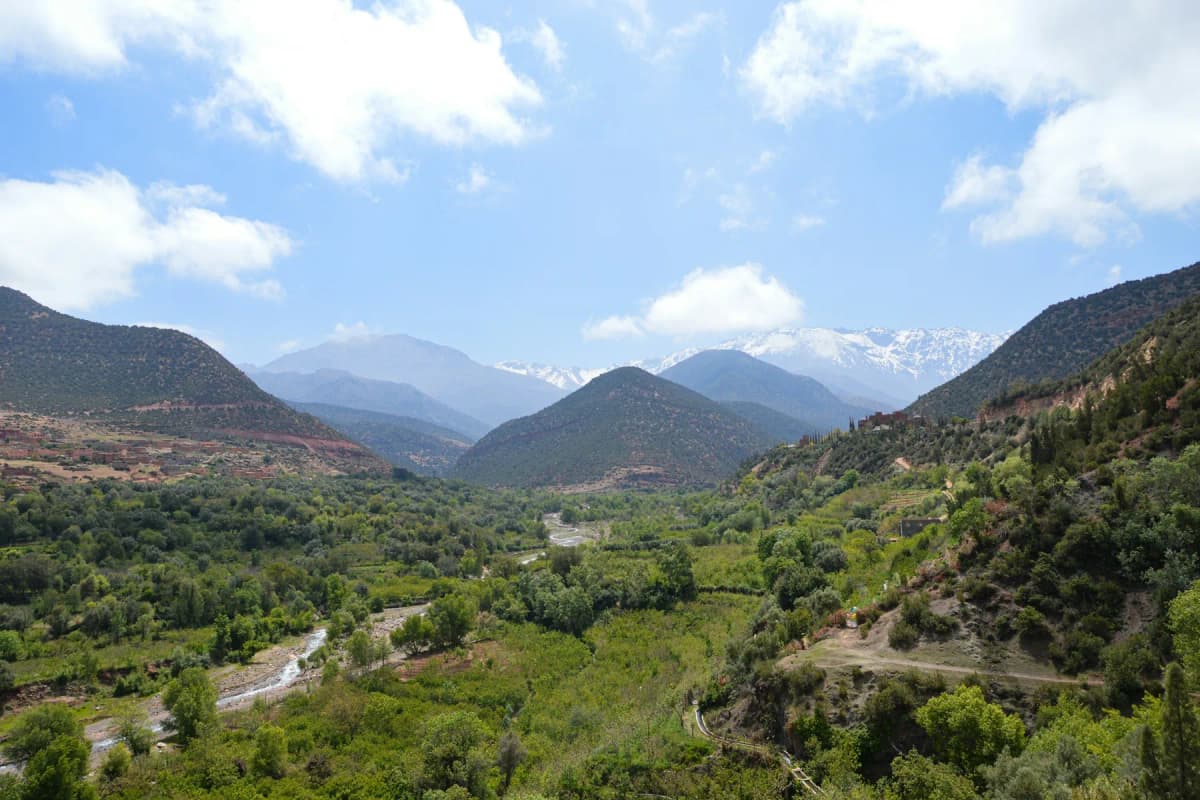 Photo: henry perks on Unsplash
Spring is the best all-round season. Marrakech climbs from 24°C in March to 29°C in May, the valleys of the Atlas are green, and there is still snow on the peaks behind the city. The desert is at its most comfortable in March and April, with warm afternoons and nights that need a jumper rather than a winter coat.
- March is mild and can be showery, especially in Fes, Chefchaouen and Tangier. In 2027 the first week or so falls in Ramadan. It's a good month for the desert and the south.
- April is the single safest choice for a first trip. It is busy, particularly around Easter, so book riads and desert tours early.
- May is warm and mostly dry everywhere. Roses are harvested in the Dades Valley, where Kelaat M'Gouna holds its rose festival, and the High Atlas trails are opening up. By late May the desert afternoons are getting hot.
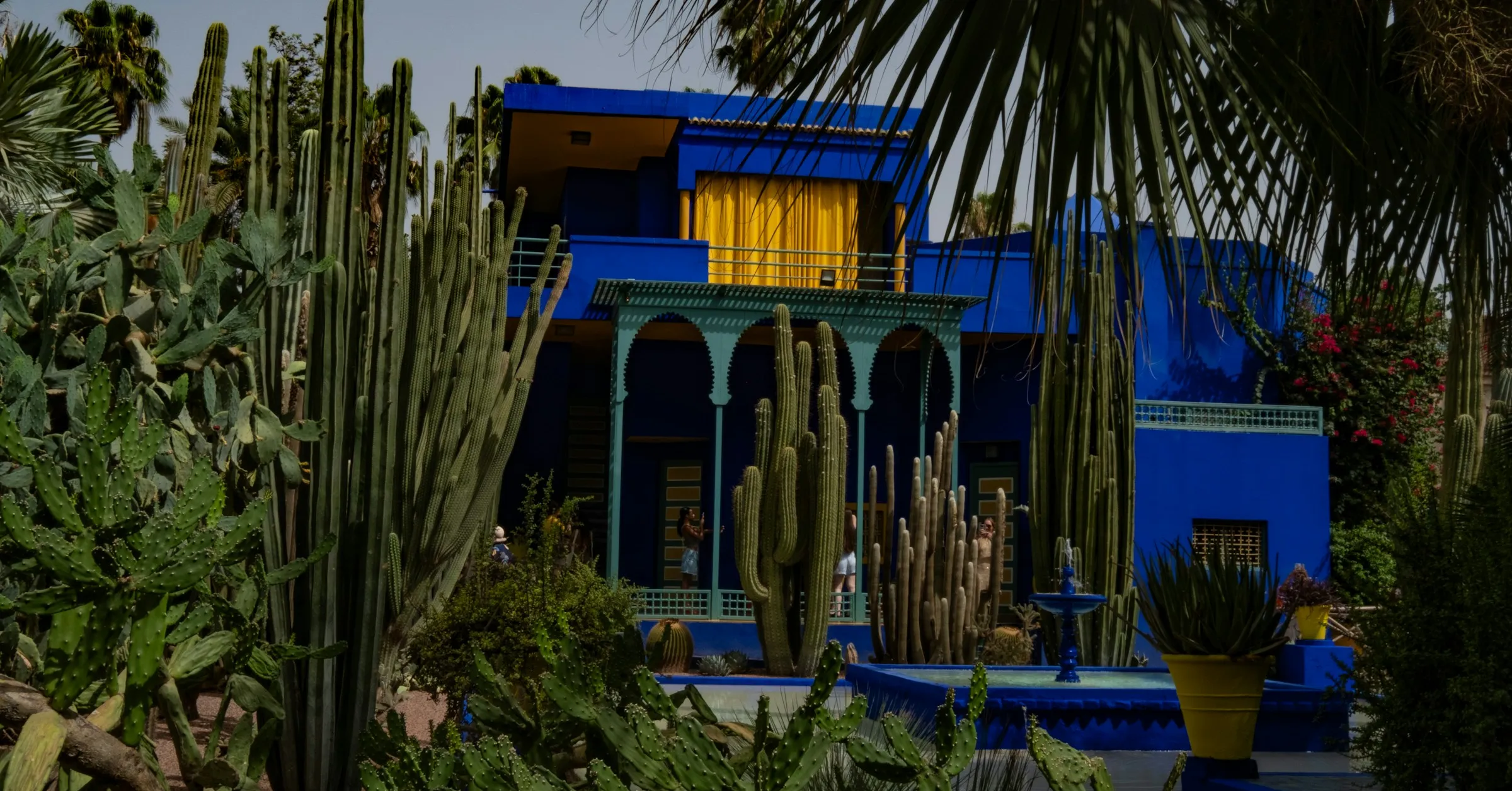
Downsides: spring is high season, so prices are at their highest and Jardin Majorelle, the Saadian Tombs and Chefchaouen's lanes are at their busiest. Occasional wind in the desert can kick up sand in March and April.
Summer in Morocco (June to August)
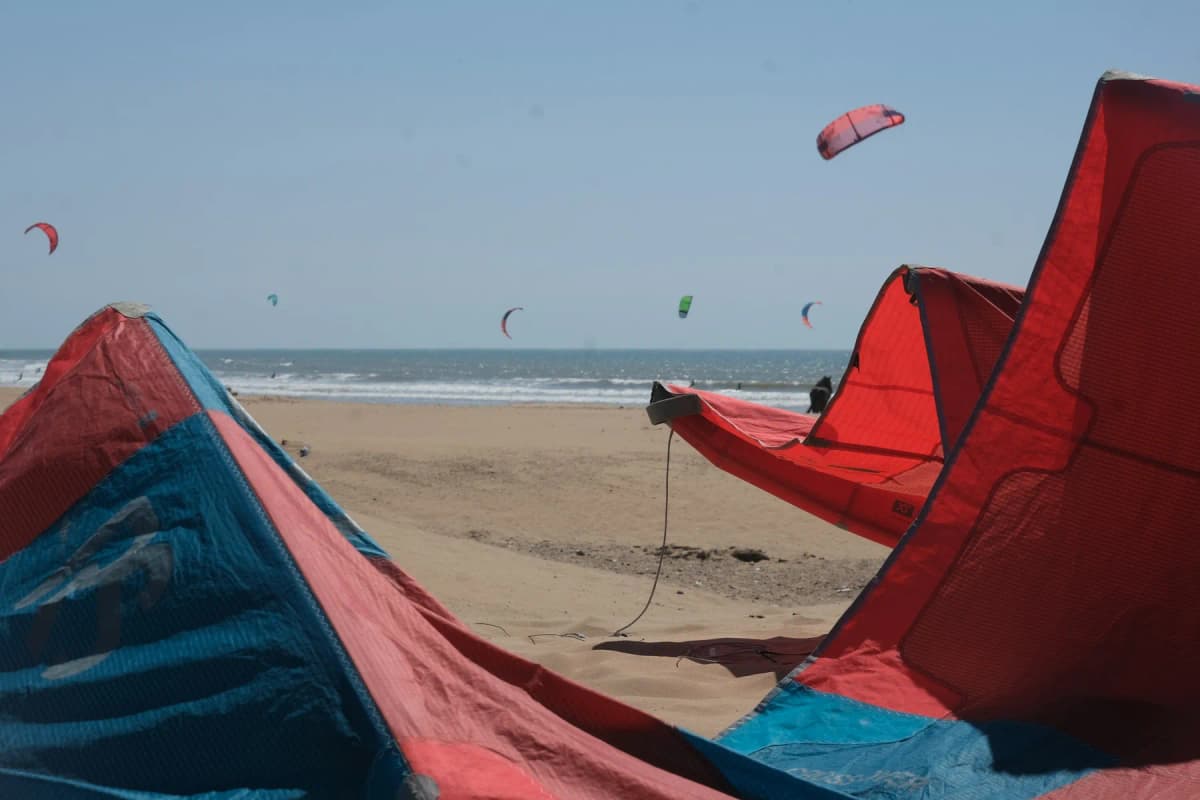 Photo: Andreea Munteanu on Unsplash
Summer splits the country in two. Inland, it is very hot: Marrakech averages 38°C in July, Fes 35°C, and the desert around 40°C, with heatwaves well above that. On the Atlantic coast it's another world. Essaouira averages 22°C in July and August, and Tangier about 28°C.
- June is the best of the three months. The first half is still manageable in the cities, and Essaouira hosts the Gnaoua World Music Festival (24 to 26 June in 2027).
- July and August are for the coast and the mountains. Moroccan families holiday in August, so beach towns such as Essaouira, Asilah and Agadir fill up and prices there rise.
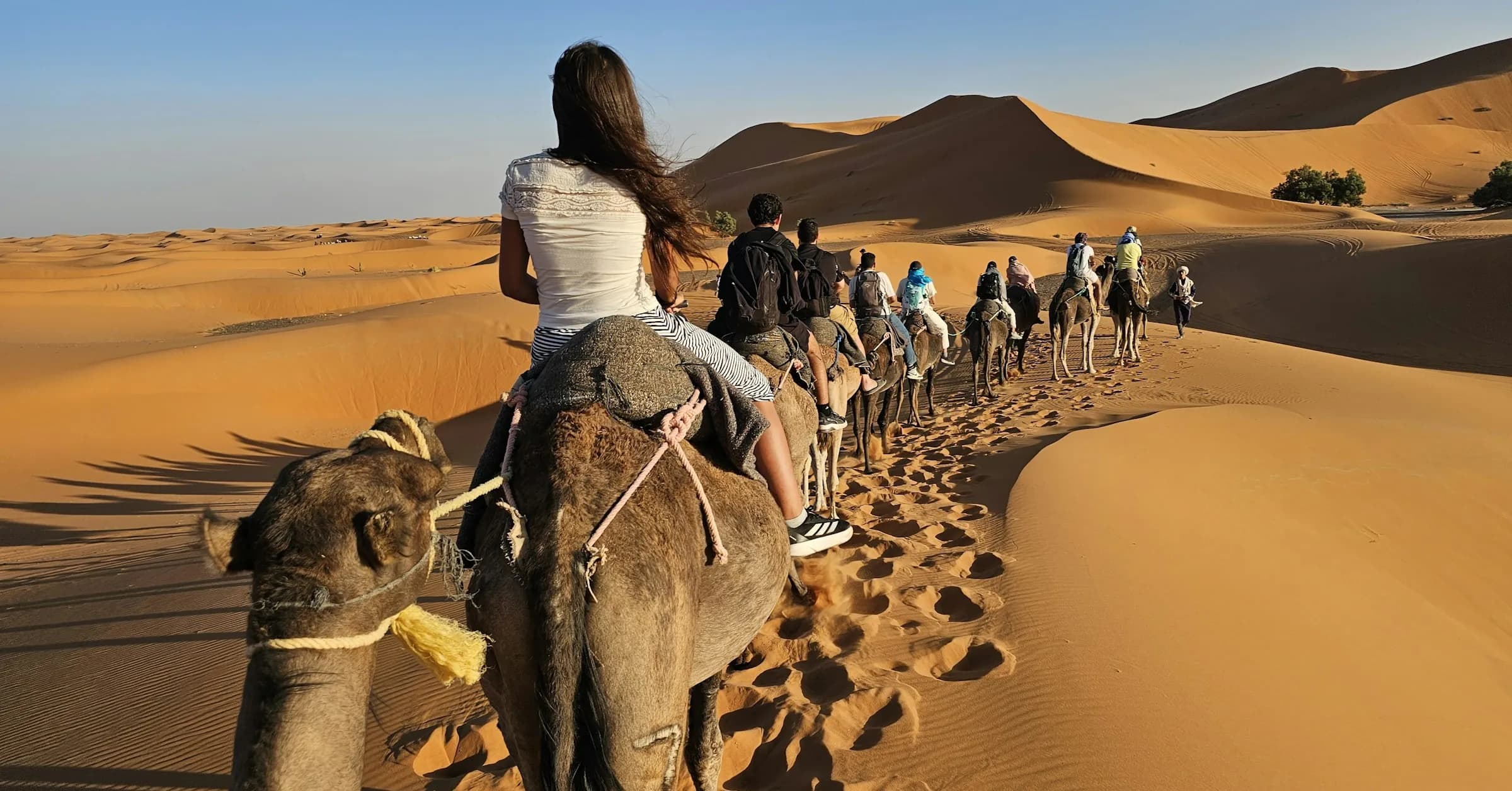
If summer is your only option, it still works with some changes. Sightsee from opening time until about 11am, rest through the afternoon, and go out again after 6pm. Pick a riad or hotel with a pool and air conditioning. Swap the long Sahara trip for a cooler route through Essaouira, the High Atlas villages around Imlil, and Chefchaouen in the Rif. Some Merzouga camps close or run a reduced service in July and August, and an afternoon camel ride in that heat is hard going.
Upside: inland hotels are at their cheapest of the year, and the big sights in Marrakech and Fes are noticeably quieter.
Autumn in Morocco (September to November)
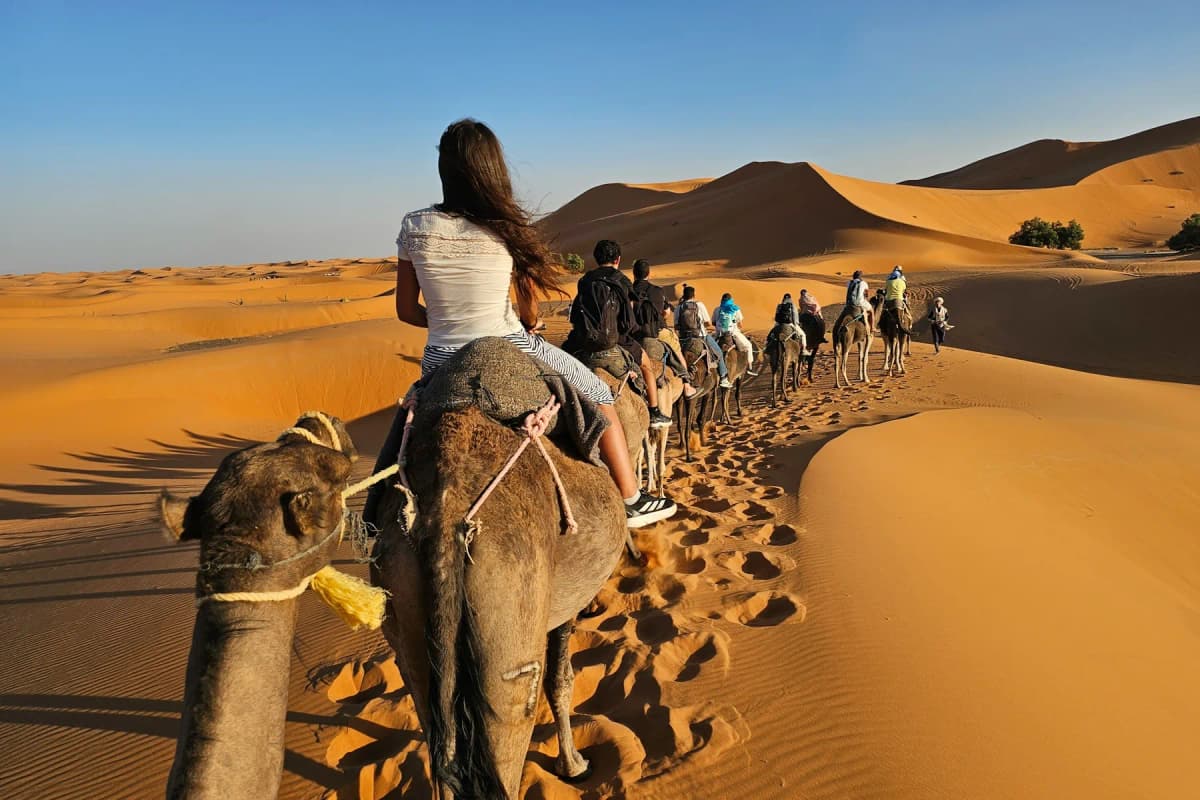 Photo: Hasmik Ghazaryan Olson on Unsplash
Autumn matches spring for weather and usually has slightly thinner crowds. The heat breaks during September, the sea is at its warmest, and the light in the desert is at its best.
- September starts hot, with Marrakech still averaging 33°C, and ends pleasantly. It's a good month for the coast and the north, and for the High Atlas.
- October does for autumn what April does for spring, with 28°C in Marrakech, 27°C at the edge of the desert, and warm evenings. Dates are harvested in the southern oases, and Erfoud, the gateway town to Merzouga, celebrates with a date festival.
- November is cooler and quieter, with highs of 23°C in Marrakech and cold desert nights by the end of the month. Rain returns to the north. For the south and the desert, it's one of the best-value months of the year.
Downsides: October is as busy as April. From late October, rain is possible in Fes, Chefchaouen and Tangier, so keep a flexible day in the north.
Winter in Morocco (December to February)
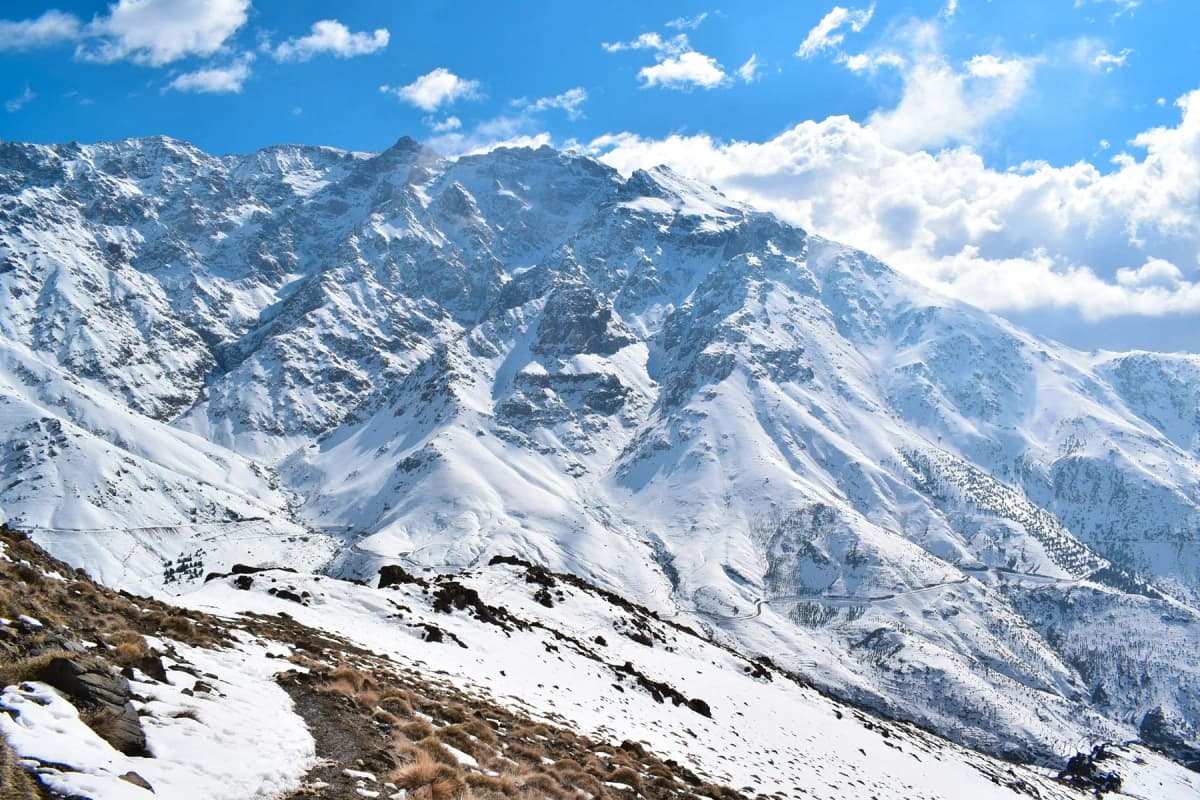 Photo:
 Winter is better than most people expect. Marrakech has clear, sunny days of 19°C to 21°C and gets 215 to 230 hours of sunshine a month. What catches visitors out is the cold after dark: nights drop to 6°C in Marrakech, 4°C in Fes and close to freezing in the desert, and traditional riads are built to stay cool, not warm. Ask whether your room has heating.
- December is quiet until about the 20th, then Christmas and New Year bring a short, expensive peak in Marrakech and the desert camps.
- January is the coldest and one of the cheapest months. Snow lies on the High Atlas, and the Tizi n'Tichka pass between Marrakech and the desert occasionally closes for a few hours after a storm.
- February warms up quickly in the south, and almond trees blossom around Tafraoute in the Anti-Atlas. In 2027, Ramadan is expected to begin around 8 February.
Winter is the wettest season in the north. Tangier gets over 100 mm of rain in each of November, December and January, and Chefchaouen can be cold and grey. It is also prime time for surfing on the coast around Taghazout.
Best time to visit Morocco by region
Marrakech
March to May and October to November. Winter days are sunny and pleasant if you pack for cold evenings, which makes December to February a good time for a city break. Avoid July and August unless you're happy to plan around the heat. Our guide to the best things to do in Marrakech has opening hours for early starts.
The Sahara: Merzouga and Zagora
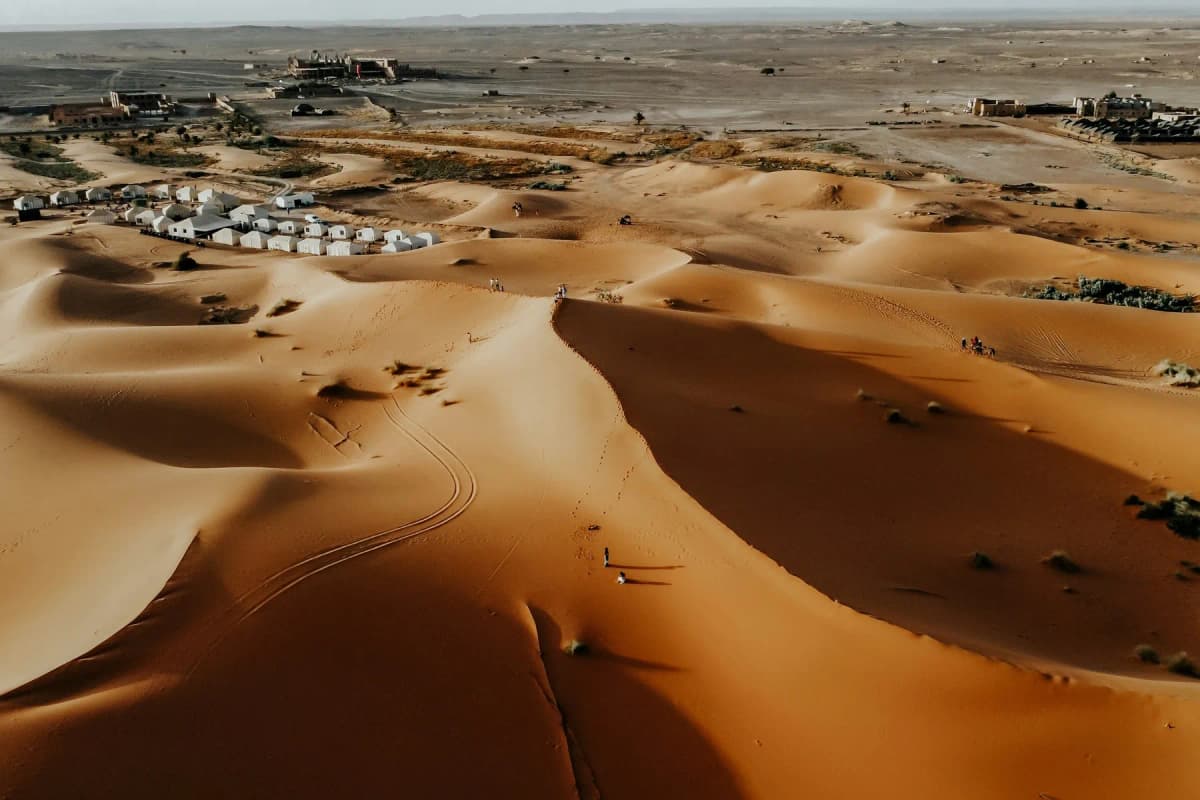 Photo: Mohamed Abira on Unsplash
October, November, March and April are the best months for the desert, with daytime highs of 21°C to 27°C and nights that are cool but bearable. December to February has beautiful clear skies and comfortable days, but nights at camp fall to between 2°C and 5°C, so bring a proper warm layer and check that the camp provides heating or extra blankets. From June to mid-September it's too hot for most people to enjoy.
The standard way to get there is a three-day tour over the Atlas. You can book a 3-day Merzouga round trip from Marrakech, or a 3-day desert tour from Marrakech that ends in Fes if you're heading north afterwards. In high summer, a sunset in the Agafay stone desert near Marrakech is a more comfortable substitute, and an Agafay quad, camel ride and dinner evening starts after the worst of the heat.
Fes, Meknes and the north
April to June and September to October. Fes is wetter than Marrakech, with about 55 rainy days a year against 29, almost all of them between October and May. Chefchaouen sits in the Rif mountains and is colder and damper still in winter. Summer in Fes is hot (35°C), while Tangier, with its sea breeze, stays in the high 20s.
The Atlantic coast: Essaouira, Agadir and Taghazout
The coast is the one part of Morocco that works all year. Essaouira's average high moves only between 18°C in January and 23°C in September. It's also windy, especially from April to September, which is why the town is known for kitesurfing rather than sunbathing. For a calmer beach, Agadir is more sheltered and a few degrees warmer, with highs of 26°C to 27°C in summer.
- Beaches: June to September, when there is almost no rain.
- Surfing: October to March around Taghazout and Imsouane, when winter swells arrive. Summer waves are smaller and better for beginners.
- Day trip: Essaouira is under three hours from Marrakech, and a small-group Essaouira day trip is the easiest way to cool down mid-summer.
The High Atlas
For walking in the valleys around Imlil and the Ourika Valley, April to June and September to October are ideal. The summit of Toubkal (4,167 m) is usually climbed without winter equipment from about June to September; from November to April it's a snow climb that needs crampons, an ice axe and a guide. July and August are fine at altitude and a real relief from Marrakech.
Ramadan, holidays and festivals
Ramadan moves about 11 days earlier each year. In 2027 it's expected to run from around 8 February to 9 March, with Eid al-Fitr on about 10 March. Exact dates depend on the moon sighting.
You can travel during Ramadan, and many visitors enjoy it. Sights, riads and tours run as normal, and the evenings after the fast is broken are lively. But many local cafés and restaurants close during the day, alcohol is harder to find, opening hours are shorter, and everything stops for half an hour or so at sunset. Morocco also moves its clocks back an hour for the month, which is worth knowing when you book trains and tours. Eat in your riad or in tourist-oriented restaurants at lunchtime, and avoid eating or drinking in the street out of courtesy.
Eid al-Adha is expected on about 17 May 2027. Most shops, souks and many restaurants close for two or three days, and transport is very busy just before it, so don't plan your main sightseeing or souk shopping for those days.
A few events worth planning around:
| When | Event | Where |
|---|---|---|
| February | Almond blossom festival | Tafraoute |
| May | Rose festival | Kelaat M'Gouna, Dades Valley |
| Early June (usually) | Fes Festival of World Sacred Music | Fes |
| 24 to 26 June 2027 | Gnaoua World Music Festival | Essaouira |
| October | Date festival | Erfoud |
| Late November or December | Marrakech International Film Festival | Marrakech |
Festival dates change from year to year, and several are only confirmed a few months ahead, so check before you book around one.
Cheapest and busiest times to visit Morocco
- High season: mid-March to May and late September to early November, plus Easter and the two weeks over Christmas and New Year. Book riads, desert tours and Jardin Majorelle tickets well ahead.
- Shoulder season: early March, June, early September and most of November. Good weather with less competition for rooms.
- Low season: January and February (outside the holidays), early December, and July and August inland. This is when riads in Marrakech and Fes discount most.
The cheapest time to go is usually January to mid-February and, for the inland cities, July and August. Flights follow school holidays in Europe more than the weather in Morocco, so compare a few dates either side of yours:
What to pack for each season
- Spring and autumn: light, loose clothes that cover shoulders and knees, a jumper or light jacket for evenings, and a warm layer for the desert night.
- Summer: breathable long sleeves, a hat, sunglasses and sunscreen. Bring a windproof layer for Essaouira, which feels cool in the wind even in August.
- Winter: a proper coat for evenings, warm sleepwear for riads and desert camps, and a waterproof for Fes and the north.
- All year: comfortable closed shoes for the medinas, and a scarf, which helps with sun, sand and cool evenings.
Two things are worth sorting before you fly in any season. Mobile data makes the medinas far easier to navigate, and an Airalo Morocco eSIM can be installed at home and switched on when you land. Winter storms can close mountain roads and summer heat can cut a trip short, so it's worth having cover; you can compare EKTA travel insurance plans online in a few minutes.
Frequently asked questions
What is the best month to go to Morocco? April and October. Both have highs of 26°C to 28°C in Marrakech, comfortable desert temperatures and open mountain roads. May and early November are close behind and slightly quieter.
What month has the best weather in Morocco? For the whole country at once, May: it's warm and mostly dry from Tangier to the Sahara, with highs of 29°C in Marrakech and 26°C in Fes. For the desert alone, October, November and March are more comfortable.
What is the cheapest month to visit Morocco? January, after the New Year holiday, is usually the cheapest, followed by February. July and August are also cheap in Marrakech and Fes because of the heat, though the coast is at its most expensive then.
What is the worst time to visit Morocco? July and August, if your trip includes Marrakech, Fes or the Sahara. Average highs are 35°C to 40°C and heatwaves push well above that. The same two months are the best time for the Atlantic coast.
Is December a good time to visit Morocco? Yes, for Marrakech, the south and the desert, as long as you pack for cold nights. Days are sunny and around 20°C in Marrakech. The north is rainy, and the Christmas and New Year period is busy and expensive.
Is February a good time to visit Morocco? It's a good month for the south: days are warming up, prices are low and the almond trees are in blossom. In 2027, Ramadan is expected to start around 8 February, so expect shorter opening hours and closed cafés during the day.
Is November a good time to visit Morocco? Yes. It's one of the best months for Marrakech and the desert, with highs of 21°C to 23°C and fewer visitors than October. Expect some rain in Fes, Chefchaouen and Tangier.
When is the best time to visit Morocco for beaches? June to September. The Atlantic coast is dry and sunny, with highs of 22°C in Essaouira and 26°C to 27°C in Agadir. The sea is coolest in spring and warmest in late summer.
How many days in Morocco is enough? Seven days covers Marrakech, the desert and Fes; ten days adds Chefchaouen and Tangier. Our Morocco itinerary sets out both, day by day.
How we researched this guide
Temperature, rainfall and sunshine figures are long-term climate normals for the Marrakech, Fes, Essaouira, Tangier, Agadir and Errachidia weather stations, as published by the World Meteorological Organization and NOAA; we've rounded them to the nearest degree. Averages hide heatwaves and cold snaps, so check a forecast in the week before you travel. Ramadan and Eid dates are astronomical predictions and can shift by a day with the official moon sighting. The Gnaoua festival dates come from the festival's own website; other festival timings are typical months, not confirmed dates. Crowd and price seasons are general patterns reported across multiple travel sources, not a guarantee for your dates. Spotted something out of date? Let us know.
Ready to plan the trip? Start with the best places to visit in Morocco, choose from our things to do in Morocco, or browse all our Morocco guides.