Where to Stay in Marrakech: 8 Best Areas, Riads vs Hotels (2026)
October 3, 2026 · Morocco
This post contains affiliate links. We may earn a commission if you book through them, at no extra cost to you. Disclaimer.
Choosing where to stay in Marrakech comes down to one question before any other: inside the medina walls or outside them. Inside, you sleep in a riad on a lane too narrow for cars, a few minutes' walk from the souks and Jemaa el-Fnaa. Outside, you get wide streets, taxis to the door, hotel pools and restaurants with a wine list, at the price of a short ride to the sights.
Neither is the wrong answer, but they make for very different trips. This guide compares the eight best areas to stay in Marrakech, who each one suits, and the trade-offs that booking sites tend to skip: noise, how far you'll carry your bags, whether a taxi can reach the door, and how easy it is to find your way home after dark.
Where to stay in Marrakech: the quick answer
| Area | Best for | Vibe at night | Taxi to the door? | Budget |
|---|---|---|---|---|
| Mouassine & the central medina | First-timers, couples | Quiet lanes, rooftop dinners | No, 5 to 10 minutes on foot | Mid to high |
| Riad Zitoun & Jemaa el-Fnaa | Short stays, budget travellers | Busy until late | No, but a short walk | Low to mid |
| Kasbah & Mellah | A calmer medina base | Quiet, local | Often yes, or very close | Low to mid |
| Bab Doukkala & the northern medina | Repeat visitors, good value | Very quiet | Close to the gates | Low to mid |
| Gueliz | Food, shopping, longer stays | Lively, bars and restaurants | Yes | Mid |
| Hivernage | Pools, nightlife, comfort | Hotel bars and clubs | Yes | Mid to high |
| The Palmeraie | Families, resort stays | Silent | Yes, but 20 minutes out | High |
| Agafay desert | A night or two of open space | Campfires and stars | By transfer only | Mid to high |
Our short version: for a first visit of two to four nights, stay in a riad in the medina, ideally around Mouassine or in the Kasbah. If you want a proper pool, easy taxis and a drink with dinner, choose Hivernage or Gueliz. With young children or in the heat of summer, a Palmeraie resort makes more sense. And if you have the nights to spare, split the trip: three in the medina, then one in the Agafay desert.
How to choose where to stay in Marrakech
- Decide on medina or new town first. The medina is where almost everything on a typical list of things to do in Marrakech is found. The new town (Gueliz and Hivernage) is a 5 to 10 minute taxi ride away and feels like a different, more modern city.
- Check how far the riad is from a gate or a taxi drop-off. Cars can't enter most of the medina. A riad that is "five minutes from Jemaa el-Fnaa" may also be ten minutes from the nearest point a taxi can reach, down lanes with no signs. Ask the riad exactly where to be dropped and whether someone will meet you.
- Think about noise honestly. The medina is quiet at night inside the riads, but mopeds use the lanes during the day and the first call to prayer comes before dawn. Rooms near a mosque or on a main lane are louder. Hivernage has nightclubs, and Gueliz has traffic.
- Match the pool to the season. Most riad pools are small plunge pools made for cooling off, not swimming. From June to September, when Marrakech regularly passes 38°C, a hotel with a full-size pool in Hivernage or the Palmeraie is a real advantage. See our guide to the best time to visit Morocco for month-by-month temperatures.
- Ask about heating in winter. December and January nights drop to around 6°C, and riads are built to stay cool. Check that rooms have heating, not only air conditioning that happens to blow warm.
- Know the alcohol situation. Many medina riads and restaurants don't serve alcohol. Some are licensed, and some will let you bring your own. Hotels in Hivernage and restaurants in Gueliz almost always serve it.
Riad or hotel?
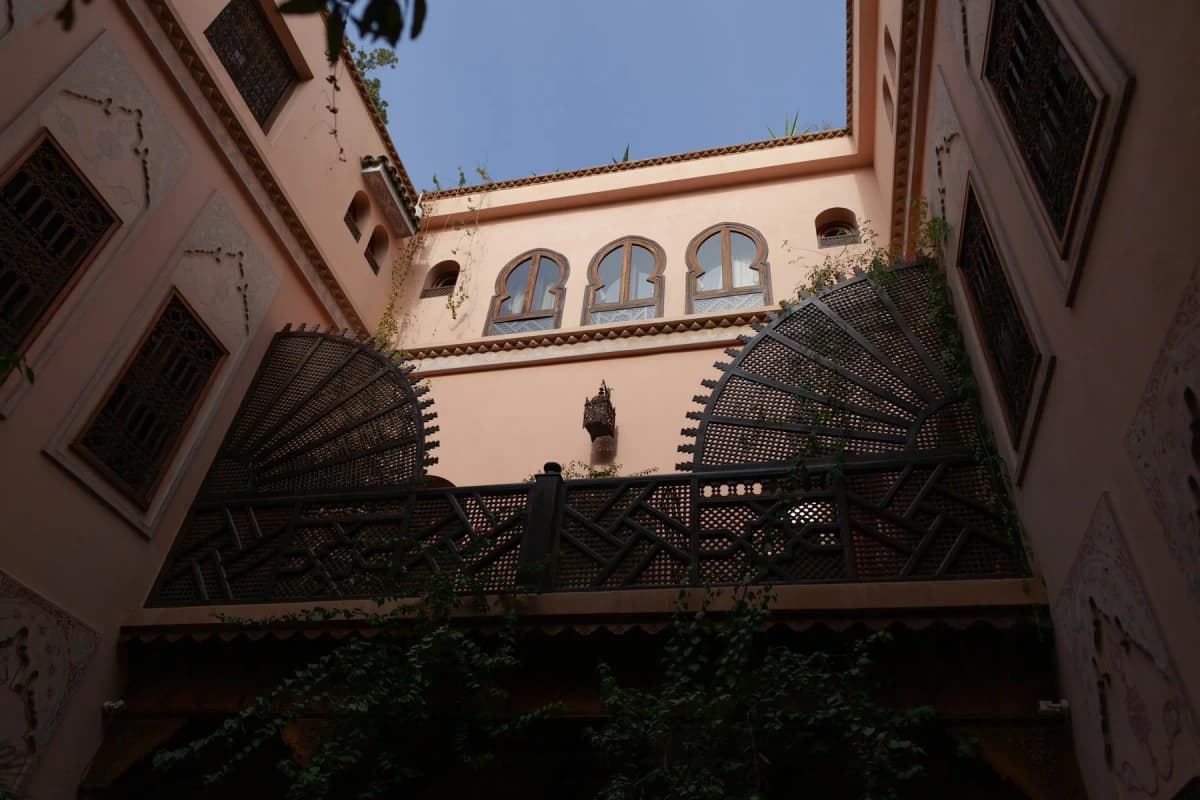 Photo: Simon Gagner on Unsplash
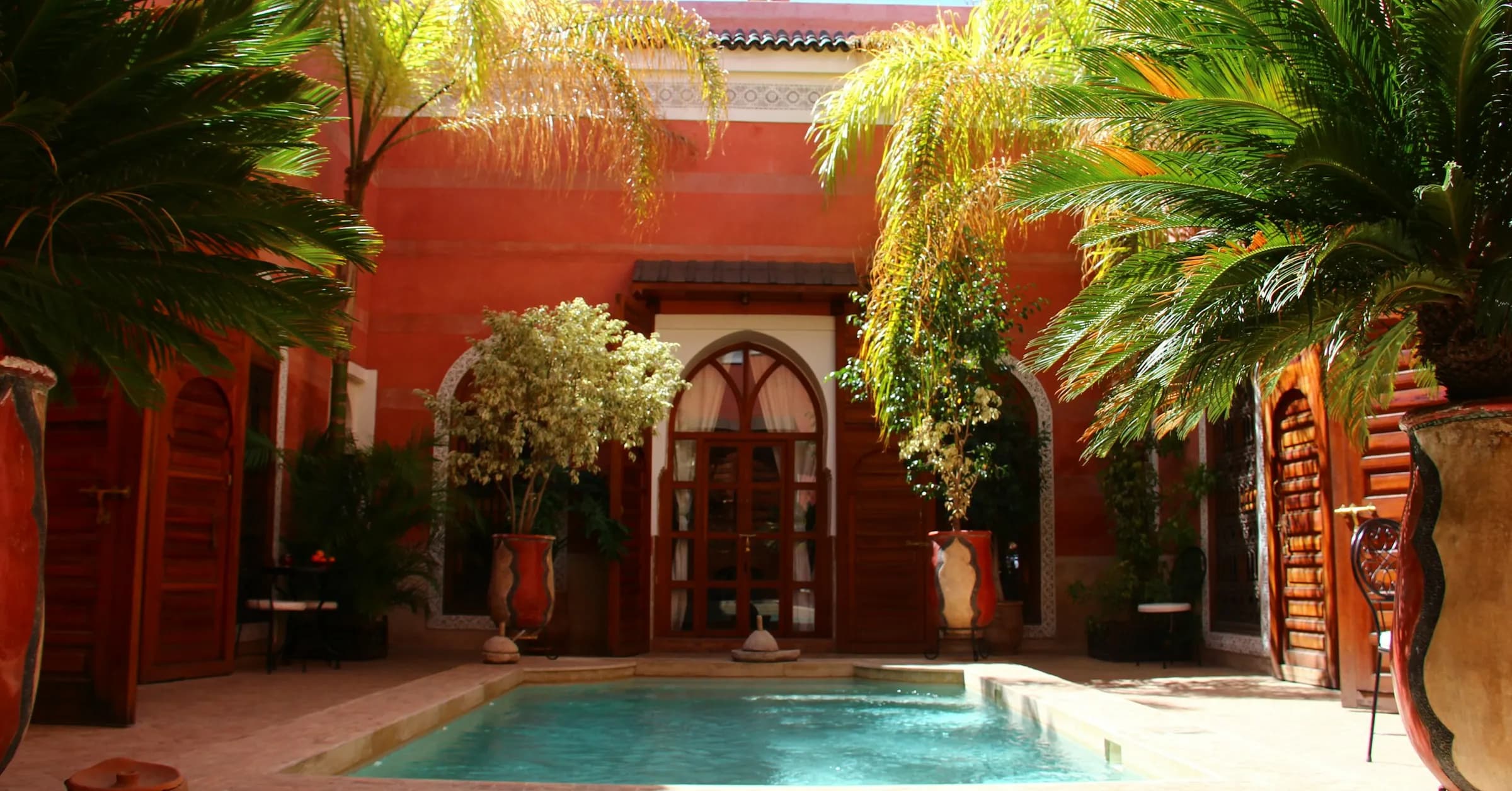
A riad is a traditional townhouse built around an inner courtyard, with plain walls to the street and all the windows facing inwards. Strictly speaking, a riad has a garden in the courtyard and a smaller house without one is a dar, but in practice both words are used for any courtyard guesthouse. Most have between four and ten rooms, a roof terrace where breakfast is served, and a small team who can arrange transfers, dinner and day trips.
- Choose a riad if you want character, personal service and the experience of stepping from a noisy lane into a silent courtyard. For most visitors it's the highlight of staying in Marrakech.
- Choose a hotel if you want a big pool, a gym, a lift, a bar, step-free access or a taxi to the door. Riads have steep stairs, rooms that open onto a shared courtyard (so sound carries), and little natural light on the ground floor.
A good compromise is a riad in the medina for the first nights and a hotel or resort with a pool at the end of the trip.
The 8 best areas to stay in Marrakech
1. Mouassine & the central medina: best for first-timers
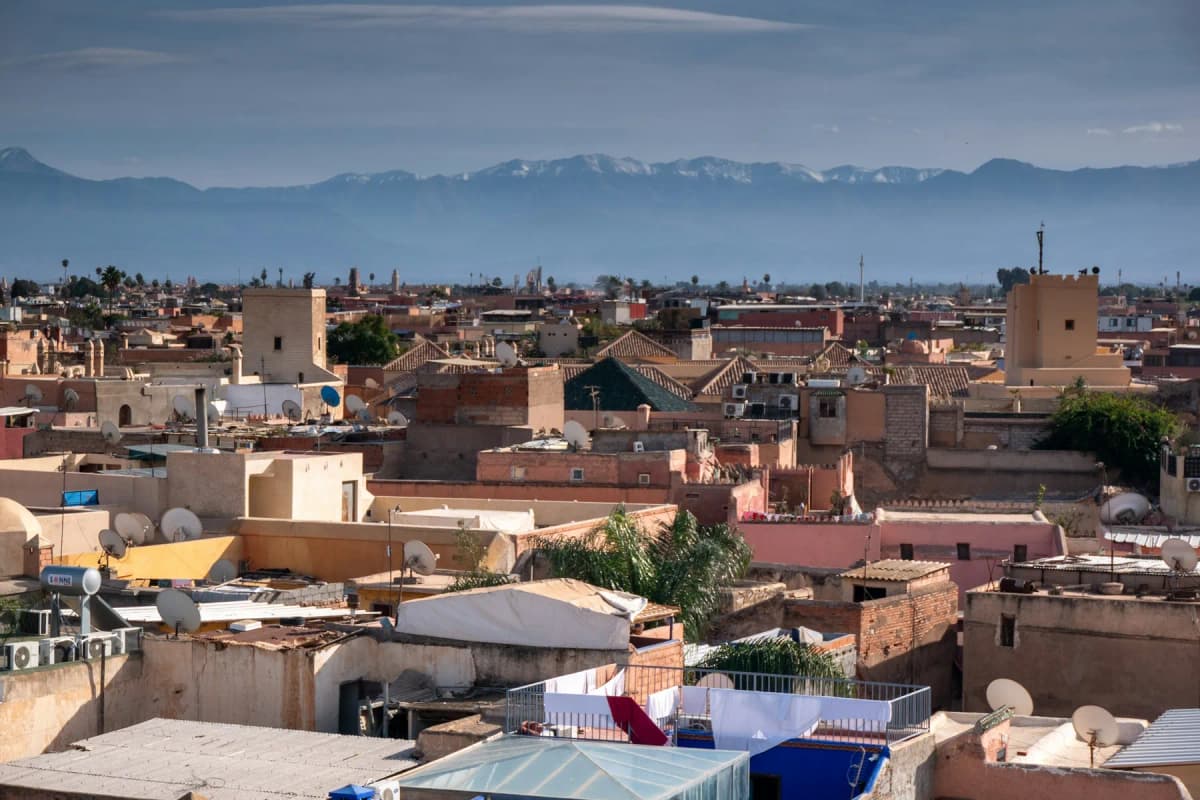 Photo: Gunnar Ridderström on Unsplash
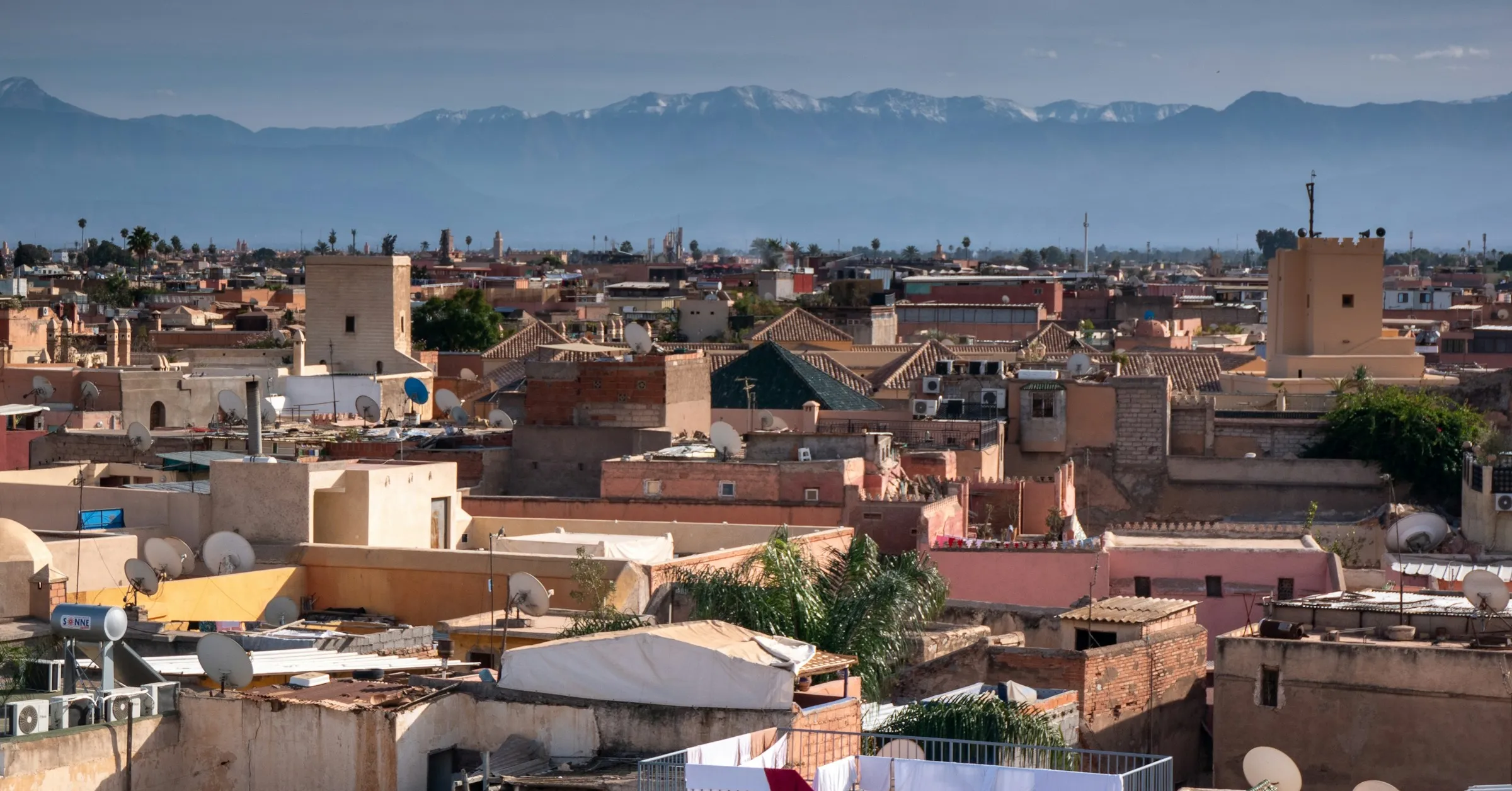
Mouassine sits just north-west of Jemaa el-Fnaa, between the square and the Dar el Bacha museum. It's the part of the medina where restored riads, concept stores, small galleries and rooftop cafés are most concentrated, and it puts you a few minutes on foot from the souks, Le Jardin Secret and the Ben Youssef Madrasa. The lanes here are busy by day but mostly residential, so they calm down quickly after dark.
This is the area we'd suggest to most people visiting for the first time. You can walk to almost everything, there are plenty of places to eat within a few minutes, and the route back from the square is short and well used in the evening.
- Good for: first-time visitors, couples, anyone who wants to walk everywhere.
- Less good for: heavy luggage, limited mobility, light sleepers near a mosque.
- Handy: the nearest taxi drop-offs are around Dar el Bacha and Bab Laksour. Ask your riad which one to use.
2. Riad Zitoun & around Jemaa el-Fnaa: best for short stays
The two parallel streets of Riad Zitoun el Kedim and Riad Zitoun el Jdid run south from Jemaa el-Fnaa towards the Bahia Palace. The lanes between them are packed with small riads, hostels and budget guesthouses, and they are some of the easiest in the medina to navigate because both streets are long, straight and lined with shops.
Staying here puts you midway between the square and the palaces, which is ideal if you only have a night or two. It's also the liveliest and most commercial part of the old city: expect foot traffic until late, mopeds, and more attention from touts than in quieter quarters.
- Good for: one or two-night stays, budget travellers, solo travellers who want busy, well-lit streets.
- Less good for: peace and quiet, anyone who tires of being sold to.
- Handy: airport bus 19 stops near Jemaa el-Fnaa, so this is the simplest area to reach without a taxi.
3. Kasbah & Mellah: best for a calmer medina stay
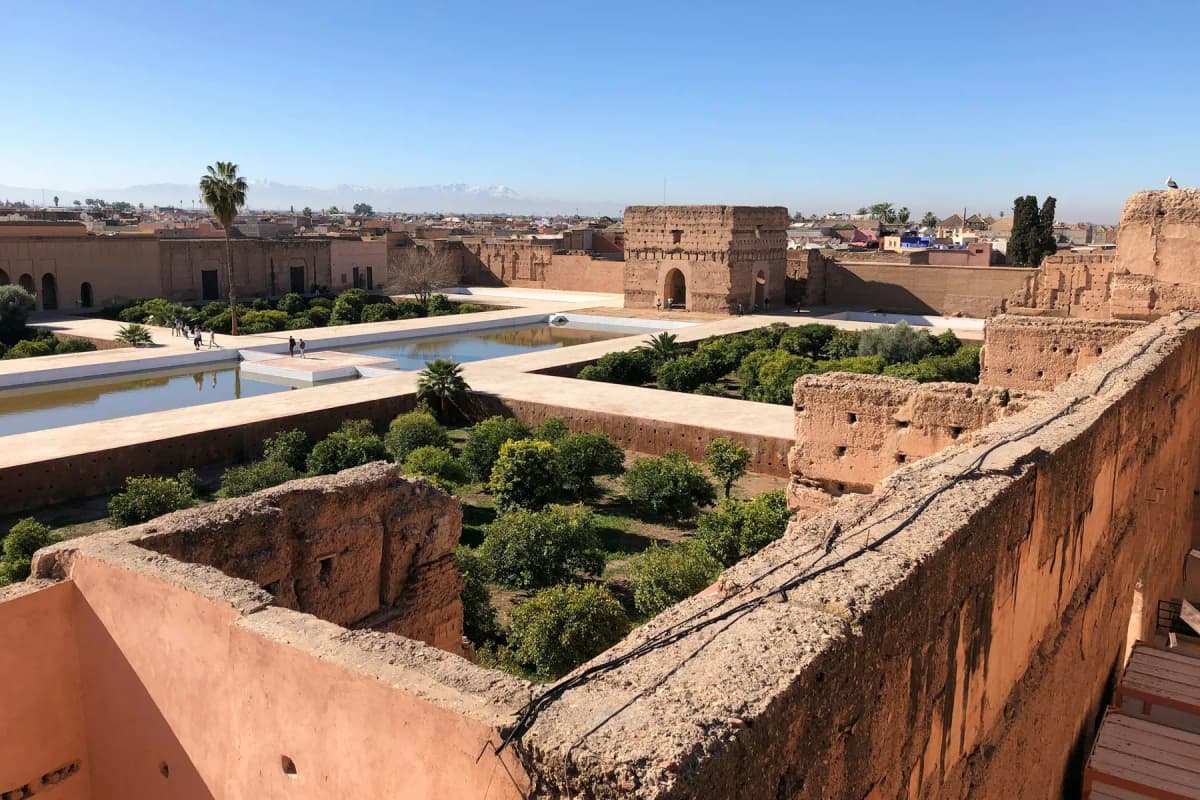 Photo: Jared Lisack on Unsplash
The Kasbah is the old royal quarter at the southern end of the medina, entered through the carved stone gate of Bab Agnaou. The Saadian Tombs and El Badi Palace are here, the Bahia Palace is next door, and the Mellah, the historic Jewish quarter, lies just to the east. Storks nest on the palace walls, the streets are a little wider, and the mood is noticeably more local than around the souks.
The practical advantage is access. Parts of the Kasbah are open to cars, so a taxi can often drop you at or near the door, which is rare inside the walls. Jemaa el-Fnaa is a 10 to 15 minute walk north. Rooms tend to cost less than in Mouassine for a similar standard.
- Good for: a quieter riad stay, easier arrivals, travellers who have been before, value for money.
- Less good for: being in the middle of the souks, late nights.
- Handy: the area around the Saadian Tombs has several good rooftop restaurants with views of the storks and the Atlas.
4. Bab Doukkala & the northern medina: best for value and local life
Bab Doukkala is the gate on the western edge of the medina, on the side that faces Gueliz. The neighbourhood behind it, and the quarters stretching north-east towards the Ben Youssef Madrasa and the shrine of Sidi Bel Abbès, are working residential areas with neighbourhood markets, bakeries and very few souvenir shops. Riads here are often larger and cheaper than those closer to the square.
It suits people who want the medina without the crowds, and it's well placed if you plan to split your time between the old city and the new: the Jardin Majorelle is about 15 minutes' walk from Bab Doukkala. The trade-off is a longer walk, 15 to 20 minutes, to Jemaa el-Fnaa, through lanes that are quiet and dimly lit at night.
- Good for: repeat visitors, longer stays, travellers on a budget who still want a riad.
- Less good for: first-timers nervous about finding their way, anyone who wants restaurants on the doorstep.
- Handy: taxis wait at the gate, and the Dar el Bacha museum and its café are close by.
5. Gueliz: best for restaurants, shopping and longer stays
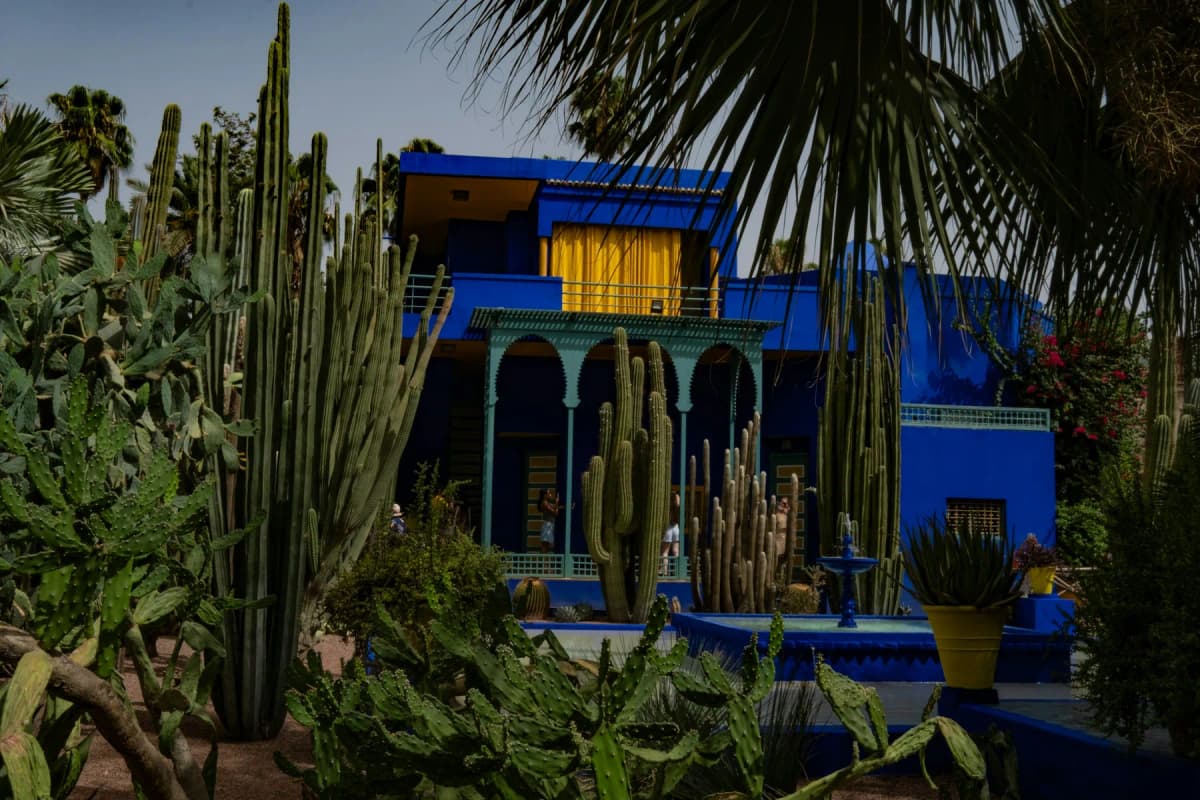 Photo: Riccardo Monteleone on Unsplash
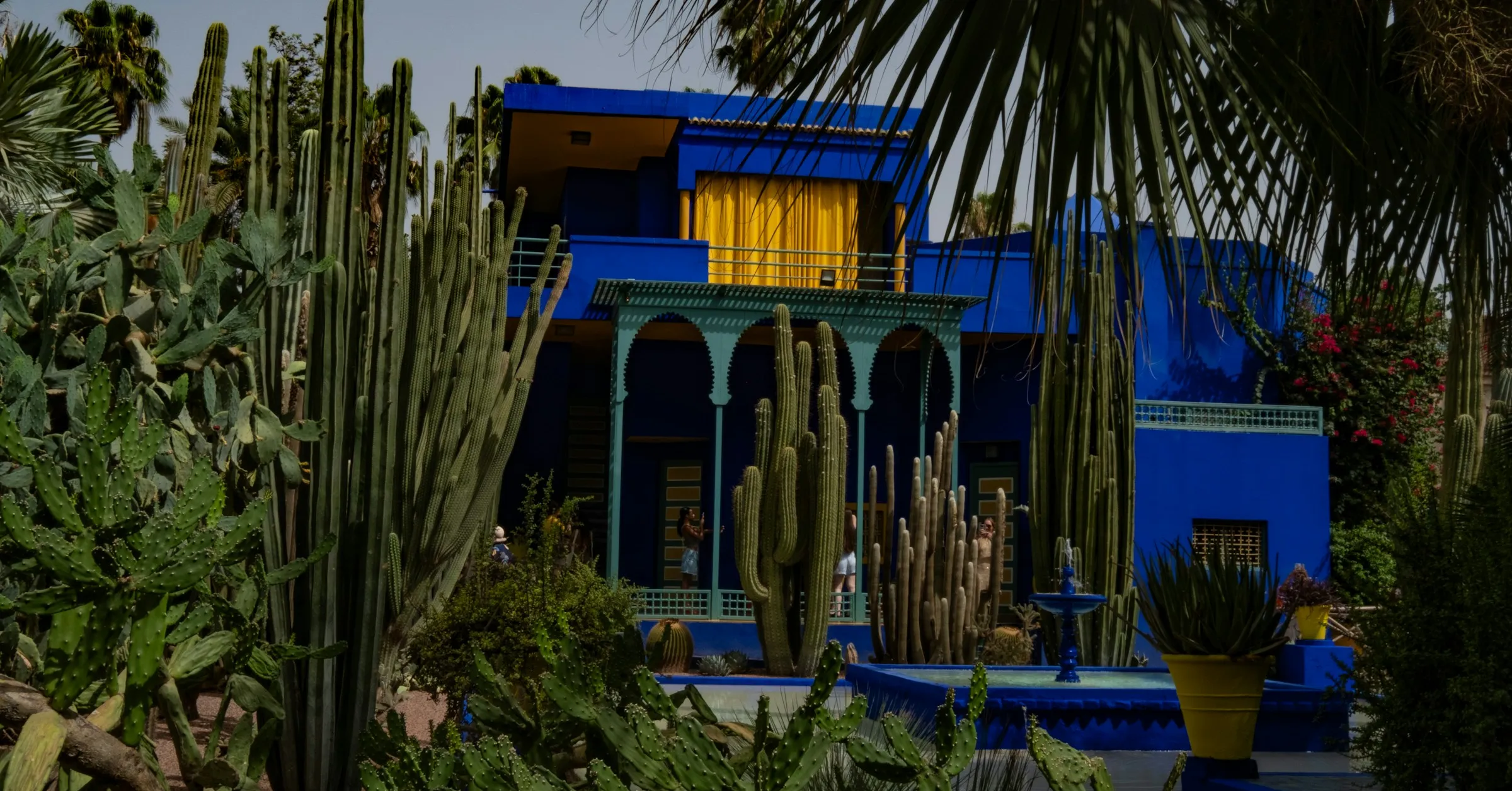
Gueliz is the new town, laid out from 1913 under the French protectorate along what is now Avenue Mohammed V. It has pavements, traffic lights, supermarkets, international shops, art galleries and the city's best choice of modern restaurants, cafés and bars. The Jardin Majorelle and the Yves Saint Laurent Museum are on its northern edge, and the railway station is on its western side.
Accommodation is mostly mid-range hotels and apartments, usually better value than the medina for the same comfort, with lifts, parking and reliable air conditioning. Jemaa el-Fnaa is 25 to 30 minutes on foot down Avenue Mohammed V or a short petit taxi ride.
- Good for: stays of a week or more, remote workers, travellers arriving or leaving by train, anyone who finds the medina overwhelming.
- Less good for: atmosphere. It could be a pleasant district in many cities.
- Handy: petit taxis are everywhere. Insist on the meter or agree the fare before you get in.
6. Hivernage: best for pools, comfort and nightlife
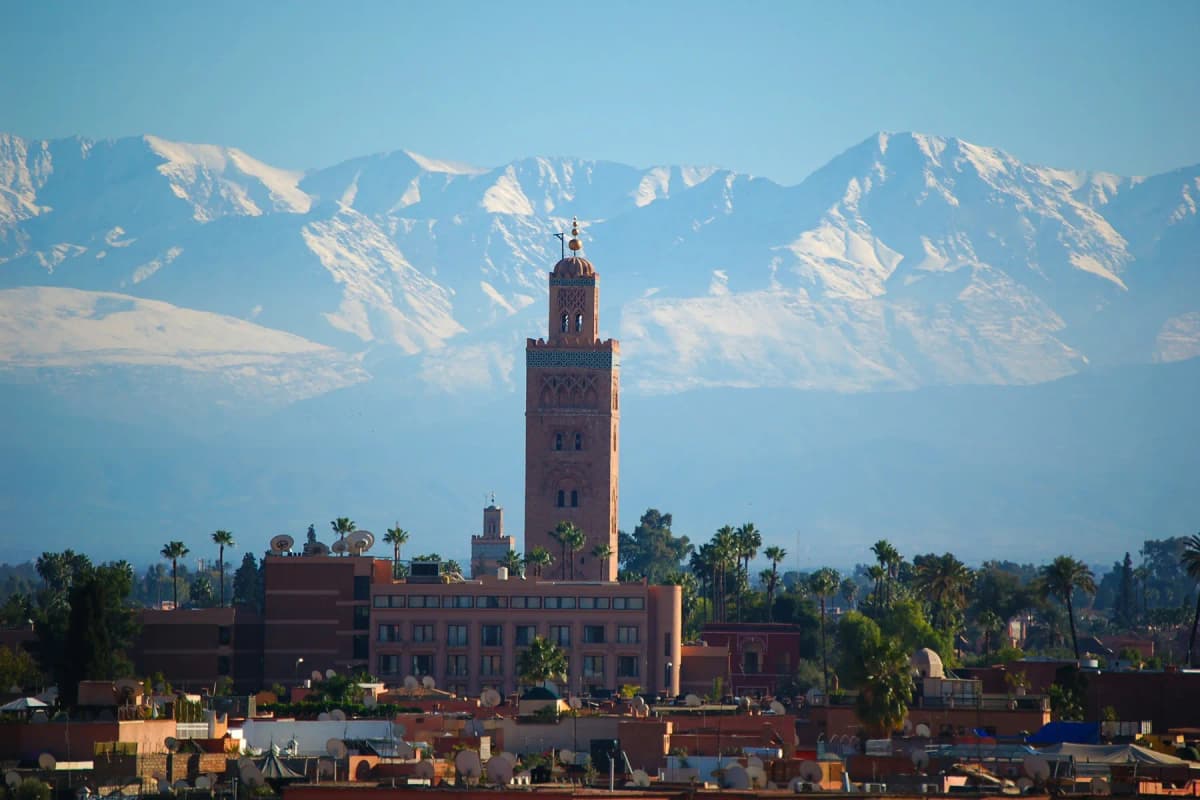 Photo: Paul Macallan on Unsplash
Hivernage is the leafy hotel district between the medina's western wall and the Menara Gardens. This is where most of the city's large four and five-star hotels are, along with its casino, its best-known nightclubs and a number of smart restaurants. The streets are wide, green and quiet by day.
Its real strength is location for a hotel district: the Koutoubia Mosque and Jemaa el-Fnaa are 15 to 20 minutes' walk from the eastern end, and the airport is only about ten minutes by car. You get a proper pool and a bar without being cut off from the old city.
- Good for: couples wanting comfort, summer visits, groups, anyone who wants a large pool within reach of the medina.
- Less good for: local character and budget travellers. Some hotels sit next to clubs, so check recent reviews for noise.
- Handy: many hotels sell day passes for their pools, useful if you're staying in a riad nearby.
7. The Palmeraie: best for families and resort stays
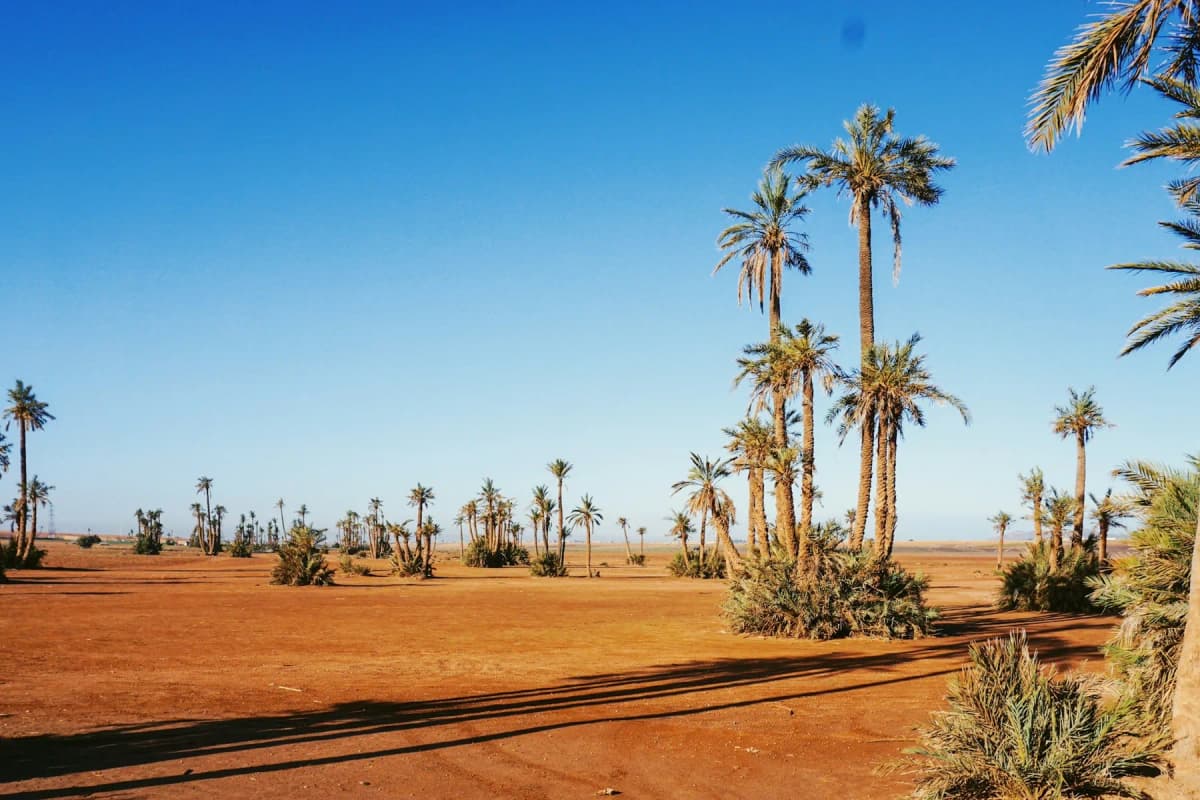 Photo: Danai Tsoutreli on Unsplash
The Palmeraie is a vast palm grove on the north-eastern edge of the city, dotted with resorts, golf courses and private villas set in large gardens. Staying here is a different kind of holiday: big pools, kids' clubs, spas, space to run around and almost total quiet at night.
The cost is distance. The medina is around 20 minutes away by car, there's nothing to walk to outside the gates, and you'll depend on the hotel shuttle or taxis, which adds up over a few days. It works best if you're coming mainly for the resort and treating the medina as an outing.
- Good for: families with young children, summer stays, villa groups, a restful end to a longer Morocco itinerary.
- Less good for: short city breaks, sightseeing-heavy trips, travelling without a budget for taxis.
- Handy: check whether your hotel runs a free shuttle to the medina, and its last return time.
8. Agafay desert: best for a night or two of open space
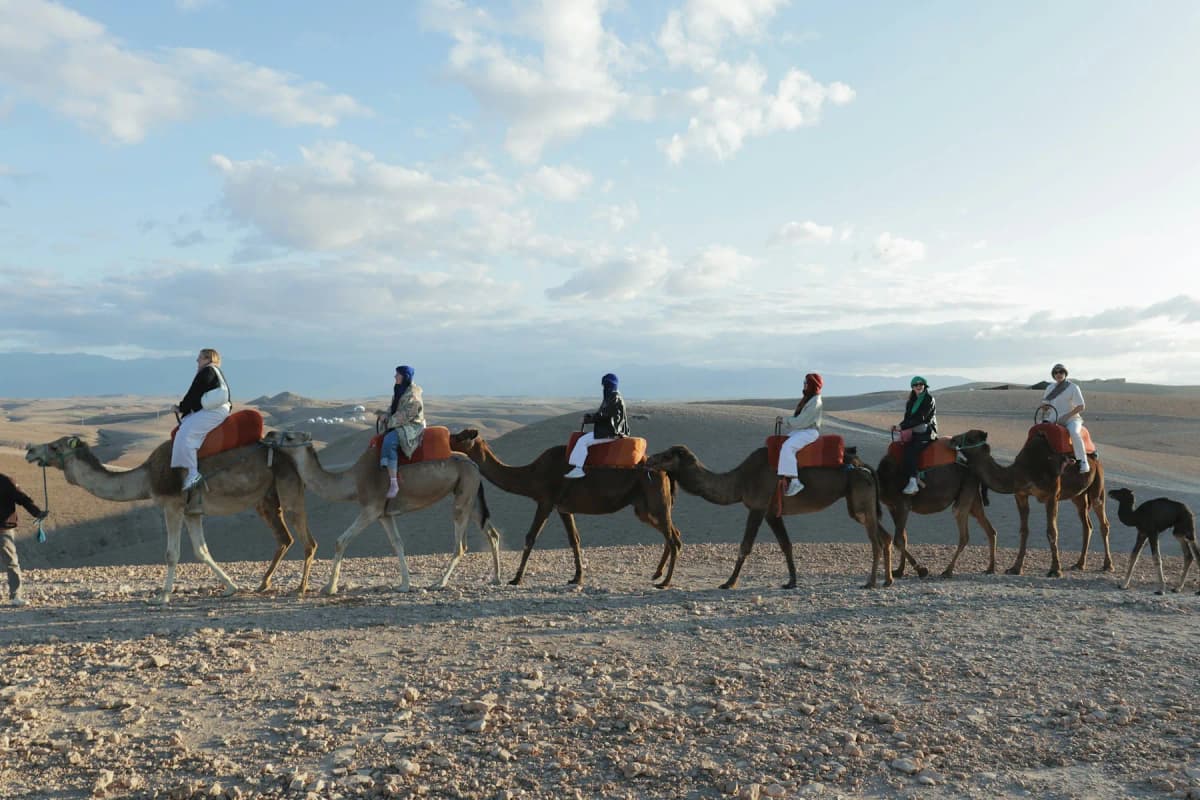 Photo:
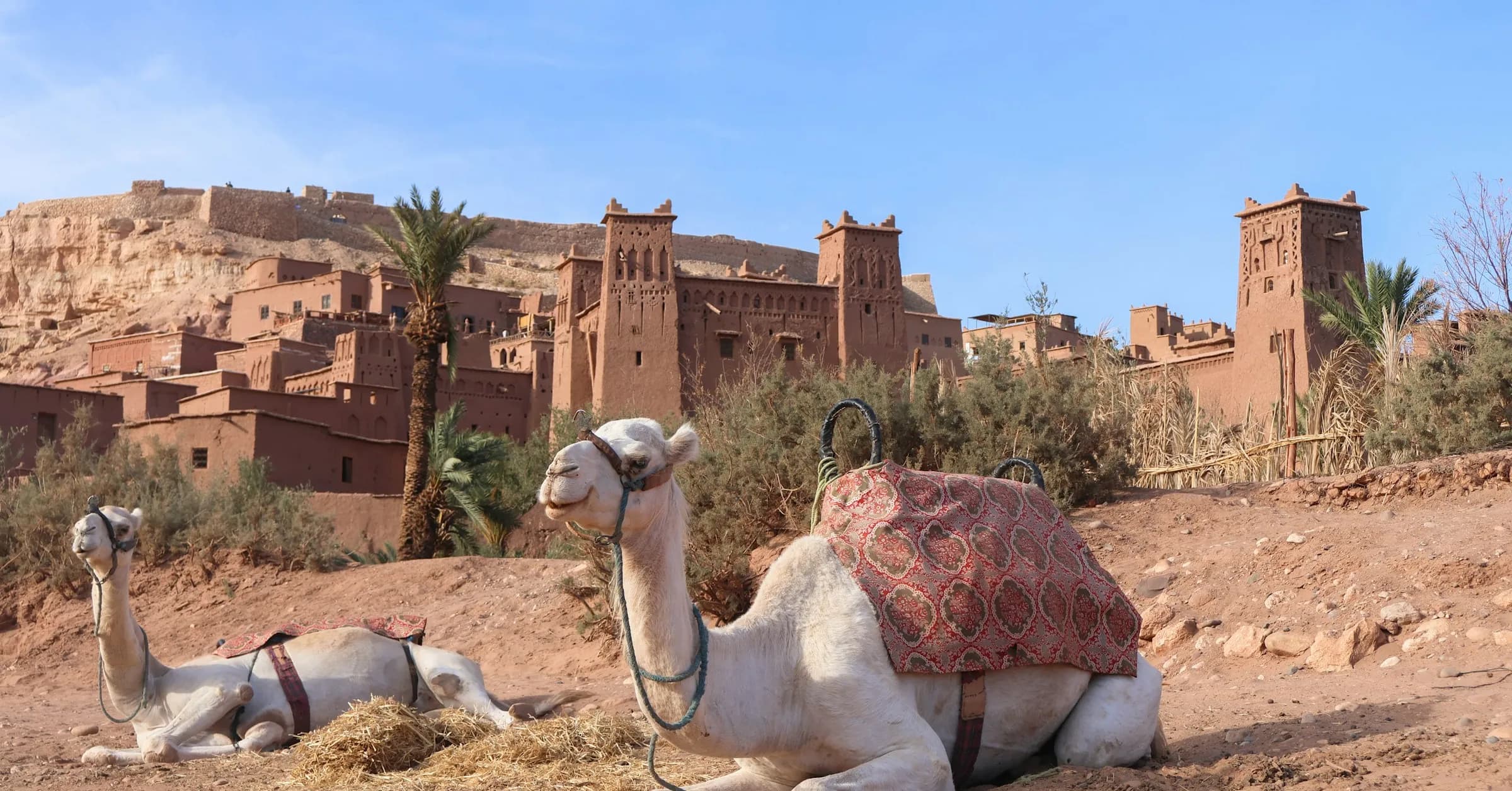
 Agafay is a stony desert plateau about 45 minutes south-west of Marrakech, with the High Atlas along the horizon. It isn't the Sahara, and there are no tall sand dunes, but its tented camps and lodges offer silence, big skies and sunsets that are hard to find in the city. Standards range from simple tents to camps with pools and private bathrooms.
It isn't a base for sightseeing. Treat it as an add-on of one or two nights, usually at the end of a stay. If you don't want to change hotels, an Agafay sunset dinner trip from the city gives you a taste of it in an evening.
- Good for: couples, a special last night, travellers who don't have time for the Sahara.
- Less good for: seeing Marrakech itself, midsummer (very hot by day) and midwinter (very cold at night).
- Handy: camps arrange their own transfers. Confirm the price when you book.
Where to avoid staying in Marrakech
Marrakech has no tourist areas that are dangerous to stay in, but a few choices lead to a worse trip:
- Deep in the medina on a first visit. A riad 20 minutes from any gate, down a string of unlit lanes, is hard to find and tiring to return to at night. If you book one, make sure the riad will send someone to meet you.
- Right on Jemaa el-Fnaa if you sleep lightly. The square is loud with drums and crowds until late.
- Sidi Youssef Ben Ali and the outer suburbs. Cheap apartments here appear on booking sites, but these are ordinary residential districts well outside the walls, with nothing for visitors.
- Route de l'Ourika or Route d'Amizmiz hotels, unless you want a resort. Some are lovely, but they are 20 to 30 minutes from the centre, and the listing may only say "Marrakech".
- The Palmeraie for a two-night city break. You'll spend too much of it in taxis.
Getting from Marrakech Airport to your hotel
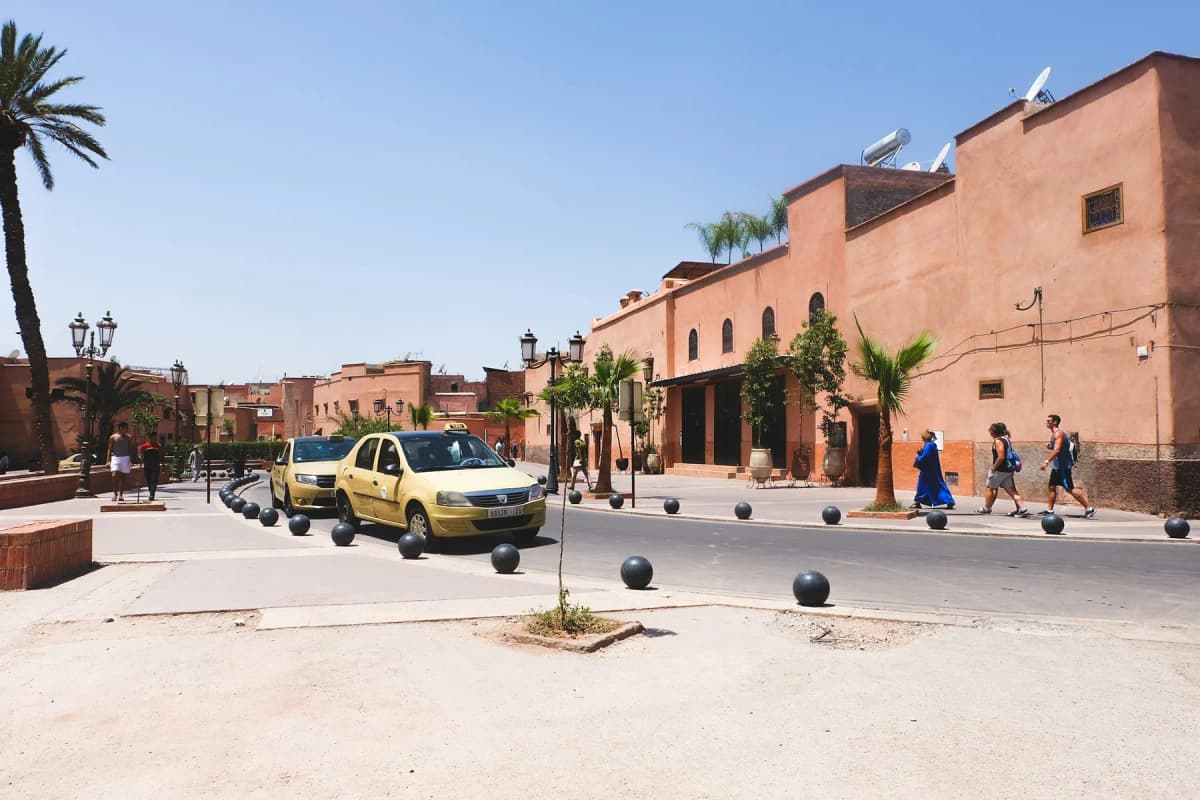 Photo: Vanessa Zhu on Unsplash
Marrakech Menara Airport (RAK) is about 6 km from the medina, so transfers are short: roughly 10 minutes to Hivernage, 15 to 20 to Gueliz and the medina gates, and 25 to 30 to the Palmeraie.
- Pre-booked transfer. The least stressful option, especially for a medina riad. A fixed-price airport transfer means no negotiating in the arrivals hall, and most riads can also send a driver who hands you over to a porter at the gate.
- Airport taxi. Official fares to the medina and Gueliz are posted at the taxi rank and are roughly 70 to 100 MAD by day and more at night, with the Palmeraie around 200 to 250 MAD. Drivers often ask for more, so point to the board and agree the price before you get in.
- Bus 19. The airport bus runs to Jemaa el-Fnaa and on to Gueliz for about 30 MAD. It's fine for the Riad Zitoun area and Gueliz hotels, less so if your riad is a long walk from the square.
For the medina, tell your riad your arrival time and ask where to be dropped. Porters with handcarts wait at the main gates and will take your bags for a small fee, usually 20 to 50 MAD depending on distance. A Morocco eSIM set up before you land makes it far easier to follow a map through the lanes and to call your riad if you get lost.
Still comparing dates? Check flight prices to Marrakech here:
Tips before you book a Marrakech riad or hotel
- Budget for the tourist tax. Accommodation in Marrakech charges a per-person, per-night tax that is rarely included in the online price. It varies with the category of the property, from roughly 10 to 40 MAD per adult per night, and is normally paid in cash at check-out.
- Book early for spring, autumn and New Year. March to May, October and the Christmas holidays are the busiest periods, and the best small riads sell out months ahead.
- Read recent reviews for the route, not only the room. Look for comments about how easy the riad was to find and whether staff met guests on arrival.
- Ask for an upstairs room. Ground-floor rooms open directly onto the courtyard and are darker and noisier. Upper rooms get more light and privacy.
- Carry cash. Many riads prefer cash for the tourist tax, dinners and transfers, and some add a fee for cards.
- Book dinner at the riad for your first night. After a flight and a walk through the lanes, eating in is easier than finding a restaurant in the dark, and riad cooking is often excellent.
- Sort out insurance before you go. A policy from a provider such as EKTA covers medical care and cancellations.
Once you've chosen a base, a Marrakech cooking class or an evening street food tour is a good way to get your bearings in the medina early in the trip.
Frequently asked questions
What is the best area to stay in Marrakech?
For most visitors it's the medina, and within it the area around Mouassine or the Kasbah. Both put you within walking distance of the main sights while staying calmer than the streets around Jemaa el-Fnaa. If you'd rather have a hotel with a large pool, choose Hivernage.
Is it better to stay in the medina in Marrakech?
For a first visit of a few nights, yes. The medina is where the souks, palaces and Jemaa el-Fnaa are, and staying in a riad is part of the experience. The new town is better for longer stays, summer heat, or travellers who want modern comforts and easy transport.
Is it better to stay in a riad or a hotel in Marrakech?
A riad offers more character and personal service, and it's the classic choice. A hotel is better if you need a full-size pool, a lift, a bar or step-free access. Many travellers do both, with a riad first and a pool hotel to finish.
Is 3 nights in Marrakech enough?
Three nights gives you two full days, which is enough for the souks, Jemaa el-Fnaa, the main palaces and the Jardin Majorelle. Add a fourth night if you want a day trip to the Atlas mountains, Essaouira or the Agafay desert.
Where should couples stay in Marrakech?
A small riad in Mouassine or the Kasbah for the atmosphere and rooftop dinners, or a Hivernage hotel for a pool and cocktails. For a special occasion, add a final night in an Agafay desert camp.
Where should families stay in Marrakech?
A Palmeraie resort or a Hivernage hotel, both of which have large pools and space for children. Families who want the medina should look for a riad in the Kasbah, where taxis can get close, and check that the courtyard pool and stairs are safe for small children.
Is the medina safe at night?
The main routes between Jemaa el-Fnaa and the popular riad areas stay busy and are generally safe in the evening. Quieter lanes empty out after about 22:00, so learn your route in daylight, keep a map on your phone, and ignore anyone who tells you a street is closed or offers to guide you.
Where should solo female travellers stay in Marrakech?
A well-reviewed riad close to a main lane in Mouassine or Riad Zitoun, where the walk home is short and well used. Riad staff are a real asset: they can book reliable taxis and guides and will often walk you to a restaurant on your first evening.
How we researched this guide
This guide is based on research using official sources such as the Moroccan National Tourist Office, ONDA, which runs Marrakech Menara Airport, and the UNESCO World Heritage listing for the medina of Marrakech, plus current traveller feedback and search trends. Taxi fares, the tourist tax and bus prices were checked in October 2026 and can change, so always confirm before you travel. Found something out of date? Let us know.
Planning more of Morocco? Browse all our Morocco guides, see the best things to do in Marrakech, plan the route with our Morocco itinerary, or pick your next stop from the best places to visit in Morocco.