20 Best Things to Do in Marrakech (2026 Guide)
October 3, 2026 · Morocco
This post contains affiliate links. We may earn a commission if you book through them, at no extra cost to you. Disclaimer.
The best things to do in Marrakech fit into a surprisingly small area. Almost everything a first-time visitor wants to see, from the square of Jemaa el-Fnaa to the souks, the Bahia Palace and the Saadian Tombs, sits inside the old walled medina, within a 20-minute walk of each other. Add Jardin Majorelle just outside the walls, a hammam, a rooftop dinner and one day trip into the desert or the mountains, and you have a full, varied stay.
This guide covers 20 things to do in Marrakech, with opening hours and entry prices checked in October 2026, what each one is like in practice, and how to fit them into two or three days. If Marrakech is one stop on a longer trip, our things to do in Morocco guide covers the rest of the country, and our Morocco itinerary shows how many days to give each place.
Things to do in Marrakech at a glance
| Thing to do | Area | Price (2026) | Time needed |
|---|---|---|---|
| Jemaa el-Fnaa at night | Medina centre | Free | An evening |
| The souks | North of Jemaa el-Fnaa | Free | Half a day |
| Jardin Majorelle | Gueliz, outside the walls | 170 MAD, online only | 1–2 hours |
| Bahia Palace | Kasbah / Mellah | 100 MAD, cash | 1 hour |
| El Badi Palace | Kasbah | 100 MAD | 1 hour |
| Saadian Tombs | Kasbah | 100 MAD | 30–45 minutes |
| Ben Youssef Madrasa | North medina | 50 MAD, cash | 1 hour |
| Le Jardin Secret | North medina | 100 MAD (+40 MAD tower) | 1 hour |
| Hammam | Everywhere | 10–40 MAD public; 290–990 MAD spa | 1–2 hours |
| Agafay desert | 45 minutes away | Tour or transfer | Half a day |
| Essaouira day trip | Atlantic coast | Tour | Full day |
1. Watch Jemaa el-Fnaa come alive after dark
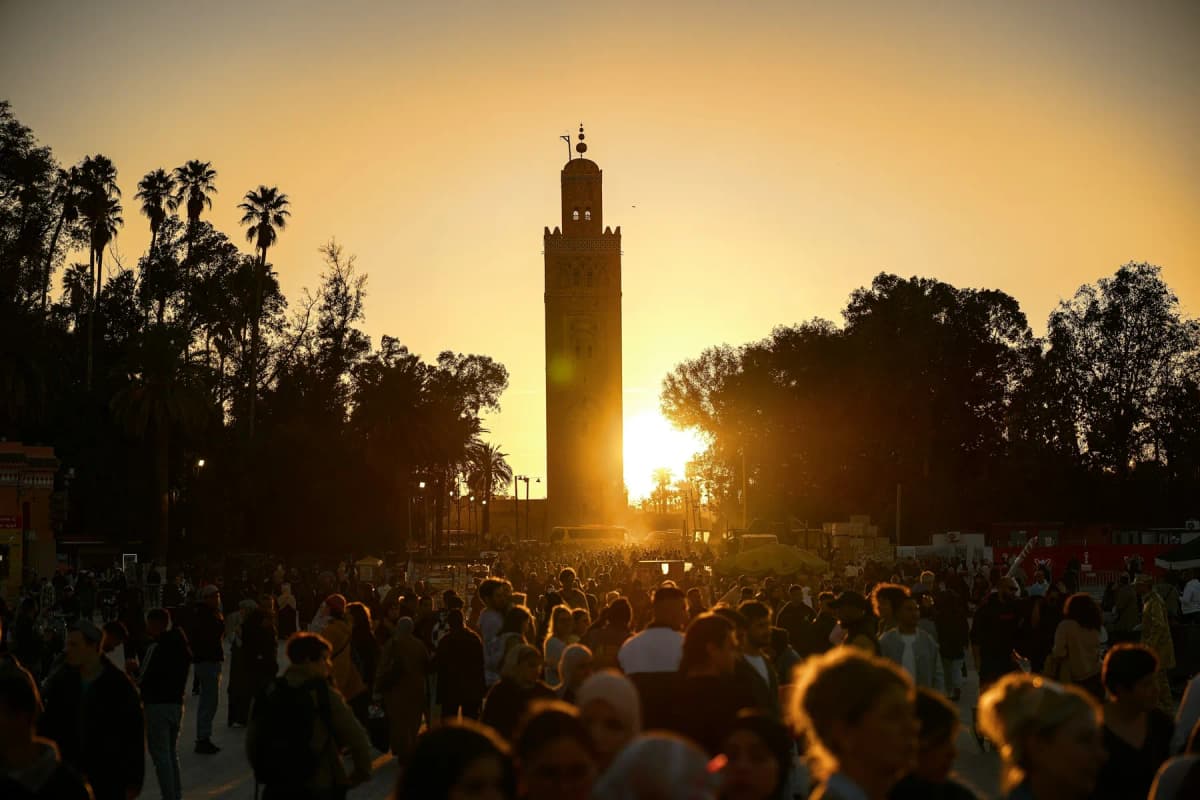 Photo:
 Jemaa el-Fnaa is the big open square at the heart of the medina, and it changes completely through the day. In the morning it's a fairly quiet space with orange-juice carts and a few henna artists. By late afternoon the musicians, storytellers and acrobats arrive, and as the light goes, rows of food stalls are wheeled out, benches go up and the smoke from the grills drifts over the crowds.
The best way to see it is to arrive just before sunset, watch from a café terrace on the edge of the square while the stalls set up, then go down and walk through it. Eat at a stall that's busy with locals, where the food turns over fast.
- Cost: free. Performers expect a small tip (10–20 MAD) if you stop to watch or take a photo.
- Tip: the snake charmers and monkey handlers will ask for money for photos, often more than you'd expect. If you'd rather not support them, keep your camera down and walk on.
- Watch out for: pickpockets in the evening crowds. Keep your phone in a front pocket.
2. Get lost in the souks
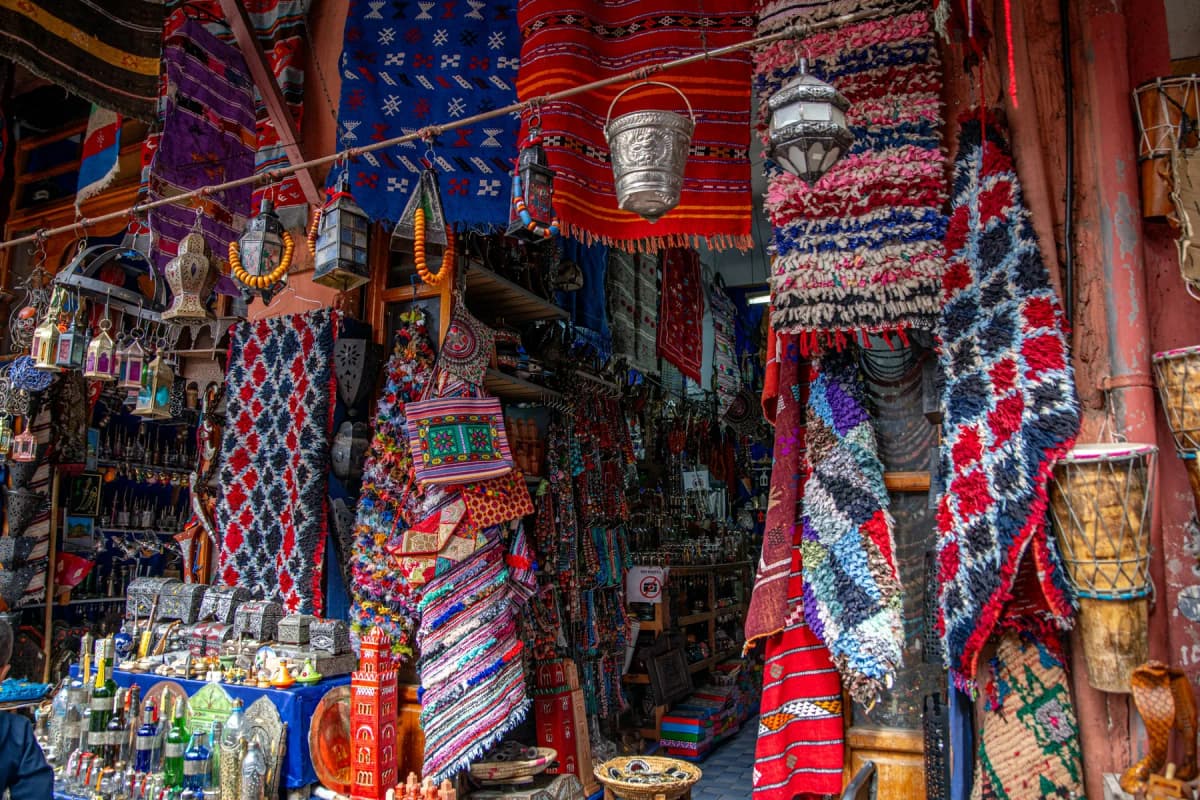 Photo:
 North of Jemaa el-Fnaa, the souks spread out in a tangle of covered lanes, each area traditionally given to one trade. Souk Semmarine is the main artery, lined with textiles and slippers. Off it you'll find the dyers' souk with skeins of wool drying overhead, the metalworkers hammering lanterns, leather and babouche sellers, and the open Rahba Kedima square with its spices, baskets and straw hats.
You will get lost, and that's fine. When you want to get out, ask any shopkeeper for "Jemaa el-Fnaa" or follow the general flow of people heading south. Mornings are calmer for browsing; late afternoon is busier and more atmospheric.
- Cost: free, apart from what you buy.
- Haggling: expected. Decide what something is worth to you before asking the price, and stay friendly. Walking away politely is part of the process, not an insult.
- Tip: if someone tells you a street is "closed" and offers to show you the way, it isn't. Thank them and carry on.
3. Book ahead for Jardin Majorelle and the YSL Museum
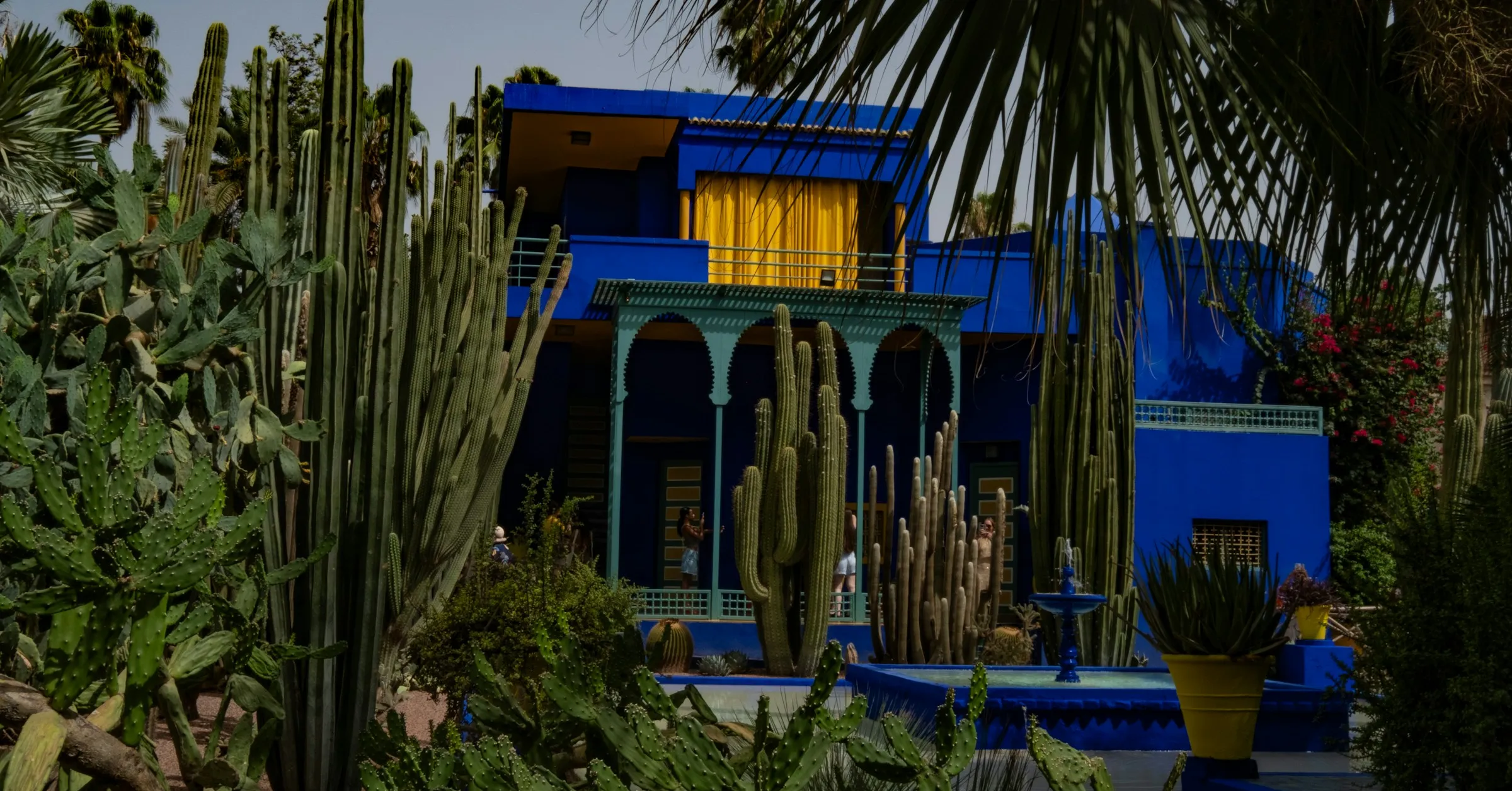
Jardin Majorelle is the garden the French painter Jacques Majorelle spent decades creating, later bought and restored by Yves Saint Laurent and Pierre Bergé. It's small, but the combination of bamboo, cacti, lily ponds and that intense cobalt blue (the colour now carries Majorelle's name) makes it one of the most photographed places in Morocco. Inside the garden is the small Pierre Bergé Museum of Berber Arts.
Next door, the Musée Yves Saint Laurent shows the designer's work and his long relationship with Marrakech.
- Cost: 170 MAD for the garden in 2026.
- Hours: garden 8:00–18:30 (last entry 18:00); YSL Museum 10:00–18:00, closed Wednesdays.
- Book: tickets are sold online only, for a set time slot, on the official ticket site. The garden says only tickets bought there are valid, so avoid resellers.
- Tip: take the first slot of the day. By late morning the paths are full of tour groups.
4. See the courtyards of the Bahia Palace
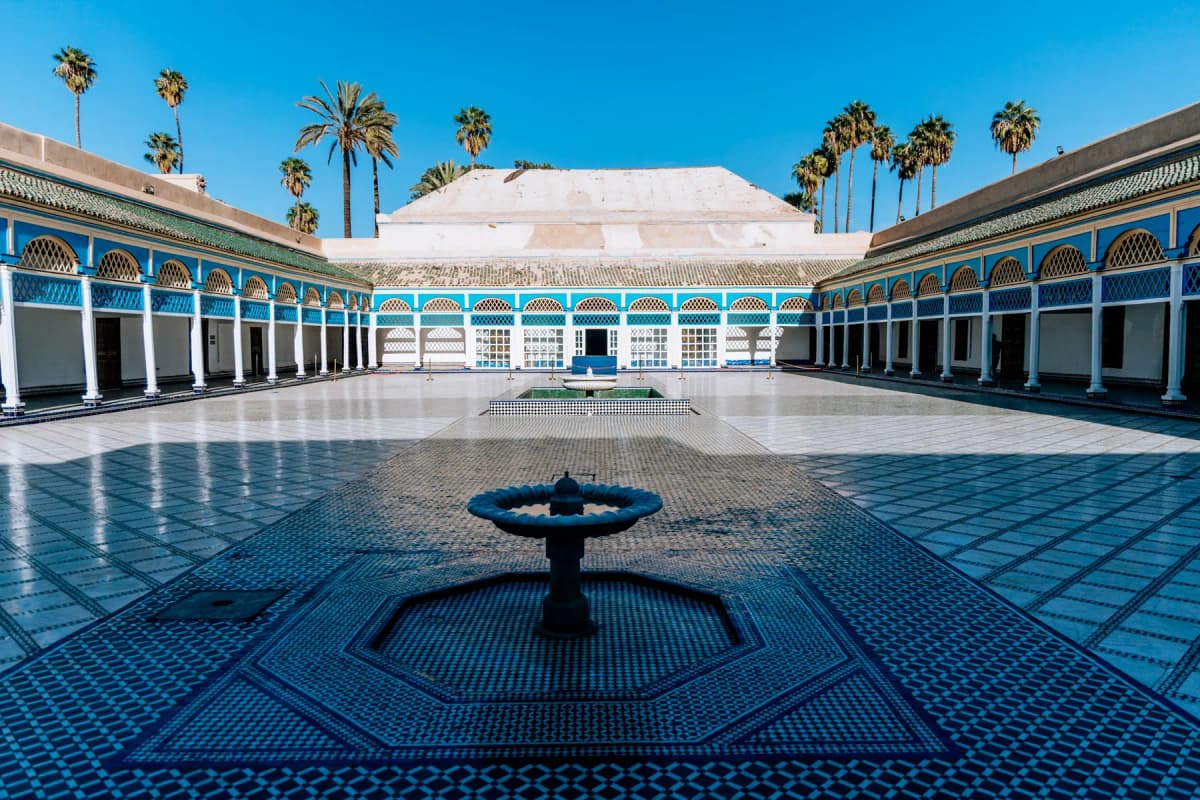 Photo: Youssef Taghlaoui on Unsplash
The Bahia Palace was built in the late 19th century for the grand viziers of the sultan, and it's the best place in Marrakech to see Moroccan decorative craft at full stretch: painted cedar ceilings, carved stucco, zellige tilework and a huge marble courtyard. The rooms are empty of furniture, so the visit is really about the surfaces and the light.
- Cost: 100 MAD, cash.
- Hours: 9:00–17:00.
- Tip: it's one of the busiest sights in the city. Go at 9:00 or in the last hour, and combine it with El Badi and the Mellah, which are all a few minutes apart.
5. Walk the ruins of El Badi Palace
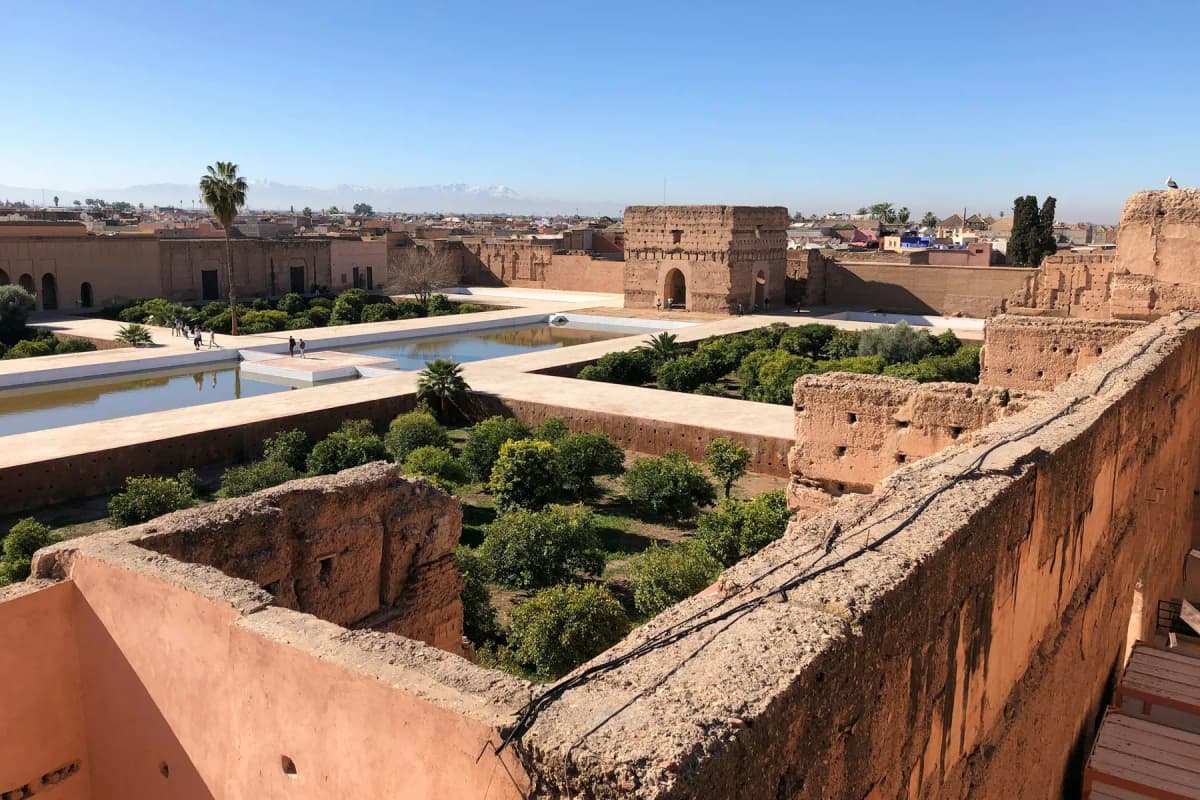 Photo: Jared Lisack on Unsplash
Where the Bahia is about detail, El Badi is about scale. The Saadian sultan Ahmad al-Mansur built it in the late 16th century as a showpiece palace; a later ruler stripped it of its marble and gold to decorate his own capital at Meknes. What's left is a vast courtyard of sunken orange gardens and pools, surrounded by high earth walls where storks nest.
Climb up to the ramparts for one of the best free-standing views over the medina rooftops to the Atlas mountains. Don't miss the separate room holding the original carved minbar (pulpit) of the Koutoubia Mosque, a 12th-century masterpiece of woodwork.
- Cost: 100 MAD for foreign adults.
- Hours: 9:00–17:00 daily.
- Tip: there's very little shade. Bring water and a hat, and avoid midday in summer.
6. Visit the Saadian Tombs early
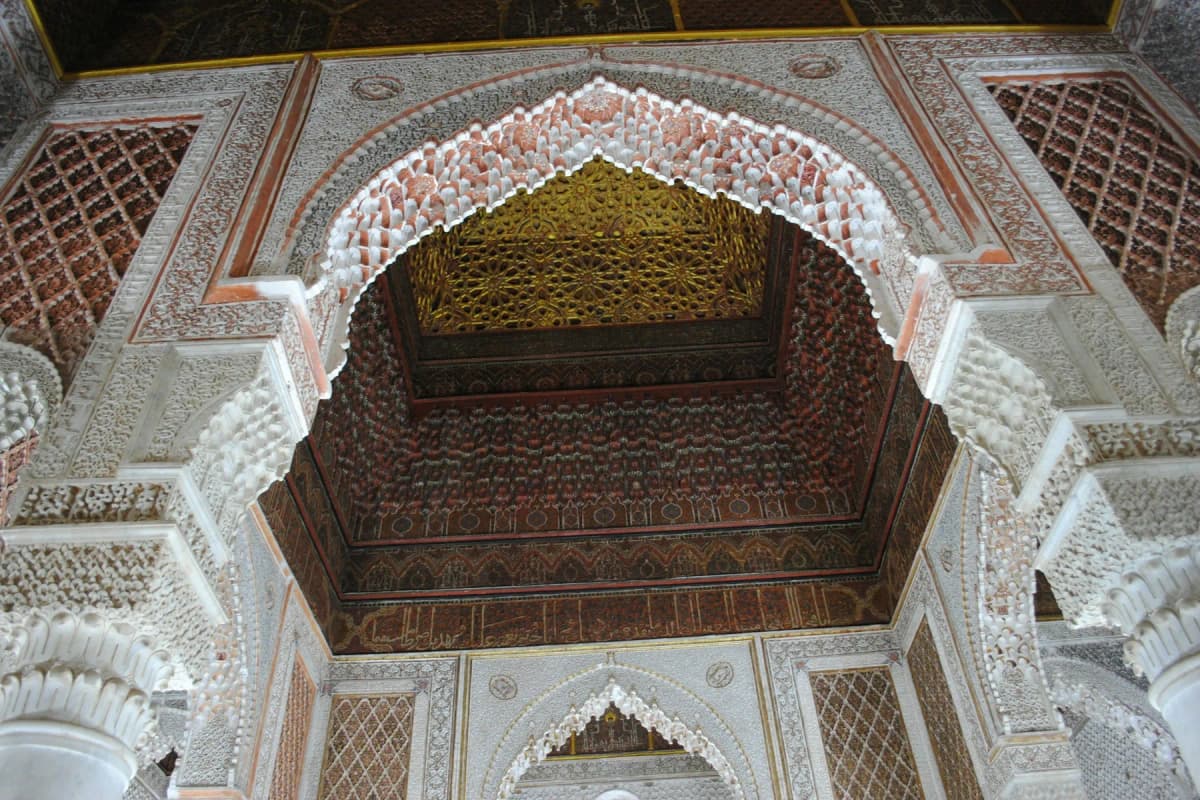 Photo:
 The Saadian Tombs hold members of the same dynasty that built El Badi, and were sealed off and forgotten for centuries before being rediscovered in the early 20th century. The highlight is the Hall of the Twelve Columns, with Italian marble pillars and dense stucco work. You view it from the doorway rather than walking in, which is why a queue builds quickly.
- Cost: 100 MAD (children 50 MAD).
- Hours: 9:00–17:00 daily.
- Tip: be there at opening time. The visit itself takes 30 minutes; the wait later in the day can take longer.
7. Admire the tilework at the Ben Youssef Madrasa
The Ben Youssef Madrasa was once one of the largest Islamic colleges in North Africa, and its central courtyard, with a long reflecting pool framed by zellige, carved stucco and cedar, is the single most beautiful space in the medina. Upstairs you can look into the tiny student cells that ring the courtyard. We cover it in more detail in our things to do in Morocco guide.
- Cost: 50 MAD, cash.
- Hours: 9:00–19:00.
- Tip: the light on the courtyard is softest in the late afternoon, and the crowds thin after 17:00.
8. Find calm in Le Jardin Secret
A few minutes from Ben Youssef, Le Jardin Secret is a restored riad garden in two parts: an exotic garden with plants from around the world, and an Islamic garden laid out in the traditional four-part pattern around water channels. After an hour in the souks, it's the easiest place in the medina to sit down in the quiet.
- Cost: 100 MAD, plus 40 MAD to climb the tower for a view over the rooftops.
- Book: if you'd like context for both, this Ben Youssef and Le Jardin Secret walking tour covers the madrasa, the garden and the souks in between with a guide.
9. See the Koutoubia minaret, especially at sunset
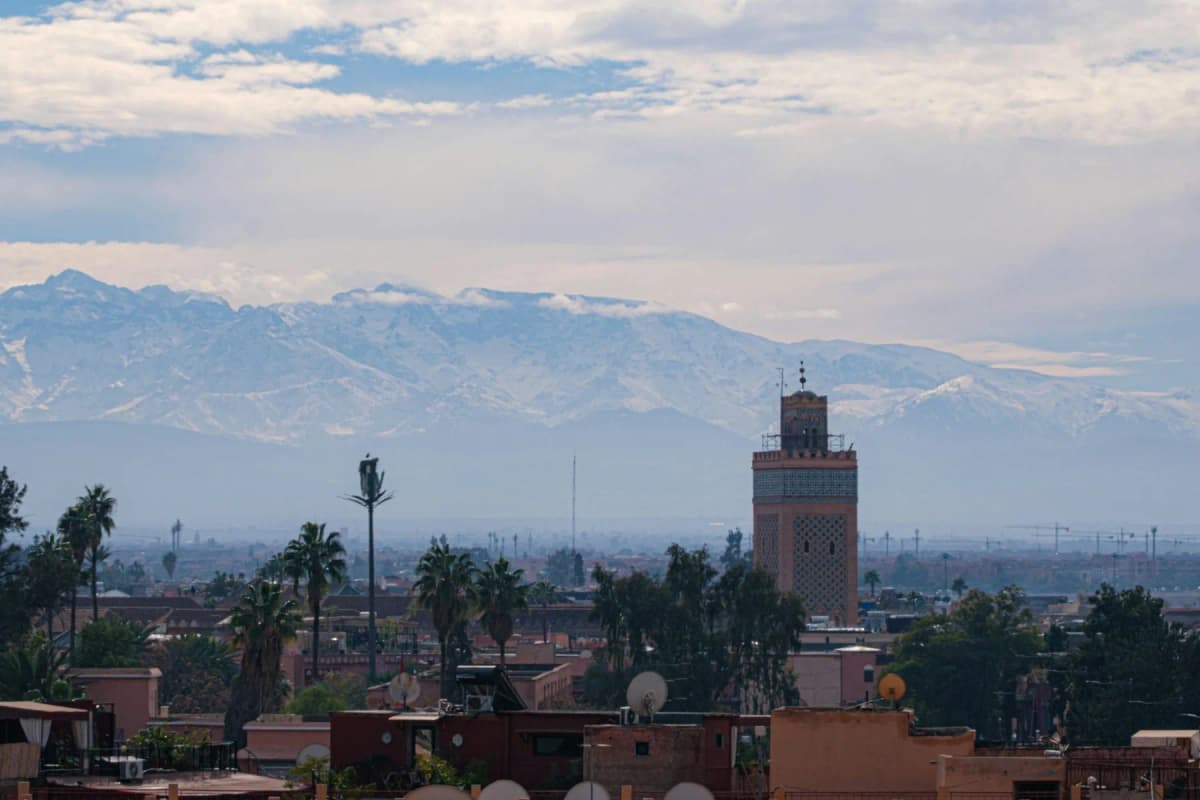 Photo: Nichika Sakurai on Unsplash
The 12th-century minaret of the Koutoubia Mosque, about 77 metres tall, is the landmark you'll navigate by all week. Non-Muslims can't enter the mosque, but you can walk around it and through the rose gardens beside it for free. On clear winter days you'll see the snowy High Atlas behind it.
- Cost: free.
- Tip: come back at dusk, when the call to prayer rings out from the minaret and the stone glows orange, then walk five minutes to Jemaa el-Fnaa for dinner.
10. Have coffee at Dar el Bacha
Dar el Bacha was built in the early 20th century for Thami El Glaoui, the powerful pasha of Marrakech, and is now the Musée des Confluences, with rotating exhibitions in beautifully restored rooms and courtyards. Most visitors come for Bacha Coffee, the elegant café inside, which serves coffee from dozens of origins in a grand tiled room.
- Cost: a modest entry fee, cash only.
- Hours: 10:00–18:00, closed Mondays.
- Tip: the café queue can be long, sometimes an hour or more. Arrive at opening or late in the afternoon, and see the museum while you wait.
11. Explore the Mellah
South of the Bahia, the Mellah is Marrakech's old Jewish quarter, founded in the 16th century. It's less polished than the souks to the north, with a busy covered spice and food market, jewellers' workshops and narrow residential lanes. The restored Lazama Synagogue and the large Miaara Jewish cemetery tell the story of a community that once numbered in the tens of thousands.
- Cost: free to walk around; a small fee for the synagogue and cemetery.
- Tip: dress modestly and check opening times locally, as both close on Saturdays and Jewish holidays.
12. Eat dinner on a rooftop terrace
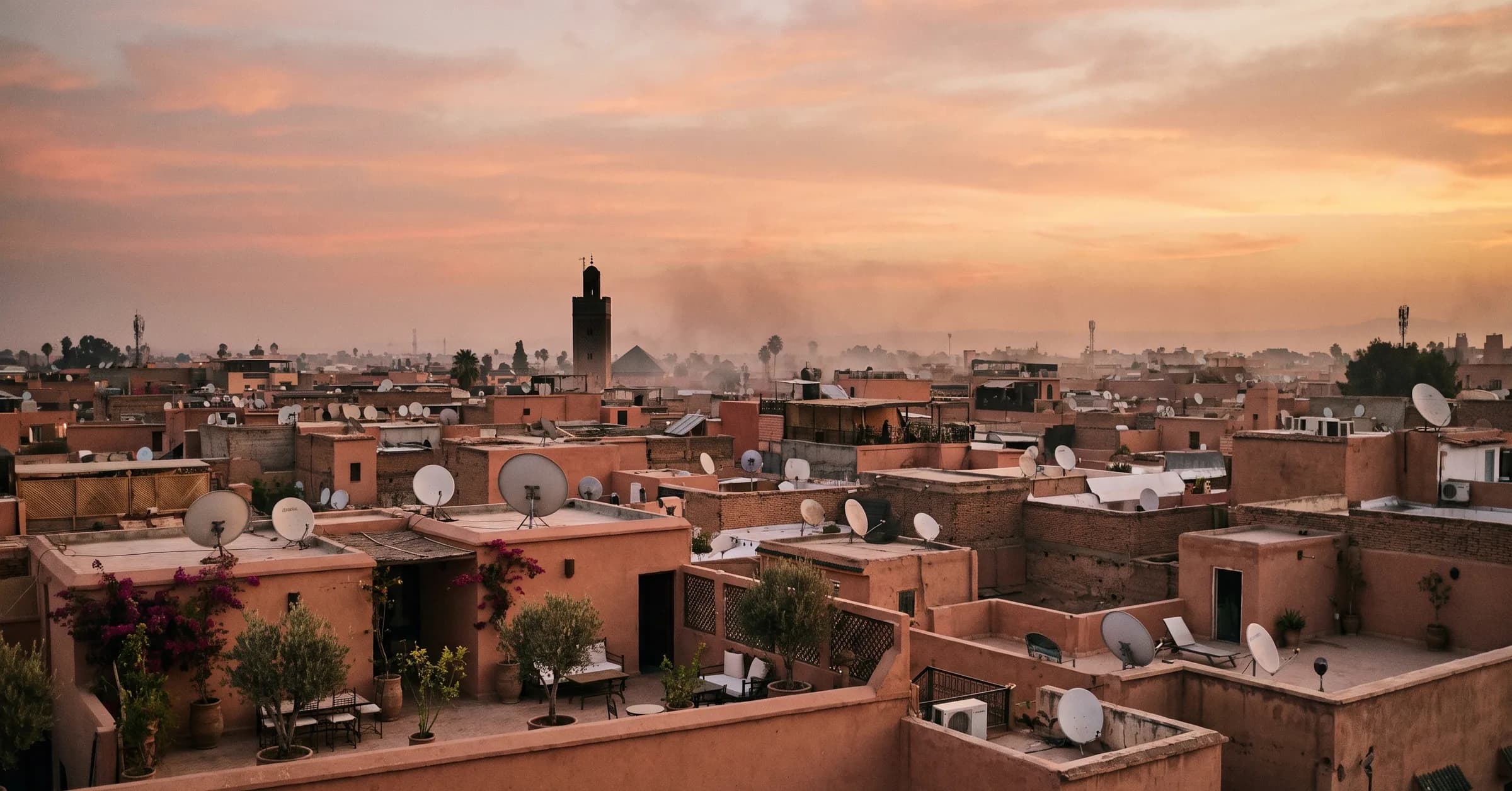
The medina looks very different from above. Dozens of cafés and restaurants have roof terraces, and an hour on one at sunset, with mint tea or dinner and the call to prayer echoing across the rooftops, is one of the best things to do in Marrakech. Rahba Kedima, the spice square, has several terrace cafés with a view of the market below, and many riads open their roofs to non-guests for dinner.
- Cost: a mint tea is about 20–30 MAD; a main course on a tourist-area terrace is about 100–200 MAD.
- Tip: most medina restaurants don't serve alcohol. If you want wine with dinner, check beforehand.
13. Get scrubbed in a hammam
The hammam is a weekly ritual for most Marrakchis: a steam room, black olive soap, then a vigorous scrub with a rough kessa glove that removes a startling amount of skin. You can do it two ways. A public hammam costs very little but you bring your own soap, glove and towel, and you'll need to follow what the locals do. A spa hammam in a riad or hotel costs far more but includes everything, plus usually a massage.
- Cost: about 10–40 MAD at a public hammam; about 290–990 MAD for a spa hammam package.
- Tip: for a first time, a mid-range spa is the easiest introduction. Book a day ahead.
14. Learn to cook a tagine
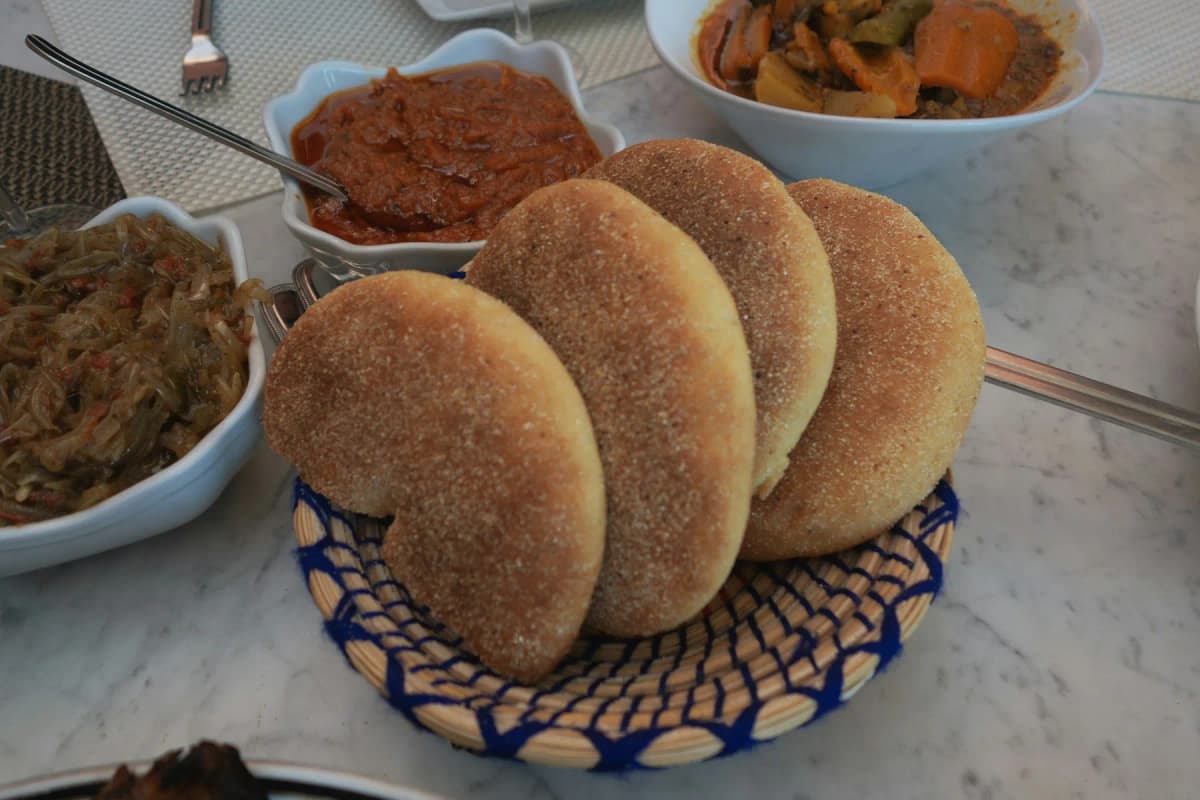 Photo: snap wander on Unsplash
A cooking class is one of the best ways to understand Moroccan food beyond the restaurant menu. Most start with a trip to the market to buy spices and vegetables, then move to a riad kitchen or a farm outside the city to make bread, salads and a tagine, which you eat for lunch. This Marrakech cooking class is a well-reviewed option that includes the market visit.
- Time: about half a day.
- Tip: if you're vegetarian or have allergies, say so when booking. Most classes adapt easily.
15. Take a street food tour
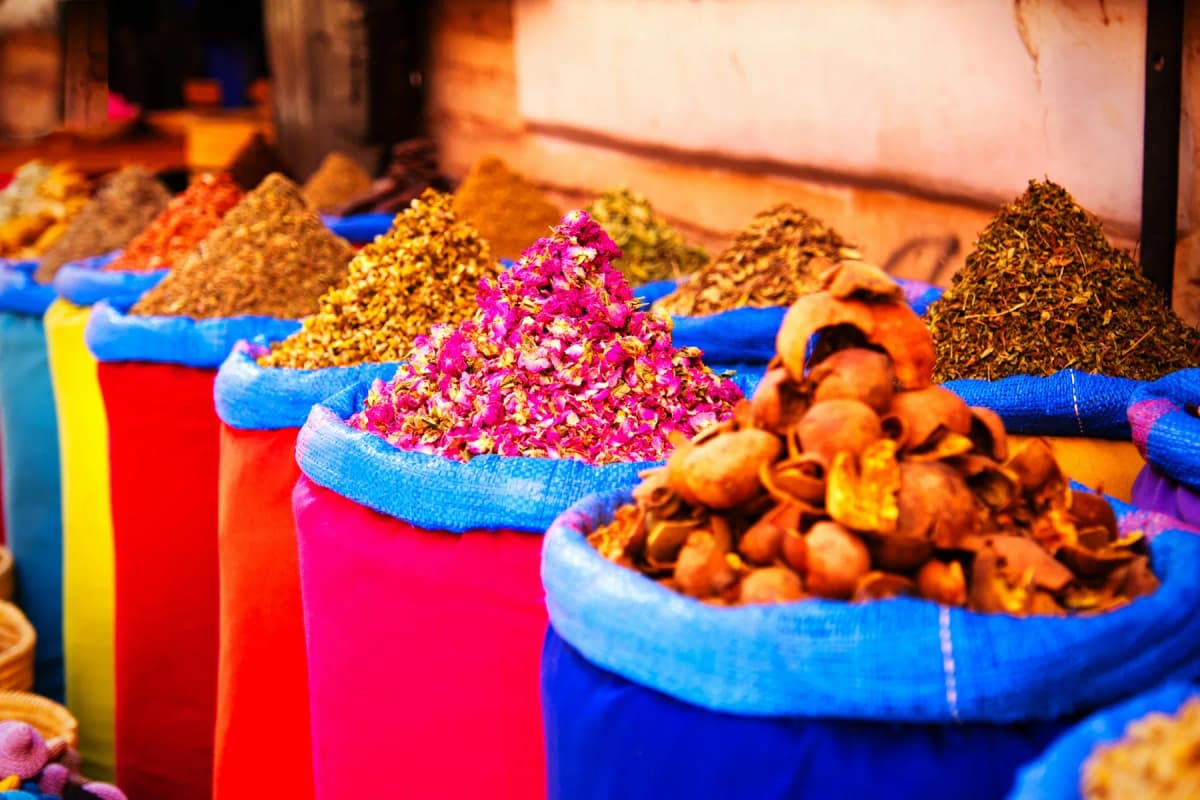 Photo: Andy Kennedy on Unsplash
The food at Jemaa el-Fnaa is the famous part, but some of the best eating in Marrakech is in the lanes around it: slow-cooked tanjia (beef or lamb cooked in a clay pot in the embers of a hammam furnace), msemen flatbreads, snail soup, sfenj doughnuts and grilled offal. A guide makes it easy to try things you'd walk past alone. This Marrakech street food night tour covers the square and the backstreets after dark.
- Time: about 3 hours, in the evening.
- Tip: come hungry and skip lunch. Portions add up quickly.
16. Float over the desert in a hot-air balloon
Sunrise balloon flights take off from the plains outside Marrakech, with views of Berber villages, palm groves and, on a clear day, the High Atlas. You're picked up from your hotel before dawn, fly for about an hour, and usually finish with breakfast. This sunrise balloon flight includes hotel pickup.
- Cost: about €95–220 for a shared basket, depending on season and operator.
- Tip: book for early in your stay. Flights are cancelled in high wind, and that leaves you a spare morning to rebook.
17. Spend a sunset in the Agafay desert
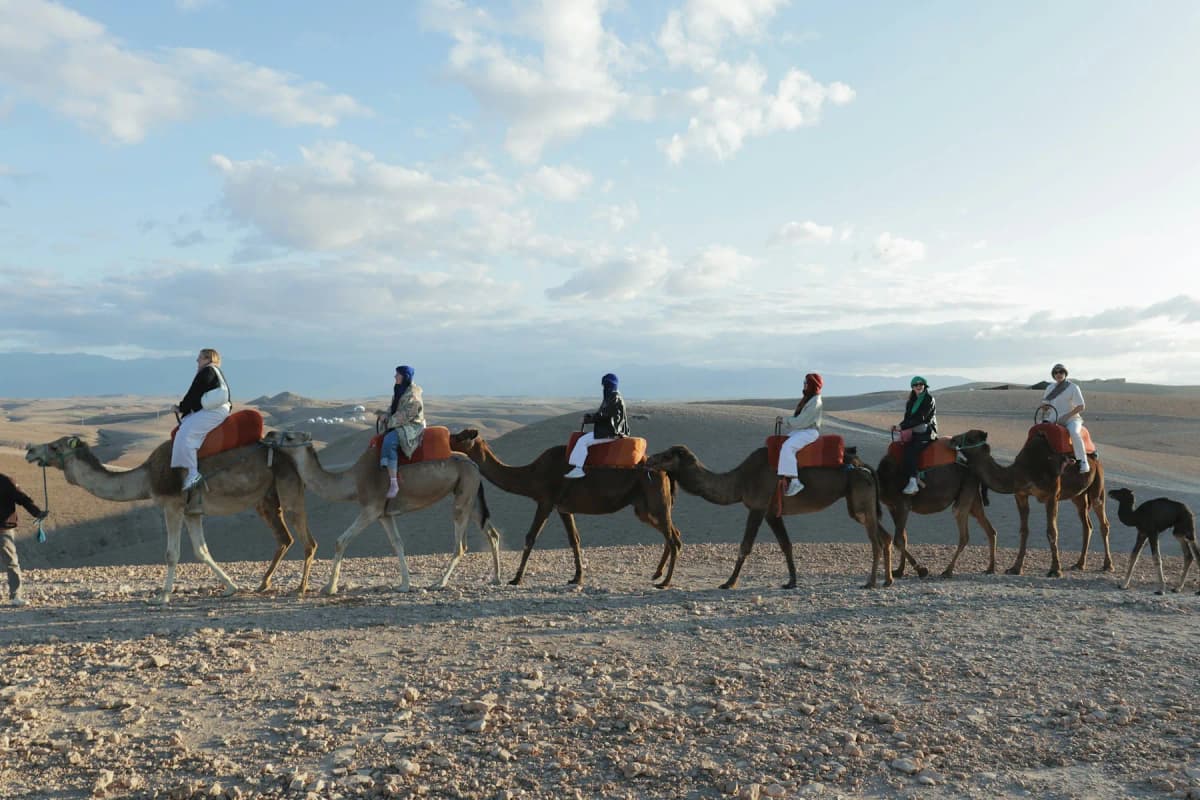 Photo:
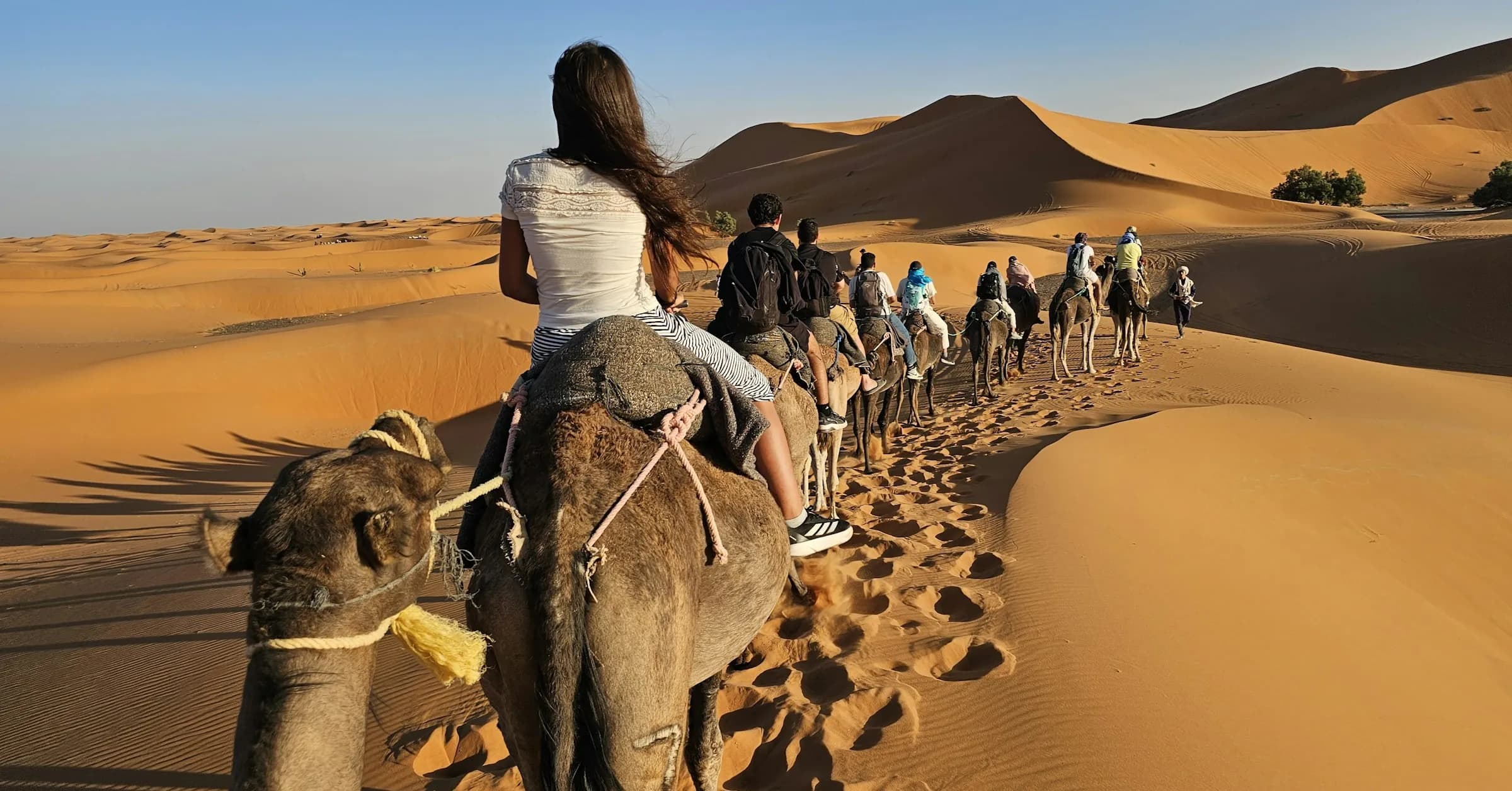
 The Agafay desert is a stony desert of bare, rolling hills about 45 minutes from Marrakech. It isn't the Sahara (there are no sand dunes), but at sunset, with the Atlas on the horizon, it's beautiful and much easier to reach. Most trips combine a camel ride or quad bike session with dinner at a desert camp. This Agafay quad, camel ride and dinner package covers all three with transfers.
- Time: an afternoon and evening.
- Tip: if you want real sand dunes, you need the 3-day trip to Merzouga. See our things to do in Morocco guide for that.
18. Escape to the Ourika Valley or Imlil
The High Atlas starts barely an hour from the city. The Ourika Valley is the easy option: a green river valley with riverside cafés and a short scramble to the waterfalls at Setti Fatma. This Ourika Valley and seven waterfalls day trip includes a local guide for the waterfall hike.
Imlil, about 90 minutes away, is the base for Mount Toubkal, North Africa's highest peak. Even without climbing it, a day walking between Berber villages and walnut orchards there is a great contrast to the medina.
- Tip: wear proper shoes for the Setti Fatma waterfalls. The path is rocky and slippery.
19. Take a day trip to Essaouira
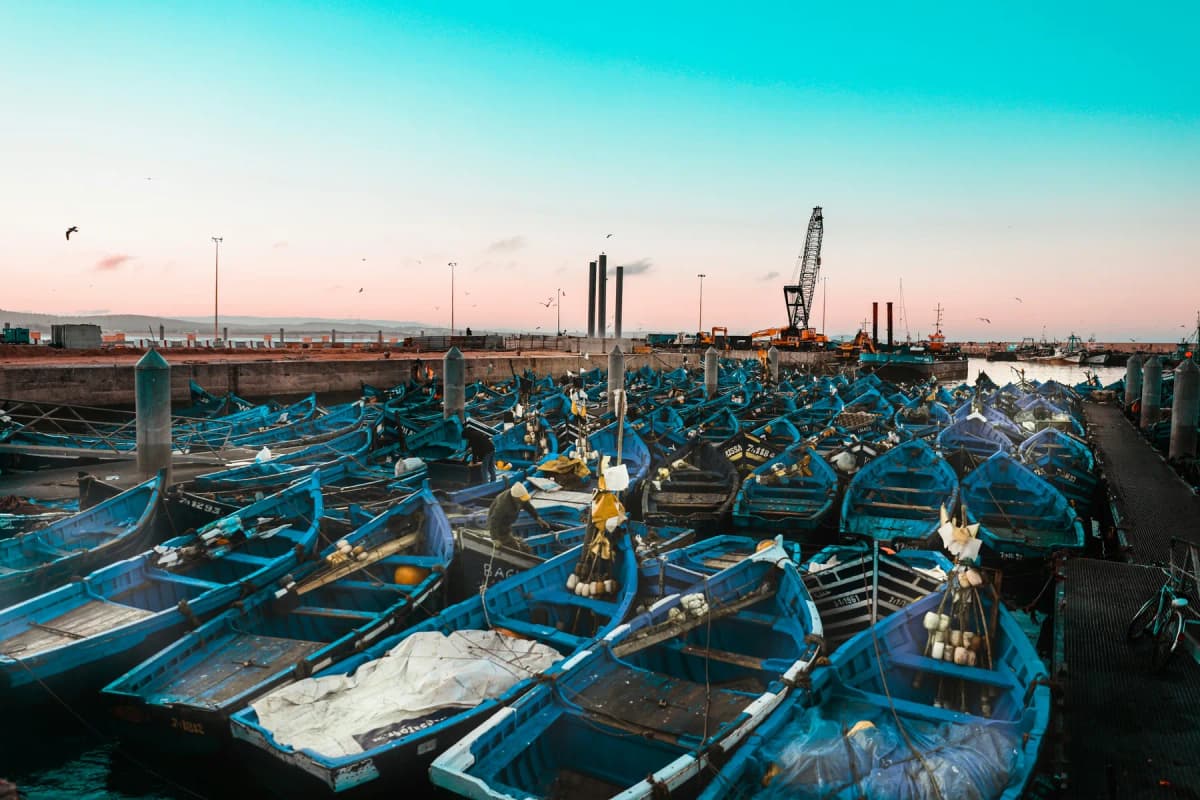 Photo:
 Essaouira is a relaxed, whitewashed port on the Atlantic, about three hours west of Marrakech. It's cooler, windier and calmer than Marrakech, with a walkable medina, a harbour full of blue fishing boats and grilled fish straight from the boats at lunchtime. It's worth staying a night if you can; if not, this small-group Essaouira day trip is a highly rated option.
- Time: a long day (about six hours on the road).
- Tip: bring a jacket. Even in summer, the wind off the ocean can be cool.
20. Visit Aït Benhaddou
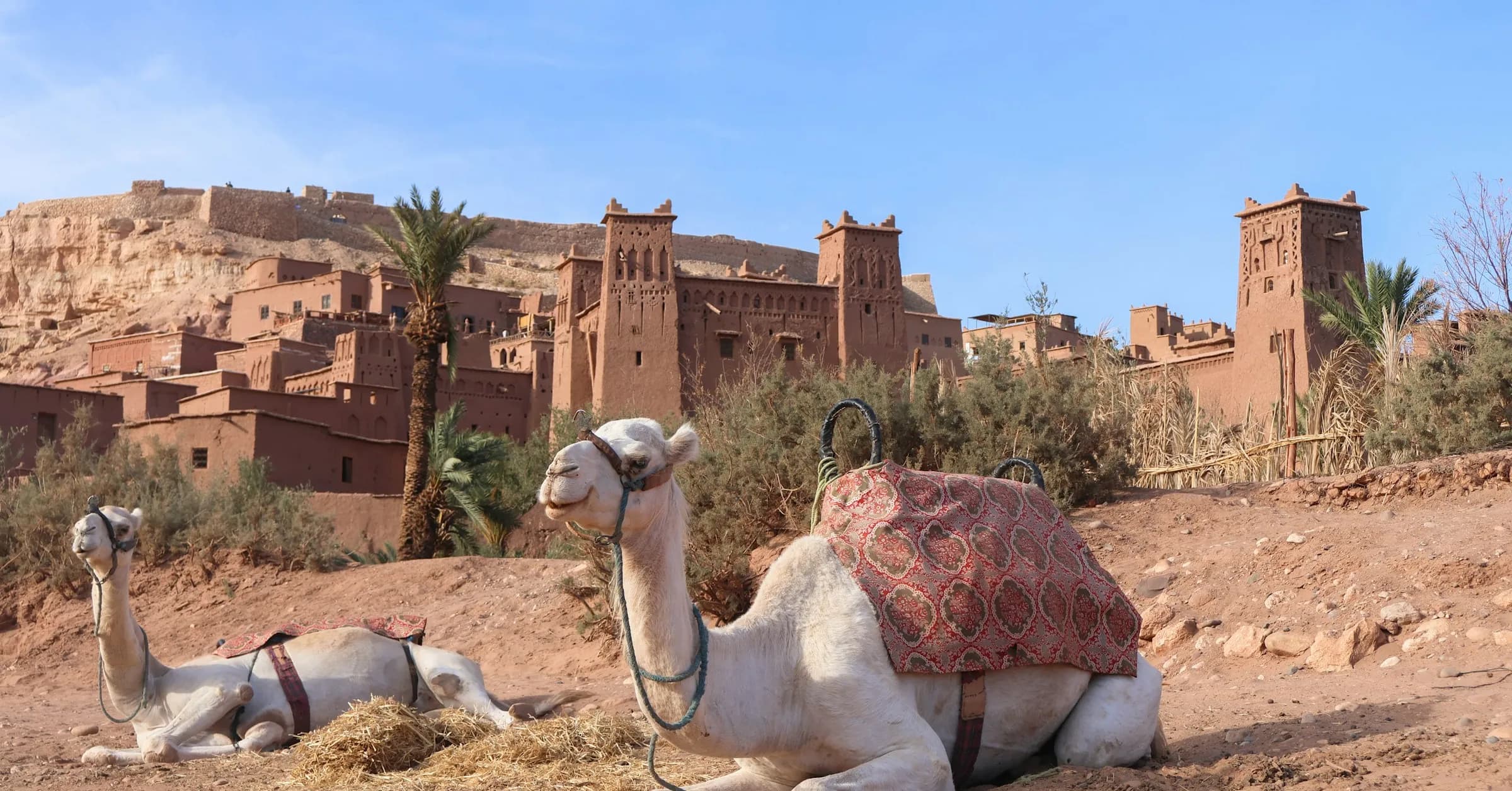
Aït Benhaddou is the most famous kasbah in Morocco, a fortified earthen village on a hillside that has appeared in dozens of films and TV series. It's about four hours from Marrakech over the dramatic Tizi n'Tichka pass, so it's a long day trip. This Aït Benhaddou and Ouarzazate day trip covers both. If you're planning a desert tour to Merzouga, skip the separate day trip: most 3-day tours stop here anyway.
Other day trips to consider: the Ouzoud waterfalls, the tallest in Morocco, with Barbary macaques on the path (Ouzoud day trip).
Free things to do in Marrakech
Marrakech can be done on a tight budget. These cost nothing:
- Jemaa el-Fnaa at sunset and after dark.
- Wandering the souks, the Mellah and the residential lanes of the medina.
- The Koutoubia gardens and the outside of the minaret.
- Cyber Parc, a large public garden between the medina and Gueliz.
- The Menara gardens, an olive grove around a large pool with a pavilion and the Atlas behind, on the western edge of the city.
- Walking the medina walls, especially the stretch near Bab Agnaou, the carved gate into the Kasbah.
How to spend 2 or 3 days in Marrakech
Day 1: the medina. Start at the Ben Youssef Madrasa at 9:00, then Le Jardin Secret. Spend late morning in the souks and have lunch on a terrace near Rahba Kedima. In the afternoon, head to the Koutoubia, then watch Jemaa el-Fnaa come alive and eat at the food stalls.
Day 2: palaces and gardens. Take the first Majorelle slot at 8:00 and see the YSL Museum (not on a Wednesday). Return to the medina for the Saadian Tombs, El Badi and the Bahia Palace, then explore the Mellah. Finish with a hammam and a rooftop dinner.
Day 3: out of the city. Pick one: Essaouira, Ourika, Imlil or Aït Benhaddou for a full day, or a morning balloon flight followed by a sunset in the Agafay desert.
With only one day, combine the morning of Day 1 with the palaces from Day 2 and end at Jemaa el-Fnaa. With four or more, add a second day trip or a cooking class.
Getting there and around
Marrakech Menara Airport (RAK) is about 6 km from the medina, roughly 20 minutes by car. Cars can't enter most of the medina, so your driver will drop you at the nearest gate, and someone from your riad will usually walk you the rest of the way. The easiest option on arrival is a pre-booked airport transfer with a fixed price. Tell your riad your arrival time so they can meet you at the drop-off.
Inside the medina, you'll walk everywhere. For Majorelle and Gueliz, take a petit taxi (agree the fare or insist on the meter before you get in) or walk about 30 minutes from Jemaa el-Fnaa. Trains connect Marrakech to Casablanca, Rabat and Fes, and a Morocco eSIM makes it much easier to follow maps through the medina lanes.
Best time to visit Marrakech
Spring (March to May) and autumn (October and November) are the best times to visit, with warm days, cool evenings and clear views of the Atlas. Summer is very hot, often above 40°C in July and August, so plan sightseeing for early morning and evening. Winter days are mild and sunny but nights get cold, and many riads have limited heating.
During Ramadan (expected around 8 February to 9 March 2027), many cafés close in daylight and sights may open shorter hours, but the evenings after sunset are lively.
Tips: do's and don'ts in Marrakech
- Do carry cash. Bahia, Ben Youssef, Dar el Bacha, souks, taxis and small restaurants are cash only. ATMs are easy to find around Jemaa el-Fnaa and in Gueliz.
- Do dress modestly. Loose clothes covering shoulders and knees are respectful and keep you cooler.
- Do book Majorelle and day trips ahead, especially in spring and autumn.
- Don't follow unofficial guides. Anyone offering to show you to the "tanneries" or a "Berber market that's only open today" is leading you to a shop. A polite "la, shukran" (no, thank you) is enough.
- Don't photograph people without asking. Many Marrakchis don't want to be photographed, and performers expect payment.
- Do get travel insurance. Medical care in private clinics is good but not cheap. EKTA covers trips to Morocco.
Frequently asked questions
What should I not miss in Marrakech? Jemaa el-Fnaa at night, the souks, the Ben Youssef Madrasa, the Bahia Palace and Jardin Majorelle. If you have an extra day, add a trip to the Agafay desert, the Atlas mountains or Essaouira.
How many days in Marrakech is enough? Three days is ideal: two for the medina and gardens and one for a day trip. Two days covers the main sights at a brisk pace. With four or five, you can add a second day trip and slow down.
What are the do's and don'ts in Marrakech? Do carry cash, dress modestly and book Majorelle online in advance. Don't follow people who offer to guide you, don't photograph people without asking, and always agree a taxi fare before getting in.
Is Casablanca or Marrakech better? For most travellers, Marrakech. It has far more to see and do, from the medina and palaces to day trips into the desert and mountains. Casablanca is a modern business city whose highlight is the Hassan II Mosque, which you can see in half a day.
Is Marrakech safe for tourists? Generally yes. The main problems are petty theft in crowds, overcharging and persistent touts rather than serious crime. Use normal city precautions and stay on busier streets late at night.
What is there to do in Marrakech for couples? A sunrise balloon flight, a sunset dinner in the Agafay desert, a couples' hammam in a riad spa, and dinner on a rooftop terrace overlooking the medina.
How we researched this guide
Prices and opening hours were checked in October 2026 against the official Jardin Majorelle, Ben Youssef Madrasa and Le Jardin Secret websites, with palace and tomb prices cross-checked across several recent visitor guides. Hammam, balloon and restaurant prices vary by operator and season, so we give ranges quoted across multiple current sources. We haven't personally tested every operator mentioned; confirm times and prices before you travel, and let us know if something has changed.
Planning the rest of your trip? See all our Morocco guides, the best places to visit in Morocco, and our Morocco itinerary for how Marrakech fits into a week or two.