Where to Stay in Lisbon: 9 Best Areas for Every Kind of Trip (2026)
September 29, 2026 · Portugal
This post contains affiliate links. We may earn a commission if you book through them, at no extra cost to you. Disclaimer.
Choosing where to stay in Lisbon matters more than it looks on a map. The city centre is compact, but it's built on steep hills, many old-town streets are cobbled stairways that taxis can't reach, and one neighbourhood's charming lanes are another's all-night street party. Pick well and you'll walk almost everywhere; pick badly and you'll spend the trip hauling a suitcase uphill or lying awake at 2 a.m.
This guide compares the nine best areas to stay in Lisbon, who each one suits, and the trade-offs most hotel listings won't tell you about: hills, noise and how easy it is to get in from the airport.
Where to stay in Lisbon: the quick answer
| Area | Best for | Vibe at night | Hills | Budget |
|---|---|---|---|---|
| Baixa | First-timers, flat walking, transport | Busy early, calm late | Flat | Mid |
| Chiado | First-timers, couples, cafés and shopping | Lively but polished | Moderate | Mid to high |
| Alfama | Atmosphere, fado, old Lisbon | Quiet lanes, fado houses | Very steep | Mid |
| Príncipe Real | Couples, repeat visitors, boutique stays | Relaxed and stylish | Moderate | High |
| Avenida da Liberdade | Luxury, families, easy taxi access | Calm | Gentle | High |
| Bairro Alto | Nightlife, young travellers | Loud until late | Moderate | Budget to mid |
| Belém | Monuments, families, a quieter stay | Very quiet | Flat | Mid |
| Parque das Nações | Short stays, early flights, modern hotels | Quiet | Flat | Mid |
| Avenidas Novas / Saldanha | Value, metro access, business trips | Local, quiet | Gentle | Budget to mid |
Our short version: the best area to stay in Lisbon for a first trip is Baixa or Chiado. Choose Alfama for atmosphere (and pack light), Príncipe Real for a stylish, quieter base, and Parque das Nações if you're only in town for a night or two around a flight.
How to choose where to stay in Lisbon
1. Check the hill, not just the map. Two hotels 500 metres apart can be very different walks. Alfama, Bairro Alto and parts of Chiado involve steep climbs and steps. If mobility is a concern, Baixa, Avenida da Liberdade, Belém and Parque das Nações are the flattest options.
2. Think about luggage on arrival day. Many old-town lanes are pedestrian-only or too narrow for cars, so a taxi may drop you a few minutes' walk away. Ask the hotel how close a car can get before you book.
3. Decide how much nightlife you want outside your window. Bairro Alto and Cais do Sodré's "Pink Street" stay loud late into the night, especially at weekends. Light sleepers should stay a few streets away and walk in.
4. Stay close to a metro station or tram line. The metro doesn't reach Alfama or Bairro Alto directly, but Baixa-Chiado, Rossio, Restauradores and Martim Moniz stations put most of the centre within a short walk.
The 9 best areas to stay in Lisbon
1. Baixa: best for first-timers who want flat streets
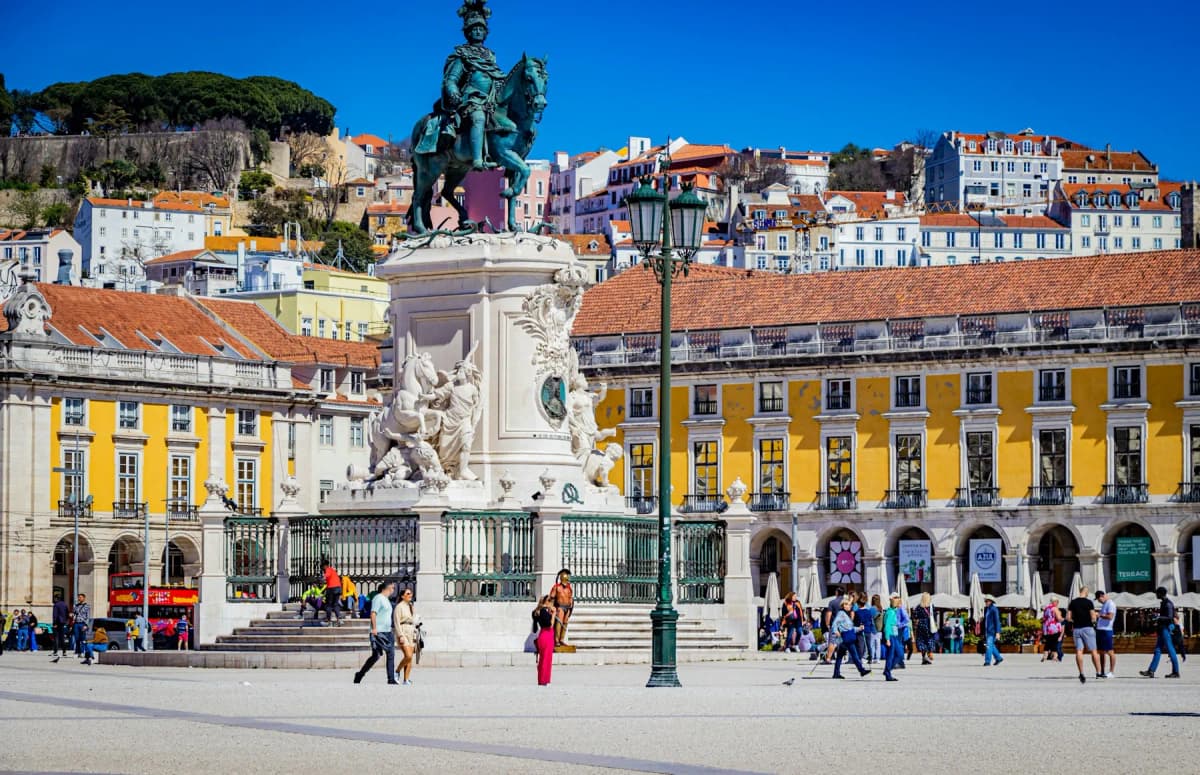 Photo: João Reguengos on Unsplash
Baixa is Lisbon's downtown, rebuilt on a grid after the 1755 earthquake, and it's the flattest part of the historic centre. It runs from Rossio square down to Praça do Comércio on the river, with Alfama rising on one side and Chiado on the other. Almost everything a first-time visitor wants is walkable from here, and trams, metro and riverside trains are all close.
- Good for: first trips, short stays, anyone who wants to avoid steep hills.
- Less good for: a local feel; Rua Augusta and the main streets are very touristy, and restaurants on them are often overpriced.
- Where to look: side streets off Rua Augusta and around Rossio and Praça da Figueira for the best balance of location and quiet.
2. Chiado: the best area to stay in Lisbon for most visitors
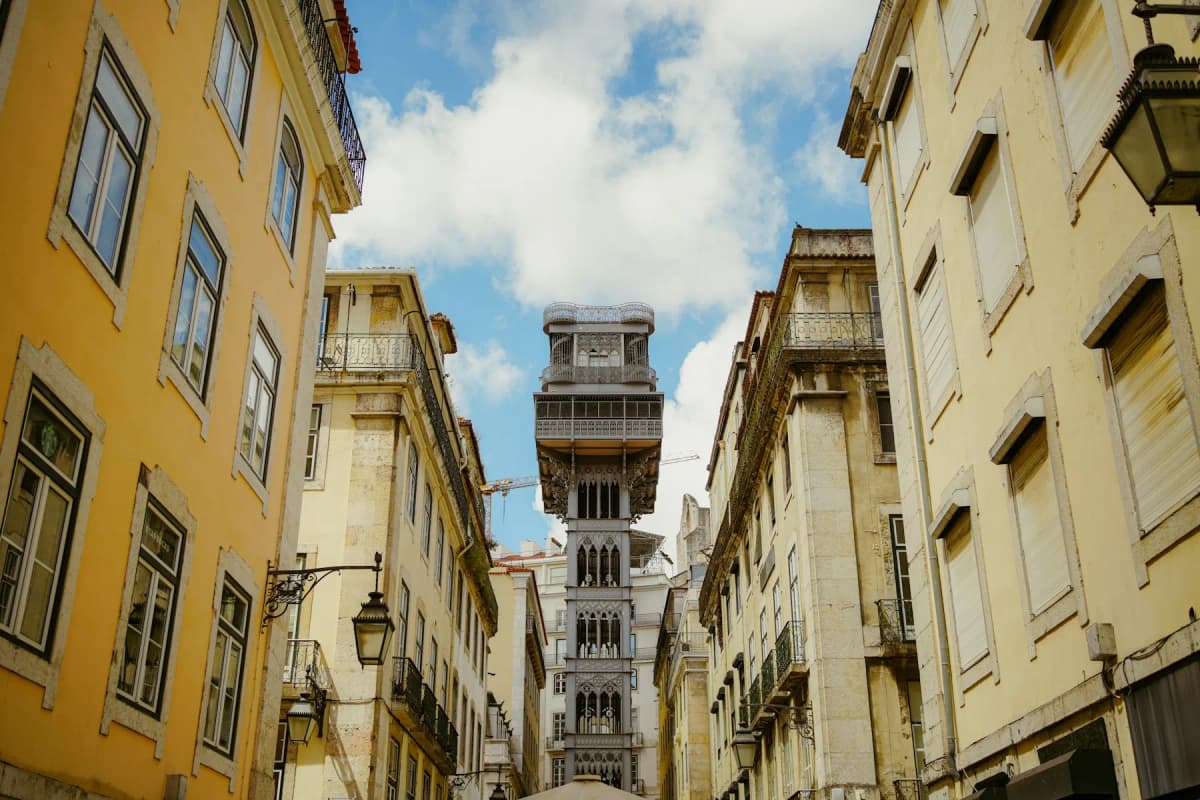 Photo: Eduard Pretsi on Unsplash
Just uphill from Baixa (the Santa Justa Lift links the two), Chiado is Lisbon's elegant old shopping and café district: historic bookshops, theatres, grand coffee houses and good restaurants. It's central, feels a little more refined than Baixa, and sits between downtown, Bairro Alto and the river, which is why so many guides call it the best area to stay in Lisbon.
- Good for: first-timers, couples, food and shopping.
- Less good for: tight budgets; hotels here are among the pricier in the centre.
- Handy: Baixa-Chiado metro station, on the blue and green lines, is right here, and tram 28 passes through.
3. Alfama: best for atmosphere and old Lisbon
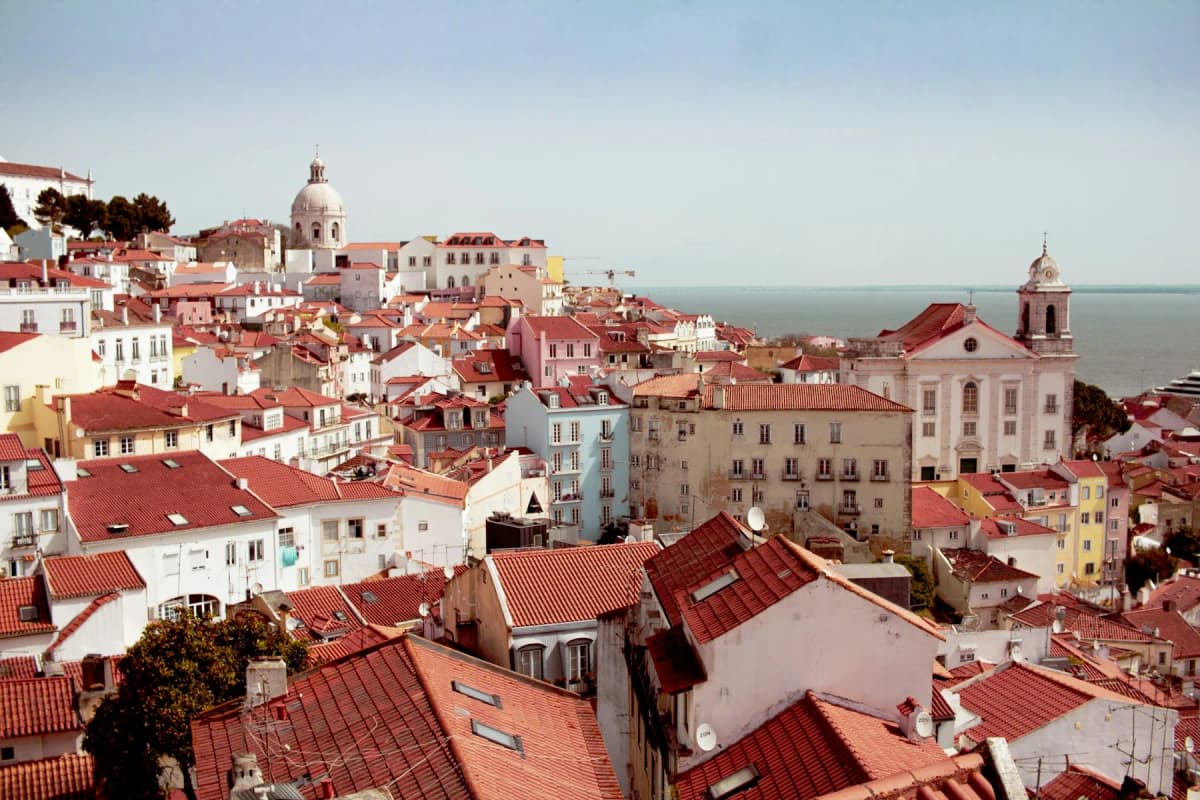 Photo: João Reguengos on Unsplash
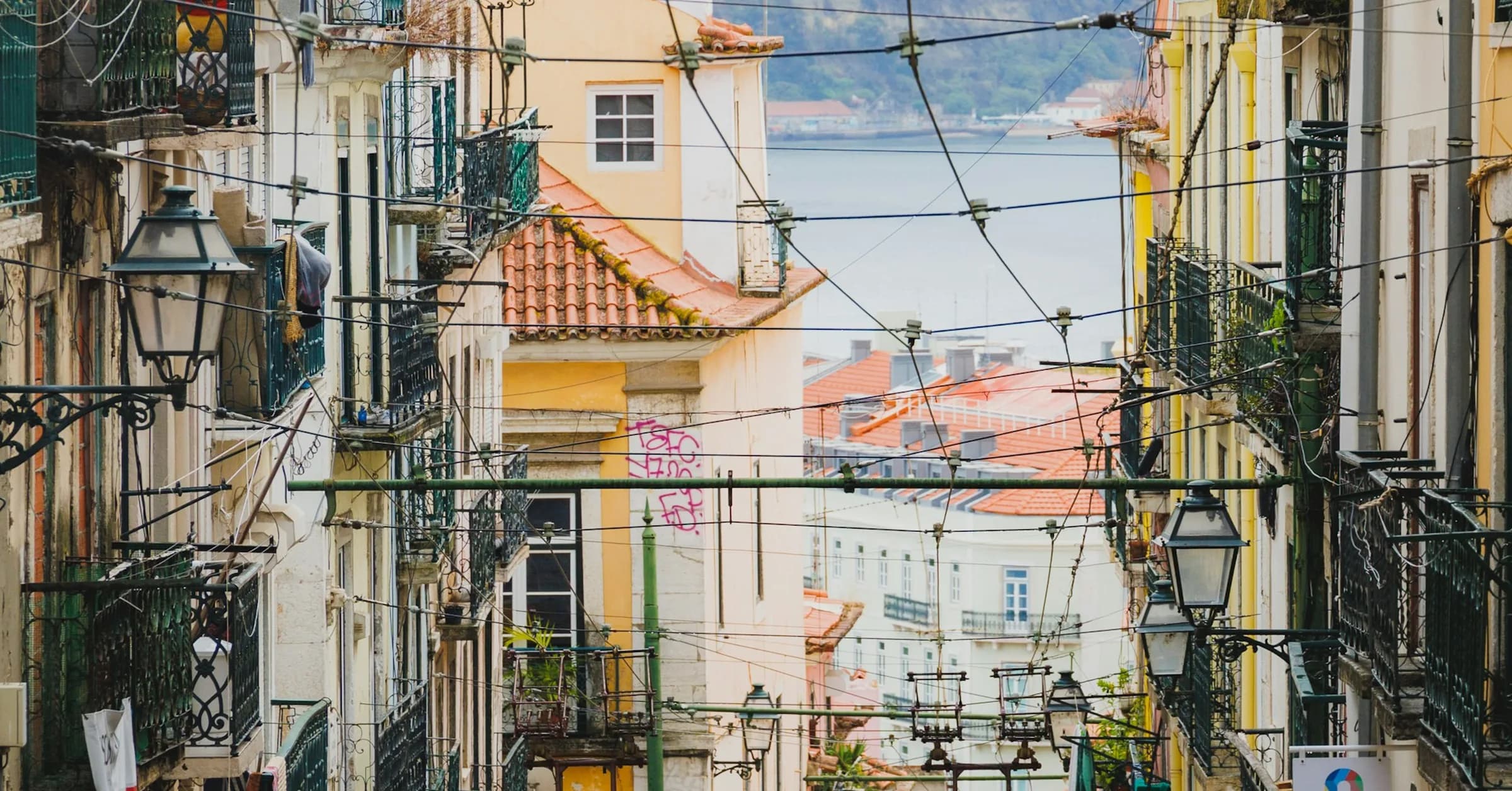
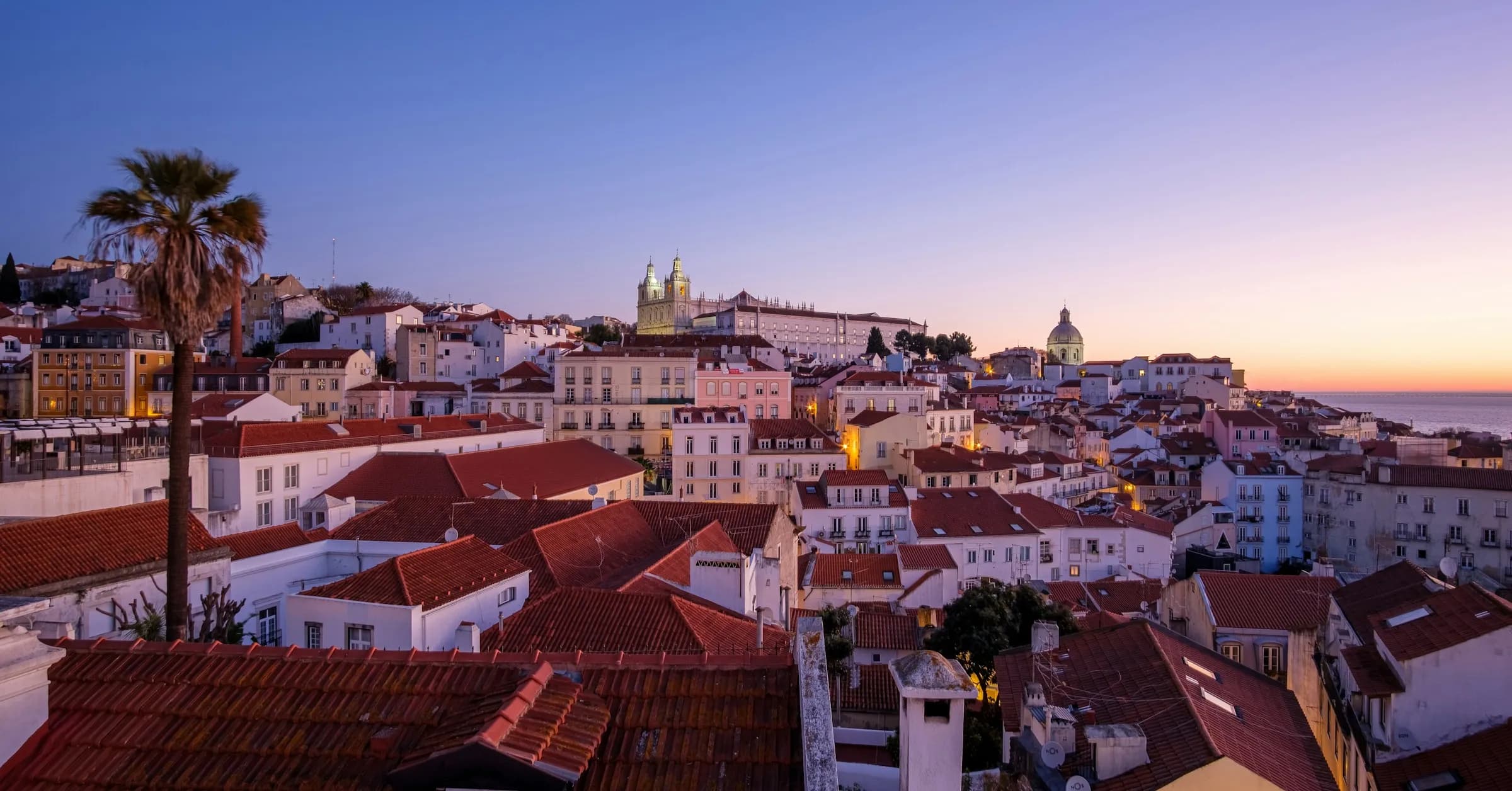
Alfama is Lisbon's oldest neighbourhood: a maze of alleys, stairways and tiled houses tumbling down from São Jorge Castle to the river. It's the home of fado, and staying here means stepping out into washing lines, tiny squares and viewpoints like Miradouro de Santa Luzia and Portas do Sol. If you've seen our things to do in Lisbon guide, many of the highlights are on your doorstep.
- Good for: atmosphere, photographers, fado evenings, couples.
- Less good for: heavy luggage, limited mobility, families with strollers. Streets are steep and cobbled, and taxis often can't reach the door.
- Handy: Santa Apolónia station at the bottom of Alfama is where trains to Porto start, which is useful if you're heading north next. Our things to do in Porto guide covers that part of the trip.
4. Príncipe Real: best for a stylish, quieter stay
Príncipe Real sits on the hill above Bairro Alto, centred on a leafy garden square. It's one of the city's most desirable residential areas, full of 19th-century mansions, concept stores, independent restaurants and boutique hotels. It's close enough to walk down to Chiado and Bairro Alto for dinner but calm enough to sleep well afterwards.
- Good for: couples, repeat visitors, design lovers.
- Less good for: budget travellers, and it's a walk uphill to get home.
- Nearby: Miradouro de São Pedro de Alcântara, one of Lisbon's best viewpoints, is between Príncipe Real and Bairro Alto.
5. Avenida da Liberdade: best for luxury and easy access
Lisbon's grand tree-lined boulevard runs from Restauradores up to Marquês de Pombal, lined with designer shops and many of the city's big five-star hotels. It's a gentle slope rather than a steep hill, cars reach every hotel door, and the blue metro line runs underneath.
- Good for: luxury stays, families, travellers who want taxis to the door.
- Less good for: atmosphere; it's more boulevard than neighbourhood, and quiet in the evenings.
6. Bairro Alto: best for nightlife
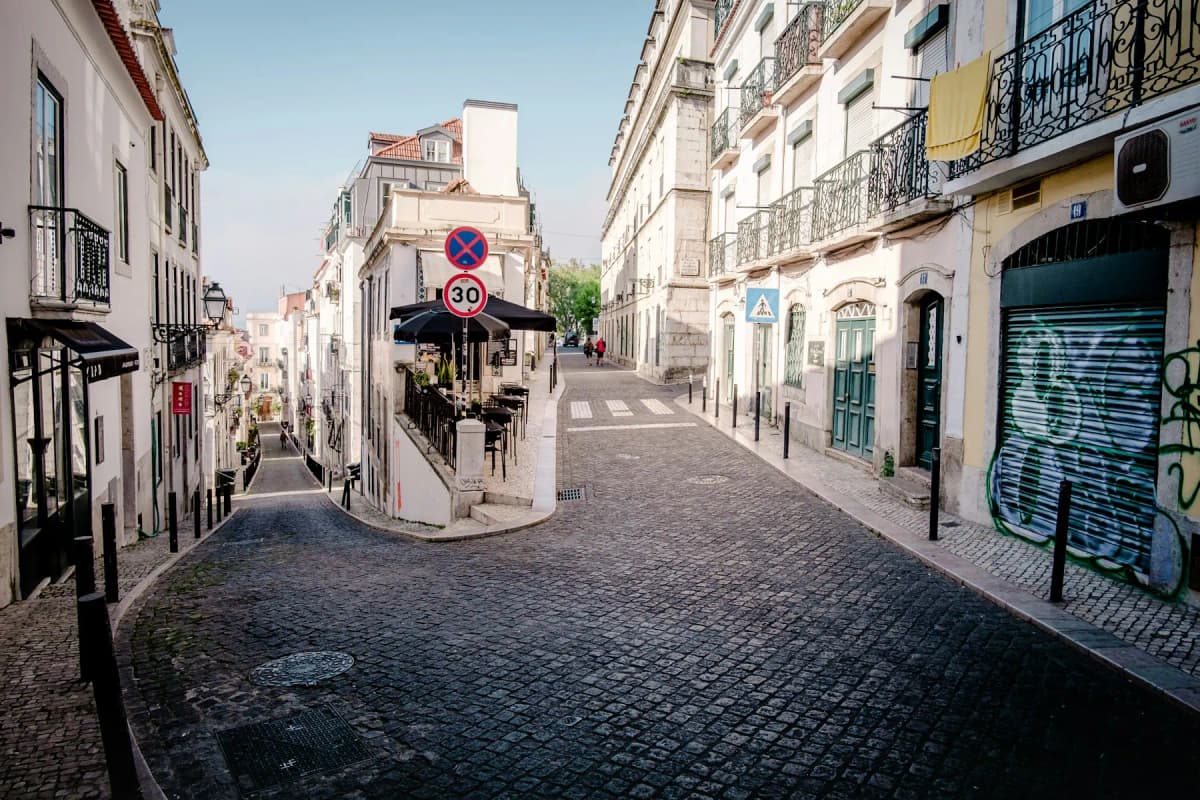 Photo: Teodor Kuduschiev on Unsplash
By day, Bairro Alto is a sleepy grid of narrow streets. By night, it becomes Lisbon's biggest open-air party, with small bars spilling crowds into the lanes. It's also full of good-value guesthouses and small restaurants.
- Good for: nightlife, solo travellers, young groups, budgets.
- Less good for: light sleepers, especially Thursday to Saturday. If you want to be near the bars but able to sleep, stay in Chiado or Príncipe Real instead.
7. Belém: best for monuments and a slower pace
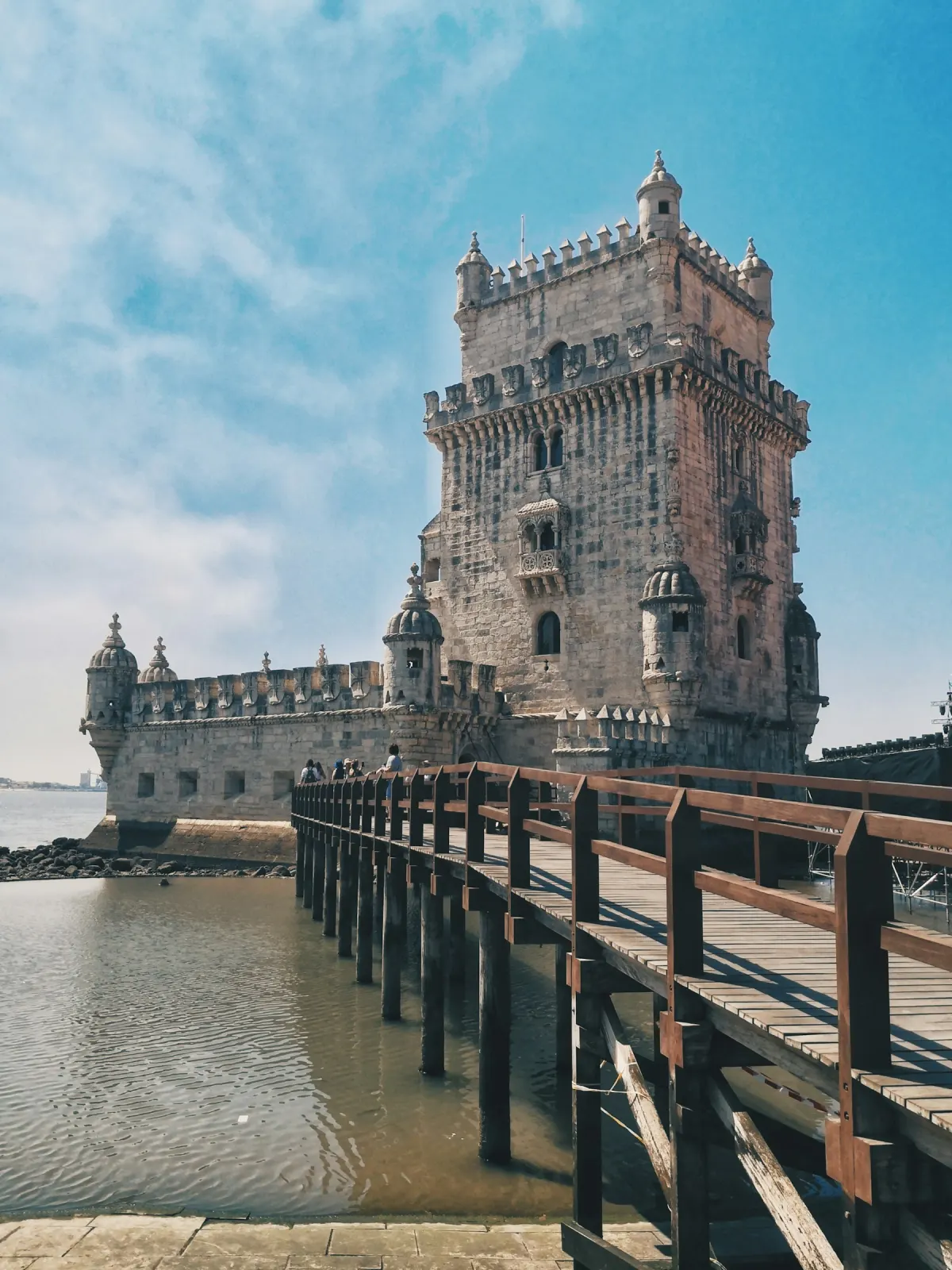 Photo: Josè Maria Sava on Unsplash
Belém, about 6 km west of the centre along the river, is home to the Jerónimos Monastery, Belém Tower and the MAAT museum, plus the famous custard tarts. It's flat, green and very calm at night.
- Good for: families, a quieter second base, travellers focused on the monuments.
- Less good for: a first trip centred on the old town, as you'll ride tram 15E or the train from Cais do Sodré every time you go into the centre.
8. Parque das Nações: best for short stays and early flights
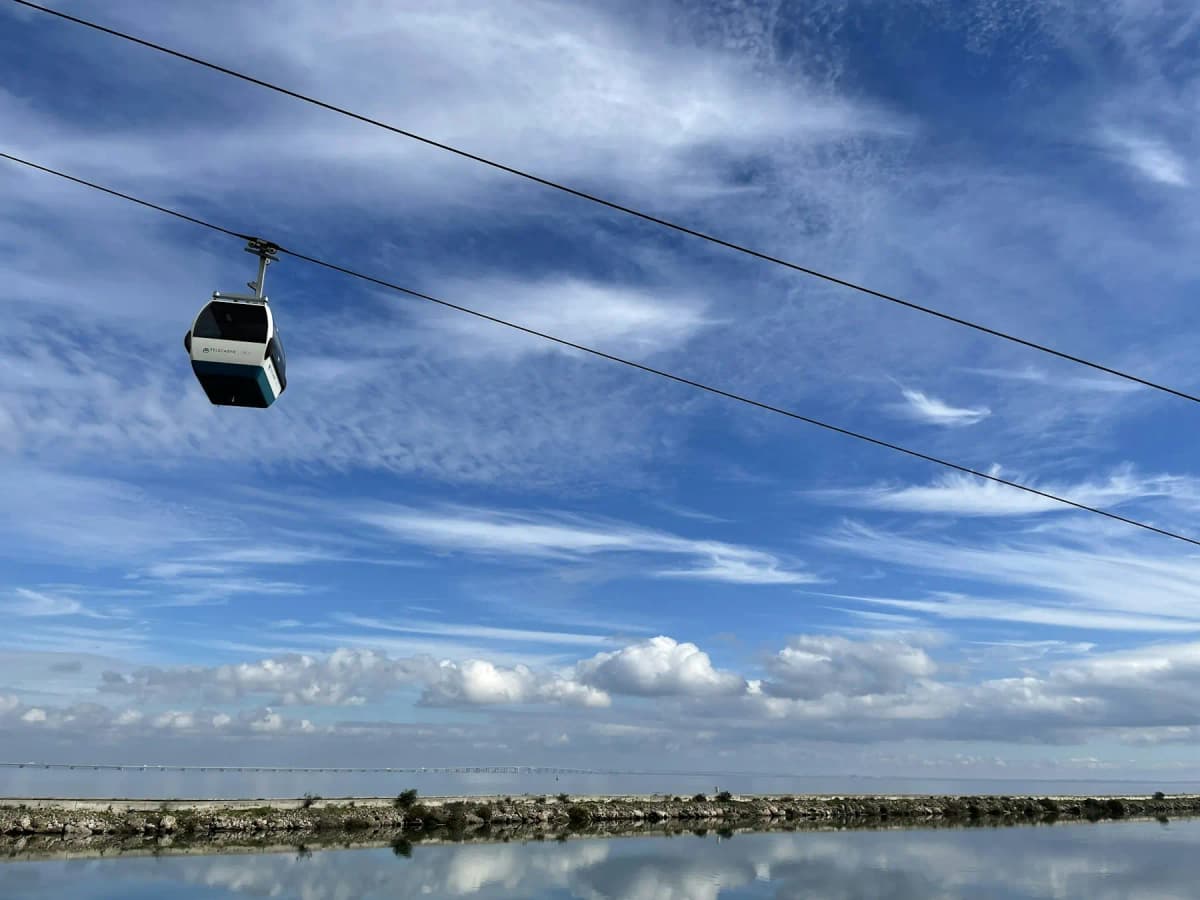 Photo: Marina Poliukhovich on Unsplash
Built for Expo '98, Parque das Nações is modern Lisbon: a riverside promenade, the Oceanário, a cable car along the water and wide flat streets. It's close to the airport, and Oriente station links the metro red line with trains to Porto and beyond.
- Good for: one-night stopovers, early or late flights, families, business trips.
- Less good for: old-town charm; you'll take the metro or a taxi into the historic centre.
9. Avenidas Novas and Saldanha: best for value
North of Marquês de Pombal, the Avenidas Novas area around Saldanha is where Lisbon actually lives and works: offices, apartment blocks, local cafés and some of the city's best-value hotels. Saldanha is a junction of the red and yellow metro lines, so you can reach the airport or the centre quickly.
- Good for: budgets, longer stays, business trips.
- Less good for: sightseeing on foot; you'll use the metro to reach the old town.
Where to avoid staying in Lisbon
Lisbon is generally a safe city for visitors, so this is less about danger and more about fit:
- Right on the Bairro Alto or Pink Street bar strips if you want to sleep. The noise carries late into the night.
- The top of a steep Alfama stairway if you're travelling with big suitcases, small children or limited mobility. Check the street view before you book.
- Around Martim Moniz and Intendente if you're a nervous first-timer. The area is central and cheaper, and parts of it have become popular with young locals, but it has a more mixed reputation after dark than Baixa or Chiado. Read recent reviews for the specific street.
- Far-out suburbs to save money. The daily commute into the centre usually costs more time than the savings are worth; Avenidas Novas is a better budget compromise.
Wherever you stay, watch for pickpockets on crowded trams (especially tram 28) and at busy viewpoints.
Getting from Lisbon Airport to your hotel
Lisbon Airport is unusually close to the city. The metro red line runs from the airport, and you change at Alameda (green line) or São Sebastião (blue line) for the centre. Baixa-Chiado takes about 30 minutes in total. Parque das Nações and Saldanha are both on the red line, with no change needed.
With heavy bags, a late arrival or a hotel in hilly Alfama, the metro loses its appeal. You can pre-book a private airport transfer that takes you as close to the door as a car can get. To have data the moment you land for maps and ride apps, a Portugal eSIM from Airalo is set up before you fly.
Still comparing dates? Check flight prices to Lisbon here:
Tips before you book a Lisbon hotel
- Budget for the city tax. Lisbon charges a tourist tax of €4 per person per night (guests aged 13 and over, capped at 7 nights), usually paid at the hotel. It's often not included in the price you see online.
- Ask about the lift. Many central hotels and apartments are in old buildings, and a fourth-floor walk-up is common. Check before you book.
- Book early for June. Prices peak in summer and especially around the Santo António festivities in June, when Alfama turns into one big street party.
- Consider two bases. On a longer trip, a few nights in the old town plus a few in Belém or by the coast works well. Sintra is an easy day trip from any central base, or you can join a guided Sintra day tour that handles the transport.
Frequently asked questions
What is the best area to stay in Lisbon for first-timers? Chiado or Baixa. Both are central, close to the metro and within walking distance of most of the sights, and Baixa is the flattest part of the old town.
Is it better to stay in Lisbon city centre or the old town? For most visitors, the centre (Baixa and Chiado) is the better choice. You're right next to the old town but with flatter streets, easier taxi access and better transport. Stay in Alfama itself if atmosphere matters more to you than convenience.
Which neighbourhood in Lisbon is the most walkable? Baixa. It's flat, laid out on a grid and within walking distance of Chiado, Alfama and the river. Just remember that walking out of Baixa in almost any direction means going uphill.
Where should I stay in Lisbon for 3 days? Chiado or Baixa, so you can spend your time sightseeing rather than commuting. With 3 days you can cover the old town, Belém and a Sintra day trip from either.
Where should I stay in Lisbon with family? Baixa, Avenida da Liberdade, Belém or Parque das Nações: all are flat or gently sloped, with easier car access and more family-sized rooms than the old hilltop neighbourhoods.
How we researched this guide
This guide is based on research using official sources such as Visit Lisboa, the Lisbon Metro and Lisbon City Council, plus current traveller feedback and search trends. Tourist tax and transport details were checked in September 2026 and can change, so always confirm before you travel. Found something out of date? Let us know.
Planning more of Portugal? Browse all our Portugal guides. Heading further afield? Our where to stay in Tokyo guide uses the same area-by-area approach.