How Many Days in Porto? 2 and 3 Day Plans (2026)
October 15, 2026 · Portugal
This post contains affiliate links. We may earn a commission if you book through them, at no extra cost to you. Disclaimer.
Most first-time visitors need two or three days in Porto. Two full days is enough to see the city itself properly: Ribeira, the Dom Luís I bridge, Clérigos Tower, Livraria Lello, the Palácio da Bolsa and a port cellar in Vila Nova de Gaia. A third day lets you add the Douro Valley, which is the main reason many people come this far north. Four days or more is never wasted, but it's a choice to slow down or take extra day trips, not a requirement.
This guide explains how to decide, then gives a realistic day-by-day plan for 2 days and for 3 days in Porto, with entry prices checked against official sources for 2026, the transport pass that fits each plan, and what to add if you stay longer.
How many days in Porto: the quick answer
| Time in Porto | What it covers | Who it suits |
|---|---|---|
| 1 day | Ribeira, the bridge, São Bento, Clérigos and a Gaia sunset | A stopover on a wider Portugal trip |
| 2 days | The whole historic centre, Lello, the Bolsa and a port cellar | Most city-break visitors |
| 3 days | Everything above plus a full day in the Douro Valley | First-timers who want the wine country |
| 4 days | Add Serralves and the coast at Foz, or Guimarães or Braga | Slower travellers, families, return visits |
| 5+ days | Use Porto as a base for northern Portugal day trips | Rail travellers and wine lovers |
Our short version: if Porto is one stop on a longer Portugal trip, give it two full days plus a third for the Douro Valley. If you only have a weekend, two days covers the city well as long as you book Livraria Lello in advance. Stay in the Baixa, Clérigos or Ribeira so you can walk almost everywhere (our guide to where to stay in Porto compares the areas), and don't try to squeeze the Douro into a half day.
Is 2 days in Porto enough?
For the city itself, yes. Porto's historic centre is compact: Ribeira, the Sé cathedral, São Bento station, Clérigos Tower and Livraria Lello are all within about 20 minutes' walk of each other, and the port cellars are just across the bridge in Vila Nova de Gaia. Two well-planned days covers the headline sights without rushing.
What two days won't give you is the Douro Valley. The wine country is a long day out whether you go by train or on a tour, so if you want to see the terraced vineyards, plan a third day. Two days is also tight if you want time for a museum like Serralves, a seafood lunch at the coast, or simply a lazy afternoon.
The things that eat time in Porto are the hills and the queues. The city drops steeply from the Baixa to the river, so walking times are longer than the map suggests, and the most popular sights (Lello and Clérigos in particular) can have long waits in high season. Booking timed tickets online is the easiest way to get your two days back.
2 days in Porto: the day-by-day plan
This plan follows the city's geography, so you're not climbing the same hill twice. Day 1 covers the old centre and the river; Day 2 covers the Baixa, Lello and the port cellars.
Day 1 morning: São Bento, the Sé and the Barredo lanes
Start at São Bento railway station, a working station that's free to walk into. Its entrance hall is lined with around 20,000 blue-and-white azulejo tiles by Jorge Colaço, showing battles, royal processions and rural scenes. Ten minutes is enough.
From there it's a short climb to the Sé do Porto, the fortress-like cathedral on the highest point of the old town. The terrace in front is free and looks over the Ribeira rooftops to the river. Walk down through the medieval lanes of the Barredo quarter rather than taking the main road: the stepped alleys are narrow, steep and far more interesting than the waterfront terraces below.
Day 1 afternoon: Ribeira, the Bolsa and a river cruise
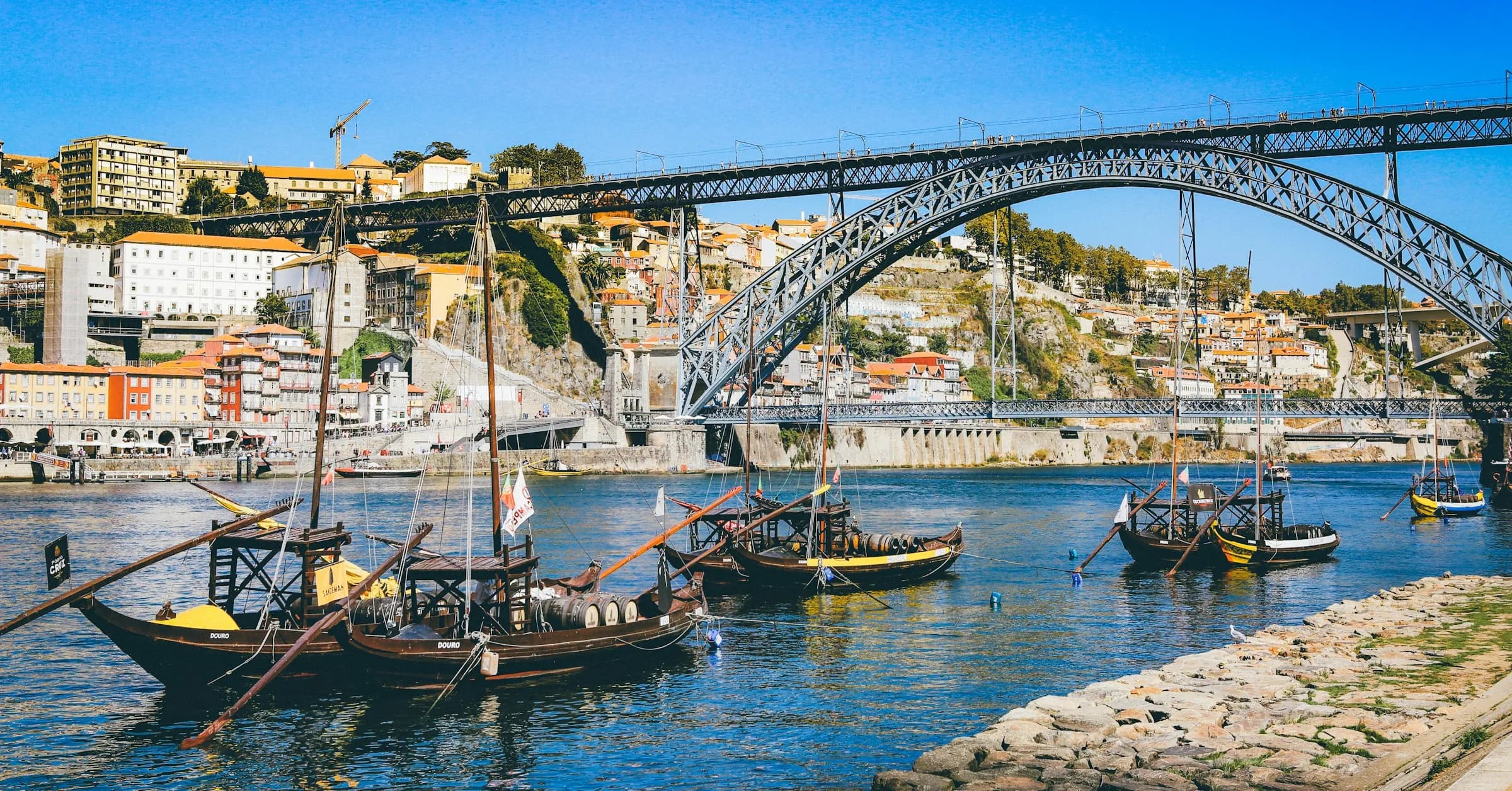
Reach the river at Ribeira, the part of Porto's UNESCO-listed centre that appears on every postcard: tall, narrow houses above a quay where the flat-bottomed rabelo boats that once carried port downriver are moored for show. Have lunch two streets uphill from the waterfront, where prices drop noticeably.
A few minutes' walk away is the Palácio da Bolsa, the 19th-century former stock exchange, which you can only see on a 30-minute guided visit (€14 for adults, 9:00–18:30). The highlight is the gilded Arab Room, modelled on the Alhambra. The palace still hosts official events and closes on some days or afternoons, so check the calendar on the booking page before planning around it.
Then rest your legs on the water. The classic six-bridges cruise runs for roughly 50 minutes from Ribeira or Gaia, passing under all six bridges that link the two banks. Boats leave frequently, or you can book a six-bridges cruise ticket in advance for a fixed time.
Day 1 evening: the top of the bridge and a Gaia sunset
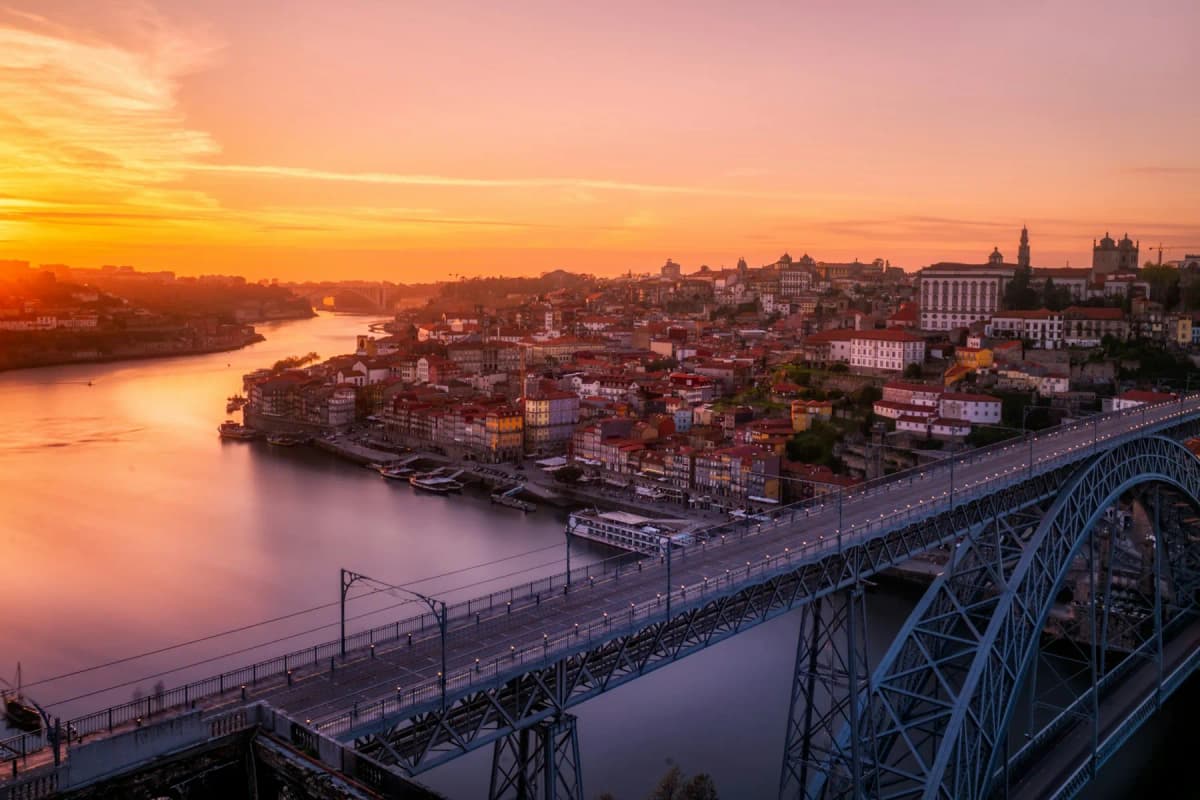 Photo: Everaldo Coelho on Unsplash
The iron Ponte Luís I opened in 1886 and was designed by Théophile Seyrig, a former partner of Gustave Eiffel. Its upper deck, about 45 metres above the water, is shared by pedestrians and Metro Line D. Climb up from the Sé side (or take the Guindais funicular towards Batalha and walk across) and cross to Jardim do Morro on the Gaia side, where much of the city seems to gather to watch the sun drop behind Ribeira. For a calmer, higher view, walk a few minutes further up to the terrace of the Mosteiro da Serra do Pilar. Both are free.
Walk back across the lower deck for dinner on either bank. If you want to try Porto's signature dish, this is the night for a francesinha: bread, ham, sausage and steak under melted cheese and a hot tomato-and-beer sauce. Share one if you've had lunch.
Day 2 morning: Livraria Lello and Clérigos Tower
Book Livraria Lello online before you travel and take the earliest slot you can. The neo-Gothic bookshop with its curving red staircase opens daily from 9:00 to 19:30, and entry is by a €15.95 timed voucher that you can deduct from the price of a book from Lello's own imprint. Combined tickets start from €29.95. It's closed on 1 January, Easter Sunday, 1 May, 24 June and 25 December.
Two minutes away is Clérigos Tower, the baroque bell tower that dominates the skyline. The climb is up a long, narrow spiral staircase, and the view from the top takes in the whole city and the river. Adult tickets are €10 (€7 for ages 11 to 18 and students), and it's open from 9:00 to 19:00. If you'd rather go up later, the Clérigos By Night ticket is €5.
Day 2 afternoon: Bolhão, Santa Catarina and the tiles
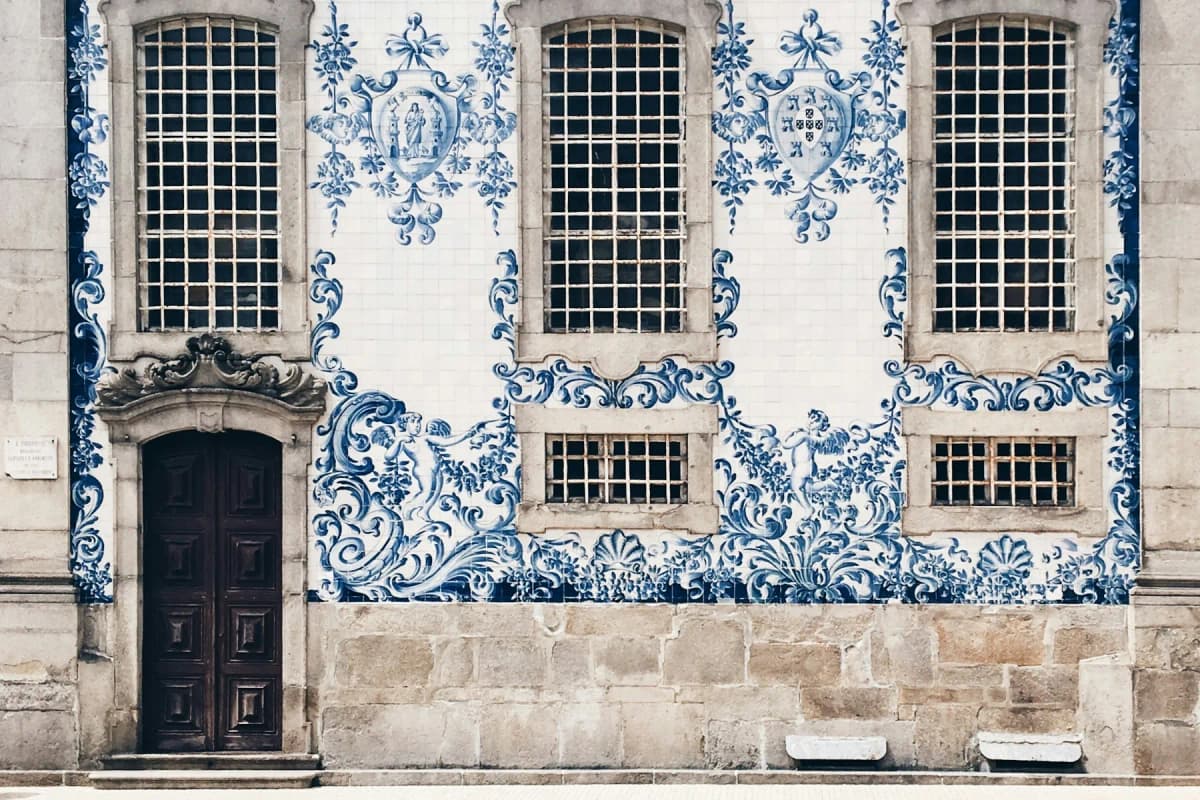 Photo: Yana Marudova on Unsplash
Walk up through Avenida dos Aliados, the grand boulevard below the city hall, to Mercado do Bolhão, Porto's restored 19th-century market hall, for a light lunch of cured meats, cheese and fruit. Nearby, on the corner of Rua de Santa Catarina, the main shopping street, is the Capela das Almas, its whole exterior covered in blue-and-white tiles showing the lives of saints. On the way back down, look out for the Igreja do Carmo, whose side wall is also tiled from top to bottom.
Day 2 evening: port cellars in Vila Nova de Gaia
Cross the lower deck of the bridge in the late afternoon and spend the end of the day in the port wine lodges of Vila Nova de Gaia. For centuries, port was made from Douro grapes but aged and shipped from here, and many of the big houses still run visits that last under an hour and finish with a tasting. At Taylor's, for example, the visit is self-guided with an audio guide and includes three wines; the cellar is open from 10:00 to 18:15. Prices vary by house and change often, so check the lodge's own website. Stay on the Gaia side for dinner and the view of Ribeira lit up across the river.
3 days in Porto: add the Douro Valley
The best use of a third day is the Alto Douro Wine Region, a UNESCO World Heritage landscape of terraced vineyards cut into the slopes above the river. It's the reason port exists, and it's a full day out, so give it a day of its own. You have two realistic options:
- By train. CP's Douro line runs from São Bento and Campanhã to Pinhão for €12.45 each way (2026 regional fare). The journey takes about two and a half hours, and the second half follows the river closely, so sit on the right-hand side heading east. In Pinhão you can take a short boat trip or visit a quinta, but estate visits usually need booking ahead and most aren't within walking distance of the station.
- On a guided tour. Because the estates are spread out and tastings don't mix well with driving, most visitors book a full-day Douro Valley tour with two winery visits, lunch and a river cruise from Pinhão, with hotel pickup in Porto included.
If wine isn't your thing, Guimarães or Braga make a better third day. Both are about an hour from São Bento on a suburban train costing €3.60 each way. Guimarães has a compact medieval centre and a castle; Braga has the hilltop sanctuary of Bom Jesus and its famous staircase. Our guide to the best day trips from Porto compares eight options with fares and journey times.
A 3-day Porto itinerary at a glance
| Day | Morning | Afternoon | Evening |
|---|---|---|---|
| Day 1 | São Bento, the Sé, Barredo | Ribeira, Palácio da Bolsa, six-bridges cruise | Bridge upper deck, sunset at Jardim do Morro |
| Day 2 | Livraria Lello, Clérigos Tower | Aliados, Bolhão, Capela das Almas | Port cellars in Gaia |
| Day 3 | Douro Valley by train or tour | Douro Valley | Back in Porto, dinner in Ribeira |
4 days in Porto or more: what to add
A fourth day is where Porto gets more relaxed. Good additions, in rough order of how often we'd recommend them:
- Serralves. Portugal's leading contemporary art museum, in a white building by Álvaro Siza, plus an Art Deco villa and a large park with woods, a lake and a treetop walkway. All spaces cost €24 for non-residents, or €15 for the park only. It's a good rainy-day option.
- Foz do Douro and Matosinhos. Where the river meets the Atlantic: a long promenade, small beaches between the rocks and the Felgueiras lighthouse. Take historic tram 1 along the river, or walk the riverside path, a little over an hour from Ribeira. Stay for grilled fish in Matosinhos, known for its seafood restaurants.
- A second day trip. Aveiro and the striped beach houses of Costa Nova make an easy, flat day; Guimarães and Braga suit history lovers.
Is 4 nights in Porto too much? Not if you use one or two of those days for day trips. Four nights (three full days plus arrival and departure) is a comfortable fit for the 3-day plan above, and it means your Douro day isn't the day after a late arrival.
Porto or Lisbon: where should you spend more time?
If you're splitting a trip between the two, most people give Lisbon a little more time than Porto. Lisbon is bigger, with more monuments, more neighbourhoods and easy day trips to Sintra and Cascais, so three days there is a realistic minimum. Porto is smaller and more intimate, and two days covers the city; it's the Douro Valley that justifies a third.
A common split for a week in Portugal is three or four days in Lisbon and two or three in Porto, with the train between them taking about three hours. Our Lisbon itinerary lays out three days in the capital, and our 7, 10 or 14-day Portugal itinerary shows how both cities, Coimbra and the Douro fit into one trip.
Getting around Porto in 2 or 3 days
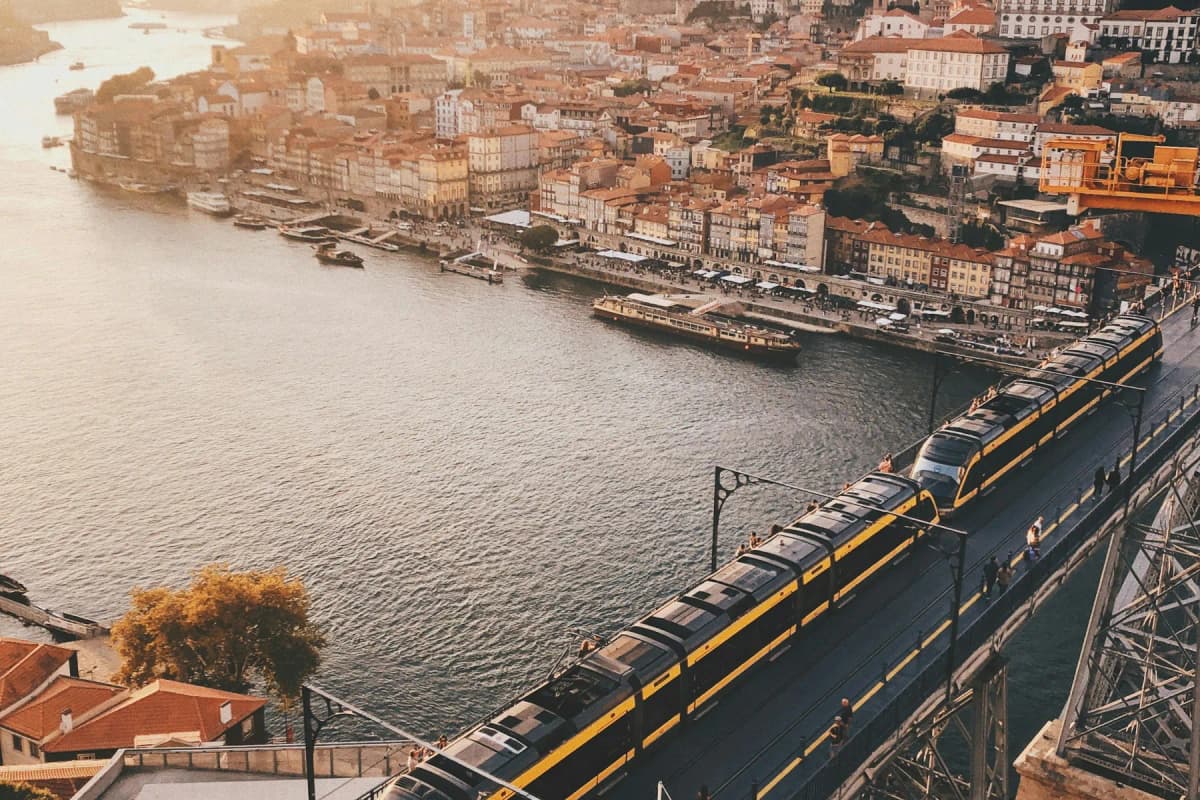 Photo: Alex Vasey on Unsplash
Both plans above are mostly on foot. Porto's centre is walkable but steep, so wear shoes with grip: the granite cobbles are slippery when wet. For longer hops, the Metro do Porto and STCP buses use the Andante ticketing system, priced by zone. The centre, Gaia and Foz are all in zone Z2; the airport is Z4.
| Ticket (2026) | Price | Best for |
|---|---|---|
| Andante Azul card | €0.60, reusable | Everyone; buy it at a metro machine |
| Single trip, Z2 | €1.40 | A few hops around the centre and Gaia |
| Single trip, Z4 | €2.30 | Airport to the city centre |
| Andante 24, Z2 | €5.35 for 24 hours | A day with several metro or bus rides |
| Andante Tour 1 / Tour 3 | €7.75 for 24h / €16.55 for 72h | Unlimited travel across the whole network |
Which pass fits? On the 2-day plan, most visitors only need a handful of single Z2 trips, so a reloadable card with pay-as-you-go trips is usually cheapest. The Andante Tour 3 only pays off if you'll ride the metro and buses many times a day, for example if you're staying out in Boavista or Matosinhos. The historic trams and the Guindais funicular are priced separately as tourist rides.
What 2 or 3 days in Porto costs
Here's what the paid sights in the plans above add up to per adult at 2026 prices. Accommodation, food and the port tasting are extra.
| Item | Price |
|---|---|
| Palácio da Bolsa guided visit | €14 |
| Livraria Lello voucher | €15.95 (deductible from a Lello book) |
| Clérigos Tower | €10 |
| Andante card and a few Z2 trips | Around €5 |
| 2-day sights total | About €45 |
| Douro train to Pinhão and back | €24.90 |
| 3-day total with the Douro by train | About €70 |
A six-bridges cruise, port cellar visit and guided Douro tour are optional extras on top, and their prices vary by operator and season.
If you're still sorting out flights to Porto, compare a few dates before you fix your plan:
Arriving at Porto Airport (OPO): Metro Line E (violet) runs straight into the city centre on a single Z4 ticket (€2.30 plus the €0.60 card). On a two-day trip every hour counts, so if you land late or have heavy bags, you can pre-book a fixed-price airport transfer to your hotel door instead. A Portugal eSIM set up before you fly means maps and metro times work from the moment you land, and travel insurance that covers trip delays and medical costs is worth having for any trip abroad.
Tips for making 2 or 3 days in Porto count
- Book Lello and the Bolsa first. They're the two sights most likely to cost you time, Lello because of queues and the Bolsa because it closes for events.
- Do the sunset on the Gaia side. The light falls on Ribeira in the evening, so the view from Jardim do Morro or Serra do Pilar is best late in the day.
- Plan downhill. Start high (São Bento, the Sé, Clérigos) and walk down to the river, then use the funicular or metro to climb back up.
- Don't do the Douro on your arrival or departure day. Trains and tours start early and return in the evening.
- Check closing days. Several sights close on public holidays, and Lello closes on 24 June for São João, Porto's biggest festival night.
- Bring a layer. Porto is on the Atlantic and can be cool, damp and breezy even in summer evenings.
Frequently asked questions
Is 2 days in Porto enough? Yes, for the city. Two full days covers Ribeira, the Dom Luís I bridge, São Bento, the Sé, Clérigos Tower, Livraria Lello, the Palácio da Bolsa and a port cellar visit in Gaia at a comfortable pace. You'll need a third day if you also want to see the Douro Valley.
Is 3 days too long in Porto? No. Three days is the most popular choice for a first visit because it lets you see the city in two days and spend the third in the Douro Valley or on a day trip to Guimarães or Braga. Even if you stay in the city, a third day gives you time for Serralves or the coast at Foz.
Is 4 nights in Porto too much? Not at all, as long as you plan a day trip or two. Four nights gives you three full days plus your arrival and departure, which fits the 3-day plan in this guide without rushing. It's also a good length for using Porto as a base for northern Portugal.
Should I spend more time in Lisbon or Porto? Most people give Lisbon a little more time. Lisbon is bigger and has more sights and day trips, so three or four days suits it; Porto's centre is smaller, so two or three days is usually enough. A common one-week split is four days in Lisbon and three in Porto.
Can you do Porto in 1 day? You can see the highlights in a long day: São Bento, the Sé, Ribeira, the bridge, Clérigos and a Gaia sunset. You'd need to skip Lello and the Bolsa or book early time slots for both, and you won't have time for the Douro Valley.
How many days do you need for Porto and the Douro Valley? Three days is the realistic minimum: two in the city and one full day in the valley. If you want to stay overnight in the Douro wine country, which gives you a slower day among the vineyards, allow four.
How we researched this guide
Prices, opening hours and transport details were checked in September and October 2026 against the official ticketing pages for Livraria Lello, the Torre dos Clérigos and the Palácio da Bolsa; Serralves for admission prices; Metro do Porto for Andante fares in force from 1 January 2026; and CP – Comboios de Portugal for the Douro line and suburban fares. Background came from Visit Porto and North. Port cellar prices, cruise prices and tour prices vary by operator and season, so we haven't quoted them. Opening days and ticket prices change, especially around holidays and events, so double-check before you travel. Found something out of date? Let us know.
Planning more of Portugal? Browse all our Portugal guides, see our full list of the best things to do in Porto, or plan a few days further afield with our guide to the best day trips from Porto.