16 Best Things to Do in Madeira (2026)
October 15, 2026 · Portugal
This post contains affiliate links. We may earn a commission if you book through them, at no extra cost to you. Disclaimer.
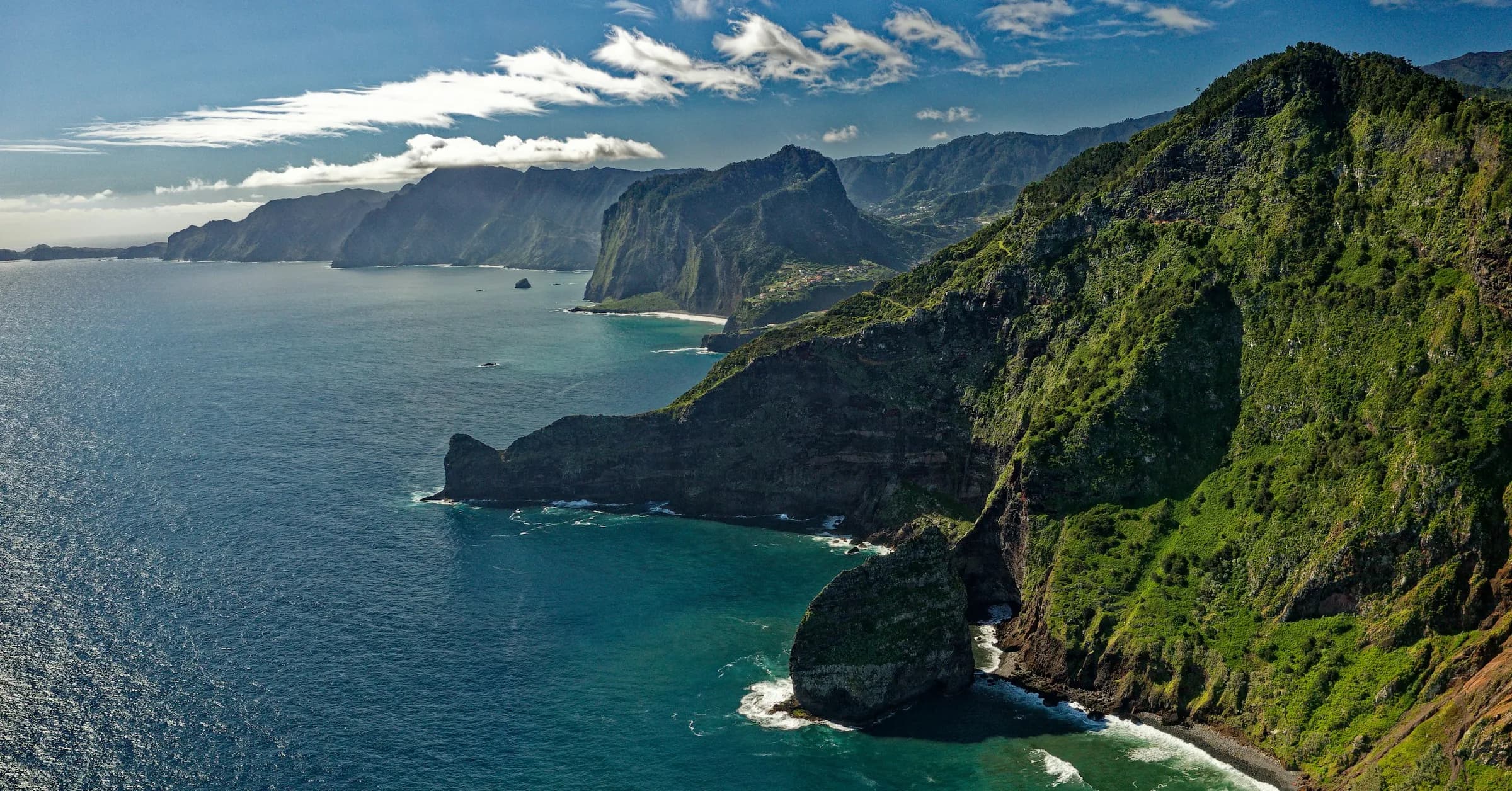
The best things to do in Madeira are mostly outdoors: walking the island's levadas (old irrigation channels with paths beside them), hiking between the peaks at Pico do Arieiro and Pico Ruivo, swimming in the volcanic rock pools at Porto Moniz, and standing on the glass skywalk at Cabo Girão, one of the highest sea cliffs in Europe. Add the old town and gardens of Funchal, the fishing harbour at Câmara de Lobos and a glass of Madeira wine, and you have a week that's very different from mainland Portugal.
This guide covers the 16 things most worth planning around, the new 2026 rules for booking hiking trails, entry prices checked against official sources where we could confirm them, and how to get around an island where a 30 km drive can take an hour.
Things to do in Madeira: the quick list
| If you have… | Do this |
|---|---|
| 3 days | Funchal and the Monte cable car, a levada walk, Pico do Arieiro at sunrise |
| 5 days | Add the west coast (Porto Moniz, Seixal, Fanal) and Ponta de São Lourenço |
| 7 days | Add the full PR1 peak walk, Santana and the north coast, Câmara de Lobos and Cabo Girão |
| 10 days | Add Porto Santo's beach and more levada walks at a slower pace |
Our short version: stay in Funchal for restaurants and transport, hire a car or book tours for the west and north, and book any hiking trail online before you go, because all classified trails now need a paid time slot. Keep a flexible day in your plan: the mountains are often in cloud, and the best walks are the ones you do on a clear morning.
Before you hike: Madeira's 2026 trail booking rules
This is the single most important thing to know before you plan your days. According to Visit Madeira, all of the island's classified walking trails (the official routes numbered PR, such as PR1 and PR6) now require a prior reservation of a time slot on the regional government's SIMplifica platform. Booking is online only and paid in advance.
- Fee: in 2026 the fee is generally €4.50 per person per trail. Press reports put the fee for the popular PR1 peak-to-peak walk higher, at €10.50. Madeira residents are exempt.
- Time slots: entry is booked in 30-minute slots, so plan your drive or transfer around your slot.
- Children: under-12s are reported to be free, but they still need to be registered.
- Fines: walking a classified trail without a reservation is an infraction, and you may be fined.
- Signal: mobile coverage is patchy in the mountains, so book and download your confirmation before you leave your hotel.
Guided walking tours usually include the trail fee and booking, which is one less thing to arrange, but check what your tour covers.
1. Watch the sunrise from Pico do Arieiro
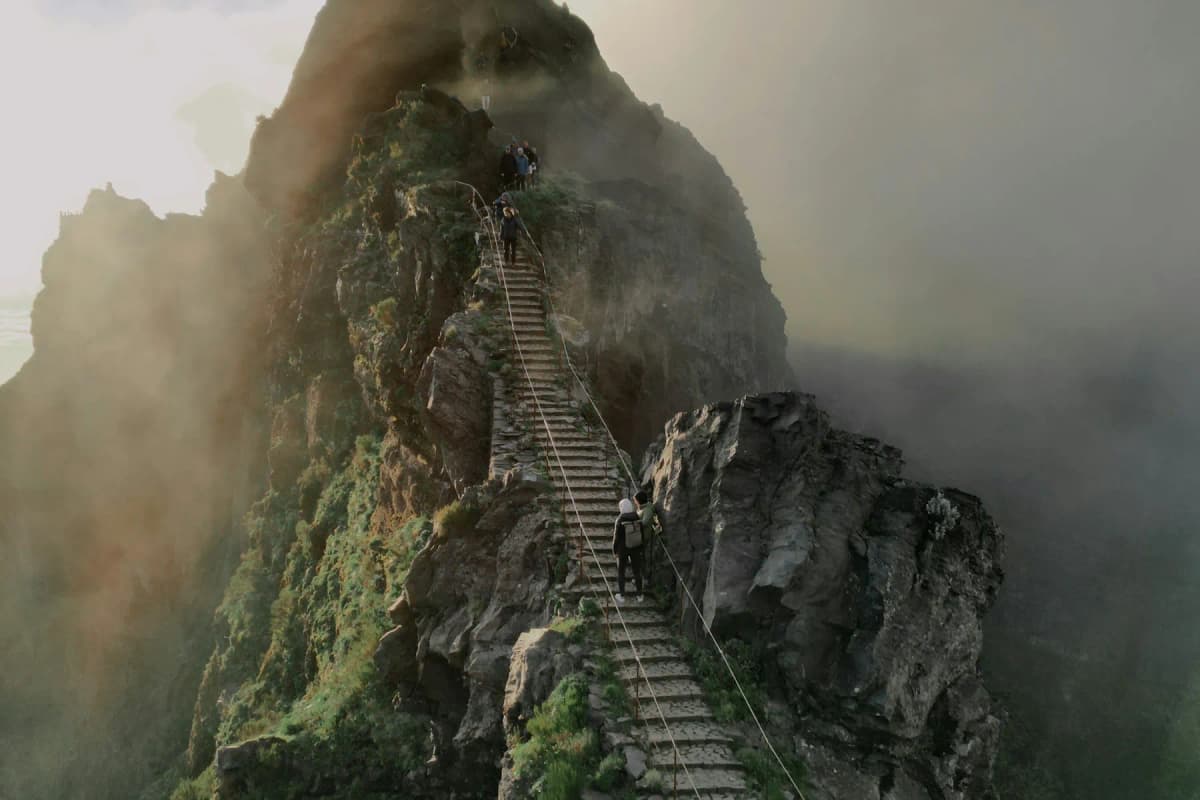 Photo: Samielle Støyl on Unsplash
Pico do Arieiro, at about 1,818 metres, is the third-highest peak on Madeira and the easiest to reach: a road climbs to a car park just below the summit. On a clear morning you stand above a sea of cloud with jagged ridges in every direction, and sunrise here is one of the best-known sights on the island.
- Good for: photographers, early risers, anyone who wants the mountain views without a long hike.
- Watch out for: the cold. It's often near freezing at the top before dawn, even in summer, while Funchal is mild. Bring a warm layer.
- Getting there: under an hour by car from Funchal on winding mountain roads. If you'd rather not drive in the dark, you can join a small-group sunrise tour to Pico do Arieiro from Funchal with hotel pickup.
2. Walk the PR1 from Pico do Arieiro towards Pico Ruivo
The PR1 Vereda do Areeiro links Pico do Arieiro with Pico Ruivo (1,862 m), Madeira's highest peak, along a ridge of stairways, tunnels and narrow ledges. It's the most famous walk on the island and a serious one, with long climbs and drops and steep sections with cable handrails.
The trail closed after wildfires in 2024 and reopened in late April 2026. Reports around the reopening said it would be walked one way, from Arieiro towards Ruivo, with two-way walking only as far as the Pedra Rija viewpoint, finishing via Achada do Teixeira, where you'll need a taxi or pre-arranged pickup. Because rules on this route have changed several times, check the trail status and direction on the SIMplifica booking page before you go, and book your slot as early as you can.
3. Hike the Levada das 25 Fontes (PR6)
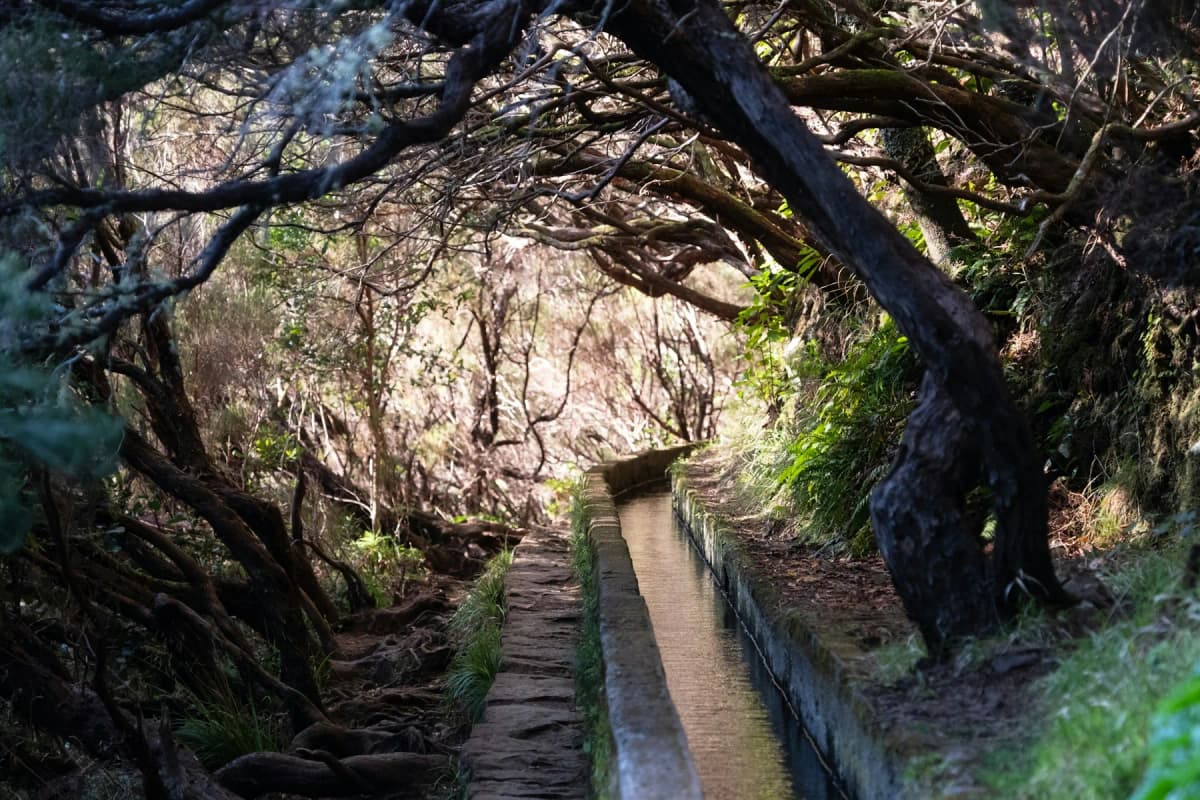 Photo: Luís Cardoso on Unsplash
The levadas are what make Madeira special for walkers. These irrigation channels were cut along the mountainsides to carry water from the wet north to the farms of the dry south, and the maintenance paths beside them make gently graded walks through places you couldn't otherwise reach.
The best known is PR6 Levada das 25 Fontes, which starts at Rabaçal, off the ER 105 road on the Paul da Serra plateau. It's 4.3 km one way (8.6 km there and back), takes about three hours and is rated moderate. The trail follows the levada through laurel forest to a pool fed by dozens of small waterfalls, the "25 springs" of the name. A shuttle runs between the car park and the start of the walk, which saves a steep stretch of road.
The car park and the trail get very busy, so arrive early or book a time slot first thing. If you don't want to drive, you can book a self-guided 25 Fontes and Risco levada hike with return transfer, which takes care of the transport while you walk at your own pace.
4. Walk through the fog forest of Fanal
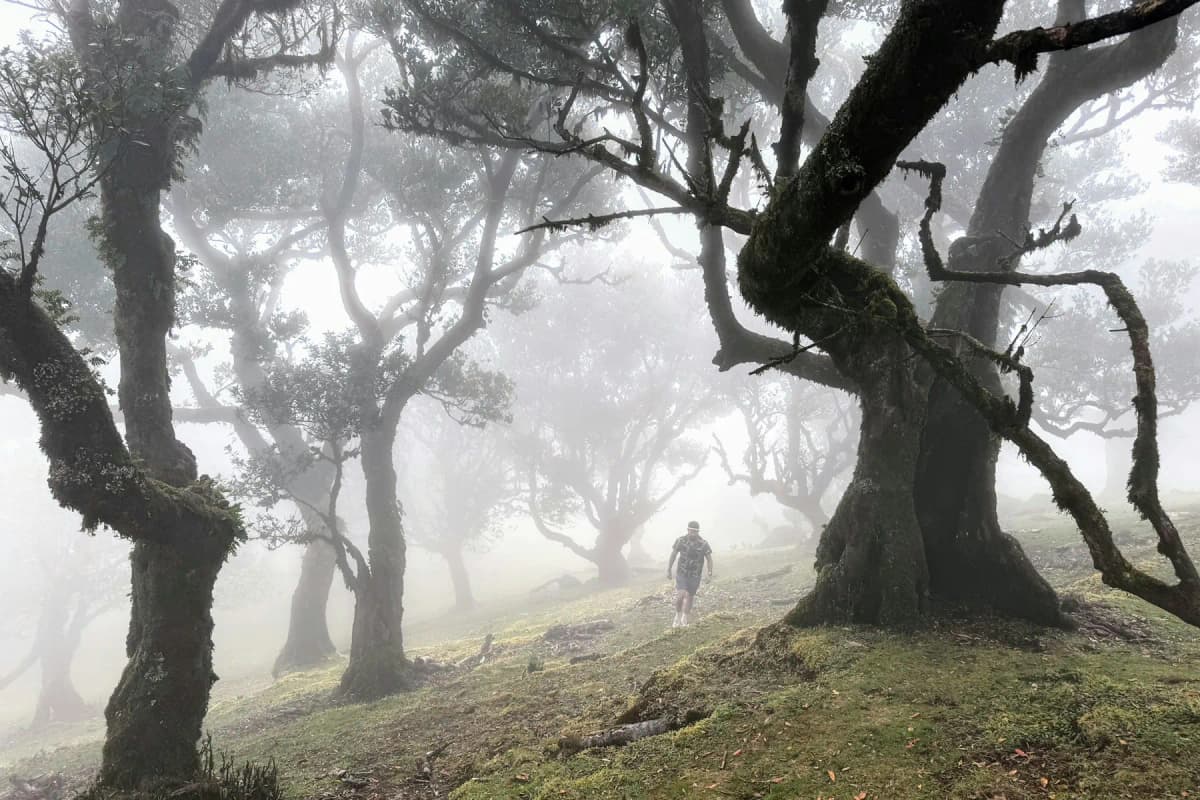 Photo: Tomas Trajan on Unsplash
Fanal, on the edge of the high plateau in the north-west, is a grassy upland dotted with ancient, twisted laurel trees. On a clear day it's a peaceful picnic spot; when the cloud rolls in, which happens often, the trees appear and vanish in the mist and it's one of the most atmospheric places on the island. It's part of Madeira's Laurisilva, the laurel forest that was listed as a UNESCO World Heritage Site in 1999.
You don't need to hike far to enjoy it: the trees are a short walk from the road. It works well combined with the west coast and Porto Moniz on the same day.
5. Hike Ponta de São Lourenço (PR8)
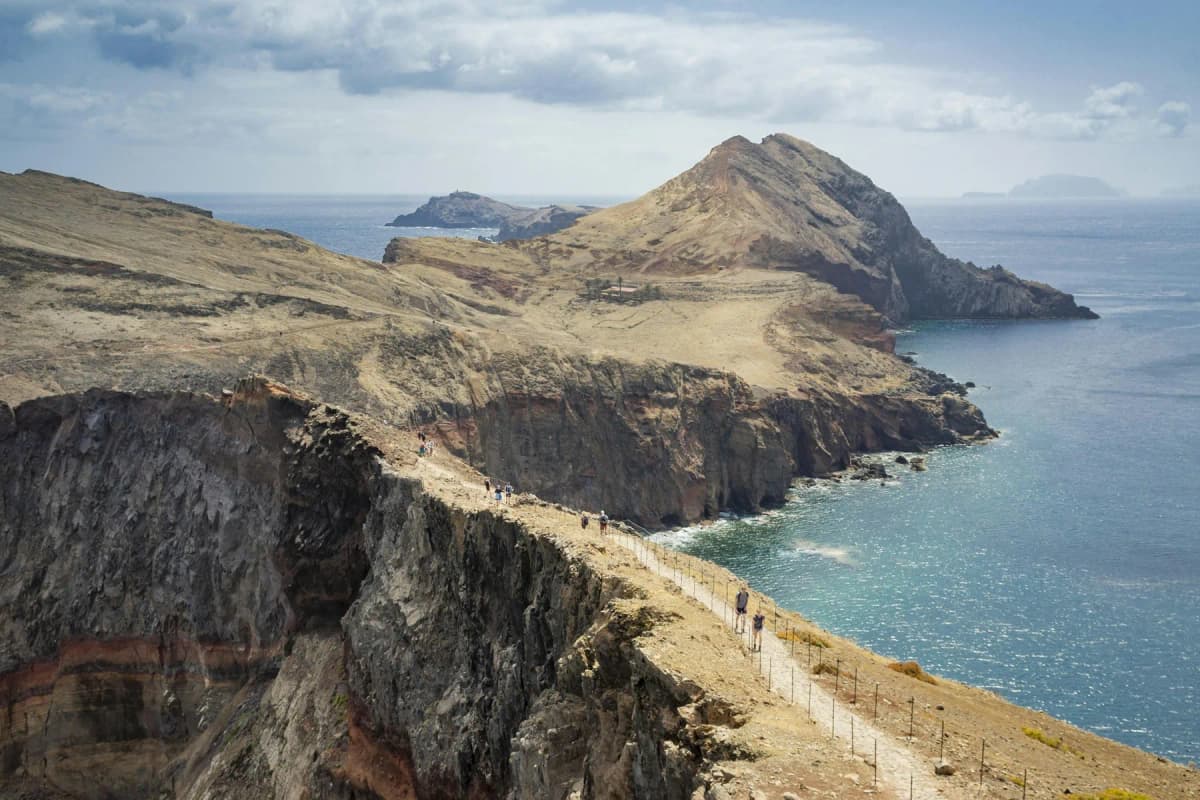 Photo: Piotr Musioł on Unsplash
At the island's eastern tip, Ponta de São Lourenço is a completely different Madeira: a dry, windswept peninsula of red, brown and ochre volcanic rock with the Atlantic on both sides. The PR8 trail runs from Baía d'Abra to Casa do Sardinha, about 3 km each way, and takes around two and a half hours there and back.
There's almost no shade, so go early, carry water and wear sun protection. The airport is close by, which makes this a good walk for your arrival or departure day.
6. Swim in the Porto Moniz natural pools
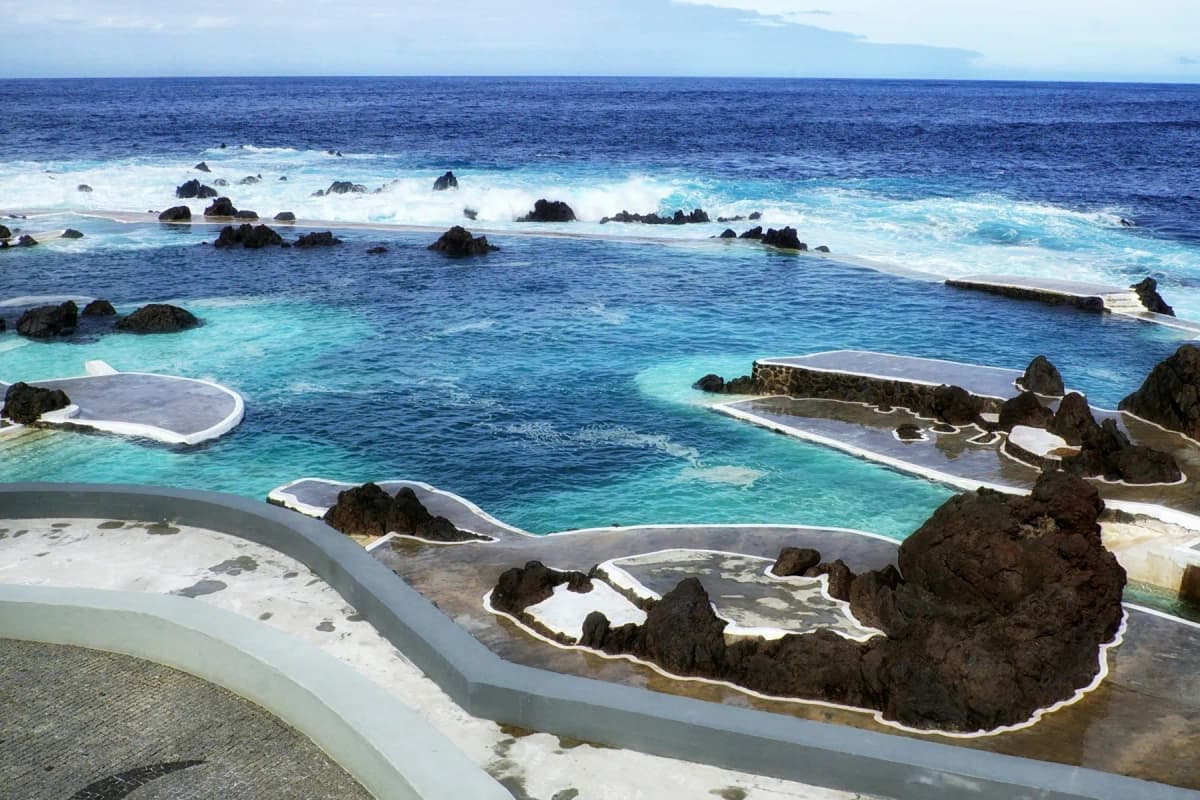 Photo: Markus Kammermann on Unsplash
At Porto Moniz, on the north-west tip of the island, the sea pours over black lava rocks into a set of natural pools that have been adapted for swimming. According to the Porto Moniz municipality, the main complex costs €3 for anyone over three (free for under-fours), with lifeguards on duty. It's open from 9:00 to 17:00 in winter and 9:00 to 19:00 in summer, and the water averages around 20 to 21 °C.
If you'd rather not pay, the Aquarium pools nearby are free. On rough days, watching the Atlantic waves smash over the outer rocks is half the fun.
7. Visit Seixal's black sand beach
A short drive east of Porto Moniz along the north coast, Seixal is a small village with one of Madeira's few black sand beaches, backed by steep green cliffs and waterfalls. There are also free natural pools by the Clube Naval, open from 10:00 to 19:00. It's a good lunch stop on a west-coast day, and the drive along the north coast road is spectacular.
8. Take a west coast day trip
Porto Moniz, Seixal and Fanal are all in the west and north-west, and they fit together naturally into one long day. Driving yourself gives you the most freedom, but the roads are steep and winding. The easier option is to book a full-day Madeira west coast nature tour with hotel transfer, which typically covers the highlights of the west and north-west in one loop from Funchal. Check the itinerary on the listing, as stops vary.
9. Stand on the Cabo Girão skywalk
West of Funchal, Cabo Girão is a 580-metre sea cliff that Visit Madeira describes as the highest promontory in Europe. A glass-floored skywalk juts out from the top, so you can look straight down at the farm terraces and the sea far below.
- Entry: €5 for visitors over 12, free for 12 and under, paid through the SIMplifica platform. The fee rose from €3 at the start of 2026.
- Hours: daily from 08:00 to 20:00.
- Tip: go early or late in the day to avoid the tour-bus crowds. It's only about 20 minutes' drive from Funchal, so it combines easily with Câmara de Lobos.
10. Spend an afternoon in Câmara de Lobos
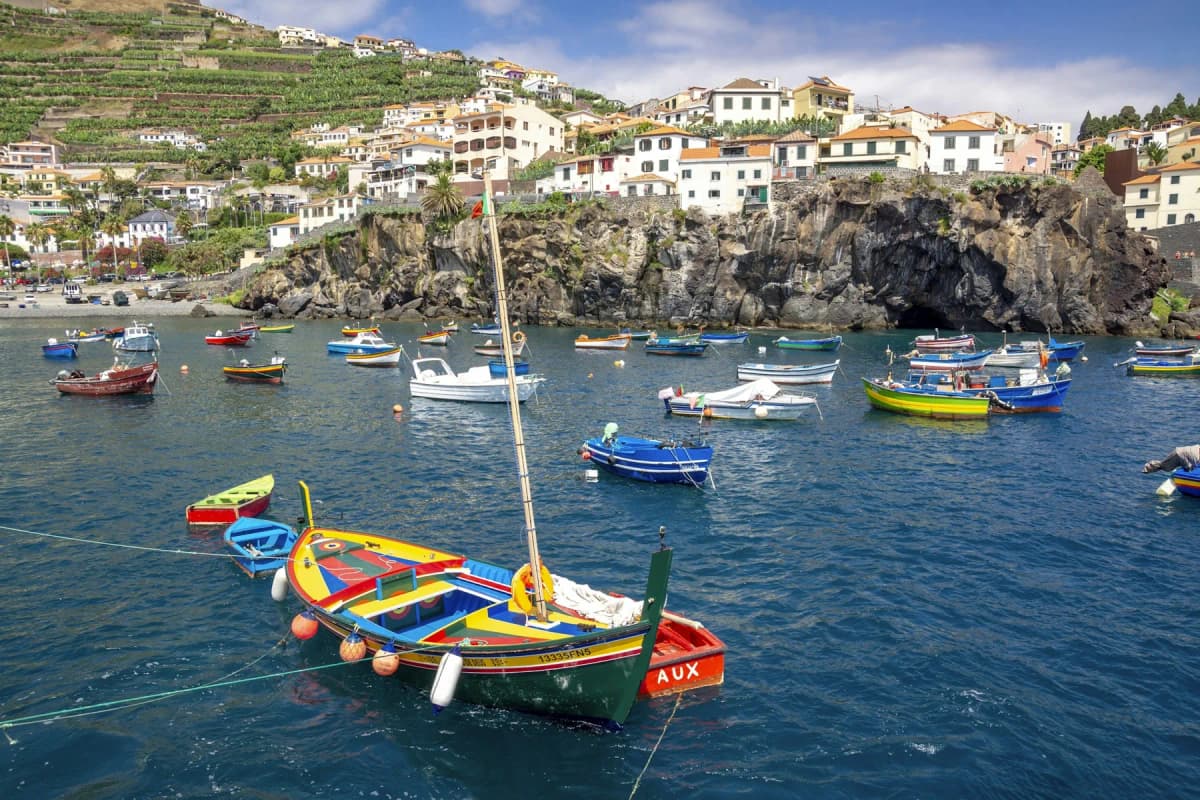 Photo: Piotr Musioł on Unsplash
The fishing village of Câmara de Lobos, just west of Funchal, has a small harbour full of brightly painted wooden boats, a pebbly beach where they're pulled up, and lanes of bars where locals gather. Winston Churchill painted the harbour during a stay on Madeira in 1950, and a viewpoint marks the spot. The village is also known for poncha, Madeira's drink of sugar-cane spirit (aguardente), honey and lemon. Try one, but it's stronger than it tastes.
11. Explore Funchal's old town and market
Funchal, the capital, is where most visitors stay. Start at the Mercado dos Lavradores, the 1940s market hall, where the ground floor is piled with tropical fruit (passion fruit in several varieties, custard apples, tamarillos) and flowers, and the fish market at the back sells the long, black espada (scabbardfish) that appears on every menu. Be aware that some fruit stalls offer generous tastings and then charge high prices per kilo, so ask before you buy.
From the market, walk into the Zona Velha (old town). Its main street, Rua de Santa Maria, is known for its painted doors, an art project that turned a run-down street into one of the liveliest parts of the city, with restaurants spilling out on to the cobbles. Finish at the seafront for a walk along the harbour.
12. Ride the cable car to Monte
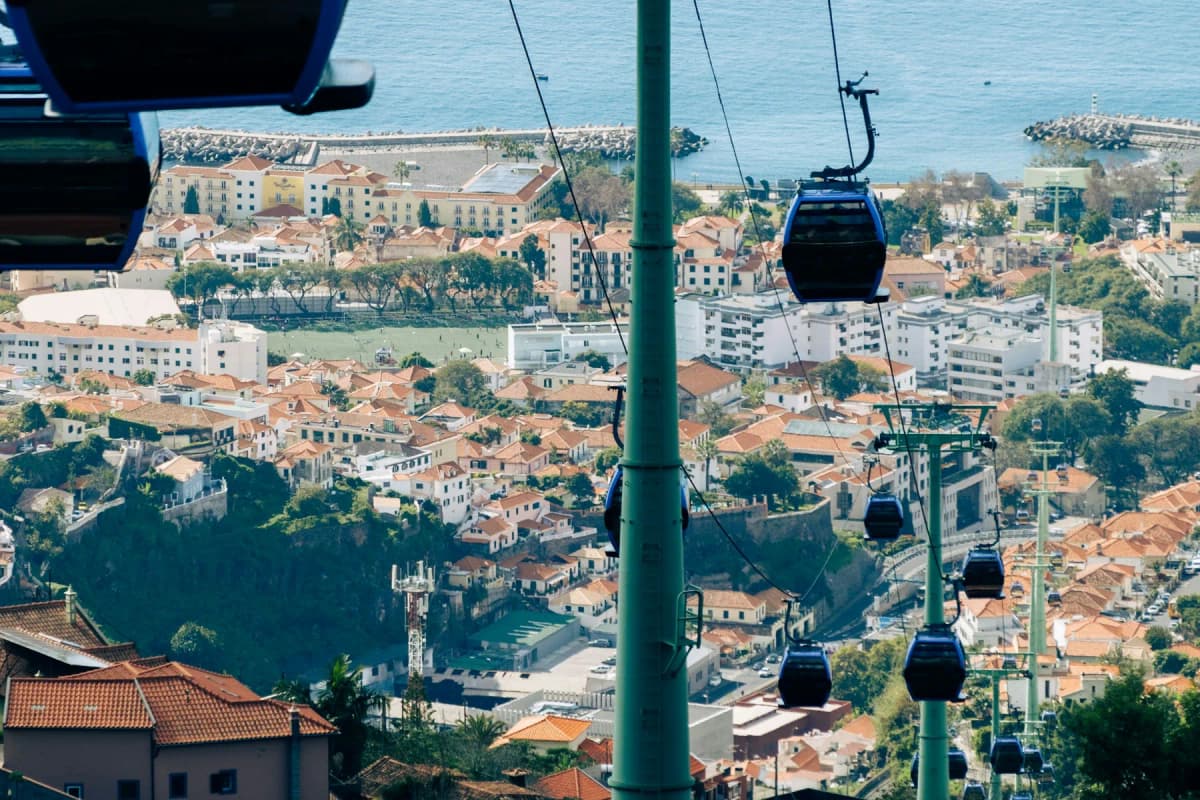 Photo: Balázs Gábor on Unsplash
The Funchal–Monte cable car climbs from the old town seafront to the hillside parish of Monte in roughly a quarter of an hour, with wide views over the city and the bay. At the top are the Church of Our Lady of Monte and two of the island's best gardens.
The cable car closed from January to April 2026 for upgrade works. We couldn't confirm 2026 fares from an official source, so check the current prices and hours on the Madeira Cable Car website before you go.
13. Slide down from Monte in a wicker toboggan
Monte's most famous attraction is the carros de cesto: wicker sledges on wooden runners, steered down the steep road towards Funchal by two drivers in white uniforms and straw hats who use their rubber-soled boots as brakes. It was once the quickest way down the hill, and it's now a firm tourist favourite. The ride takes about ten minutes and finishes partway down the hill, from where you can walk, take a taxi or catch a bus.
Prices rose on 1 May 2026 to €30 for one person, €40 for two and €60 for three per toboggan, according to local press reports.
14. Visit Monte Palace and the Botanical Garden
Madeira's mild climate makes it a garden island, and two gardens stand out:
- Monte Palace Tropical Garden, beside the top of the cable car, is a hillside garden of lakes, oriental pagodas, cycads and tiled panels, with a museum of minerals and African sculpture. Funchal's tourism office lists it as open daily from 9:30 to 18:00.
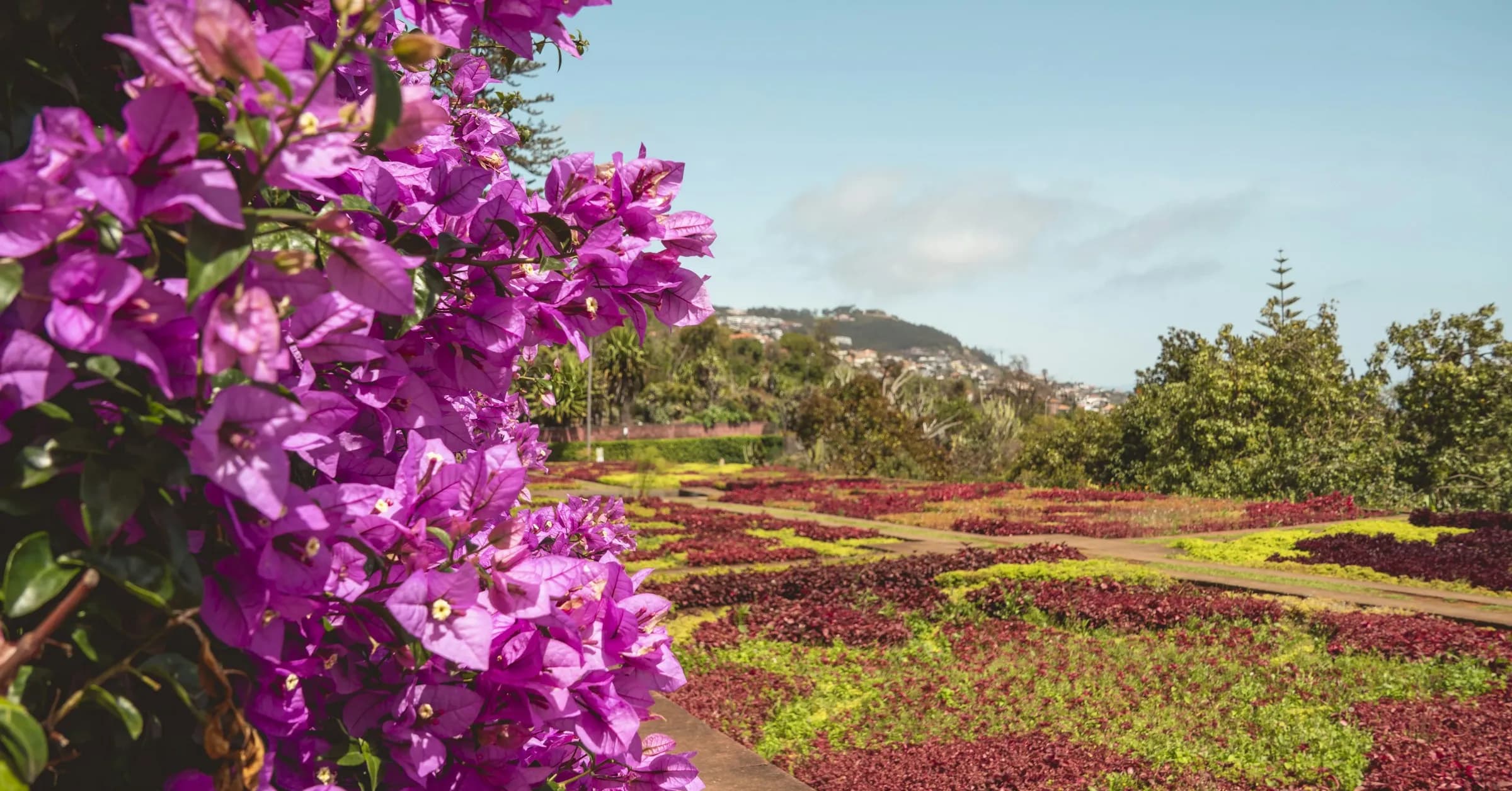
- Madeira Botanical Garden, on another hillside above Funchal, is more formal, with neat geometric flower beds and views over the bay. It's linked to the city by a separate cable car from Monte.
We couldn't confirm 2026 non-resident ticket prices for either garden from official sources, so check them before you go. Madeira residents get free entry to the Botanical Garden from 2026.
15. Taste Madeira wine at a Funchal lodge
Madeira wine is fortified like port but aged by heat, which gives it an unusual nutty, caramel character and a famously long life: bottles decades old are still drinkable. The best introduction is a lodge visit in central Funchal, such as Blandy's Wine Lodge on Avenida Arriaga, where guided tours explain the ageing process and end with a tasting. We couldn't confirm 2026 tour prices from an official source, so check on the lodge's own site. Ask about the four main grape styles, from dry Sercial to rich Malmsey.
16. See the thatched houses of Santana
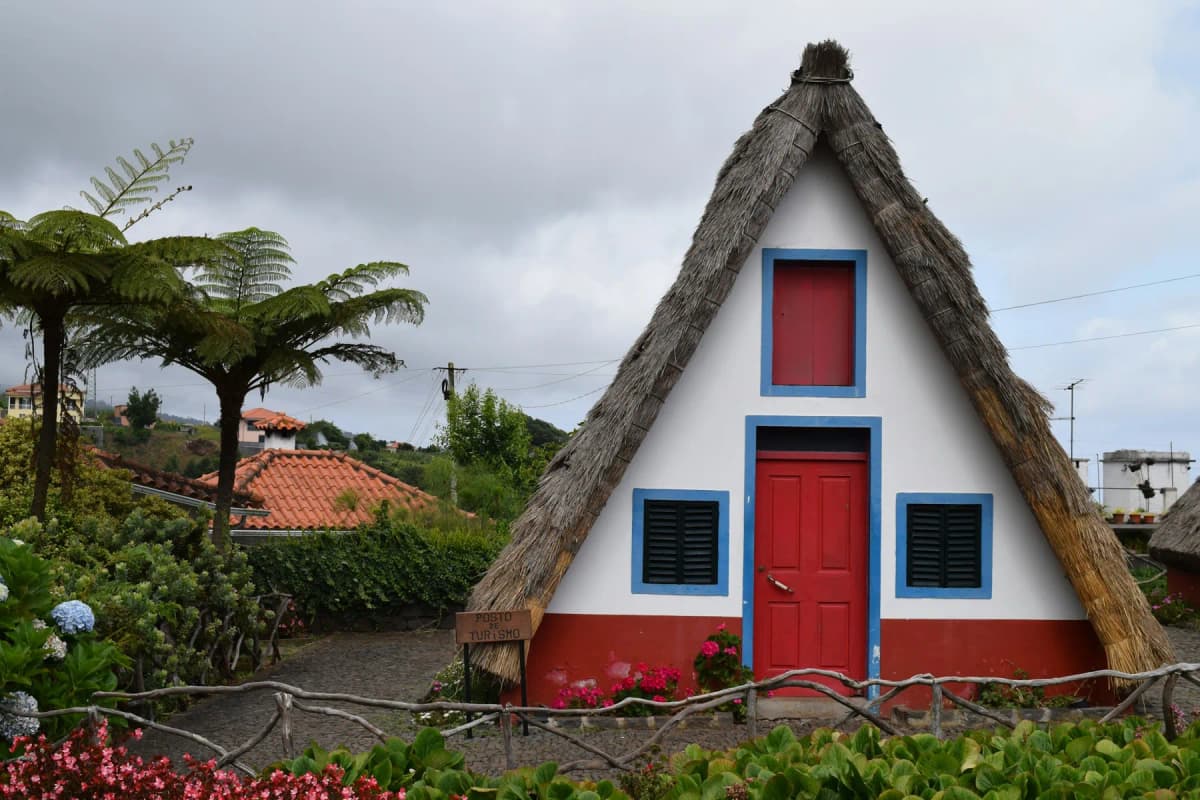 Photo:
 On the north coast, the town of Santana is known for its casas de Santana: small triangular A-frame houses with thatched roofs that reach almost to the ground, painted white with red doors and blue trim. A few are preserved in the centre for visitors, and it's a short stop that pairs well with Achada do Teixeira (the end of the PR1) or the north-east coast.
Bonus: a day on Porto Santo. If you want a proper sandy beach, Madeira's neighbouring island has a long golden sand beach that Madeira itself lacks. The Porto Santo Line ferry from Funchal takes about two and a half hours each way, so it's a long day trip; staying a night or two is more relaxing. We couldn't confirm 2026 ferry fares, so check them when you book.
Getting around Madeira
Madeira is small on the map but slow to cross. Roads climb steeply, many villages are linked by tunnels, and mountain roads are narrow and winding. Your main options:
- Hire a car. It gives you the most freedom, especially for sunrise at Pico do Arieiro or an early start at Rabaçal. Visit Madeira notes there are no tolls on the island. In towns, white-lined bays are free, blue are paid and yellow mean no parking. Paid parking applies Monday to Friday 8:00 to 20:00 and Saturday 8:00 to 14:00, and it's free on Sundays and public holidays.
- Book tours. If you'd rather not drive mountain roads, a handful of day tours from Funchal covers the west coast, the peaks and the levadas, and most include hotel pickup.
- Buses and taxis. Funchal has a good city bus network, but buses to the mountains and the far west are infrequent, so they're hard to rely on for hikes.
Arriving at Madeira Airport (FNC): the airport is east of Funchal, about 20 to 25 minutes by road. The Aerobus, taxis, car hire and transfers all serve it. If you're arriving late or with luggage, you can pre-book a fixed-price transfer from Madeira Airport to Funchal so a driver is waiting.
If you're still comparing flights to Madeira, check a few dates before you lock in your trip:
Before you go: mountain trails, remote viewpoints and booking confirmations all depend on your phone, so set up a Portugal eSIM before you fly (Madeira is part of Portugal, so the same plan works). Hiking on steep trails is also a good reason to have travel insurance that covers medical costs and outdoor activities; check the policy's hiking terms before you buy.
Tips for visiting Madeira
- Check the mountain weather, not the Funchal forecast. Funchal can be sunny while the peaks are in cloud, and vice versa. Webcams at Pico do Arieiro and other viewpoints help you decide on the morning.
- Book trail slots early, but stay flexible. Popular walks like PR1 and PR6 fill up; if you can, book them for a day when the forecast looks good and keep a backup plan.
- Pack layers and good shoes. It can be 25 °C on the coast and close to freezing on the peaks on the same day, and levada paths are often wet and slippery.
- Bring a torch for tunnels. Several levada walks pass through dark, dripping tunnels.
- Respect closures. Trails close after storms, rockfalls or fires. Closures are for safety, and walking a closed trail can get you fined.
- Skip the São Vicente caves. They've been closed since an earthquake in March 2020, despite still appearing on some older lists.
Frequently asked questions
What must you do in Madeira? At minimum: walk a levada (PR6 Levada das 25 Fontes is the classic), see the view from Pico do Arieiro, swim in the natural pools at Porto Moniz, stand on the Cabo Girão skywalk, and spend time in Funchal's old town and market. If you're fit, the PR1 walk between the peaks is the island's signature hike.
What currency is used in Madeira? The euro. Madeira is an autonomous region of Portugal and part of the European Union, so prices and payments work just as they do on the mainland. Cards are widely accepted in Funchal, but carry some cash for small cafés, markets and rural areas.
Does Madeira have sandy beaches? Very few natural ones. Most of Madeira's coast is cliffs and rocky or pebble beaches, which is why the sea pools at Porto Moniz and Seixal are so popular. Seixal has a small black sand beach, and a few beaches have imported golden sand. For a long natural sandy beach, take the ferry to Porto Santo.
How many days to see Madeira? A week is ideal for a first visit. Three days lets you see Funchal, one levada and Pico do Arieiro; five days adds the west coast and Ponta de São Lourenço; seven days gives you time for the PR1, the north coast and a spare day for bad weather in the mountains.
Do you need to book hiking trails in Madeira? Yes, for all classified (PR) trails. You need to reserve and pay for a time slot in advance on the SIMplifica platform. The fee in 2026 is generally €4.50 per person, and walking without a reservation can lead to a fine.
Do you need a car in Madeira? Not to enjoy Funchal, but a car makes the rest of the island much easier, especially for early starts. If you'd rather not drive the mountain roads, base yourself in Funchal and use day tours for the west coast, the peaks and the levadas.
How we researched this guide
Trail booking rules, the Cabo Girão fee and hours, transport and parking information came from Visit Madeira, the official tourism site of the Madeira regional government. Natural pool prices and hours at Porto Moniz came from the Porto Moniz municipality, and Monte Palace's hours from Funchal's municipal tourism pages. The 2026 PR1 fee, the PR1 reopening details, the Cabo Girão fee change and the Monte toboggan prices come from local press reports, not official price lists, so treat them as a guide. We couldn't confirm 2026 prices for the cable car, the gardens, Madeira wine lodge tours or the Porto Santo ferry, so we've left them out. Rules and prices on the island change often, especially for trails, so double-check before you travel. Found something out of date? Let us know.
Planning your trip? Read our guide to the best time to visit Madeira for month-by-month weather and festival dates, browse all our Portugal guides, or combine Madeira with the mainland using our 7, 10 or 14-day Portugal itinerary and our list of the best things to do in Lisbon.