Best Time to Visit Madeira: Month by Month (2026)
October 15, 2026 · Portugal
This post contains affiliate links. We may earn a commission if you book through them, at no extra cost to you. Disclaimer.
The best time to visit Madeira for most people is April to June and September. Those months bring warm, mostly dry days in Funchal, long daylight for hiking, and the island in flower, without the peak crowds and prices of August. May is the standout month if you want the Flower Festival; September is best if you want the warmest sea for swimming.
The good news is that there's no truly bad month. Madeira is known as the island of eternal spring because Funchal's temperature barely changes through the year: the official 1991 to 2020 averages from Portugal's weather service, IPMA, show a mean of 17 °C in January and February and under 24 °C in August. What does change is the rain. October to March is the wetter half of the year, and that matters more in the mountains, where most of the best walks are, than on the coast.
Best time to visit Madeira at a glance
| If you want | Go in | Why |
|---|---|---|
| The best all-round balance | April, May, June, September | Warm, dry-ish, flowers, good hiking |
| The Flower Festival | Late April to May | Parades in Funchal on two May Sundays |
| Swimming and sea pools | July to September | Sea around 24 °C, almost no rain |
| Hiking and levada walks | April to June, September to early October | Mild, long days, fewer closures |
| Lower prices and fewer people | November and January to March (outside Carnival) | Low season, but more rain |
| Big events | New Year's Eve, Carnival, the Atlantic Festival | Fireworks and parades |
Our short version: go in May or June for walking, flowers and comfortable heat, or September for swimming and the end of the Wine Festival. Choose winter if you want mild sunshine in Funchal and cheaper flights, but leave spare days for hikes, because mountain trails close more often in the wet season.
Madeira weather by month
These are the official long-term averages (1991 to 2020) for the Funchal weather station, published by IPMA, Portugal's national weather service. They describe Funchal and the sunny south coast, where most visitors stay.
| Month | Average high | Average low | Rainfall | Rainy days (1 mm+) |
|---|---|---|---|---|
| January | 20.0 °C | 14.3 °C | 67 mm | 6 |
| February | 19.9 °C | 13.9 °C | 72 mm | 6 |
| March | 20.6 °C | 14.3 °C | 62 mm | 6 |
| April | 21.0 °C | 14.9 °C | 45 mm | 5 |
| May | 22.0 °C | 16.2 °C | 27 mm | 3 |
| June | 23.7 °C | 18.2 °C | 8 mm | 1 |
| July | 25.4 °C | 19.7 °C | 2 mm | 0 |
| August | 26.8 °C | 20.7 °C | 1 mm | 0 |
| September | 26.6 °C | 20.4 °C | 23 mm | 3 |
| October | 25.2 °C | 19.2 °C | 91 mm | 7 |
| November | 22.8 °C | 17.0 °C | 80 mm | 7 |
| December | 21.0 °C | 15.5 °C | 95 mm | 9 |
A few things stand out. The difference between the warmest and coolest months in Funchal is under 7 °C. The temperature in Funchal has never dropped below freezing over that 30-year period, and it reaches 30 °C on only a couple of days a year on average. And the rain is concentrated in October to March, with summer almost completely dry: Funchal averages less than 1 rainy day in July and August combined.
Sea temperature: according to Visit Madeira, the sea is around 18 °C in winter and 24 °C in summer. The warmest water is usually from late August into October.
The mountains and the north have their own weather
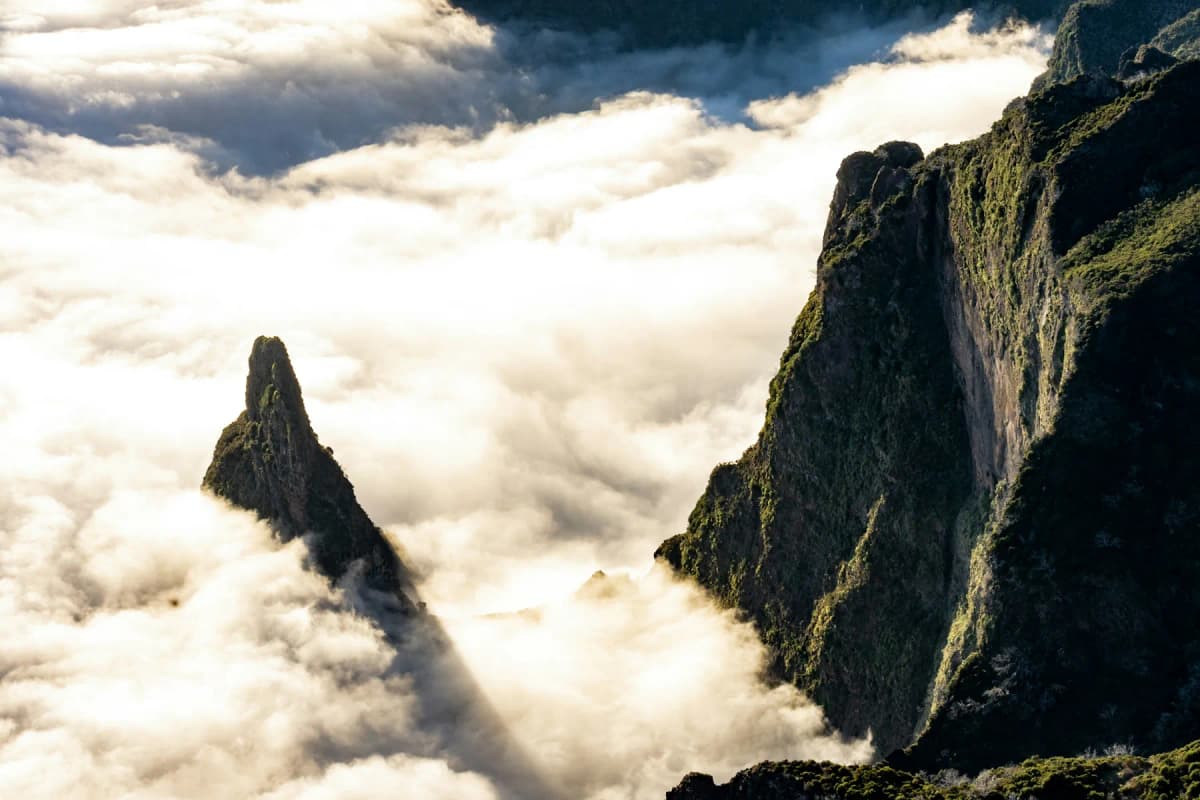 Photo: Daniele Canaponi on Unsplash
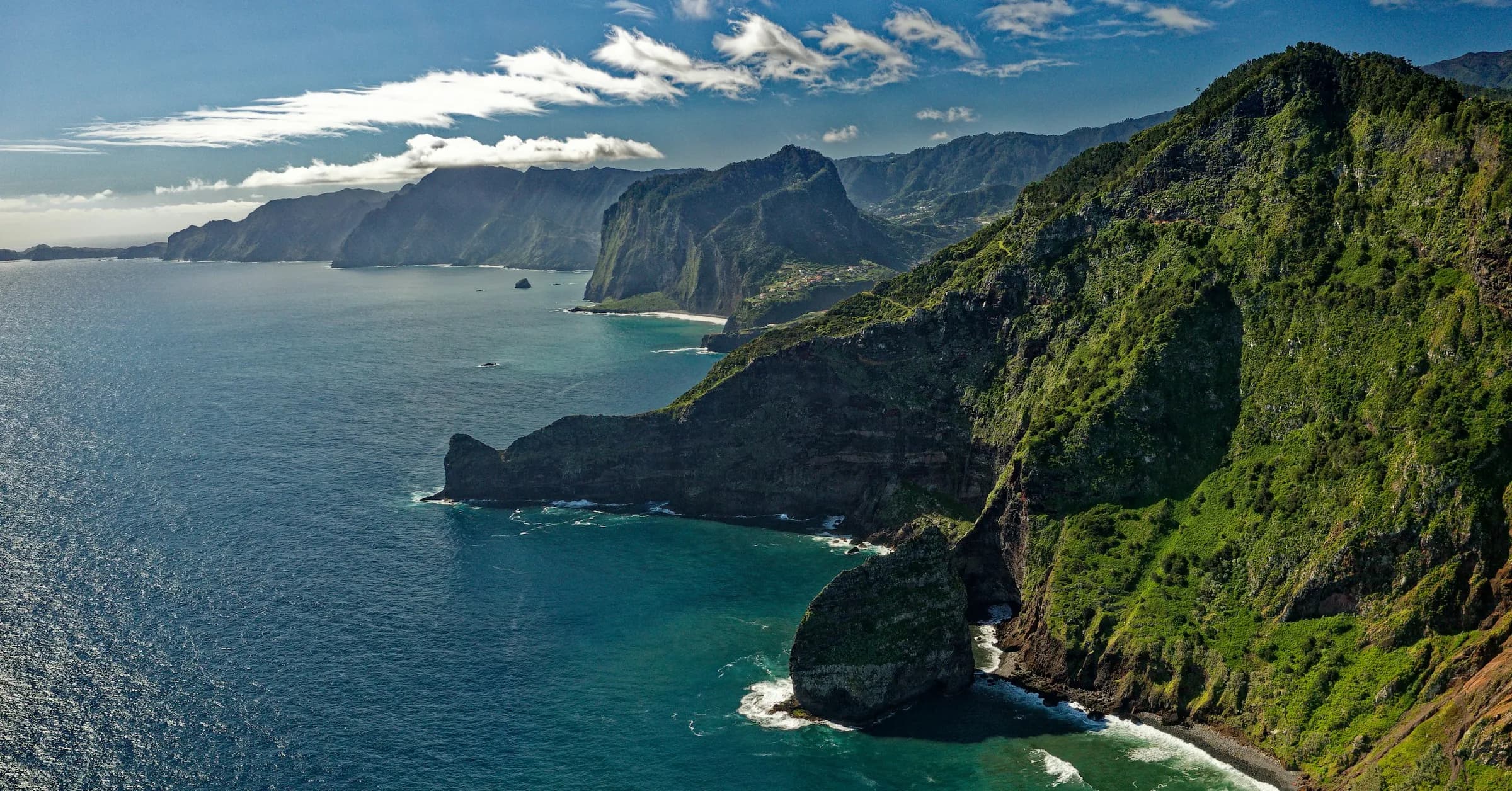
The table above is for Funchal, and it can be misleading if you're planning to hike. Madeira is a steep volcanic island, and the trade winds push moist air against its northern slopes. Visit Madeira notes that the south coast is warmer and drier, while the north and the mountains are wetter, windier and often foggy.
In practice, that means:
- The peaks are much colder. Pico Ruivo, the highest point, is 1,862 metres up, and it can be close to freezing at dawn at Pico do Arieiro even when Funchal is warm.
- Cloud is common at any time of year. You can drive up from a sunny Funchal into thick fog, or climb above a layer of cloud into sunshine. It's often clearer early in the morning.
- The wet season hits trails hardest. Heavy rain causes rockfalls and landslides, and trails are closed when conditions are unsafe. This happens more from late autumn to early spring.
For hiking, the most reliable months are roughly May to September, with May, June and September the most comfortable for long walks because high summer can be hot on exposed trails.
Spring: March to May
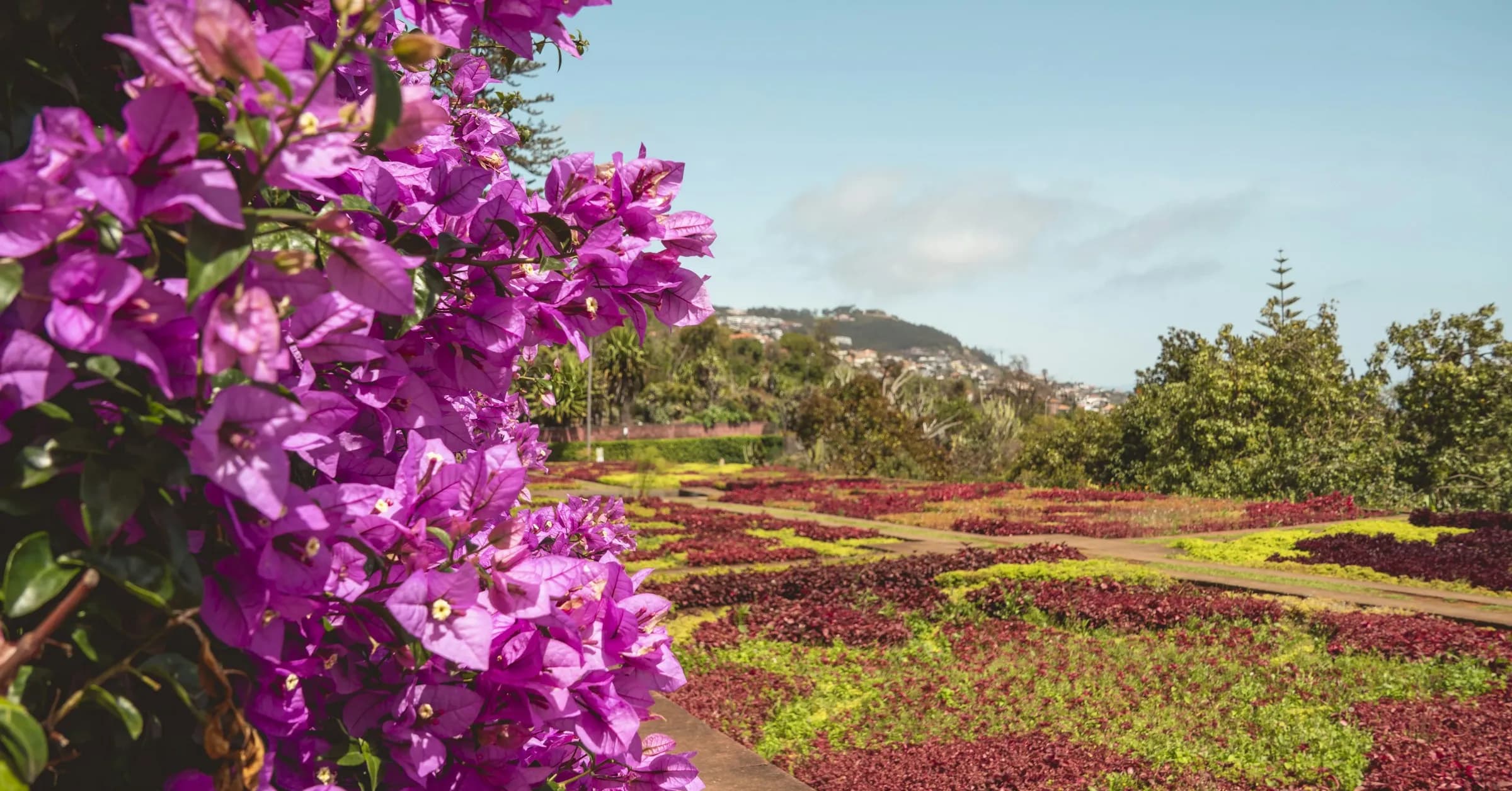
Spring is one of the best times to visit Madeira. Rainfall drops sharply from March to May, days lengthen, and the island is at its most colourful, with jacaranda, bird of paradise and agapanthus flowering across Funchal.
- March: still fairly wet (around 62 mm in Funchal), but mild, quieter and usually cheaper than later in spring. A good month for town-based trips with some walking.
- April: a big step up, with less rain and more stable weather. Easter can be busy with Portuguese visitors.
- May: our pick for most people. Rain falls on only about 3 days in Funchal on average, highs are around 22 °C, and the Flower Festival fills the city with flower carpets and parades.
Summer: June to August
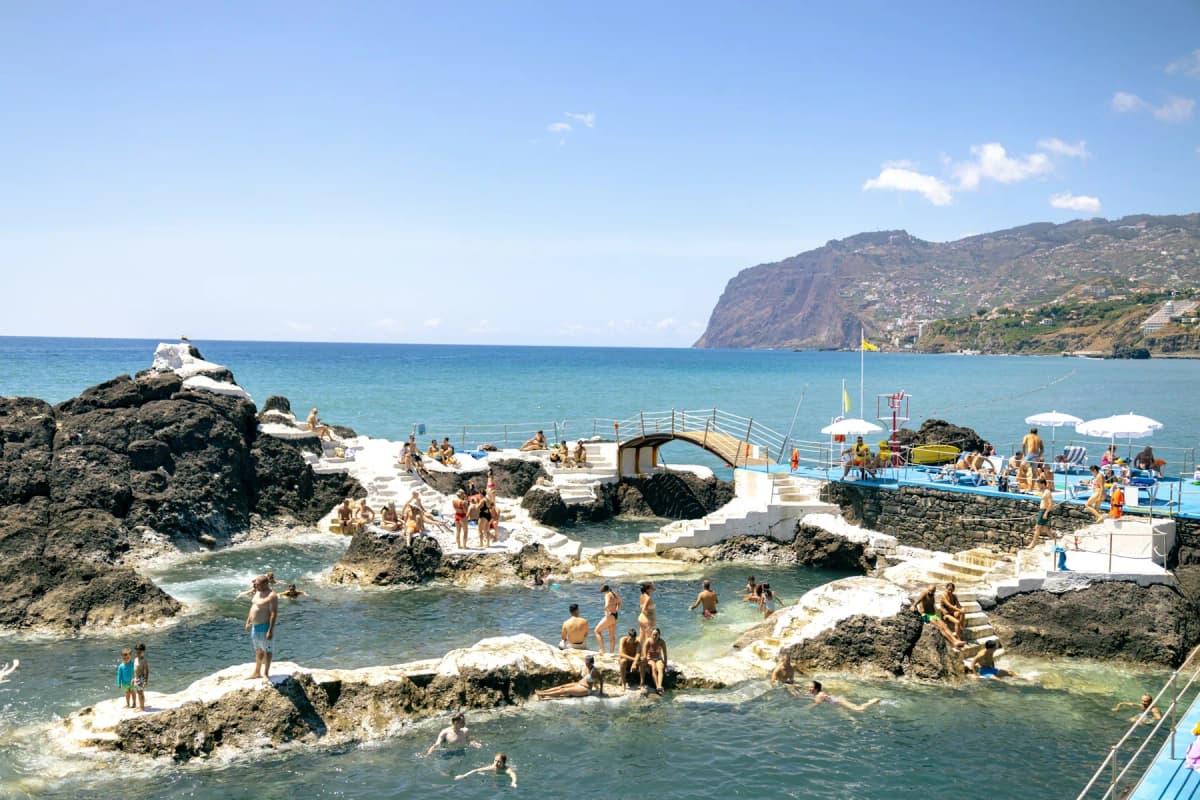 Photo: Mick Kirchman on Unsplash
Summer in Madeira is warm rather than hot. Highs in Funchal are around 24 to 27 °C, there's almost no rain, and the sea warms up for swimming in the natural pools at Porto Moniz and Seixal and the lidos around Funchal.
- June: excellent. Dry, long days, the Atlantic Festival with Saturday-night fireworks over Funchal bay, and the crowds haven't peaked yet.
- July: reliably dry and sunny on the south coast, with warm sea and busy beaches and pools. In 2027, the SAL Gastronomic Festival runs in July.
- August: the warmest and busiest month, when European school holidays drive up flight and hotel prices. The Wine Festival starts in late August. Book accommodation and car hire well ahead.
Summer can bring an occasional hot, hazy spell when wind from Africa blows dust over the island. These episodes are usually short.
Autumn: September to November
September is the second sweet spot of the year: the sea is at its warmest, the summer crowds have gone home, it rarely rains, and the Wine Festival continues into mid-September, with grape-picking and treading events. It's the best month for a mix of swimming and hiking.
October is the turning point. Funchal is still warm (highs around 25 °C), but October is one of the wettest months on average, with 91 mm of rain. Much of that falls in a few heavy spells, so you may get a week of sunshine or several days of downpours. The Nature Festival, with guided walks and outdoor activities, runs in early October.
November is mild and green but wet, with 80 mm of rain on average in Funchal. It's quieter and often cheaper, but it's not the month to plan a trip around the high mountain walks.
Winter: December to February
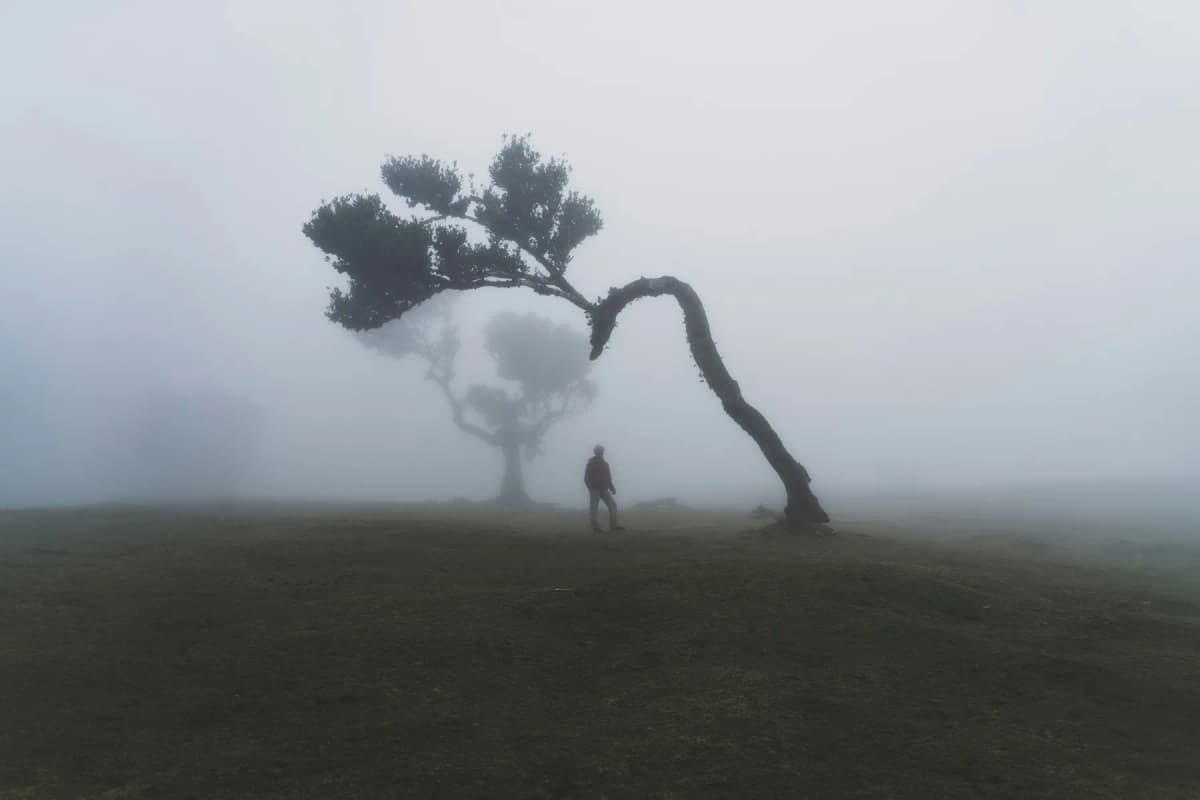 Photo: Hikerwise.com on Unsplash
Madeira's winter is mild by European standards, which is why it's long been popular with northern Europeans escaping the cold. Highs in Funchal hover around 20 °C, nights around 14 °C, and you can still have plenty of sunny days. But this is the rainy season, and the mountains are colder, cloudier and more likely to have trail closures.
- December: the wettest month on average (95 mm in Funchal), but also one of the most atmospheric. Funchal's Christmas lights go up from 1 December and stay until early January, and the city's New Year's Eve fireworks, launched over the bay, are among the most famous in the world. Late December is high season, with prices to match, so book early.
- January and February: generally the cheapest and quietest months outside the holidays, with mild temperatures. Carnival brings parades to Funchal in February in 2026 and early February in 2027.
Winter suits travellers who want mild weather for sightseeing, gardens and coastal walks, and who can be flexible with hiking days.
What is the rainy season in Madeira?
Madeira's rainy season runs from roughly October to March. According to IPMA's 1991 to 2020 averages, those six months bring around 470 mm of Funchal's 574 mm of annual rain, with December (95 mm), October (91 mm) and November (80 mm) the wettest months. By contrast, June, July and August together average about 11 mm.
Rain in Madeira rarely lasts all day on the south coast, and it's often heavier and more frequent in the north and the mountains than in Funchal. If you visit in the wet season, keep your hiking days flexible and check trail status before you set out.
Madeira festivals and events: 2026 and 2027 dates
These dates come from Visit Madeira's official events calendar, which notes that they are subject to change. Check before you book.
| Event | 2026 | 2027 |
|---|---|---|
| Carnival | 11 to 22 February (parade 14 February) | 3 to 14 February (Allegoric Parade 5 and 6 February) |
| Flower Festival | 30 April to 31 May (parades 3 and 17 May) | 29 April to 30 May (parades 2 and 16 May) |
| Atlantic Festival | 5 to 28 June (fireworks Saturdays 6, 13, 20 and 27 June) | 4 to 27 June (fireworks 5, 12, 19 and 26 June) |
| SAL Gastronomic Festival | 9 to 18 July | |
| Wine Festival | 23 August to 13 September | 22 August to 12 September |
| Columbus Festival (Porto Santo) | 17 to 20 September | 23 to 26 September |
| Nature Festival | 6 to 11 October | 5 to 10 October |
| Christmas lights | 1 December 2026 to 10 January 2027 | |
| New Year's Eve fireworks | 31 December | 31 December |
For the Flower Festival parade, seating along the route is paid, and Visit Madeira says tickets are sold at Avenida Arriaga 18 in Funchal. The festival is one of the busiest times of year, so book accommodation early.
When is the best time for what you want to do?
Hiking and levada walks
May, June and September are best. Trails are drier, days are long, and temperatures are comfortable for long walks. Remember that all classified trails now need a paid time slot booked online in advance; our guide to the best things to do in Madeira explains the 2026 rules and the best walks.
Swimming and sea pools
July to September, when the sea is around 24 °C and the weather is reliably dry. Late September and early October can still be good for swimming, with warm water and fewer people.
Flowers and gardens
April and May, when the island is in full bloom and the Flower Festival is on. That said, Madeira's gardens are colourful all year round.
Fewer crowds and lower prices
November and January to March (avoiding Carnival week) are the quietest and generally cheapest times. Christmas, New Year, Easter and August are the most expensive.
Fireworks and events
New Year's Eve for the fireworks; February for Carnival; May for the Flower Festival; June for the Atlantic Festival's fireworks.
What is the cheapest month to visit Madeira?
Prices for flights and hotels tend to be lowest in November and in January and February outside the Carnival week, when demand is lowest. The most expensive periods are Christmas and New Year (driven by the fireworks), Easter and August. We haven't quoted specific prices because they vary widely by airline, departure city and hotel, so compare dates before you book.
If you're flexible, comparing a few weeks either side of your ideal dates can make a real difference:
Planning ahead: in summer or for the Flower Festival, you can pre-book a fixed-price transfer from Madeira Airport to Funchal so you're not queueing for a taxi. In any season, a Portugal eSIM keeps your trail bookings and weather apps working, and travel insurance that covers trip disruption and medical costs is worth having, especially in winter, when storms can delay flights and close mountain roads.
When not to go to Madeira
There's no month to avoid entirely, but some trips suit some months badly:
- Hiking-focused trips in December to February. More rain, more cloud and more trail closures. You can still walk, but you'll need flexibility.
- Budget trips over Christmas and New Year. It's the most expensive time of the year and accommodation sells out early.
- Quiet trips in August. It's the busiest month, and popular trails, pools and viewpoints are crowded.
- Sun-and-swim trips in winter. Funchal is mild, but the sea is around 18 °C, which is chilly for most swimmers.
How many days do you need in Madeira?
A week is ideal for a first visit in any season. It gives you time for Funchal, two or three walks, the west coast and the north, plus a spare day in case the mountains are clouded over. In winter, an extra day or two gives you more chances of a clear morning for the peaks. Three days is enough for Funchal and one or two highlights, and five days covers the main sights at a steady pace.
Frequently asked questions
What is the best month to visit Madeira? May is the best all-round month for most people: dry, warm (around 22 °C), long days for hiking, and the Flower Festival in Funchal. September is a close second, with the warmest sea and fewer crowds than August.
What is the rainy season in Madeira? Roughly October to March. December, October and November are the wettest months in Funchal, while June to August are almost completely dry. The mountains and the north get more rain than the south coast.
What is the cheapest month to visit Madeira? Usually November, January or February, outside the Christmas, New Year and Carnival periods. These are low season months with lower demand for flights and hotels.
Is Madeira warm in winter? Mild rather than warm. Funchal averages highs of around 20 °C and lows of around 14 °C from December to February. The sea is around 18 °C, and the mountains can be cold, especially before dawn.
How many days are needed in Madeira? About a week for a first visit. That allows for Funchal, a couple of levada walks, Pico do Arieiro, the west coast and a spare day for bad weather in the mountains.
Is 3 full days in Madeira enough? It's enough for a taste: Funchal and the Monte cable car, one levada walk and Pico do Arieiro at sunrise. You won't have time for the west coast, Ponta de São Lourenço or the longer peak walks, and a cloudy day can easily cost you one of your highlights.
How we researched this guide
Monthly temperature and rainfall figures are the official 1991 to 2020 climate normals for the Funchal station (58 metres above sea level), published by IPMA, Portugal's national weather service. Sea temperatures and the description of the island's regional climate come from Visit Madeira, the official tourism site of the Madeira regional government, and festival dates come from its official 2026 to 2028 events calendar, which notes that dates are subject to change. Advice on the cheapest and busiest months is based on seasonal demand patterns, not on specific fares. Weather varies year to year, so check the forecast close to your trip. Found something out of date? Let us know.
Ready to plan? See our guide to the best things to do in Madeira, browse all our Portugal guides, or add the mainland with our 7, 10 or 14-day Portugal itinerary.