Lisbon Itinerary: 3 Days in Lisbon, Day by Day (2026)
October 13, 2026 · Portugal

This post contains affiliate links. We may earn a commission if you book through them, at no extra cost to you. Disclaimer.
The best Lisbon itinerary for a first visit is three days: one day for the old centre (Baixa, Chiado, Alfama and the castle), one day for Belém and the riverside, and one day for a trip out to Sintra. Three days is also the honest answer to "how many days in Lisbon?" for most travellers. Two days covers the city's main sights at a brisk pace, and four or five days lets you add Cascais, the museums and a slower pace.
This Lisbon itinerary lays out each day in walking order, with 2026 ticket prices taken from official sources where we could confirm them, the transport pass that fits each day, and shorter and longer versions if you have 2, 4 or 5 days.
Lisbon itinerary at a glance
| Day | Area | Main sights | Getting around |
|---|---|---|---|
| Day 1 | Baixa, Chiado, Alfama | Praça do Comércio, Carmo Convent, the Cathedral, São Jorge Castle, the miradouros | On foot, plus tram 28 |
| Day 2 | Belém and the river | Jerónimos Monastery, Belém Tower, pastéis de nata, LX Factory | Tram 15E or train from Cais do Sodré |
| Day 3 | Sintra | Pena Palace, Moorish Castle, Quinta da Regaleira | Train from Rossio, about 40 min |
| Day 4 (optional) | Cascais, or museums | Coast walk and beaches, or the Tile Museum and Gulbenkian | Train from Cais do Sodré, or metro |
| Day 5 (optional) | Évora or Parque das Nações | Roman temple and Chapel of Bones, or the Oceanarium | Intercidades train, or metro |
One rule shapes the whole plan: many of Lisbon's national monuments close on Mondays, including the main sights in Belém. If your trip includes a Monday, put the old centre or Sintra on that day and move Belém to another.
How many days in Lisbon do you need?
Three days is the right amount for most first visits. Here is how the options compare:
- 1 day: enough for a taste of Baixa, Alfama and one viewpoint. You will miss Belém or rush it.
- 2 days: the two city days below. You see the essentials but skip Sintra.
- 3 days: the full plan. Two city days and Sintra, without feeling rushed.
- 4 days: add Cascais or a museum day. This is the most comfortable version.
- 5 days: add Évora or a slow day. Good if Lisbon is your only base in Portugal.
Lisbon is a compact city, but it is built on steep hills with cobbled pavements, and that slows everything down. Plans that look easy on a map take longer on foot than you expect, which is why this itinerary groups sights by neighbourhood and never crosses the city twice in one day.
Day 1: Baixa, Chiado, Alfama and the castle
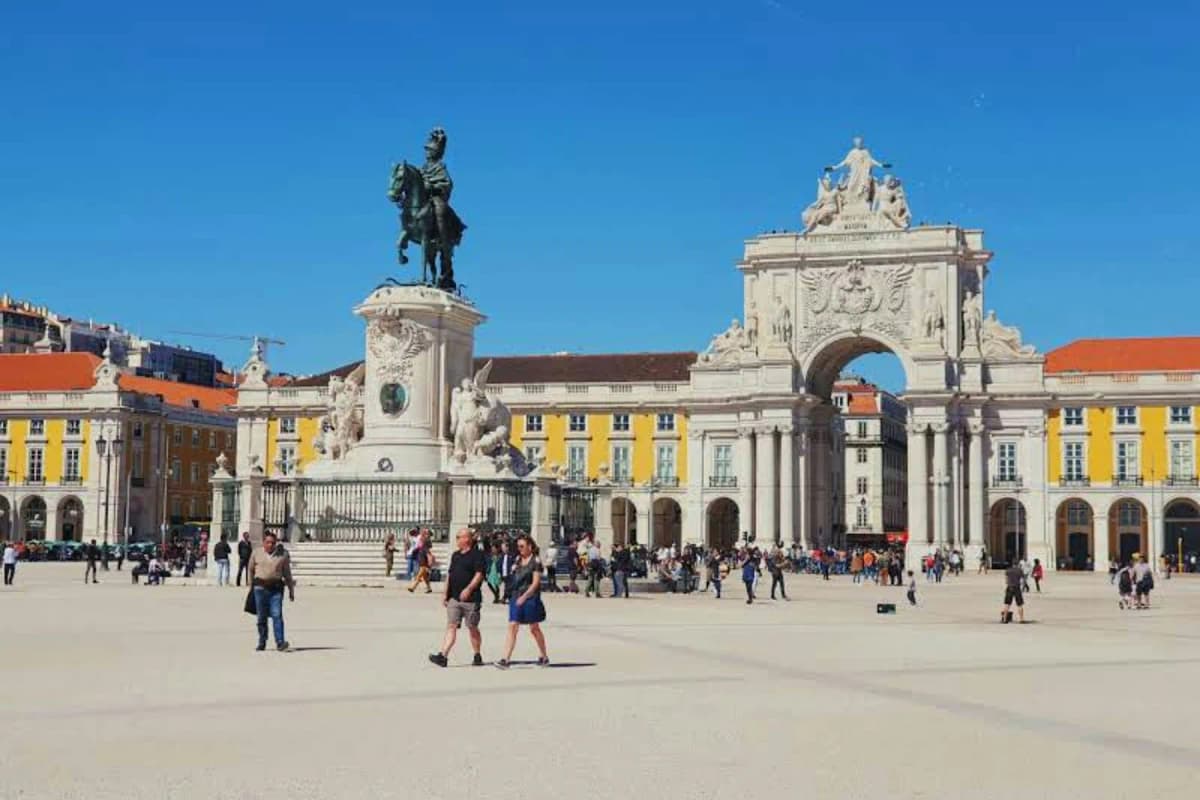 Photo:
 Day one covers the historic heart of the city, from the grand riverside square up through the oldest neighbourhood to the castle. It is almost all on foot, and the route runs so that the steepest climbing comes with a tram ride as an option.
Morning: Baixa and Chiado
Start at Praça do Comércio, the huge arcaded square that opens onto the Tagus. This was the site of the royal palace until the earthquake of 1755 destroyed most of central Lisbon. The grid of streets behind it, the Baixa, was rebuilt afterwards to a single plan.
Walk through the triumphal arch and up Rua Augusta, the pedestrian main street, to Rossio square with its wave-patterned paving. On the way you pass the Santa Justa Lift, an iron elevator from 1902 that links the Baixa with the higher Chiado district. Queues for the lift are often long. You can reach the same upper level for free by walking up through Chiado, and the viewing platform at the top can be entered from that side.
At the top is the Carmo Convent, a Gothic church left roofless by the 1755 earthquake and kept that way as a memorial. Its open arches are one of the most striking sights in the city. Continue through Chiado, the elegant shopping and café district, to the Miradouro de São Pedro de Alcântara for the classic view across the Baixa to the castle.
Afternoon: Alfama and São Jorge Castle
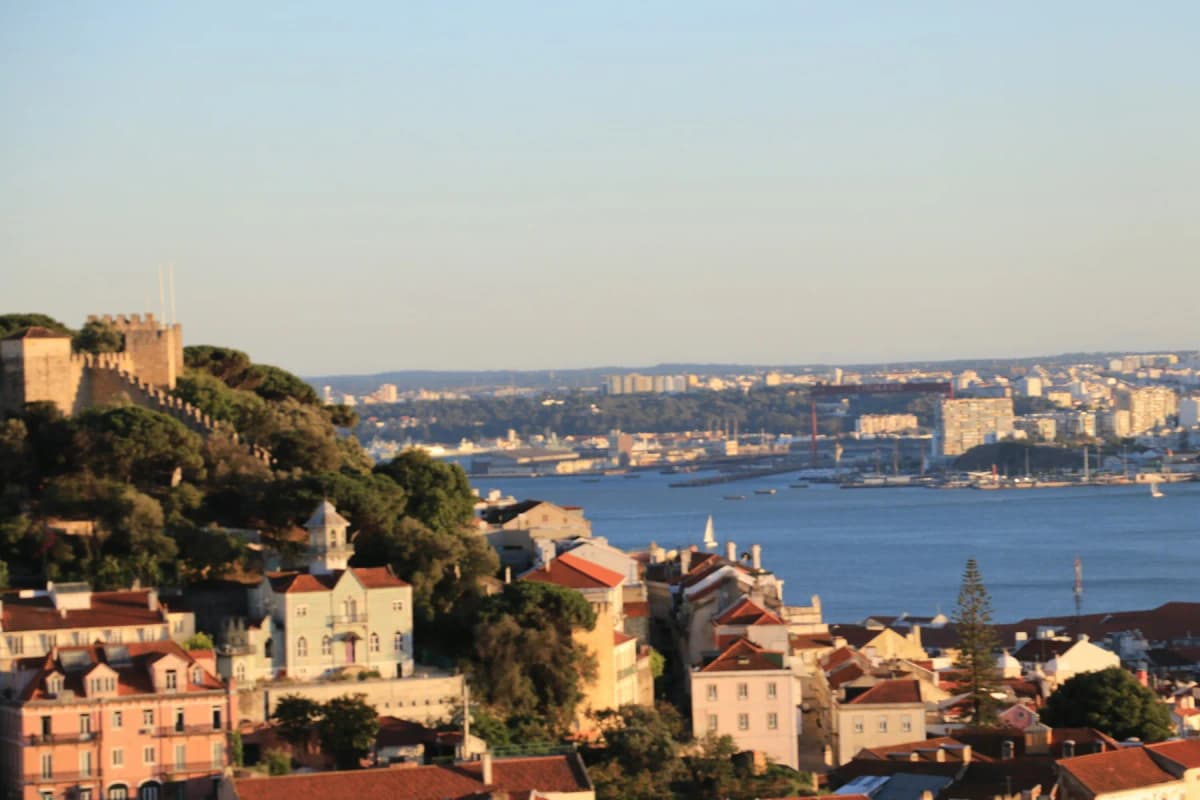 Photo:
 After lunch, head east into Alfama, the oldest quarter of Lisbon and the one part of the centre that survived the earthquake. Its lanes are a tangle of stairways, tiled facades and laundry lines, and getting slightly lost is the point.
A good route is to climb from the Baixa past the Sé, Lisbon's fortress-like 12th-century cathedral, to two viewpoints that sit side by side: Miradouro de Santa Luzia, with its tiled terrace and bougainvillea, and Portas do Sol, with a wide view over Alfama's rooftops to the river.
From there it is a short climb to São Jorge Castle. The hilltop has been fortified since at least Moorish times, and today you walk the ramparts, towers and gardens with a view over the whole city. Adult entry is €17 on the castle's official price list, with reduced prices for ages 13 to 25 and over 65, and free entry for children under 12. Allow an hour and a half.
Evening: tram 28 and a miradouro at sunset
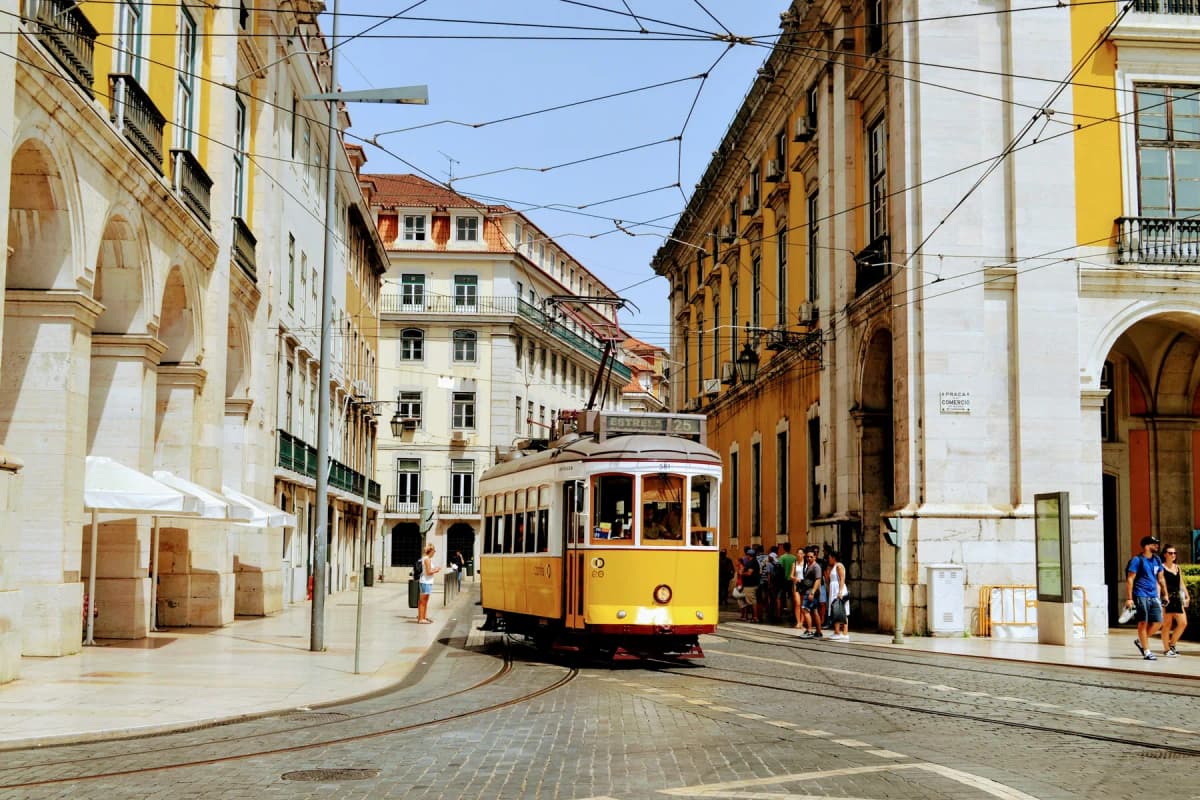 Photo: Aayush Gupta on Unsplash
Tram 28 is the famous yellow tram that rattles from Martim Moniz through Graça, Alfama, the Baixa and Chiado to Estrela and Campo de Ourique. It is ordinary public transport that became a tourist attraction, and by mid-morning the queues at the Martim Moniz terminus can be long. Two things help: ride it early in the morning or in the evening, and pay with a pass or zapping credit, because a ticket bought on board costs about €3.30, far more than the same ride on a card. Keep an eye on your belongings, as the tram is known for pickpockets.
End the day at a viewpoint. Miradouro da Senhora do Monte in Graça is the highest in the centre and faces the sunset. Alfama and the neighbouring Mouraria are also where Lisbon's fado tradition is strongest, and many restaurants here have live fado in the evening, usually with a set menu or minimum spend.
Day 1 costs: São Jorge Castle €17, plus the Carmo Convent if you go inside (a small fee; check the current price at the door). Everything else is free.
Day 2: Belém, the river and LX Factory
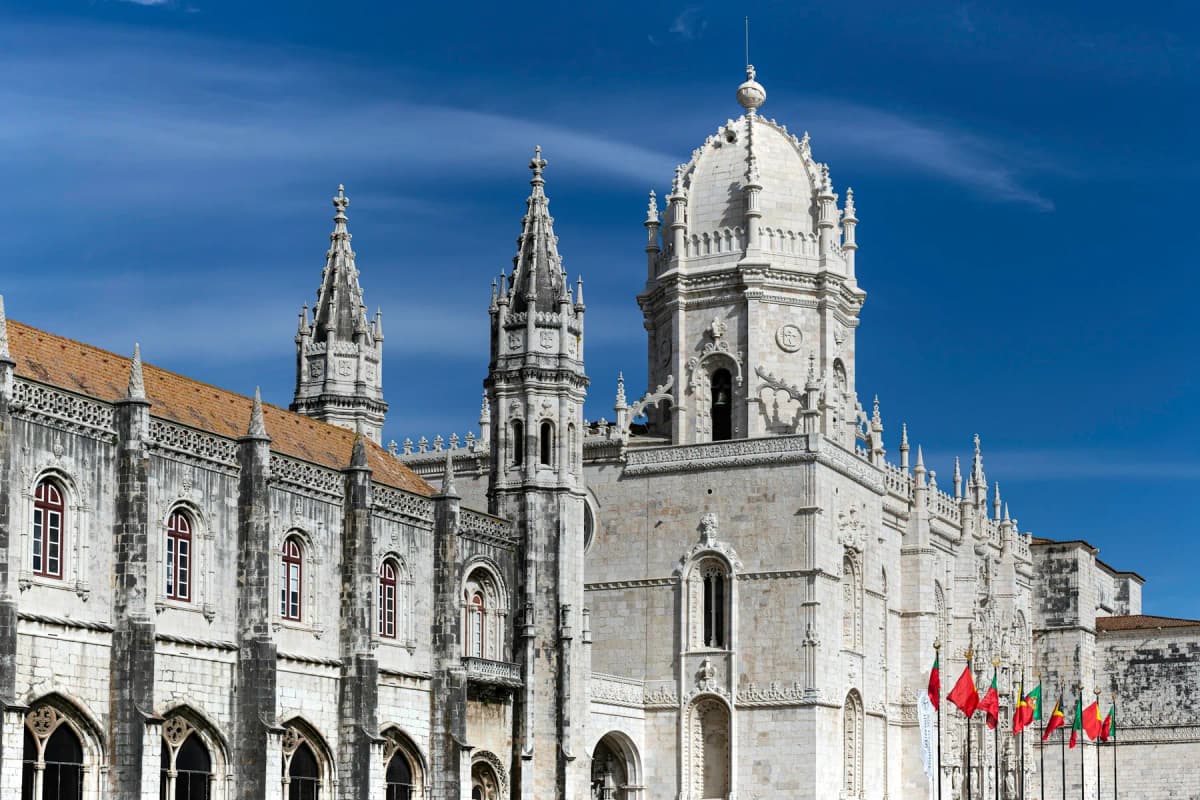 Photo: José Francisco García Cuenca on Unsplash
Belém is the riverside district about 6 km west of the centre, where Portugal's ships left for India and Brazil in the 15th and 16th centuries. It holds the city's two UNESCO-listed monuments.
Getting there: tram 15E runs from Praça da Figueira and Praça do Comércio to Belém in around 25 to 30 minutes. The Cascais-line train from Cais do Sodré is quicker, reaching Belém station in under 10 minutes, though only some trains stop there.
Morning: Jerónimos Monastery and Belém Tower
Go to the Jerónimos Monastery first, as close to opening time as you can. It was begun in 1501 with the profits of the spice trade, and its two-storey cloister is the finest example of the ornate Manueline style, carved with ropes, coral and sea creatures. The church, which holds the tomb of Vasco da Gama, is free to enter. The cloister is ticketed: €18 under the national monuments price list in force when we checked. Buy online in advance, because the ticket queue is one of the longest in Lisbon.
From the monastery, walk through the gardens and under the railway to the Monument to the Discoveries, a 52-metre stone prow lined with statues of explorers, and on along the river to the Belém Tower. This small fortress, built between 1514 and 1519 to guard the river mouth, is the symbol of the city. Entry is listed at €15, with timed slots. The interior is small and the stairs are narrow, and many visitors are content to see it from outside. The tower has also had closures for conservation work, so check that it is open before you count on going in.
Both monuments are closed on Mondays.
Lunch: pastéis de nata
 Photo: Eilis Garvey on Unsplash
The custard tart was created by the monks of Jerónimos, and the bakery next door, Pastéis de Belém, has sold them to the original recipe since 1837. The takeaway queue looks daunting but moves fast, and there is a large seating area inside with table service. Eat them warm, with cinnamon and icing sugar.
Afternoon: MAAT, LX Factory and the bridge
 Photo: Svetlana Gumerova on Unsplash
Walk or take the tram back towards the centre along the river. The MAAT (Museum of Art, Architecture and Technology) is worth a stop for its building alone: a low, wave-shaped structure covered in white tiles, with a roof you can walk over for free.
Further on, tucked under the Ponte 25 de Abril, is LX Factory, a 19th-century industrial complex turned into a street of independent shops, cafés, restaurants and street art. It is a good place for a late lunch or an early dinner. The bridge above it, a red suspension bridge opened in 1966, looks so much like San Francisco's Golden Gate that visitors regularly mix up their photographs.
Evening: Cais do Sodré and Bairro Alto
Back in the centre, the Time Out Market at Cais do Sodré is a food hall where well-known Lisbon chefs and restaurants run counters around shared tables. It is busy and not cheap, but it is an easy way to try several things at once. From there the steep streets of Bairro Alto are a short climb or a ride on the Bica funicular. The district is quiet by day and fills with bars after dark.
Day 2 costs: Jerónimos cloister €18, Belém Tower €15 if you go in.
Day 3: Sintra
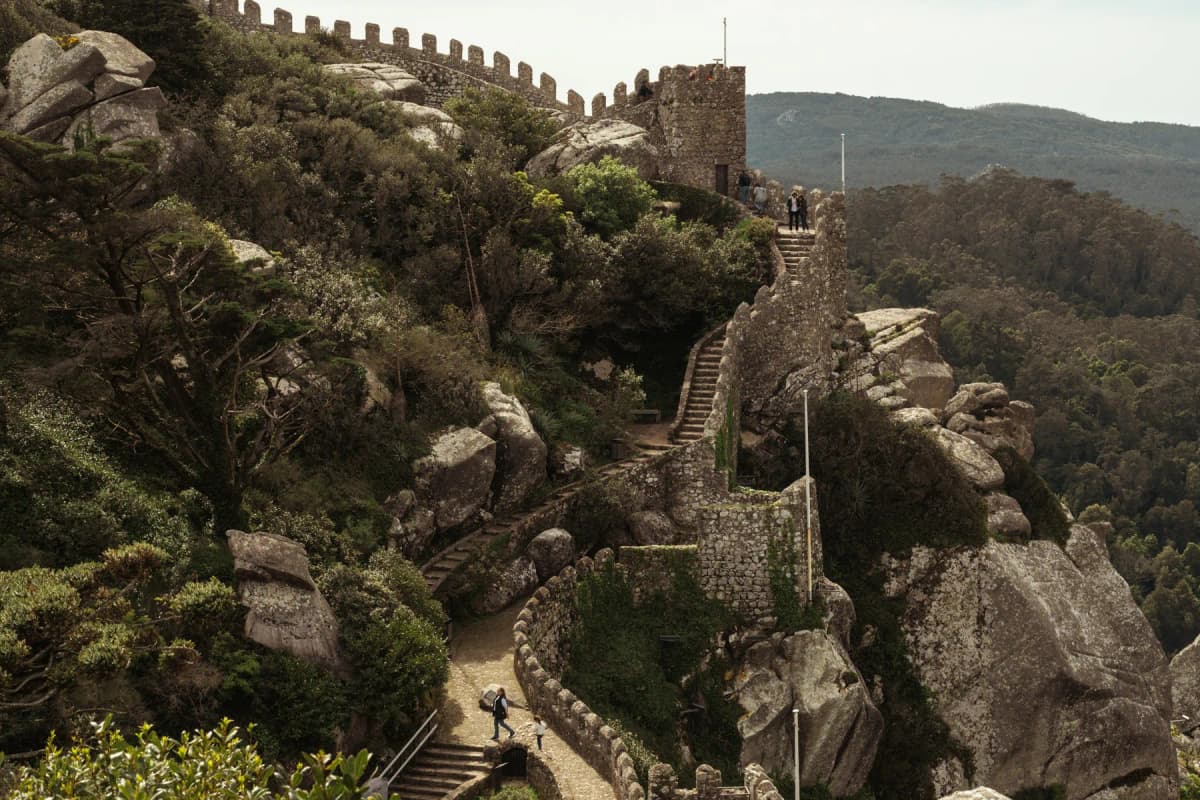 Photo: Karl Hedin on Unsplash
On the third day, leave the city. Sintra is a hill town of palaces and forest 40 minutes away, and it is the one day trip that belongs in any Lisbon itinerary of three days or more.
Getting there: suburban trains leave Rossio station about every 20 minutes. A single is €2.55 on CP's 2026 fare table.
A realistic plan:
- Pena Palace first, on the earliest timed slot you can book. €20 for the palace and park.
- Moorish Castle, a short walk from Pena, for the views. €12.
- Lunch in Sintra's old town.
- Quinta da Regaleira in the afternoon, for the gardens, tunnels and the Initiation Well. €20.
Two paid sights is a comfortable day and three is a full one. Pena and the Moorish Castle are high above the town, and most people take the tourist bus loop from the station or a taxi up. If you would rather have transport between the palaces arranged for you, a guided Sintra day tour from Lisbon does that and usually adds a stop on the coast.
Our guide to the best day trips from Lisbon has more detail on Sintra, plus eleven alternatives if you have been before.
2 days in Lisbon: the short version
With two days, do Day 1 and Day 2 as written. You will see the old centre, the castle, the viewpoints and Belém, which are the essentials.
If you would rather see Sintra than Belém, swap it in for Day 2 and visit Belém on a later trip. Trying to add Sintra as a half day rarely works: the train and the hill transport take too much of the time.
4 days in Lisbon: add Cascais or the museums
A fourth day lets you slow down. Choose by the weather:
- In good weather, Cascais. The train from Cais do Sodré follows the coast for 35 to 40 minutes and costs €2.55 each way. Walk the old town, follow the seafront to the Boca do Inferno sea cave, and swim at one of the town beaches.
- In poor weather, the museums. The National Tile Museum (Museu Nacional do Azulejo), in a former convent east of the centre, tells the story of Portugal's painted tiles and includes a vast panorama of Lisbon before the earthquake. The Calouste Gulbenkian Museum holds one of Europe's great private art collections in a modernist building set in gardens.
Four days is not too long for Lisbon. It is the version of this itinerary with the least rushing.
5 days in Lisbon: add Évora or the modern city
With five days, pick one more:
- Évora, a walled Alentejo city with a Roman temple and a chapel lined with bones. Intercidades trains from Oriente take about 1h35 and cost €13.90 each way, or €25.50 return, on CP's 2026 table.
- Parque das Nações, the modern riverside district built for Expo 98, with the Lisbon Oceanarium, a cable car along the water and the long Vasco da Gama Bridge. It is a good choice with children.
- A slow day. Go back to the neighbourhood you liked most, take the ferry across to Cacilhas for a fish lunch with a view of the city, or spend the afternoon in the botanical gardens.
Getting around Lisbon during your itinerary
| Ticket | 2026 price | Good for |
|---|---|---|
| Navegante occasional card | €0.50 | The reusable card you load tickets onto |
| Single ticket, Carris and Metro | €1.90 | One or two rides a day |
| Zapping (pay as you go), metro ride | €1.72 | Flexible days |
| Contactless bank card, metro ride | €1.92 | No card to buy |
| 24-hour ticket, Carris and Metro | €7.25 | Four or more rides in a day |
| 24-hour ticket with CP trains | €11.40 | A Sintra or Cascais day with city travel |
| Tram ticket bought on board | About €3.30 | Avoid if you can |
Prices are from the Lisbon Metro's 2026 fare table, except the on-board tram fare, which comes from recent secondary sources.
Which to buy: on Day 1 you will mostly walk, so singles or zapping are enough. On Day 2, a 24-hour ticket pays for itself if you take the tram to Belém, a tram back and one or two rides in the evening. On Day 3, a return to Sintra is €5.10, so the €11.40 ticket only makes sense if you also use the metro and trams several times that day.
The Lisboa Card costs €31 for 24 hours, €51 for 48 hours and €62 for 72 hours. It includes Carris, the metro and CP trains to Sintra and Cascais, plus free entry to a list of monuments that includes the Jerónimos Monastery. It is worth it on the Belém day if you visit two or three included sights. It does not cover the Sintra palaces or São Jorge Castle.
From the airport, the metro's red line reaches the centre in about 25 to 30 minutes with one change. If you arrive late or with heavy bags, you can pre-book a private transfer from Lisbon Airport instead.
What a 3-day Lisbon itinerary costs
| Item | Cost per adult |
|---|---|
| São Jorge Castle | €17 |
| Jerónimos cloister | €18 |
| Belém Tower (optional) | €15 |
| Pena Palace and park | €20 |
| Quinta da Regaleira | €20 |
| Moorish Castle (optional) | €12 |
| Transport: two 24-hour tickets and a Sintra return | About €20 |
| Total for sights and transport | About €95 to €122 |
Accommodation and food come on top. Lisbon also charges a tourist tax of €4 per person per night, paid at your hotel. For where to base yourself, see our guide to where to stay in Lisbon.
Still booking flights? Compare dates here:
For maps and train times on the go, a Portugal eSIM from Airalo can be set up before you land, and travel insurance from EKTA is sensible cover for pre-booked tickets and medical costs.
Tips for following this Lisbon itinerary
- Check your Monday. Jerónimos and the Belém Tower close on Mondays. Sintra's palaces and São Jorge Castle open daily.
- Book three things ahead: Pena Palace (timed), Jerónimos, and Quinta da Regaleira in summer.
- Wear shoes with grip. The polished limestone pavements are slippery, especially when wet, and the hills are steep.
- Start early. The castle, Jerónimos and Pena are all far quieter in the first hour.
- Use the hills in one direction. Take a tram, funicular or lift up and walk down.
- Do not overfill the days. Three or four sights a day, with time for a viewpoint and a long lunch, is how Lisbon is best seen.
Frequently asked questions
Is 3 days in Lisbon too much? No. Three days is the amount most first-time visitors need: two for the city and one for Sintra. Travellers who stay only two days usually have to drop either Belém or Sintra.
Is 4 days in Lisbon too long? No. A fourth day gives you time for Cascais, the Tile Museum or the Gulbenkian, and makes the whole trip less hurried. Even five days works if you add a day trip to Évora.
What should I do in Lisbon for 3 days? Spend day one in Baixa, Chiado and Alfama, including São Jorge Castle and a ride on tram 28. Spend day two in Belém at the Jerónimos Monastery and the Belém Tower, then LX Factory. Take the train to Sintra on day three.
What should I not miss in Lisbon? The view from São Jorge Castle or a miradouro at sunset, the cloister of the Jerónimos Monastery, a walk through Alfama, a warm pastel de nata in Belém, and a day in Sintra. Those five cover what makes the city distinct.
How many days in Lisbon is enough? Three full days is enough to see the main sights and take one day trip. Two days is the minimum for the city alone. If Lisbon is your only stop in Portugal, four or five days lets you add Cascais and Évora.
What is the best month to visit Lisbon? May, June, September and early October usually bring warm, dry weather without the peak heat and crowds of July and August. Winter is mild but wetter, and the cheapest time for hotels.
Is the Lisboa Card worth it for 3 days? Often not for all three days, because it does not cover the Sintra palaces or the castle. A 24-hour card on your Belém day is the better-value use, as it includes the Jerónimos Monastery and all city transport.
How we researched this guide
Transport fares come from the 2026 fare table published by the Lisbon Metro and from the 2026 suburban price list of CP – Comboios de Portugal, checked in October 2026. The São Jorge Castle price is from the castle's official website, Sintra prices from Parques de Sintra and Quinta da Regaleira's own price list, and Lisboa Card prices from the official Visit Lisboa shop. Prices for the Jerónimos Monastery and the Belém Tower follow the national monuments tariff and may have changed, so confirm before you book. The on-board tram fare is from recent secondary sources. This itinerary is built from official opening information, maps and published timetables; it does not include first-hand restaurant or hotel reviews. Found something out of date? Let us know.
For more, see all our Portugal guides, the full list of the best things to do in Lisbon, our pick of the best day trips from Lisbon, and the Portugal itinerary that links Lisbon with Porto and the Douro. Heading north afterwards? Start with the best day trips from Porto.