Best Time to Visit the Amalfi Coast: Month by Month (2026)
October 12, 2026 · Italy
This post contains affiliate links. We may earn a commission if you book through them, at no extra cost to you. Disclaimer.
The best time to visit the Amalfi Coast is May, June and September. In those three months the days are warm, the ferries, hotels and beach clubs are all open, and the towns are less crowded and cheaper than in July and August. September has the warmest sea of the three. Early October is a good fourth choice if you care more about walking and views than swimming.
The worst time for most visitors is November to February, when rain is frequent, the ferries stop and many hotels and restaurants shut for the winter. August is the other month to think twice about: it is hot, expensive and very busy. This guide goes through the weather, crowds, prices and what is open in every month, so you can match the timing to the trip you want.
Best time to visit Amalfi Coast at a glance
| If you want | Go in | Why |
|---|---|---|
| The best all-round balance | May, June, September | Warm, everything open, fewer people than high summer |
| Warm sea and swimming | Late June to September | Sea at 24 to 26°C |
| Hiking the Path of the Gods | April, May, October | Mild days and clear views |
| The lowest prices with things still open | April and October | Shoulder season rates, ferries running |
| Festivals and nightlife | July and August | Ravello Festival, Ferragosto fireworks |
| Empty towns and winter light | November to March | Very quiet, but no ferries and many closures |
Amalfi Coast weather by month
These are long-term monthly averages for the town of Amalfi, rounded to whole numbers. Positano, Praiano and Maiori are within a degree or so. Ravello sits about 350 metres above the sea and is a little cooler.
| Month | Average high | Average low | Rainfall | Sea temperature |
|---|---|---|---|---|
| January | 13°C | 9°C | 138 mm | 15°C |
| February | 13°C | 8°C | 111 mm | 14°C |
| March | 15°C | 10°C | 111 mm | 14°C |
| April | 17°C | 12°C | 79 mm | 16°C |
| May | 21°C | 16°C | 65 mm | 19°C |
| June | 25°C | 20°C | 30 mm | 24°C |
| July | 28°C | 22°C | 15 mm | 26°C |
| August | 29°C | 23°C | 25 mm | 26°C |
| September | 25°C | 20°C | 100 mm | 25°C |
| October | 21°C | 17°C | 124 mm | 22°C |
| November | 17°C | 13°C | 191 mm | 19°C |
| December | 14°C | 10°C | 156 mm | 16°C |
Three things stand out. Summer is dry, with July the driest month of the year. Most of the annual rain falls between October and March, and November is the wettest month. And the sea lags behind the air: it is still cool in May and still warm in October.
Rainfall figures vary quite a lot between climate sources, so read the table as a pattern, not a forecast. Averages also hide heatwaves. In recent summers the coast has had spells well above 30°C, and the stone stairways hold the heat.
Spring: April and May
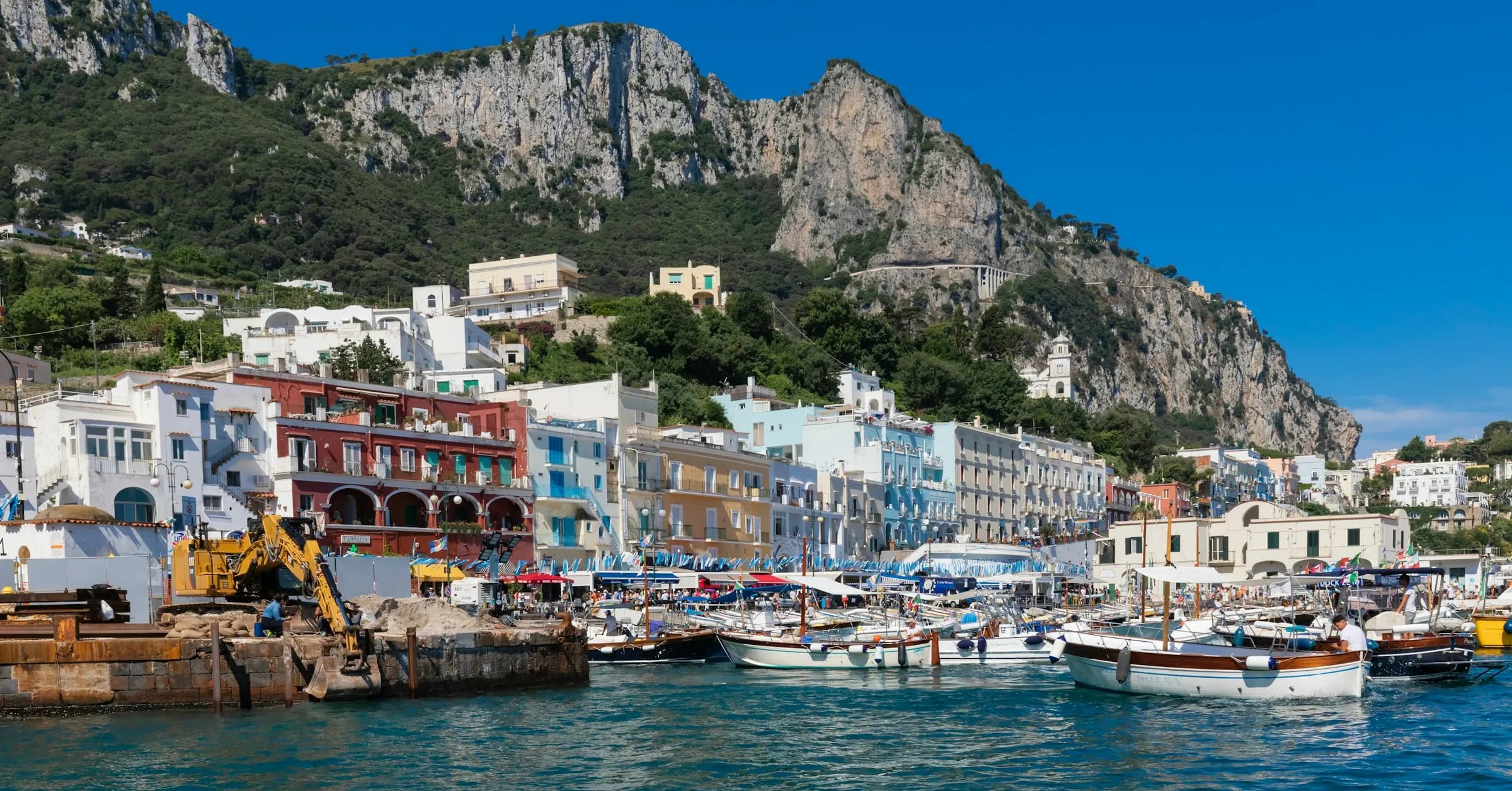
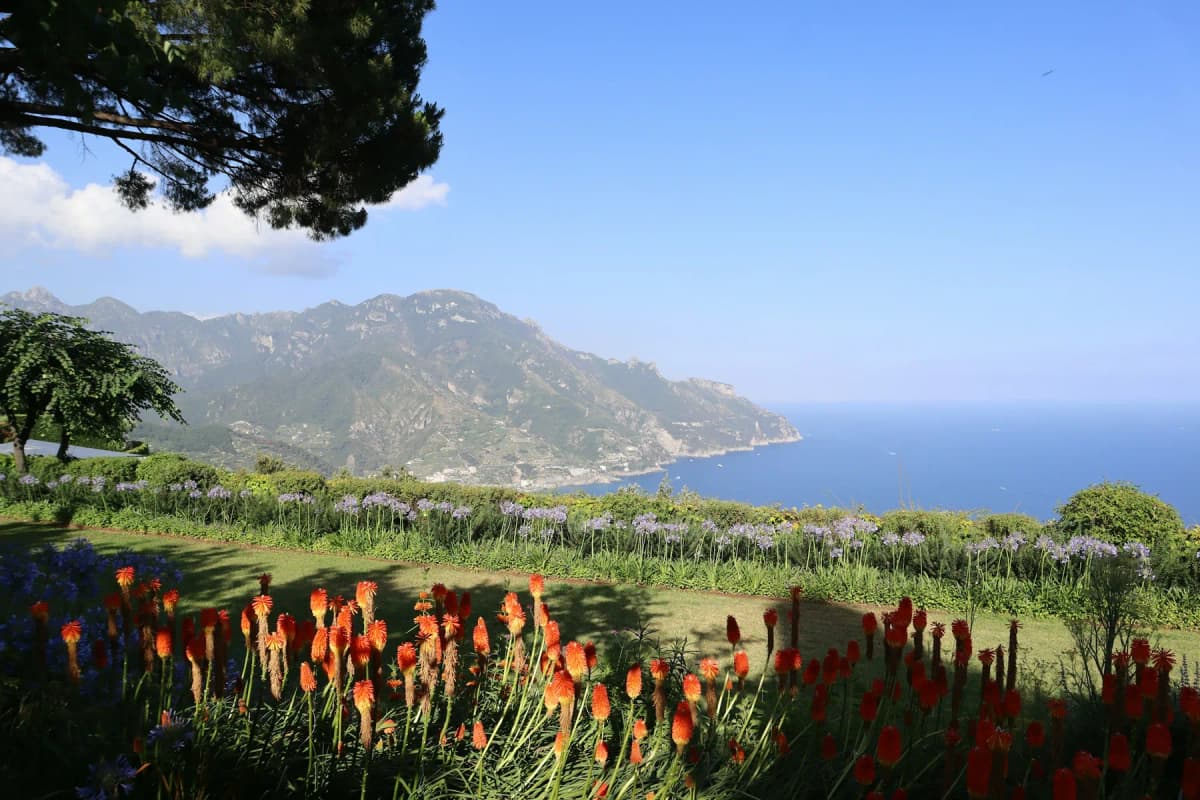 Photo: Mihaela Claudia Puscas on Unsplash
Spring is when the coast opens. Easter marks the start of the season, and most hotels, restaurants and beach clubs that closed for the winter reopen in the weeks around it. In 2027 Easter Sunday falls on 28 March.
April is mild and green, with highs of about 17°C and wisteria and lemon blossom on the terraces. The seasonal ferries start running at the beginning of the month. It can still rain, about 79 mm on average, and the sea is too cold for most people at 16°C. Easter week and the long weekends around 25 April and 1 May are busy and priced like high season, and the traffic rules that restrict cars on the coast road apply on those dates.
May is the first of the three best months. Highs reach 21°C, rain is lighter and the days are long. Everything is open, the ferries run a full timetable, and room rates have not yet reached their summer peak. The sea is about 19°C, which is fine for a quick swim on a sunny afternoon and cold for a long one.
Spring suits walkers, photographers and anyone who wants to see the towns without queues. Bring a light jacket and a waterproof.
Summer: June, July and August
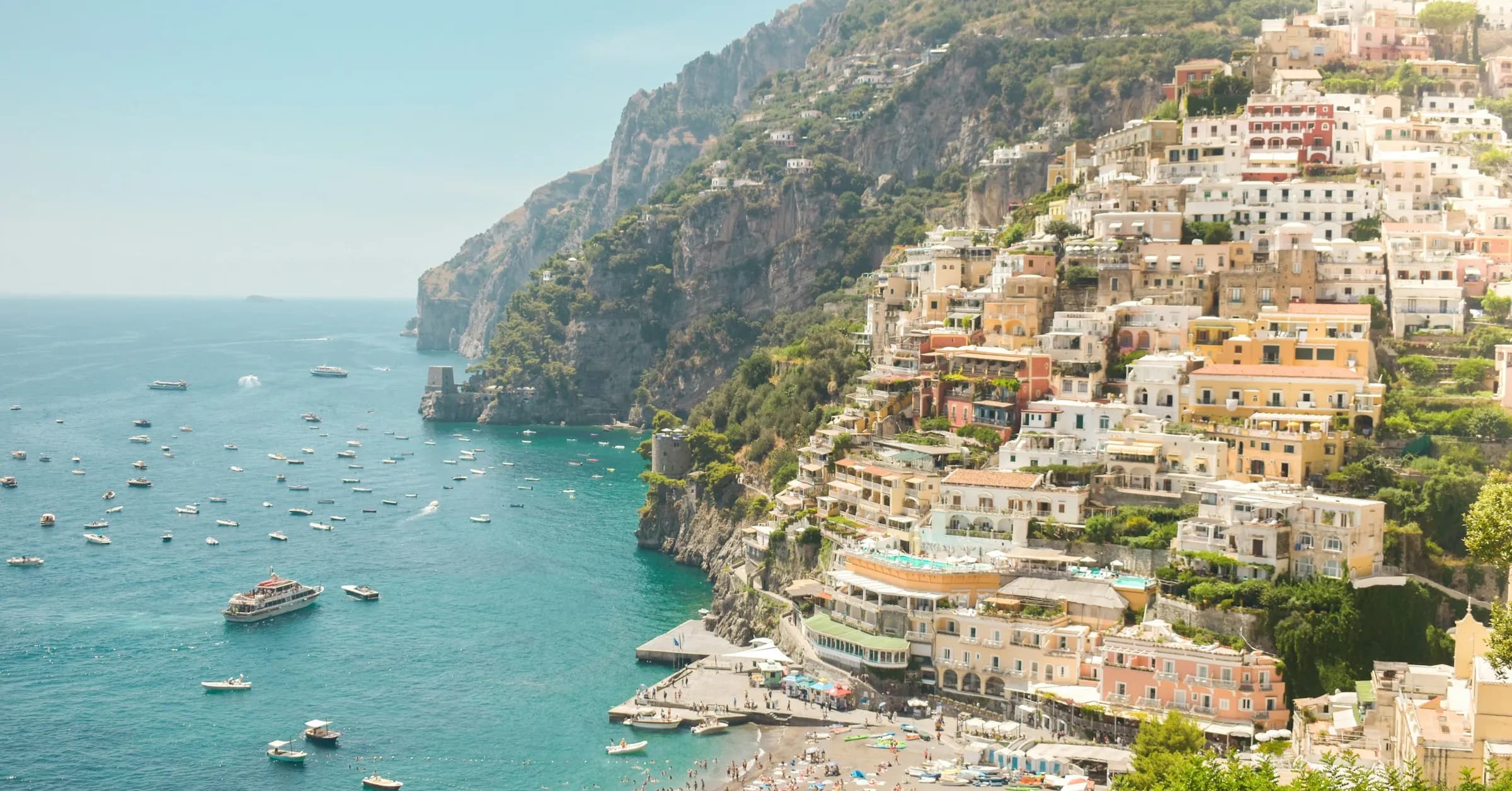
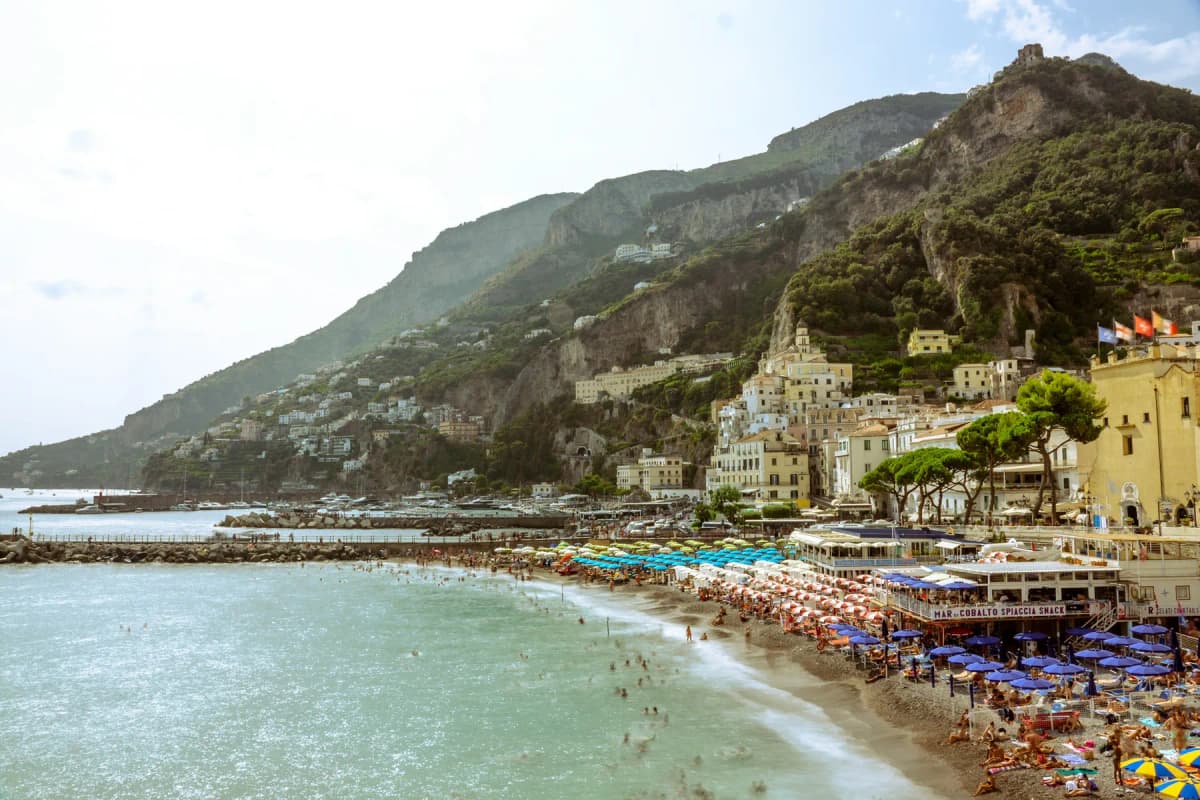 Photo: Enzo Cetrangolo on Unsplash
June is the best single month for many people. Highs average 25°C, there is very little rain, and the sea warms quickly to about 24°C by the end of the month. The days are the longest of the year, with around 15 hours of daylight. The first half of June is noticeably quieter than the second, and weekends are busier than weekdays because of visitors from Naples and Salerno.
July is hot, dry and busy. Highs average 28°C and the sea is 26°C. The Ravello Festival, the main cultural event on the coast, fills the gardens of Villa Rufolo with concerts. Ferries and buses are crowded from mid morning, and hotels in Positano and Amalfi are at or near their highest rates.
August is the peak. It is the hottest month, at 29°C on average, and it is when Italians take their own holidays. The week around Ferragosto, the national holiday on 15 August, is the busiest of the year. Expect full beaches by 9:30, queues for buses that leave people behind, slow traffic on the coast road and the highest prices of the year. There is an upside: the sea is at its warmest, every bar and restaurant is open late, and there are fireworks and village festivals most weeks.
If summer is the only time you can travel, it still works. Choose June over August if you have the choice, book ferries and beach clubs ahead, start your days early and move between towns by boat.
Autumn: September and October
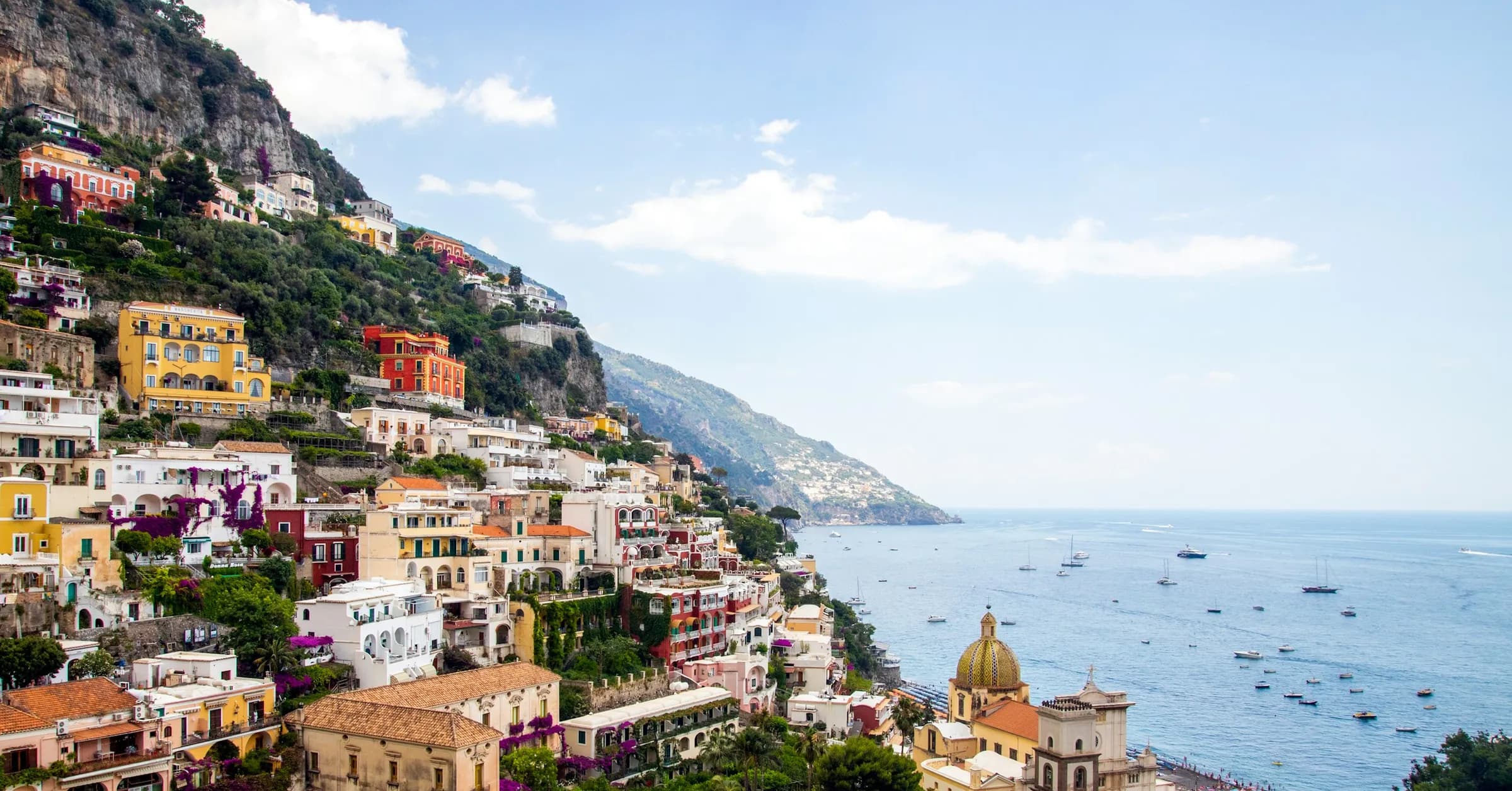
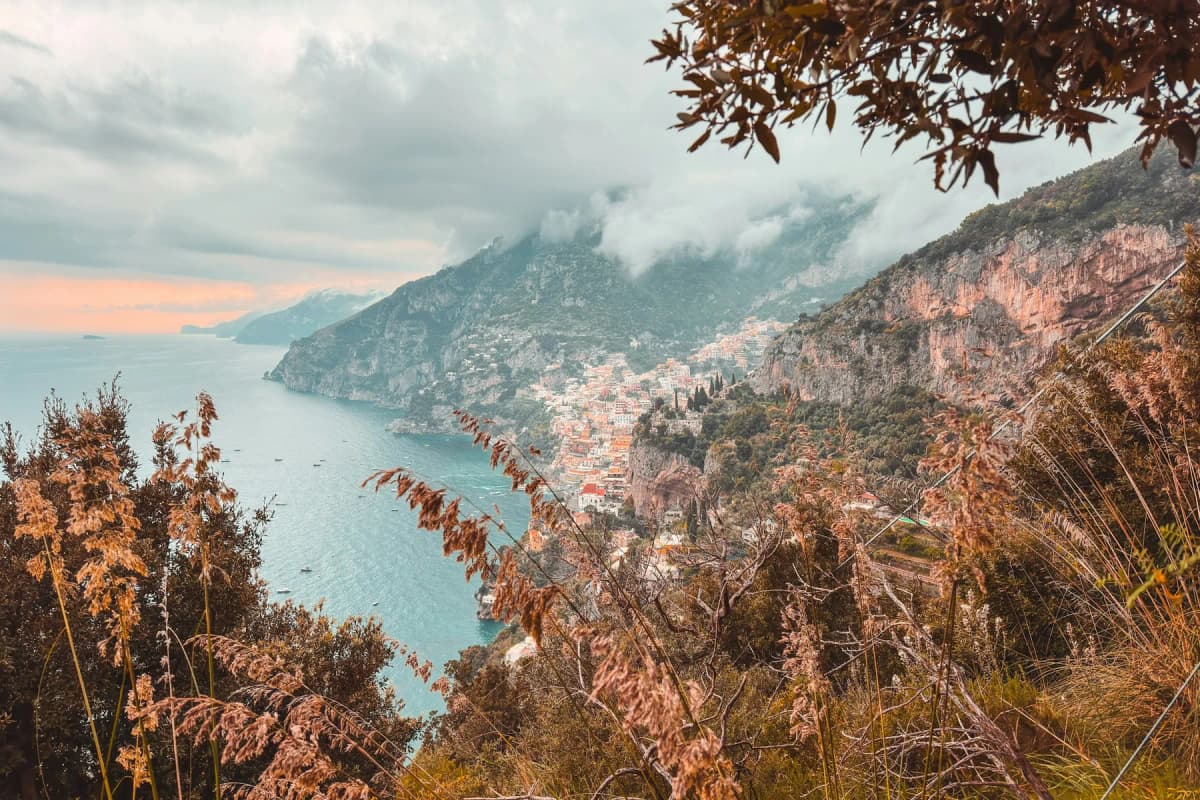 Photo: Christopher Pap de Pestény on Unsplash
September is the month most people who know the coast recommend. Highs drop to a comfortable 25°C, the sea is still about 25°C after a whole summer of sun, and the crowds thin out once Italian schools go back in the middle of the month. Prices ease a little from the second week. The trade-off is rain: September averages around 100 mm, usually in short, heavy storms that clear quickly, with the odd rough-sea day that stops the boats.
October is two months in one. The first half is often warm and bright, with highs around 21°C and a sea of 22°C that is still fine for swimming. It is one of the best times for the Path of the Gods and for Ravello's gardens. From the middle of the month the weather turns less reliable, the days shorten, and the season starts to wind down. The larger four and five star hotels close at the end of October, and the ferries make their last runs in late October or the first days of November.
If you go in the second half of October, stay in Amalfi, which keeps more of its restaurants and shops open, and check ferry dates before you book.
Winter: November to March
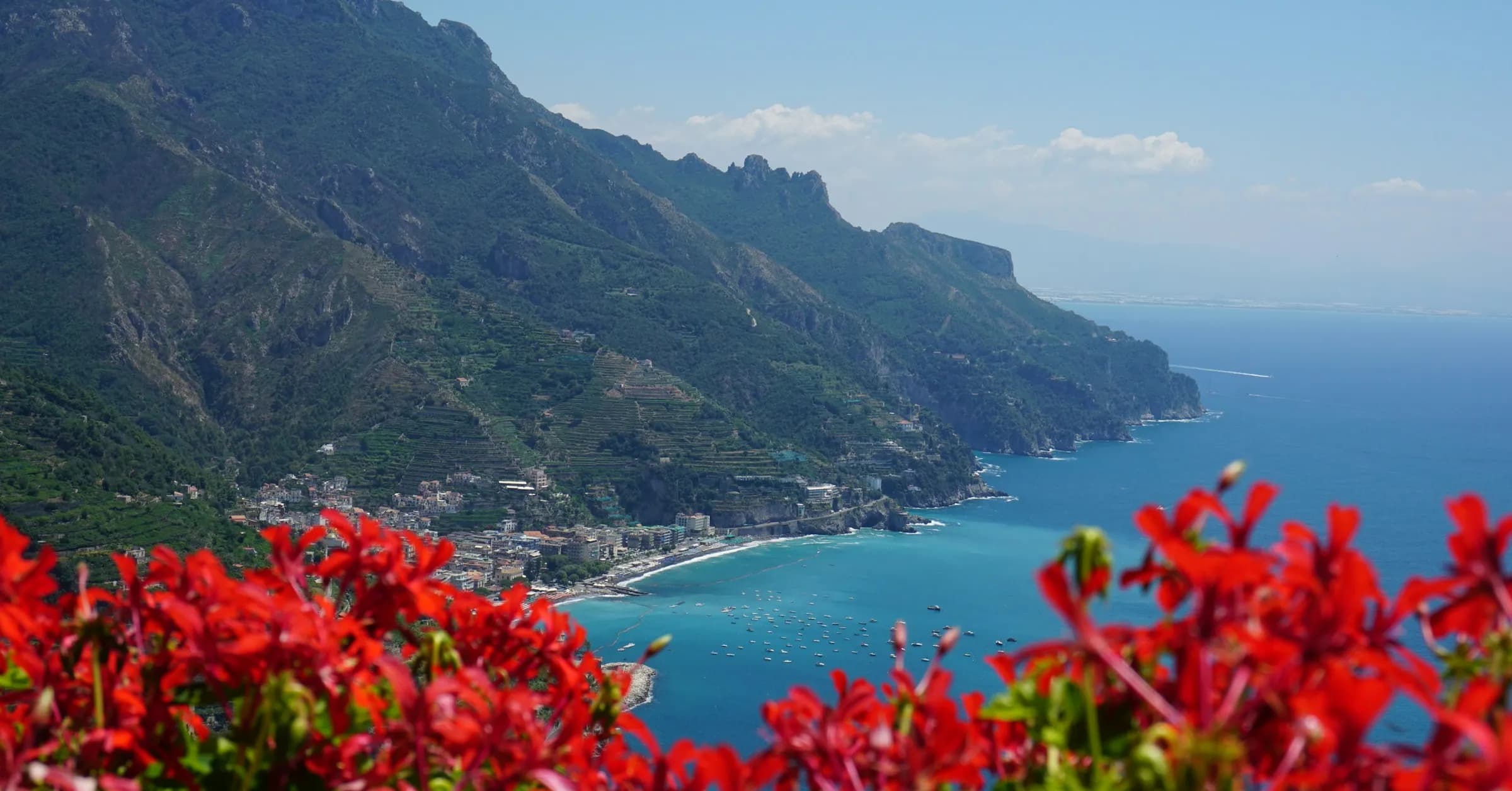
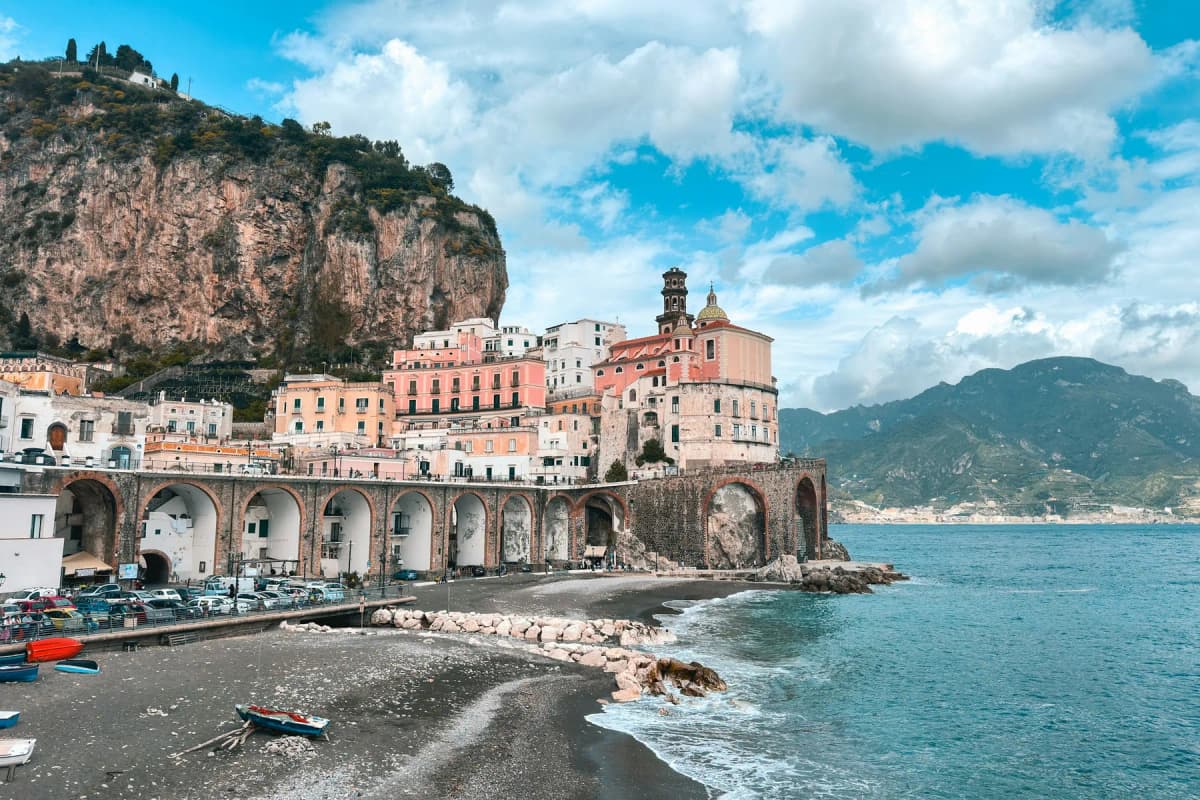 Photo: Christopher Pap de Pestény on Unsplash
Winter on the coast is quiet in a way that is hard to imagine in August. It is also limited.
November is the wettest month, with around 190 mm of rain, and the month when most seasonal businesses close. December is cool, at 14°C, with only about nine hours of daylight. Things pick up for Christmas and New Year, when some hotels and restaurants reopen and Amalfi puts on lights and a fireworks display. January and February are the deadest months. Positano all but shuts, with only a handful of places open, and many restaurants across the coast close for their annual break. March is a slow thaw: temperatures climb to 15°C and businesses start to reopen towards Easter.
What does work in winter:
- Buses. SITA buses run all year, less often than in summer.
- Amalfi, Maiori, Minori and Vietri sul Mare. These are lived-in towns with shops, bakeries and cafes that stay open for residents.
- Prices. The hotels that stay open charge a fraction of their summer rates.
- Day trips inland. Pompeii, Herculaneum and Naples are better in cool weather.
What does not:
- Ferries. The seasonal coastal ferries stop. Published information about winter sailings is inconsistent, so assume there are few or none and check with the operator, Travelmar, before you plan around a boat.
- Beach clubs and boat tours. Closed.
- Many hotels and restaurants, especially in Positano, Praiano and Ravello.
Winter suits a short, slow trip based in Amalfi, perhaps combined with Naples. It does not suit a first visit built around boats and beaches.
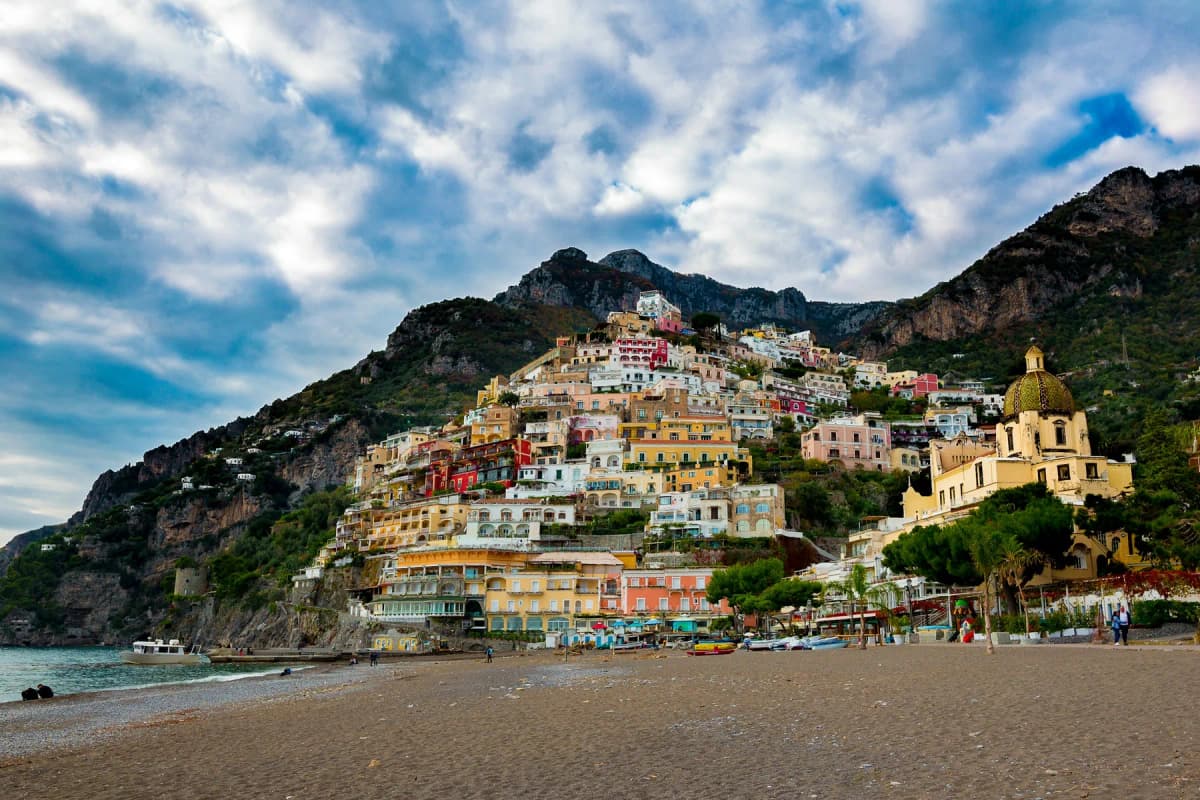 Photo: Khachik Simonian on Unsplash
When is the best time for what you want to do?
Swimming and beach days
Late June to the end of September. The sea is 24 to 26°C and every beach club is open. Hardier swimmers can add late May and the first half of October. For ideas on which beaches to choose, see our guide to things to do in Positano.
Hiking
April, May and October. The Path of the Gods has almost no shade, so the cooler months are far more comfortable, and the air is clearer for views towards Capri. In summer, start at sunrise or do not go. In winter the path can be slippery after rain.
Boat trips and Capri
May to September. Boats need calm seas as well as a timetable, and the summer months have the fewest cancellations. The Blue Grotto in particular is closed whenever there is a swell, which is common from late autumn to early spring. If Capri is a priority and you are travelling through Naples, our Naples to Capri guide covers the year-round ferries from there.
Fewer crowds
The second half of September, early October, and May outside the holiday weekends. Within any month, weekdays are quieter than weekends and the towns are calmest before 10:00 and after 17:00, once the day trippers have left.
Lower prices
April and October are the cheapest months in which the coast is fully working. November to March is cheaper still, with the limits described above. August is the most expensive month, followed by July and late June.
Driving the coast road
Outside the summer, if at all. In peak periods a rule based on the last digit of the number plate bans half of all non-resident cars from the coast road between 10:00 and 18:00. It applies at Easter, around the late April and early May holidays, at weekends in June and July, and every day in August and September. Parking is scarce and expensive all year. Our guide to getting from Rome to the Amalfi Coast explains the alternatives.
Festivals and events through the year
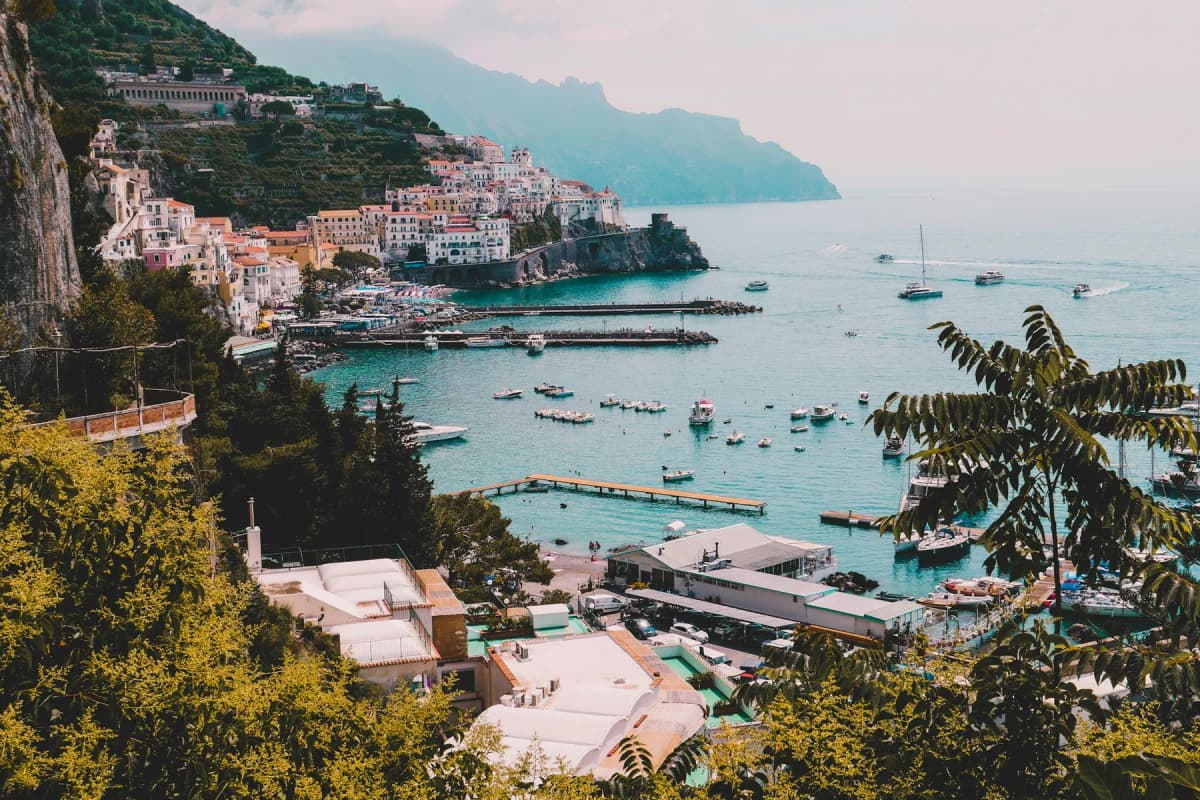 Photo: silvia trigo on Unsplash
| When | Event | Where |
|---|---|---|
| February | Carnival, with a parade of floats | Maiori |
| Easter week | Processions on Good Friday | Towns across the coast |
| Late May or early June | Regatta of the Ancient Maritime Republics | Rotates between Amalfi, Pisa, Genoa and Venice |
| 27 June | Feast of Sant'Andrea, with a procession and fireworks | Amalfi |
| July to early September | Ravello Festival of music | Ravello |
| Early August | Luminaria di San Domenico, with thousands of candles | Praiano |
| 15 August | Ferragosto and the Feast of the Assumption, with fireworks | Positano, Maiori |
| 31 August and 1 September | Byzantine New Year, a costumed historical pageant | Amalfi and Atrani |
| 30 November | Feast of Sant'Andrea, the winter celebration | Amalfi |
Two notes on the table. The Ravello Festival ran from 4 July to 5 September in 2026, and dates for 2027 had not been published when this guide was written. The regatta is hosted by Amalfi only one year in four. It was held in Pisa in 2026 and is due in Venice in 2027, so check the host city before planning a trip around it.
Festival days are worth seeing, but they also fill hotels and close roads. If you are in Amalfi on 27 June or in Positano on 15 August, book well ahead and do not plan to move between towns in the evening.
What is open when?
| Ferries | Hotels | Beach clubs | Restaurants | |
|---|---|---|---|---|
| April | Start at the beginning of the month | Most open by Easter | Opening | Most open |
| May to September | Full timetable | All open | All open | All open |
| October | Running, last sailings at the end of the month | Open, large hotels close at the end of the month | Close during the month | Most open |
| November to March | Few or none | Many closed | Closed | Many closed, especially January and February |
Exact dates change each year and are confirmed late. As an example, one operator's Capri service was scheduled from 1 April to 3 November in 2026. Use the table to choose a month, then check real dates before you book flights.
When not to go to the Amalfi Coast
There are three periods to avoid unless you have a reason to pick them.
- Mid November to the end of February, if you want ferries, beaches, boat trips or a wide choice of places to eat. It is the rainy season and the closed season at once.
- The middle two weeks of August, if you dislike heat, queues and high prices. This is the busiest time of the year.
- Easter week and the long weekends around 25 April, 1 May and 2 June, if you are hoping for a quiet shoulder-season trip. Italian holidaymakers fill the coast and prices jump for those few days.
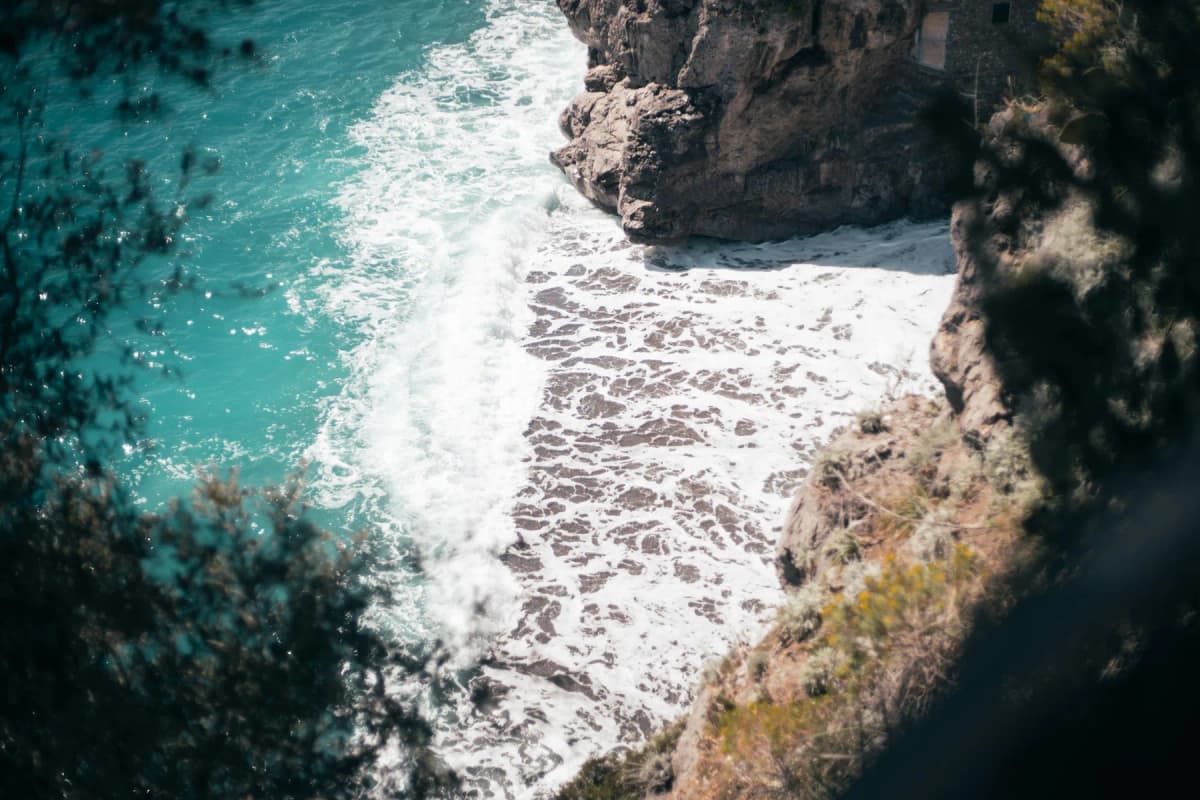 Photo:
 Bad weather can disrupt a trip in any month. When the sea is rough the ferries stop and everyone moves to the buses, which fill up fast. Build one flexible day into any itinerary, whatever the season.
How far ahead should you book?
- July and August: four to six months ahead for hotels in Positano and Amalfi, and earlier for rooms with a sea view.
- May, June and September: three to four months ahead. These months have become nearly as popular as high summer.
- April and October: one to two months is usually enough, except at Easter.
- Winter: a few weeks, but confirm that the hotel and nearby restaurants will be open.
Flights to Naples follow the same pattern, with the best fares in April, May and October.
Once you have chosen your dates, our five day Amalfi Coast itinerary shows how to fit the main towns, Capri and the Path of the Gods into one trip.
Practical tips
- Pack for the month. Spring and autumn need a light jacket and a waterproof. Summer needs a hat, high-factor sunscreen and shoes that can cope with hot stone steps. Winter needs proper rain gear.
- Plan around the middle of the day in summer. Sightsee early, rest or swim from 12:00 to 16:00, and go out again in the evening.
- Check ferry dates in April, October and November. The first and last sailings move from year to year.
- Keep a spare day. Rough seas cancel boats in every season.
- Reserve Capri early in summer. Ferries and Capri boat tours sell out on fine days.
- Arrange your arrival. A private transfer from Naples is most useful in winter, when there are no ferries, and late at night.
- Stay connected. Timetable changes are posted online first. An Italy eSIM from Airalo can be installed before you travel.
- Insure the trip. Weather cancellations are the most likely thing to go wrong. EKTA travel insurance is one option to compare.
Best time to visit Amalfi Coast FAQ
When not to go to the Amalfi Coast?
Avoid mid November to February if you want ferries, beaches and open restaurants, because it is the wet season and most seasonal businesses are closed. Avoid mid August if you want to escape heat, crowds and peak prices.
What is the rainy season on the Amalfi Coast?
October to March. Most of the year's rain falls in those six months, and November is the wettest, with around 190 mm on average. June, July and August are dry.
What is the busiest time on the Amalfi Coast?
July and August, and above all the week around Ferragosto on 15 August. Easter week and the weekends of June and September are also very busy.
Is Positano or Amalfi better?
It depends on the season as well as taste. Positano is prettier and better for beaches in summer, but it almost closes in winter. Amalfi is flatter, has the best transport links and stays open all year, so it is the safer choice from late October to March.
What is the cheapest month to visit the Amalfi Coast?
January and February have the lowest hotel rates, but very little is open. Among the months when the coast is fully working, April and October are the cheapest.
Is the Amalfi Coast worth visiting in October?
Yes, especially in the first half of the month. It is warm enough to swim, the ferries are running and the crowds have gone. Later in October the weather is less settled and hotels begin to close.
Can you swim on the Amalfi Coast in May?
You can, but the sea is cool at about 19°C. Most people find it comfortable from mid June. It stays warm until early October.
How many days do you need on the Amalfi Coast?
Four to five days is enough to see Positano, Amalfi, Ravello and Capri without rushing. Add a spare day outside high summer in case the boats are cancelled.
Is the Amalfi Coast too hot in August?
Average highs are about 29°C, and heatwaves push well above that. With the humidity and the stairs it can be tiring. If you go, plan mornings and evenings for walking and the hottest hours for the sea.
How we researched this guide
This guide was built from published data and official sources, not from a single visit. The monthly temperature and rainfall figures are long-term averages for Amalfi derived from climate reanalysis data, and the sea temperatures are monthly averages from a sea temperature database. We rounded them to whole numbers, and we note above that rainfall figures differ between sources. Ferry season dates come from operator timetables for 2026. Festival dates were checked against the organisers' published programmes, and we say where the dates for 2027 were not yet available. Seasonal closing patterns for hotels and restaurants are drawn from local tourism sites, and they are patterns, not guarantees. The traffic rules for the coast road match those in our other Italy guides.
Opening dates, ferry timetables and festival programmes are confirmed only a few weeks or months ahead. Check the ones that matter to your trip before you book.
For itineraries and transport guides for the region, see our Italy travel guides.