Best eSIM for Japan (2026): 5 Providers Compared by Price, Network and Data
October 11, 2026 · Japan
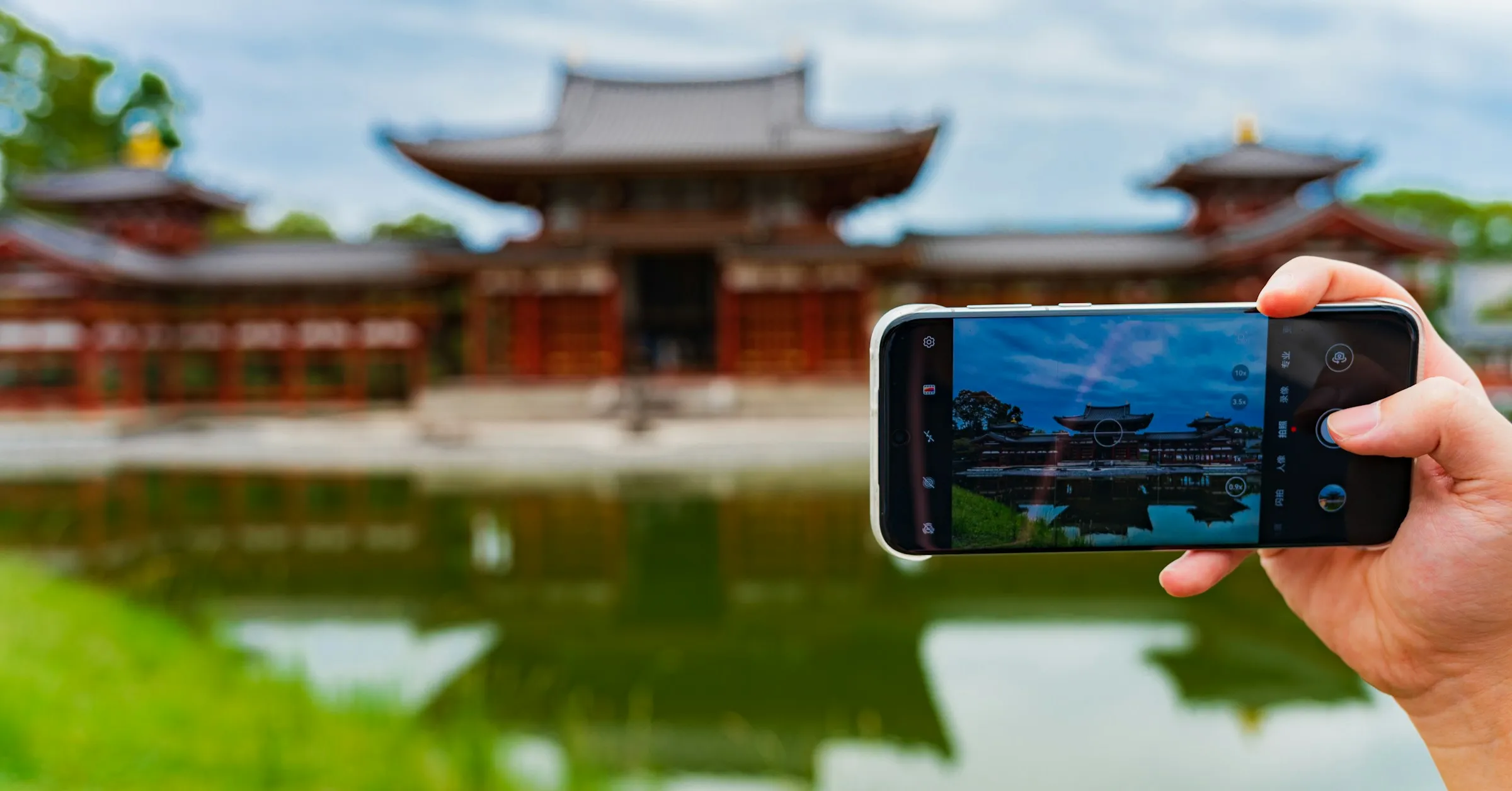
This post contains affiliate links. We may earn a commission if you book through them, at no extra cost to you. Disclaimer.
The best eSIM for Japan for most travellers is a fixed-data plan from Airalo: about $11 for 5 GB or $18 for 10 GB, valid for 30 days, on the SoftBank network. Nomad is usually a dollar or two cheaper for the same amount of data. Holafly is the pick if you want unlimited data and do not need much hotspot. Ubigi is the one to choose if you are heading deep into the countryside, because it uses NTT Docomo, the network with the widest rural coverage.
Every eSIM in this guide gives you fast 4G or 5G data in Tokyo, Kyoto and Osaka, and none of them needs a visit to a shop. The real differences are price, how much data you get before the speed drops, whether you can share data with a laptop, and which Japanese network sits behind the plan. This guide compares five providers on those points and helps you choose the right size.
A note on how this site earns money: the Airalo links on this page are affiliate links, so we earn a small commission if you buy through them. The other four providers pay us nothing. Where one of them is the better choice, we say so.
Best eSIM for Japan: the quick answer
| Provider | Best for | 10 GB, 30 days | Unlimited, 7 days | Japanese network | Hotspot |
|---|---|---|---|---|---|
| Airalo | Most travellers, easy app, top-ups | about $18 | about $27 | SoftBank, KDDI | Yes |
| Nomad | Lowest price for fixed data | about $16 to $18 | about $25 | KDDI au, SoftBank | Yes |
| Holafly | Unlimited data, no counting | not sold | about $27.50 | KDDI, SoftBank | Limited (about 1 GB a day) |
| Saily | Small, cheap plans | about $18 | about $25 | KDDI (reported) | Yes |
| Ubigi | Rural trips, hiking, Hokkaido | about $16 | not the focus | NTT Docomo, KDDI | Yes |
Prices are in US dollars as seen in October 2026. Providers change them often and run sales, so treat these as a guide and check the price at checkout.
- One week in the cities, light use: 3 to 5 GB. About $7 to $11.
- 10 to 14 days, normal use: 10 GB. About $16 to $18. This is the plan that suits most first trips.
- Heavy use, video calls or working remotely: 20 GB (about $23 to $26) or an unlimited plan.
How we chose
We compared the five providers that travellers to Japan use most, on six points:
- Price per gigabyte for the plan sizes people really buy: 5, 10 and 20 GB.
- The network behind the plan. Japan has three big networks: NTT Docomo, KDDI (sold as "au") and SoftBank. A newer fourth, Rakuten Mobile, is rarely used by travel eSIMs.
- What "unlimited" means. Every unlimited plan has a fair-use rule that slows you down after a daily amount.
- Hotspot. Can you share the connection with a laptop or a travel partner?
- Validity. How many days the plan lasts, and when the clock starts.
- Ease of use. The app, top-ups and support.
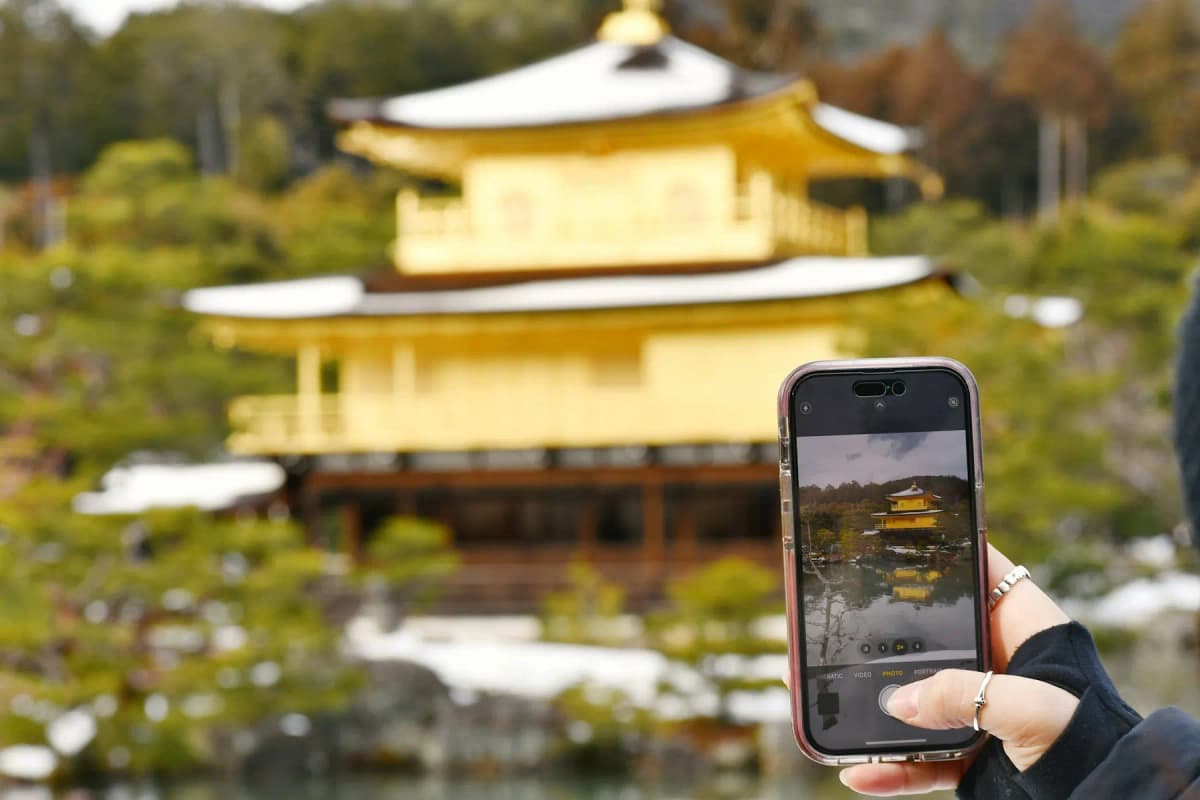 Photo: Max Harlynking on Unsplash
1. Airalo: the best eSIM for Japan for most travellers
Airalo is the largest eSIM store, and its Japan plans are the easiest place to start. You pick a size, pay, and install the eSIM from the app in a couple of minutes. If you run low, you top up in the same app without installing anything new.
Plans and prices. Airalo sells both fixed-data and unlimited plans for Japan. Recent prices for the fixed plans:
| Data | Validity | Approximate price |
|---|---|---|
| 1 GB | 7 days | $4 to $4.50 |
| 3 GB | 30 days | $8.50 |
| 5 GB | 30 days | $11 to $11.50 |
| 10 GB | 30 days | $18 |
| 20 GB | 30 days | $25 to $26 |
Unlimited plans run from 3 days (about $11) to 30 days (about $72), with 7 days at around $27. Like all unlimited travel plans, they slow down after a daily high-speed allowance. Check the plan details for the current figure before you buy.
Network. Airalo's Japan eSIM connects mainly to SoftBank, with KDDI as a second network. Both are strong in cities, on the Shinkansen routes and at the main sights.
Good points
- 30 days of validity on everything from 3 GB up, so the same plan covers a one week or a three week trip.
- Top-ups in the app.
- Hotspot is allowed on the fixed-data plans.
- The most widely used provider, so there are plenty of setup guides if you get stuck.
Weak points
- Rarely the very cheapest. Nomad and Saily often undercut it by a dollar or two.
- Data only. There is no Japanese phone number.
- SoftBank coverage thins out in remote mountain areas.
Choose it if you want a simple, reliable plan for a classic Tokyo, Kyoto and Osaka trip. See Airalo's Japan eSIM plans.
2. Nomad: the cheapest for fixed data
Nomad sells almost the same product as Airalo for a little less. Its Japan plans listed in October 2026:
| Data | Validity | Price |
|---|---|---|
| 1 GB | 7 days | $4 |
| 3 GB | 30 days | $7 |
| 5 GB | 30 days | $10 |
| 10 GB | 30 days | $16 on sale, $18 regular |
| 20 GB | 30 days | $23 on sale, $26 regular |
| 50 GB | 30 days | $35 |
Unlimited plans cost $11 for 3 days, $25 for 7 days, $41 for 14 days and $49 for 21 days. After the daily high-speed allowance, the speed falls to 512 kbps, which is enough for messages and maps but not for video.
Network. KDDI au and SoftBank.
Good points
- Usually the lowest price per gigabyte among the big names.
- A 50 GB plan for heavy users, which is better value than most unlimited plans.
- Hotspot allowed.
- You have 60 days after purchase to activate, so you can buy early.
Weak points
- The best prices are sale prices, and they come and go.
- Data only.
Choose it if price matters most and you are happy with a fixed amount of data.
3. Holafly: the best unlimited eSIM for Japan
Holafly only sells unlimited plans, priced by the day. For Japan in October 2026: 5 days for $20.50, 7 days for $27.50, 10 days for $36.50, 15 days for $50.50 and 30 days for $73.90.
Network. KDDI and SoftBank.
Good points
- No counting gigabytes. You pick the number of days and stop thinking about it.
- You choose the exact length of your trip, so a 9 or 12 day plan is possible.
- Good support by chat.
Weak points
- The most expensive option for most trips. A 10 day plan costs about twice as much as 10 GB from Nomad or Airalo, and most travellers use less than 10 GB in 10 days.
- Hotspot sharing is limited to about 1 GB per day.
- "Unlimited" still has a fair-use rule. If you use a lot in one day, the speed can drop until the next day.
Choose it if you stream, upload a lot of video or simply do not want to watch a data meter, and you do not need to run a laptop from your phone all day.
 Photo:
 4. Saily: good value for small plans
Saily comes from the company behind NordVPN. Its Japan prices are close to Nomad's: about $4 for 1 GB (7 days), $8 for 3 GB, $11 for 5 GB, $18 for 10 GB and $25 for 20 GB, all for 30 days. Unlimited plans start at around $19 for 5 days.
Network. Reported as KDDI. Saily does not make this as clear as the others, so check the plan page.
Good points
- Low prices on the smallest plans, which suits a short stopover.
- A clean, simple app.
- Built-in options to block ads and trackers, which also saves a little data.
Weak points
- A newer service with a shorter track record.
- One network rather than two, if the reports are right.
Choose it if you want a cheap small plan for a few days in Tokyo or Osaka.
5. Ubigi: the best eSIM for rural Japan
Ubigi is less well known, but it has one clear advantage: it connects to NTT Docomo, as well as KDDI. Docomo has the widest coverage in Japan, especially in the mountains, on small islands and across Hokkaido.
Plans and prices. Ubigi prices its plans in several currencies. A 10 GB, 30 day plan costs roughly $16, a 25 GB plan about $32, and there is a tiny 1 GB plan for a few dollars if you only need a backup.
Good points
- Docomo coverage, which matters on the Kumano Kodo, the Nakasendo trail, in the Japan Alps and in rural Hokkaido and Tohoku.
- Hotspot allowed.
- One eSIM profile can be reused for later trips and other countries.
Weak points
- The app and website are less polished than Airalo's.
- Fewer plan sizes.
Choose it if your trip goes beyond the big cities and you want the best chance of a signal on a mountain trail or a country road.
 Photo: Bobby Youstra on Unsplash
Which Japanese network is best?
For a first trip, it barely matters. All three big networks cover Tokyo, Kyoto, Osaka, Hiroshima, Nara, Hakone and the Shinkansen lines between them, with 4G nearly everywhere and 5G in the city centres.
The difference shows up off the main route:
- NTT Docomo has the widest reach in rural and mountain areas. Only Ubigi, of the five here, uses it.
- KDDI (au) is close behind and strong along roads and railways.
- SoftBank is excellent in cities and a little weaker in remote valleys.
One thing no eSIM can fix: there are stretches with no signal on any network. Long Shinkansen tunnels, deep subway sections between stations and some hiking trails will drop your connection for a minute or two. Download offline maps for the areas you will visit before you set out.
How much data do you need in Japan?
Less than most people think. On a normal sightseeing day you use maps, a transit app, a translation app, messaging and some photo uploads. That comes to roughly 300 to 700 MB a day.
| Type of traveller | Daily use | 7 days | 14 days |
|---|---|---|---|
| Light: maps, messages, a little browsing | 300 to 500 MB | 3 GB | 5 to 10 GB |
| Normal: plus social media and photo uploads | 0.5 to 1 GB | 5 GB | 10 GB |
| Heavy: video calls, streaming, hotspot for a laptop | 2 GB or more | 20 GB | Unlimited or 50 GB |
Three things use data fast: video streaming, video calls and automatic photo backups. Turn off cloud photo backup over mobile data, download playlists and shows over hotel Wi-Fi, and 10 GB will last two weeks without effort.
Hotel Wi-Fi in Japan is free and usually fast. Convenience stores, many stations and most Shinkansen trains also have free Wi-Fi, although it can be slow and asks you to sign in.
If you are following our 10 day Japan itinerary, a 10 GB plan with 30 days of validity is the right size.
eSIM, pocket Wi-Fi or physical SIM?
| Option | Typical cost | Good for | Drawbacks |
|---|---|---|---|
| eSIM | $10 to $30 per trip | Solo travellers and couples with recent phones | Phone must be unlocked and support eSIM |
| Pocket Wi-Fi | About ¥500 to ¥1,200 a day | Families and groups sharing one connection, older phones | One more device to charge, carry and return |
| Physical SIM | About ¥2,000 to ¥5,000 | Phones without eSIM | You must swap out your home SIM and queue or find a vending machine at the airport |
| Roaming from home | Often $5 to $15 a day | Very short trips, or plans that include Japan | Expensive over a week or more |
For one or two people, an eSIM is the cheapest and simplest choice. A pocket Wi-Fi only wins when four or five people share it, or when someone in the group has a phone that cannot take an eSIM.
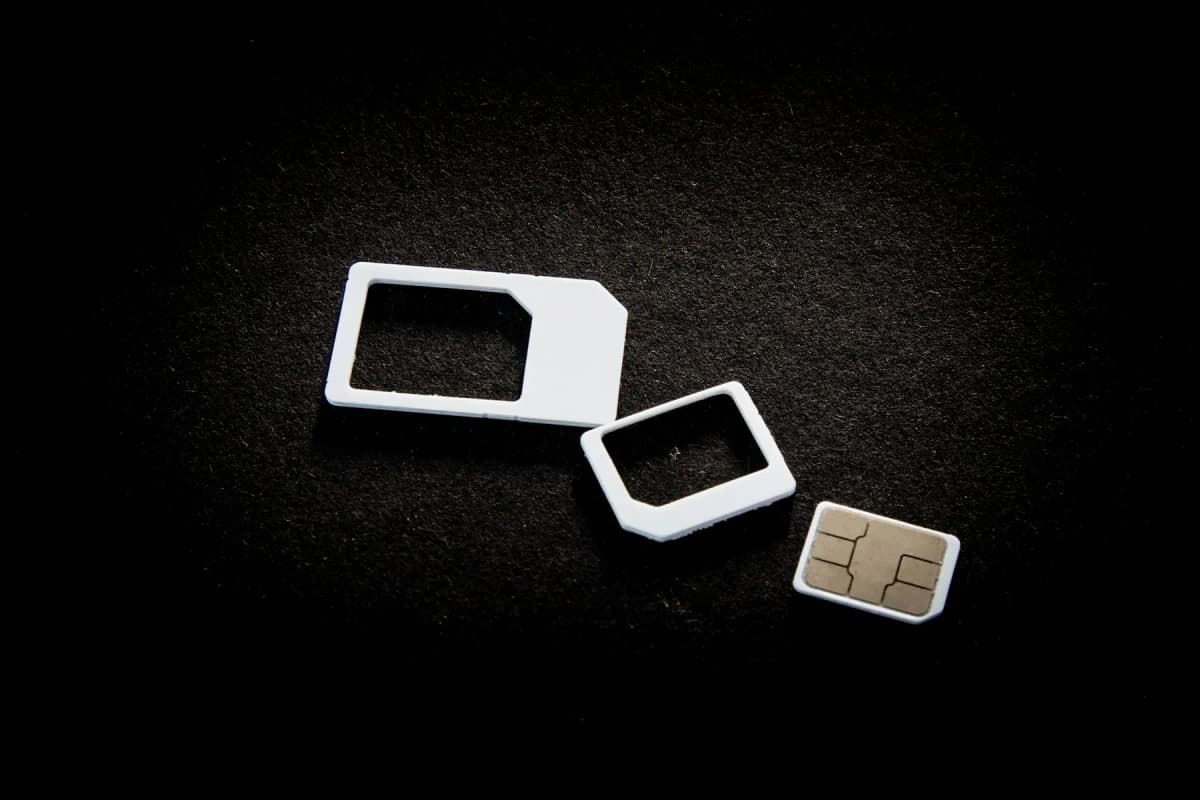 Photo: User_Pascal on Unsplash
Will your phone work with a Japan eSIM?
Two conditions:
- Your phone supports eSIM. That includes the iPhone XS, XR and everything newer, Google Pixel 3 and newer, and Samsung Galaxy S20 and newer, along with most recent flagship phones. Some models sold in mainland China and a few budget phones do not. On an iPhone, go to Settings, then General, then About: if you see a line called "Available SIM" or "Digital SIM", you are fine.
- Your phone is unlocked. If you bought it on a contract and it is still tied to your carrier, a travel eSIM will not connect. On an iPhone, the same About screen should say "No SIM restrictions". If not, ask your carrier to unlock it before you travel.
How to set up a Japan eSIM
- Buy the plan a few days before you fly. You need an internet connection to install an eSIM, so do not leave it for the arrivals hall.
- Install it at home over Wi-Fi. The app does this for you, or you scan a QR code. Give the new line a clear name such as "Japan".
- Leave it switched off until you land, unless the provider says the plan only starts when it connects in Japan. Most do work that way, but check, because a few start counting from installation.
- When you land, turn on the Japan eSIM, select it for mobile data, and switch on data roaming for that line. This does not mean roaming charges. It is simply how travel eSIMs connect.
- Turn off data roaming on your home SIM so that your own carrier cannot charge you. You can leave the home line on for calls and texts if you want to receive bank codes, but check what your carrier charges for incoming texts abroad.
If it does not connect after a minute, switch flight mode on and off, then restart the phone. That fixes most problems.
What a Japan eSIM cannot do
- Phone calls and SMS. Travel eSIMs are data only. Use WhatsApp, FaceTime, LINE or any other app for calls. LINE is what most people in Japan use.
- Restaurant bookings by phone. Some small restaurants only take reservations by telephone. Ask your hotel to call for you. They are used to it.
- Sign-ups that need a Japanese number. A few local apps and services ask for one. Visitors can nearly always do without them.
Where you will use the data most
Trains. Japan's transport runs on apps. Google Maps and the Japan Transit Planner tell you the platform, the best carriage and the exit number. In cities like Tokyo and Osaka, where a single station can have dozens of exits, this saves real time. See our Tokyo itinerary and Osaka itinerary for how the days fit together.
Translation. Point your camera at a menu or a ticket machine and a translation app turns it into English. It works much better online than offline.
Tickets and timed entry. Many attractions now sell timed tickets online and show them as QR codes. You will want a connection at the gate.
Day trips. On a day out to Nara, Himeji or Koyasan you will be checking return trains all afternoon. Our guide to day trips from Osaka lists the routes.
 Photo: Thomas Hammerlund on Unsplash
Our recommendation by type of trip
- First trip, Tokyo, Kyoto and Osaka, 7 to 14 days: Airalo 10 GB for 30 days. Enough data, long validity, easy top-ups.
- On a tight budget: Nomad 5 GB or 10 GB, bought when there is a sale.
- A long weekend or a stopover: a 1 to 3 GB plan from Saily, Nomad or Airalo. All cost under $10.
- Heavy user or content creator: Holafly unlimited if you mostly use your phone, or Nomad 50 GB if you need a hotspot for a laptop.
- Hiking, skiing or a road trip in Hokkaido, Tohoku, Shikoku or the Alps: Ubigi, for the Docomo network.
- A family or a group of four or more: compare the cost of one eSIM each with a single pocket Wi-Fi. For teenagers with their own phones, separate eSIMs are easier, because the group can split up.
Before you go
- Flights. Compare fares into Tokyo's Haneda and Narita airports and Osaka's Kansai airport. Flying into one city and out of the other saves a long train ride back.
- Travel insurance. Medical care in Japan is excellent, and visitors pay the full cost. Get a travel insurance quote before you leave.
- Airport transfer. Trains from the airports are fast and cheap. If you land late or have a lot of luggage, a pre-booked transfer takes you to the hotel door.
- Power. Maps and translation drain a battery quickly. Carry a small power bank. Japan uses type A plugs (two flat pins) at 100 volts.
- Where to stay. Choosing a base near a main station matters more than anything else. See where to stay in Tokyo and our Kyoto vs Osaka comparison.
Frequently asked questions
What is the best eSIM for Japan? For most travellers, Airalo's 10 GB plan for 30 days, at about $18. Nomad is slightly cheaper for the same data, Holafly is best for unlimited use, and Ubigi has the best rural coverage because it uses NTT Docomo.
How much does a Japan eSIM cost? Roughly $4 for 1 GB, $10 to $11 for 5 GB, $16 to $18 for 10 GB and $23 to $26 for 20 GB. Unlimited plans cost about $25 to $28 for a week and $50 to $75 for a month.
How much data do I need for 2 weeks in Japan? About 10 GB for normal use: maps, transit apps, translation, messaging and social media. Light users can manage with 5 GB. If you make video calls or stream every day, buy 20 GB or an unlimited plan.
Is an eSIM better than pocket Wi-Fi in Japan? For one or two people, yes. It is cheaper, there is nothing extra to carry or charge, and nothing to return at the airport. Pocket Wi-Fi is better value for a group of four or more sharing one connection, or for phones that do not support eSIM.
Can I buy an eSIM after I arrive in Japan? Yes. You can buy and install one over airport Wi-Fi. It is less stressful to do it at home, where you have a stable connection and time to fix any problem.
Do Japan eSIMs come with a phone number? Almost never. Travel eSIMs are data only. You can still call and message through apps such as WhatsApp, FaceTime and LINE, and you keep your home number for incoming texts.
Does an eSIM work on the Shinkansen and the subway? Yes, with short gaps. The signal drops in long tunnels on the Shinkansen and between some subway stations, on every network. Stations themselves are covered.
Can I use my eSIM as a hotspot? On Airalo's fixed-data plans, Nomad, Saily and Ubigi, yes. Holafly limits hotspot sharing to about 1 GB a day. Rules on unlimited plans vary, so check before you buy if you need to run a laptop.
Are unlimited eSIMs really unlimited? Not at full speed. Every provider applies a fair-use rule: after a daily amount of fast data, the speed is reduced until the next day. For normal use you are unlikely to notice.
When should I activate my Japan eSIM? Install it before you leave home, then turn it on when you land. On most plans the validity period starts when the eSIM first connects to a network in Japan, but read the plan details, because a few start from the day you install.
How we researched this guide
This comparison is based on the plans and prices published by each provider in October 2026, including Nomad, Holafly and Ubigi, along with coverage information from the Japanese networks and recent traveller reports. General advice on staying connected comes from the Japan National Tourism Organization. eSIM prices, plan sizes and fair-use rules change often, and currency conversion can shift the figure you see, so check the final price and the plan details before you pay. Found something out of date? Let us know.
Planning more of Japan? Browse all our Japan guides.