Tokyo Itinerary: 5 Days for First-Timers, With 3 and 4 Day Versions (2026)
October 10, 2026 · Japan
This post contains affiliate links. We may earn a commission if you book through them, at no extra cost to you. Disclaimer.
The best Tokyo itinerary for a first visit is five days: one day for old Tokyo in Asakusa and Ueno, one for Harajuku and Shibuya, one for the fish market, Ginza and teamLab, one for Shinjuku and a neighbourhood of your choice, and one for a day trip to Hakone, Kamakura or Nikko. With three days, do the first three. With four, add either Shinjuku or the day trip.
Tokyo is the largest city in the world, and the mistake nearly everyone makes is to zigzag across it. A temple in the east, a crossing in the west, a museum back in the east: that is two hours a day on trains. This itinerary groups each day on one side of the city, so most of your travel is on foot or a few stops on one line. It also tells you which tickets to book before you fly, because three of the most popular attractions sell out.
Tokyo itinerary: the quick answer
| Day | Area | Main sights | Book ahead? |
|---|---|---|---|
| 1 | East: Asakusa, Ueno, Akihabara | Senso-ji, Ueno Park, Tokyo National Museum, Skytree | Skytree (optional) |
| 2 | West: Harajuku, Shibuya | Meiji Shrine, Takeshita Street, Omotesando, Shibuya Crossing, Shibuya Sky | Shibuya Sky |
| 3 | Bay and centre: Tsukiji, Ginza, Toyosu | Tsukiji Outer Market, Imperial Palace East Gardens, Ginza, teamLab Planets | teamLab |
| 4 | Shinjuku and a neighbourhood | Shinjuku Gyoen, Shimokitazawa or Yanaka, Golden Gai, Omoide Yokocho | Ghibli Museum (if going) |
| 5 | Day trip | Hakone, Kamakura, Nikko or Kawaguchiko | Train seats for Hakone and Kawaguchiko |
- 3 days in Tokyo: days 1, 2 and 3.
- 4 days in Tokyo: days 1 to 3, plus day 4 if you like cities or day 5 if you want mountains or temples.
- 5 days in Tokyo: all five. This is the comfortable version.
Before you start: four decisions
1. Choose your airport if you can. Haneda is 20 to 30 minutes from the centre. Narita is about an hour away and the train costs around ¥3,000. If the fares are close, Haneda saves you time at both ends.
2. Pick one base and stay there. Tokyo's trains are so good that there is no reason to change hotels. Shinjuku, Shibuya, Ueno, Asakusa and the Tokyo Station area all work for this itinerary. Our guide to where to stay in Tokyo compares nine areas.
3. Book three things early. Shibuya Sky at sunset, teamLab, and the Ghibli Museum if it matters to you. Details are in each day below.
4. Do not count arrival day. After a long-haul flight you will be tired by 6 pm and awake at 4 am. Day 1 below is your first full day. On arrival day, check in, walk around your neighbourhood, eat something simple and sleep.
Day 1: old Tokyo (Asakusa, Ueno and Akihabara)
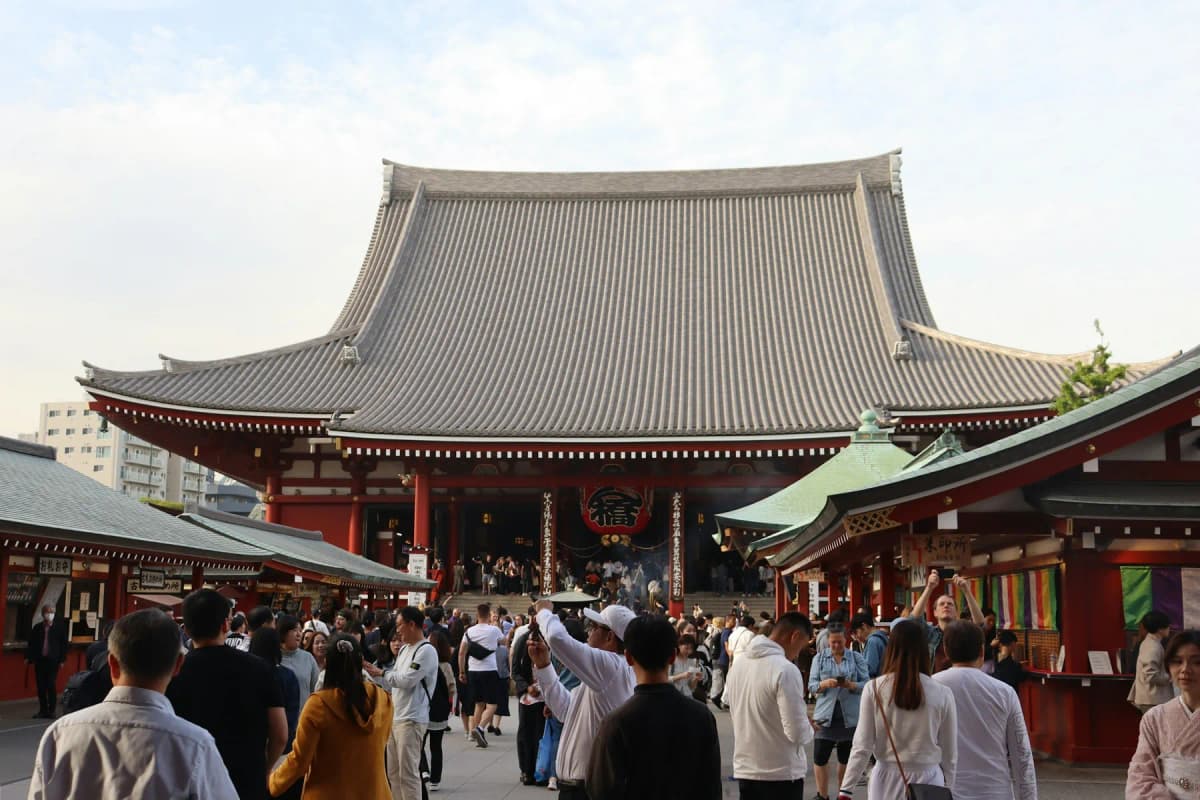 Photo: Alicja Ziajowska on Unsplash
Start on the east side, where Tokyo still feels like the old merchant city it grew from. Jet lag helps today, because the first stop is best very early.
Morning: Asakusa. Senso-ji is Tokyo's oldest temple. Walk in through the Kaminarimon gate with its giant red lantern, up Nakamise shopping street, and on to the main hall and the five-storey pagoda. The grounds are free and always open. The main hall opens at 6 am (6:30 from October to March). Before 9 am it is calm. By 11 am it is one of the most crowded places in Japan.
Afterwards, walk the back streets west of the temple, or head to Kappabashi, the kitchenware street where restaurants buy their knives, bowls and plastic display food. It is 10 minutes on foot and a great place for a souvenir that you will use.
Midday: Ueno. Take the Ginza subway line three stops to Ueno, about five minutes. Ueno Park holds several of the city's best museums. If you choose one, make it the Tokyo National Museum, which has the country's largest collection of Japanese art, from samurai armour to woodblock prints. Entry to the permanent collection is about ¥1,000, and it is closed on most Mondays.
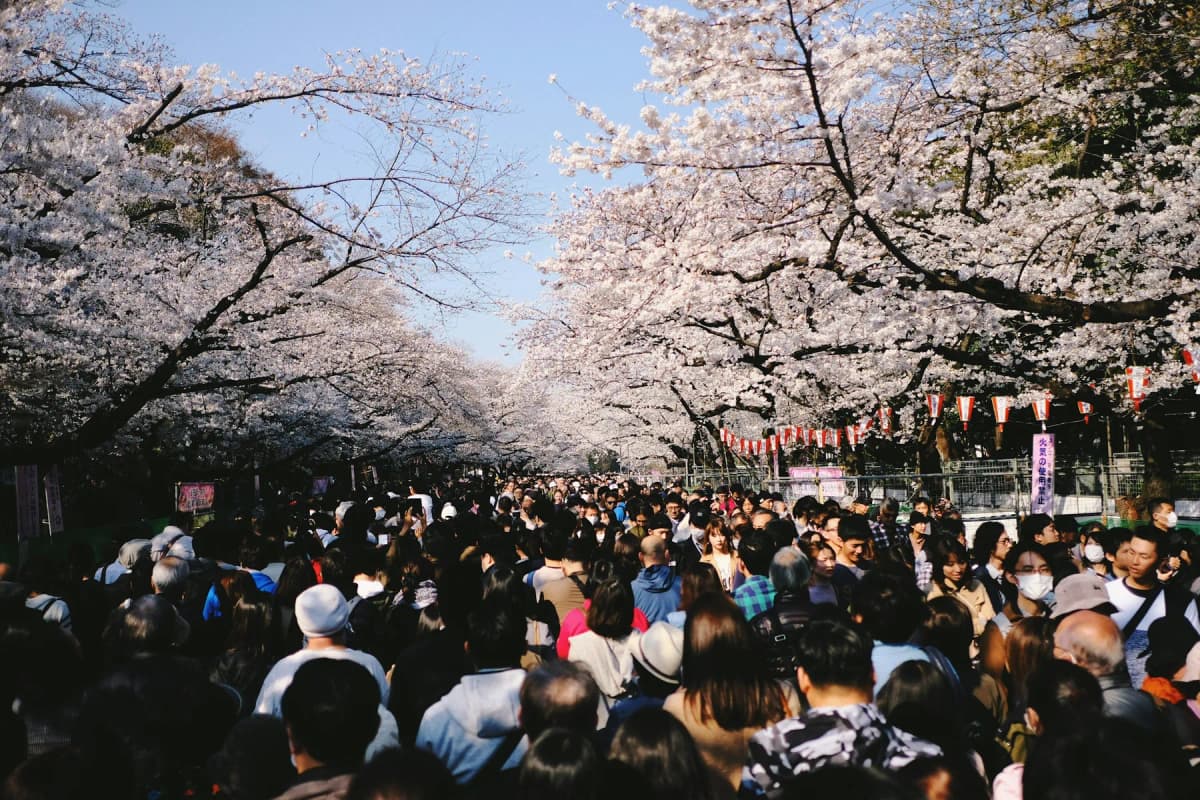 Photo: Trevor Paxton on Unsplash
For lunch, walk down to Ameyoko, the market street that runs under the railway tracks south of the park. It is loud and cheap, with stalls selling grilled seafood, kebabs, fruit on sticks and bowls of rice topped with raw fish.
Afternoon: Akihabara. One stop south of Ueno on the JR Yamanote line, or a 15 minute walk. This is the district of electronics shops, multi-storey arcades, retro game stores and anime merchandise. Even if none of that is your thing, an hour here is worth it for the spectacle.
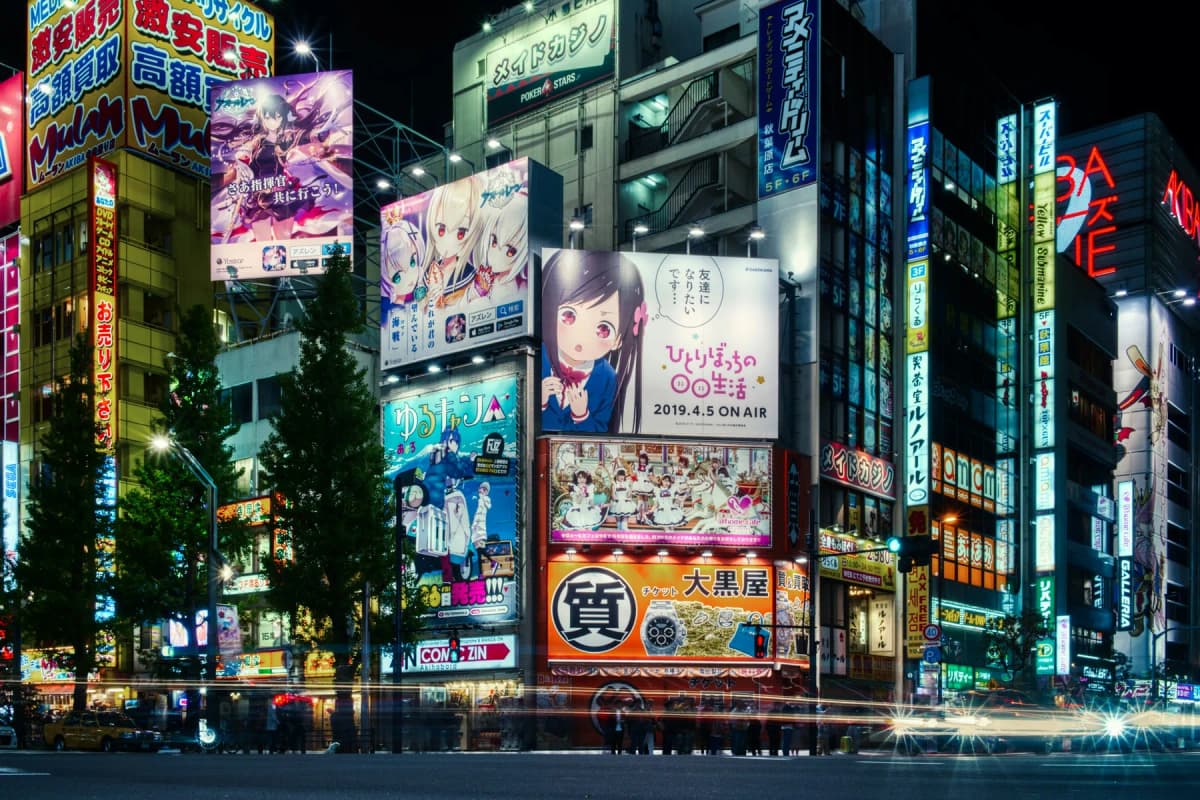 Photo:
 Evening: Tokyo Skytree (optional). At 634 metres, the Skytree is the tallest tower in Japan, and it is a 20 minute walk or one train stop from Asakusa. Since April 2026 the ticket price changes by date. Advance online tickets for the 350 metre deck start at around ¥1,800, and buying on the day costs more. Go about 45 minutes before sunset to see the city in daylight and then lit up.
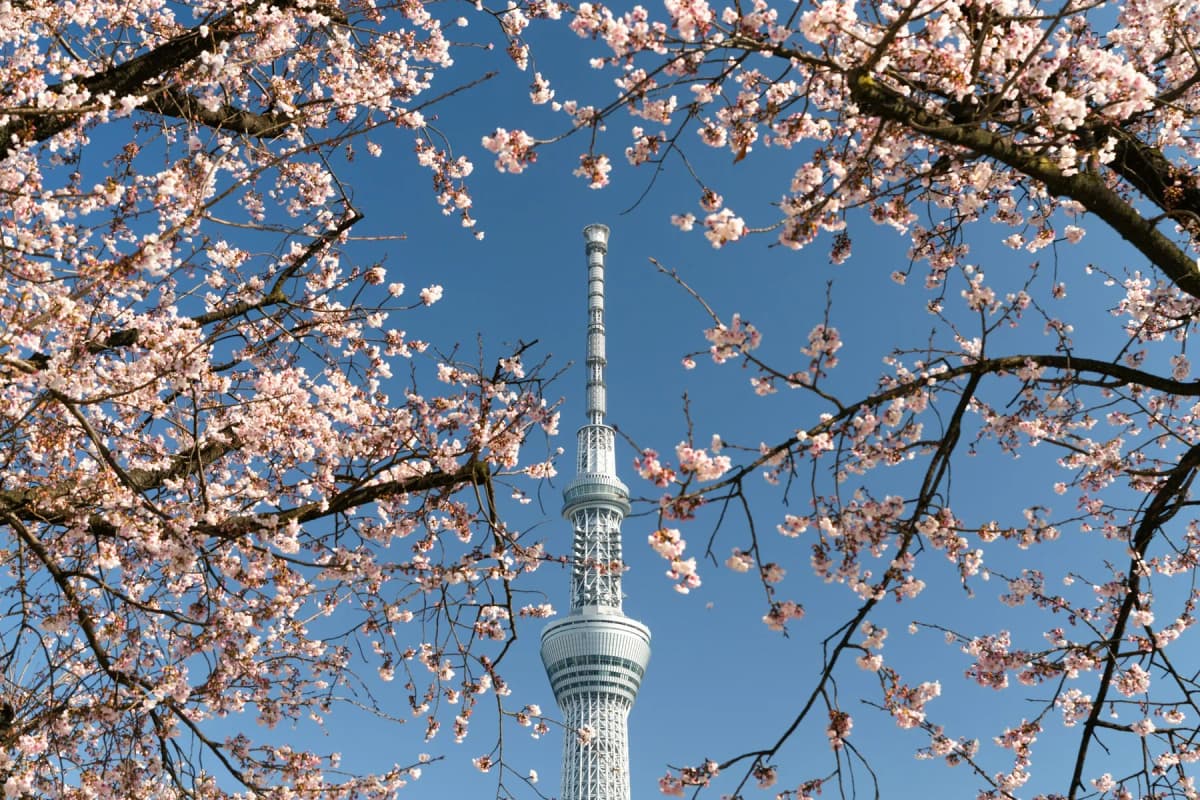 Photo: Ryoji Iwata on Unsplash
Only want one paid viewpoint on your trip? Skip this one and keep Shibuya Sky tomorrow. For dinner, stay in Asakusa for tempura or a counter seat at an izakaya on Hoppy Street.
Day 2: modern Tokyo (Harajuku and Shibuya)
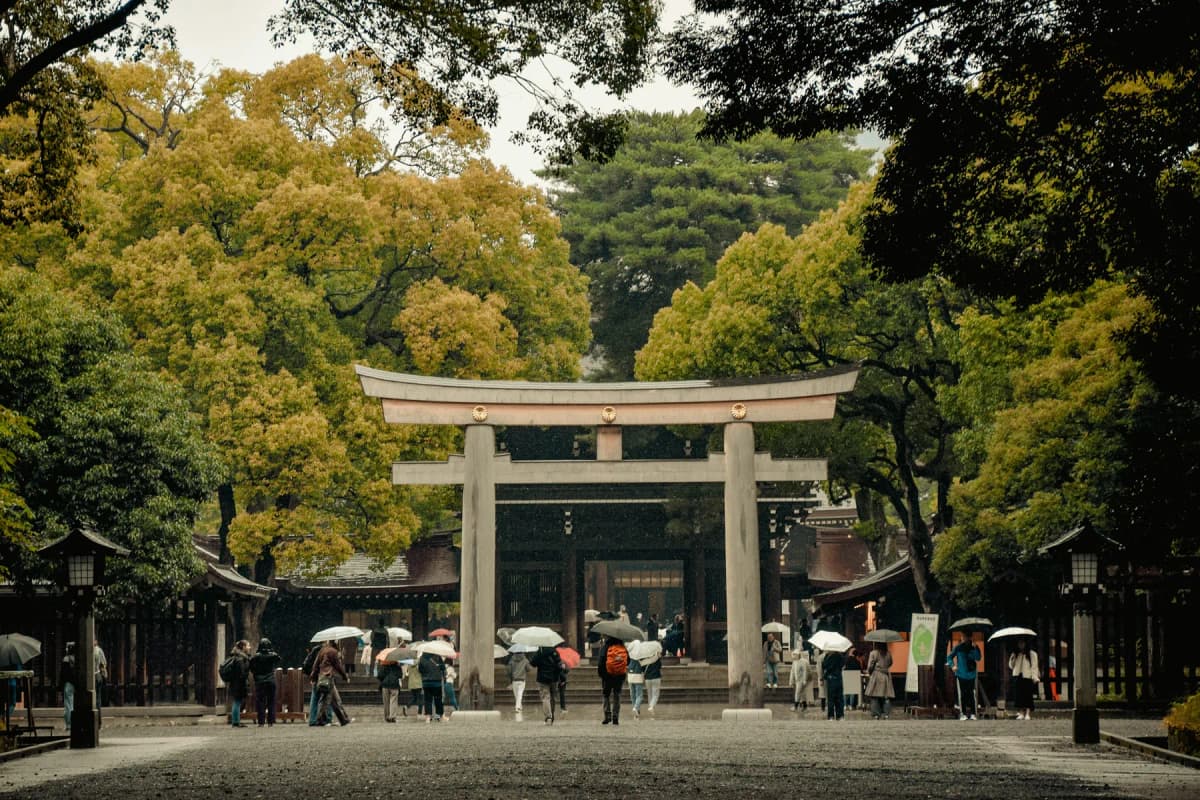 Photo:
 Today is the west side, and all of it can be walked, from Harajuku Station to Shibuya Station.
Morning: Meiji Shrine. Right next to Harajuku Station, a gravel path leads under huge wooden torii gates into a forest of around 100,000 trees. It takes 10 minutes to reach the shrine itself, and by then you cannot hear the city. Entry is free. The shrine opens at sunrise and closes at sunset. On weekend mornings you have a good chance of seeing a wedding procession cross the courtyard.
Late morning: Harajuku. Come out of the forest and cross the road to Takeshita Street, a narrow pedestrian lane of crepe stands, candy floss, sock shops and teenage fashion. It is 350 metres of sensory overload and it takes 20 minutes.
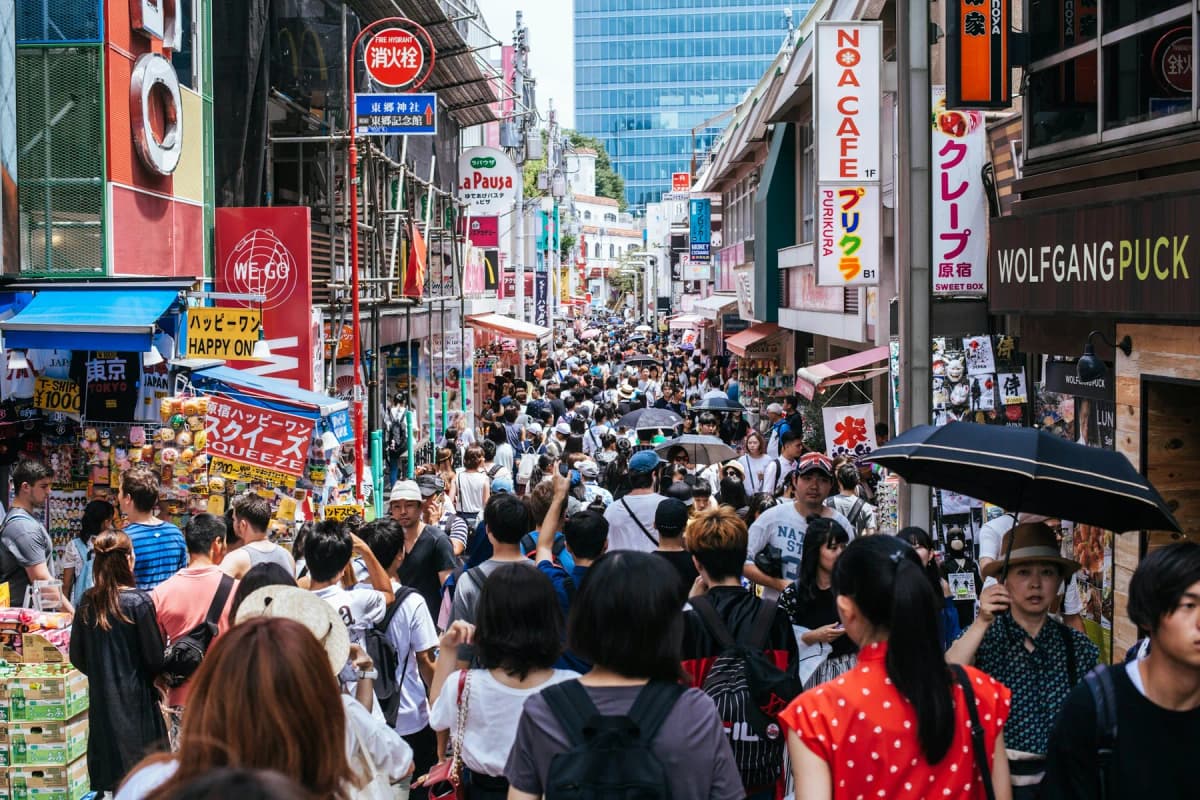 Photo:
 Then walk down Omotesando, the wide, tree-lined avenue of flagship stores and striking architecture. The back streets on either side, known as Ura-Harajuku and Cat Street, are where the good small shops and cafes are. Have lunch here.
Afternoon: Shibuya. Cat Street leads you to Shibuya in about 20 minutes. Find the Hachiko statue outside the station, then cross the famous scramble crossing, where as many as 3,000 people cross at once at busy times. For a free view from above, try the windows on the upper floors of the buildings around the junction.
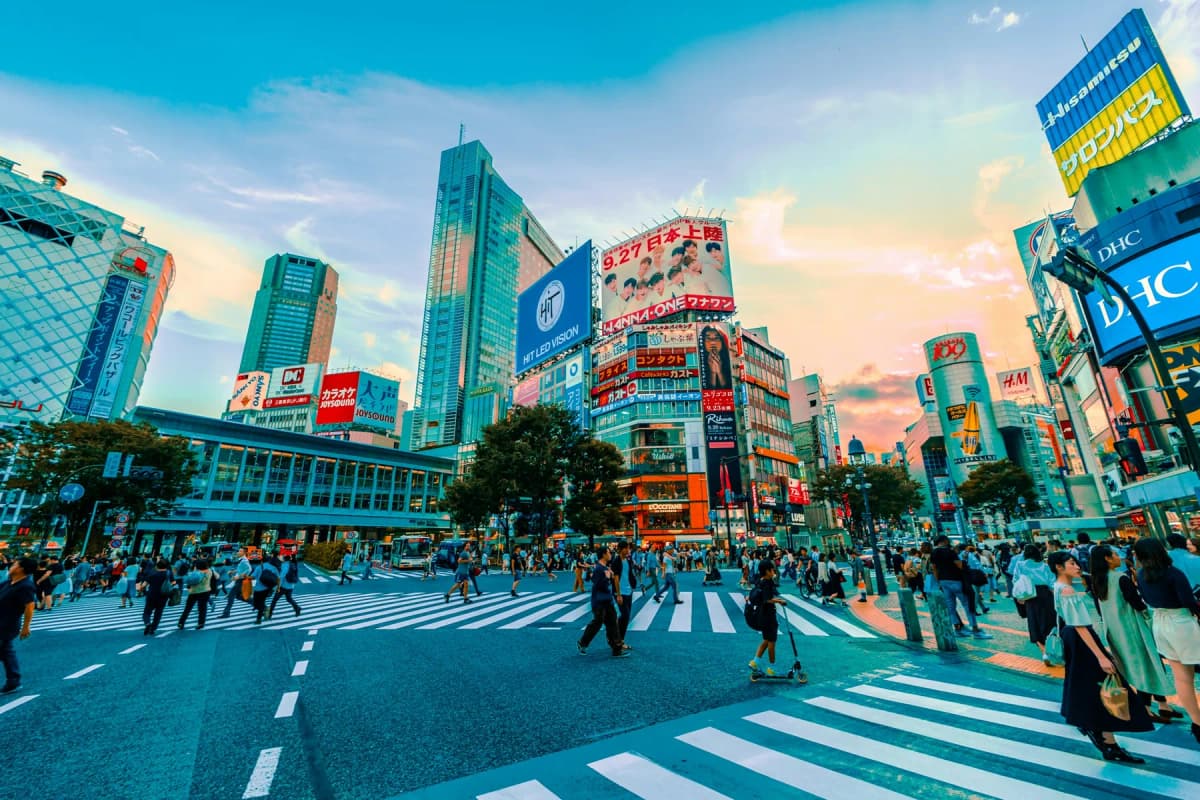 Photo: Jezael Melgoza on Unsplash
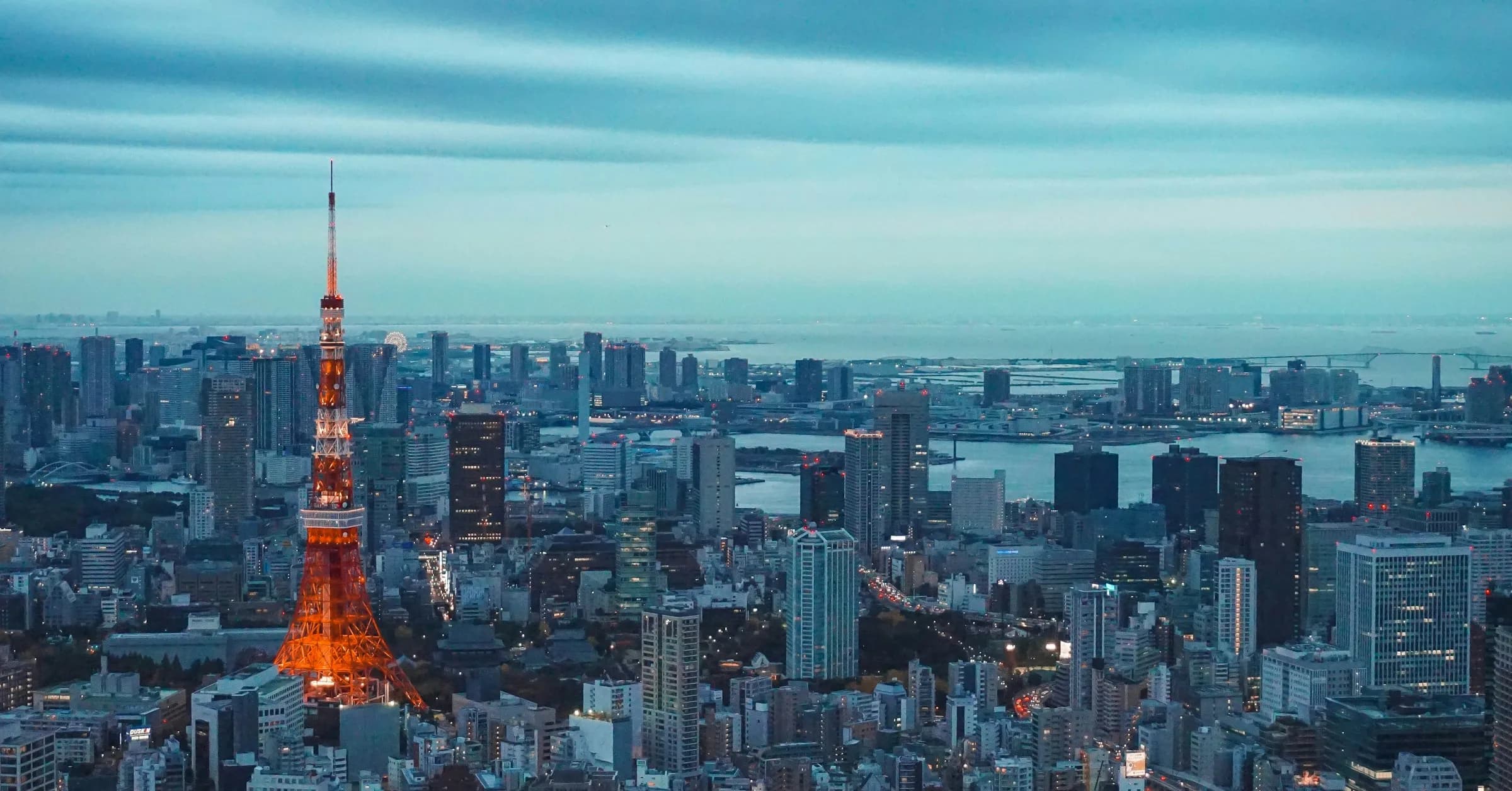
Sunset: Shibuya Sky. This is the open-air rooftop on top of the Shibuya Scramble Square tower, 229 metres up, with the crossing directly below and Mount Fuji on the horizon on a clear day. It is the best view in Tokyo.
- Price: online tickets are about ¥2,700 before 3 pm and about ¥3,400 from 3 pm. Tickets at the counter cost a few hundred yen more.
- Booking: tickets are released about two weeks ahead and the sunset slots go within hours. Set a reminder. If you miss them, book a slot an hour or two before sunset and stay, as there is no time limit once you are in.
- Good to know: bags and loose items go in a locker before you go onto the roof. The roof closes in strong wind or rain.
Evening: eat in Shibuya. The basement food halls of the department stores are good for a cheap picnic dinner, and the alleys of Nonbei Yokocho beside the tracks are full of tiny bars.
Day 3: market, palace gardens, Ginza and teamLab
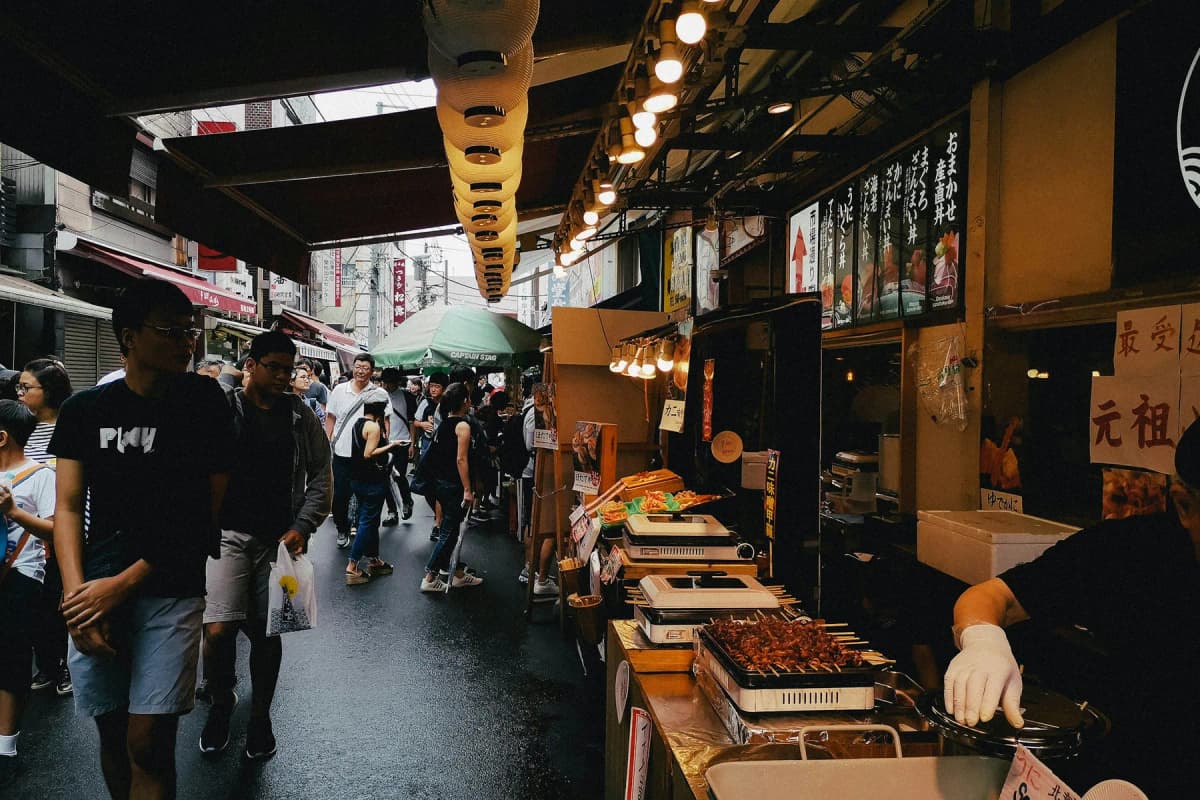 Photo: Michael Wu on Unsplash
Morning: Tsukiji Outer Market. The wholesale fish market moved to Toyosu in 2018, but the outer market stayed, and it is the better place to eat. A few blocks of narrow lanes are packed with stalls selling grilled scallops, sweet rolled omelette on a stick, tuna rice bowls, oysters and fresh strawberry mochi. Arrive between 8 and 9 am. Most stalls are finished by early afternoon, and many close on Sundays and some Wednesdays. Bring cash, and eat at the stall where you bought the food and not while walking.
Late morning: Imperial Palace East Gardens. Two subway stops away, or a 25 minute walk through Ginza. The East Gardens are the only part of the Imperial Palace grounds that you can enter freely. They hold the massive stone walls and moats of the old Edo Castle and a pretty Japanese garden. Entry is free. They are closed on Mondays and Fridays. If the gardens are closed, walk to the Nijubashi bridge viewpoint and the restored red-brick front of Tokyo Station.
Lunch and early afternoon: Ginza. Tokyo's smartest shopping district. Even if you are not buying, see the 12 floors of the flagship Uniqlo, the stationery heaven of Itoya, and a department store food hall. On weekend afternoons the main street is closed to cars.
Late afternoon or evening: teamLab Planets. A museum of digital art that you walk through barefoot, sometimes knee-deep in water, with rooms of floating flowers, mirrors and light. It is in Toyosu, about 20 minutes from Ginza by subway and the Yurikamome line.
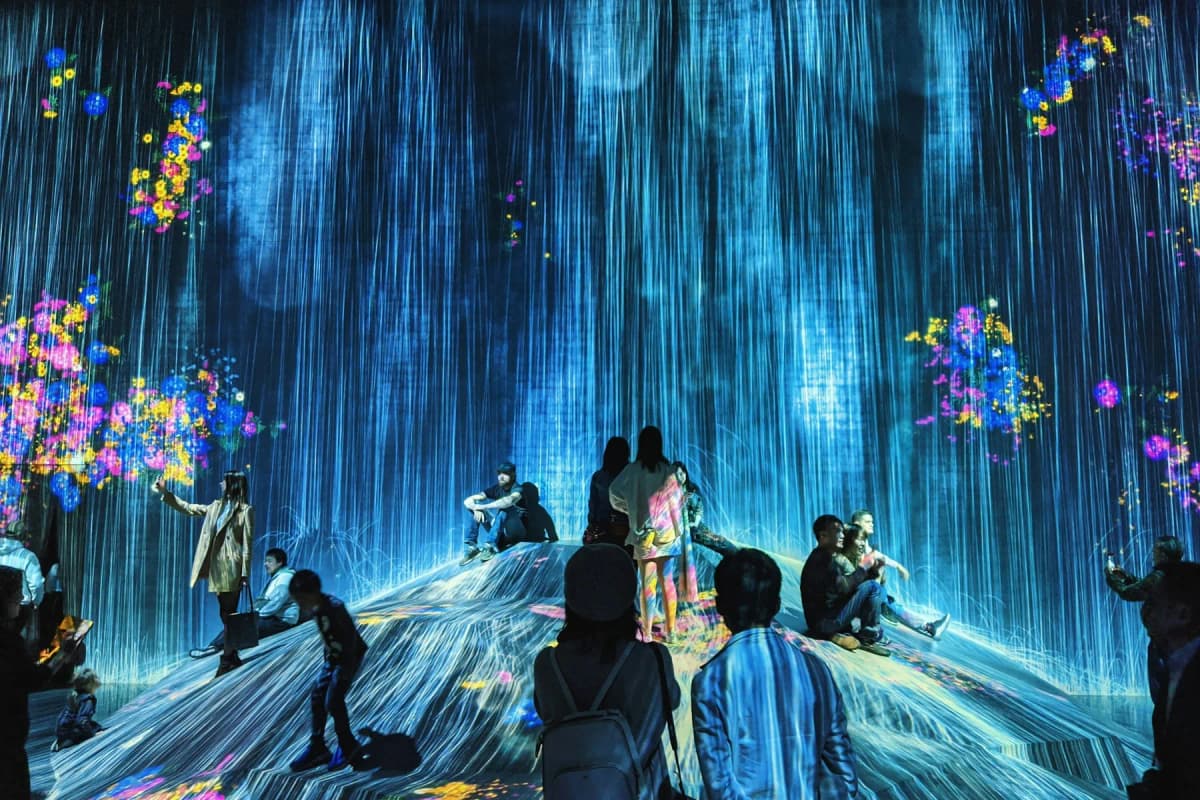 Photo: note thanun on Unsplash
- Price: adult tickets start at about ¥3,600 and cost more on weekends and peak dates.
- Booking: tickets are for a timed entry and popular slots sell out days ahead. Book teamLab tickets in advance once your dates are fixed.
- Good to know: wear shorts or trousers that roll up above the knee. Allow two hours. Evening slots are quieter than midday.
There is a second venue, teamLab Borderless, at Azabudai Hills near Roppongi. It is larger and you keep your shoes on. One of the two is enough for most people.
Day 4: Shinjuku and a neighbourhood of your choice
Morning: Shinjuku Gyoen. One of the finest parks in the city, with a formal French garden, an English lawn and a traditional Japanese garden with tea houses. Entry is ¥500. It is closed on Mondays. In late March and early April it is among the best cherry blossom spots in Tokyo, and you may need to reserve an entry time on peak days.
Midday and afternoon: pick one.
- Shimokitazawa: a few minutes from Shibuya or Shinjuku by train. Vintage clothing shops, record stores, small theatres, curry and coffee. It is the Tokyo that locals in their twenties go to.
- Yanaka: an old neighbourhood near Ueno that survived the war. A shopping street of family-run food stalls, wooden houses, small temples and a lot of cats. Quiet and very different from the rest of the city.
- Ghibli Museum, Mitaka: a small, charming museum from the animation studio behind Spirited Away, 20 minutes west of Shinjuku. Tickets cost ¥1,000, are for a set date and time, and are not sold at the door. They go on sale on the 10th of each month for the following month and sell out fast.
- Odaiba: the artificial island in Tokyo Bay, with a waterfront walk, the Rainbow Bridge view, a life-size Gundam statue and big shopping centres. Good with children.
Late afternoon: a free view. The Tokyo Metropolitan Government Building in west Shinjuku has free observation decks on the 45th floor, 202 metres up. There is often a short queue for the lift. On clear winter afternoons you can see Mount Fuji.
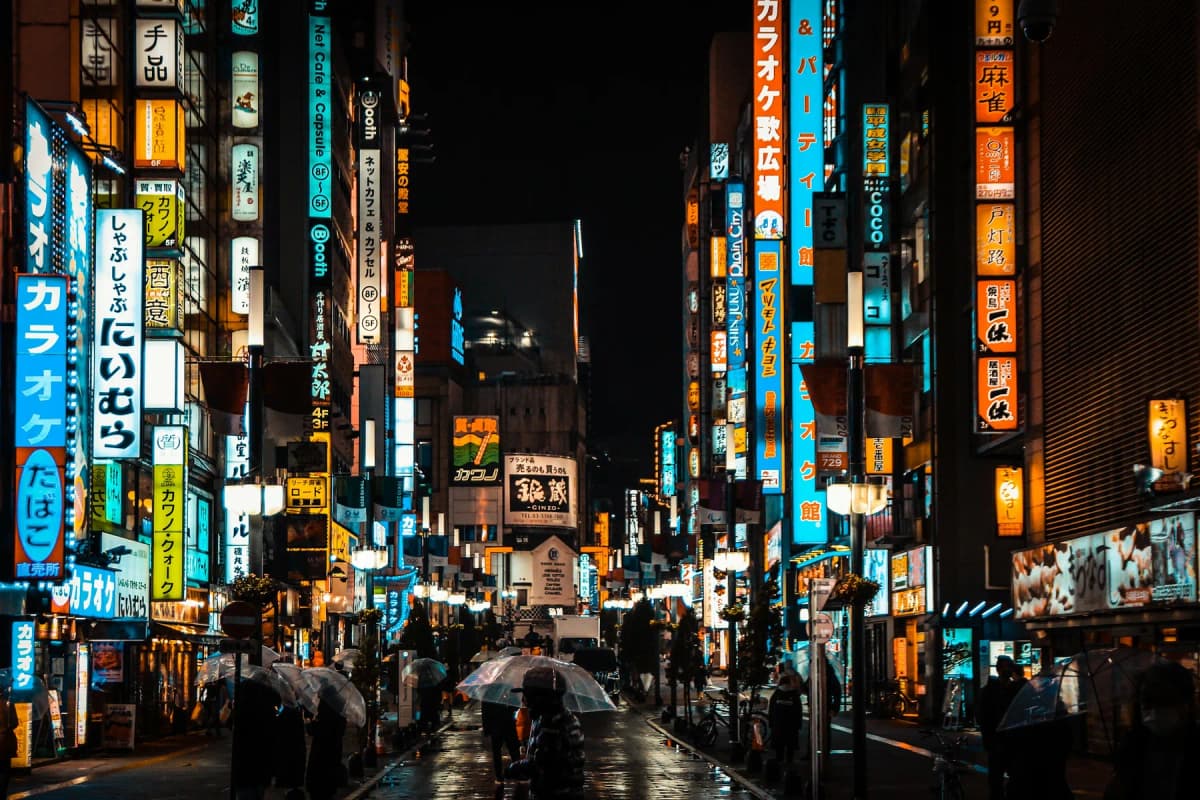 Photo: Pema G. Lama on Unsplash
Evening: Shinjuku after dark. This is the Tokyo of films. Start at Omoide Yokocho, the smoky alley of yakitori counters beside the station. Walk through the neon of Kabukicho, where a giant Godzilla head looks over the cinema, and finish at Golden Gai, six tiny lanes holding around 200 bars, most with room for six or eight people. Some bars charge a cover of ¥500 to ¥1,000, and a few are for regulars only. A sign in English at the door is a good sign that you are welcome.
Kabukicho is safe to walk through, but ignore anyone on the street who tries to lead you to a bar or club. That is how visitors end up with enormous bills.
Day 5: a day trip from Tokyo
A day out of the city makes the whole trip better. Pick one.
| Day trip | Travel time each way | Best for | Good to know |
|---|---|---|---|
| Hakone | About 1.5 hours from Shinjuku | Hot springs, Lake Ashi, open-air museum, a chance of Mount Fuji | The Hakone Free Pass from Odakyu covers the loop of trains, cable car, ropeway, boat and buses |
| Kamakura | About 1 hour from Tokyo Station | The Great Buddha, Zen temples, a beach town | The easiest and cheapest. Add Enoshima island if you start early |
| Nikko | About 2 hours from Asakusa | Lavish shrines in a cedar forest, waterfalls | A long day. Leave by 8 am |
| Kawaguchiko | About 2 hours from Shinjuku | The classic view of Mount Fuji across a lake | Only worth it on a clear day. Check the forecast the night before |
Mount Fuji hides behind cloud on many days, especially in summer. If seeing it matters, keep day 4 and day 5 flexible and go on whichever morning is clear.
Would you sooner stay in the city? Use the day for whichever day 4 option you skipped, or for Tokyo DisneySea, which exists nowhere else in the world.
How to adjust this Tokyo itinerary
- With children: swap Golden Gai for Odaiba, add the Ueno Zoo on day 1 and keep teamLab. Trains are easy with a pushchair outside rush hour (roughly 7:30 to 9:30 am).
- In the rain: move museums, teamLab, department stores and Akihabara's arcades to the wet day. Shibuya Sky closes its roof in bad weather.
- On a tight budget: Senso-ji, Meiji Shrine, the East Gardens, the Metropolitan Government Building view, Yanaka and every neighbourhood walk are free. A filling lunch set costs ¥1,000 to ¥1,500.
- In cherry blossom season: add an hour at Ueno Park on day 1, the Meguro River near Shibuya on day 2 and Chidorigafuchi moat near the palace on day 3.
- Going on to Kyoto and Osaka: our 10 day Japan itinerary picks up where this one ends, and Kyoto vs Osaka helps you decide where to base yourself next.
Getting around Tokyo
Get an IC card first. Suica and PASMO are rechargeable cards that work on every train, subway and bus in Tokyo, and in shops and vending machines. iPhone users can add one to Apple Wallet before they land. Visitors can also buy the Welcome Suica at the airports.
Know the two networks. JR runs the Yamanote line, the green loop that connects Shinjuku, Shibuya, Harajuku, Tokyo, Akihabara and Ueno. The subway (Tokyo Metro and Toei) fills in everything inside and around the loop. They are separate companies, and a subway pass does not cover JR.
Is the Tokyo Subway Ticket worth it? It gives visitors unlimited rides on all Tokyo Metro and Toei subway lines for 24 hours (¥1,000), 48 hours (¥1,500) or 72 hours (¥2,000), counted from first use. A typical subway ride costs about ¥180 to ¥330, so it pays off at four or five rides a day. On days 1 and 3 of this itinerary it is good value. On day 2 you mostly walk, and on day 5 you leave the city, so the 72 hour version only makes sense if you start it on the right morning.
From the airport:
| Airport | Best train | To | Time | Approximate fare |
|---|---|---|---|---|
| Narita | Narita Express | Tokyo Station, Shibuya, Shinjuku | 55 to 90 minutes | ¥3,100 to ¥3,300 |
| Narita | Keisei Skyliner | Nippori, Ueno | About 40 minutes | ¥2,600 |
| Haneda | Keikyu line | Shinagawa | About 15 minutes | Under ¥500 |
| Haneda | Tokyo Monorail | Hamamatsucho | About 15 to 20 minutes | About ¥500 |
Landing late at night, or travelling with children or several suitcases? A pre-booked private transfer from Narita or Haneda takes you straight to your hotel door.
Rush hour. Avoid trains between about 7:30 and 9:30 am on weekdays if you can, especially with luggage.
How much does a Tokyo trip cost?
A rough daily budget per person, not counting flights:
| Budget | Mid-range | Comfortable | |
|---|---|---|---|
| Bed (per person, sharing) | ¥4,000 to ¥7,000 (hostel or capsule) | ¥8,000 to ¥15,000 | ¥20,000 and up |
| Food | ¥3,000 to ¥4,000 | ¥5,000 to ¥8,000 | ¥12,000 and up |
| Transport in the city | ¥800 to ¥1,200 | ¥800 to ¥1,200 | ¥2,000 and up with taxis |
| Sights | ¥0 to ¥1,500 | ¥2,000 to ¥4,000 | ¥4,000 and up |
| Per day | About ¥8,000 to ¥13,000 | About ¥16,000 to ¥28,000 | ¥38,000 and up |
The paid sights in this five day itinerary (Tokyo National Museum, Skytree, Shibuya Sky, teamLab Planets and Shinjuku Gyoen) add up to roughly ¥11,000 per person. Hotel prices rise sharply in cherry blossom season and around New Year. Tokyo also charges a small accommodation tax of ¥100 or ¥200 per person per night on rooms above ¥10,000, and the city plans to change it to a percentage of the room rate, so check what applies on your dates.
Before you go
- Mobile data. You will use maps and transit apps constantly, and station Wi-Fi is patchy. Set up a Japan eSIM before you fly and it connects when you land. To compare providers and prices, see our guide to the best eSIM for Japan.
- Travel insurance. Japanese hospitals are excellent, and visitors pay the full cost. Get a travel insurance quote before you leave.
- Cash. Cards work in most places now, but small restaurants, market stalls and some temples still take cash only. ATMs in 7-Eleven stores accept foreign cards.
- Luggage. Coin lockers are in every large station. Hotels will hold bags before check-in and after check-out, and can forward suitcases to your next city, usually by the next day.
- Rubbish. There are very few public bins. Carry a small bag and empty it at your hotel or a convenience store.
- Tipping. There is none. Leaving money on the table causes confusion.
Frequently asked questions
How many days do you need in Tokyo? Three full days cover the main sights. Four or five let you add a neighbourhood off the tourist track and a day trip, and are a better fit if Tokyo is your only stop in Japan. On a two week trip around the country, four nights is a good balance.
Is 3 days in Tokyo enough? Yes, for a first look. Follow days 1 to 3 of this itinerary and you will see Asakusa, Ueno, Harajuku, Shibuya, the Tsukiji market, Ginza and teamLab. You will miss Shinjuku at night and a day trip, so if you can add a fourth day, do.
What is the best area to stay in Tokyo for sightseeing? Shinjuku and Shibuya are the most convenient for nightlife and the west side. Ueno and Asakusa are cheaper and handy for Narita. The Tokyo Station area is best if you are taking the Shinkansen onwards. Every one of them is on or near the Yamanote loop.
What should I book in advance for Tokyo? Shibuya Sky (released about two weeks ahead), teamLab Planets or Borderless, the Ghibli Museum (on sale on the 10th of the month before), and any restaurant you have your heart set on. Sumo tournament tickets, in January, May and September, also sell out quickly.
Is the JR Pass worth it for Tokyo? No. The nationwide Japan Rail Pass only pays off with several long Shinkansen trips. Inside Tokyo, use an IC card or the Tokyo Subway Ticket.
What is the best month to visit Tokyo? Late March to early April for cherry blossom, and November for autumn colour and clear skies. May and October are mild and less crowded. July and August are hot and humid, and June is the rainy season. Winter is cold, dry and sunny, with the best chance of seeing Mount Fuji.
Is Tokyo expensive? Less than its reputation suggests. Hotels are the main cost. Food is good value at every level, public transport is cheap, and many of the best sights are free. A mid-range traveller spends roughly ¥16,000 to ¥28,000 a day, not counting flights.
Is Tokyo easy to get around without Japanese? Yes. Station signs, announcements and ticket machines are in English, and map apps give exact platforms and exit numbers. In small restaurants, picture menus, ticket machines and pointing all work fine.
How we researched this guide
This itinerary is based on research using official sources such as Go Tokyo, the official Tokyo travel guide, the Japan National Tourism Organization, Tokyo Metro and JR East, plus current traveller feedback. Ticket prices, opening days and booking rules change often, so check the latest information before you book. Found something out of date? Let us know.
Planning more of Japan? Browse all our Japan guides.