Osaka Itinerary: 3 Days for First-Timers, With 1 and 2 Day Versions (2026)
October 11, 2026 · Japan
This post contains affiliate links. We may earn a commission if you book through them, at no extra cost to you. Disclaimer.
The best Osaka itinerary for a first visit is three days: one day for Osaka Castle and the Namba area with Dotonbori at night, one for the south of the city around Sumiyoshi Taisha, Shinsekai and Tennoji, and one for the aquarium at the bay and the Umeda Sky Building. With one day, do the castle in the morning and Dotonbori in the evening. With two, add the southern day. A fourth day is for Universal Studios Japan or a day trip to Nara, Himeji or Kyoto.
Osaka is Japan's third largest city and its most relaxed. People come here to eat, and the local word for it is kuidaore: to eat until you drop. The sights are spread along one north to south subway line, so the city is easy to plan. This itinerary keeps each day in one part of town, lists what things cost in 2026, and tells you when the Osaka Amazing Pass saves money and when it does not.
Osaka itinerary: the quick answer
| Day | Area | Main sights | Book ahead? |
|---|---|---|---|
| 1 | Centre: castle, Namba | Osaka Castle, Kuromon Market, Shinsaibashi, Dotonbori, Hozenji Yokocho | No |
| 2 | South: Sumiyoshi, Tennoji | Sumiyoshi Taisha, Shitennoji, Shinsekai, Tsutenkaku, Harukas 300 | No |
| 3 | Bay and north: Osaka Bay, Umeda | Kaiyukan aquarium, Tempozan, Nakanoshima, Umeda Sky Building | Kaiyukan (timed tickets) |
| 4 (optional) | Out of the centre | Universal Studios Japan, or a day trip to Nara, Himeji or Kyoto | USJ tickets |
- 1 day in Osaka: the morning of day 1 at the castle, then Kuromon, Shinsaibashi and Dotonbori. If you have energy left, go up the Umeda Sky Building or Harukas 300 at sunset before dinner.
- 2 days in Osaka: days 1 and 2.
- 3 days in Osaka: all three. This is the comfortable version.
- 4 or 5 days: add Universal Studios Japan and one day trip.
Before you start: four decisions
1. Choose where you arrive. Kansai International Airport (KIX) is on an island about 50 km south of the city. The Shinkansen from Tokyo, Kyoto and Hiroshima stops at Shin-Osaka, which is a few minutes north of the centre by subway. If you are flying into Japan for a longer trip, compare arriving in Tokyo and leaving from Osaka, so you do not have to go back the way you came.
2. Pick a base: Namba or Umeda. Namba, in the south, is the best choice for a first visit. Dotonbori is on your doorstep, and the Nankai train from the airport ends there. Umeda, in the north, is the main transport hub and the better base if you plan several day trips to Kyoto, Kobe or Himeji. Both are on the Midosuji subway line, nine minutes apart. If you are still deciding how to split your nights in the region, read our Kyoto vs Osaka comparison.
3. Decide about the Osaka Amazing Pass. It costs ¥3,500 for one day or ¥5,000 for two, and covers unlimited subway and bus rides plus free entry to about 40 attractions. It pays off only on a day when you visit three or more of them. There is a full section on it below.
4. Buy the tickets that sell out. Osaka is easy on this front. The Kaiyukan aquarium sells timed tickets and limits walk-ins on busy days. Universal Studios Japan tickets are priced by date and should be bought in advance. Nothing else in this itinerary needs a reservation.
Day 1: Osaka Castle, Kuromon Market and Dotonbori
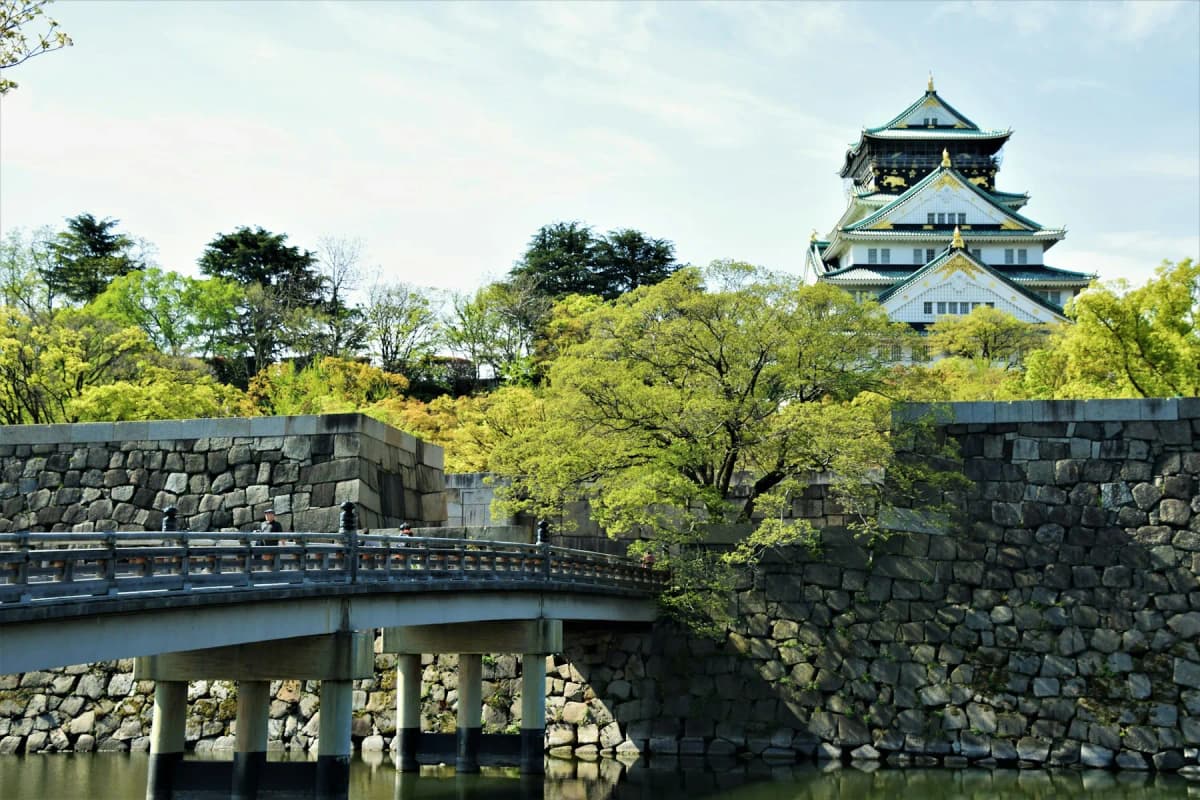 Photo: Jeremy Santana on Unsplash
Start with the one big historic sight, then spend the rest of the day eating and walking.
Morning: Osaka Castle. The castle was first built in the 1580s by Toyotomi Hideyoshi, the warlord who unified Japan. The main tower you see today is a concrete reconstruction from 1931, with a museum inside and an observation deck on the eighth floor. What is original, and more impressive than the tower, is the huge stone walls and the moats around it.
- Park: free and always open.
- Main tower: ¥1,200, open 9:00 to 18:00, last entry 17:30.
- Time needed: two to two and a half hours with the park.
- Getting there: Tanimachi 4-chome or Morinomiya stations on the subway, or Osakajokoen on the JR Loop Line.
Arrive by 9:00. Tour groups fill the tower from about 10:30. If you are not interested in the museum, the best views of the castle are from outside anyway, and the park costs nothing. In late March and early April, the Nishinomaru Garden on the west side is one of the city's main cherry blossom spots and charges a small entry fee.
Lunch: Kuromon Market. Take the subway to Nippombashi. Kuromon is a covered market street about 600 metres long that has supplied the city's restaurants for well over a century. Stalls sell grilled scallops, sea urchin, wagyu skewers, fresh fruit and tuna cut to order. Prices are aimed at visitors these days, so look before you buy, and eat at the stall: walking while eating is frowned on. Many stalls close by 17:00.
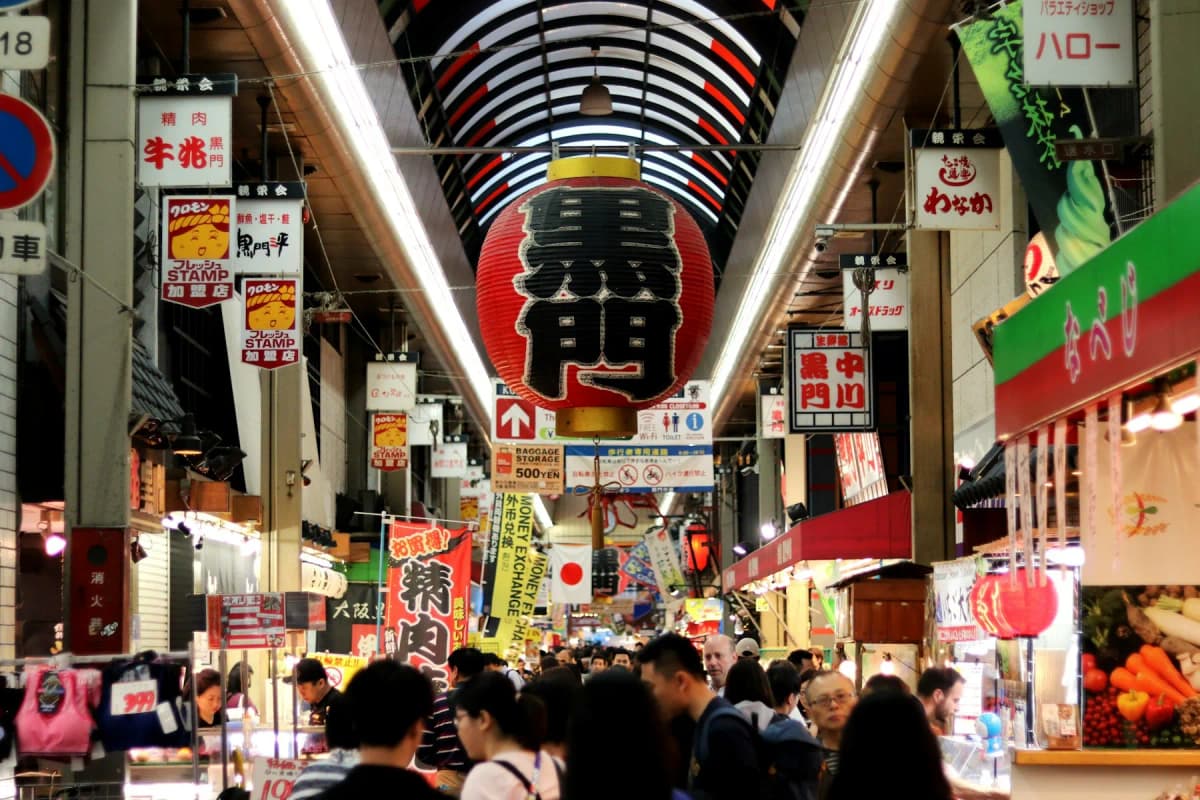 Photo:
 Afternoon: Namba and Shinsaibashi. From the market it is a short walk to three very different places:
- Sennichimae Doguyasuji, the kitchenware arcade, for knives, takoyaki pans and plastic display food.
- Namba Yasaka Shrine, about ten minutes west of Namba Station, with a stage built inside a giant lion's head. It is free and takes 15 minutes.
- Shinsaibashi-suji, a covered shopping street that runs north for about 600 metres, and Amerikamura next to it, the centre of the city's youth fashion and second-hand clothes.
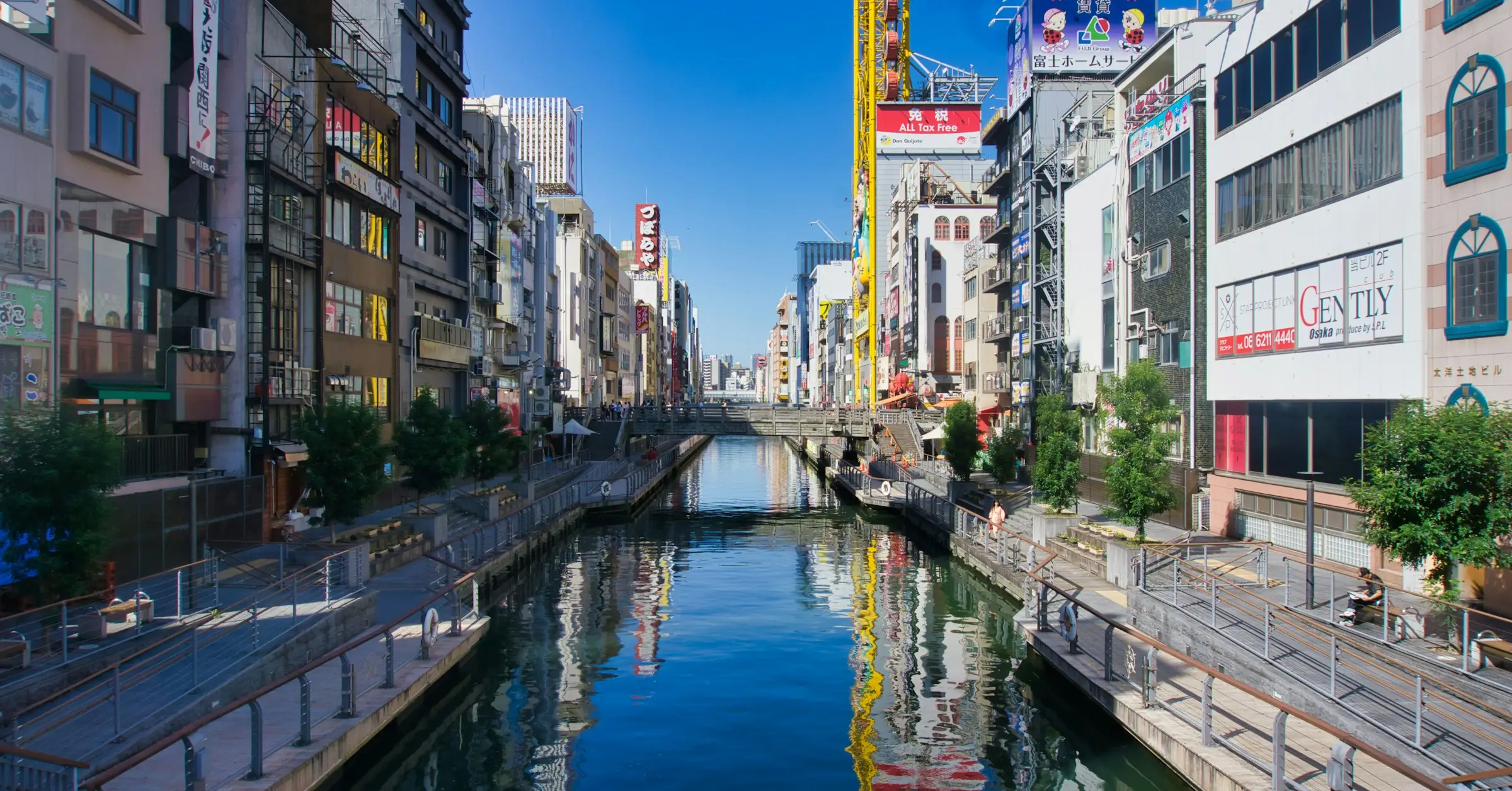
Evening: Dotonbori. Come back to the canal at dusk, when the signs light up. Stand on Ebisu Bridge for the Glico running man, then walk east past the giant mechanical crab, the octopus and the pufferfish lantern. This is the place for takoyaki (octopus dumplings) and okonomiyaki (a thick savoury pancake), and half the fun is choosing a stall.
The Tombori River Cruise is a 20 minute boat ride along the canal, and it is one of the better uses of the Amazing Pass. Without the pass it costs around ¥1,500 to ¥2,000.
Before you leave, find Hozenji Yokocho, a narrow stone lane one block south of the canal. It has a small temple with a statue of Fudo Myoo covered in thick green moss, because worshippers splash it with water. The lane is quiet, lantern-lit and lined with small restaurants.
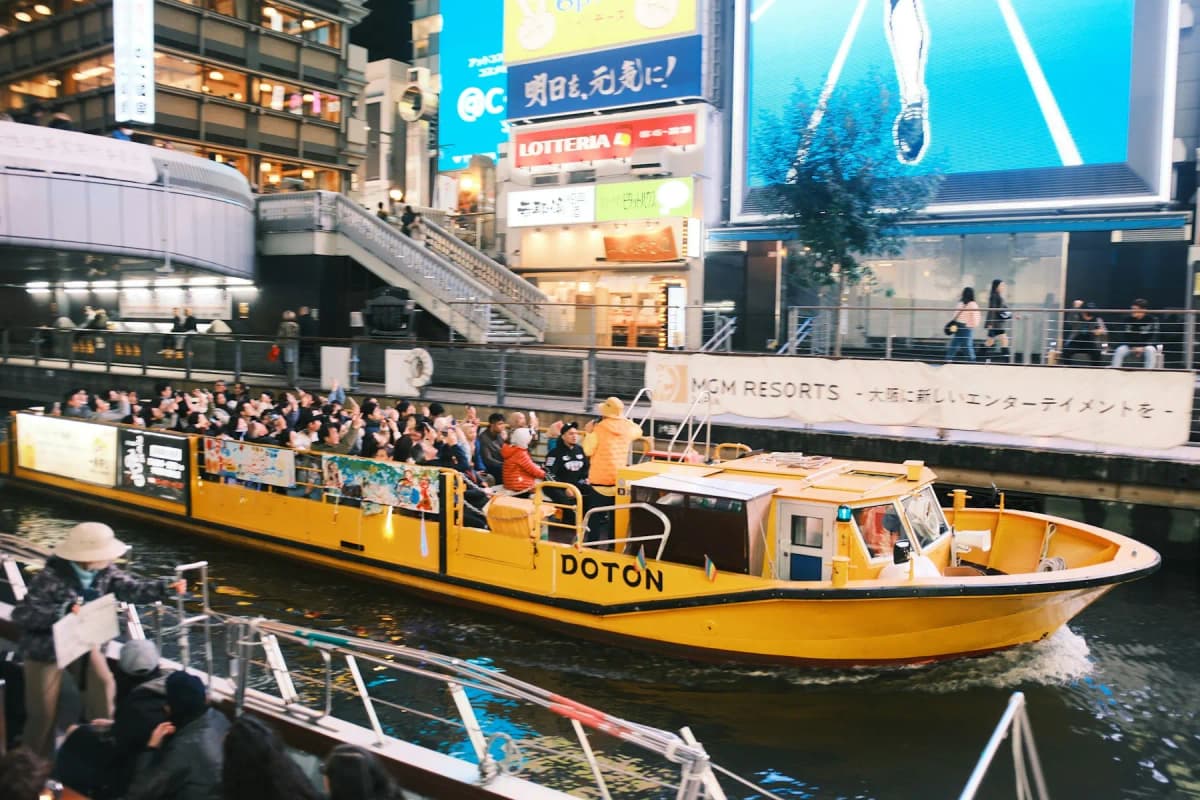 Photo: Hongwei FAN on Unsplash
Day 2: Sumiyoshi Taisha, Shitennoji and Shinsekai
Today covers the south of the city: a shrine older than most of Japan's temples, the country's first state Buddhist temple, and a neighbourhood that looks like 1960s Osaka.
Morning: Sumiyoshi Taisha. From Namba, take a local train on the Nankai Main Line to Sumiyoshitaisha Station, about ten minutes. Express trains do not stop here. The shrine was founded in the third century according to tradition, before Buddhism and its architecture arrived from the mainland, and its four main halls are built in a purely Japanese style with straight roofs. You enter over the Sorihashi, a steep red arched bridge reflected in the pond below.
- Entry: free.
- Time needed: about an hour.
- Tip: it is a working shrine, not a museum. You will often see weddings and families bringing newborn babies.
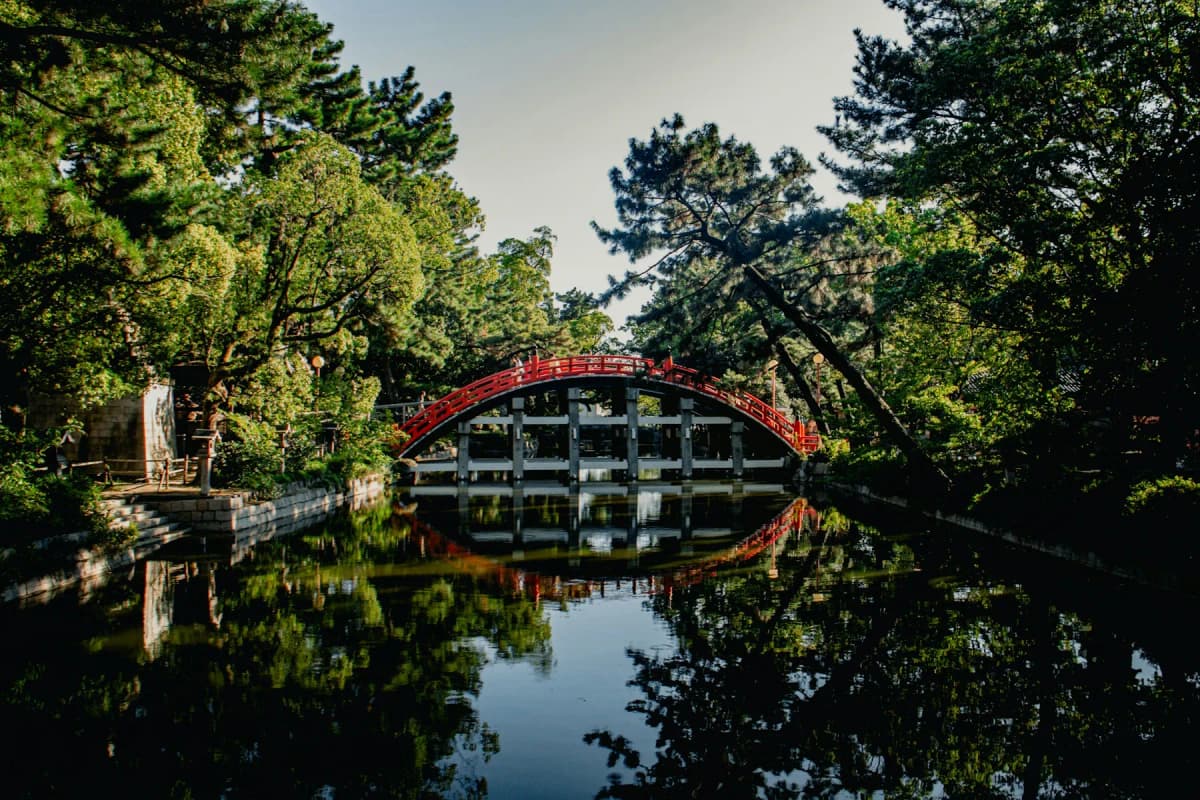 Photo:
 Late morning: the tram to Tennoji. In front of the shrine runs the Hankai Line, Osaka's last tram. Ride it north to its terminus at Tennoji. It takes about 15 minutes, costs a low flat fare and passes through ordinary neighbourhoods that visitors rarely see.
Midday: Shitennoji. A 15 minute walk north of Tennoji Station. Shitennoji was founded in 593 by Prince Shotoku and is regarded as the first official Buddhist temple in Japan. The buildings have burned down and been rebuilt many times, always to the original plan: gate, five-storey pagoda, main hall and lecture hall in a straight line.
- Outer grounds: free.
- Inner precinct: ¥300. Garden: ¥300. Treasure house: ¥500.
- On the 21st and 22nd of each month, a large flea market fills the grounds.
Lunch and afternoon: Shinsekai. Walk or take the subway one stop to Dobutsuen-mae. Shinsekai means "new world". It was built in 1912 as a showpiece modelled on Paris and New York, then left alone for decades, which is why it now feels like a film set: giant pufferfish lanterns, pachinko halls, old men playing shogi, and Tsutenkaku tower in the middle.
The food here is kushikatsu: skewers of meat, seafood and vegetables, breaded and deep-fried. You dip each skewer into a shared pot of sauce, once only. Double-dipping is the one rule everyone knows.
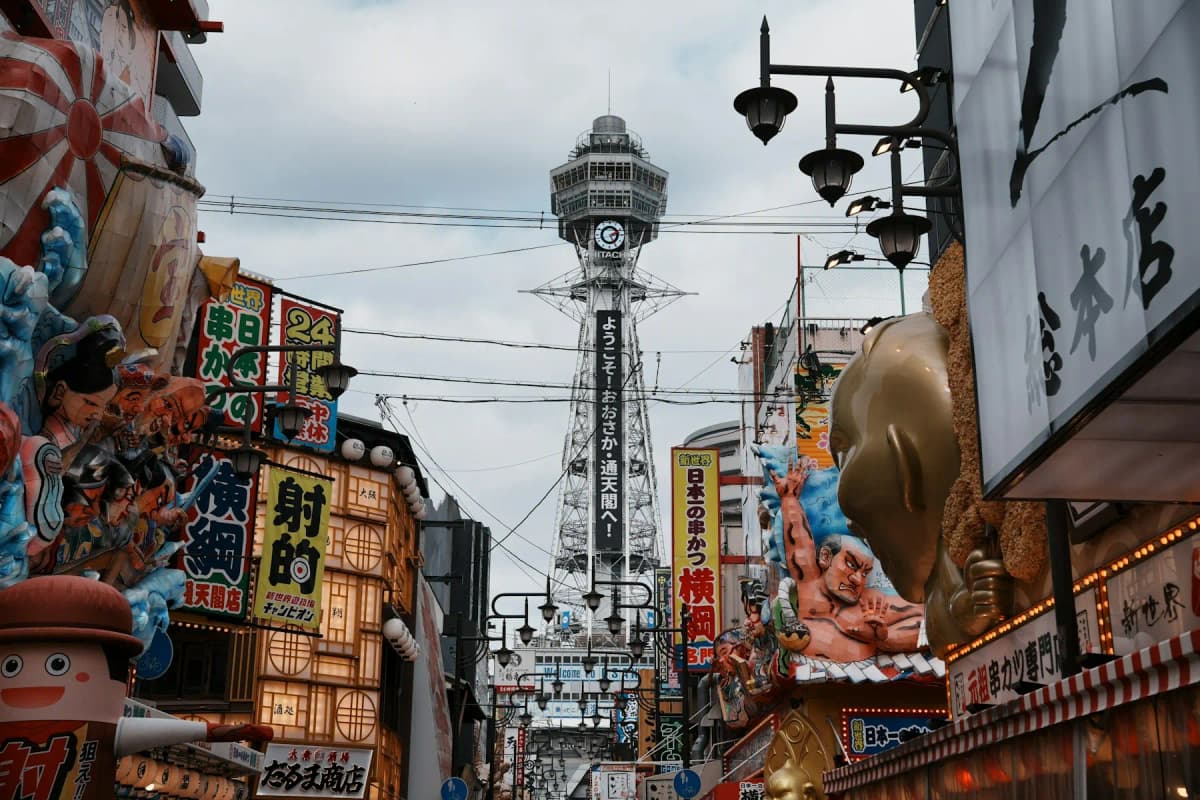 Photo:
 Tsutenkaku is 108 metres tall, with an observation deck and a slide that drops down the outside of the tower. Entry costs roughly ¥1,000 to ¥1,500 depending on which decks you include, and the slide is extra. The view is modest. Go for the retro atmosphere, or skip the ticket and enjoy the tower from the street.
Sunset: Harukas 300. Abeno Harukas, next to Tennoji Station, is 300 metres tall. The observation deck on floors 58 to 60 has floor to ceiling glass on all sides and is the best high view in Osaka.
- Entry: ¥2,000. Open 9:00 to 22:00.
- Tip: arrive 45 minutes before sunset to see the city in daylight, at dusk and lit up.
For dinner, stay in Tennoji, or take the Midosuji Line back to Namba in seven minutes.
Day 3: the aquarium, Osaka Bay and Umeda
Morning: Kaiyukan. The Osaka Aquarium is one of the largest in the world. You start at the top and walk down a spiral ramp around a central tank nine metres deep, which holds whale sharks and manta rays. The other tanks follow the Pacific Rim, from Japanese forest otters to Antarctic penguins.
- Entry: priced by date, roughly ¥2,400 to ¥3,500 for adults.
- Tickets: timed. Buy online a few days ahead in holiday periods and at weekends.
- Time needed: two to two and a half hours.
- Getting there: Osakako Station on the Chuo subway line, then a five minute walk.
- Tip: go at opening time or after 16:00. The middle of the day is crowded with school groups and families.
Next door, the Tempozan Ferris Wheel is 112 metres tall and gives a view across the bay to Kobe on clear days. It is covered by the Amazing Pass.
Afternoon: Nakanoshima. Ride the subway back towards the centre and get off at Yodoyabashi. Nakanoshima is a narrow island between two rivers, with the red-brick Central Public Hall, a rose garden, and two good art museums. It is the calmest walk in central Osaka and a good break after the aquarium.
Late afternoon: Umeda. Walk or take the subway one stop north. Umeda is a city of department stores and underground shopping streets. The food halls in the basements of Hankyu and Hanshin are worth a visit of their own.
Sunset: Umeda Sky Building. Two 40-storey towers joined at the top by the Floating Garden Observatory, 173 metres up. The last escalator crosses open air between the towers, and the roof deck is open to the sky.
- Entry: ¥2,000. Usually open 9:30 to 22:30.
- Getting there: a 10 to 15 minute walk from Osaka and Umeda stations, partly through an underpass.
- Pass holders: free entry with the Amazing Pass applies only earlier in the day, so check the cut-off time.
You do not need both Harukas 300 and the Umeda Sky Building. Harukas is higher and enclosed. Umeda is open-air and more unusual. Choose one for sunset and see the other area by day.
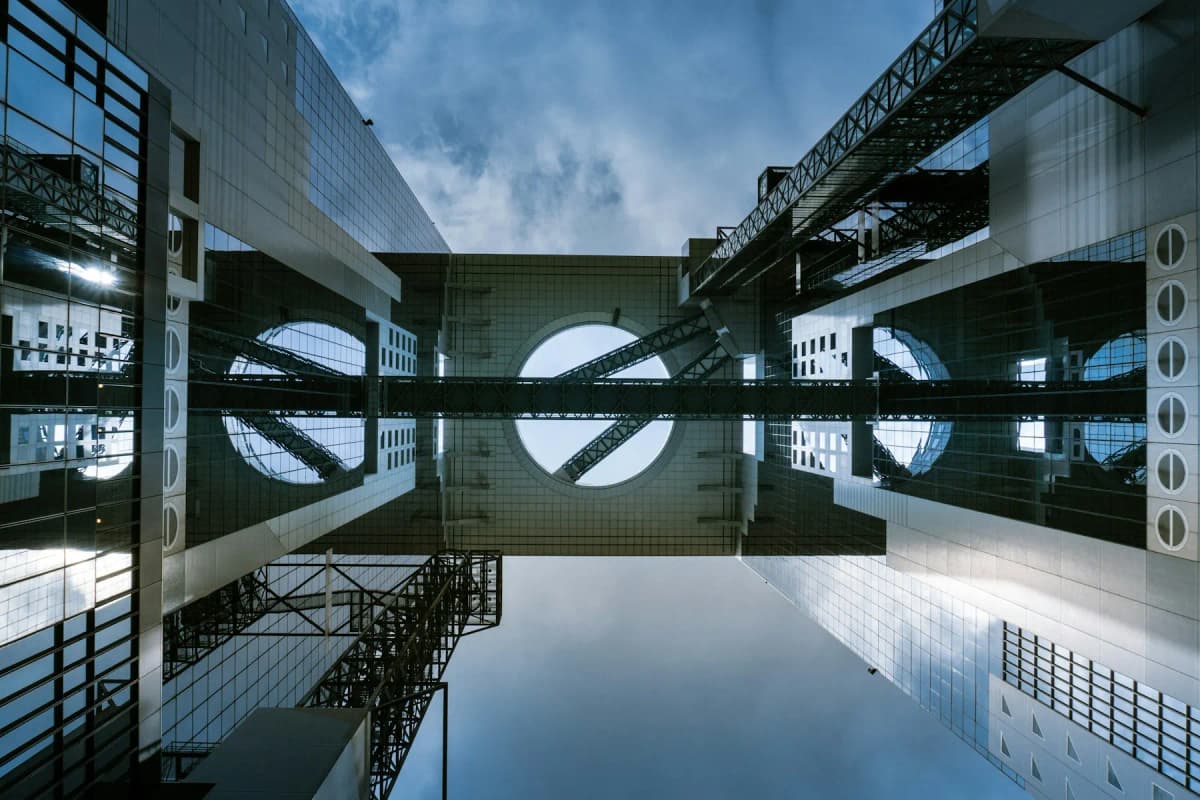 Photo: Paul Cuoco on Unsplash
Evening. Eat in the basement of the Umeda Sky Building, which is laid out as a 1920s Osaka street, or head to Tenma, two stops away on the JR Loop Line, for a maze of tiny standing bars and grills where the locals drink.
Day 4: Universal Studios Japan or a day trip
Universal Studios Japan (USJ). The park is 15 minutes by JR train from Osaka Station and needs a full day. Super Nintendo World, with Mario Kart and Donkey Kong Country, and the Wizarding World of Harry Potter are the main draws.
- Tickets: a 1-Day Studio Pass is priced by date, from roughly ¥8,400 to ¥11,800 for adults.
- Super Nintendo World: on busy days you need a timed entry ticket for the area. They are free in the park's app once you are inside, and they run out early.
- Tip: go on a weekday, arrive 45 to 60 minutes before the official opening time, and head straight to Nintendo World.
You can book Universal Studios Japan tickets in advance and scan the QR code at the gate.
A day trip. Osaka is the best base in western Japan for day trips:
- Nara: 40 minutes. Deer, Todai-ji and the Great Buddha. An easy half or full day.
- Himeji: 30 minutes by Shinkansen, about an hour by regular train. Japan's finest original castle.
- Kyoto: 30 minutes by JR rapid train. See our guide to the best things to do in Kyoto.
- Kobe: 25 minutes. Harbour, beef and sake breweries.
Our guide to day trips from Osaka compares ten of them, with train times and costs.
Is the Osaka Amazing Pass worth it?
Sometimes. Here is how it works in 2026:
- Price: ¥3,500 for one day, ¥5,000 for two consecutive days.
- Transport: unlimited rides on the Osaka Metro and city buses. It is not valid on JR trains, and the private railway lines it covers differ between the 1-day and 2-day versions.
- Free entry to about 40 attractions, including the Osaka Castle main tower, the Tombori River Cruise, Tsutenkaku, the Tempozan Ferris Wheel and the Umeda Sky Building (daytime only).
- Not included: Kaiyukan, Universal Studios Japan and Harukas 300.
The pass pays off when you fit three or more paid attractions into one day. For example:
| Pass day | Normal price |
|---|---|
| Osaka Castle main tower | ¥1,200 |
| Umeda Sky Building (before the cut-off) | ¥2,000 |
| Tombori River Cruise | about ¥1,500 |
| Subway rides | about ¥800 |
| Total | about ¥5,500 |
That is a saving of about ¥2,000 on the 1-day pass. To use it with this itinerary, move the Umeda Sky Building to the early afternoon of day 1 and take the river cruise that evening.
On days 2 and 3 as written, the pass does not pay. On those days use an IC card, or the Enjoy Eco Card, a one day subway and bus ticket that costs ¥820 on weekdays and ¥620 at weekends and on holidays.
Facilities and rules change each April, and a few attractions ask pass holders to collect a timed ticket first. Check the official list before you buy.
Getting to Osaka
From Kansai Airport (KIX):
| Route | Time | Approximate fare |
|---|---|---|
| Nankai Airport Express to Namba | 45 minutes | ¥970 |
| Nankai Rapi:t limited express to Namba | 35 to 40 minutes | ¥1,500 to ¥1,700 |
| JR Haruka limited express to Tennoji or Shin-Osaka | 35 to 50 minutes | ¥1,300 to ¥2,400, depending on the ticket |
| JR Kansai Airport Rapid to Osaka Station | 70 minutes | about ¥1,200 |
For a hotel in Namba, the Nankai Airport Express is the best value. For Umeda, take the JR rapid. Fares rose in 2026, so check the current price at the station.
If you land late at night, or are travelling with children and heavy bags, a pre-booked airport transfer takes you straight to the hotel.
By Shinkansen: trains from Tokyo take about two and a half hours and arrive at Shin-Osaka. From there the Midosuji subway line reaches Umeda in 6 minutes and Namba in 15. From Kyoto, the JR Special Rapid to Osaka Station takes 30 minutes and costs under ¥600, so there is no need for the Shinkansen on that leg.
If Osaka is one stop on a longer route, our 10 day Japan itinerary shows how it fits with Tokyo, Kyoto and Hiroshima.
Getting around Osaka
- The Midosuji Line is the red subway line that runs north to south through Shin-Osaka, Umeda, Shinsaibashi, Namba and Tennoji. You will use it every day.
- The Chuo Line runs east to west and connects the castle with the aquarium.
- The JR Loop Line circles the centre and is useful for the castle, Tenma, Tennoji and the connection to Universal Studios.
- Fares are roughly ¥190 to ¥390 per subway ride. An IC card such as ICOCA, or Suica and PASMO from Tokyo, works on everything.
- Escalators: in Osaka people stand on the right, the opposite of Tokyo.
- Walking: Namba, Dotonbori and Shinsaibashi are one continuous area on foot. So are Shinsekai and Tennoji.
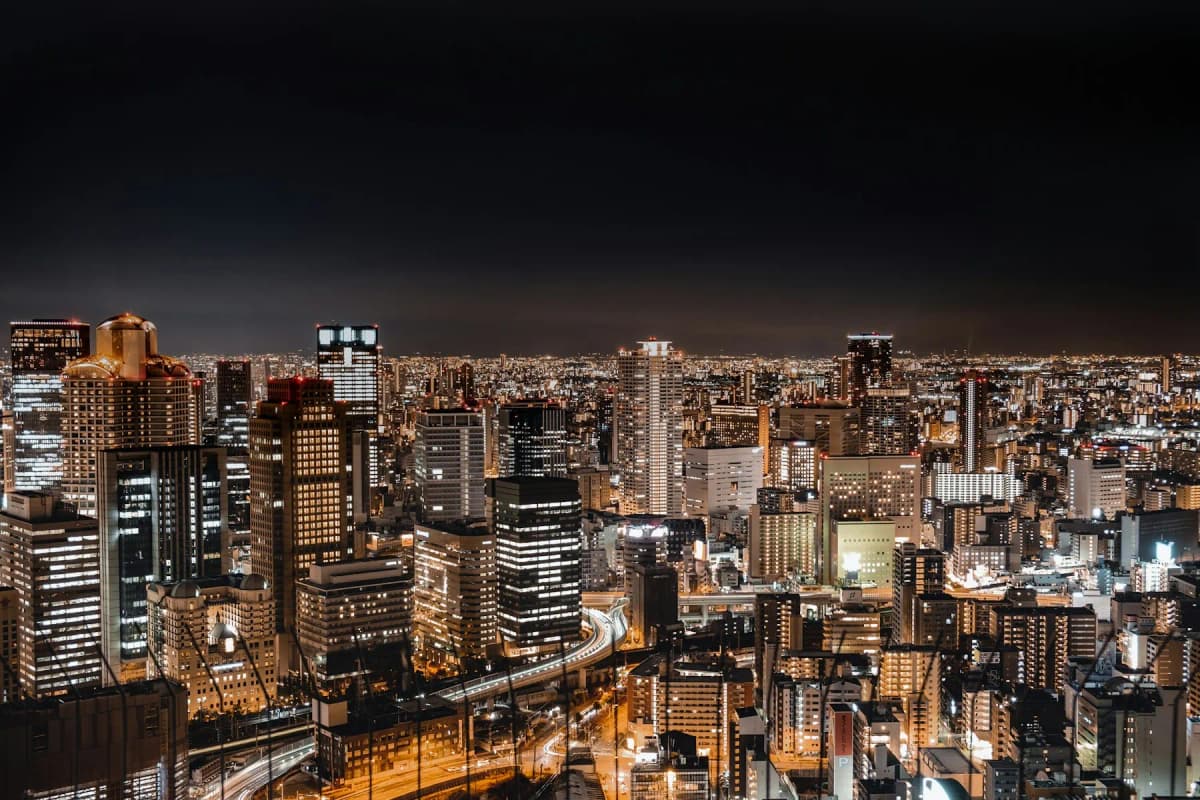 Photo: Geejay Sabordo on Unsplash
What to eat in Osaka
- Takoyaki: balls of batter with a piece of octopus inside, served very hot with sauce and bonito flakes. Let them cool for a minute.
- Okonomiyaki: a thick pancake of cabbage, batter and pork or seafood, cooked on a hotplate, often at your table.
- Kushikatsu: deep-fried skewers, best in Shinsekai.
- Kitsune udon: thick noodles in a light broth with sweet fried tofu, an Osaka invention.
- Butaman: steamed pork buns. The queues at the 551 Horai counters in stations tell you where to go.
- Depachika: department store food halls, for a picnic or a cheap, excellent dinner. Prices drop in the last hour before closing.
Street food costs ¥500 to ¥1,000 a portion, and a sit-down meal of okonomiyaki or kushikatsu with a drink costs ¥1,500 to ¥3,000.
How to adjust this Osaka itinerary
- With children: swap Shitennoji for Tennoji Zoo, which is next to Shinsekai, and give a full day to Universal Studios. Kaiyukan works for every age.
- In the rain: Kaiyukan, the Umeda underground malls, the covered Shinsaibashi-suji arcade and Kuromon Market are all under a roof.
- In summer: July and August are hot and humid. Do the outdoor sights before 11:00, and spend the middle of the day indoors. The Tenjin Matsuri festival, on 24 and 25 July, fills the rivers with boats and ends with fireworks.
- In the evening: teamLab Botanical Garden in Nagai Park is an outdoor light installation that opens after dark. Tickets cost roughly ¥2,000, and Nagai Station is on the Midosuji Line.
- If you have seen Tokyo: skip one of the observation decks and give the time to Tenma, Nakazakicho or another neighbourhood where the city is not performing for visitors.
How much does an Osaka trip cost?
Osaka is a little cheaper than Tokyo and a lot cheaper than Kyoto in high season.
| Per person, per day | Budget | Mid-range |
|---|---|---|
| Accommodation | ¥4,000 to ¥7,000 | ¥9,000 to ¥16,000 |
| Food | ¥3,000 to ¥4,500 | ¥5,000 to ¥9,000 |
| Transport | ¥800 to ¥1,200 | ¥800 to ¥1,500 |
| Sights | ¥1,000 to ¥2,500 | ¥2,500 to ¥4,500 |
| Total | about ¥9,000 to ¥15,000 | about ¥17,000 to ¥31,000 |
These are rough ranges for 2026, with accommodation counted as half a double room in the mid-range column. Universal Studios Japan adds ¥10,000 or more on the day you go.
Before you go
- Mobile data. You will use maps and transit apps all day. Set up a Japan eSIM before you fly, or read our comparison of the best eSIM for Japan.
- Travel insurance. Japanese hospitals are excellent, and visitors pay the full cost. Get a travel insurance quote before you leave.
- Luggage. Coin lockers at Namba, Umeda and Shin-Osaka fill up by late morning. A luggage storage service is a useful backup on your arrival and departure days.
- Cash. Cards work in most places, but market stalls, small kushikatsu counters and some shrines take cash only. ATMs in 7-Eleven stores accept foreign cards.
- Rubbish. There are very few public bins. Hand packaging back to the stall where you bought the food, or carry a small bag.
- Tipping. There is none.
Frequently asked questions
How many days do you need in Osaka? Two full days cover the main sights. Three days are more relaxed and add the aquarium and Umeda. Plan four or five if you want Universal Studios Japan and a day trip to Nara or Himeji.
Is 2 days in Osaka enough? Yes. Follow days 1 and 2 of this itinerary and you will see Osaka Castle, Kuromon Market, Dotonbori, Sumiyoshi Taisha, Shinsekai and a sunset view from Harukas 300.
Can you see Osaka in one day? You can see the highlights. Go to Osaka Castle at 9:00, eat at Kuromon Market, walk Shinsaibashi in the afternoon and spend the evening in Dotonbori. Many people do this as a day trip from Kyoto, which is 30 minutes away by train.
Where should I stay in Osaka for the first time? Namba, for the food, the nightlife and the direct train from Kansai Airport. Choose Umeda if you plan several day trips, and Shin-Osaka only if you have an early Shinkansen.
Is the Osaka Amazing Pass worth it? Only on a day with three or more included attractions, such as the castle tower, the Umeda Sky Building and the Tombori River Cruise. It does not cover JR trains, the Kaiyukan aquarium or Universal Studios Japan.
Is Osaka or Kyoto better? They are different. Kyoto has the temples, gardens and traditional streets. Osaka has the food, the nightlife and lower hotel prices. They are 30 minutes apart, so most visitors see both.
What is the best month to visit Osaka? Late March to early April for cherry blossom, and November for autumn colour and mild weather. May and October are pleasant and quieter. June is rainy, and July and August are hot and humid.
What food is Osaka known for? Takoyaki, okonomiyaki and kushikatsu are the big three. Try kitsune udon and the steamed pork buns from 551 Horai as well.
Is Osaka safe at night? Yes. Dotonbori and Namba are busy until late and safe to walk in. As in any big city, ignore touts who try to lead you to a bar, especially around Dotonbori and Shinsekai.
How we researched this guide
This itinerary is based on research using official sources such as Osaka Info, the official Osaka tourism guide, the Japan National Tourism Organization, Osaka Metro and the Osaka Amazing Pass website, plus current traveller feedback. Ticket prices, pass rules and train fares change often, and several rose in 2026, so check the latest information before you book. Found something out of date? Let us know.
Planning more of Japan? Browse all our Japan guides.