Things to Do in Kyoto: 15 Best Sights and Experiences (2026)
October 10, 2026 · Japan
This post contains affiliate links. We may earn a commission if you book through them, at no extra cost to you. Disclaimer.
The best things to do in Kyoto on a first visit are to walk the torii gates of Fushimi Inari, stand on the wooden terrace of Kiyomizu-dera, wander the old lanes of Higashiyama and Gion, and see the Arashiyama bamboo grove and the Golden Pavilion. Add Nishiki Market, Nijo Castle and a tea ceremony and you have the core of the city. Two full days cover the highlights. Three days let you do it without rushing.
Kyoto was Japan's capital for more than a thousand years and it has more temples and shrines than anyone could visit in a lifetime. The hard part is not finding things to do. It is choosing, and then seeing the famous places without spending the day in a queue. This guide ranks the 15 that are worth your time, gives the current entry fee and the best time of day for each, and puts them into a plan by area so you do not criss-cross the city.
Things to do in Kyoto: the quick answer
| # | What | Area | Entry | Time needed | Best time to go |
|---|---|---|---|---|---|
| 1 | Fushimi Inari Shrine | South | Free | 1 to 3 hours | Before 8 am or after 5 pm |
| 2 | Kiyomizu-dera | Higashiyama | ¥500 | 1 to 1.5 hours | At opening (6 am) |
| 3 | Sannenzaka, Ninenzaka and Yasaka Pagoda | Higashiyama | Free | 1 hour | Before 9 am |
| 4 | Gion and Pontocho | Central east | Free | 1 to 2 hours | Early evening |
| 5 | Arashiyama bamboo grove | West | Free | 20 minutes (half a day for the area) | Before 8 am |
| 6 | Tenryu-ji | West | From ¥500 | 45 minutes | Morning |
| 7 | Kinkaku-ji (Golden Pavilion) | Northwest | ¥500 | 45 minutes | At opening or late afternoon |
| 8 | Ryoan-ji rock garden | Northwest | About ¥600 | 45 minutes | Early morning |
| 9 | Nishiki Market | Downtown | Free | 1 hour | Late morning |
| 10 | Nijo Castle | Central | ¥1,300 | 1.5 hours | Morning |
| 11 | Ginkaku-ji and the Philosopher's Path | Northeast | See below | 2 hours | Morning |
| 12 | A tea ceremony | Various | From about ¥3,000 | 45 to 90 minutes | Afternoon |
| 13 | Sanjusangendo | Near Kyoto Station | About ¥600 | 45 minutes | Any time |
| 14 | Tofuku-ji | South | Varies | 1 hour | Autumn mornings |
| 15 | Kyoto Imperial Palace and park | Central | Free | 1 hour | Any time |
Fees are for adults and were checked in October 2026. Most temples take cash only, so carry coins and ¥1,000 notes.
How many days do you need in Kyoto?
- One day: numbers 1 to 4 only. Fushimi Inari at dawn, Kiyomizu-dera and Higashiyama by mid-morning, Nishiki Market for lunch, Gion in the evening. It is a long day but it works.
- Two days: add Arashiyama and Kinkaku-ji on day two. This is the minimum we would plan for.
- Three days: add Nijo Castle, Ginkaku-ji, the Philosopher's Path and a tea ceremony, at a pace that leaves room for a slow lunch.
- Four days or more: use the extra day for Nara, Osaka or Himeji.
If Kyoto is one stop on a longer route, our 10 day Japan itinerary shows how it fits with Tokyo and Osaka.
The 15 best things to do in Kyoto
1. Walk the torii gates at Fushimi Inari
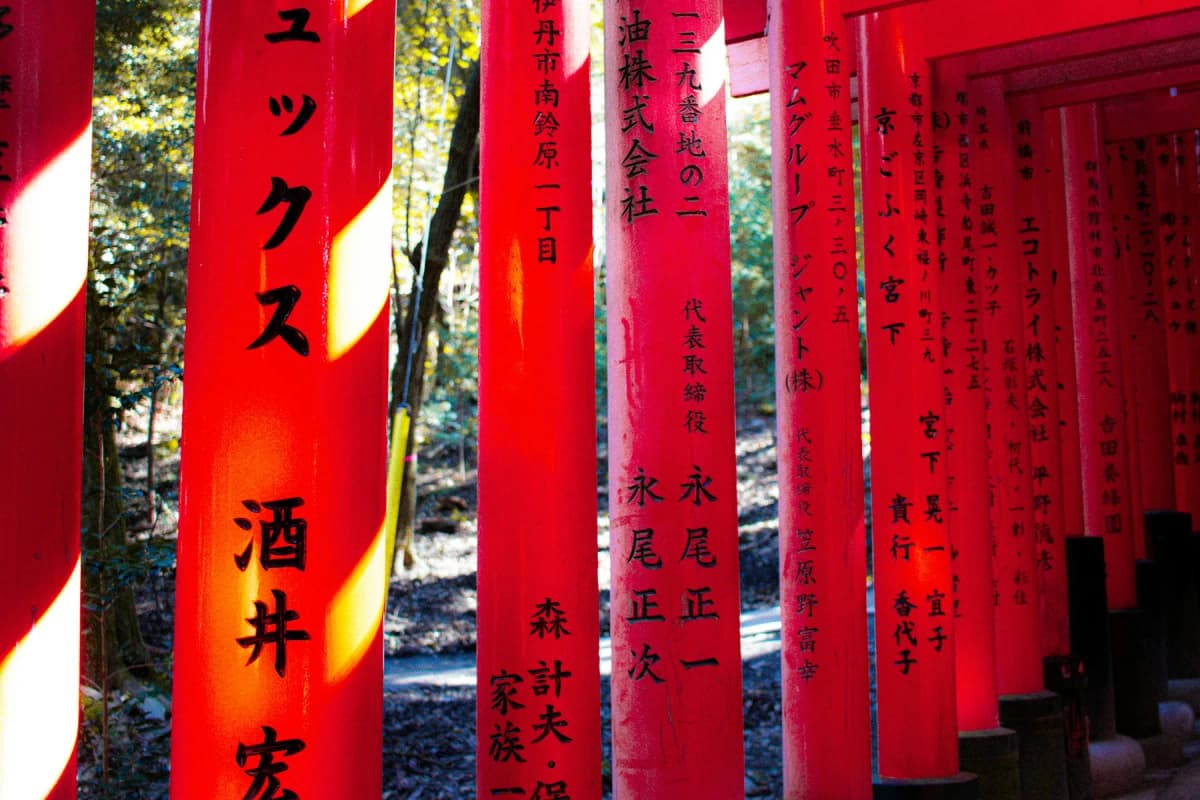 Photo: Robert Bota on Unsplash
Thousands of orange gates climb the forested slope of Mount Inari, each one donated by a business or a family. It is the image most people have of Kyoto, and it is free and open day and night.
The first few hundred metres are packed for most of the day. The fix is simple: keep walking. Most visitors turn around within 15 minutes. Climb for half an hour to the Yotsutsuji junction and you get a view over the city and far fewer people. The full loop to the summit and back takes two to three hours and involves a lot of steps, so wear proper shoes and bring water in summer.
- Getting there: JR Nara line from Kyoto Station to Inari Station, about five minutes. The shrine gate is across the road. Keihan trains stop at Fushimi-Inari Station, a few minutes' walk away.
- Best time: before 8 am, or after 5 pm when the lanterns come on. The path is lit, but the upper mountain is dark and quiet at night.
2. Stand on the terrace at Kiyomizu-dera
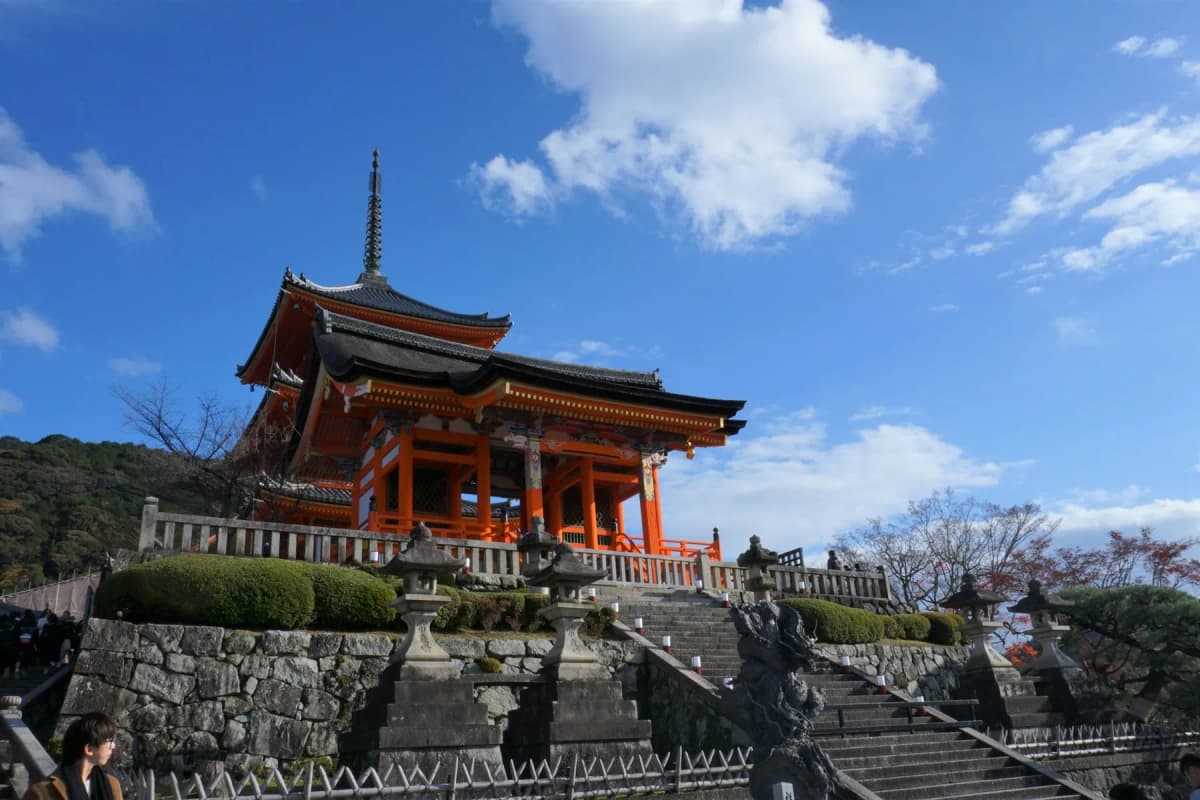 Photo: Jerome Jome on Unsplash
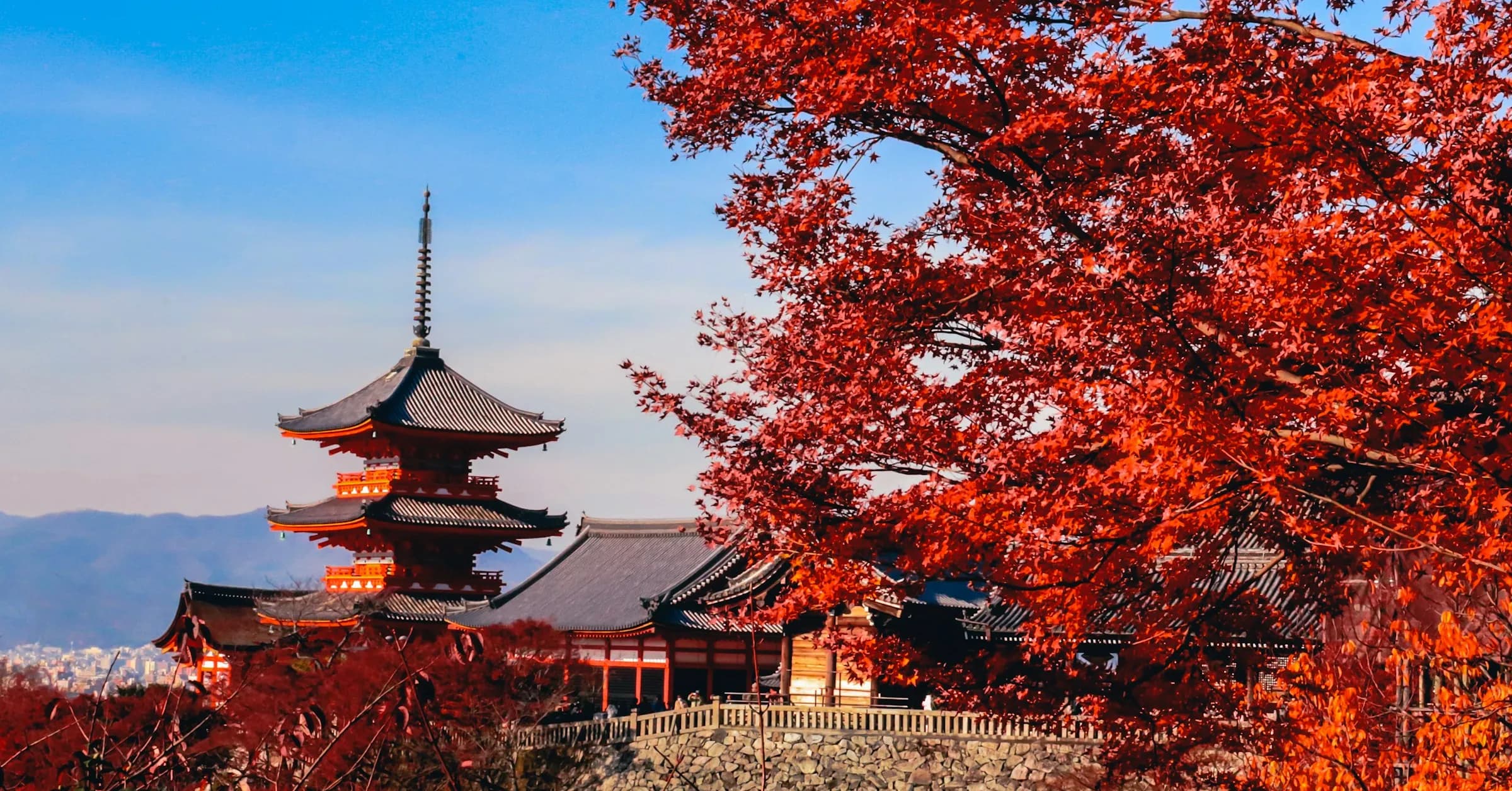
Kiyomizu-dera is a hillside temple with a huge wooden stage built out over the valley without a single nail. From the terrace you look across the treetops to the city. In autumn the maples below turn red, and in spring the hillside is pale with cherry blossom.
Entry is ¥500. The temple opens at 6 am all year, which is the secret to enjoying it: by 10 am the approach road is shoulder to shoulder, while at 7 am you share the terrace with a few early risers. Below the main hall, visitors queue to drink from the three streams of the Otowa waterfall, which gives the temple its name ("pure water").
- Getting there: city bus 206 or 86 from Kyoto Station to Gojo-zaka or Kiyomizu-michi, then a 10 to 15 minute walk uphill. From Gion it is a 20 minute walk.
- Good to know: closing time is usually around 6 pm, with later hours during the spring and autumn night illuminations.
3. Wander Sannenzaka, Ninenzaka and the Yasaka Pagoda
The stone lanes that run downhill from Kiyomizu-dera are the Kyoto of postcards: wooden shopfronts, tea houses, sweet shops and the five-storey Yasaka Pagoda rising at the end of the street. They cost nothing and they link Kiyomizu-dera to Gion, so you would walk them anyway.
Go straight after Kiyomizu-dera, before the shops open at around 9 or 10 am, if you want photos without crowds. Come back later if you want to shop. The lanes continue north past Kodai-ji temple to Maruyama Park and Yasaka Shrine, which is free, always open and pretty when its lanterns are lit after dark.
4. Spend an evening in Gion and Pontocho
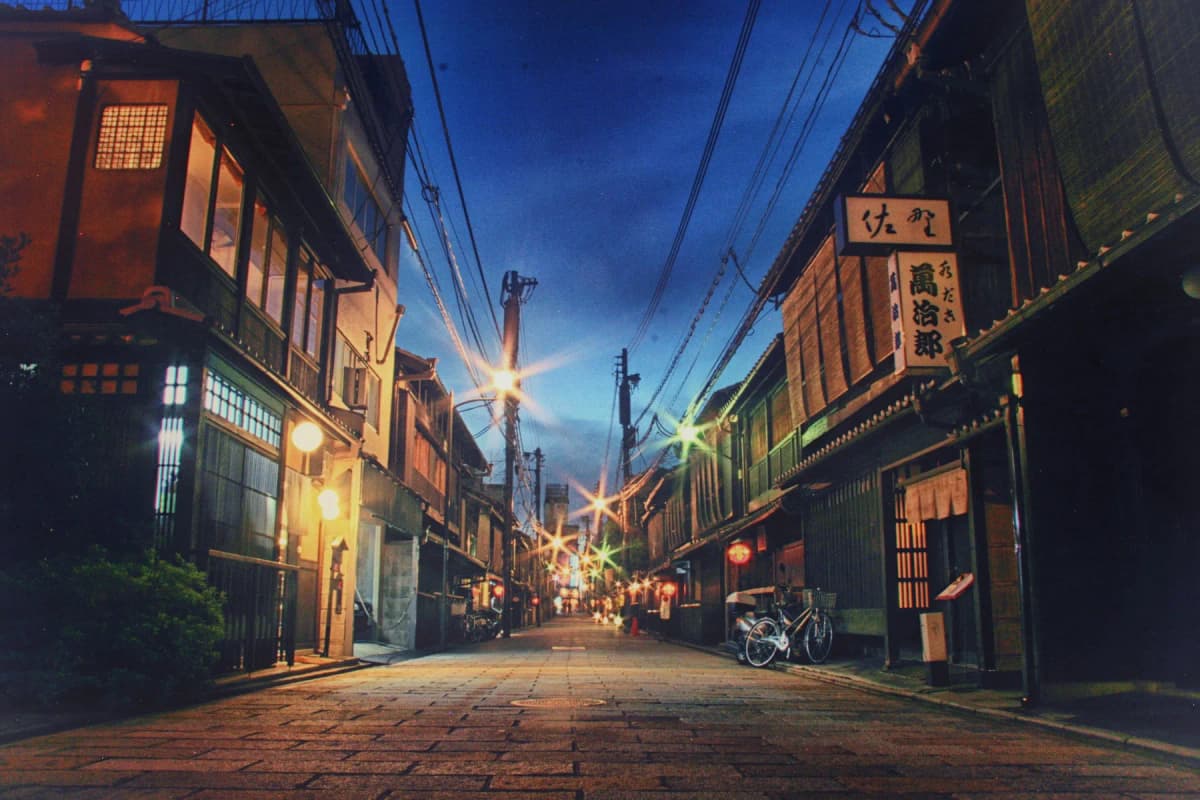 Photo: Fabrizio Chiagano on Unsplash
Gion is Kyoto's best-known geisha district. In Kyoto the women are called geiko, and their apprentices are maiko. Around dusk you may see one on her way to an appointment on Hanamikoji Street or beside the Shirakawa canal, which is the prettiest corner of the district.
There are rules here and they are enforced. The narrow private alleys off Hanamikoji are closed to tourists, and signs warn of a ¥10,000 fine. Stay on the public streets, do not block or follow geiko and maiko, and never touch them or ask them to stop for a photo. They are working.
Cross the river for dinner in Pontocho, a lantern-lit alley one person wide and lined with restaurants. From May to September many of them build wooden decks over the Kamo River.
5. See the Arashiyama bamboo grove early
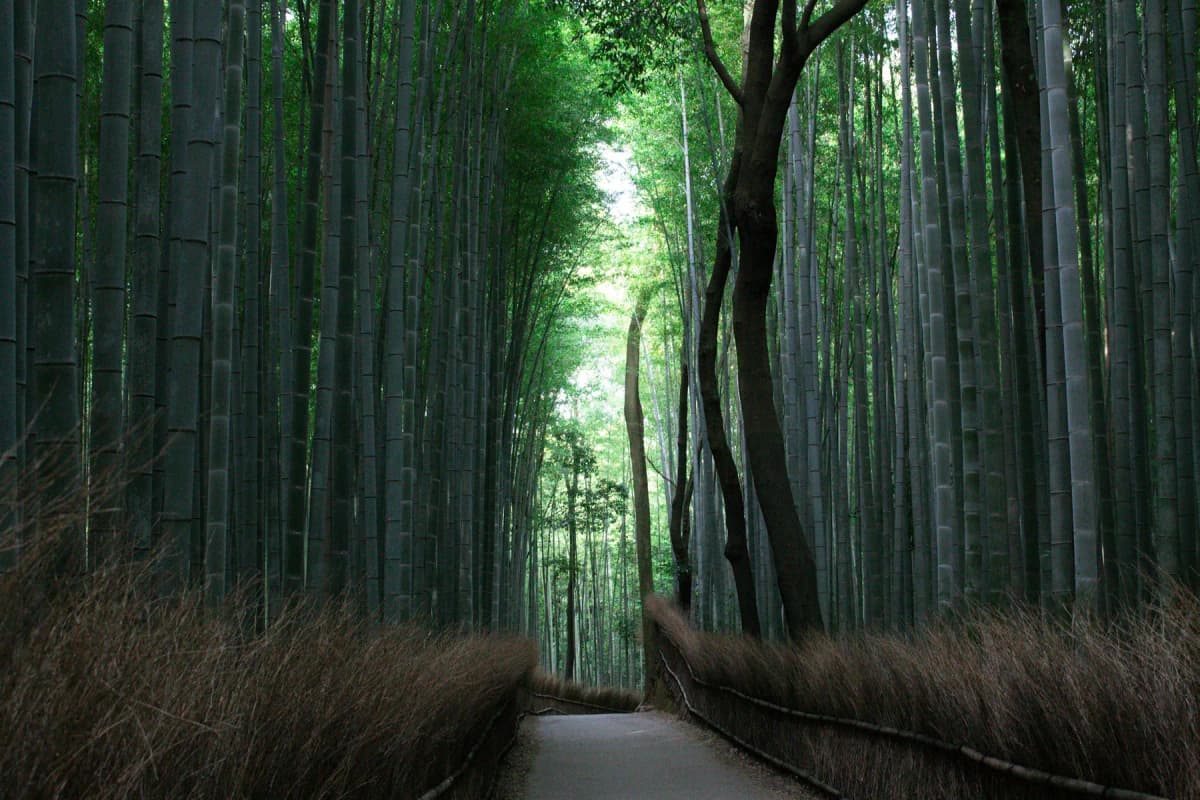 Photo: Matteo Ferrero on Unsplash
The bamboo grove is free, always open and much smaller than photos suggest. The main path is about 500 metres long and takes 10 to 15 minutes to walk. By 9 am it is full of tour groups. Before 8 am it is calm, and you can hear the stalks knocking together in the wind.
Do not come all this way for the grove alone. Arashiyama is a half-day district: Tenryu-ji next door, the long Togetsukyo Bridge over the river, the hillside garden of Okochi Sanso villa at the top of the grove, and the Iwatayama monkey park across the bridge, a steep 20 minute climb with a wide view at the top.
- Getting there: JR Sagano line from Kyoto Station to Saga-Arashiyama, 11 to 17 minutes, then a 10 minute walk. From downtown, the Hankyu line or the little Randen tram also work.
6. Sit by the garden at Tenryu-ji
Tenryu-ji is the main temple of Arashiyama and a World Heritage Site. The reason to go in is the pond garden, laid out in the 14th century, which uses the mountains behind it as part of the design. The garden costs ¥500, and it is ¥300 more to enter the temple buildings and view it from the wooden verandas.
The garden's north gate opens directly onto the bamboo grove, so the easy order is grove first, then enter the garden from the north and leave by the main gate towards the river.
7. See the Golden Pavilion at Kinkaku-ji
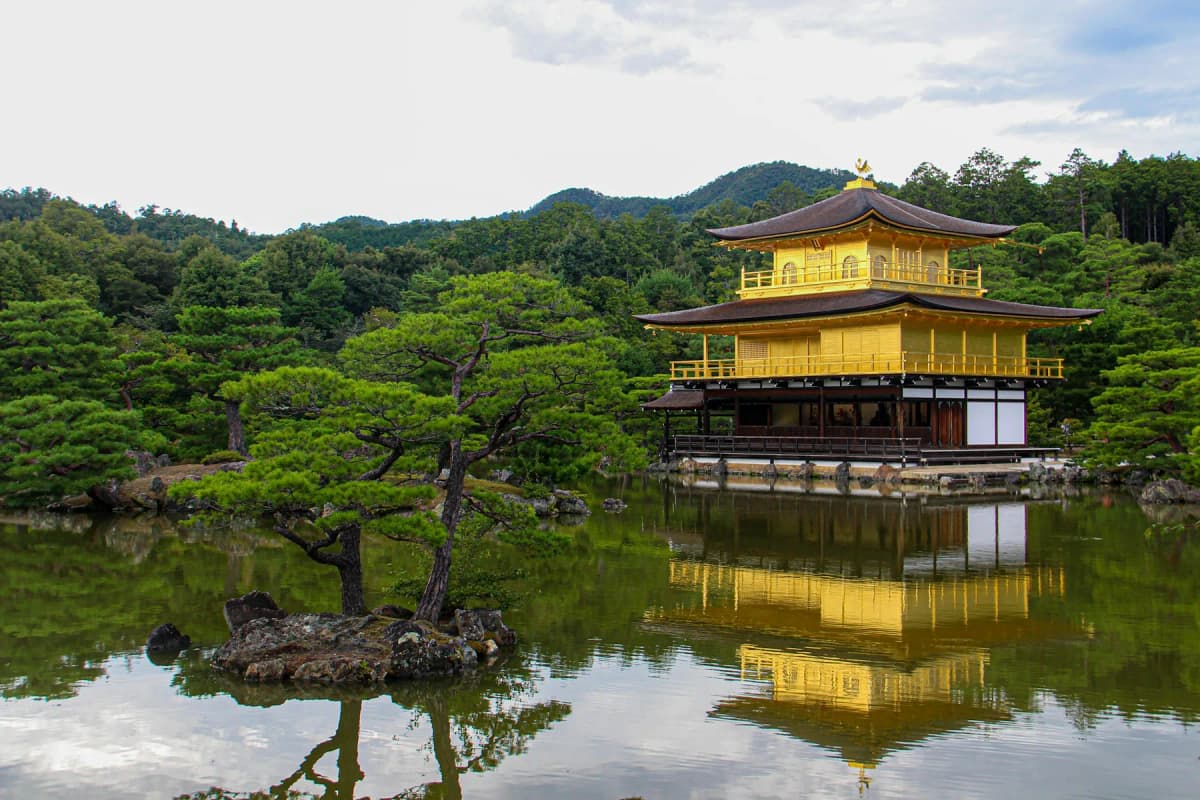 Photo:
 The top two floors of Kinkaku-ji are covered in gold leaf, and on a still day the whole building is doubled in the pond in front of it. You cannot go inside. The visit is a one-way path around the pond and up through the garden, and it takes about 40 minutes.
Entry is ¥500 and the grounds are open from 9 am to 5 pm. It is busy all day, but the route keeps people moving and everyone gets the same view. Go right at opening, or in the last hour when the low sun hits the gold.
- Getting there: there is no train station nearby. From Kyoto Station, take the Karasuma subway to Kitaoji and a short bus or taxi from there, or the direct city bus 205, which takes around 40 minutes.
8. Count the rocks at Ryoan-ji
A 20 minute walk or a short bus ride from Kinkaku-ji, Ryoan-ji has Japan's most famous rock garden: 15 stones on raked white gravel, arranged so that you can never see all of them at once from the veranda. Nobody knows for certain who made it or what it means, which is part of the appeal.
Entry is about ¥600. It opens at 8 am, an hour before Kinkaku-ji, so start here if you want to sit in front of the garden in something close to silence. The large pond garden below is lovely too and most people hurry past it.
9. Eat your way through Nishiki Market
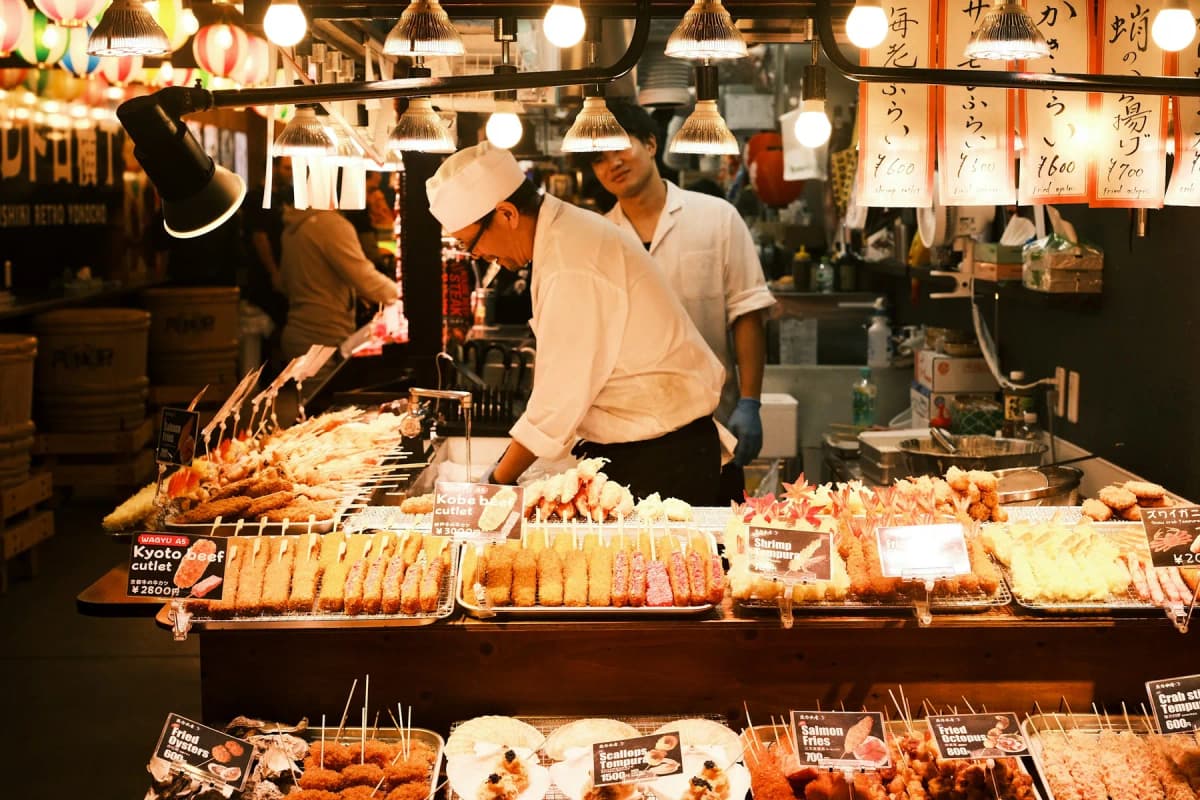 Photo: Perry Merrity II on Unsplash
Nishiki is a covered arcade about 400 metres long with more than a hundred shops and stalls, known as "Kyoto's kitchen". Things to try: tamagoyaki (rolled omelette), soy milk doughnuts, grilled eel, pickles of every colour, sesame dumplings and tiny glazed octopus on a stick.
Each shop keeps its own hours. Most open between 9 and 11 am and close between 5 and 6 pm, and some shut on Wednesdays or Sundays. Late morning on a weekday is the best window.
One rule catches visitors out: do not eat while walking. The market asks you to eat at the stall where you bought the food, then move on. The arcade is narrow, and a skewer in a crowd is a bad idea.
10. Walk the nightingale floors at Nijo Castle
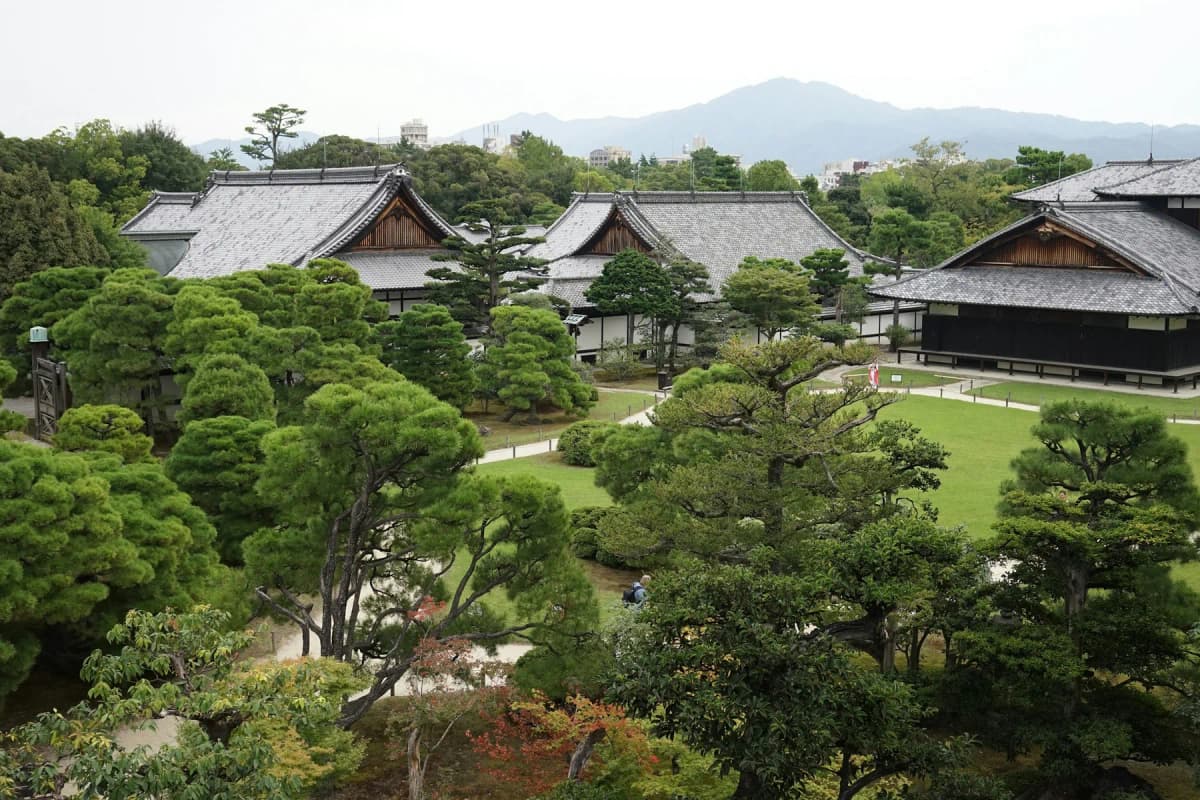 Photo:
 Nijo Castle was the Kyoto residence of the Tokugawa shoguns, and it is where the last shogun handed power back to the emperor in 1867. The highlight is Ninomaru Palace: room after room of gold-leaf screens painted with tigers and pines, connected by "nightingale floors" that chirp under your feet so that nobody could walk the corridors unheard.
A ticket with Ninomaru Palace costs ¥1,300. It is one of the few big sights in Kyoto that is mostly indoors, so save it for a rainy or very hot day. In early October 2026 the city proposed a higher price of ¥2,000 for visitors who do not live in Kyoto, starting in the 2027 fiscal year. It is not in effect, but check the price if you are travelling after April 2027.
- Getting there: Tozai subway line to Nijojo-mae Station, right outside the gate.
11. Visit Ginkaku-ji and walk the Philosopher's Path
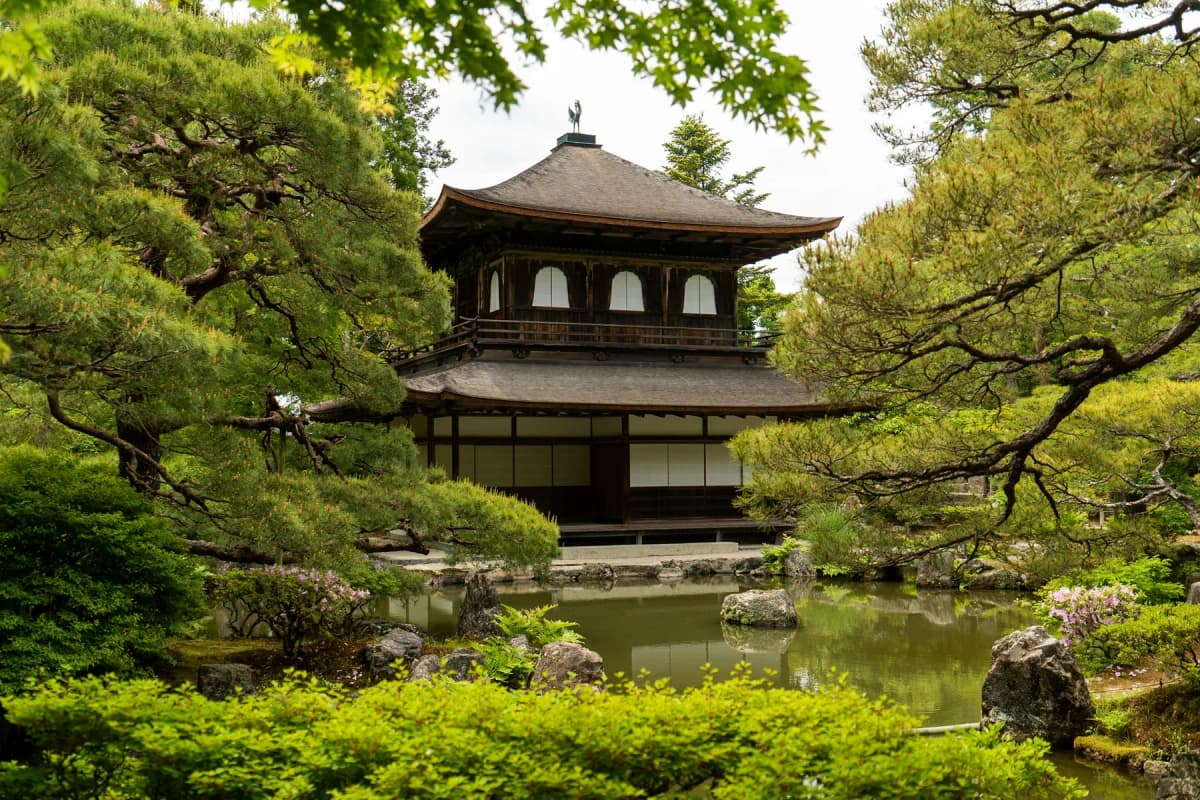 Photo: David Emrich on Unsplash
Ginkaku-ji, the Silver Pavilion, was never covered in silver. It is a quiet wooden hall beside a moss garden and a cone of raked sand, and many people end up preferring it to its golden cousin. Entry was ¥500 for years. Recent reports put it at ¥1,000 since spring 2026, so check the current price before you go.
From the gate, the Philosopher's Path follows a narrow canal south for about two kilometres, shaded by cherry trees. It takes 30 to 40 minutes at a slow walk, with small temples and cafes along the way. It ends near Nanzen-ji, whose huge gate and brick aqueduct are free to see from the grounds. In the first week of April the whole path is a tunnel of blossom, and very busy.
- Getting there: city bus 5 or 17 to Ginkakuji-michi. Or do the walk in reverse: Tozai subway to Keage, visit Nanzen-ji, and walk north.
12. Join a tea ceremony
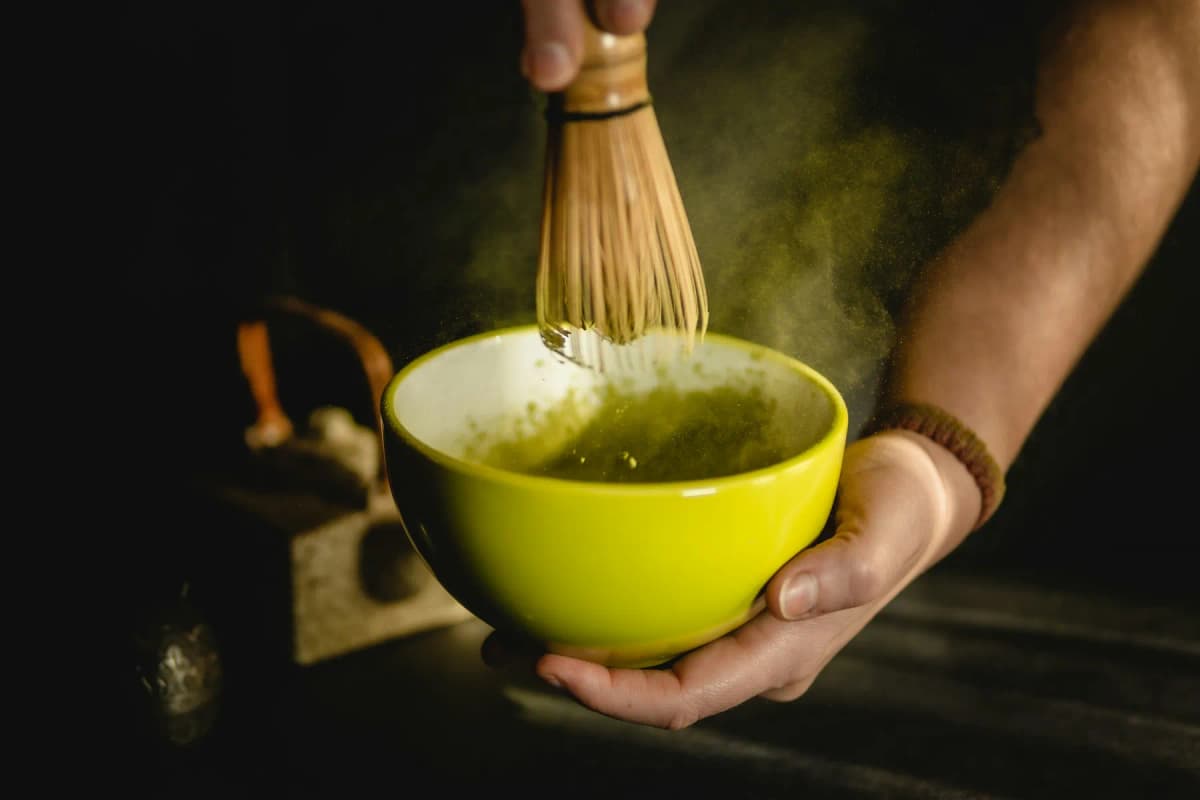 Photo: sentidos humanos on Unsplash
Kyoto is the home of the Japanese tea ceremony, and nearby Uji grows some of the country's best matcha. A session for visitors usually lasts 45 to 90 minutes. A host prepares the tea in front of you, explains each movement, and then you whisk a bowl yourself and drink it with a seasonal sweet.
Shared group sessions start at about ¥3,000 per person. Private sessions cost from roughly ¥5,500 to ¥9,000 per person, depending on the group size and the venue. Many places offer kimono rental as an add-on. Book ahead, as almost all of them are by reservation only, and most are clustered around Higashiyama, Gion and Kinkaku-ji so they fit easily into a sightseeing day.
Short on time? Many temples have a tea room where you can sit with a bowl of matcha and a sweet for around ¥500 to ¥1,000 and look at the garden. It is not a ceremony, but it is a very good half hour.
13. See the 1,001 statues at Sanjusangendo
Inside Japan's longest wooden hall, 1,001 life-size golden statues of Kannon, the goddess of mercy, stand in ranks on either side of a giant seated figure. No two faces are quite the same. It is one of the most striking interiors in Japan, and photos are not allowed, so it stays a surprise.
Entry is about ¥600. It is a 20 minute walk or a short bus ride from Kyoto Station and rarely feels crowded, which makes it a good choice for your arrival or departure day.
14. Cross the bridge at Tofuku-ji
Tofuku-ji is a large Zen temple one stop from Kyoto Station, on the way to Fushimi Inari. Most of the year it is peaceful and you can admire the enormous wooden gate for free. In mid to late November it becomes one of the most popular places in the city, when the valley of maples under the Tsutenkyo Bridge turns red.
The bridge and the chequerboard moss garden of the Hojo are ticketed separately, and prices are higher during the autumn leaf season. Expect roughly ¥500 to ¥1,000 for each. Combine it with Fushimi Inari: the two are a 15 minute walk apart, or one stop on the JR Nara line or the Keihan line.
15. Walk through the Kyoto Imperial Palace and its park
Japan's emperors lived here until 1868. Today you can walk a set route around the palace grounds for free, without a reservation, and see the halls and gardens from outside. It is usually closed on Mondays. The palace sits inside Kyoto Gyoen, a wide park of gravel avenues and old trees where locals jog and picnic.
It is not the most dramatic sight on this list, but it is free, central and uncrowded, and it fills a spare hour between Nijo Castle and Nishiki Market nicely.
A 3 day Kyoto plan by area
Kyoto's sights sit around the edges of the city, so the trick is to stay on one side each day.
Day 1: east (Higashiyama and Gion)
- 7 am: Kiyomizu-dera
- 9 am: Sannenzaka, Ninenzaka, Yasaka Pagoda, Kodai-ji
- Lunch: Nishiki Market
- Afternoon: rest, or Sanjusangendo
- Evening: Yasaka Shrine, Gion and dinner in Pontocho
Day 2: west and northwest (Arashiyama and the Golden Pavilion)
- 7:30 am: bamboo grove, then Tenryu-ji
- Late morning: Togetsukyo Bridge and lunch by the river
- Afternoon: taxi or bus to Ryoan-ji and Kinkaku-ji
- Evening: downtown
Day 3: south, centre and northeast
- 7 am: Fushimi Inari, climbing at least to Yotsutsuji
- Late morning: Nijo Castle
- Afternoon: Ginkaku-ji and the Philosopher's Path to Nanzen-ji
- Late afternoon: a tea ceremony
With only two days, drop day 3's afternoon and move Fushimi Inari to the late afternoon of day 1.
Getting around Kyoto
- Trains first. JR reaches Fushimi Inari, Tofuku-ji and Arashiyama. The Keihan line runs up the east side past Fushimi Inari and Gion. The two subway lines cover the centre and Nijo Castle.
- Buses for the rest. Kinkaku-ji, Ginkaku-ji and Kiyomizu-dera need a bus or a taxi. The flat fare in the central zone is ¥230. Buses are slow and crowded in spring and autumn. The city has proposed a higher bus fare for non-residents from the 2027 fiscal year. It is not in effect yet.
- Day pass. The Subway and Bus One-Day Pass costs ¥1,100 (¥550 for children) and pays for itself at about five rides. The old bus-only pass has been discontinued.
- Taxis. For three or four people, a short taxi ride between nearby sights often costs little more than the bus and saves a lot of time. Kinkaku-ji to Ryoan-ji and Kyoto Station to Kiyomizu-dera are good examples.
- Bicycles. The centre is flat and laid out as a grid. Rental shops near Kyoto Station charge roughly ¥1,000 to ¥1,500 a day. Park only in marked bicycle parking areas, as bikes left on the street are removed.
- Luggage. Large suitcases are not welcome on city buses. Use coin lockers, send bags ahead from your hotel, or book luggage storage in Kyoto in advance if you arrive before check-in.
Where you sleep changes how easy all of this is. Our guide to where to stay in Kyoto compares the six areas that work best.
How much do the main sights cost?
Kyoto is cheaper to sightsee than most people expect, because several of the best things are free.
| Cost per adult | |
|---|---|
| Fushimi Inari, bamboo grove, Gion, Higashiyama lanes, Imperial Palace, Yasaka Shrine | Free |
| Most temples (Kiyomizu-dera, Kinkaku-ji, Tenryu-ji garden, Sanjusangendo) | ¥500 to ¥600 each |
| Ginkaku-ji | Up to ¥1,000 |
| Nijo Castle with Ninomaru Palace | ¥1,300 |
| Shared tea ceremony | From about ¥3,000 |
| Subway and Bus One-Day Pass | ¥1,100 |
All 15 things on this list, including a shared tea ceremony and three days of transport passes, come to roughly ¥12,000 to ¥14,000 per person.
When is the best time to visit Kyoto?
- Late March to early April: cherry blossom. Beautiful and the busiest and most expensive time of year. Book months ahead.
- May and early June: fresh green leaves, mild weather and fewer people once Golden Week (late April to early May) has passed.
- Mid-June to mid-July: the rainy season. Moss gardens look their best and crowds are thin.
- Late July and August: hot and very humid. Start at dawn and plan indoor sights for the afternoon. The Gion Matsuri festival fills the city in July.
- Mid-November to early December: autumn leaves. As busy as cherry blossom season, and just as worth it.
- January and February: cold, quiet and good value, with a chance of snow on the Golden Pavilion.
Whatever the season, the same rule applies: famous sights early, lunch late, and something quiet in the afternoon.
Day trips from Kyoto
Once you have seen the city, three easy trips are worth a day:
- Nara: 35 to 45 minutes by train. Friendly deer, the Great Buddha at Todai-ji and a compact park you can cover on foot.
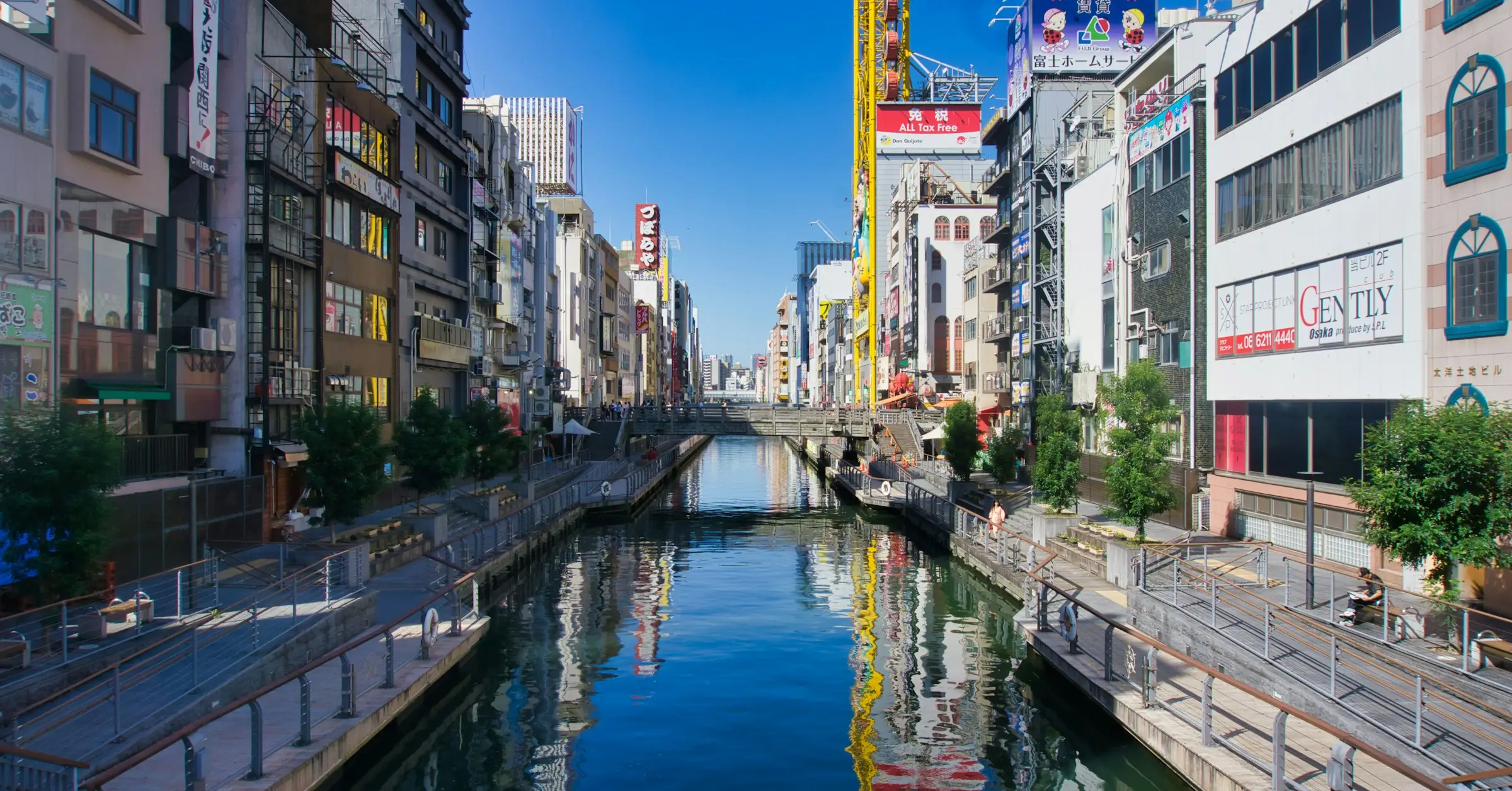
- Osaka: 15 minutes by Shinkansen or about 30 minutes by regular train. Go for the food, the castle and the neon of Dotonbori. Our Osaka itinerary fits the highlights into one day. If you are deciding where to base yourself, read Kyoto vs Osaka. Heading to Universal Studios Japan? Book USJ tickets in advance, as popular dates sell out.
- Himeji: under an hour by Shinkansen to Japan's finest original castle.
Our guide to day trips from Osaka covers these and more, and nearly all of them work just as well from Kyoto.
Before you go
- Flights. Kyoto has no airport. Fly into Osaka (Kansai, KIX), about 75 to 85 minutes away on the direct Haruka express, or into Tokyo and take the Shinkansen, which takes about 2 hours 15 minutes.
- Airport transfer. Landing late, or travelling with children or a lot of bags? You can pre-book a private transfer from Kansai Airport to your hotel door.
- Mobile data. You will use maps and train apps all day. An eSIM is the simplest option: set up a Japan eSIM before you fly and it connects when you land. To compare providers and prices, see our guide to the best eSIM for Japan.
- Travel insurance. Medical care in Japan is excellent and not cheap for visitors. Get a travel insurance quote before you leave.
- Cash. Many temples, small restaurants and market stalls take cash only. ATMs in convenience stores accept foreign cards.
- Accommodation tax. Kyoto raised its accommodation tax in March 2026. It is charged per person per night on top of your room rate, from ¥200 for the cheapest rooms to ¥1,000 for rooms between ¥20,000 and ¥49,999, and more above that.
- Shoes. You will take them off at most temples. Wear socks and shoes that slip on and off.
Frequently asked questions
What is the number one thing to do in Kyoto? Fushimi Inari Shrine. The tunnels of torii gates are unlike anything else in Japan, it is free, and it is open at all hours, so you can fit it around everything else. Kiyomizu-dera is a close second.
Is 2 days enough for Kyoto? Two full days are enough for the main sights: Higashiyama, Gion and Fushimi Inari on one day, Arashiyama and Kinkaku-ji on the other. Three days is more comfortable and leaves time for Nijo Castle, the Philosopher's Path and a tea ceremony.
What should I not miss in Kyoto? Fushimi Inari, Kiyomizu-dera, the lanes of Higashiyama, Gion at dusk, the Arashiyama bamboo grove and Kinkaku-ji. If you only have one day, do the first four, as they are close to each other.
What can I do in Kyoto for free? A lot. Fushimi Inari, the bamboo grove, the Higashiyama lanes, Gion, Yasaka Shrine, Nishiki Market, the Philosopher's Path, the grounds of Nanzen-ji, the Kamo River and the Imperial Palace all cost nothing.
How do I avoid the crowds in Kyoto? Start early. Kiyomizu-dera opens at 6 am, and Fushimi Inari and the bamboo grove never close. Visit the famous places before 9 am, eat lunch late, and keep quieter sights such as Sanjusangendo, Ryoan-ji's pond garden or the Imperial Palace for the middle of the day. Weekdays are calmer than weekends.
Can I see geisha in Kyoto? You might, in Gion or Pontocho in the early evening, but it is a matter of luck. Do not block, follow or touch them, and stay out of the private alleys in Gion, which are closed to tourists. If you want a guaranteed encounter, book a cultural show or a dinner with a maiko performance.
Is Kyoto walkable? Within each district, yes. Higashiyama and Gion are best on foot, and so is Arashiyama. Between districts you need a train, bus or taxi, as the main areas are several kilometres apart.
Do I need to book anything in advance? Most temples and shrines need no booking. Do reserve tea ceremonies, popular restaurants and, in cherry blossom and autumn leaf seasons, your hotel, as early as you can.
How we researched this guide
This guide is based on research using official sources such as the Kyoto City Official Travel Guide, the Japan National Tourism Organization, Kiyomizu-dera, Tenryu-ji and Nijo Castle, plus current traveller feedback. Entry fees, opening hours and local rules change, so check the latest information before you go. Found something out of date? Let us know.
Planning more of Japan? Browse all our Japan guides.