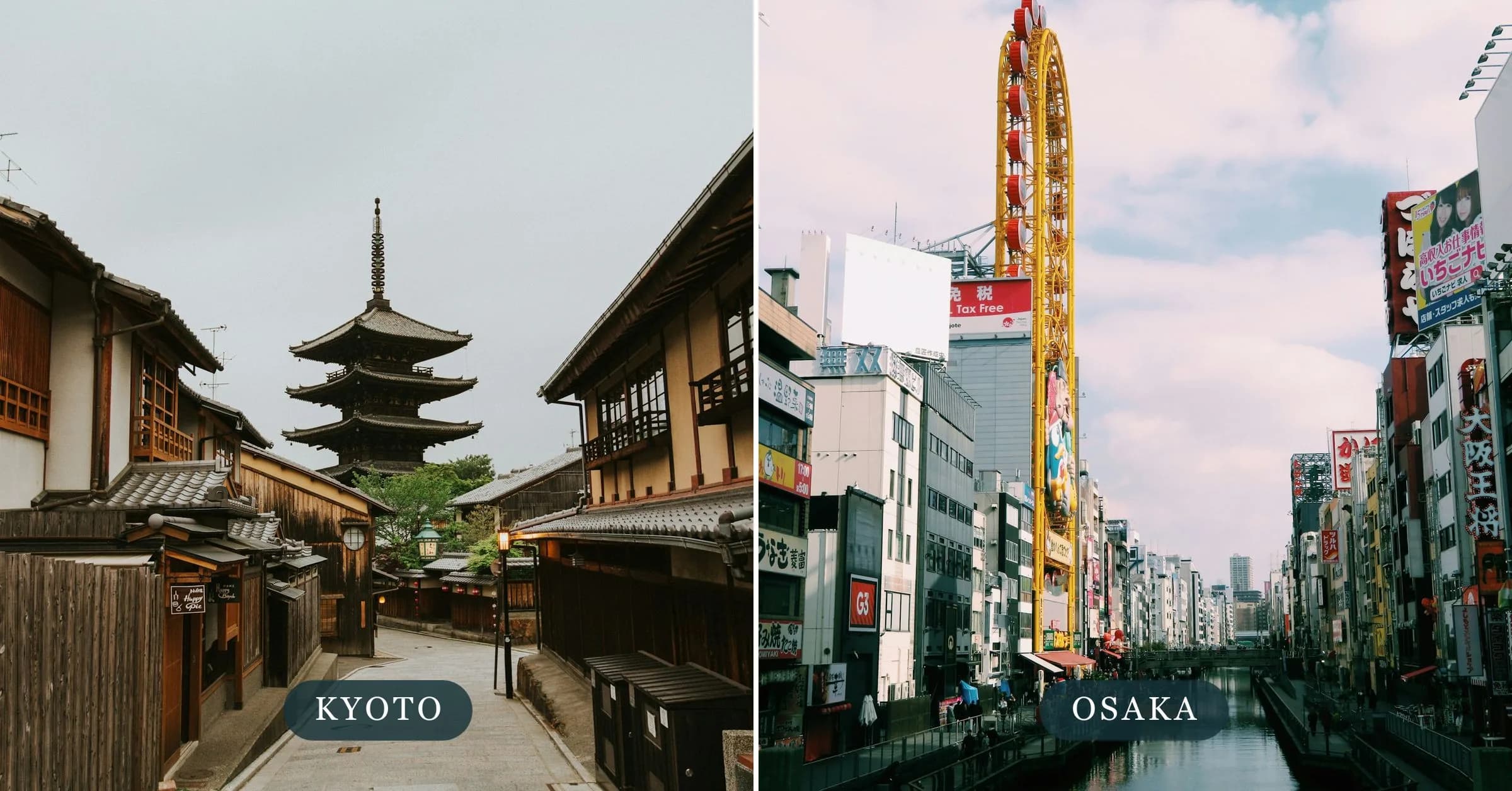
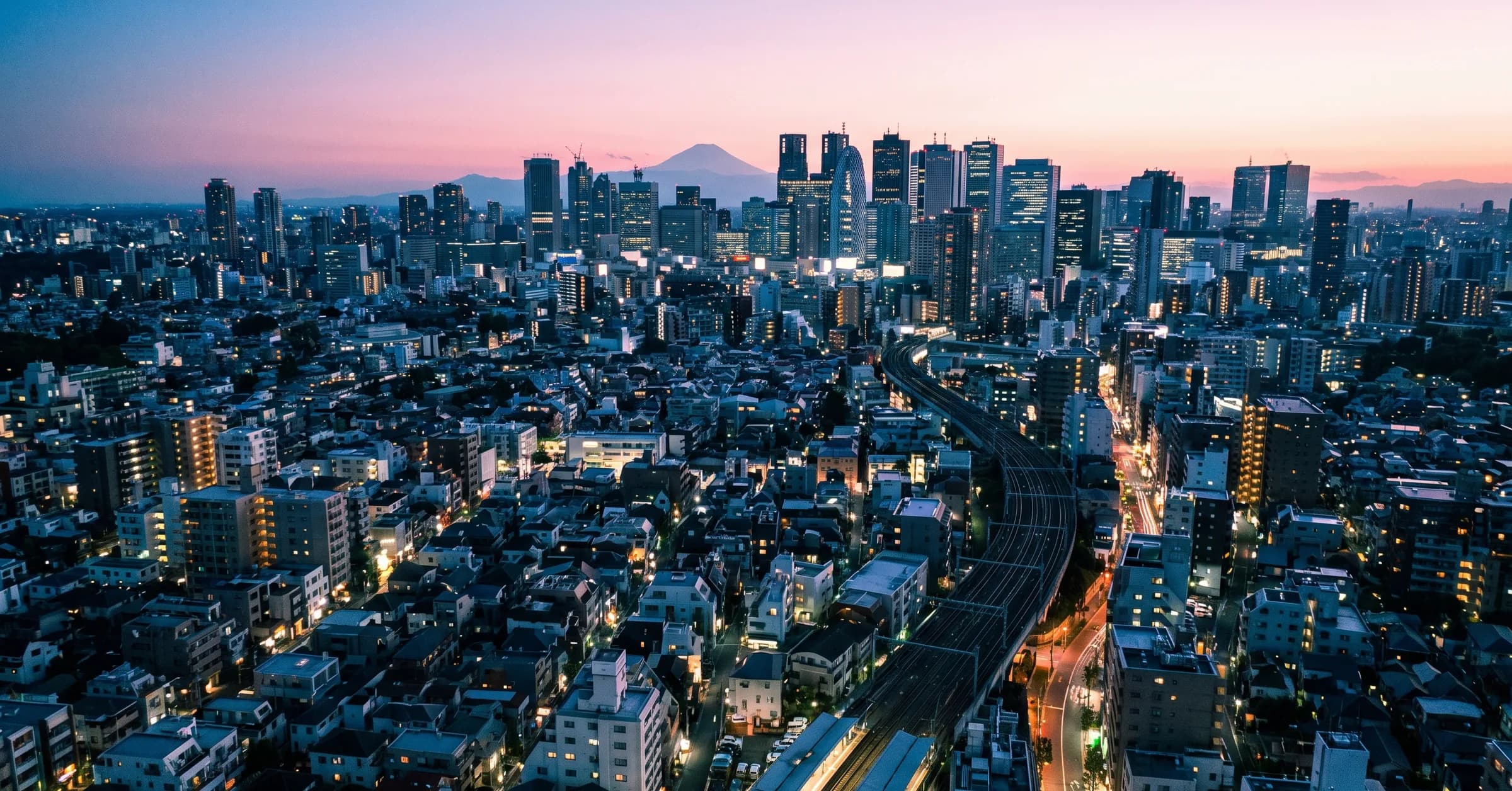
Where to Stay in Kyoto: 6 Best Areas for First-Timers (2026)
October 8, 2026 · Japan
This post contains affiliate links. We may earn a commission if you book through them, at no extra cost to you. Disclaimer.
The best area to stay in Kyoto on a first trip is Downtown Kyoto, around Shijo-Kawaramachi. It is central, flat and full of places to eat, and you can walk to Gion in about ten minutes. Stay in Gion or Southern Higashiyama for old-Kyoto atmosphere, and near Kyoto Station if you have a short stay, an early train or heavy luggage.
Choosing where to stay in Kyoto is different from choosing in Tokyo or Osaka. Kyoto is a smaller city, but its famous sights sit around the edges, on the hills to the east, north and west, and the subway has only two lines. No single area is close to everything, so the right base depends on what you want your mornings and evenings to look like.
This guide compares the six areas that work best for visitors, says who each one suits and who should skip it, and covers the practical points that change the decision: luggage, the hotel tax that went up in March 2026, ryokan versus hotel, and how early you need to book.
Where to stay in Kyoto: the quick answer
| Area | Best for | Evenings | Getting around | Budget |
|---|---|---|---|---|
| Downtown (Shijo-Kawaramachi) | First-timers, food, shopping | Lively | Subway, Hankyu and Keihan lines, buses | Budget to high |
| Gion and Southern Higashiyama | Atmosphere, couples, ryokan stays | Quiet after dark | Mostly on foot, bus, Keihan line | Mid to very high |
| Kyoto Station | Short stays, day trips, late arrivals | Functional | Shinkansen, JR, subway, bus hub | Budget to high |
| Central Kyoto (Karasuma Oike, Nijo) | Value, calm streets, longer stays | Calm | Both subway lines | Budget to mid |
| Northern Higashiyama (Okazaki) | Gardens, temples, repeat visitors | Very quiet | Tozai subway line, bus, bicycle | Mid to high |
| Arashiyama | One special night, nature, onsen ryokan | Very quiet | JR Sagano line, Randen tram, Hankyu | Mid to very high |
Our short version: stay Downtown for a first trip of two to four nights. Choose Gion or Southern Higashiyama if atmosphere matters more than convenience, Kyoto Station if you are in town for one or two nights or plan several day trips, and Central Kyoto if you want more room for the money.
How to choose where to stay in Kyoto
Four questions settle it for most people.
1. How many nights do you have? With one or two nights, stay near Kyoto Station or Downtown and don't lose time on transfers. With three or more, the quieter areas start to make sense. Our Kyoto vs Osaka guide explains why three nights in Kyoto is the usual sweet spot.
2. How much luggage are you carrying? This matters more in Kyoto than in most cities. The lanes of Higashiyama are sloped and partly stepped, and the city asks visitors not to bring large suitcases onto its buses, which are often crowded. If you have big cases, pick a hotel within a short walk of a train or subway station, or forward your luggage (more on that below).
3. Do you want evenings out? Downtown has most of the city's restaurants, bars and late-opening shops. Gion, Northern Higashiyama and Arashiyama go quiet early. That quiet is the reason some people choose them.
4. Are you planning day trips? Nara, Osaka, Himeji and Hiroshima all start from Kyoto Station. One day trip doesn't justify staying there. Three do.
The 6 best areas to stay in Kyoto
1. Downtown Kyoto (Shijo-Kawaramachi): best for first-timers
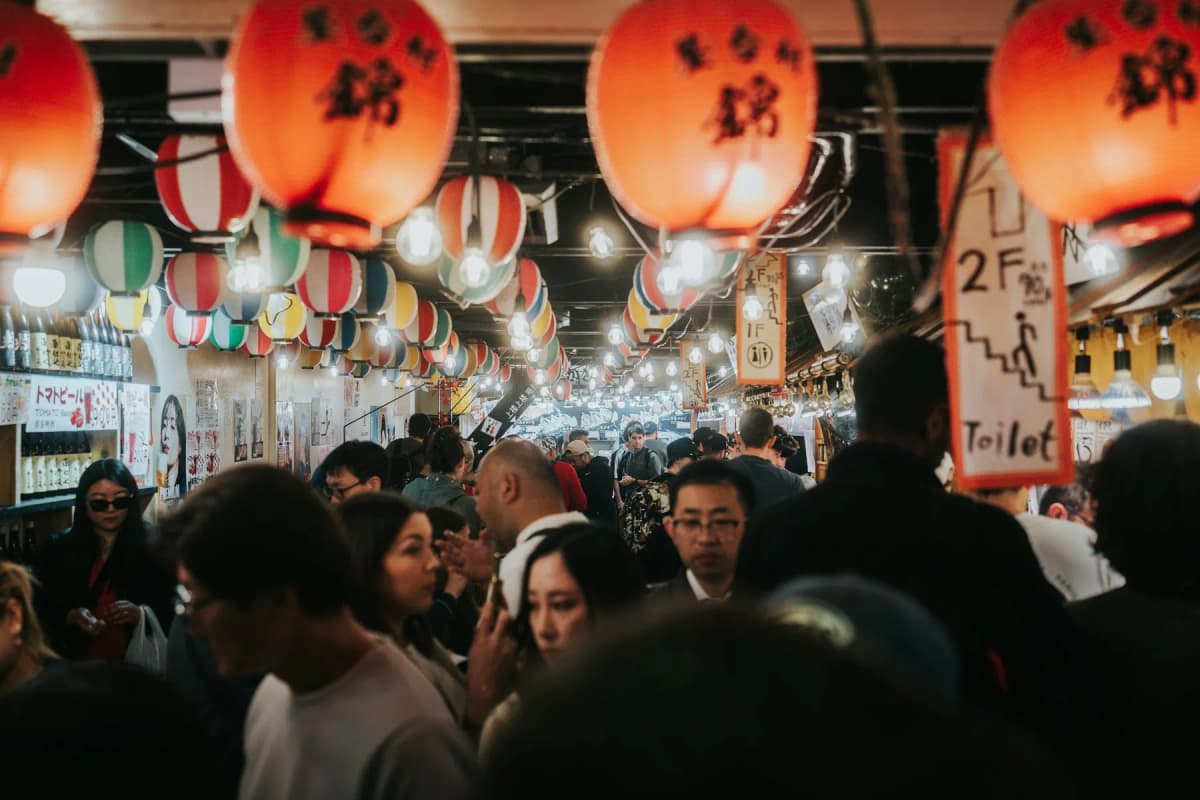 Photo: Dex Ezekiel on Unsplash
Downtown is the grid of streets around the crossing of Shijo and Kawaramachi, between Karasuma Street and the Kamo River. Hotel listings often call it Kawaramachi, Shijo or Nakagyo. It has the department stores, the covered Teramachi and Shinkyogoku arcades, Nishiki Market and the narrow restaurant alley of Pontocho. Cross the Shijo bridge and you are in Gion.
It isn't the prettiest part of Kyoto. The main streets are modern and busy. What it gives you is the easiest evenings in the city and the best mix of transport: the Karasuma subway line to Kyoto Station in about five minutes, the Hankyu line to Osaka in about 45 minutes and out to Arashiyama, and the Keihan line across the river for Fushimi Inari.
- Good for: first trips, food lovers, shoppers, anyone who wants to walk to dinner and walk home.
- Less good for: people who want to step out of the door into wooden lanes; light sleepers on the main roads.
- Don't miss nearby: Nishiki Market in the morning, Pontocho after dark, and a walk along the Kamo River at sunset.
- Where to look: within a few minutes' walk of Shijo, Karasuma or Kyoto-Kawaramachi stations. The side streets north of Shijo are quieter than the main avenue.
2. Gion and Southern Higashiyama: best for atmosphere
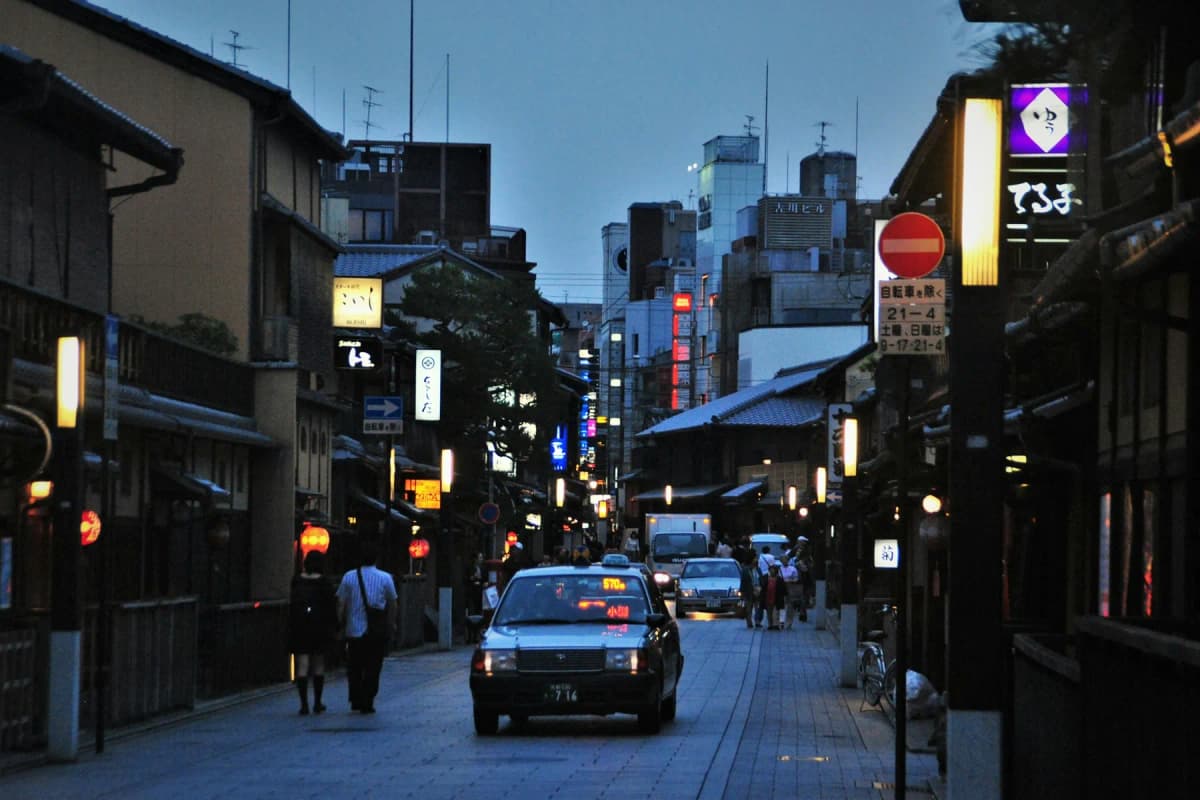 Photo:
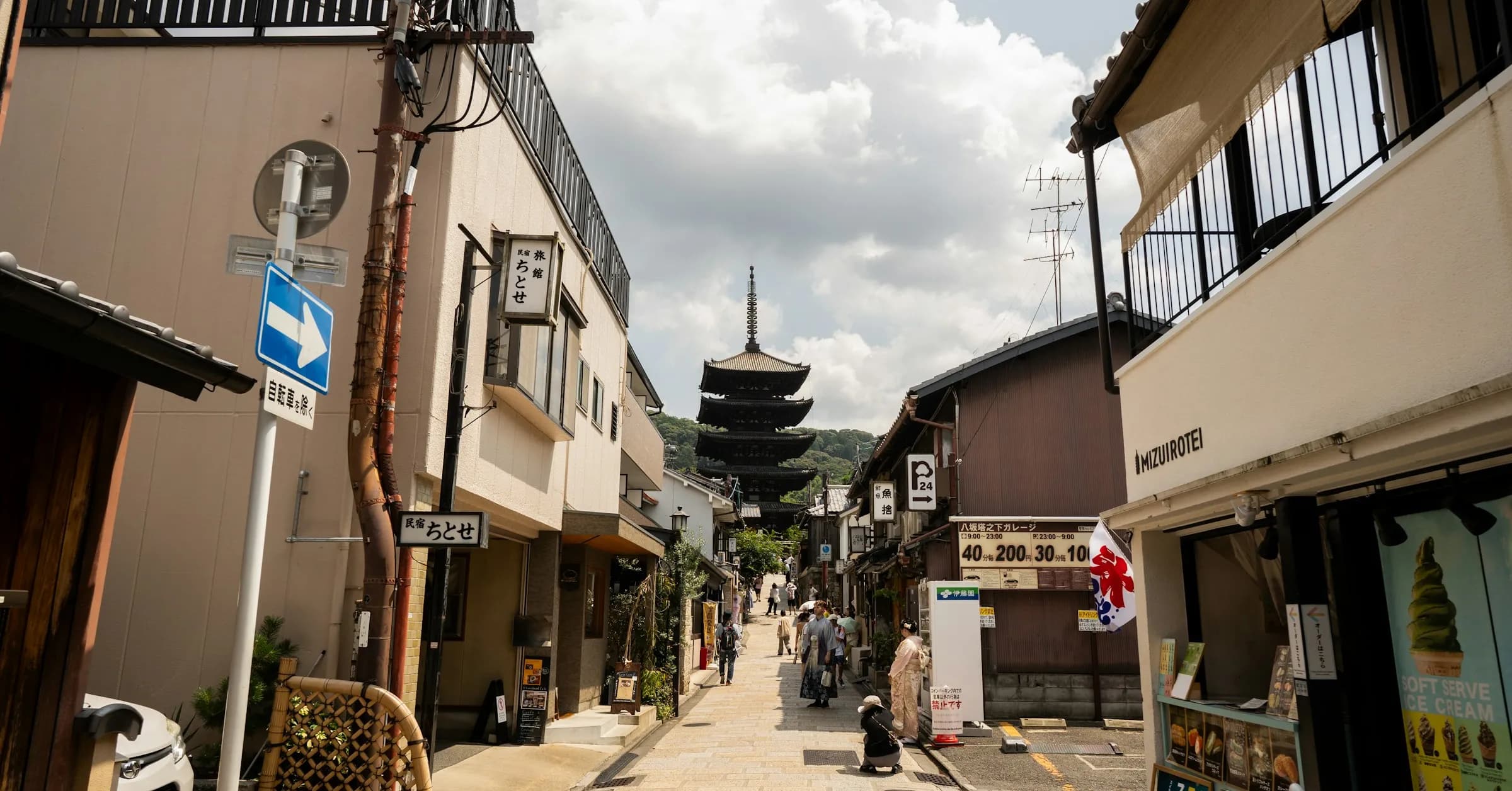
 This is the Kyoto on the postcards: wooden teahouses in Gion, Yasaka Shrine, and the stone lanes of Ninenzaka and Sannenzaka climbing towards Kiyomizu-dera, with the Yasaka Pagoda above the roofs. By late morning these lanes are packed. Stay here and you get them at seven in the morning and after dinner, when the day visitors have gone. That is the whole case for paying more.
The trade-offs are real. Rooms cost more than the same standard Downtown, many restaurants close early, and the nearest station (Gion-Shijo on the Keihan line) can be a 10 to 20 minute walk from hotels higher up the hill. Dragging suitcases over the cobbles is no fun, so take a taxi from Kyoto Station on arrival.
- Good for: couples, photographers, ryokan and machiya stays, second visits.
- Less good for: tight budgets, heavy luggage, people with limited mobility, nightlife.
- Know the rules: Gion is a working neighbourhood. Signs put up by the local council ban visitors from the private side alleys and from photographing geiko and maiko without permission, with a notice of a ¥10,000 charge. Hanamikoji, the main street, is public and open to everyone.
- Where to look: between Yasaka Shrine and Kodai-ji for the best balance of atmosphere and access, or near Gion-Shijo Station if you want trains close by.
3. Kyoto Station: best for short stays and day trips
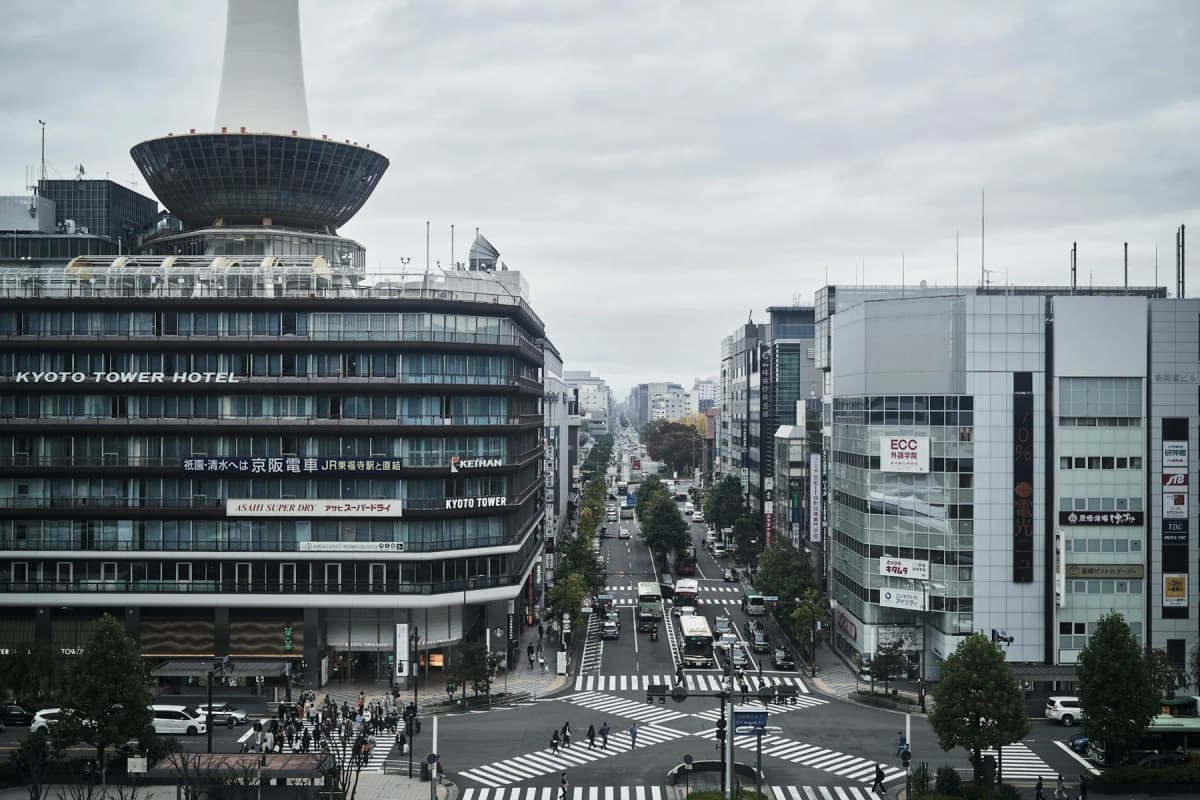 Photo: Akira Cake on Unsplash
The area around Kyoto Station is the practical choice. The Shinkansen, the Haruka airport express, the JR lines, the Karasuma subway line and the main bus terminal are all here, and there are a lot of hotels, so prices are often lower than Downtown for the same standard. Fushimi Inari is five minutes away on the JR Nara line, and trains on the Sagano line reach Saga-Arashiyama in 11 to 17 minutes.
It has less charm. The streets around the station are wide and modern, and you will take a train, bus or taxi to reach most evening spots. The station building does have plenty of restaurants, a department store and big underground malls, so you won't go hungry.
- Good for: one or two night stays, late arrivals from Kansai Airport or Tokyo, rail pass holders, day trips to Nara, Osaka, Himeji or Hiroshima.
- Less good for: atmosphere, and evenings if you want more than a station restaurant.
- Where to look: the north side (Karasuma exit) has Kyoto Tower, the bus terminal and more places to eat. The south side (Hachijo exit) is closer to the Shinkansen gates and tends to be a little cheaper.
4. Central Kyoto (Karasuma Oike and Nijo): best value base
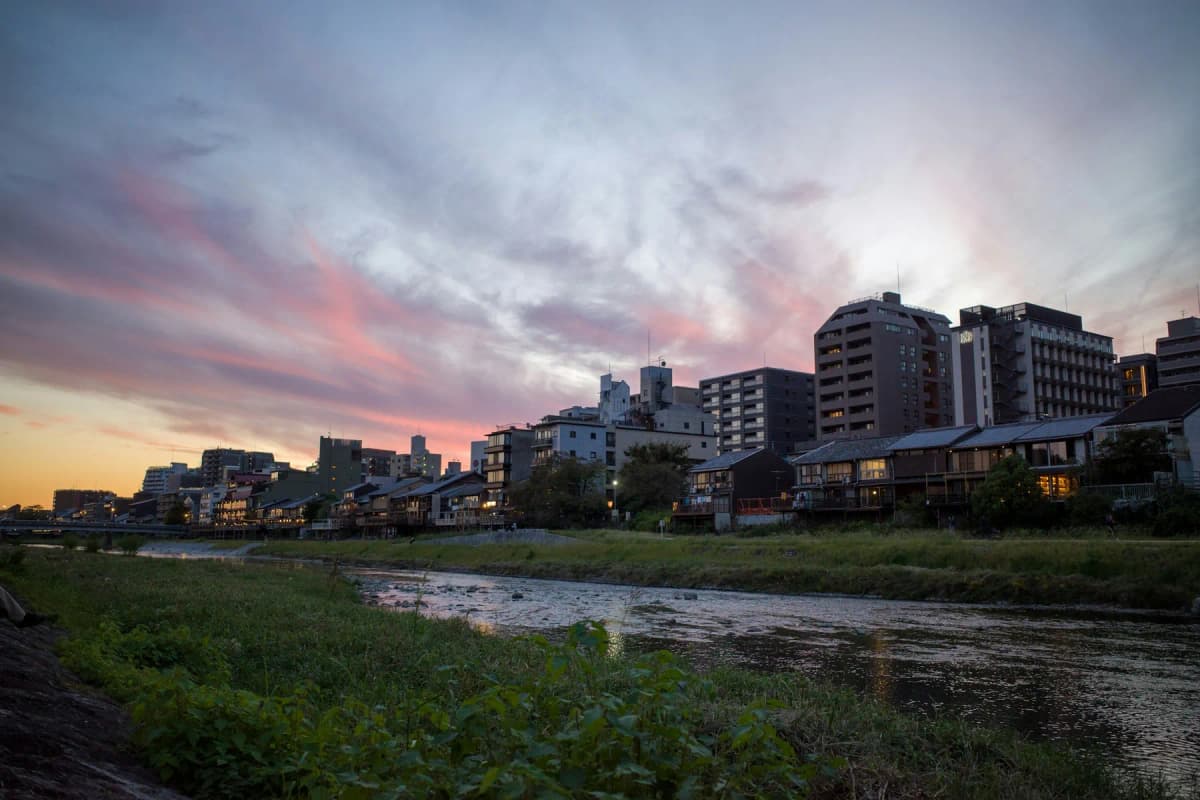 Photo:
 North of Downtown, the streets around Karasuma Oike, Nijo Castle and the Imperial Palace park are residential, calm and well connected. Karasuma Oike is where Kyoto's two subway lines cross, so you can ride south to Kyoto Station, east to Higashiyama or west to Nijo Castle without a change. Downtown is one subway stop or a 10 to 15 minute walk.
Hotels here are often newer, with slightly bigger rooms for the price, and the area has many small cafés, bakeries and craft shops among the old townhouses.
- Good for: value, families, longer stays, travellers who like a local neighbourhood.
- Less good for: people who want sights on the doorstep; apart from Nijo Castle and the Imperial Palace, most are a ride away.
- Where to look: within five minutes of Karasuma Oike or Marutamachi stations.
5. Northern Higashiyama (Okazaki): best for gardens and quiet
Northern Higashiyama runs from Heian Shrine and the Okazaki museums up past Nanzen-ji and Eikan-do, along the Philosopher's Path to Ginkaku-ji, the Silver Pavilion. It is green, spacious and much calmer than the southern half of Higashiyama. Several of Kyoto's best-known luxury hotels and garden ryokan are here.
Transport is the weak point. The Tozai subway line serves the southern edge at Higashiyama and Keage stations, but the Philosopher's Path end has no train or subway and relies on buses. Many guests rent bicycles, which works well because the area is mostly flat.
- Good for: repeat visitors, garden and temple lovers, cherry blossom and autumn colour, a slower pace.
- Less good for: short first trips, evenings out, anyone relying on trains.
6. Arashiyama: best for one special night
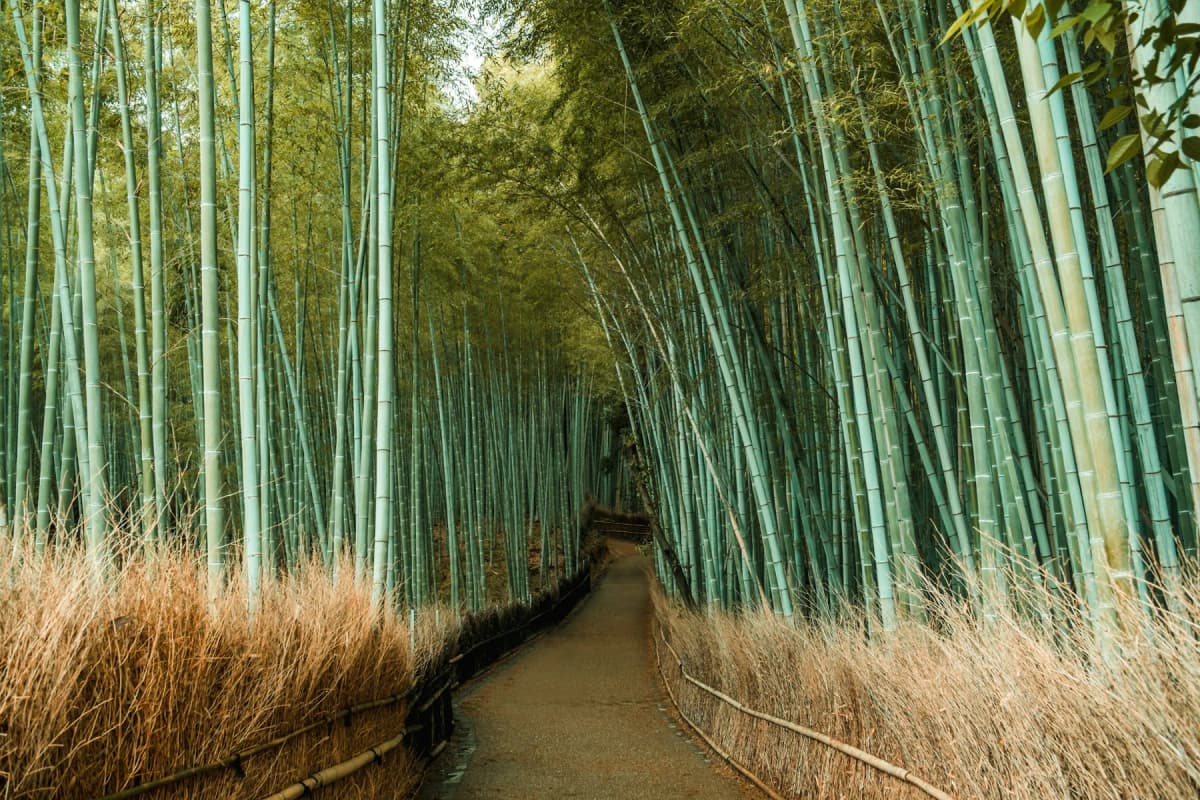 Photo: Adam Dillon on Unsplash
Arashiyama sits on Kyoto's western edge, where the river meets the hills: the bamboo grove, Tenryu-ji temple and Togetsukyo Bridge. Most people visit on a day trip and meet the crowds. The grove is open around the clock and free, so guests who sleep nearby can walk it soon after sunrise with very few people around. The area also has some of the city's best riverside and hot-spring ryokan.
As a base for a whole Kyoto trip it is too far out. Shops and restaurants close early, and every other sight means a train ride into town first.
- Good for: one night in a ryokan at the start or end of your stay, honeymoons, nature.
- Less good for: your only base, tight budgets, evenings.
- Getting there: JR Sagano line from Kyoto Station to Saga-Arashiyama, the Randen tram, or the Hankyu line from Downtown with one change at Katsura.
Ryokan, machiya or hotel?
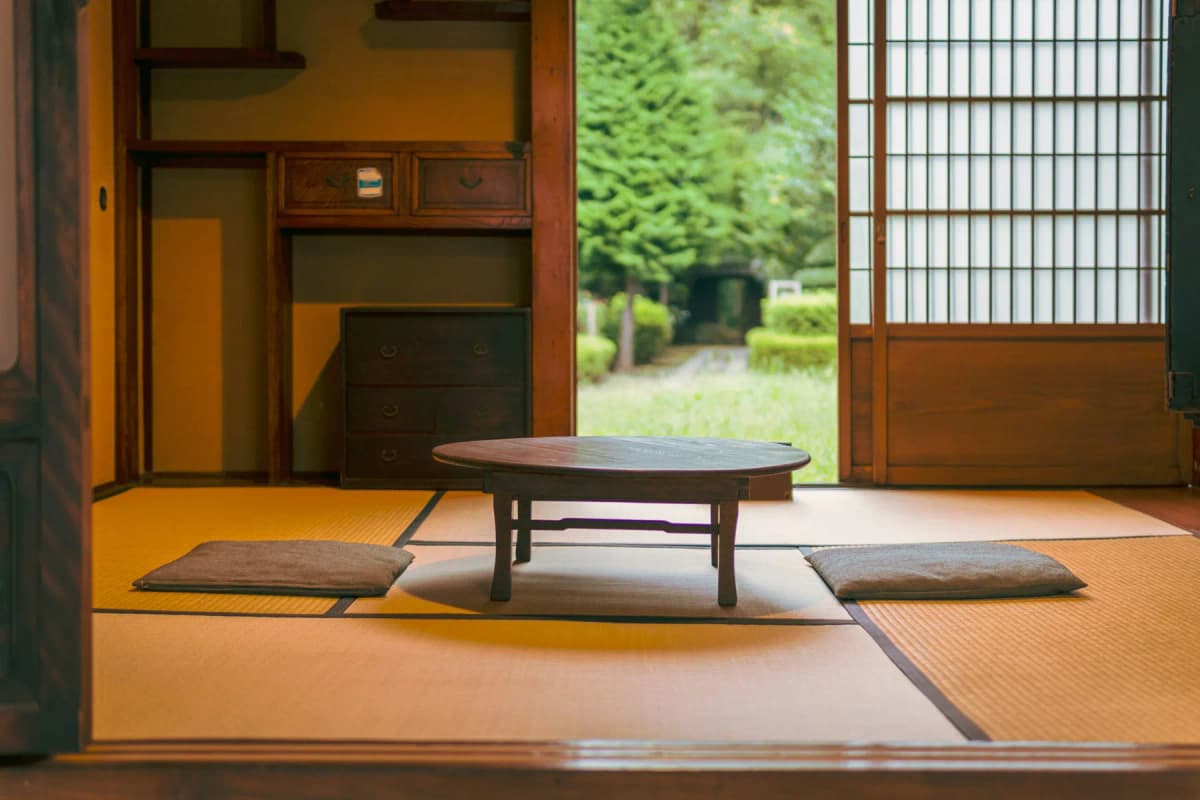 Photo: Se. Tsuchiya on Unsplash
Kyoto is the best place in Japan to try traditional accommodation, and you don't have to do it for the whole stay.
| Type | What it is | Good to know |
|---|---|---|
| Hotel | Western-style rooms, from compact business hotels to luxury brands | The simplest choice. Rooms at the cheaper end are small, so check the size in square metres |
| Ryokan | Traditional inn with tatami floors and futon bedding, often with dinner and breakfast | Usually priced per person, not per room. Fixed dinner times and earlier check-in are normal |
| Machiya | A restored wooden townhouse rented as a whole house | Good for families and groups. Thin walls and steep stairs are part of the deal, and neighbours live next door, so keep noise down |
| Hostel or capsule | Dorm beds or sleeping pods | The cheapest option, and Kyoto has some very well-designed ones |
A plan that works well: a hotel Downtown or near the station for most nights, plus one night in a ryokan in Gion, Northern Higashiyama or Arashiyama. One night is enough for the dinner, the bath and the futon, and it keeps the cost under control.
How much does it cost to stay in Kyoto?
Kyoto is one of Japan's most expensive cities to sleep in, and prices move a lot with the season. Published guides disagree on the numbers, so treat these as rough ranges per room, per night, outside the peak weeks:
- Hostel or capsule bed: about ¥4,000 to ¥6,000 per person.
- Business hotel: from about ¥8,000, more often ¥12,000 to ¥20,000 for a double.
- Upscale hotel: ¥30,000 and up.
- Ryokan with dinner and breakfast: from about ¥15,000 per person at simple inns to ¥50,000 or more per person at the famous ones.
In cherry blossom season and in November these figures climb sharply. Industry data for 2025 put the average rate at Kyoto's full-service city hotels above ¥40,000 a night in both April and November.
The Kyoto accommodation tax (new rates from March 2026)
Kyoto charges an accommodation tax on every stay, per person, per night. The city raised it on 1 March 2026 and it is now the highest in Japan at the top end. The amount depends on the room charge per person, with meals excluded:
| Room charge per person, per night | Tax per person, per night |
|---|---|
| Under ¥6,000 | ¥200 |
| ¥6,000 to ¥19,999 | ¥400 |
| ¥20,000 to ¥49,999 | ¥1,000 |
| ¥50,000 to ¥99,999 | ¥4,000 |
| ¥100,000 or more | ¥10,000 |
For most travellers that means ¥400 to ¥1,000 each per night. It is often collected at the hotel and not shown in the price you see when booking, so read the small print.
When to book
Kyoto fills up earlier than anywhere else in Japan. The busiest periods are:
- Cherry blossom: late March to mid-April.
- Autumn colour: mid to late November.
- Golden Week: late April to early May.
- Gion Matsuri: July, with the main float processions on 17 and 24 July.
- New Year.
For those weeks, book three to six months ahead, and earlier still for well-known ryokan. If Kyoto is full or over budget, Osaka is about 30 minutes away by train and usually cheaper. Our Kyoto vs Osaka guide covers how to do that well.
Getting to your Kyoto hotel
Still pricing flights? Compare fares into Osaka (Kansai, KIX) and Tokyo before you fix your route:
From Kansai Airport (KIX): the JR Haruka limited express runs direct to Kyoto Station about every 30 minutes and takes 75 to 85 minutes. Depending on the seat and the discount ticket you use, expect to pay roughly ¥3,000 to ¥3,600 one way. If you land late, travel as a family or just don't want to handle trains after a long flight, you can pre-book a private transfer from the airport to your hotel door.
From Tokyo: the fastest Nozomi Shinkansen takes about 2 hours 15 minutes to Kyoto Station. If you are starting your trip there, see our guide to where to stay in Tokyo.
From Kyoto Station to your hotel: take the Karasuma subway line for Downtown and Central Kyoto. For Gion and Higashiyama, a taxi is the easy option with bags and the fare is modest for two or more people sharing.
Send your luggage ahead. Japan's luggage-forwarding services (takkyubin) will move your suitcases from your last hotel to your Kyoto hotel, usually by the next day. Ask at reception the day before you travel. There are also coin lockers and staffed baggage counters at Kyoto Station if you arrive before check-in.
Getting around from your base
- Subway: two lines. The Karasuma line runs north to south through Kyoto Station and Downtown. The Tozai line runs east to west past Nijo Castle and Higashiyama. They cross at Karasuma Oike.
- Buses: they reach the sights the trains don't, such as Kinkaku-ji and Ginkaku-ji. The flat fare in the central zone is ¥230. Buses get very crowded in peak season, so use trains where you can.
- Day pass: the Subway and Bus One-Day Pass costs ¥1,100 for adults and pays for itself at about five rides.
- Trains to the edges: JR for Fushimi Inari and Arashiyama, Keihan for Fushimi Inari and Gion, Hankyu for Arashiyama and Osaka.
- On foot and by bike: central Kyoto is flat and laid out as a grid, so walking and cycling are often the fastest way between nearby sights.
Areas to skip on a first trip
- Far north or far south of the centre (around Kinkaku-ji, or beyond Fushimi): cheaper, but you will spend a lot of your day on buses.
- Anywhere more than about ten minutes' walk from a station, unless it is a ryokan you have chosen on purpose. A cheap room with a long bus ride each way is rarely a saving.
- Staying in Osaka just to save a little: it works, and many people do it, but you lose the early mornings and evenings that make Kyoto special. Do it when the saving is large or Kyoto is sold out.
Before you book
- Check the room size. Under about 15 m² is tight for two people with suitcases.
- Check the bed type. A "semi-double" is narrower than a standard double.
- Check who the price is for. Ryokan rates are normally per person and include meals.
- Look at the walk from the station on a map, including hills if you are booking in Higashiyama.
- Sort your insurance before you fly. Medical care in Japan is excellent but not free for visitors. You can compare travel insurance plans with EKTA in a couple of minutes.
Frequently asked questions
What is the best area to stay in Kyoto for first-timers? Downtown Kyoto, around Shijo-Kawaramachi. It is central, has the most restaurants and shops, sits on the subway and two private rail lines, and is a ten-minute walk from Gion.
Is it better to stay in Gion or near Kyoto Station? Gion is better for atmosphere and for early or late walks through the old streets. Kyoto Station is better for short stays, day trips and travelling with luggage, and it is usually cheaper. With three nights or more, Gion or Downtown gives you a nicer trip. With one or two, the station is more efficient.
How many nights should I stay in Kyoto? Three nights suits most first visits. That gives you time for Fushimi Inari, Higashiyama and Kiyomizu-dera, Arashiyama and Kinkaku-ji at a comfortable pace. Two nights works if you start early each day.
Is it worth staying in a ryokan in Kyoto? Yes, for one night. You get the tatami room, the bath and usually a multi-course dinner. Beyond one or two nights the fixed meal times and the price become limiting for most people.
Should I stay in Kyoto or Osaka? Stay in Kyoto if temples, gardens and early mornings are the point of your trip. Stay in Osaka for food, nightlife and lower prices. With five nights or more, split your stay. We compare both in detail in Kyoto vs Osaka.
How much is the hotel tax in Kyoto? Since 1 March 2026 it is ¥200 to ¥10,000 per person, per night, depending on the room charge. Most mid-range stays pay ¥400 or ¥1,000 per person, per night.
Can I take a suitcase on Kyoto buses? Small bags are fine. The city asks visitors not to bring large suitcases on board, because the buses are often full. Use the subway, a taxi or a luggage-forwarding service on arrival and departure days.
Is Arashiyama a good place to stay? For one night, yes, because you can see the bamboo grove before the crowds arrive. As a base for the whole trip it is too far from the rest of the city.
How we researched this guide
This guide is based on research using official sources such as the Kyoto City Official Travel Guide, the Kyoto City transport bureau, JR West and the Japan National Tourism Organization, plus current traveller feedback and published hotel-industry data. Prices, taxes and timetables change, so check the latest information before you book. Found something out of date? Let us know.
Planning more of Japan? Browse all our Japan guides.