Rome to Amalfi Coast: Train, Ferry, Bus and Car (2026)
October 11, 2026 · Italy
This post contains affiliate links. We may earn a commission if you book through them, at no extra cost to you. Disclaimer.
The fastest way to get from Rome to the Amalfi Coast is a high-speed train from Roma Termini to Salerno, which takes about 1.5 to 2 hours, followed by a ferry to Amalfi (about 35 minutes) or Positano (about 70 minutes). Door to door it takes around three to four hours and costs roughly €30 to €60 per person. No train goes to the coast itself, and outside the ferry season you finish the trip by SITA bus.
The distance is about 275 km by road. The first part is easy, because Rome has frequent fast trains to both Naples and Salerno. The last part is where plans go wrong: the coast has one narrow road, the ferries are seasonal and the buses are crowded in summer. This guide covers every option, which one suits which town and whether the trip works as a day out from Rome.
Rome to Amalfi Coast at a glance
| Option | Total time | Approx. cost per person | Best for |
|---|---|---|---|
| High-speed train to Salerno + ferry | 3 to 4 hours | €30 to €60 | Most travellers, April to October |
| High-speed train to Salerno + SITA bus | 3.5 to 4.5 hours | €25 to €45 | Winter, rough seas, tight budgets |
| Train to Naples + Circumvesuviana + SITA bus | 4 to 5 hours | €20 to €40 | Staying in Sorrento or Positano on a budget |
| Direct seasonal bus from Roma Tiburtina | about 4.5 to 5 hours | about €26 | No changes, summer only |
| Private transfer | about 3.5 hours | about €660 to €720 per car | Groups, heavy luggage, late arrivals |
| Rental car | 3.5 to 4 hours plus parking | fuel, tolls and parking | Rarely worth it in season |
Train fares in the table assume you book ahead. Tickets bought on the day cost more.
By train and ferry via Salerno (the best route)
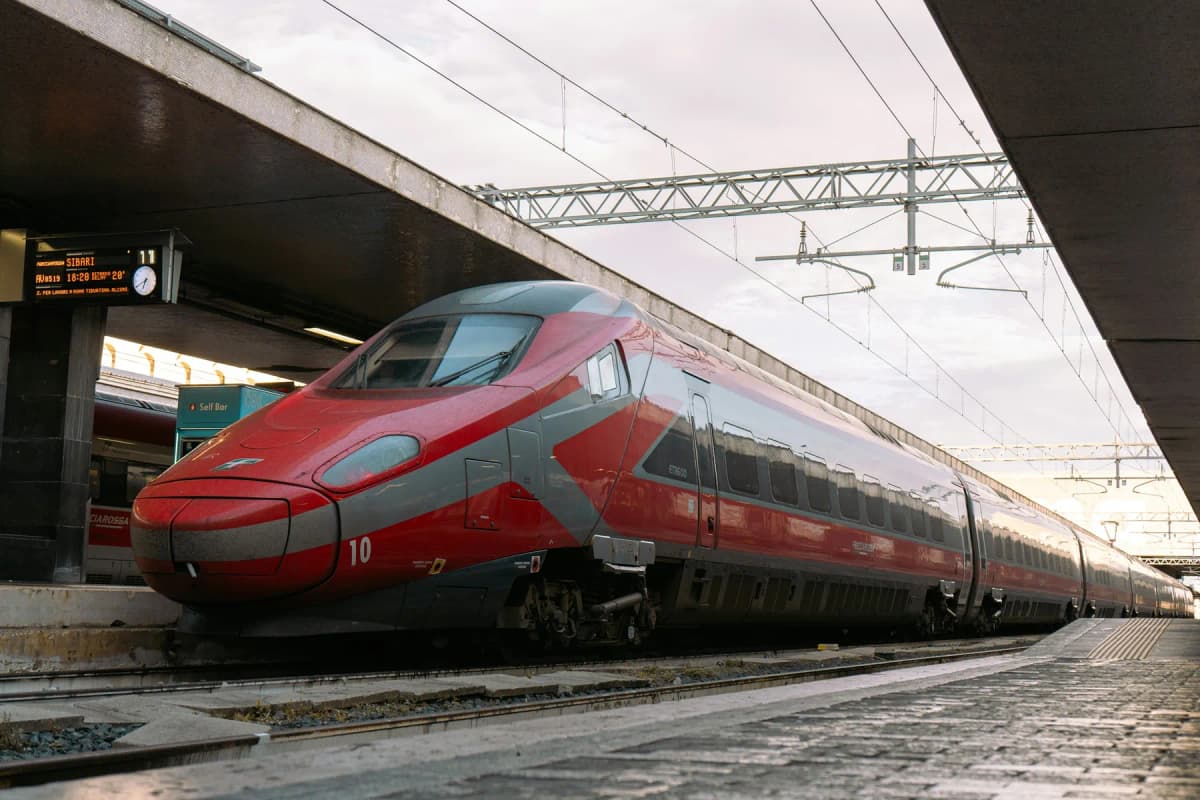 Photo:
 This is the route to use between April and October. It has one change, the change is simple, and you arrive at the coast by sea.
Step 1: Rome to Salerno by high-speed train
Two companies run fast trains from Roma Termini to Salerno: Trenitalia, with its Frecciarossa services, and Italo. The fastest trains take about 1 hour 26 minutes and most take between 1.5 and 2 hours. Some also stop at Roma Tiburtina, which is handy if you are staying on that side of the city.
Advance fares start at roughly €18 to €25 one way and climb as the date gets closer. Both companies sell tickets on their own websites and apps, and seats are reserved, so there is nothing to validate. Italo lists the station as "Salerno (Amalfi Coast)". It is the same Salerno station that Trenitalia uses.
Cheaper regional and Intercity trains also run, but they take three hours or more, so they only make sense if the fast trains are sold out or very expensive.
Step 2: Salerno to Amalfi or Positano by ferry
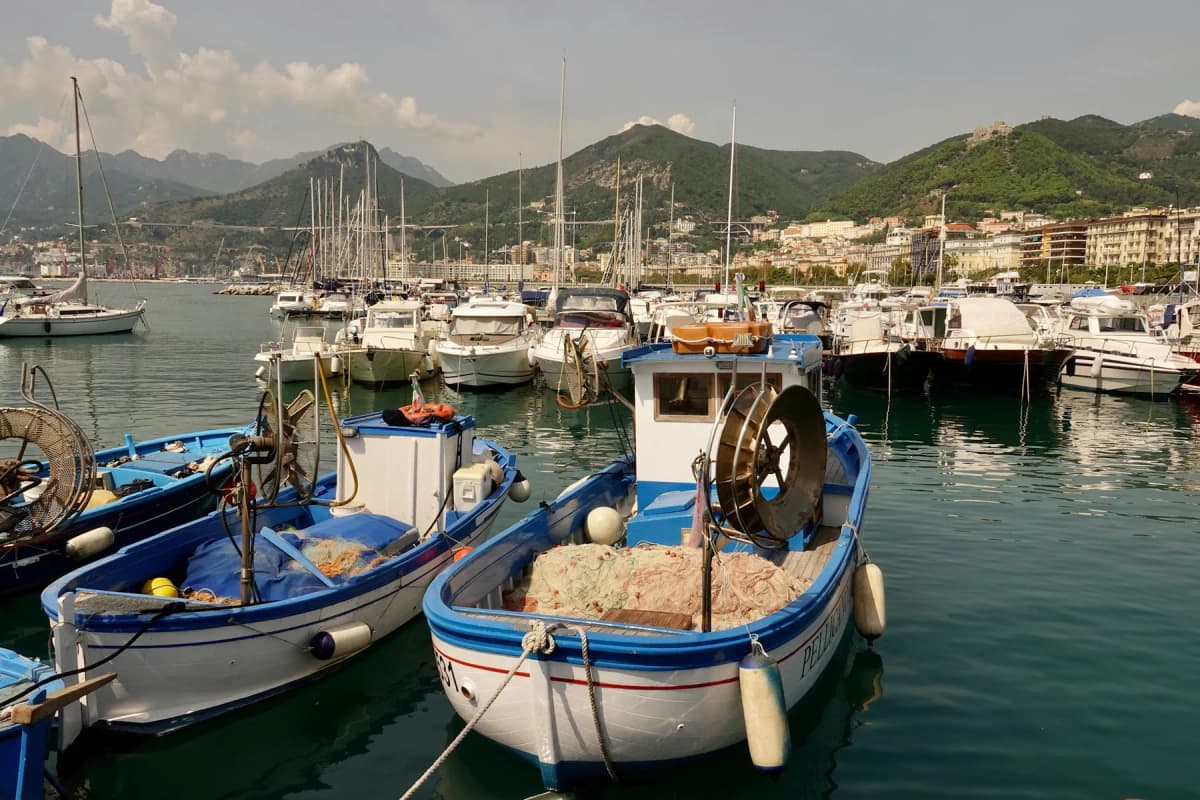 Photo:
 Ferries to the coast leave from two places in Salerno. The Piazza della Concordia pier is a few minutes' walk straight down from the station to the seafront. Molo Manfredi, used by some sailings, is about a 20 minute walk or a short taxi ride further west. Your ticket says which pier, so check it before you set off.
Several companies work the route, among them Travelmar, NLG and Alicost. In season, boats run roughly between 08:00 and 18:00.
| Ferry | Time | Approx. fare |
|---|---|---|
| Salerno to Amalfi | about 35 minutes | €8 to €12 |
| Salerno to Positano | about 70 minutes | €12 to €17 |
Large suitcases usually cost €2 to €3 extra. Some sailings also call at Vietri, Cetara, Maiori and Minori, which helps if you are staying at the eastern end of the coast.
Three things to know before you rely on the ferry:
- It is seasonal. Services start in early April and end in late October or early November. There are none in winter.
- It stops in rough seas. If the boats are cancelled, the SITA bus is the fallback, so allow for that on days when you have a fixed check-in or a dinner booking.
- The last boat is early. A train that reaches Salerno after about 17:30 will usually miss the last ferry. From Rome, aim to be on a train by early afternoon at the latest.
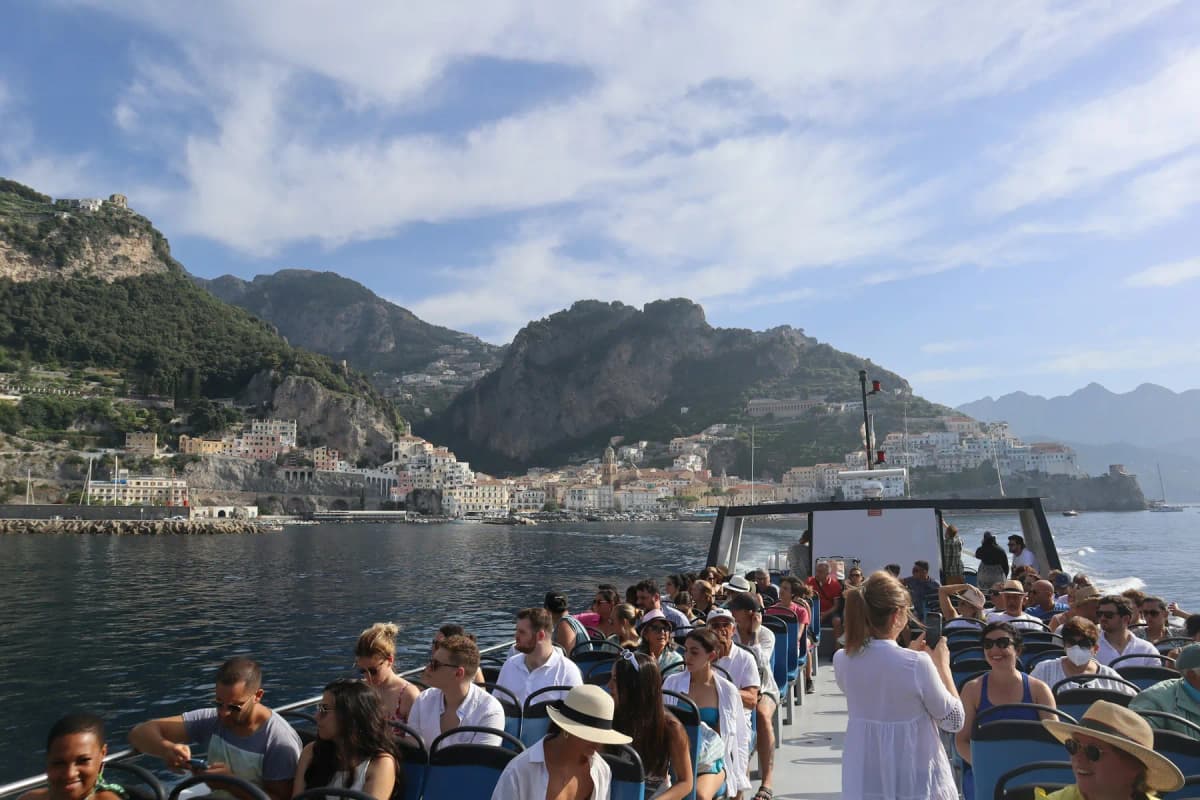 Photo: Mihaela Claudia Puscas on Unsplash
By train and SITA bus via Salerno
When the ferries are not running, take the same train to Salerno and continue on the blue SITA Sud bus to Amalfi. The ride takes about 1 hour to 1 hour 15 minutes, costs a few euros and leaves every 30 to 60 minutes from the stops near the station.
You cannot buy a ticket from the driver. Get one at a tobacconist, bar or newsstand near the station before you queue, and stamp it in the machine when you board. The bus follows the coast road through Vietri, Cetara, Maiori and Minori, so sit on the left for the sea views. In summer it is often standing room only, and with big luggage the ferry is far more comfortable.
For Positano, change in Amalfi to the Sorrento-bound SITA bus, which takes about another 40 minutes. For Ravello, change in Amalfi to line 5110, about 25 to 30 minutes.
Are there trains from Rome to the Amalfi Coast?
No train runs to Amalfi, Positano, Praiano or Ravello, because there is no railway along the coast. The closest you can get by rail is Salerno at the eastern end or Sorrento at the western end, and you finish the trip by ferry, bus or car.
One station does carry the name. Vietri sul Mare-Amalfi is a small stop on the regional line a few minutes before Salerno, in the first town of the coast. Booking sites list Rome to Vietri from about €18 in roughly 2 hours 35 minutes with a change. It is useful if you are staying in Vietri, but for Amalfi and Positano it is easier to continue to Salerno, where the ferries and most buses start.
If a booking site sells you a "train from Rome to Amalfi Coast", look at where the ticket actually ends. It will be Salerno, Vietri or a combined train and bus fare.
Via Naples and Sorrento (for Positano and Sorrento)
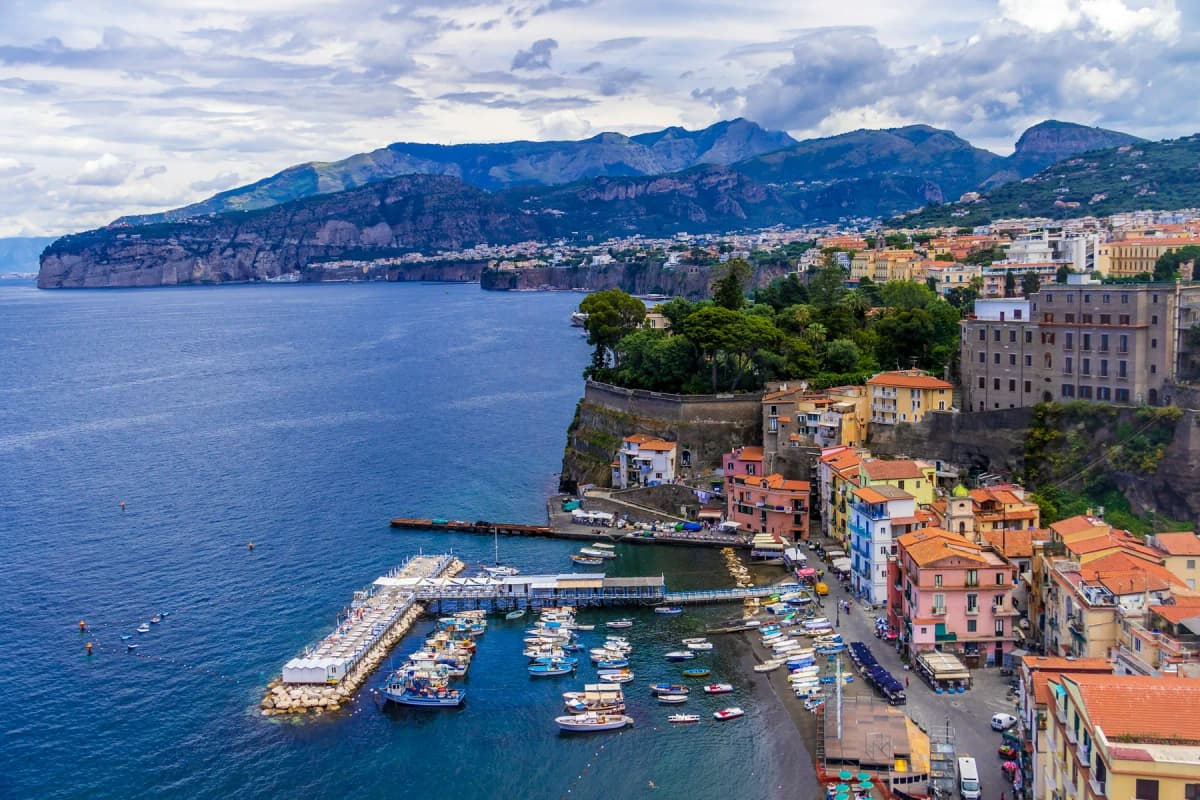 Photo: Nick Fewings on Unsplash
This route makes sense if you are staying in Sorrento, want to stop at Pompeii on the way, or are heading to Positano outside the ferry season.
- Rome to Napoli Centrale. High-speed trains take about 1 hour 10 to 1 hour 15 minutes and run two or three times an hour at busy times. Advance fares start at about €9 to €15.
- Naples to Sorrento. The Circumvesuviana commuter train leaves from Napoli Garibaldi, the lower level of the same station. It takes about 70 to 75 minutes, costs about €4 to €5 and runs roughly every 30 minutes. It is basic, has no luggage space and can be crowded, so watch your bags. The Campania Express is a tourist service on the same line with reserved seats and air conditioning for about €15, running a few times a day in season.
- Sorrento to Positano or Amalfi. SITA buses leave from outside Sorrento station. Positano is 35 to 60 minutes away (€2.40) and Amalfi 75 to 100 minutes (€3.40), depending on traffic.
In season there are also ferries from Naples to Positano and Amalfi, leaving from Molo Beverello. Sailings are limited, so check the day's timetable before you plan around one.
Overall this route is cheaper than going through Salerno and slower by an hour or more. For Amalfi town and anywhere east of it, Salerno is the better gateway.
By direct bus from Rome
A direct coach links Rome with the coast in summer. According to the 2026 timetable published locally, the Marozzi service runs from 1 June to 30 September on Mondays, Wednesdays, Fridays, Saturdays and Sundays. It leaves Roma Tiburtina bus station at 7:00, reaches Positano at about 11:30 and Amalfi at about 12:00, and costs about €26 one way. The return leaves the coast in the early afternoon.
The appeal is that you load your bag once and get off in the town. The limits are the single daily departure, the summer-only season and a journey that depends on coast road traffic. The published information says there is no toilet on board. Book about a week ahead in July and August, and confirm the days and times before you rely on them, because the schedule is set each year.
By private transfer
A private car from Rome to Positano or Amalfi covers roughly 270 to 290 km and takes about 3 hours 15 minutes to 3.5 hours in normal traffic. One operator's 2026 list price is €660 for a saloon car carrying up to three people and €720 for a minivan carrying up to eight, with a supplement of about 20% at night. Prices vary between companies, so compare.
For a couple that is hard to justify against a train and ferry at a tenth of the cost. For a family or a group of six to eight with luggage, the per-person price comes close to first-class train fares, and you are collected at your hotel or at the airport. You can check transfer prices and book ahead so the fare is fixed before you travel.
A cheaper mix is to take the train to Naples or Salerno and book a car only for the last stretch, which takes roughly 1 to 2 hours depending on the town.
Cars cannot reach most hotel doors in Positano. Drivers stop on the main road, usually at Chiesa Nuova or Sponda, and porters carry bags down the steps for a fee.
By rental car
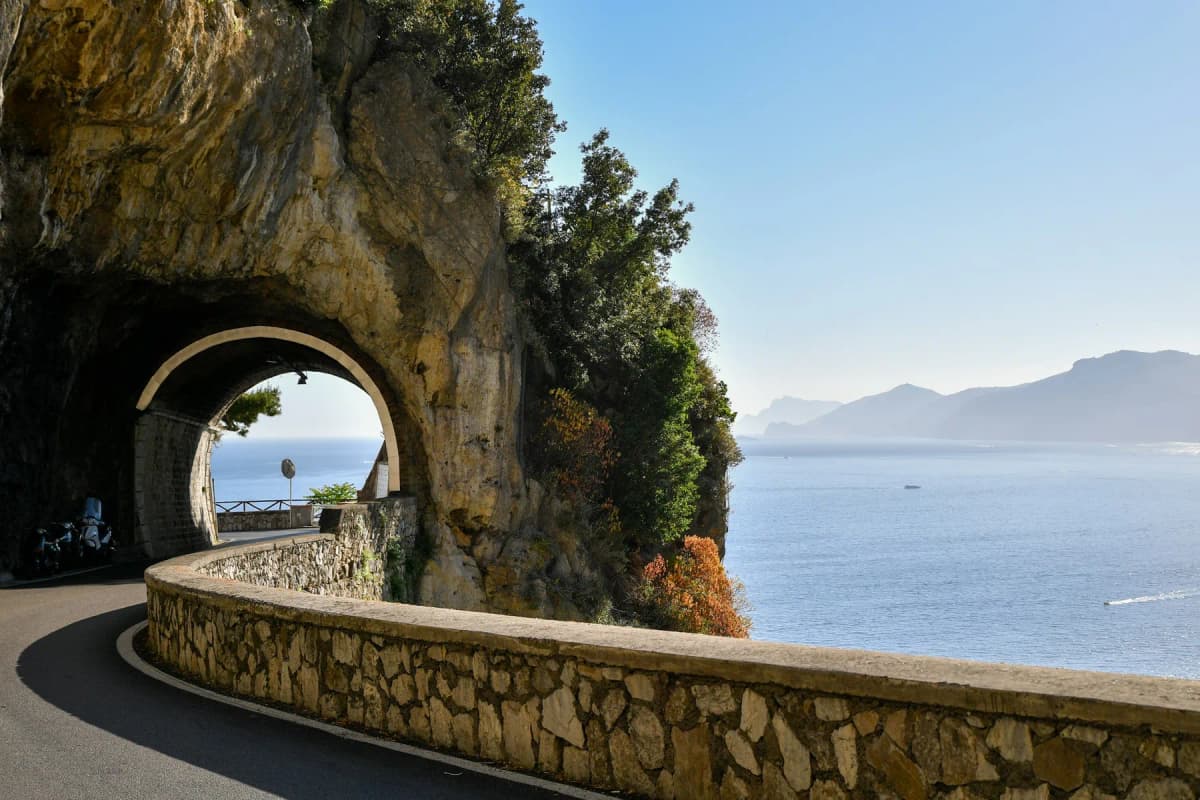 Photo: Margo Evardson on Unsplash
The drive is about 275 km and takes 3.5 to 4 hours without stops: the A1 motorway south to Naples, then the A3 towards Salerno, leaving at Vietri sul Mare for Amalfi or at Castellammare di Stabia for Sorrento and Positano. The motorways are tolled.
The motorway part is straightforward. The coast road is not. The SS163 is narrow and winding, with buses that need both lanes on the bends, and parking in Amalfi and Positano is scarce and expensive. Many hotels have no parking of their own.
What is the odd and even rule on the Amalfi Coast?
The odd and even rule is an alternating number plate system on the SS163 coast road in peak periods. Between 10:00 and 18:00, cars whose plate ends in an odd number may not drive on odd dates, and cars whose plate ends in an even number may not drive on even dates.
It has applied around Easter, the late April and early May holidays, weekends and public holidays in June and July, and every day in August and September. Residents, taxis and buses are exempt, and so are hotel guests on their arrival and departure days if they can show a booking. Ordinary rental cars are not exempt. The exact dates are set by ordinance each year, so check the current rules with your hotel before you drive.
A car is worth having only if the Amalfi Coast is one stop on a longer road trip through the south, or if you are visiting between November and March, when the road is quiet and the rule does not apply.
From Rome's airports
Fiumicino (FCO). Take the Leonardo Express to Roma Termini, about 32 minutes for €14, and change to a train for Salerno or Naples. Some timetables also include a direct high-speed train from the airport station to Naples, which saves the change, so check when you book. Allow at least 45 minutes at Termini between trains if you have bags.
Ciampino (CIA). Airport buses reach Termini in about 40 minutes for roughly €4 to €6.
If you land after about 13:00, you are unlikely to reach Salerno in time for the last ferry. Either use the bus from Salerno, book a transfer, or spend the night in Rome or Naples and travel in the morning. Naples airport is far closer to the coast than either Rome airport, so compare flights into Naples as well.
Which route for which town?
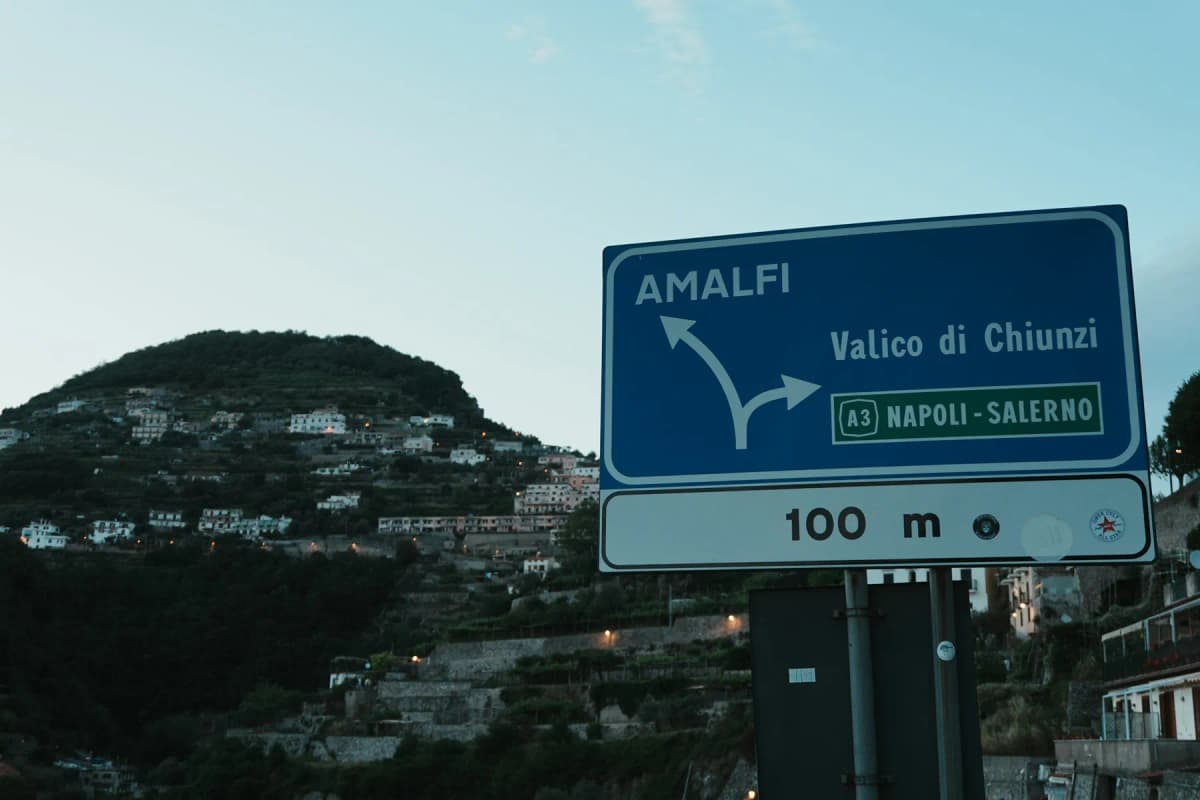 Photo: Ariel Automat on Unsplash
| Staying in | Best route from Rome |
|---|---|
| Amalfi, Atrani | Train to Salerno, ferry to Amalfi (bus in winter) |
| Positano | Train to Salerno, ferry to Positano; or via Naples and Sorrento by bus in winter |
| Praiano | Train to Salerno, ferry to Amalfi or Positano, then SITA bus or taxi |
| Ravello | Train to Salerno, ferry or bus to Amalfi, then bus 5110 or a taxi |
| Minori, Maiori, Cetara, Vietri | Train to Salerno, then ferry or SITA bus |
| Sorrento | Train to Naples, then Circumvesuviana or Campania Express |
Arriving on the coast
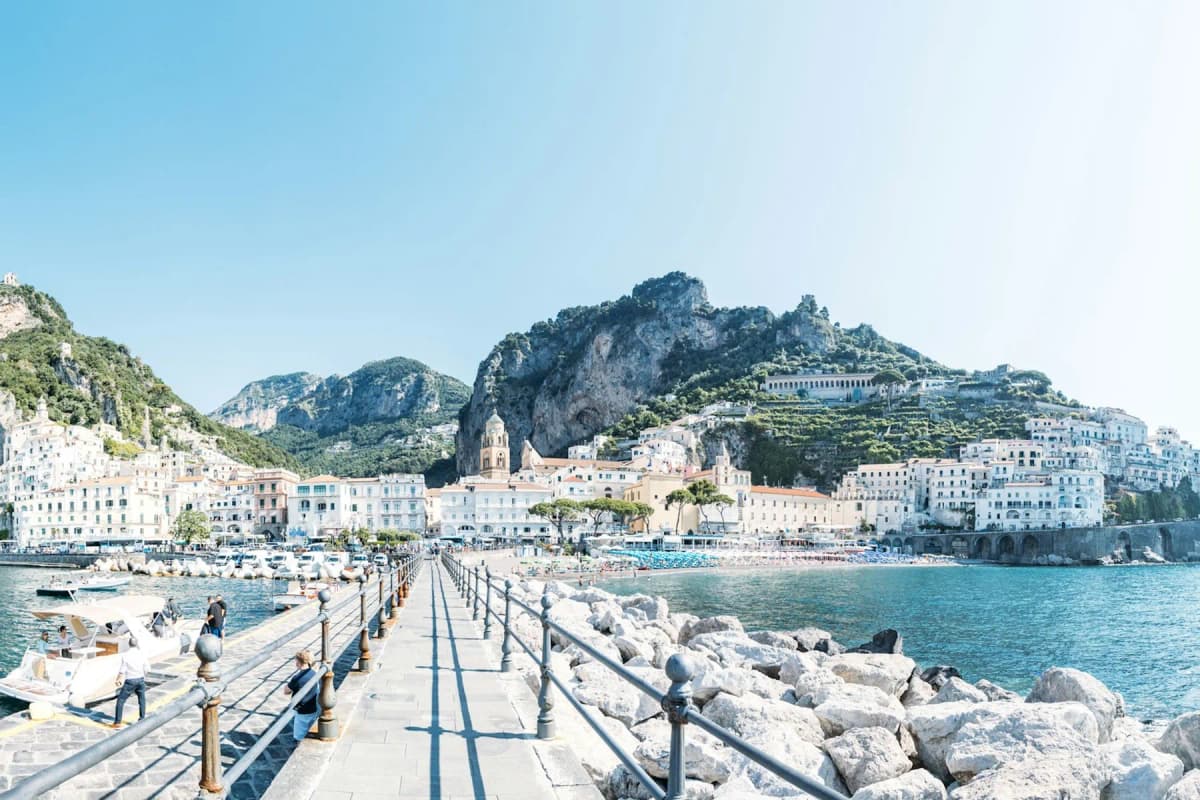 Photo: Rafael Peier on Unsplash
Amalfi. Ferries dock at the pier beside Piazza Flavio Gioia, which is also the bus terminus and the taxi rank. The old town starts across the road, and most central hotels are within a ten minute walk on fairly level ground.
Positano. Ferries land next to Spiaggia Grande at the bottom of the town. Almost every hotel is uphill by steps. Porters wait at the pier and charge per bag, which is money well spent with a suitcase. Buses stop at the top of the town, at Chiesa Nuova and Sponda.
If you arrive early. Hotels will usually hold bags before check-in. If you want to break the journey for a few hours in Salerno or Naples, luggage storage points near the stations take bags by the day.
Can you do the Amalfi Coast as a day trip from Rome?
Yes, but it is a long day of 12 to 13 hours with about seven of them in transit. It works only between April and October, when the ferries run, and only if you keep the plan small.
A realistic day on your own looks like this: a train from Termini at around 7:00, Salerno by about 9:00, the ferry to Amalfi, two hours for the cathedral and the old town, the ferry on to Positano for lunch and a walk, then a mid-afternoon ferry back to Salerno and a train to Rome that arrives in the evening. Book the train tickets in advance and buy the return ferry as soon as you land.
If you would rather not manage the connections, an organised day tour from Rome to Amalfi and Positano follows the same train and ferry route with a guide and takes about 12.5 hours. Tours of this kind are listed from roughly $165 to $300 per person depending on what is included.
One day shows you the view and little else. If you can spare two nights, the trip is far better value, and three to five days lets you add Ravello, the Path of the Gods and Capri. Our Amalfi Coast itinerary lays out the days.
Practical tips
- Book fast trains early. The cheapest fares on both Trenitalia and Italo sell out first, and prices rise as the date approaches.
- Leave slack in Salerno. Give yourself 30 to 45 minutes between the train and the ferry. Trains run late often enough to matter, and the pier is a walk away.
- Check the pier. Piazza della Concordia and Molo Manfredi are about 20 minutes apart on foot.
- Validate paper tickets. Regional train, Circumvesuviana and SITA tickets must be stamped. High-speed tickets with a seat reservation do not.
- Travel light. Every town on the coast has steps, and bags cost extra on ferries.
- Sit on the right side. On the ferry from Salerno, the coast is on the right. On the bus from Salerno, the sea is on the left.
- Have a rough-sea plan. Know the time of the next SITA bus in case the ferry is cancelled.
- Get mobile data. Timetables and platform changes are easier to check on the move. An Italy eSIM from Airalo can be installed before you leave home.
- Insure the trip. Missed connections and cancelled boats are the usual problems on this route. EKTA travel insurance is one option to compare.
Rome to Amalfi Coast FAQ
How long does it take to get from Rome to the Amalfi Coast?
About three to four hours by high-speed train and ferry via Salerno, about 3.5 hours by private car and four to five hours by the routes through Naples and Sorrento. The direct summer bus takes about 4.5 to 5 hours.
Is there a train from Rome to the Amalfi Coast?
Not to the coastal towns. Trains go to Salerno and to the small Vietri sul Mare-Amalfi station at the eastern end, or to Sorrento via Naples. From there you continue by ferry or bus.
Is there a ferry from Rome to the Amalfi Coast?
No. Rome is not on this ferry network. The ferries start from Salerno and, with fewer sailings, from Naples and Sorrento.
What is the cheapest way to get from Rome to the Amalfi Coast?
An advance fare to Naples, the Circumvesuviana to Sorrento and a SITA bus can come to about €20 in total, but it takes four to five hours. The direct summer bus at about €26 and an advance train to Salerno plus the SITA bus are the next cheapest.
Is it better to go through Naples or Salerno?
Salerno is better for Amalfi, Ravello and the eastern towns, and usually for Positano in ferry season. Naples and Sorrento are better for Sorrento itself and for Positano in winter.
Is 1 day enough for the Amalfi Coast?
One day is enough to see Amalfi and Positano briefly, but not enough to enjoy them. Two nights is a sensible minimum and five days covers the whole coast.
When should you not go to the Amalfi Coast?
Avoid August if you dislike crowds and high prices, and avoid November to March if you want beaches and ferries, because many hotels and all the regular boat services shut down for winter.
Should you rent a car in Rome for the Amalfi Coast?
Usually not. Traffic, parking costs and the alternating number plate rule make a car a burden from spring to autumn. The train and ferry are faster and less stressful.
How we researched this guide
This guide is based on operator and official sources, not on a single trip. Train times and fare ranges come from Trenitalia, Italo and current booking listings for Rome to Salerno, Naples and Vietri sul Mare. Ferry times, piers, fares and season dates were compared across the 2026 listings of the companies sailing from Salerno. Bus information comes from SITA Sud fares and the locally published 2026 timetable for the direct Rome coach. Transfer prices are one operator's published 2026 rates, and the driving restriction is described from published summaries of the yearly ordinance, which is why we suggest confirming the dates.
Fares and schedules on this route change with the season. Check the train and ferry times again in the week before you travel.
Planning the rest of the trip? See all our Italy travel guides.