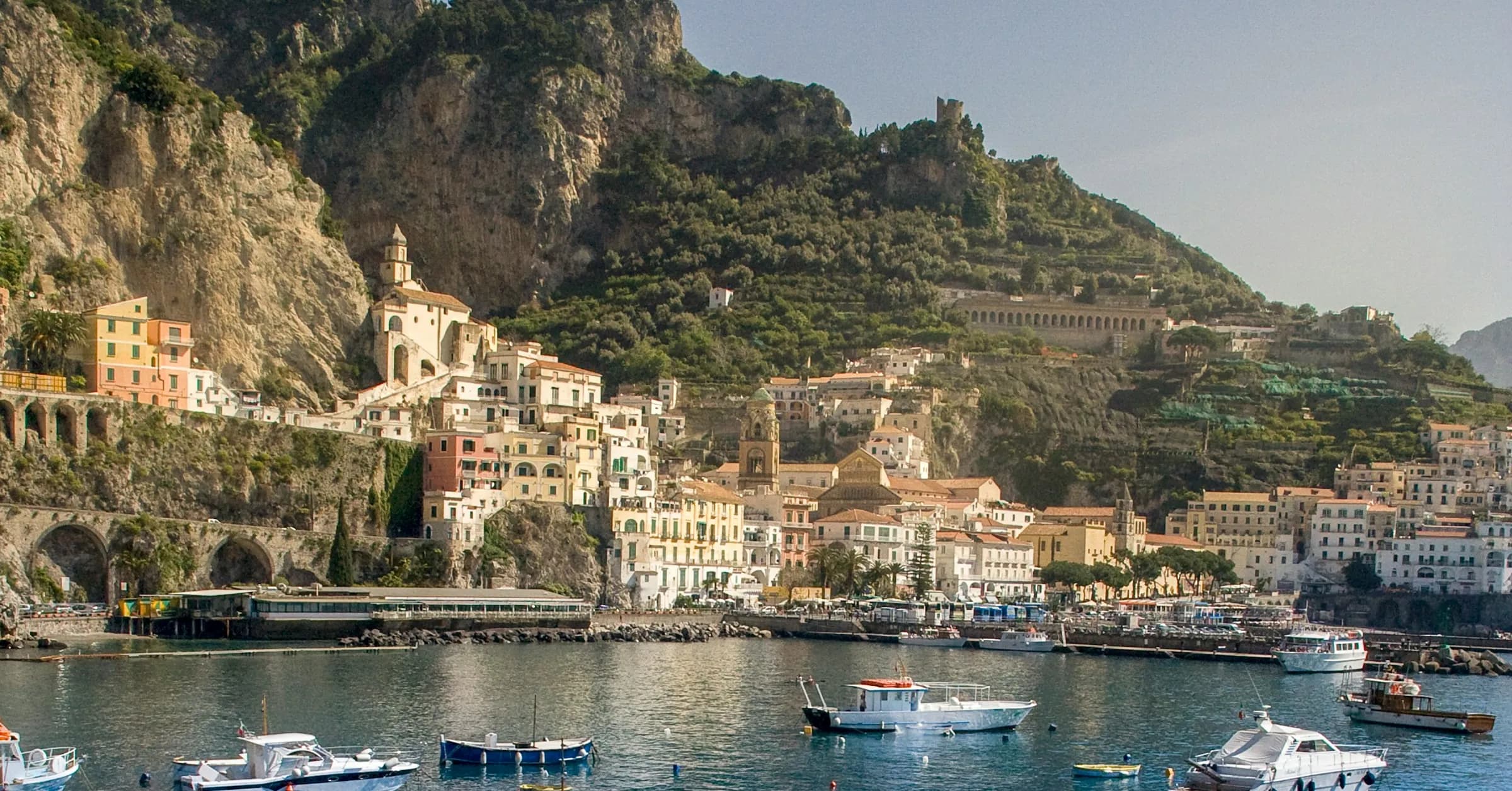
Amalfi Coast Itinerary: 5 Days by Ferry and Bus (2026)
October 11, 2026 · Italy
This post contains affiliate links. We may earn a commission if you book through them, at no extra cost to you. Disclaimer.
The best Amalfi Coast itinerary for a first visit is five days from one base: a day each for Amalfi and Atrani, Positano and Fornillo beach, Ravello, the Path of the Gods and Capri. You do not need a car, because ferries and SITA buses link every stop between April and October. Three days covers Amalfi, Positano and Ravello if that is all the time you have.
The coast is only about 50 km long, but it is slow to move along. One narrow road, the SS163, runs from Positano to Vietri sul Mare, and in summer the buses on it are full and the traffic crawls. The plan below keeps each day to one area, uses ferries where they are faster and leaves the afternoons loose enough for a swim. Prices and times are for the 2026 season and were checked against official sites and current timetables where they exist.
Amalfi Coast itinerary at a glance
| Day | Where | Main things to do | How to get there from Amalfi |
|---|---|---|---|
| 1 | Amalfi and Atrani | Cathedral, old town, walk to Atrani, swim | On foot |
| 2 | Positano | Lanes, Spiaggia Grande, Fornillo beach | Ferry, about 25 minutes |
| 3 | Ravello and Minori | Villa Rufolo, Villa Cimbrone, walk down to the sea | Bus, about 25 to 30 minutes |
| 4 | Path of the Gods | Hike from Bomerano to Nocelle, steps down to Positano | Bus to Bomerano, about 45 minutes |
| 5 | Capri | Marina Grande, Anacapri, Monte Solaro, boat trip | Ferry, about 50 to 75 minutes |
| Quick answer | |
|---|---|
| Ideal length | 5 days; 3 days is the workable minimum |
| Best base | Amalfi for transport, Positano for views, Praiano or Atrani for lower prices |
| Best months | May, June, September and early October |
| Car needed? | No, and it is a burden in summer |
| Ferry season | Roughly early April to late October or early November |
| Nearest train station | Salerno (Sorrento for the western end) |
Before you start: three decisions
Where should you base yourself on the Amalfi Coast?
Amalfi is the most practical base for this itinerary. It sits in the middle of the coast, it is the hub for SITA buses and it has the busiest ferry pier, so every day in the plan starts with a single direct ride. It is also flat by local standards, which matters when you arrive with luggage.
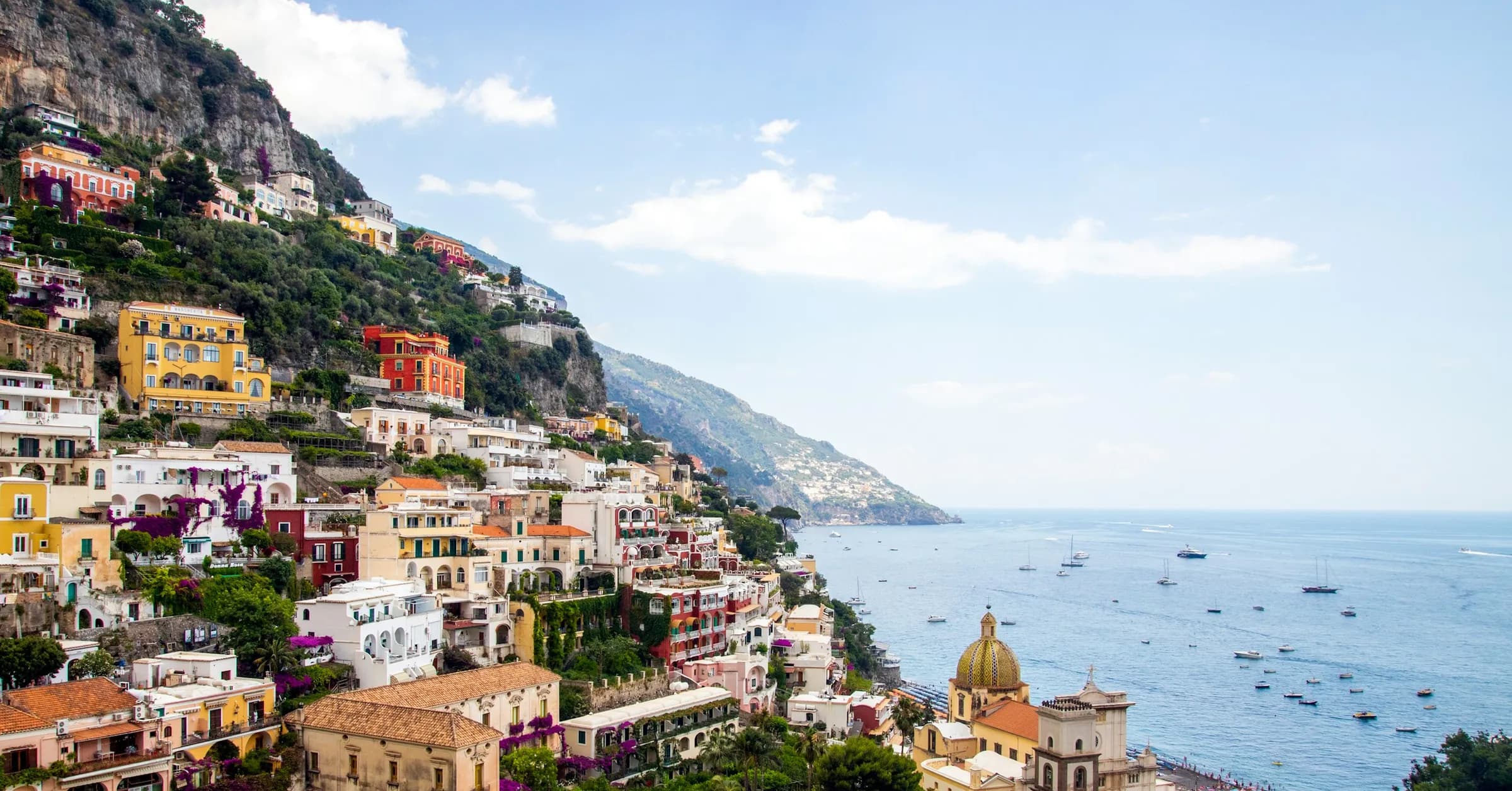
Positano is the prettier and steeper town, and usually the more expensive one. It works well if the view from the room is the point of the trip, but allow for stairs everywhere and for a bus or ferry change on the Ravello day. Praiano, between the two, is quieter and cheaper, with good sunsets and fewer ferries. Atrani, Minori and Maiori, just east of Amalfi, tend to have the lowest room prices on the coast and are a short bus or boat ride from Amalfi.
One base for the whole stay is simpler than two. Moving hotels costs half a day on this coast, and porters or taxis for bags add up.
When is the best time to go?
May, June, September and early October give the best mix of warm weather, running ferries and bearable crowds. July and August are hot, expensive and very busy, and buses often leave stops full. From November to March most ferries stop, many hotels and beach clubs close and the coast is quiet. That suits walkers but not a beach trip.
If your dates fall in early April or late October, check ferry timetables shortly before you travel. The first and last sailing dates change a little each year and with the weather.
Do you need a car?
No. Parking is scarce and expensive, the road is narrow, and in peak periods an alternating number plate rule limits which cars can use the SS163 during the day. Ferries are faster than the road between Amalfi and Positano, and buses reach the hill villages. If you are arriving from the capital, our guide to getting from Rome to the Amalfi Coast compares the train, ferry, bus and transfer options in detail.
Day 1: Amalfi and Atrani
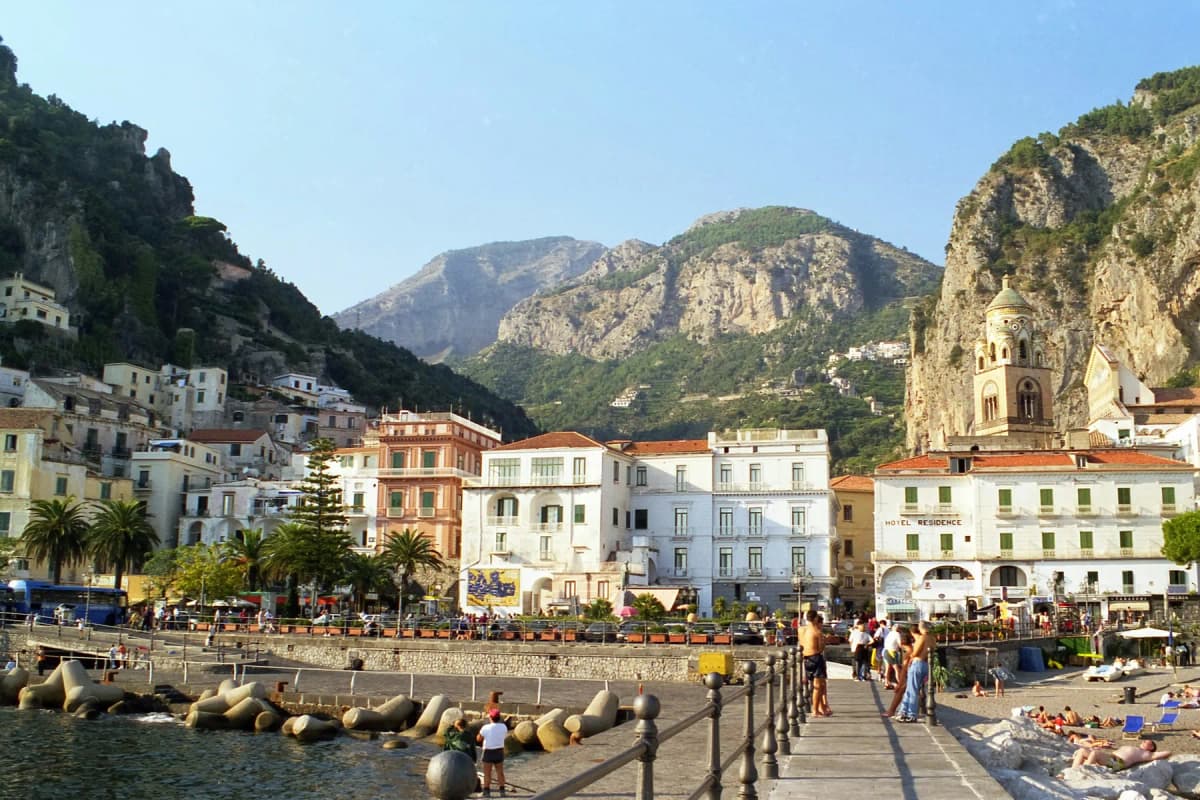 Photo: Michael Hamments on Unsplash
Start with the town that gives the coast its name. Amalfi was a sea-trading republic in the Middle Ages, and most of what you will see dates from that period or was built on top of it.
Morning: the cathedral and the old town. The Cathedral of Sant'Andrea stands at the top of a wide flight of steps on Piazza Duomo. The church itself is free to enter at set times, and a combined ticket of about €3 to €4 covers the Cloister of Paradise, the Basilica of the Crucifix, the museum and the crypt where the relics of Saint Andrew are kept. Go early, before the day trip boats arrive, and allow about an hour.
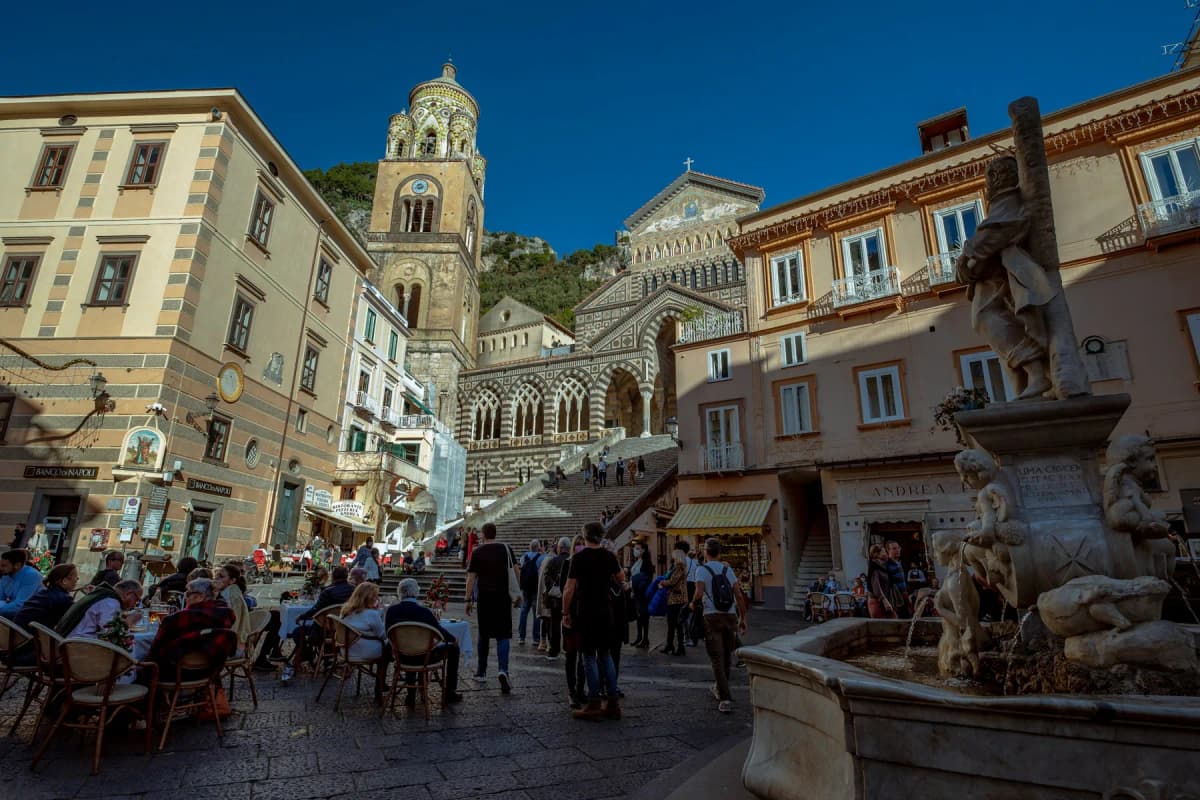 Photo: Matteo Bellia on Unsplash
From the piazza, the main street climbs gently inland past lemon shops and bakeries. Keep walking for ten to fifteen minutes and the crowds thin out. The Paper Museum, in an old mill at the top of the town, explains how Amalfi made paper from rags using water from the valley. Covered side passages run parallel to the main street and are a cooler way back down.
Lunch. This is the place to try scialatielli, a short thick local pasta usually served with seafood, and a delizia al limone, a small lemon cream cake. Anything on Piazza Duomo costs more than the same dish two streets back.
Afternoon: Atrani. Atrani is the next village east, about ten minutes on foot. You can follow the road around the headland or take the pedestrian tunnel and passages that cut through from Amalfi. It is one of the smallest municipalities in Italy by area, with a small square, a church above the sea and a dark-sand beach framed by the arches of the coast road. It is noticeably calmer than Amalfi, and a good place to swim and stay for an early evening drink.
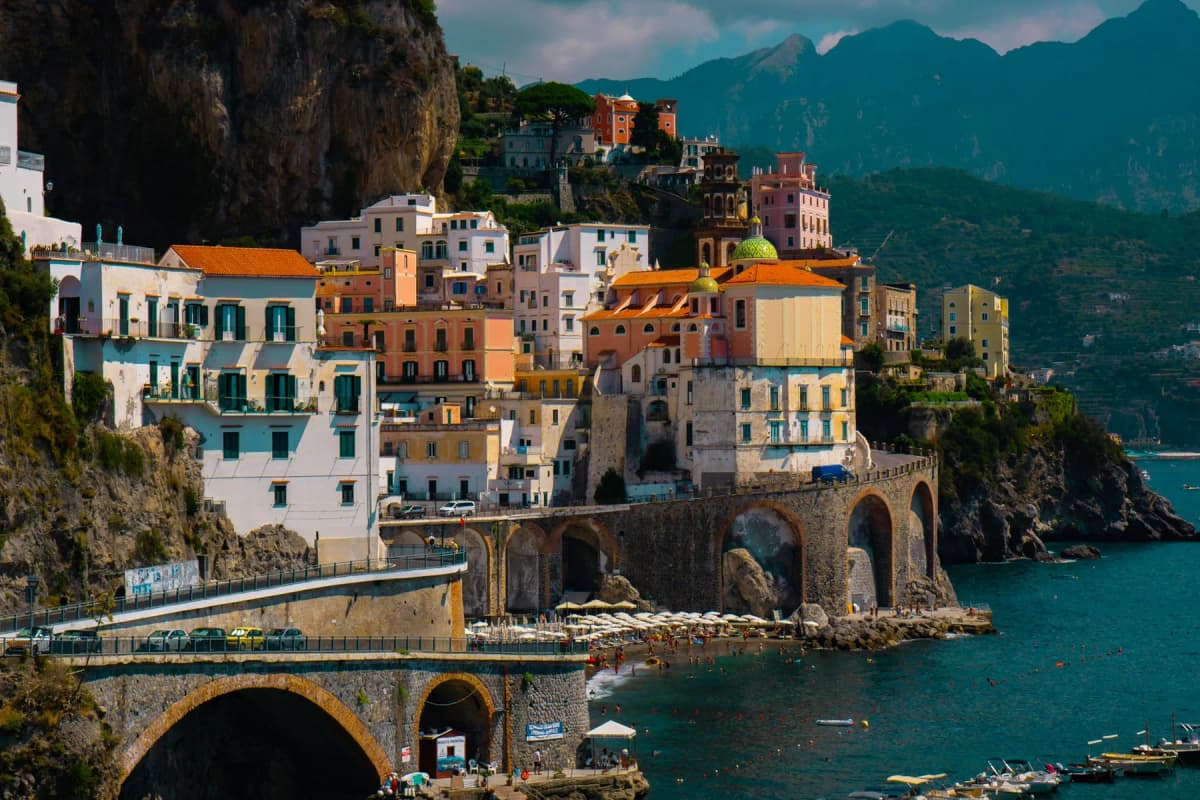 Photo:
 If you have energy left. The Valle delle Ferriere is a shaded walk up the valley behind Amalfi to old ironworks and waterfalls. Allow two to three hours for the return trip from the town, and wear proper shoes.
Day 2: Positano and Fornillo beach
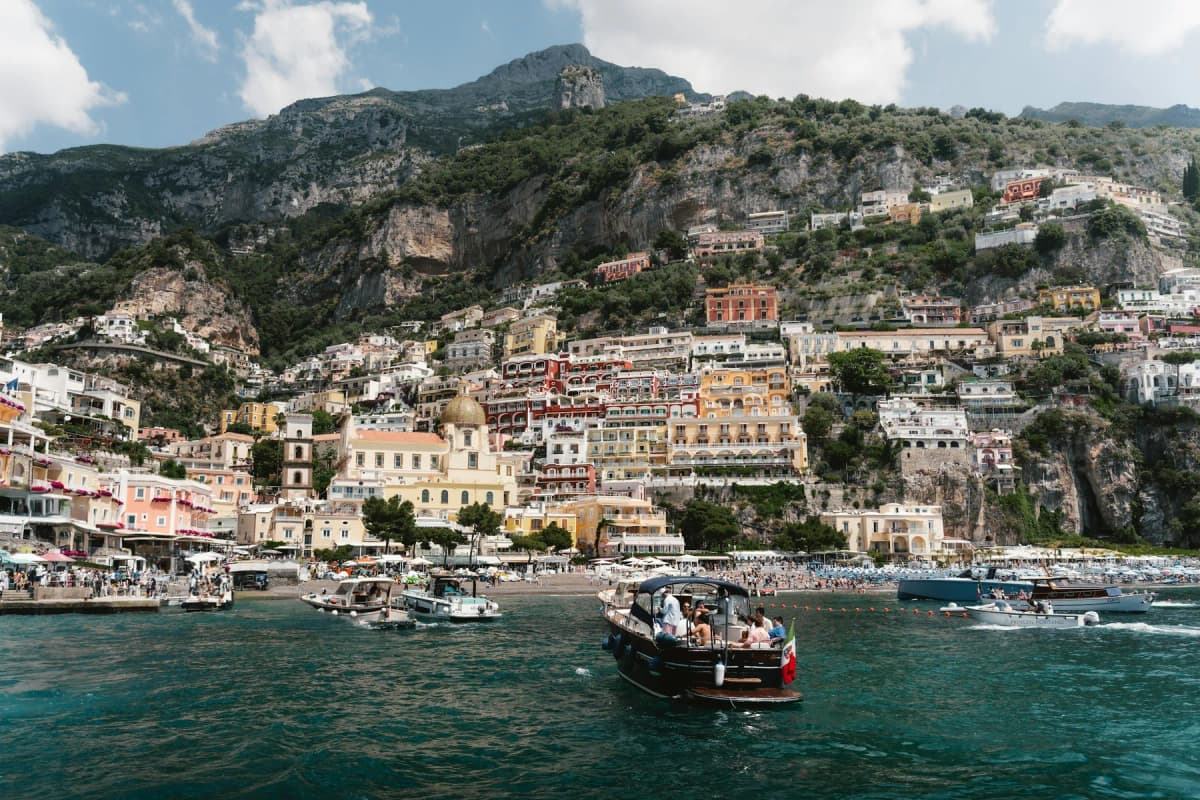 Photo: Ahmet Yüksek on Unsplash
Take the ferry, not the bus. The crossing from Amalfi takes about 20 to 25 minutes, costs roughly €10 to €14 each way and gives you the view of Positano that the postcards use. First boats leave at around 08:40 and the last ones back run at about 19:00 to 19:40 in season, but check the day's times at the pier. The bus takes around 40 minutes when traffic is light and much longer when it is not.
Morning: the town. The ferry lands beside Spiaggia Grande, the main beach. Walk up through the lanes to the church of Santa Maria Assunta with its tiled dome, then keep climbing along Via dei Mulini and Via Cristoforo Colombo for the classic view back over the town. Positano is vertical, so plan on a lot of steps. Shops here sell linen, ceramics and handmade sandals at prices to match the setting.
Fornillo beach: the quieter side of Positano
Fornillo beach is the smaller of Positano's two main beaches and the better one for a relaxed afternoon. It is a 10 to 15 minute walk west of Spiaggia Grande along Via Positanesi d'America, a paved cliff path that passes an old watchtower. The walk is mostly level with a few steps.
Fornillo has a handful of beach clubs with restaurants, plus a small free section. Sunbeds with an umbrella cost roughly €15 to €35 a day depending on the club, the row and the month, which is usually less than on Spiaggia Grande. The beach is pebble and dark sand, so water shoes help.
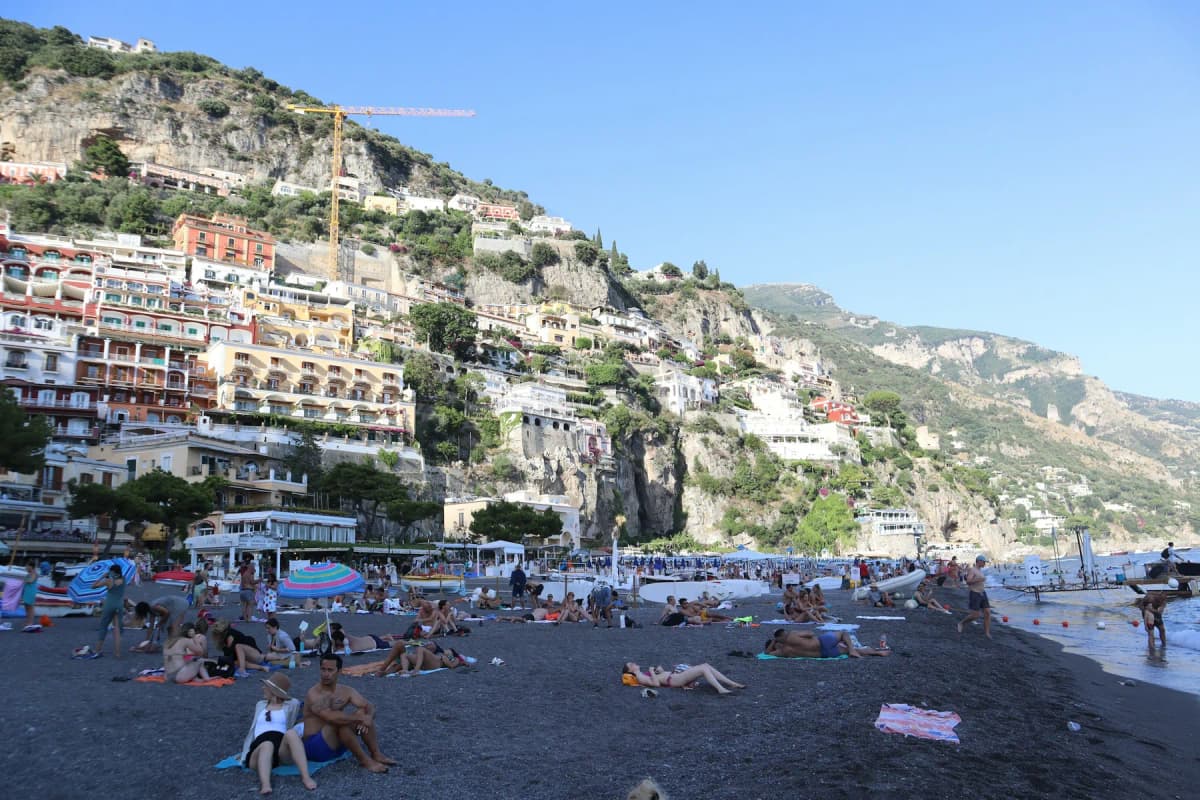 Photo: Mihaela Claudia Puscas on Unsplash
Evening. Stay for the light at sunset if the ferry times allow, then take one of the last boats back. If you miss it, the SITA bus stops are up on the main road at Sponda and Chiesa Nuova, a steep 10 to 20 minute climb from the beach.
Day 3: Ravello, then down to the sea
Ravello sits about 365 metres above the coast and is cooler, greener and quieter than the towns below. SITA bus line 5110 runs from Amalfi in about 25 to 30 minutes for around €1.50. Buses fill up from mid-morning, so take an early one.
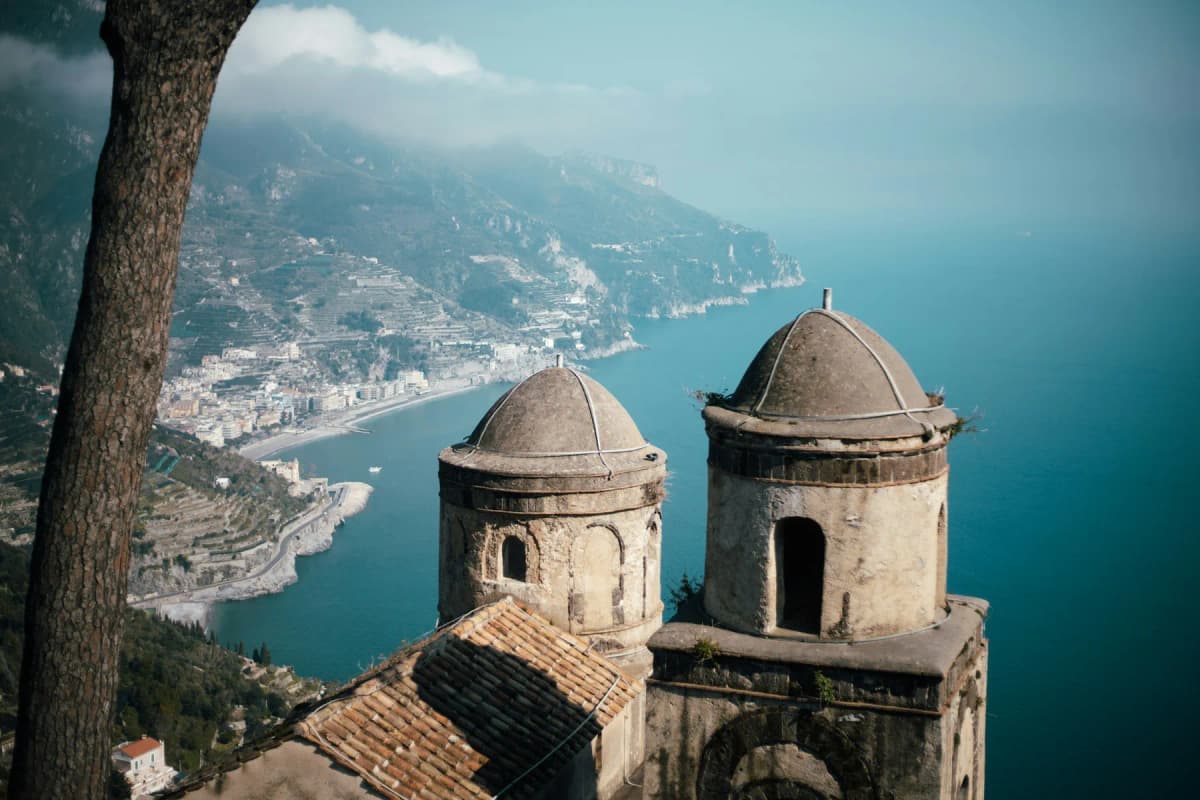 Photo:
 Villa Rufolo. The villa is on the main square, next to the cathedral. Its terraced gardens look straight down the coast towards Maiori, and the view with the two small domes and the umbrella pine is the best-known picture of Ravello. According to the official Villa Rufolo site, the full ticket is €8, with a €6 rate for over-65s and children aged 5 to 12, and in the 2026 summer season the villa opens from 9:00 to 20:00 with last entry at 19:30. During the Ravello Festival, which in 2026 ran from early July to early September, a stage is built on the garden terrace and access can be limited before concerts.
Villa Cimbrone. A ten minute walk along a quiet lane leads to the second garden. It is larger and wilder than Villa Rufolo and ends at the Terrace of Infinity, a long balcony lined with marble busts above a sheer drop to the sea. Entry to the gardens is about €10 and they stay open from 9:00 until sunset.
Lunch in Ravello, then choose how to come down. The bus goes back to Amalfi the way it came. The better option, if your knees allow it, is to walk down the old stairway to Minori, which takes about 45 minutes to an hour and is downhill all the way. Minori has a relaxed beach, the remains of a Roman seaside villa and a well-known pastry shop on the front.
The Lemon Path. From Minori, the Sentiero dei Limoni climbs through terraced lemon groves and drops into Maiori. It takes roughly an hour and is the easiest scenic walk on the coast. Maiori has the longest beach on the Amalfi Coast, and buses and seasonal ferries back to Amalfi.
Day 4: The Path of the Gods
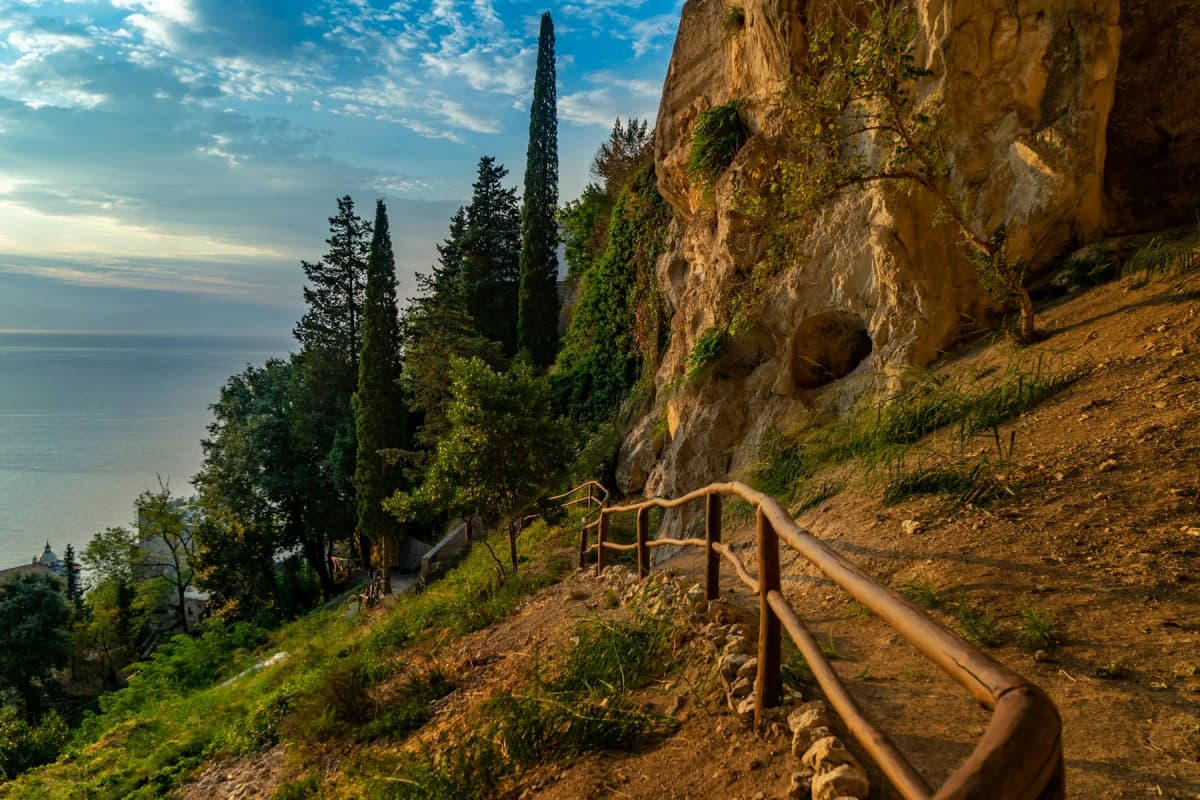 Photo: Gregory Smirnov on Unsplash
The Sentiero degli Dei is the famous walk of the coast: a path along the cliffs high above Praiano and Positano, with Capri on the horizon. It is free and needs no guide in good weather.
The route. Walk it east to west, from Bomerano to Nocelle, so the views are in front of you and the path trends downhill. From Amalfi, SITA bus 5080 towards Agerola reaches Bomerano in about 45 minutes. The trail starts near Piazza Paolo Capasso and is signed. It is about 6 to 7 km to Nocelle and takes most people two to three hours with photo stops.
Getting down. Nocelle is a hamlet above Positano. From there you can take the local bus down to Positano, or walk the stairway of roughly 1,500 to 1,700 steps, which takes 45 minutes to an hour and is hard on the legs. The steps end on the coast road at Arienzo, a short walk from the town.
What to bring. Start before 9:00 in summer because there is little shade. Carry at least 1.5 litres of water each, wear shoes with grip and avoid the path in rain or strong wind. Some sections are narrow with drops on one side, so it is not a good choice for anyone with a real fear of heights.
Afternoon. You finish in Positano with the afternoon free. Swim at Fornillo or Arienzo, eat a late lunch, then take the ferry back to Amalfi. If you are based in Praiano, there is also a steep signed path from the village up to the trail.
Day 5: Capri by ferry
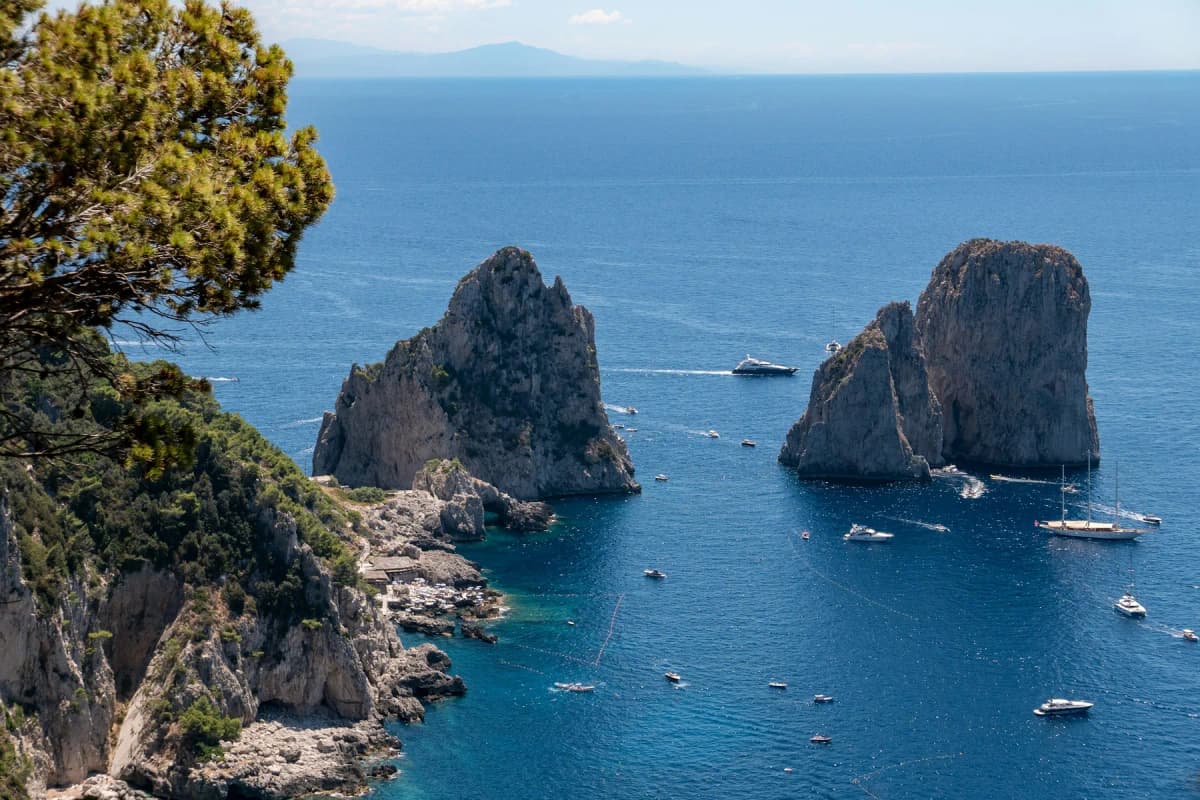 Photo: Alessio Maffeis on Unsplash
Capri is a full day. Seasonal ferries run from Amalfi in about 50 to 75 minutes for roughly €23.50 to €28 each way, and from Positano in about 30 minutes from around €22.50. A €5 landing fee applies between April and October and is normally included in the ticket. Take the first boat out and book the return when you buy the outward ticket, because afternoon sailings sell out.
A simple route for one day:
- From Marina Grande, take the funicular up to Capri town (about €2.40) and walk through the Piazzetta to the Gardens of Augustus for the view of the Faraglioni rocks.
- Take the bus to Anacapri and ride the chairlift to the top of Monte Solaro, the highest point on the island. The chairlift costs €14 return or €11 one way, and you can walk down in about an hour.
- Eat in Anacapri, which is calmer and cheaper than Capri town.
- If the sea is calm, add a boat trip around the island from Marina Grande.
The Blue Grotto. It costs about €40 in total once you add the boat from Marina Grande to the rowing boat and entry fee of roughly €18 to €19, and queues in summer can be long for a visit of a few minutes. It also closes whenever the sea is rough. Treat it as optional.
If you would rather not manage the boats yourself, organised Capri day trips bundle the crossing with a boat tour of the island. Compare what is included, because some only cover the transfer.
If the sea is too rough for ferries, swap this day for the Emerald Grotto at Conca dei Marini (about €10, cash) and the fjord at Furore, both reachable by bus from Amalfi.
How to shorten or extend this itinerary
3 days. Day 1 Amalfi and Atrani, day 2 Positano and Fornillo beach, day 3 Ravello. This is the core of the coast and works from a base in Amalfi with no early starts.
4 days. Add either the Path of the Gods or Capri. Choose the hike in spring and autumn, when the temperature is right for walking, and Capri in high summer.
7 days. Keep the five days above and add two from this list:
- Sorrento and Pompeii. Take the ferry or bus to Sorrento, then the Circumvesuviana train to Pompei Scavi. It is a long day, so start early.
- A beach day. Take a small boat from Amalfi to Santa Croce or Duoglio, two coves with beach clubs that are awkward to reach on foot.
- Cetara and Vietri sul Mare. Two small towns at the eastern end. Cetara is a working fishing village known for its anchovy sauce, and Vietri is the home of the coast's painted ceramics.
- A rest day. Seven days of stairs is a lot. A day by the hotel pool is a reasonable plan.
Getting to the Amalfi Coast
There is no airport and no railway on the coast itself. The usual gateways are Naples airport, Naples Centrale station and Salerno station.
- From Salerno, ferries reach Amalfi in about 35 minutes and Positano in about 70 minutes in season, and SITA buses run to Amalfi all year in about an hour and a quarter.
- From Naples, take the Circumvesuviana train to Sorrento (about 70 minutes) and a SITA bus on to Positano or Amalfi, or take a high-speed train to Salerno and the ferry from there.
- From Rome, the fastest route is a high-speed train to Salerno, then the ferry. The full comparison is in our Rome to Amalfi Coast guide.
- By private transfer from Naples airport or station, the drive to Amalfi or Positano takes roughly 1.5 to 2 hours. You can book a transfer in advance at a fixed price, which is useful with heavy bags or a late arrival.
Getting around: ferries and SITA buses
Ferries. Several companies, including Travelmar, NLG and Alicost, connect Salerno, Maiori, Minori, Amalfi, Positano, Sorrento and Capri from roughly early April to late October or early November. Boats are faster than the road, have open decks and rarely sell out except on Capri routes, but they are cancelled in rough seas. Tickets are sold at kiosks on the piers and online. Large suitcases usually cost €2 to €3 extra.
SITA buses. Blue SITA Sud buses run the whole coast all year. Single fares are low, from about €1.50 for Amalfi to Ravello to €3.40 for Sorrento to Amalfi, and a COSTIERASITA 24-hour pass costs €10. Tickets are not sold on board. Buy them at tobacconists, bars and newsstands before you get to the stop, and validate them in the machine on your first ride. In summer, expect to stand and sometimes to wait for the next bus.
Taxis and boats. Taxis are expensive even for short rides between towns, so agree the price before you get in. Small water taxis and shared boats to nearby coves leave from the piers in Amalfi and Positano.
A tip for arrival day. If your ferry lands hours before check-in, most hotels will hold bags. There are also luggage storage points in Salerno, Sorrento and Naples if you want to stop for a few hours on the way.
What does an Amalfi Coast trip cost?
The Amalfi Coast is one of the more expensive parts of Italy, and prices rise sharply in July and August. These are the fixed costs you can plan around for 2026, per person.
| Item | Typical cost |
|---|---|
| Tourist tax | about €2.50 to €5 per person per night |
| Amalfi to Positano ferry | about €10 to €14 |
| Amalfi to Capri ferry | about €23.50 to €28 |
| SITA 24-hour pass | €10 |
| Sunbed and umbrella at Fornillo | about €15 to €35 a day |
| Villa Rufolo | €8 |
| Villa Cimbrone gardens | about €10 |
| Monte Solaro chairlift, return | €14 |
Rooms and meals vary too much by month and town to give one figure, so compare live prices for your dates. The biggest saving is where you sleep: Atrani, Minori, Maiori and Praiano are cheaper than Amalfi, which is cheaper than Positano.
Before you go
- Book rooms early. For May to September, the best-value places go months ahead.
- Pack light. Most hotels are reached by steps. A backpack or a small case is far easier than a large suitcase.
- Bring cash. Buses, small beach clubs and the grottoes often prefer or require it.
- Mobile data. Timetables change with the weather, so it helps to be able to check them on the pier. An Italy eSIM from Airalo can be set up before you fly.
- Insurance. Ferry cancellations can cost you a prepaid night or a connection. Travel insurance from EKTA is one option that covers medical costs and trip disruption.
- Dress for churches. Shoulders and knees should be covered in the cathedrals.
Amalfi Coast itinerary FAQ
How many days is enough on the Amalfi Coast?
Five days is enough to see Amalfi, Positano, Ravello, the Path of the Gods and Capri without rushing. Three days covers the three main towns. With only one or two days, stay in Amalfi and visit Positano by ferry.
What is the best itinerary for an Amalfi Coast trip?
For a first visit, base yourself in one town and take one area a day: Amalfi and Atrani, Positano, Ravello, a hiking day on the Path of the Gods and a day on Capri. Use ferries along the coast and buses for the hill villages.
Is Positano nicer than Amalfi?
Positano is the more photogenic town, with houses stacked up a steep slope above the beach. Amalfi has more history, a grander cathedral, flatter streets and far better transport links. Many visitors stay in Amalfi and spend a day in Positano.
Which is nicer, Sorrento or Amalfi?
They suit different trips. Sorrento is a larger town on the Bay of Naples with a train station, more hotels and easy access to Pompeii and Capri, but it is not on the Amalfi Coast itself. Amalfi is smaller, has beaches in the town and puts you in the middle of the coast.
Can you do the Amalfi Coast without a car?
Yes. Ferries and SITA buses reach every place in this itinerary, and a car is more trouble than help between May and September because of traffic, parking costs and daytime driving restrictions.
Is Fornillo beach worth the walk?
Yes, if you want a calmer beach day in Positano. It is 10 to 15 minutes on a level path from the ferry pier, and sunbeds tend to cost less than on Spiaggia Grande.
Is the Path of the Gods difficult?
It is a moderate walk. The main section from Bomerano to Nocelle is about 6 to 7 km on a rocky path with little shade, and it trends downhill in that direction. The hard part is the long stairway down to Positano afterwards, which you can skip by taking the bus from Nocelle.
Is the Amalfi Coast worth visiting in winter?
Only for a quiet trip built around walking and food. From November to March most ferries stop and many hotels, restaurants and beach clubs close, but buses still run and prices are much lower.
How we researched this guide
This itinerary was built from official and operator sources, not from a single visit. Opening hours and ticket prices for Villa Rufolo come from the villa's official site. Bus lines, fares and pass prices come from SITA Sud information and current local timetables. Ferry durations, price ranges and season dates were compared across the 2026 listings of the companies serving Amalfi, Positano, Salerno and Capri. Walking times and distances for the Path of the Gods and the Ravello to Minori stairway were cross-checked between several hiking guides, and we give ranges where they disagree. We do not quote hotel or restaurant prices because they change too much with the month.
Prices and timetables on this coast change every season. Confirm ferry times a day or two before each crossing, especially in April, October and in windy weather.
For more on the country, including how to combine the coast with Rome and the main cities by train, see our Italy travel guides.