15 Best Things to Do in Positano (2026 Guide)
October 12, 2026 · Italy
This post contains affiliate links. We may earn a commission if you book through them, at no extra cost to you. Disclaimer.
The best things to do in Positano are to spend time on its two beaches, visit the church of Santa Maria Assunta and the Roman villa beneath it, walk up Via Cristoforo Colombo for the view, take a boat along the coast and hike the Path of the Gods above the town. Positano is small. You can see the town itself in a day, and two or three days gives you time for the boat trips and walks that are the real reason to stay.
It is also steep, crowded in summer and expensive. Almost everything involves steps, the one road through the town is one-way, and a sunbed can cost more than lunch. This guide lists fifteen things worth your time, with the prices, opening hours and practical details you need to plan around those limits.
Things to do in Positano at a glance
| What | Time needed | Approx. cost (2026) | Best time of day |
|---|---|---|---|
| Spiaggia Grande | 1 hour to a full day | Free area, sunbeds about €35 to €40 | Before 10:00 |
| Walk to Fornillo beach | 10 to 15 minutes each way | Free, sunbeds about €15 to €40 | Morning or late afternoon |
| Santa Maria Assunta | 20 minutes | Free | Morning |
| MAR Roman villa museum | 30 to 45 minutes | about €15 | Any, book ahead in summer |
| Via Cristoforo Colombo viewpoint | 30 minutes | Free | Early morning or sunset |
| Boat trip along the coast | Half or full day | from about €120 per person | Morning |
| Day trip to Capri | Full day | Ferry from about €22.50 each way | Early start |
| Path of the Gods | Half a day | Bus fare only | Start by 9:00 |
| Nocelle and Montepertuso | 2 to 3 hours | Bus about €1.30 | Afternoon |
| Amalfi and Ravello | Full day | Ferry about €10 to €14 each way | Any |
1. Spend a morning on Spiaggia Grande
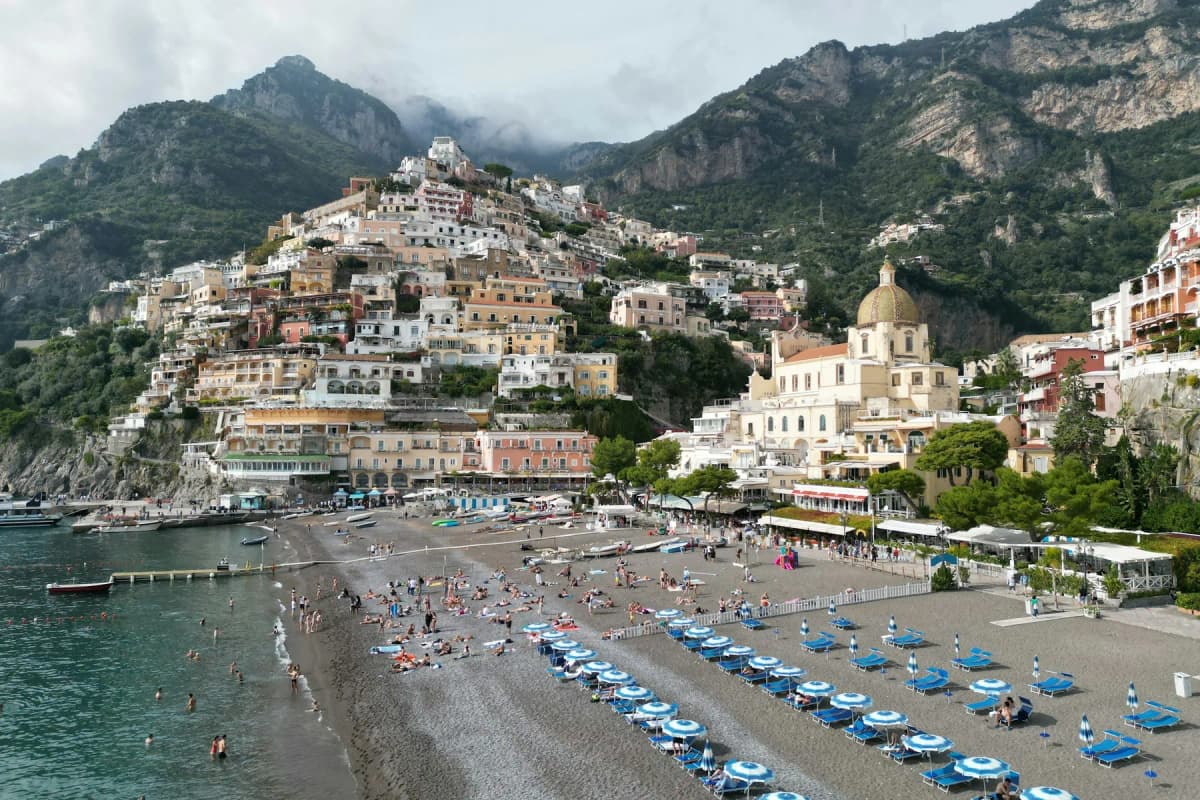 Photo: Daniel Diemer on Unsplash
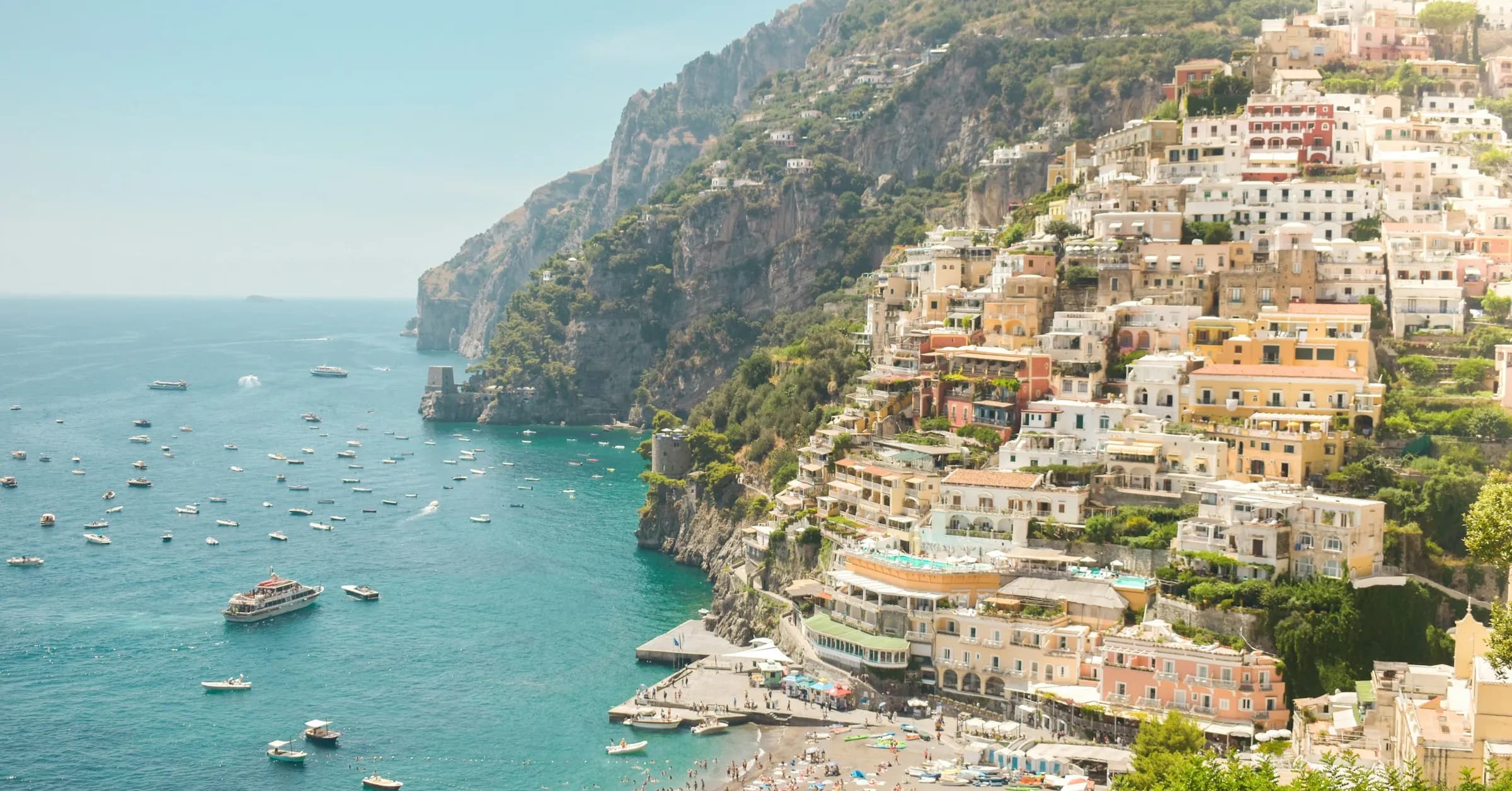
Spiaggia Grande is the main beach, about 300 metres of dark pebbles and coarse sand at the foot of the town. The ferry pier is at its western end, restaurants line the back of it and the view up at the houses is the one on every postcard.
Most of the beach is taken up by beach clubs that rent sunbeds and umbrellas. One of the main clubs listed its 2025 prices at €35 to €40 per person for a standard bed, depending on the row, with a premium area at well over €100. There is a free public section in the middle. It fills early, so in July and August be there before 10:00.
The beach is pebbly and the stones get hot. Water shoes or sandals you can swim in make a real difference.
2. Walk the coastal path to Fornillo beach
Fornillo is the second beach, smaller and calmer, in the next cove to the west. You reach it on a level path called Via Positanesi d'America, which starts beside the ferry pier and takes 10 to 15 minutes. The walk passes two stone watchtowers, Torre Trasita and Torre di Clavel, built to look out for pirates.
Sunbeds here cost less than on Spiaggia Grande, roughly €15 to €40 a day depending on the club and the month, and several clubs have simple restaurants where a sunbed and lunch can be combined. There is a small free area too. Because the cove faces a different way, it loses the sun earlier in the afternoon than the main beach.
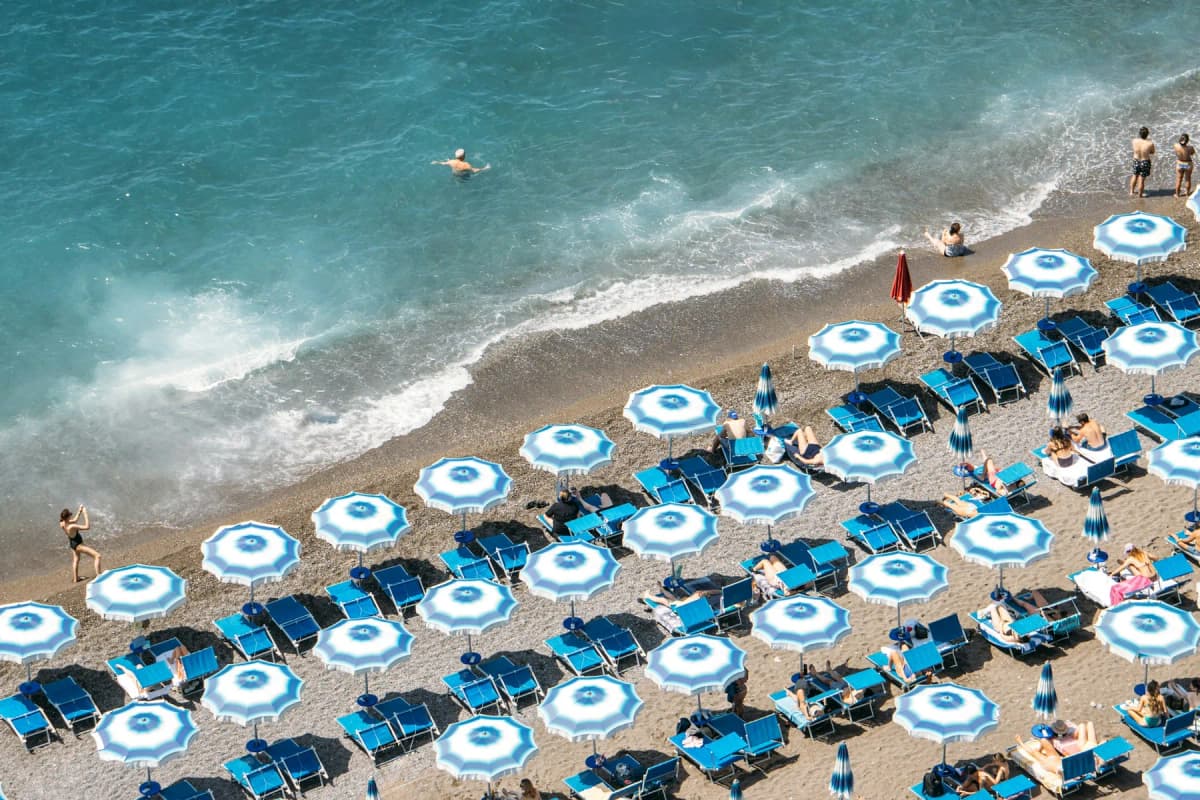 Photo: Rafael Peier on Unsplash
3. Step inside Santa Maria Assunta
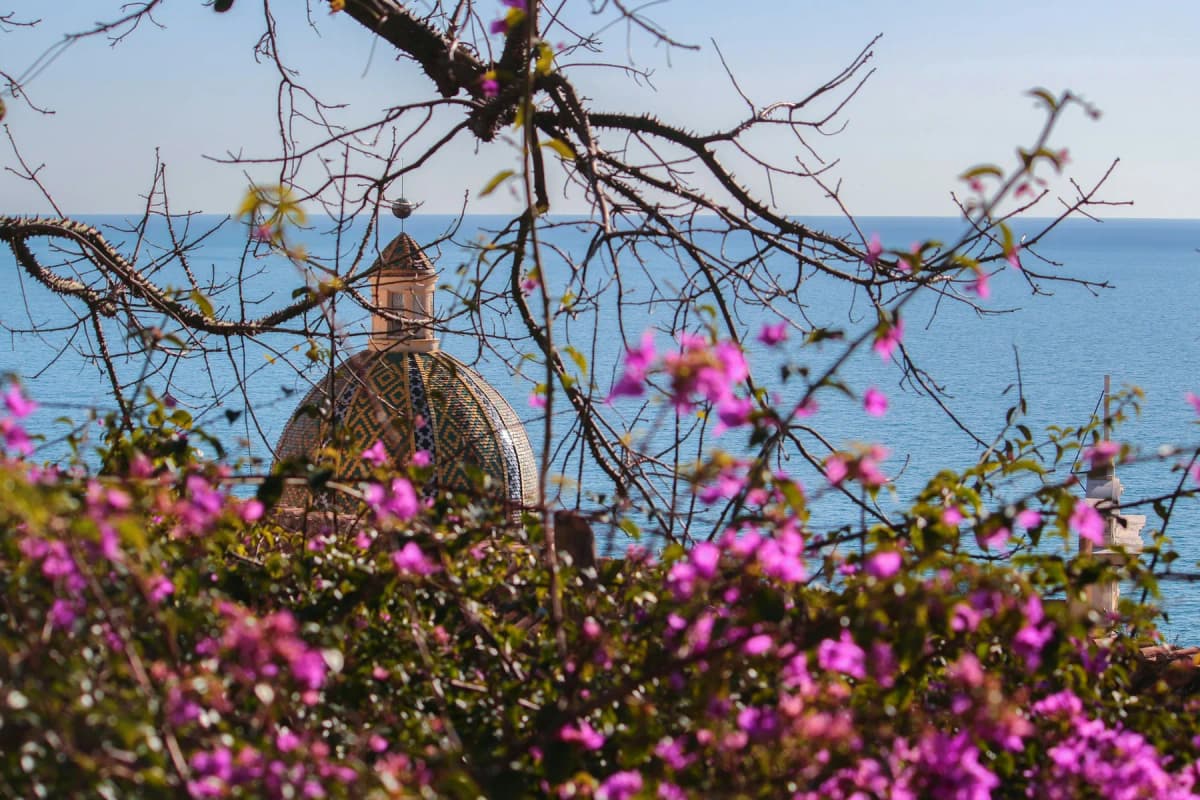 Photo: Milos Lopusina on Unsplash
The church with the green and yellow majolica dome is the centre of the town. It stands just behind Spiaggia Grande on Piazza Flavio Gioia, and entry is free, although it often closes for a few hours in the middle of the day.
Inside, above the altar, is a Byzantine icon of the Madonna and Child, dated by different sources to the 12th or 13th century. Local legend says it arrived on a ship from the east that was becalmed off the coast. The sailors heard a voice saying "posa, posa", meaning "put me down", and when they carried the icon ashore the wind returned. The story is offered as the origin of the town's name.
The church's big day is 15 August, the Feast of the Assumption, when the icon is carried in procession and the evening ends with fireworks over the sea.
4. See the Roman villa under the church
The MAR Positano museum is the most surprising thing in town. Beneath the church lie the remains of a Roman seaside villa that was buried by the eruption of Vesuvius in AD 79, the same eruption that destroyed Pompeii. Excavation uncovered part of a dining room with wall paintings in vivid reds, blues and greens that are still fresh after nearly two thousand years. The visit also takes in the medieval crypts above it.
According to the museum's official site, it is open every day from 9:00 to 21:00 between 1 April and 31 October, and from 10:00 to 16:00 between 1 November and 31 March. Visits are in small groups with a guide and last about half an hour. Listed ticket prices vary between sources, with most recent ones around €15 for adults, so check the current price and book a time slot ahead in summer.
It is also the best thing to do in Positano on a wet or very hot day.
5. Walk Via Cristoforo Colombo for the classic view
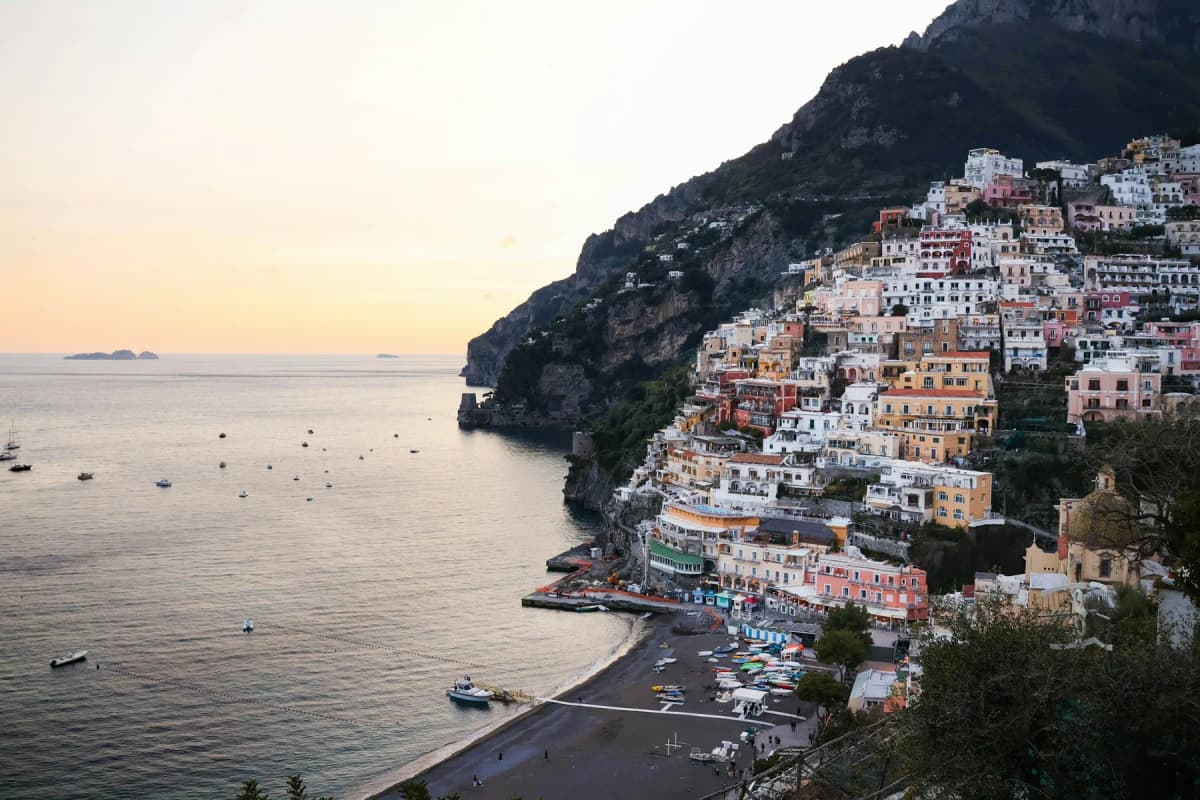 Photo: Kristijan Nikodinovski on Unsplash
The photograph most people want, with the whole town stepping down the hillside to the beach, is taken from Via Cristoforo Colombo. This is the road that climbs east from Piazza dei Mulini towards the Sponda bus stop. Walk up for five to ten minutes and the view opens on your right. It is free and there are several spots along the wall.
Go early in the morning for soft light and few people, or in the last hour before sunset. In the middle of the day the pavement is narrow and busy with traffic. Some shops and terraces along the road charge for access to a photo spot. You do not need them.
6. Take a boat along the coast
Positano makes more sense from the water. From a boat you see how the town is built into the cliff, and you reach coves and sea caves that have no road access.
There are three ways to do it:
- Small-group cruise. A half or full day along the coast towards Amalfi, with swim stops. Listings for 2026 start at about €120 to €150 per person.
- Private boat with a skipper. From about €700 for the boat for half a day, usually with drinks and towels included. Split between six or eight people it compares well with a group tour.
- Ferry. The cheap version. The public ferry to Amalfi takes 20 to 25 minutes and costs about €10 to €14. You get the view but no swim stops.
Boats leave from the pier at Spiaggia Grande, where the operators have booths. Trips are cancelled when the sea is rough, so book for early in your stay and keep a spare day.
7. Swim off the Li Galli islands
Li Galli is a group of three small rocky islands a few kilometres off Positano, visible from the beach. In myth they were the home of the Sirens who sang to Ulysses. In the 20th century they were owned in turn by the choreographer Léonide Massine and the dancer Rudolf Nureyev.
The islands are private and you cannot land, but the water around them is deep, clear and sheltered, and most boat tours from Positano stop there to swim and snorkel. If your tour description does not mention Li Galli, ask before you book.
8. Take the ferry to Capri for the day
Capri is the easiest big day trip from Positano. In season, roughly April to October, ferries cross in about 30 minutes and fares start at about €22.50 each way. Take a morning boat, buy your return as soon as you land and do not leave it to the last sailing of the day.
Organised Capri day trips by boat are the alternative. A small boat takes a group of up to about twelve around the island, past the Faraglioni rocks and the grottoes, with a few hours ashore. Listings from Positano run from about €150 to €180 per person. Compare what is included, because the Blue Grotto entry is paid separately.
If you are arriving in the region through Naples and want to see the island on the way, our Naples to Capri guide explains the ferries from that side.
9. Hike the Path of the Gods
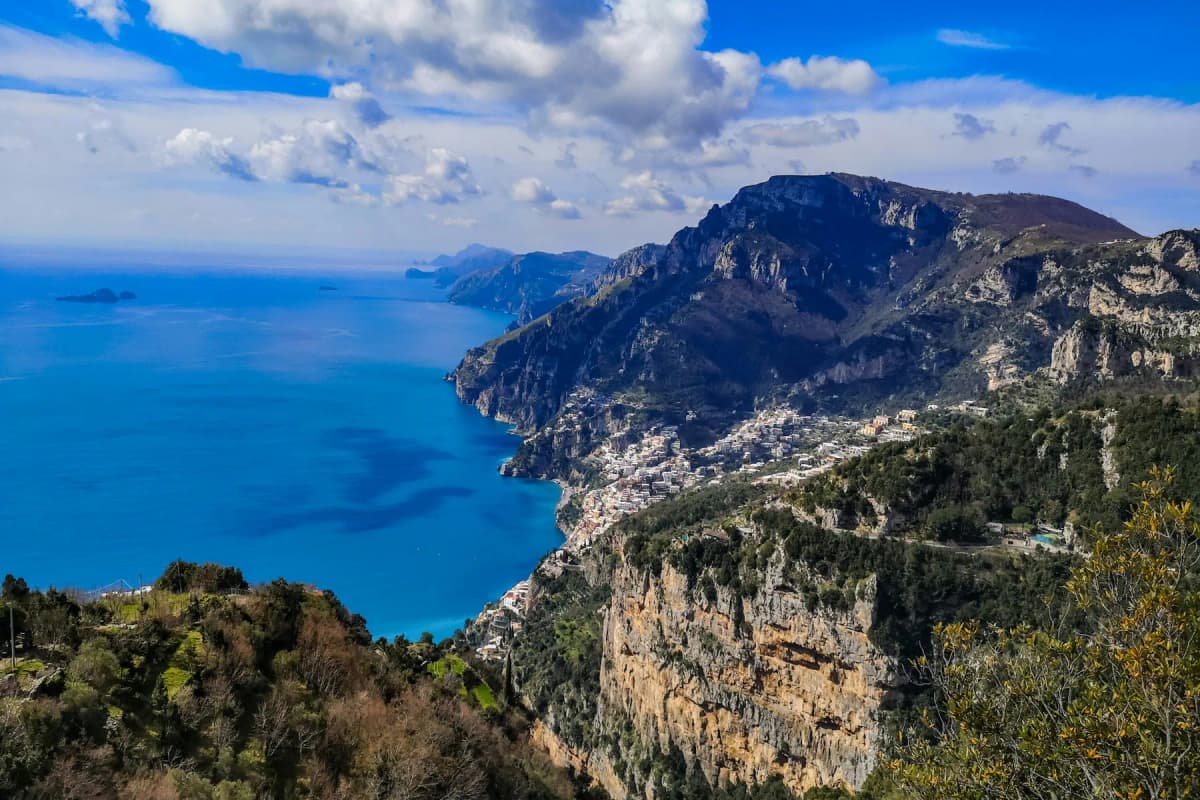 Photo: Daria Sinkevich on Unsplash
The Sentiero degli Dei, or Path of the Gods, is the best-known walk on the coast. It runs along the mountainside about 500 metres above the sea, from Bomerano, in the hills above Amalfi, to Nocelle, the hamlet above Positano. The main section is about 6 to 7 km and takes two to three hours at a steady pace.
Walk it from Bomerano towards Nocelle. In that direction the path trends downhill and the views towards Positano and Capri are in front of you. From Nocelle you have two choices: a stairway of 1,500 to 1,700 steps down to the coast road at Arienzo, or the local bus down into Positano.
Getting to the start takes planning. From Positano you take a SITA bus to Amalfi and another up to Bomerano, so leave early. The path is rocky with little shade and no water for most of its length. Wear proper shoes, carry at least a litre and a half of water per person, and avoid the middle of the day in summer.
10. Ride the bus up to Nocelle and Montepertuso
If the full hike is not for you, the two hill villages above the town are worth a trip on their own. Small local buses run up from Positano about once an hour, and a ticket costs about €1.30 if you buy it before boarding.
Nocelle is a quiet hamlet with no cars in its centre and a terrace near the church that looks straight down on Positano. Montepertuso takes its name, "pierced mountain", from a large natural hole through the rock above the village. Legend says the Virgin Mary made it in a contest with the devil. Both villages have family-run restaurants that cost less than those by the beach, and some of them run a free shuttle from the town for dinner guests.
You can also walk up by the old stairways, which takes about two hours and is hard going in the heat. Riding up and walking down is the sensible way round.
11. Find the quieter beaches: Arienzo and Laurito
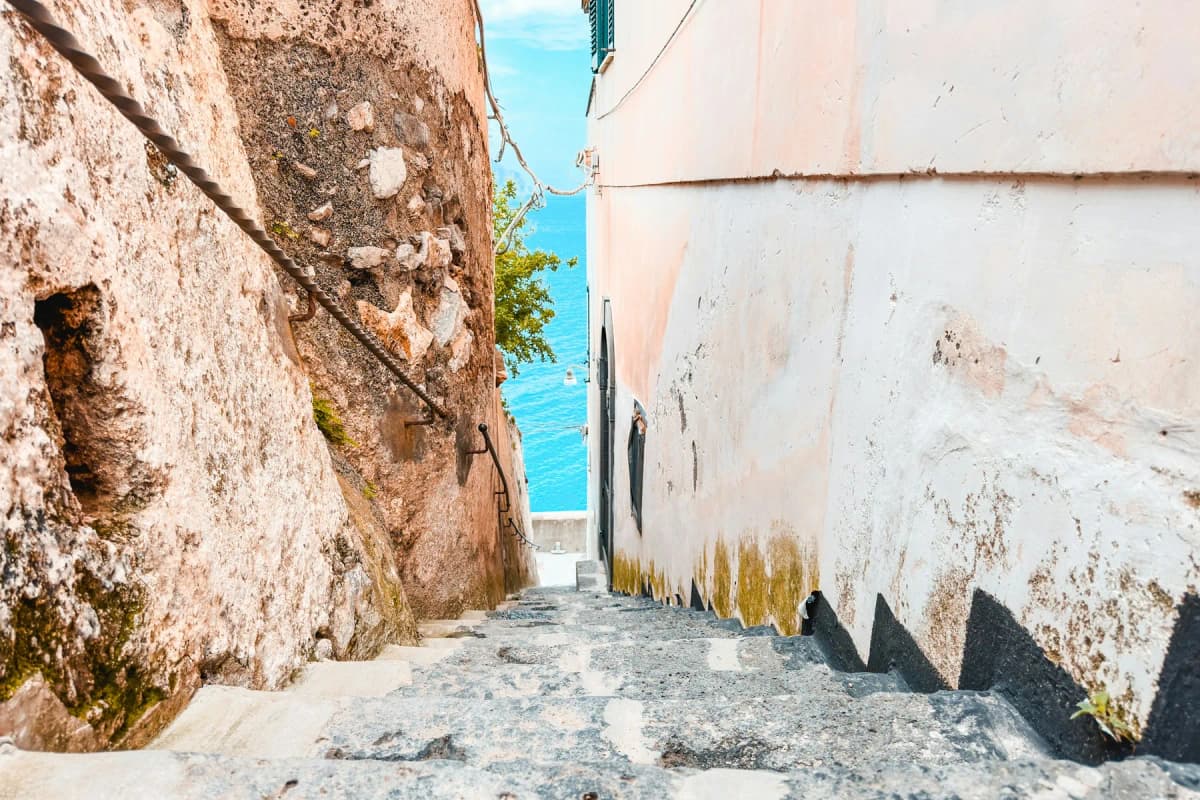 Photo: Christopher Pap de Pestény on Unsplash
East of the town are two smaller beaches that most day visitors never reach.
Arienzo is known as the 300 steps beach, after the stairway that leads down to it from the coast road. Its beach club runs a shuttle boat from the main pier for its guests, and day packages that bundle the boat, a sunbed and often lunch cost considerably more than a bed on the town beaches. Because of the way it faces, Arienzo keeps the sun later in the afternoon.
Laurito is a small cove with a couple of restaurants. Their boats collect guests from the main pier in the late morning. Look for the boat with the red fish sign. There is also a long stairway from the road.
Both suit a slow day built around lunch. Book ahead in summer.
12. Shop for sandals, linen and ceramics
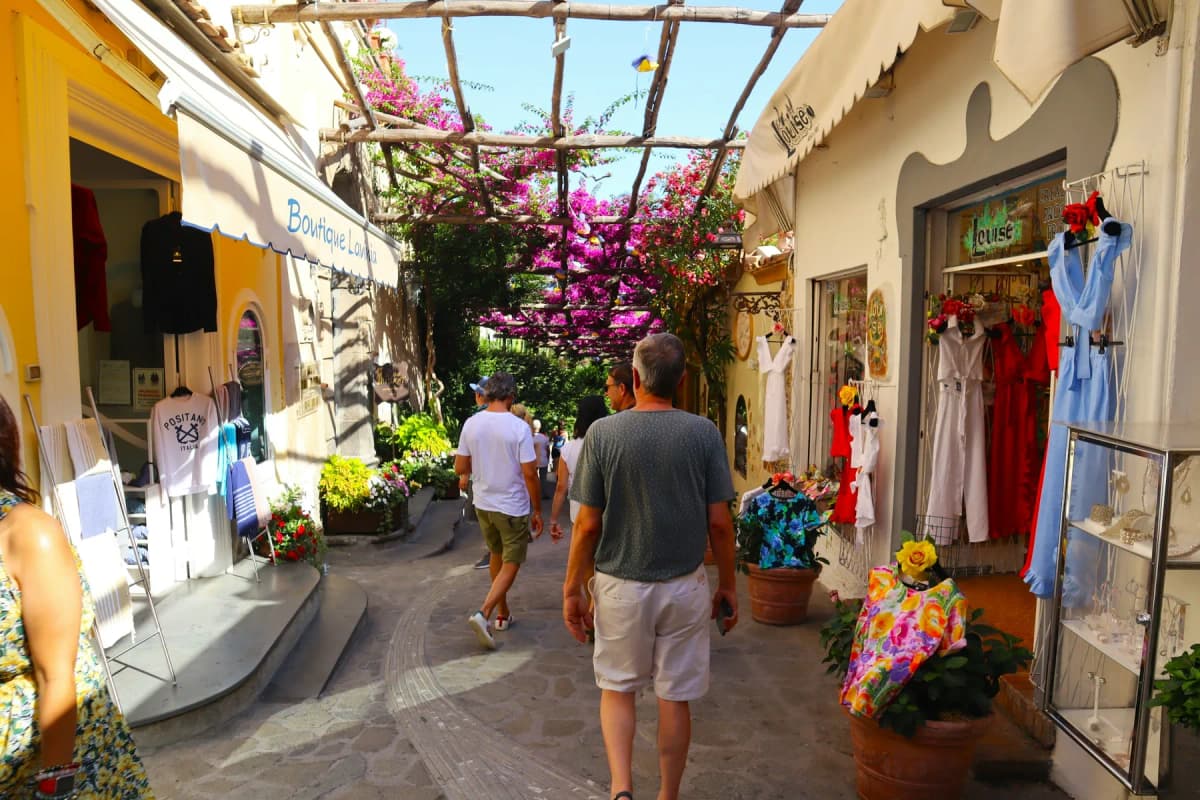 Photo: Mihaela Claudia Puscas on Unsplash
Positano has had its own fashion since the 1960s: loose linen and cotton clothes in white and bright colours, known as Moda Positano. The lanes between Piazza dei Mulini and the beach, shaded by bougainvillea, are lined with boutiques selling it.
Three things are worth looking at:
- Handmade leather sandals. Several workshops make them to measure. You choose the sole and the straps, and they are fitted to your foot, often while you wait or within a couple of hours.
- Linen clothing. Shirts, dresses and trousers, much of it made locally.
- Hand-painted ceramics. Plates, tiles and jugs, most of them made in Vietri sul Mare at the eastern end of the coast.
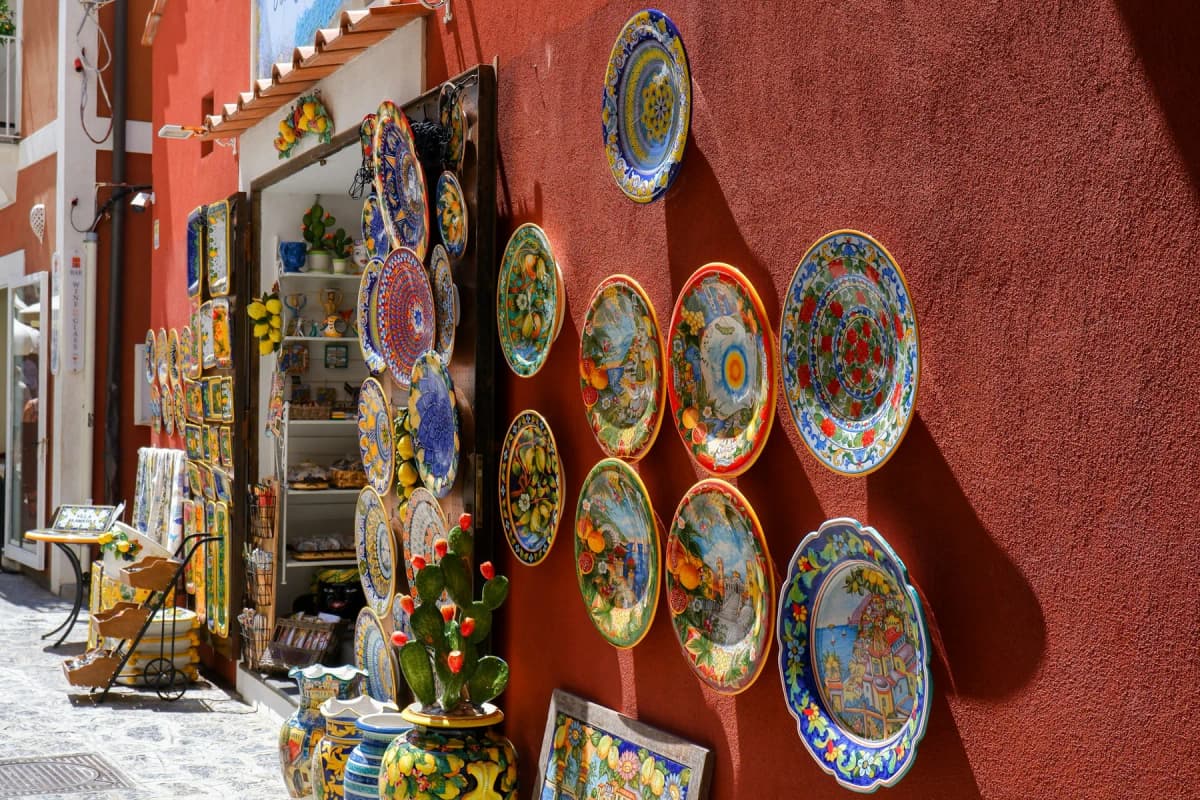 Photo: Antonio Sessa on Unsplash
Prices are lower in the upper part of town, along Viale Pasitea, than in the lanes near the beach. Most ceramic shops will ship large pieces home.
13. Have a drink at sunset
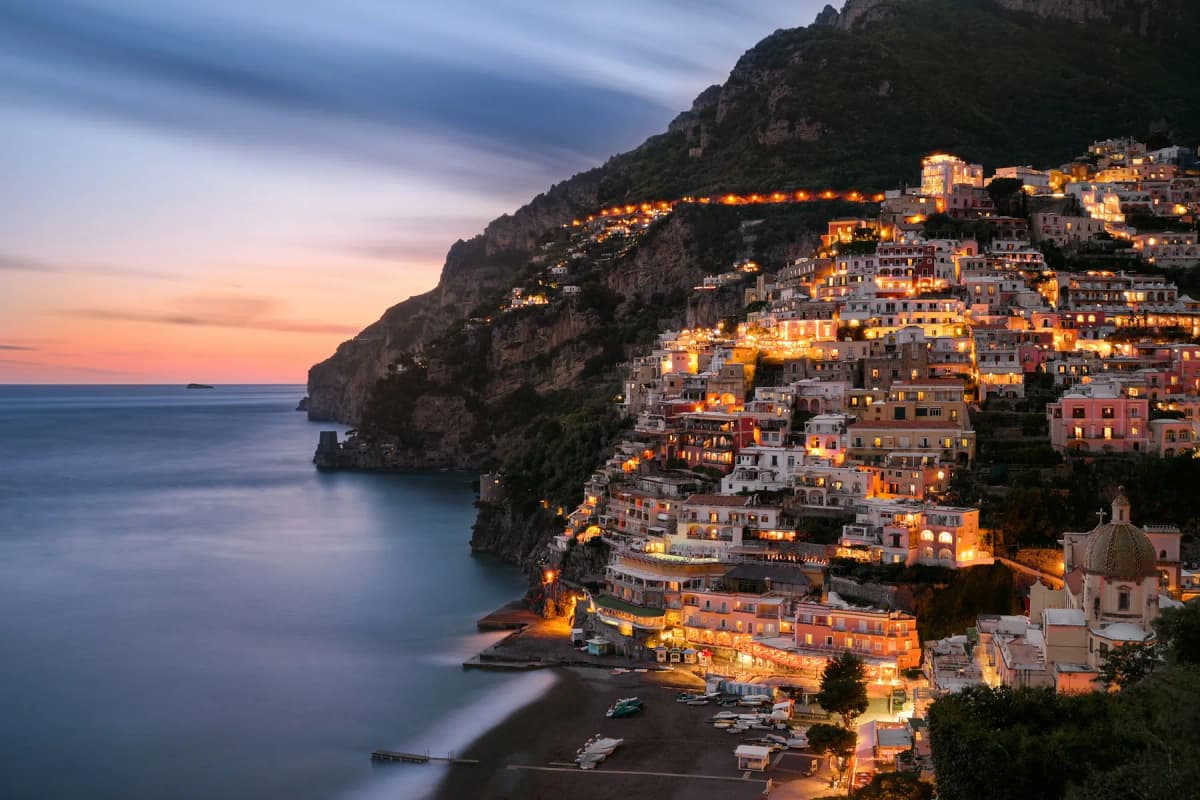 Photo: Sebastian Leonhardt on Unsplash
Positano faces south-west, so the town catches the evening light and the terraces fill up for aperitivo. This is the most expensive drink you will have in Italy. Guides to the town report prices two or three times those elsewhere in the country, and the best-known terrace bars do not take reservations, so people queue before opening time.
There are ways to enjoy the same light for less:
- Any bar along Via Cristoforo Colombo has the view, and the ones further up are quieter.
- Restaurants in Montepertuso and Nocelle look down on the whole coast.
- The wall along Via Cristoforo Colombo and the Fornillo path are both free.
Sunset is around 20:30 in June and 19:00 in late September.
14. Take a cooking class or taste the local lemons
The Amalfi Coast grows a large, fragrant lemon called the sfusato amalfitano, and it turns up everywhere: in limoncello, in the lemon cream cake called delizia al limone, in granita and squeezed over fried fish.
Cooking classes are a good way to spend half a day, especially if the sea is too rough for boats. They are usually held in family homes or restaurant kitchens in the hills above the town, in small groups, and cover fresh pasta, gnocchi alla sorrentina and a lemon dessert. Book a couple of weeks ahead in summer.
If you do not want a class, order a lemon granita from a kiosk and a plate of scialatielli, the thick local pasta, with seafood.
15. Spend a day in Amalfi and Ravello
Amalfi is 20 to 25 minutes away by ferry. Its cathedral, with a striped facade at the top of a wide flight of steps, and the lanes behind it take a couple of hours. From Amalfi, a bus climbs in about 25 to 30 minutes to Ravello, a hill town known for two gardens: Villa Rufolo, which costs €8, and Villa Cimbrone.
Do Ravello in the morning before it gets hot, come down to Amalfi for lunch and the cathedral, and take a late afternoon ferry back to Positano. Our Amalfi Coast itinerary sets out the timings in detail.
Pompeii is possible too, by bus to Sorrento and then the Circumvesuviana train, but allow about two hours each way.
How many days do you need in Positano?
- One day covers the town: the church and Roman villa, the walk to Fornillo, the Via Cristoforo Colombo view and a swim.
- Two days adds a boat trip or Capri.
- Three days adds the Path of the Gods or Amalfi and Ravello, and leaves a spare day in case the boats are cancelled.
Many people visit for a few hours by ferry from Amalfi, Sorrento or Salerno. That works, but it puts you in town between 11:00 and 16:00, which is the busiest and hottest part of the day.
Getting around Positano
Positano has one road, Viale Pasitea, which loops down from the coast road to Piazza dei Mulini and back up as Via Cristoforo Colombo. Everything below it is on foot, by stairs and lanes.
- On foot. Expect hundreds of steps a day. From the Chiesa Nuova bus stop at the top of town to the beach takes about 20 to 25 minutes downhill.
- Local bus. Small orange buses run a loop along the internal road and up to Montepertuso and Nocelle. Tickets cost about €1.30 from tobacconists and bars, and a little more on board.
- SITA buses to Amalfi and Sorrento stop only on the coast road above the town, at Chiesa Nuova and Sponda. In summer they are often full.
- Ferries leave from the pier at Spiaggia Grande, in season only.
- Porters wait at the pier and at the bus stops and carry bags to hotels for a fee per piece. With a suitcase, use them.
If you are coming from the capital, our guide to getting from Rome to the Amalfi Coast covers the train and ferry route to Positano. A private transfer from Naples takes roughly 1.5 to 2 hours and is worth pricing for a group or a late arrival.
Practical tips
- Start early. The town is at its best before 10:00 and after 17:00, when the day visitors have gone.
- Bring water shoes. Every beach is pebbles.
- Carry cash. Bus tickets, porters and some beach kiosks need it.
- Book ahead in summer. Boat trips, beach clubs, cooking classes and dinner tables sell out days in advance in July and August.
- Budget for a tourist tax of a few euros per person per night, paid at your hotel.
- Keep one day flexible. Boats stop in rough seas, and you will want to move your Capri or coast trip.
- Get mobile data. Ferry and bus times change with the weather. An Italy eSIM from Airalo can be set up before you fly.
- Insure the trip. Cancelled boats can cost you a prepaid tour or a connection. EKTA travel insurance is one option to compare.
Things to do in Positano FAQ
What is the best month to go to Positano?
May, June and September. The weather is warm, the ferries and beach clubs are running and the town is less crowded than in July and August. The sea is warmest in September. Our guide to the best time to visit the Amalfi Coast goes through every month.
Which is nicer, Amalfi or Positano?
Positano is the prettier of the two and the better choice for beaches, boat trips and a romantic stay. Amalfi is flatter, cheaper and has much better bus and ferry connections, so it is the easier base for seeing the whole coast.
Who made Positano famous?
The American writer John Steinbeck, more than anyone. His essay about the town appeared in Harper's Bazaar in 1953 and brought it to the attention of travellers abroad. Until then it was a poor fishing village that many residents had left for America.
Is one day enough for Positano?
Yes, for the town itself. A day covers the beach, the church, the Roman villa and the main viewpoint. You need a second or third day for boat trips, Capri or the Path of the Gods.
Is Positano expensive?
Yes. It is one of the most expensive towns in Italy for hotels, sunbeds and drinks with a view. You can cut costs by using the free beach areas, eating in the upper town or in Montepertuso, and visiting in May or October.
Can you swim in Positano?
Yes. Spiaggia Grande and Fornillo both have free sections and clear water. The sea is comfortable from about June to early October and warmest in August and September.
Is Positano walkable?
It is walkable but steep. There are no cars below the main road, and getting anywhere means stairs. Anyone with limited mobility should choose a hotel close to the road or the beach and ask the hotel about access.
Do you need a car in Positano?
No. Parking is scarce and costly, and ferries, buses and your feet cover everything in this guide.
How we researched this guide
This guide was built from official and operator sources, not from a single visit. Opening hours for the Roman villa come from the MAR Positano museum's own site. Beach club prices are those published by the clubs for the 2025 season, and boat tour prices are 2026 listings, so both are given as approximate. Ferry times and fares match the 2026 operator listings used in our other Amalfi Coast guides. Walking times and distances for the Path of the Gods were cross-checked between several hiking guides. Local bus fares come from current information for the Positano internal service. Where sources disagreed, as with the date of the church's icon and the museum's ticket price, we say so.
Prices in Positano rise most years and opening times change with the season. Confirm anything that matters to your plans before you go.
For more on the country, including how to reach the coast from Rome and Naples, see our Italy travel guides.