Rome Itinerary: 3 Days for First-Timers (2026)
October 12, 2026 · Italy
This post contains affiliate links. We may earn a commission if you book through them, at no extra cost to you. Disclaimer.
Three days is the right length for a first Rome itinerary. It gives you one day for ancient Rome (the Colosseum, Forum and Palatine), one for the Vatican and Trastevere, and one for the historic centre from Campo de' Fiori to the Spanish Steps. Each day stays in one part of the city, so you walk between sights and use public transport only once or twice.
Two things need booking before you travel: the Colosseum and the Vatican Museums. Both use timed tickets that sell out in busy months, and the days you get them will decide the order of everything else. This guide sets out the three days, explains how the bookings work in 2026, and shows how to shorten the plan to one or two days or stretch it to four or five.
Rome itinerary at a glance
| Day | Area | Main sights | Book ahead? |
|---|---|---|---|
| 1 | Ancient Rome and Monti | Colosseum, Roman Forum, Palatine Hill, Capitoline Hill | Colosseum: yes |
| 2 | Vatican and Trastevere | Vatican Museums, Sistine Chapel, St Peter's Basilica, Castel Sant'Angelo | Vatican Museums: yes |
| 3 | Historic centre | Campo de' Fiori, Piazza Navona, Pantheon, Trevi Fountain, Spanish Steps, Villa Borghese | Borghese Gallery: yes, if you go |
| 4 (optional) | Trastevere, Aventine, Testaccio | Gianicolo, Aventine keyhole, Baths of Caracalla, Testaccio market | No |
| 5 (optional) | Day trip | Ostia Antica, Tivoli or Orvieto | Train tickets only |
The days can be done in any order. Fix days 1 and 2 around your ticket times, then put day 3 wherever it fits. It is the most flexible, because almost nothing on it needs a reservation.
Before you start: what to book and when
Colosseum tickets
The standard ticket covers the Colosseum, the Roman Forum and the Palatine Hill and is valid for 24 hours, with a fixed entry time for the Colosseum itself. Guides to the 2026 prices put it at about €18, including a €2 online booking fee. A "Full Experience" ticket that adds the arena floor or the underground levels costs a few euros more and sells out faster.
Tickets are released on the official site, ticketing.colosseo.it, about 30 days before the visit date, and morning slots in spring and summer can go within minutes. They are issued in your name and staff may ask for matching ID at the gate. If the official site is sold out, resellers such as Klook offer Colosseum, Forum and Palatine tickets at a higher price, and guided tours from authorised operators include entry too. Avoid sellers who approach you outside the monument.
Vatican Museums tickets
The Vatican Museums, which include the Sistine Chapel, sell timed tickets through their own site, museivaticani.va. The full price has recently been about €20 at the door plus a €5 fee for booking online, and slots open roughly 60 days ahead. The online fee is worth paying. If the official slots for your dates are gone, Vatican Museums and Sistine Chapel tickets on Klook are a fallback at a mark-up. Without a booking, the queue along the Vatican walls can last two hours or more in high season.
The museums are closed on most Sundays. On the last Sunday of each month entry is free in the morning, with very long queues and no reservations. St Peter's Basilica is separate: it is free, needs no ticket, and has its own security queue in the square.
Other things to know before you plan
- Mondays and Sundays. The Borghese Gallery is closed on Mondays. The Vatican Museums are closed on Sundays except the last of the month. The Colosseum and Pantheon are open daily.
- Wednesdays. When the Pope holds a general audience in St Peter's Square on Wednesday morning, the basilica stays closed until around midday and the area is crowded. Put your Vatican day on another day if you can.
- First Sunday of the month. State-run sites including the Colosseum are free. It sounds appealing, but there are no advance reservations and the queues are long.
- Dress code. St Peter's Basilica, the Vatican Museums and most churches require covered shoulders and knees for everyone. A light scarf in your bag solves it in summer.
- Where you stay matters. A central base saves an hour a day. Our guide to where to stay in Rome compares seven areas by walking distance and metro access.
Day 1: Ancient Rome and Monti
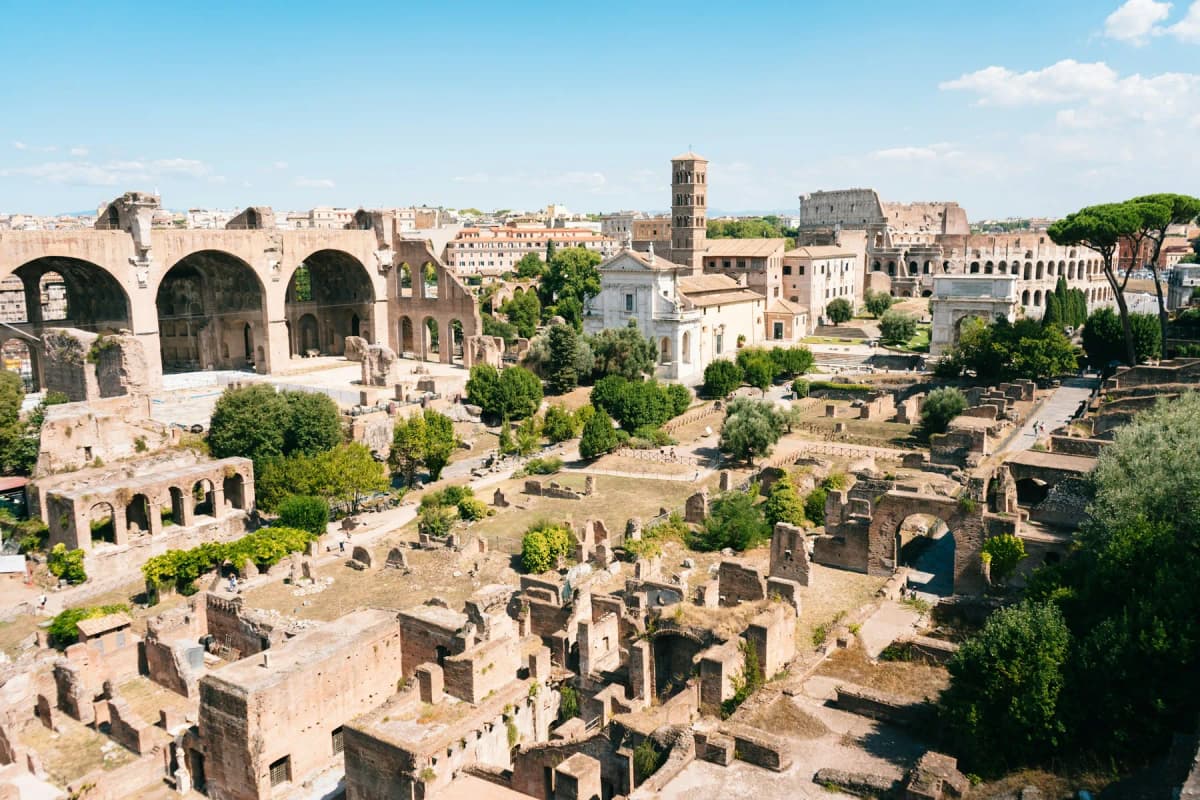 Photo: Fabio Fistarol on Unsplash
Morning: the Colosseum
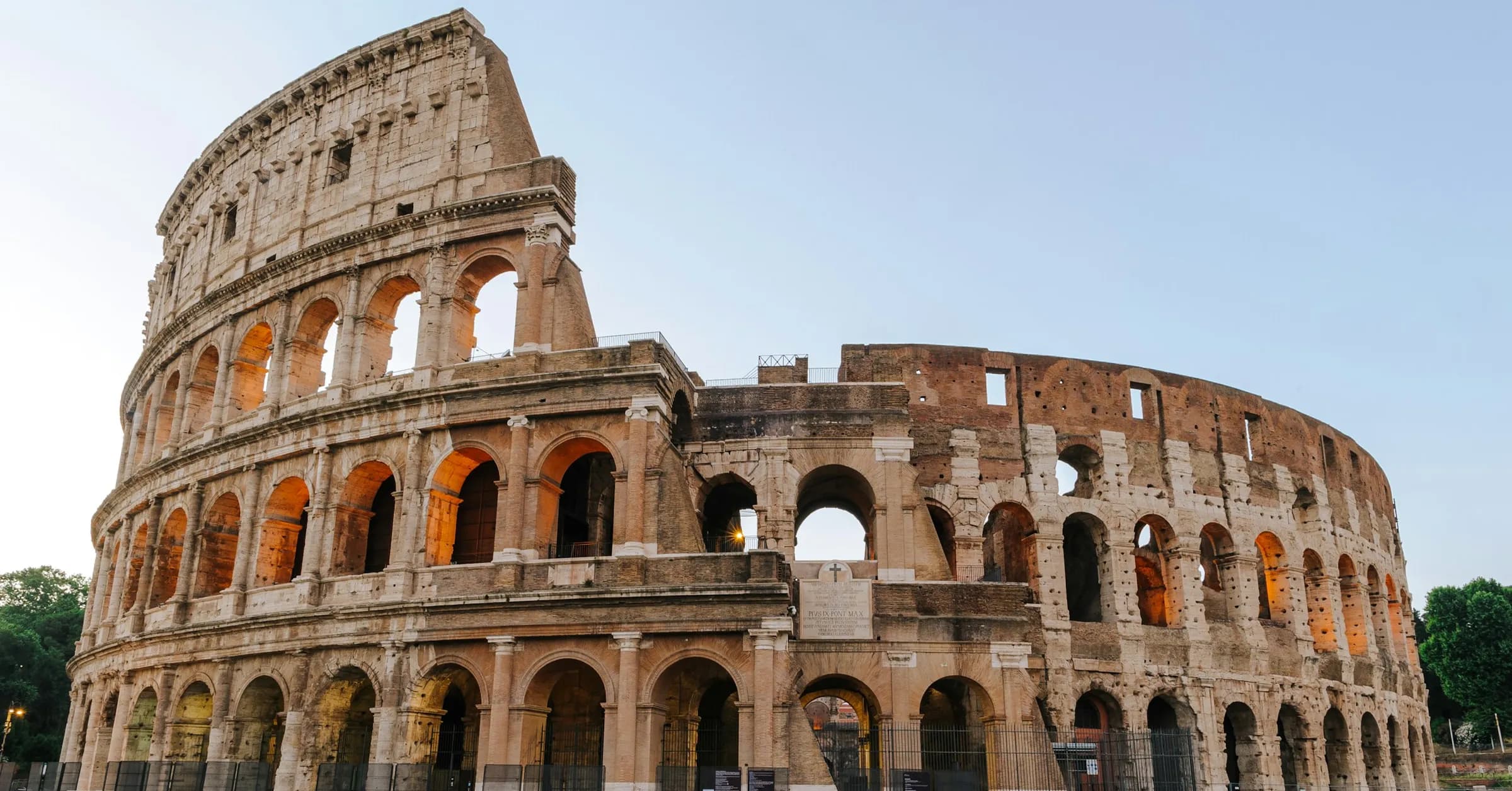
Take the earliest Colosseum slot you can get. Mornings are cooler and less crowded, and an early start leaves the rest of the day for the Forum. The entrance is beside Colosseo station on metro Line B, which since December 2025 is also a stop on Line C. Allow about an hour to an hour and a half inside: the first and second tiers, the exhibition on the upper level, and the view down into the underground chambers where animals and fighters waited.
Security is airport-style, and large bags and glass bottles are not allowed in. Bring a refillable water bottle. There are drinking fountains (nasoni) throughout the city and on the archaeological site.
Late morning: the Roman Forum and Palatine Hill
The same ticket covers the Forum and the Palatine, which are a single fenced site next door. Enter on Via di San Gregorio or by the Arch of Titus. A good route is to climb the Palatine Hill first, where the emperors had their palaces and the terraces look down over the Forum on one side and the Circus Maximus on the other. Then walk down into the Forum and along the Via Sacra, past the Temple of Saturn and the Arch of Septimius Severus, and leave at the far end near the Capitoline Hill.
Allow two hours. There is very little shade, so in summer do this before midday and carry a hat. Signage is limited, and an audio guide or guidebook makes a big difference to what you get from the ruins.
Lunch: Monti
Monti, the district just north of the Forum, is five minutes on foot and far better for lunch than the cafes facing the Colosseum. The lanes around Via del Boschetto and Piazza della Madonna dei Monti have trattorias, pizza by the slice and wine bars at ordinary neighbourhood prices.
Afternoon: the Capitoline Hill and Piazza Venezia
Walk up to the Capitoline Hill, where the square at the top, Piazza del Campidoglio, was designed by Michelangelo. From the terrace behind the city hall there is a free view straight down the length of the Forum, which is one of the best in Rome and makes more sense now that you have walked it. The Capitoline Museums on the square hold the bronze she-wolf and the original statue of Marcus Aurelius, and they are a good choice if you want an indoor hour.
Below the hill is Piazza Venezia and the huge white Vittoriano monument. Its lower terraces are free to climb. A lift to the roof terrace costs extra.
Evening
Return to Monti for dinner, or walk ten minutes west to the Jewish Ghetto, known for fried artichokes and some of the oldest restaurants in the city. After dark, the Colosseum is floodlit and the walk along Via dei Fori Imperiali is traffic-free for much of its length.
Day 2: The Vatican, Castel Sant'Angelo and Trastevere
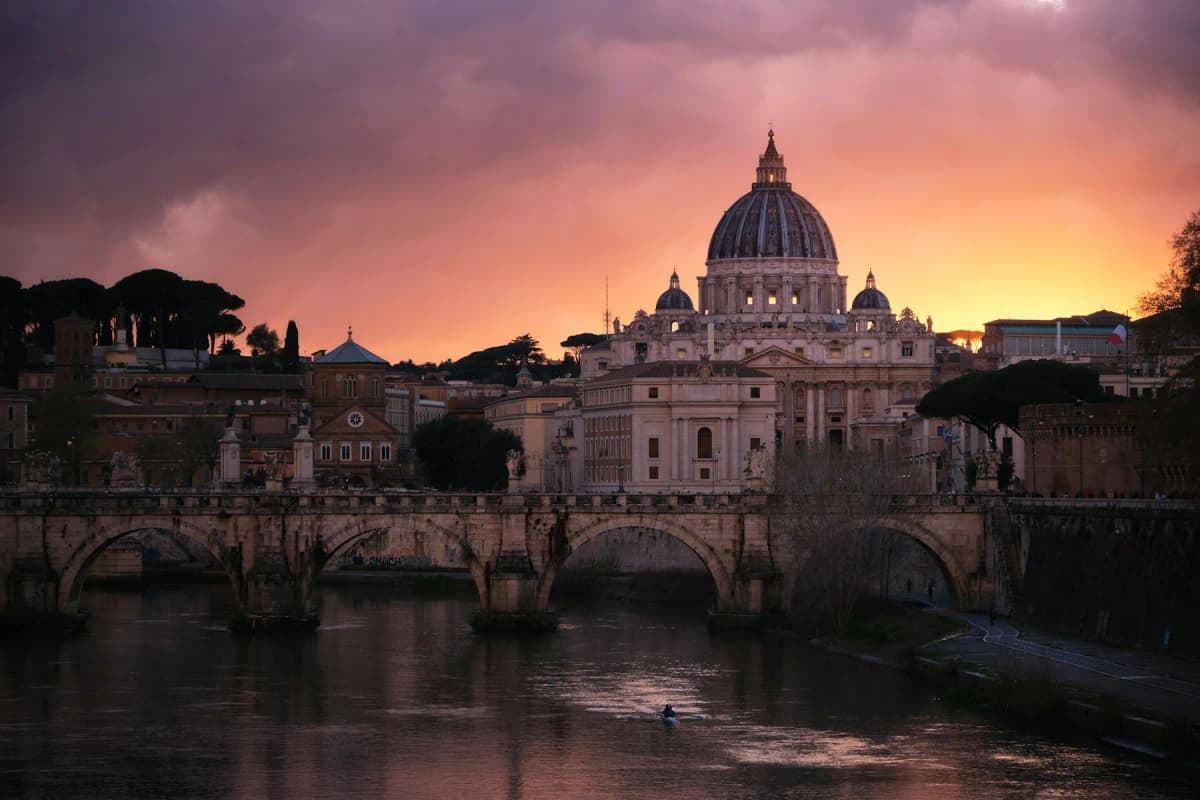 Photo: Joshua Kettle on Unsplash
Morning: the Vatican Museums and Sistine Chapel
Book the first entry of the day if you can. The museums are on the north side of Vatican City, about ten minutes' walk from Ottaviano station on metro Line A. They are very large, with several kilometres of galleries, and the one-way route carries most visitors through the Gallery of Maps and the Raphael Rooms to the Sistine Chapel at the end.
Allow three hours. If you want to see the chapel before it fills up, walk the main route without stopping, see the chapel, then decide what to go back for. Photography and talking are not permitted inside the Sistine Chapel.
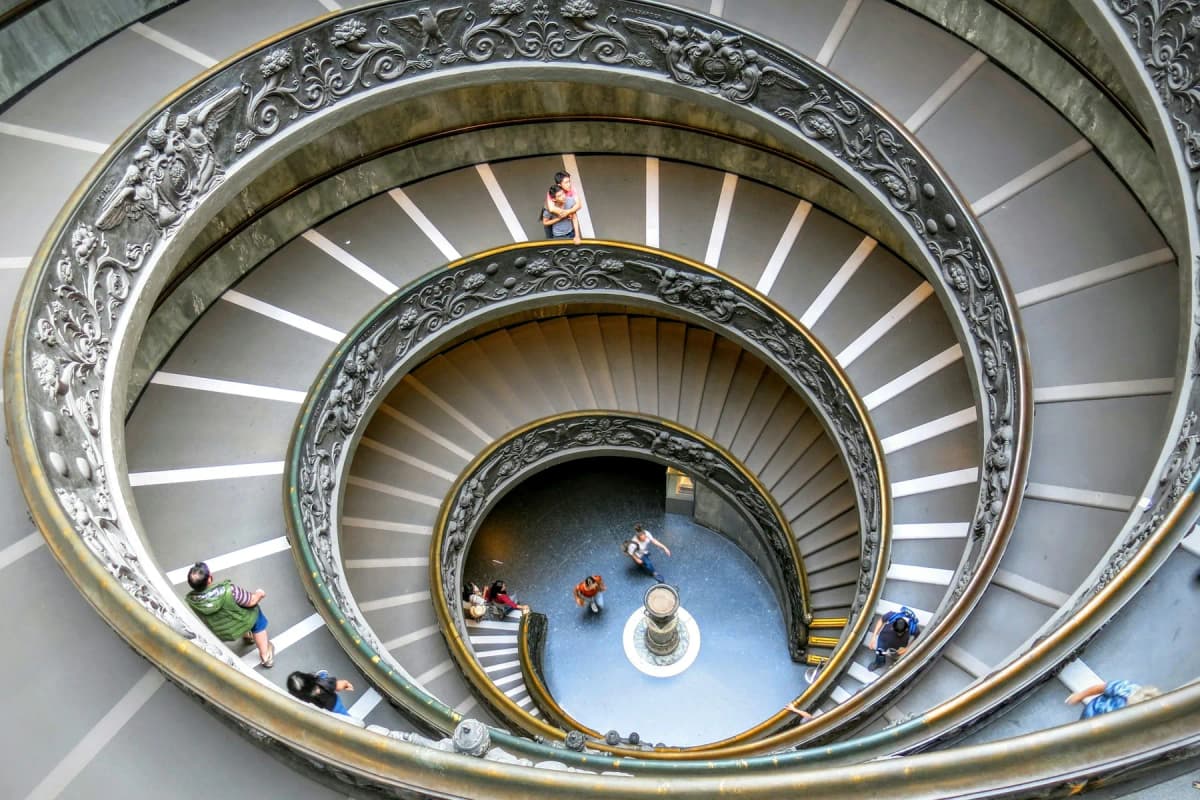 Photo: Jonathan Singer on Unsplash
Midday: St Peter's Basilica
The basilica entrance is on St Peter's Square, about a 15 minute walk around the outside of the Vatican walls from the museum exit. Entry is free. The queue you see in the square is for the security check, and it tends to be shortest early in the morning and from mid-afternoon. Inside are Michelangelo's Pietà, just to the right of the entrance, and Bernini's bronze canopy over the main altar.
Climbing the dome costs extra, with a cheaper ticket if you take the stairs all the way and a dearer one that uses a lift for the first section. Either way the last 300 or so steps are a narrow, curving staircase inside the dome's shell, so it is not for anyone uneasy in tight spaces. The view from the top looks straight down on the square and across the whole city.
Eat in Prati, the residential district north of the square. The streets a few blocks back from the Vatican walls, around Via Cola di Rienzo, are where local office workers have lunch.
Afternoon: Castel Sant'Angelo and the river
Walk down Via della Conciliazione to Castel Sant'Angelo, about ten minutes from the square. Built as the tomb of the emperor Hadrian and later turned into a papal fortress, it is a ticketed museum with a rooftop terrace that looks back at St Peter's dome. If you have had enough of interiors, skip it and cross Ponte Sant'Angelo, the pedestrian bridge lined with Bernini's angels, for the view from outside.
Evening: Trastevere
From the bridge, Trastevere is a 20 to 25 minute walk south along the river, or a short bus or taxi ride. Arrive before sunset, see the mosaics in the church of Santa Maria in Trastevere, and stay for dinner. This is the district with the most restaurants and bars in central Rome. The places on the main piazzas are the busiest, and the side streets are usually better value.
Day 3: The historic centre, from Campo de' Fiori to Villa Borghese
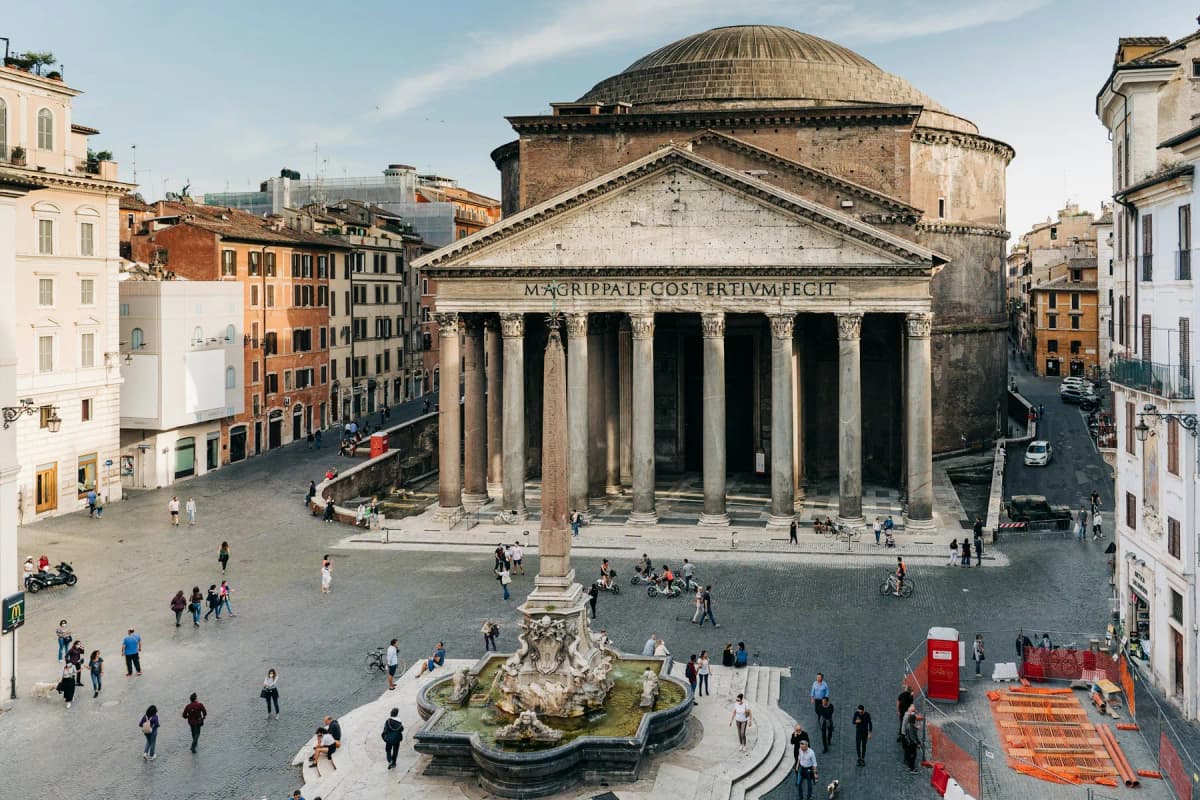 Photo: Gabriella Clare Marino on Unsplash
This is a walking day through the Centro Storico. The whole route is about four kilometres, and nothing on it is more than ten minutes from the next stop.
Morning: Campo de' Fiori, Piazza Navona and the Pantheon
Start at Campo de' Fiori, where a produce and flower market sets up every morning except Sunday. From there it is five minutes to Piazza Navona, the long oval square built on the outline of a Roman stadium, with Bernini's Fountain of the Four Rivers at its centre.
Another five minutes east brings you to the Pantheon, the best-preserved building of ancient Rome, with its unsupported concrete dome and open oculus. Entry has been ticketed since 2023. The price has been reported at between €5 and €7 depending on the date of the latest increase, and under-18s go free. You can buy at the door or online, and a booked time is useful at weekends. Allow half an hour.
For coffee, the streets around the Pantheon have several of Rome's best-known historic coffee bars. Standing at the counter is cheaper than sitting at a table, as it is everywhere in Italy.
Midday: the Trevi Fountain
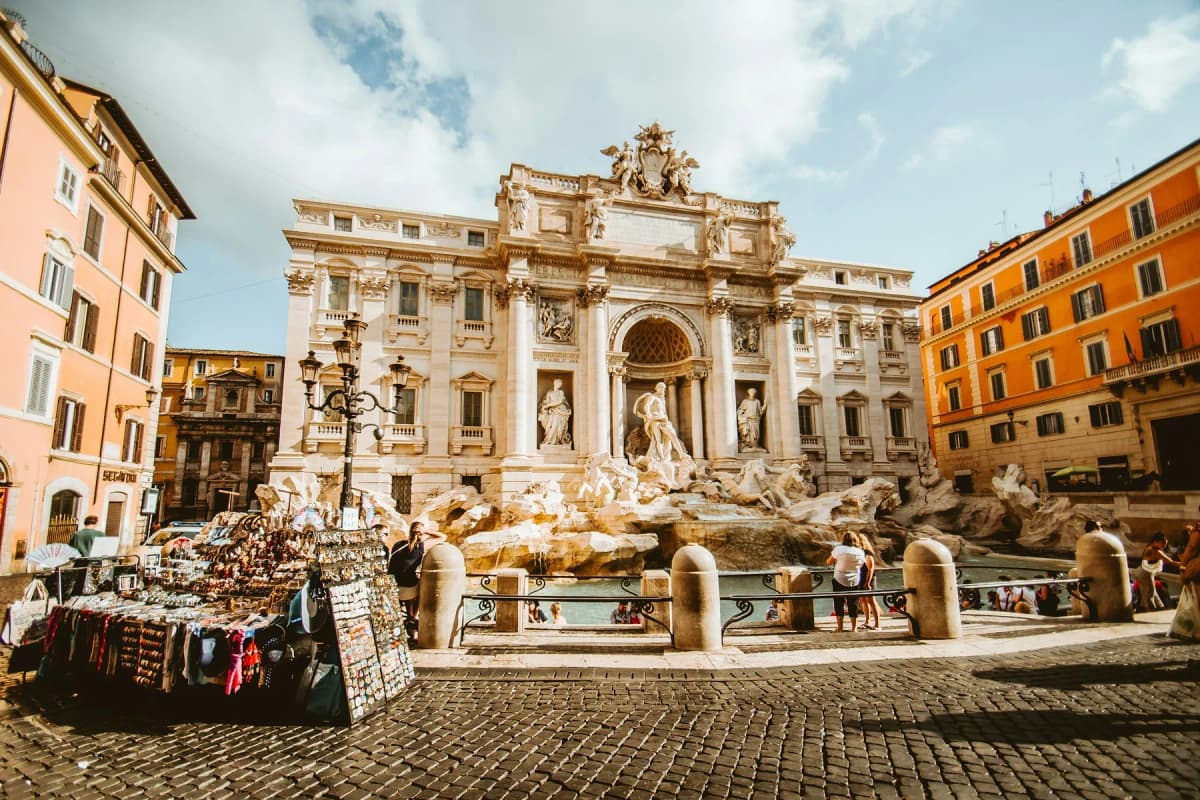 Photo: Chris Czermak on Unsplash
The Trevi Fountain is about eight minutes' walk from the Pantheon. Since February 2026, visitors who want to go down the steps to the edge of the basin pay a €2 fee during the day, with payment online or on site. Reports put the paid hours at about 9:00 to 22:00, starting later on some days when the coins are collected. Looking at the fountain from the square above remains free, and so does going down to the water late in the evening. It is at its most crowded from late morning to sunset, so if a clear view matters to you, come back early or late.
Afternoon: the Spanish Steps and Villa Borghese
Ten minutes north is Piazza di Spagna and the Spanish Steps. You can climb them but not sit on them: local rules prohibit sitting, eating or drinking on the steps, and fines are issued. At the top, turn left along the terrace to the Pincio, a viewpoint over Piazza del Popolo and the domes of the city that is at its best towards sunset.
Behind the Pincio is Villa Borghese, Rome's central park, with shaded paths, a small lake with a temple, and bikes and rowing boats for hire.
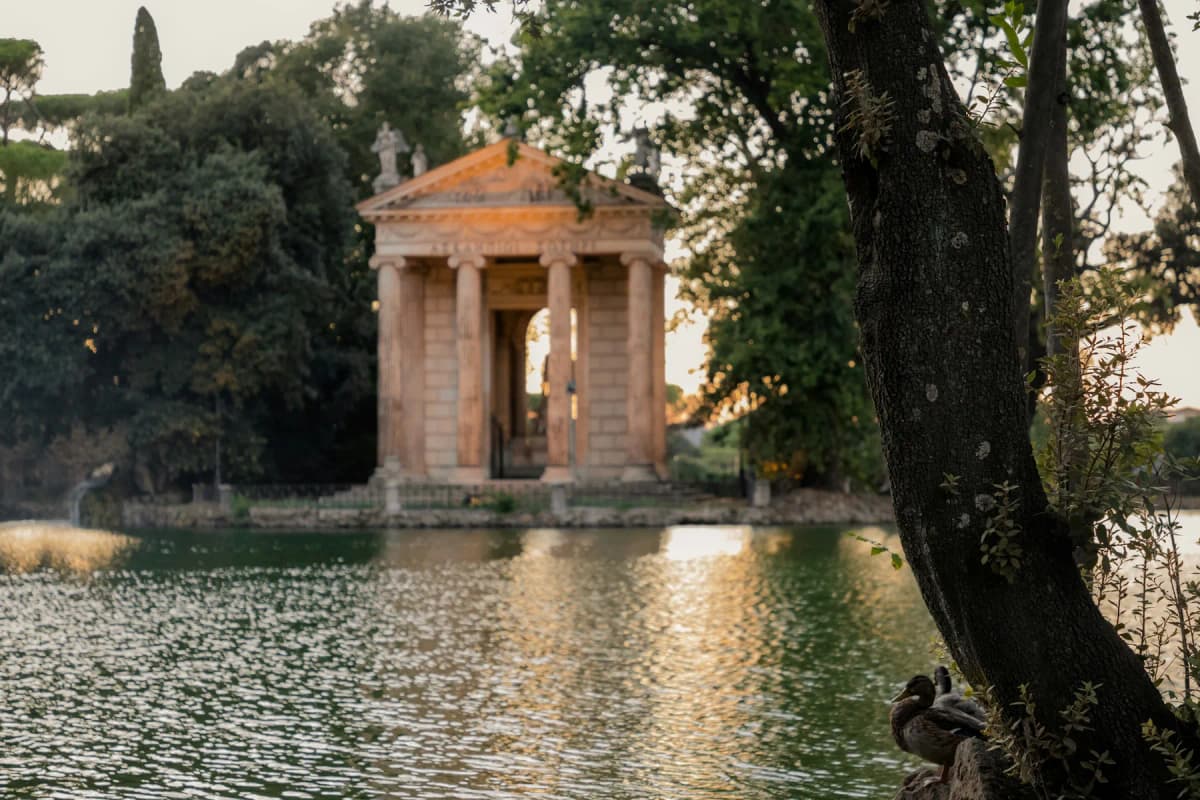 Photo: Jovan Vasiljević on Unsplash
If you want one more museum, make it the Borghese Gallery at the eastern edge of the park, which holds Bernini's finest sculptures and paintings by Caravaggio and Raphael. Reservations are compulsory, entry is in fixed two-hour slots, and it is closed on Mondays. Book as early as you can, then build the afternoon around the slot you get.
Evening
Walk back down through the Tridente, the smart shopping streets between the Spanish Steps and Piazza del Popolo, for an aperitivo. For a last dinner, the lanes west of Piazza Navona, around Via del Governo Vecchio, are a reliable area to look.
How to shorten or extend this itinerary
Rome in 1 day
One day is enough for an outline. Take an early Colosseum slot, walk through the Forum, then follow the Day 3 route in reverse from Piazza Venezia: Trevi Fountain, Pantheon, Piazza Navona. Finish by crossing the river to St Peter's Square in the late afternoon, when the basilica queue is shorter. Skip the Vatican Museums, which take half a day on their own.
Rome in 2 days
Do Day 1 as written. On day two, visit the Vatican Museums and St Peter's in the morning, then cross Ponte Sant'Angelo and walk the heart of Day 3 in the afternoon: Piazza Navona, the Pantheon and the Trevi Fountain. It is a full day with a lot of walking, and Trastevere becomes dinner only.
Rome in 4 days
Add a slower day south of the centre:
- Morning: climb the Gianicolo hill above Trastevere for the view, then walk down through the district while it is quiet.
- Midday: cross the river to the Aventine Hill for the Orange Garden terrace and the famous keyhole view of St Peter's dome at the Knights of Malta gate.
- Lunch: Testaccio, at the foot of the hill, is Rome's traditional food district, and its covered market is a good place to eat cheaply.
- Afternoon: the Baths of Caracalla, a vast and usually uncrowded ruin, are a 15 to 20 minute walk from Testaccio. Alternatively, take a bus out to the Appian Way and the catacombs.
Rome in 5 days
Use the fifth day for a trip out of the city:
- Ostia Antica. The ruins of Rome's ancient port are large, well preserved and far quieter than Pompeii. The local train from Porta San Paolo, beside Piramide metro station, takes about half an hour and uses an ordinary city transport ticket. The site is usually closed on Mondays.
- Tivoli. Villa d'Este, with its Renaissance fountains, and Hadrian's Villa are about an hour east by regional train or bus. Seeing both in one day is possible but long.
- Orvieto. This hilltop town in Umbria, with one of Italy's finest cathedral façades, is a little over an hour north by train.
- Florence. High-speed trains take about an hour and a half, so a day trip works, although the city deserves a night or two. See where to stay in Florence.
- Pompeii or the Amalfi Coast. Both are a long day from Rome. An organised day tour from Rome to Amalfi and Positano handles the connections. To do it yourself, see our Rome to Amalfi Coast guide, and if you have more time, our five day Amalfi Coast itinerary.
Getting to Rome
Most international flights use Fiumicino (FCO). The Leonardo Express train runs non-stop to Termini station in 32 minutes for about €14, and a cheaper regional train serves Trastevere and Ostiense stations. Official white taxis charge a fixed fare to the centre, recently about €55. If you would rather have a driver waiting, you can book an airport transfer in advance at an agreed price. Low-cost flights often land at Ciampino (CIA), which is linked to Termini by coach in about 40 minutes.
If your flight lands early or leaves late, luggage storage points around Termini and the centre will hold bags by the day, which frees up a half day for sightseeing.
Getting around Rome
You will walk most of this itinerary. Public transport is useful for three journeys: to the Colosseum (Line B or C to Colosseo), to the Vatican (Line A to Ottaviano), and to or from Trastevere (tram 8 from Piazza Venezia).
According to ATAC, the city transport operator, a single ticket costs €1.50 and is valid for 100 minutes on buses and trams, including one metro ride. A 24 hour pass is €8.50, 48 hours €15 and 72 hours €22. On this itinerary most people make two or three trips a day, so single tickets, or tapping a contactless bank card at the gate, usually work out cheaper than a pass. An increase in the single fare to €2 has been proposed, so check before you travel.
Wear proper walking shoes. The cobblestones are uneven, and a typical day on this plan covers eight to twelve kilometres.
What does three days in Rome cost?
Sightseeing itself is relatively cheap, because so much of Rome is free: the squares, the fountains from above, St Peter's Basilica, the churches and the views. Approximate 2026 costs per adult for this itinerary:
| Item | Approximate cost |
|---|---|
| Colosseum, Forum and Palatine | €18 |
| Vatican Museums (booked online) | €25 |
| Pantheon | €5 to €7 |
| Trevi Fountain basin access | €2 |
| St Peter's Basilica | Free (dome extra) |
| Borghese Gallery (optional) | About €15 to €20 with booking fee |
| Public transport, 3 days | About €10 to €22 |
| Airport train, return | About €28 |
That puts the essentials at roughly €90 to €120 per person before food and accommodation. Meals range from a few euros for pizza by the slice to €30 to €45 a head for a sit-down trattoria dinner with wine. Hotels are the largest cost, and the city also charges a tourist tax of up to about €10 per person, per night, depending on the hotel's star rating. The details are in our guide to where to stay in Rome.
When to go
April to June and September to October have the best weather for a walking itinerary, along with the biggest crowds and the highest prices. July and August are hot, often well over 30°C, so plan outdoor sites like the Forum for early morning and keep museums for the afternoon. Some family-run restaurants close for part of August. November to February, outside Christmas and New Year, is the quietest and cheapest period, with shorter days and some rain, and it is when timed tickets are easiest to get.
Before you go
- Book the Colosseum and Vatican Museums first, then flights and hotels around them if your dates are flexible.
- Get mobile data. You will use maps constantly, and your tickets will be on your phone. An Italy eSIM from Airalo can be set up before you leave.
- Insure the trip. EKTA travel insurance is one option to compare for cancellation and medical cover.
- Carry ID. Colosseum tickets are issued by name, and reduced-price tickets need proof of age.
- Watch your pockets. Pickpockets work the metro, the 64 bus and the crowds at the Trevi Fountain. Keep phones and wallets zipped away.
- Pay in euros. If a card machine offers to charge you in your home currency, decline. The exchange rate is almost always worse.
Rome itinerary FAQ
How many days is enough in Rome, Italy?
Three full days is enough to see the main sights at a reasonable pace: one day for ancient Rome, one for the Vatican and one for the historic centre. Two days works if you move quickly, and four or five allow time for Trastevere, Testaccio and a day trip.
Is 3 days in Rome too long?
No. Three days is the minimum that avoids rushing. The Vatican Museums and the Colosseum with the Forum each take half a day, and the historic centre needs at least another full day on foot. Even then, expect to fly home with sights still unvisited.
What should you not miss in Rome, Italy?
On a first visit: the Colosseum and Roman Forum, the Pantheon, the Trevi Fountain, St Peter's Basilica and the Sistine Chapel in the Vatican Museums. Add Piazza Navona and an evening in Trastevere, both of which are free and take no planning.
What are 20 must-see places in Rome?
This itinerary covers them: the Colosseum, Roman Forum, Palatine Hill, Capitoline Hill, Piazza Venezia, the Vatican Museums, the Sistine Chapel, St Peter's Basilica, Castel Sant'Angelo, Trastevere, Campo de' Fiori, Piazza Navona, the Pantheon, the Trevi Fountain, the Spanish Steps, the Pincio terrace, Villa Borghese and the Borghese Gallery. With extra days, add the Aventine Hill, the Baths of Caracalla and Ostia Antica.
Do I need to book the Colosseum and the Vatican in advance?
Yes, for most of the year. Colosseum tickets are released about 30 days ahead and Vatican Museums tickets about 60 days ahead, and popular morning slots sell out. In winter you may find tickets a few days before, but booking ahead still saves queueing.
Can you do the Colosseum and the Vatican on the same day?
You can, but it makes for a tiring day with about six hours of queues and galleries and a cross-city transfer in the middle. If you only have one or two days, pick one for a full visit and see the other from outside.
Is Rome a walkable city?
Yes. The historic centre is compact, mostly flat and partly pedestrianised, and many of the sights on this itinerary are within ten minutes of each other. The Colosseum and the Vatican are each about 25 minutes' walk from the Pantheon, in opposite directions, which is where the metro helps.
What is the best month to visit Rome?
May and late September to mid-October offer the best mix of warm weather and long days, though they are busy. For fewer crowds and lower prices, consider March, early April outside Easter, or November.
How we researched this guide
This itinerary is based on desk research: official visitor information, published opening rules and maps, not a personal trip report. Transport fares come from ATAC. Ticket prices and booking windows are those reported for 2026 for the Colosseum Archaeological Park and the Vatican Museums. We could not confirm every figure directly on the official sites, including the Pantheon and Trevi Fountain charges and the exact hours they apply, so check the official pages before you book. Walking times were measured on maps and are approximate.
Prices and rules change. If you spot something out of date, Let us know.
Planning more of Italy? Browse all our Italy guides.