Where to Stay in Rome: 7 Best Areas for 2026
October 12, 2026 · Italy
This post contains affiliate links. We may earn a commission if you book through them, at no extra cost to you. Disclaimer.
The best area to stay in Rome for a first visit is the Centro Storico, the historic centre around the Pantheon and Piazza Navona, because most of the famous sights are within a 20 minute walk. If that is over budget, Monti gives you the Colosseum on foot and a metro stop for less money, and Prati is the calm choice next to the Vatican. Trastevere is the pick for evenings out, and the streets around Termini station are the cheapest and best connected.
Rome's centre is larger than it looks on a map, and only parts of it are on the metro. That makes the choice of base matter more here than in most European capitals. This guide compares seven areas by what you can walk to, how you get around, how noisy it is and what it costs, then covers the tourist tax, airport transfers and the parts of the city that are not worth the saving.
Where to stay in Rome: the quick answer
| Area | Best for | Nearest metro | Walk to the Pantheon | Price level |
|---|---|---|---|---|
| Centro Storico (Pantheon, Navona, Campo de' Fiori) | First visits, short stays | None close (Barberini or Spagna, 15 minutes) | 0 to 10 minutes | High |
| Monti | Colosseum, food, value | Cavour, Colosseo (Line B) | About 20 minutes | Medium |
| Trastevere | Evenings, restaurants, atmosphere | None (tram 8) | About 20 minutes | Medium |
| Prati (Vatican side) | Families, quiet nights, Vatican visits | Ottaviano, Lepanto (Line A) | About 25 minutes | Medium |
| Spanish Steps and Tridente | Shopping, upmarket hotels | Spagna, Flaminio (Line A) | About 12 minutes | Very high |
| Termini and Esquilino | Budget, early trains, airport links | Termini (Lines A and B) | About 30 minutes | Low |
| Testaccio | Food, repeat visits | Piramide (Line B) | About 35 minutes | Low to medium |
Walking times are approximate and assume a hotel somewhere near the middle of each area.
How to choose an area in Rome
Three things decide whether a Rome hotel is in a good spot.
The metro covers less than you expect. Rome has three lines. Line A runs from the Vatican side (Ottaviano) through Spagna and Barberini to Termini. Line B runs from Termini past Cavour and the Colosseum to Piramide. Line C, the newest, reached the Colosseum in December 2025 and links it to San Giovanni and the eastern suburbs. None of them stops in the heart of the Centro Storico or in Trastevere, because the ground under the old city is full of archaeology. In those areas you walk or take a bus or tram.
Most of the centre is walkable, on cobbles. From the Pantheon it is about five minutes to Piazza Navona, under ten to the Trevi Fountain, and around 25 to the Colosseum or to St Peter's Square. A central base means you can do most of a trip on foot. The paving is uneven cobblestone (sampietrini), so wheeled suitcases and thin-soled shoes are both hard work. If you are arriving with heavy bags, check how far the hotel is from the nearest taxi drop-off.
Old buildings come with quirks. Many hotels and guest houses occupy a floor or two of a historic palazzo. Lifts can be tiny or missing, rooms facing the street can be noisy until late, and air conditioning is worth confirming if you visit between June and September. Read the room description for the floor, the lift and the window, not only the location.
A fourth point for drivers: the centre is a limited traffic zone (ZTL) enforced by cameras, and fines reach rental customers weeks later. Do not plan to drive to a central hotel unless the property confirms in writing that it can register your number plate.
The 7 best areas to stay in Rome
1. Centro Storico: best for a first visit
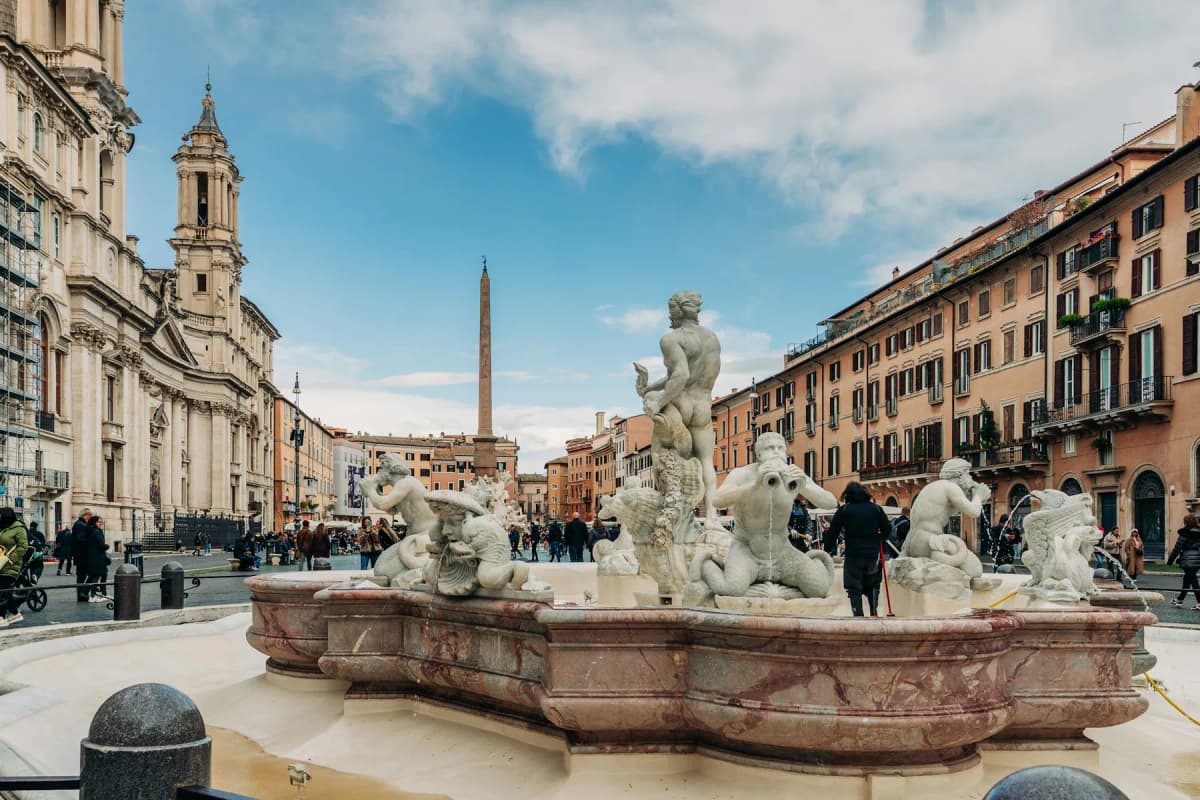 Photo: Gabriella Clare Marino on Unsplash
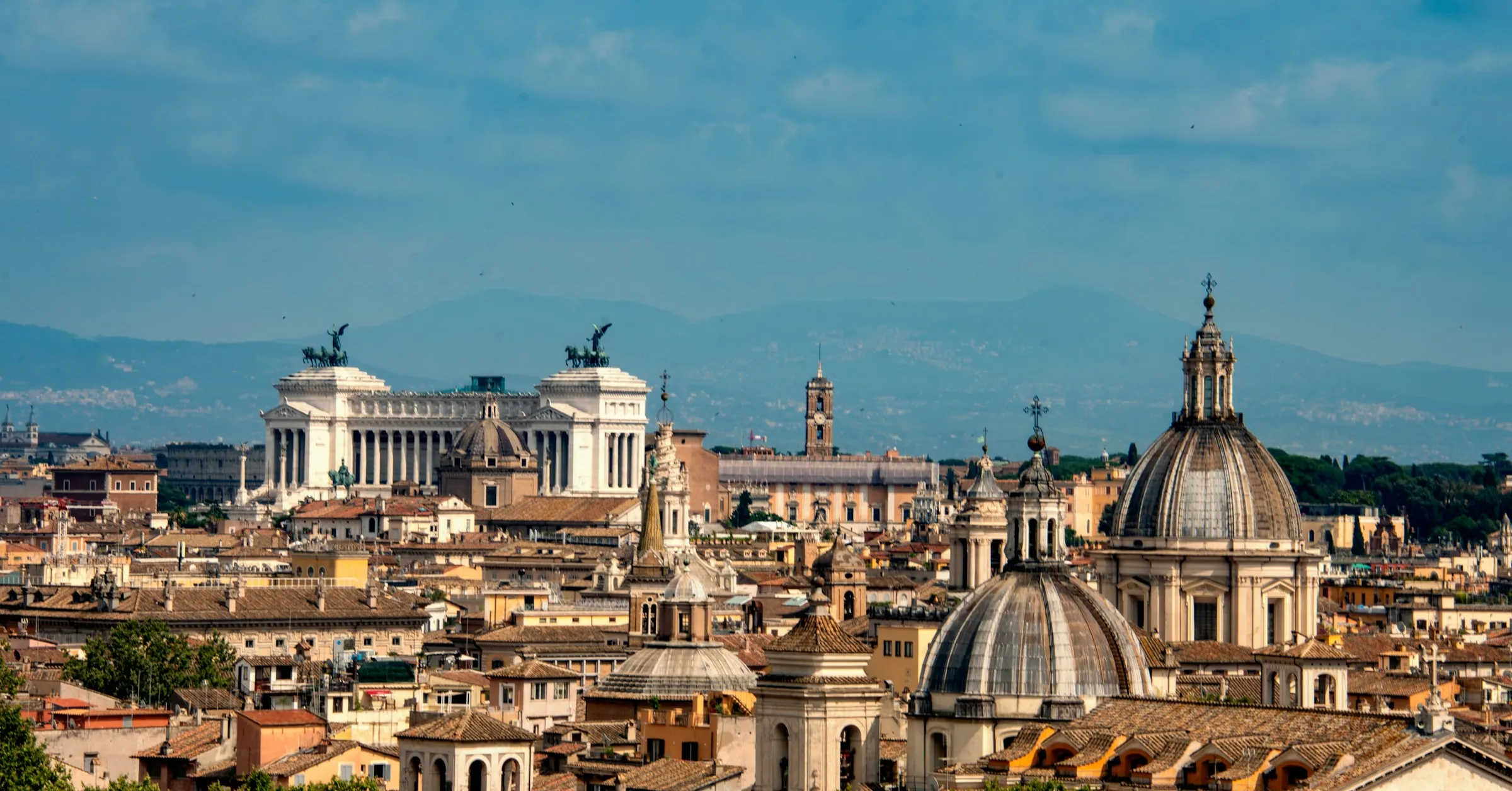
The historic centre is the tangle of lanes inside the bend of the Tiber, taking in the Pantheon, Piazza Navona and Campo de' Fiori. It is what most people picture when they think of Rome, and it is the most central place you can stay. The Trevi Fountain, the Spanish Steps, the Jewish Ghetto and the bridge to Castel Sant'Angelo are all a short walk away, and you can cross to Trastevere on foot for dinner.
The trade-offs are price and practicalities. Rooms here cost more than anywhere except the Spanish Steps, the streets are busy from morning until late, and there is no metro station. From the airport you will need a taxi or a train to Termini followed by a bus or cab. Campo de' Fiori has a market by day and bars by night, so the streets right around it are among the loudest in the centre.
- Good for: first visits, stays of two or three nights, anyone who wants to walk everywhere.
- Less good for: tight budgets, light sleepers, travellers relying on the metro.
- Where to look: the quieter lanes between the Pantheon and Piazza Navona, or around Via Giulia and Via dei Coronari. Ask for a courtyard room.
2. Monti: best for the Colosseum and good value
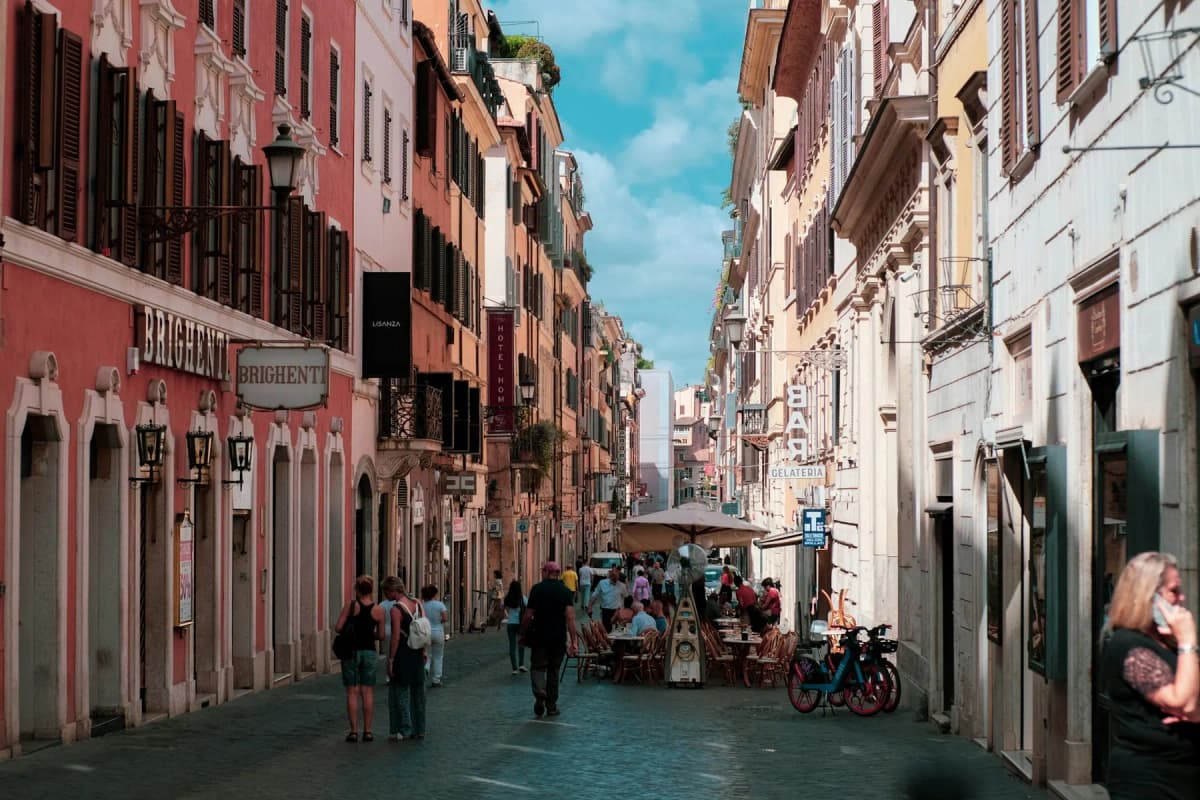 Photo: Matthew Jones on Unsplash
Monti sits on the slope between the Colosseum and Termini. It is one of the oldest residential districts in the city and still feels like a neighbourhood, with small wine bars, independent shops and a square, Piazza della Madonna dei Monti, where people gather in the evening. The Colosseum and the Roman Forum are five to ten minutes on foot, and the Trevi Fountain is about 15.
Monti also has what the Centro Storico lacks: metro stops. Cavour and Colosseo are both on Line B, two stops and one stop from Termini, and the Colosseo station now connects to Line C as well. Prices are usually a step below the historic centre for a similar standard of room. The area is hilly, with some steep streets and steps, and the main road through it, Via Cavour, is busy with traffic.
- Good for: ancient Rome on foot, food and wine bars, couples, travellers who want a metro stop.
- Less good for: anyone who struggles with hills, or who wants the Vatican close by.
- Where to look: the lanes around Via del Boschetto, Via dei Serpenti and Via Urbana, away from Via Cavour itself.
3. Trastevere: best for evenings and atmosphere
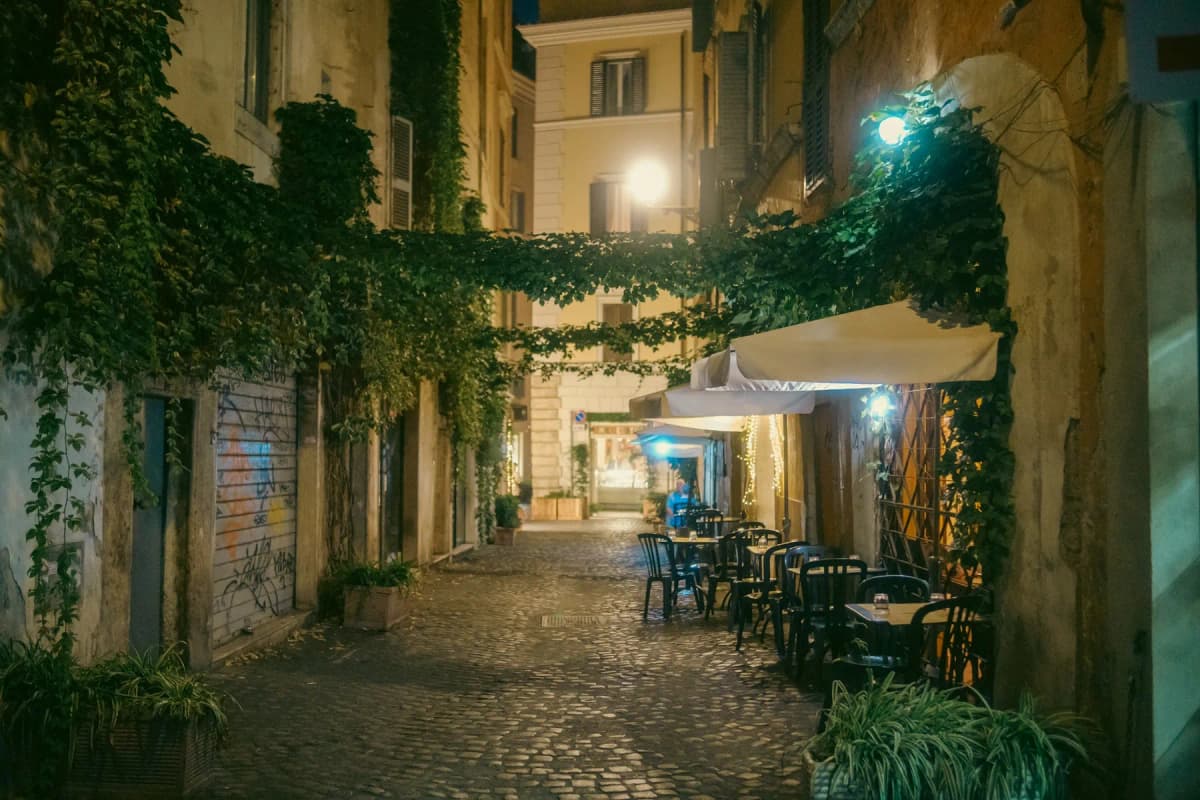 Photo: Mariano Alvarez on Unsplash
Trastevere is across the river from the historic centre, a district of ivy-covered houses, washing lines and small piazzas. It has the highest concentration of trattorias and bars in central Rome, and at night the lanes around Piazza di Santa Maria in Trastevere and Piazza Trilussa fill with people. By day it is quieter, and the church of Santa Maria in Trastevere and the Gianicolo hill above the district are both worth the time.
There is no metro. Tram 8 runs from Viale di Trastevere to Piazza Venezia in about ten minutes, and you can walk over Ponte Sisto to Campo de' Fiori in ten to fifteen. Trastevere railway station, at the southern end of the district, has direct regional trains to Fiumicino airport, which is useful, but it is a 15 to 20 minute walk or a tram ride from the old lanes. Noise is the main risk: the busiest streets stay loud well past midnight, especially from Thursday to Saturday.
- Good for: restaurants and nightlife on the doorstep, second visits, a more local feel.
- Less good for: early sleepers, short stays packed with sights on the other side of the city, heavy luggage.
- Where to look: the quieter southern half around Piazza di Santa Cecilia, or the streets towards the Gianicolo, away from Piazza Trilussa.
4. Prati: best for families and the Vatican
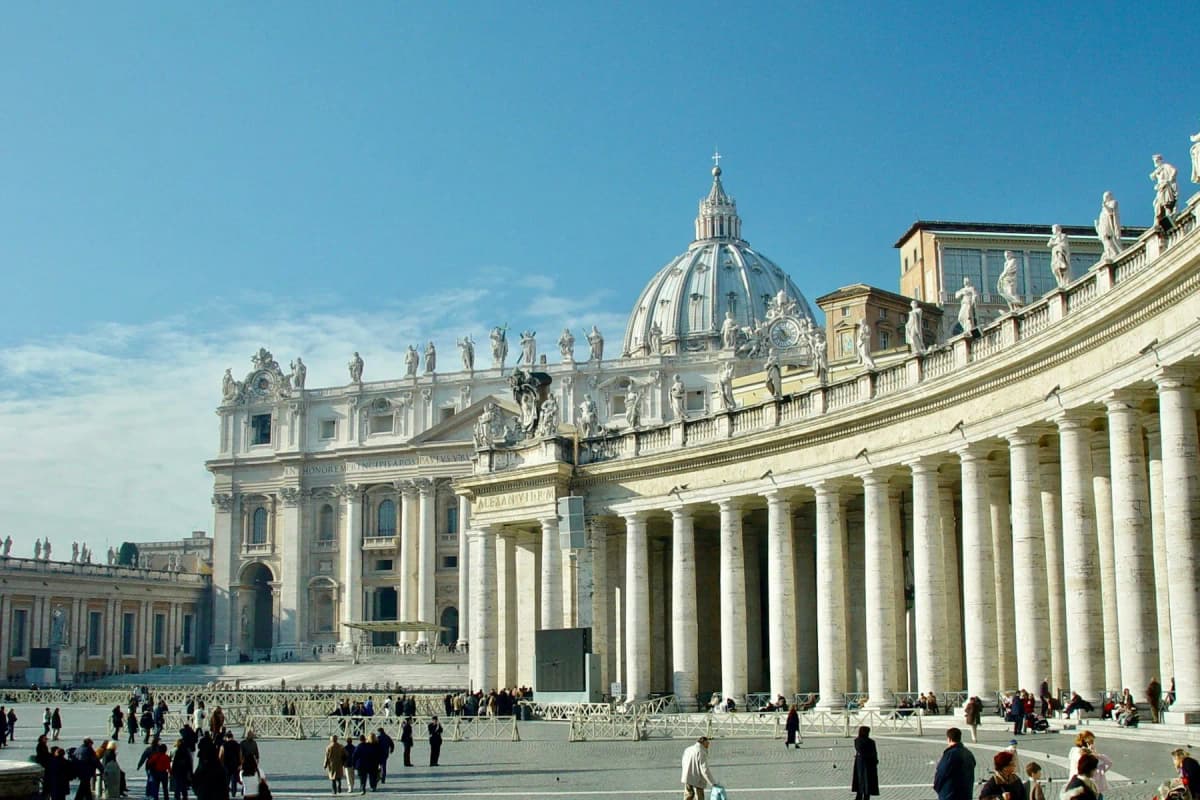 Photo: Arnold Straub on Unsplash
Prati is the grid of wide, tree-lined streets north of the Vatican. It was laid out in the late nineteenth century, so the buildings are grander and more regular than in the old centre, with proper lifts and larger rooms more common. It is a residential and office district where Romans shop and eat, and it is noticeably calmer at night than anywhere across the river.
The Vatican Museums entrance and St Peter's Square are both within about ten to fifteen minutes on foot from most of Prati, which helps if you have an early entry slot. Ottaviano and Lepanto stations on Line A put you three or four stops from the Spanish Steps and six from Termini. The walk to Piazza Navona takes about 20 to 25 minutes over the river past Castel Sant'Angelo. The downside is that you are on one edge of the sightseeing map, so the Colosseum means a metro ride with a change at Termini.
- Good for: families, quiet nights, an early Vatican visit, better-sized rooms for the money.
- Less good for: nightlife, anyone who wants to step out into the old lanes.
- Where to look: around Via Cola di Rienzo and Piazza Cavour for the shortest walk into the centre, or near Ottaviano for the Vatican and the metro.
5. Spanish Steps and Tridente: best for shopping and upmarket hotels
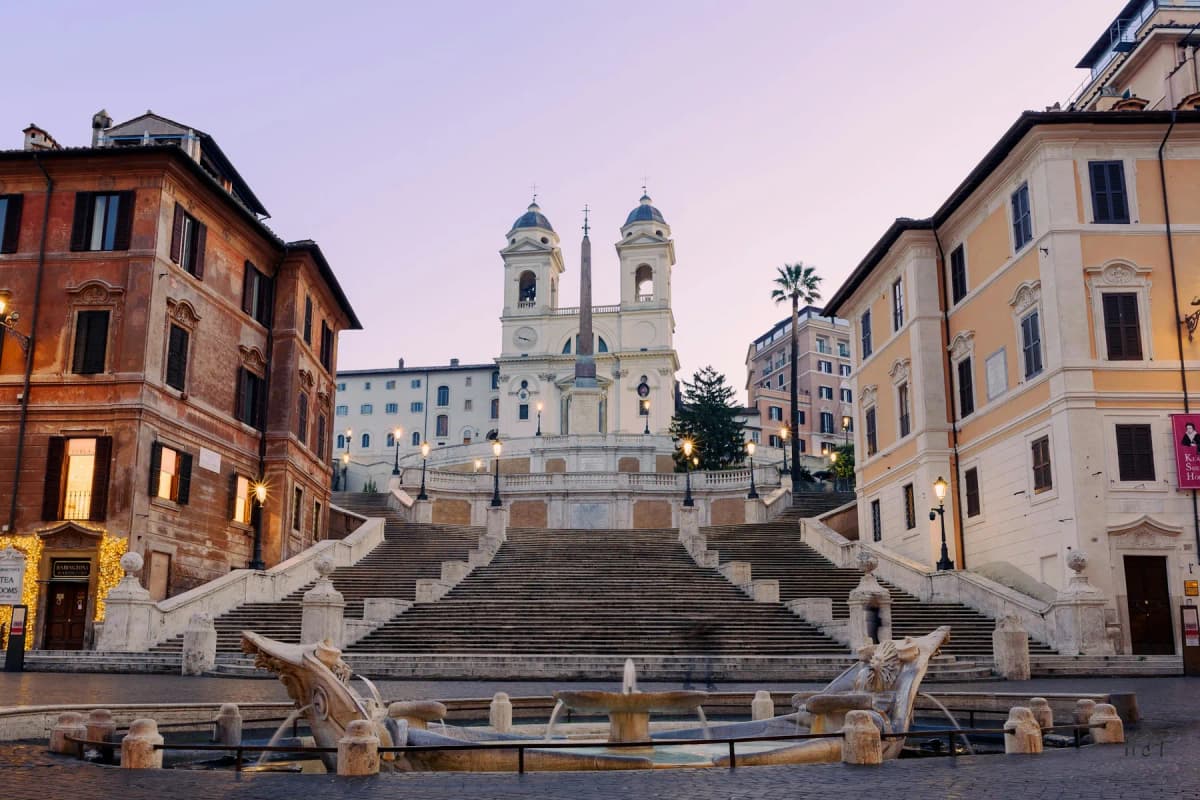 Photo: Matteo del Piano on Unsplash
The Tridente is the wedge of streets fanning south from Piazza del Popolo, with the Spanish Steps on its eastern side. This is Rome's smartest shopping district, centred on Via dei Condotti, and it holds many of the city's best-known luxury hotels. The streets are elegant, well kept and busy with visitors all day.
It is also practical. Spagna and Flaminio are on Line A, the Trevi Fountain is about ten minutes on foot, the Pantheon about 12, and the Villa Borghese park is up the hill behind the steps. The cost is the catch: this is the most expensive area in the city, and restaurants on the main streets charge accordingly. It quietens down in the evening once the shops close.
- Good for: luxury stays, shopping, a central base that is also on the metro.
- Less good for: budget and mid-range travellers, anyone looking for neighbourhood restaurants.
- Where to look: Via Margutta and the streets towards Piazza del Popolo are calmer than the blocks right below the steps.
6. Termini and Esquilino: best for budgets and early trains
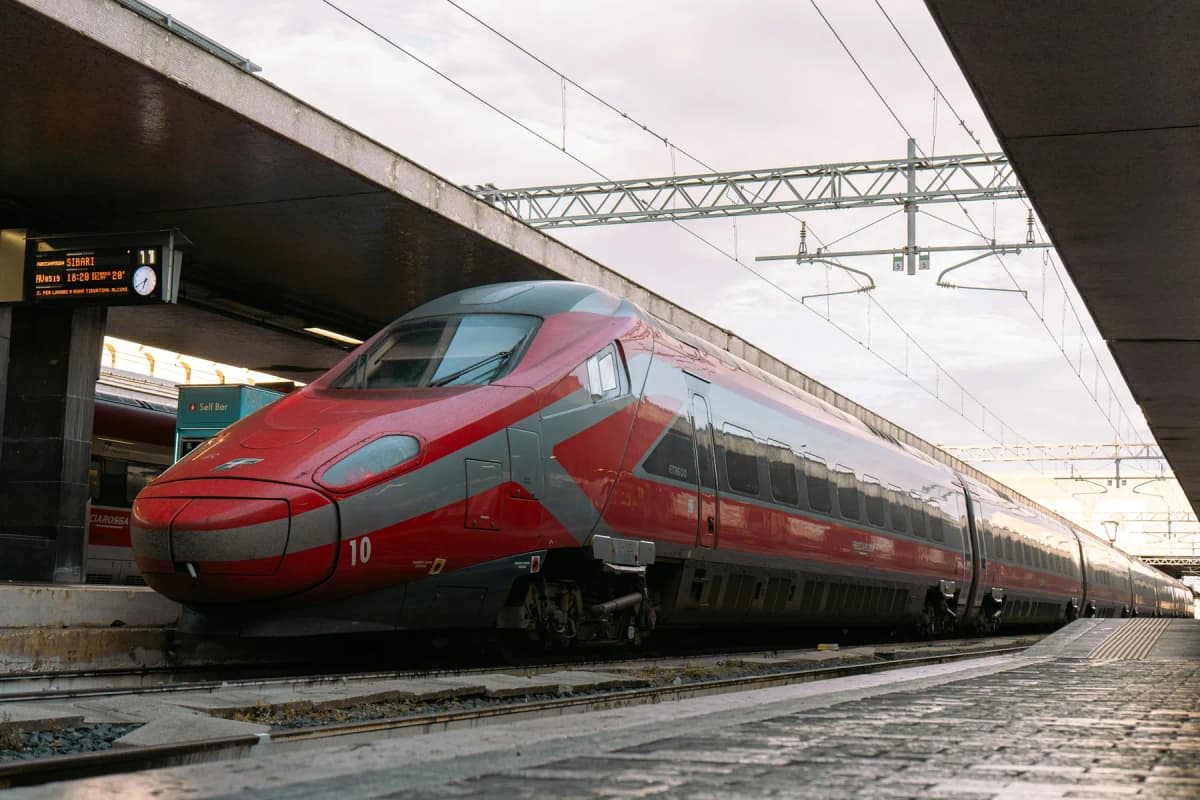 Photo:
 Roma Termini is the main railway station and the only place where metro Lines A and B meet. The Leonardo Express from Fiumicino airport arrives here, the airport buses from Ciampino stop outside, and high-speed trains leave for Florence, Naples and Venice. The streets around it hold the largest concentration of budget hotels, hostels and mid-range chains in Rome.
On the map, Termini does better than people give it credit for. The Colosseum is two metro stops away or about 20 minutes on foot, the basilica of Santa Maria Maggiore is around the corner, and Monti begins a few blocks to the south-west. What you give up is charm. The area is busy, functional and a little scruffy, and the immediate surroundings of the station, like those of most big stations, call for the usual care with bags and phones, particularly late at night.
- Good for: tight budgets, one-night stops, early departures, day trips by train.
- Less good for: atmosphere, romantic trips, travellers who want to stroll home through pretty streets.
- Where to look: the south-western side towards Via Nazionale, Santa Maria Maggiore and Monti. Some travellers find the blocks immediately east of the station, around Via Giolitti and Via Marsala, less comfortable after dark.
7. Testaccio: best for food and repeat visits
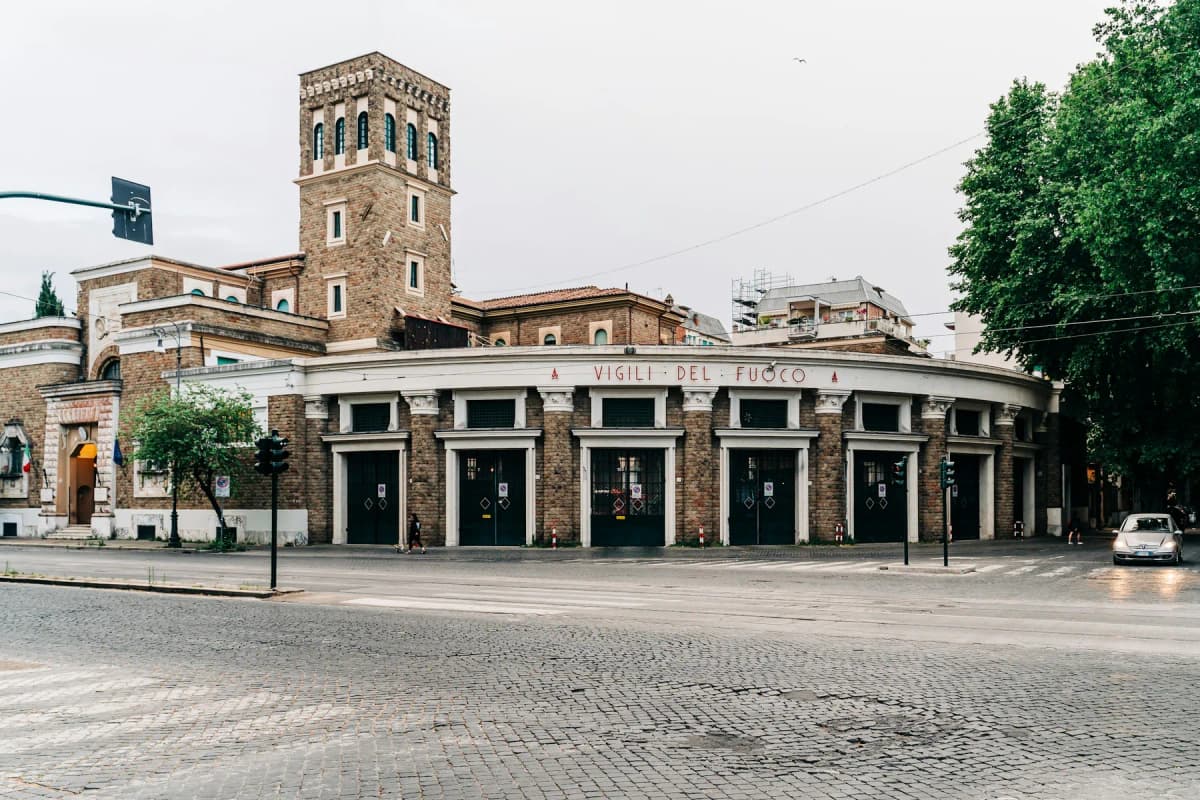 Photo: Gabriella Clare Marino on Unsplash
Testaccio is a working-class district south of the Aventine hill, built around the city's former slaughterhouse. It is known in Rome for traditional cooking, and its covered market is one of the best places in the city for an inexpensive lunch. There are few big-name sights, which is the point: prices are lower, the restaurants are aimed at residents, and the streets are a calm grid.
Piramide station on Line B is at the edge of the district, two stops from the Colosseum and four from Termini, and the adjoining Ostiense railway station has regional trains to Fiumicino airport. Walking to the historic centre takes a good half hour. Testaccio suits people who have already seen the main sights, or who care more about eating well than being close to the Pantheon.
- Good for: food-focused trips, longer stays, second or third visits, lower prices.
- Less good for: first-timers with two or three days, anyone who wants sights on the doorstep.
- Where to look: the streets around Piazza Testaccio and the market, within a ten minute walk of Piramide.
What does it cost to stay in Rome?
Rome is one of the more expensive Italian cities for accommodation, and prices move a lot with the season. As a rough guide for a double room in a decent, central property:
| Category | Low season (roughly November, January, February) | High season (roughly April to June, September, October) |
|---|---|---|
| Hostel dorm bed | About €25 to €45 | About €40 to €80 |
| Budget hotel or guest house | About €70 to €120 | About €120 to €180 |
| Mid-range hotel (3 to 4 star) | About €120 to €180 | About €180 to €300 |
| Luxury hotel (5 star) | From about €350 | From about €600 |
These are indications drawn from typical listed prices, not quotes, and Easter, Christmas, New Year and major events push them higher. July and August are hot and often a little cheaper than spring and autumn. The Centro Storico and Spanish Steps sit at the top of each range, Termini and Testaccio at the bottom.
Many of the best-value places in Rome are not conventional hotels but small guest houses (often listed as B&Bs or "affittacamere") with a handful of rooms on one floor of a residential building. They can be excellent, but reception hours are often limited, so tell them your arrival time.
Rome tourist tax
Rome charges a tourist tax (contributo di soggiorno) per person, per night. It is almost never included in the room price shown online and is paid at the property, usually at check-out. The rates below are the ones widely reported for 2026; your booking confirmation should state the exact amount.
| Accommodation | Tax per person, per night |
|---|---|
| 5 star hotel | About €10 |
| 4 star hotel | About €7.50 |
| 3 star hotel | About €6 |
| 2 star hotel | About €5 |
| 1 star hotel | About €4 |
| B&Bs, guest houses, holiday apartments, hostels | About €3.50 to €7, depending on category |
The tax is charged for a maximum of ten consecutive nights, and children under ten are exempt. For two adults in a four star hotel for four nights that adds about €60 to the bill, so it is worth including when you compare prices.
When to book
Rome is busy for most of the year. Spring (April to June) and early autumn (September and October) are the peak, with the mildest weather and the highest prices. Easter week is especially crowded because of the papal events at the Vatican. For those periods, booking three to four months ahead gives a much better choice of central rooms. For winter, outside Christmas and New Year, a few weeks is usually enough.
Choose a rate with free cancellation where you can. It lets you reserve early and still switch if a better room appears, and it protects you if train or flight plans change.
If you plan to visit the Colosseum or the Vatican Museums, book those as soon as tickets are released and fit the rest of the trip around them. Our Rome itinerary explains how the booking windows work and how to group the sights by area.
Getting to your hotel from the airports
From Fiumicino (FCO). Most international flights land here, about 30 km south-west of the centre.
- Leonardo Express train: non-stop to Termini in 32 minutes, about €14 one way. Best for Termini, Monti and anywhere on the metro.
- FL1 regional train: about €8, stopping at Trastevere, Ostiense and Tiburtina stations but not Termini. Best for Trastevere and Testaccio.
- Taxi: official white taxis charge a fixed fare between the airport and addresses inside the Aurelian Walls, which covers all seven areas in this guide apart from some of Prati. It is posted on the taxi door and has recently been about €55 for up to four passengers with luggage. Confirm the fixed fare before you set off.
- Private transfer: costs a little more than a taxi but the driver meets you in arrivals with the price agreed in advance. You can compare and book a transfer ahead, which is useful for late arrivals, families and groups.
- Airport buses: several companies run coaches to Termini for roughly €6 to €8. They take 50 minutes or more depending on traffic.
From Ciampino (CIA). The smaller airport used by low-cost airlines has no railway station. Coaches run to Termini in about 40 minutes for around €6, and taxis charge a fixed fare to the centre that is lower than from Fiumicino.
Arriving by train. High-speed trains from Florence, Naples, Venice and Milan arrive at Termini, and some also stop at Tiburtina. From Termini, the metro reaches Monti, the Spanish Steps and Prati directly. For the Centro Storico and Trastevere, a taxi from the official rank is the easiest option with luggage.
If you arrive before check-in or leave late, most hotels will hold bags. For apartments that cannot, luggage storage points near Termini and around the centre take bags by the day.
Getting around Rome from your base
- On foot. This is how you will cover most of the centre. Allow more time than the map suggests, because the lanes wind and the sights slow you down.
- Metro. Lines A and B cross at Termini. Trains run from about 5:30 to 23:30, later on Friday and Saturday nights. Line A serves the Vatican, the Spanish Steps and the Trevi area (Barberini). Line B serves the Colosseum, Monti and Testaccio.
- Buses and trams. These fill the gaps, especially for the Centro Storico and Trastevere. Routes 40 and 64 link Termini with the historic centre and the Vatican, and tram 8 connects Trastevere with Piazza Venezia. Buses are frequent on paper but can be slow and crowded.
- Tickets. According to ATAC, the city transport operator, a single ticket (BIT) costs €1.50 and is valid for 100 minutes on buses and trams with one metro ride. Passes cost €8.50 for 24 hours, €15 for 48 hours, €22 for 72 hours and €29 for a week. You can also tap a contactless bank card at metro gates and on board buses instead of buying a paper ticket. A rise in the single fare to €2 has been proposed, so check the current price when you travel.
- Taxis. Use official white taxis from ranks or a recognised app. They run on the meter within the city, with the fixed fares applying only to airport trips.
Areas to skip or think twice about
- Hotels far outside the centre sold as "Rome". Cheap rooms near the ring road, in EUR or close to Fiumicino can mean 45 minutes or more each way. Check the walking time to a metro station, not the distance to "the centre".
- The far side of the Vatican. Listings described as "near the Vatican" sometimes sit west of it, in Aurelio, a long walk uphill from anything else. Prati, on the north-east side, is the part to look for.
- The blocks right beside Termini, if atmosphere matters. They are convenient and usually fine, but they are the least attractive part of the centre. If the price difference is small, Monti is a better experience for a similar journey time.
- Directly on Campo de' Fiori or Piazza Trilussa. Wonderful for an evening, hard to sleep above.
Before you book
- Check the map pin, not the description. "Central" and "near the Colosseum" are used loosely. Look at the walking route to the nearest metro stop or to the Pantheon.
- Ask about the lift, the floor and the air conditioning. All three vary widely in historic buildings.
- Add the tourist tax. Up to €10 per person, per night, on top of the listed price.
- Get mobile data. Maps and bus apps make Rome much easier. An Italy eSIM from Airalo can be installed before you fly.
- Insure the trip. Cover for cancellations, delays and medical care is worth having. EKTA travel insurance is one option to compare.
- Heading south afterwards? Our guide to getting from Rome to the Amalfi Coast covers the trains and ferries, and Florence is about an hour and a half north by high-speed train: see where to stay in Florence.
Frequently asked questions
What is the best area to stay in Rome for a first-time visit?
The Centro Storico, around the Pantheon and Piazza Navona. It is the most central part of the city, and the Trevi Fountain, the Spanish Steps and Campo de' Fiori are all within a 15 minute walk. If prices there are too high, Monti is the best alternative: it is next to the Colosseum, has two metro stops and usually costs less.
What is the most central area to stay in Rome?
The streets between the Pantheon and Piazza Navona are the geographic middle of the sightseeing area. From there it is roughly 25 minutes on foot to both the Colosseum and St Peter's Square, and less to almost everything else.
What is the prettiest part of Rome?
That is a matter of taste, but the two areas most often named are Trastevere, for its ivy-covered lanes and small piazzas, and the Centro Storico around Piazza Navona and Via dei Coronari. Monti and the streets near Via Margutta in the Tridente are also very attractive and a little calmer.
Can you recommend some hotels in Rome?
We do not list individual hotels in this guide, because prices and quality change quickly and we have not inspected properties ourselves. Choose the area first using the comparison above, then filter by recent guest reviews, a free cancellation rate and the practical points that matter in old buildings: lift, air conditioning and a quiet room.
How many nights do you need in Rome?
Three nights gives you two and a half to three full days, enough for ancient Rome, the historic centre and the Vatican without rushing. Four or five nights allows a slower pace and a day trip. See our Rome itinerary for a day-by-day plan.
Is it better to stay near the Colosseum or the Vatican?
Near the Colosseum, in Monti, for most visitors. It is closer to the historic centre and has more choice of places to eat in the evening. Stay near the Vatican, in Prati, if you want quiet streets and larger rooms, are travelling with children, or have a very early Vatican Museums entry.
Is Trastevere a good place to stay?
Yes, if evenings matter to you and you do not mind walking or taking a tram. It has more restaurants and bars than any other central district. It is less suitable if you want quiet nights or plan to rely on the metro, since there is no station.
Is it safe to stay near Termini station?
Thousands of visitors stay around Termini without any problem, and it is the most practical area for transport. Like the surroundings of most large stations it attracts pickpockets and feels rougher late at night, so keep valuables secure and choose a hotel on the Via Nazionale or Santa Maria Maggiore side if that concerns you.
How we researched this guide
This guide is based on desk research, not on stays at individual hotels. Transport fares come from ATAC, the city transport operator, and airport train information from Trenitalia. Tourist tax rates are those reported for 2026 and set by Roma Capitale; we could not confirm every category against the official table, so treat them as a guide and check your booking confirmation. Walking times were measured on maps and are approximate. Price ranges are indications taken from typical listed rates in 2026 and will vary by date.
Prices and rules change. If you spot something out of date, Let us know.
Planning more of Italy? Browse all our Italy guides.