Where to Stay in Florence: 7 Best Areas for 2026
October 12, 2026 · Italy
This post contains affiliate links. We may earn a commission if you book through them, at no extra cost to you. Disclaimer.
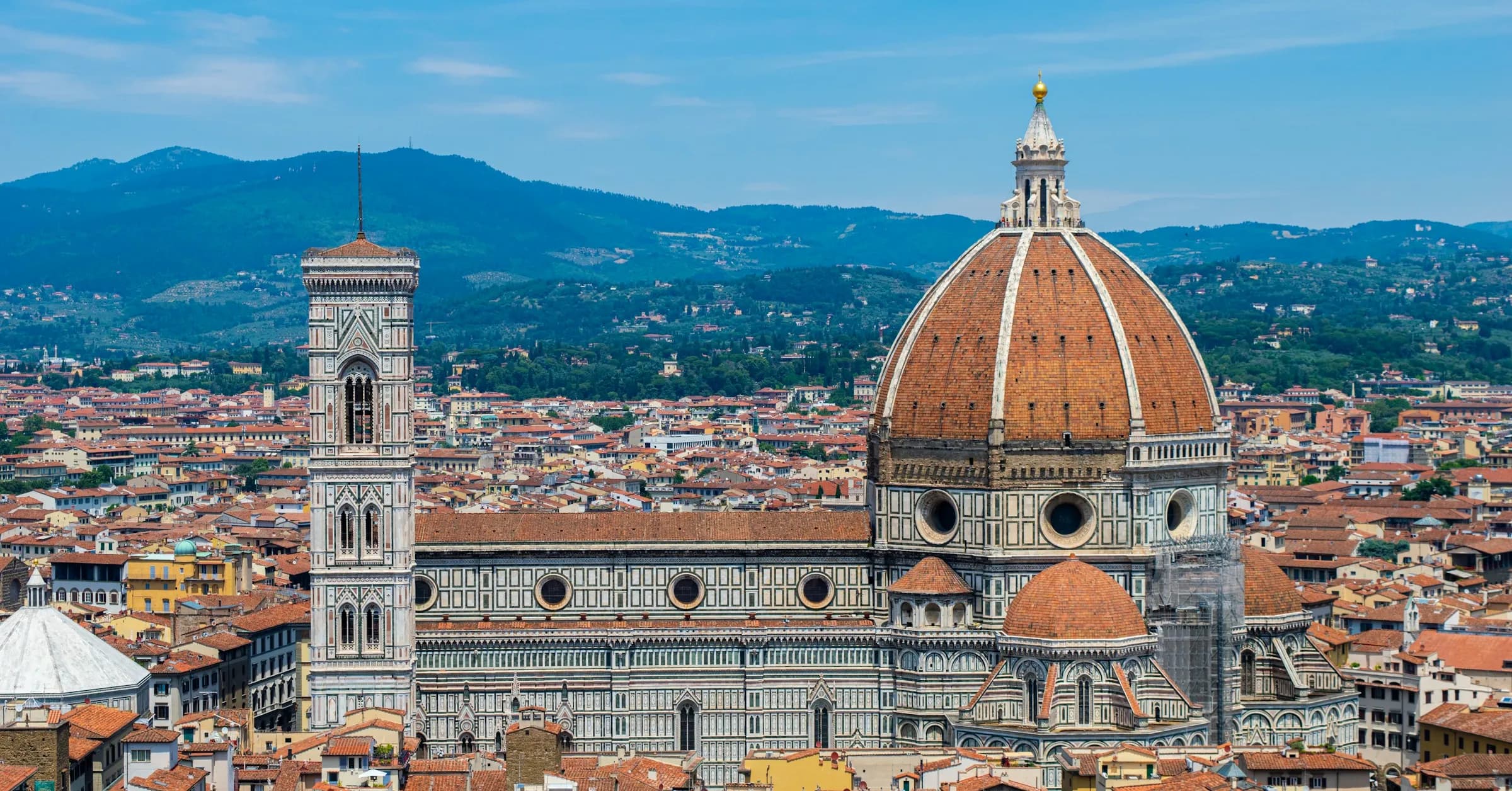
The best area to stay in Florence for a first visit is the historic centre around the Duomo and Piazza della Signoria, where the cathedral, the Uffizi and the Ponte Vecchio are all within a ten minute walk. Santa Maria Novella is the practical choice beside the station, Santa Croce has the best evenings, and the Oltrarno, across the river, is quieter and more local. Florence is small, so even the outer areas in this guide are 20 to 25 minutes on foot from the cathedral.
Because the city is so compact, choosing a base here is less about distance and more about noise, price and how you are arriving. This guide compares seven areas, then covers what rooms cost, the tourist tax, getting in from the airports, and the limited traffic zone that catches out visitors with rental cars.
Where to stay in Florence: the quick answer
| Area | Best for | Walk to the Duomo | Walk to the station (SMN) | Price level |
|---|---|---|---|---|
| Duomo and Piazza della Signoria | First visits, one or two nights | 0 to 5 minutes | About 10 minutes | High |
| Santa Maria Novella | Train travellers, day trips, short stays | About 8 minutes | 0 to 5 minutes | Medium |
| San Lorenzo and San Marco | Budget, markets, the Accademia | About 5 to 10 minutes | About 5 to 10 minutes | Low to medium |
| Santa Croce and Sant'Ambrogio | Restaurants, bars, a lived-in feel | About 10 minutes | About 20 minutes | Medium |
| Oltrarno: Santo Spirito | Artisans, evenings, a local feel | About 15 minutes | About 15 to 20 minutes | Medium |
| Oltrarno: San Frediano | Quiet streets, longer stays | About 20 minutes | About 15 to 20 minutes | Low to medium |
| San Niccolò | Views, calm, couples | About 20 minutes | About 30 minutes | Medium to high |
Walking times are approximate and assume a hotel near the middle of each area.
How to choose an area in Florence
Everything is within walking distance. The historic centre is roughly two kilometres across and almost flat. From the Duomo it is about five minutes to Piazza della Signoria and the Uffizi, under ten to the Ponte Vecchio, and ten to the main station. There is no metro and little need for one. Most visitors never use public transport except to reach the airport or the Piazzale Michelangelo viewpoint.
Noise varies more than distance. The streets between the Duomo and the river are full of tour groups by day, and parts of Santa Croce and Santo Spirito are lively until late at night. If you sleep lightly, ask for a room on an internal courtyard or an upper floor, and check whether the windows are double-glazed.
Buildings are old. Many hotels and guest houses occupy a floor or two of a centuries-old palazzo. Lifts may be small or absent, staircases are often steep stone, and air conditioning is not universal. It matters from June to early September, when Florence is among the hottest cities in Italy.
Cars are a liability. Almost the whole historic centre is a limited traffic zone, the ZTL, covered in its own section below. If you are touring Tuscany by car, plan to arrive in Florence without it or to leave it at the edge of the centre.
The 7 best areas to stay in Florence
1. Duomo and Piazza della Signoria: best for a first visit
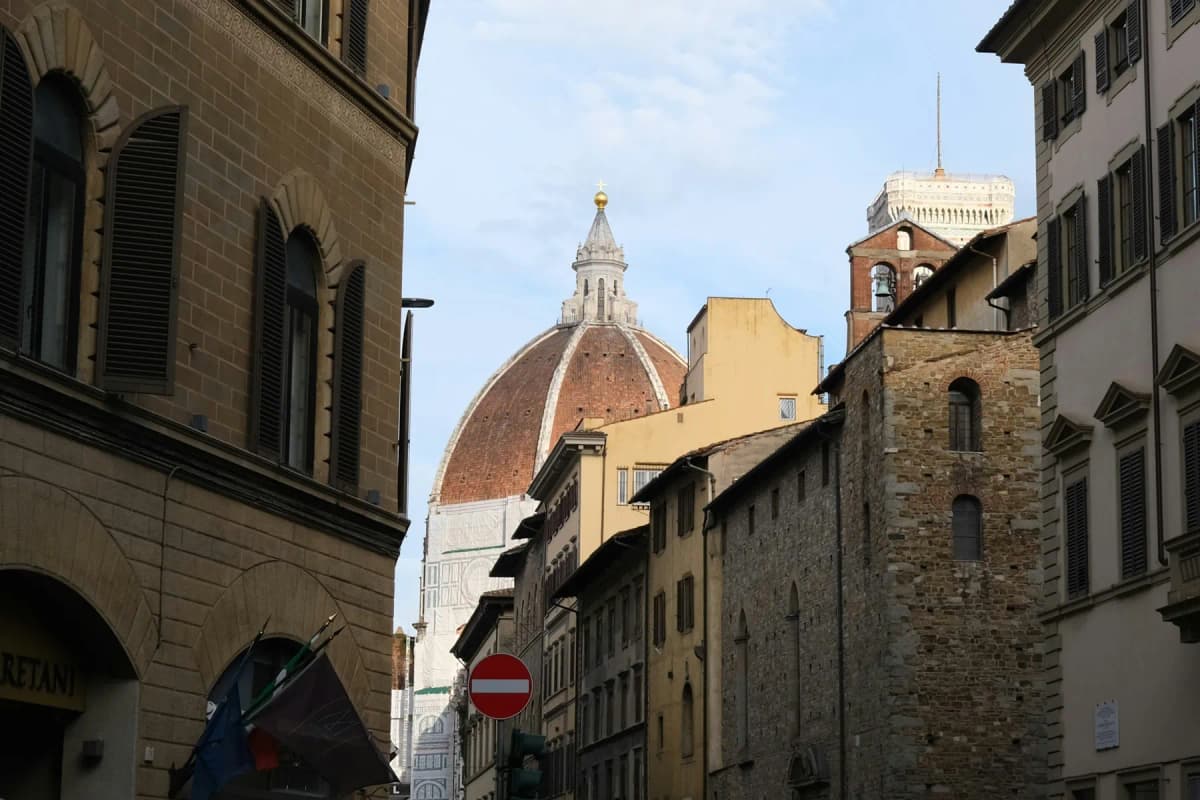 Photo: Kseniia Zapiatkina on Unsplash
The core of the historic centre runs from the cathedral south to the River Arno, taking in Piazza della Repubblica, Piazza della Signoria, the Uffizi and the Ponte Vecchio. Stay here and the main sights are on your doorstep, which makes a real difference when you have a timed slot for Brunelleschi's dome at 8:15 or want to see the squares before the day-trippers arrive.
It is the busiest and most expensive part of the city. The streets are crowded from mid-morning to early evening, restaurants in the main squares are priced for visitors, and rooms cost more than anywhere else for the same standard. It does quieten down at night, more than Santa Croce or Santo Spirito.
- Good for: first visits, stays of one or two nights, anyone who wants to walk out of the door and be there.
- Less good for: budgets, people who dislike crowds, drivers.
- Where to look: the side streets east of Via dei Calzaiuoli towards the Bargello, or the lanes between Piazza della Signoria and the river, away from the main pedestrian routes.
2. Santa Maria Novella: best for train travellers
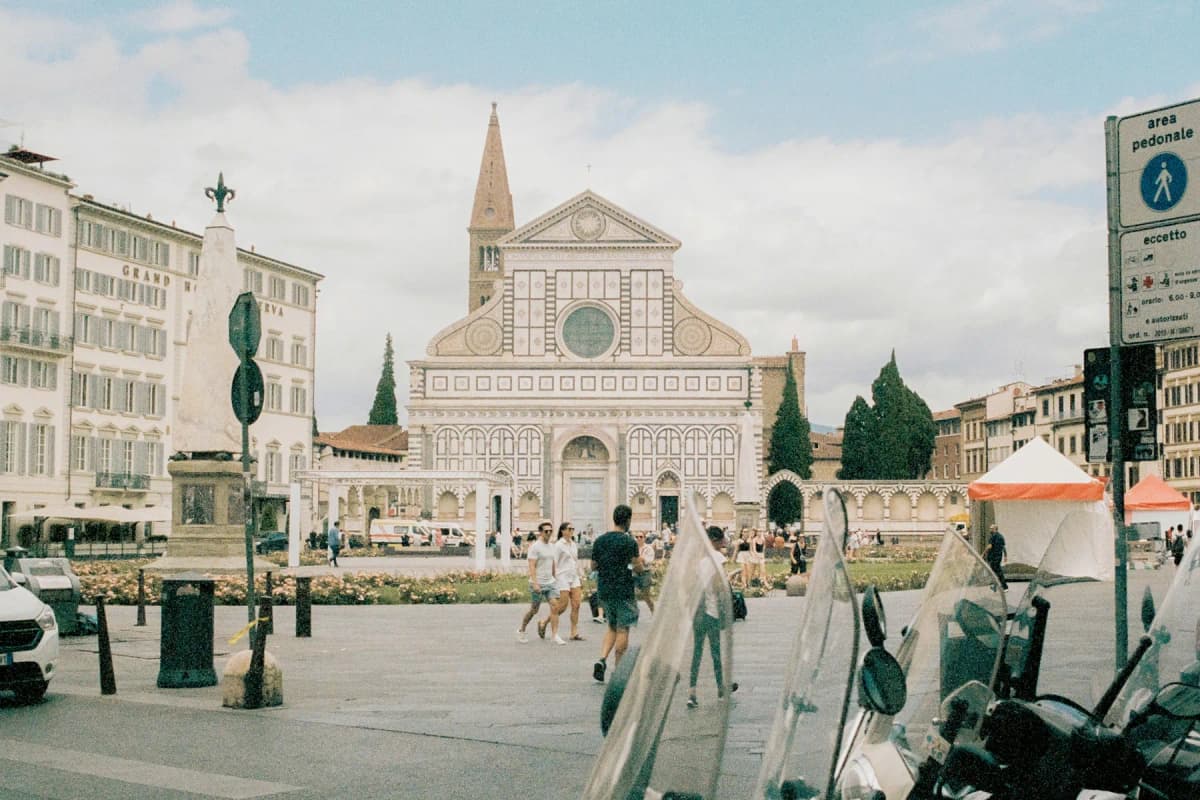 Photo: Asa Rodger on Unsplash
Firenze Santa Maria Novella, usually shortened to SMN, is the main railway station, and the district beside it is named after the church with the striped marble façade on the adjoining square. High-speed trains from Rome, Venice and Milan arrive here, the airport tram stops alongside, and regional trains leave for Pisa, Lucca and Siena. The Duomo is less than ten minutes' walk away.
That makes it the most practical base for short stays and for anyone planning day trips around Tuscany. The area between the station and the river, around Via della Scala and Piazza Santa Maria Novella, has a wide choice of mid-range and upmarket hotels. The streets immediately around the station itself are functional and traffic-heavy, as station districts usually are.
- Good for: arriving and leaving by train, day trips, heavy luggage, one-night stops.
- Less good for: atmosphere right outside the door, at least on the station side.
- Where to look: around Piazza Santa Maria Novella and south towards Via de' Tornabuoni and the river.
3. San Lorenzo and San Marco: best for budgets
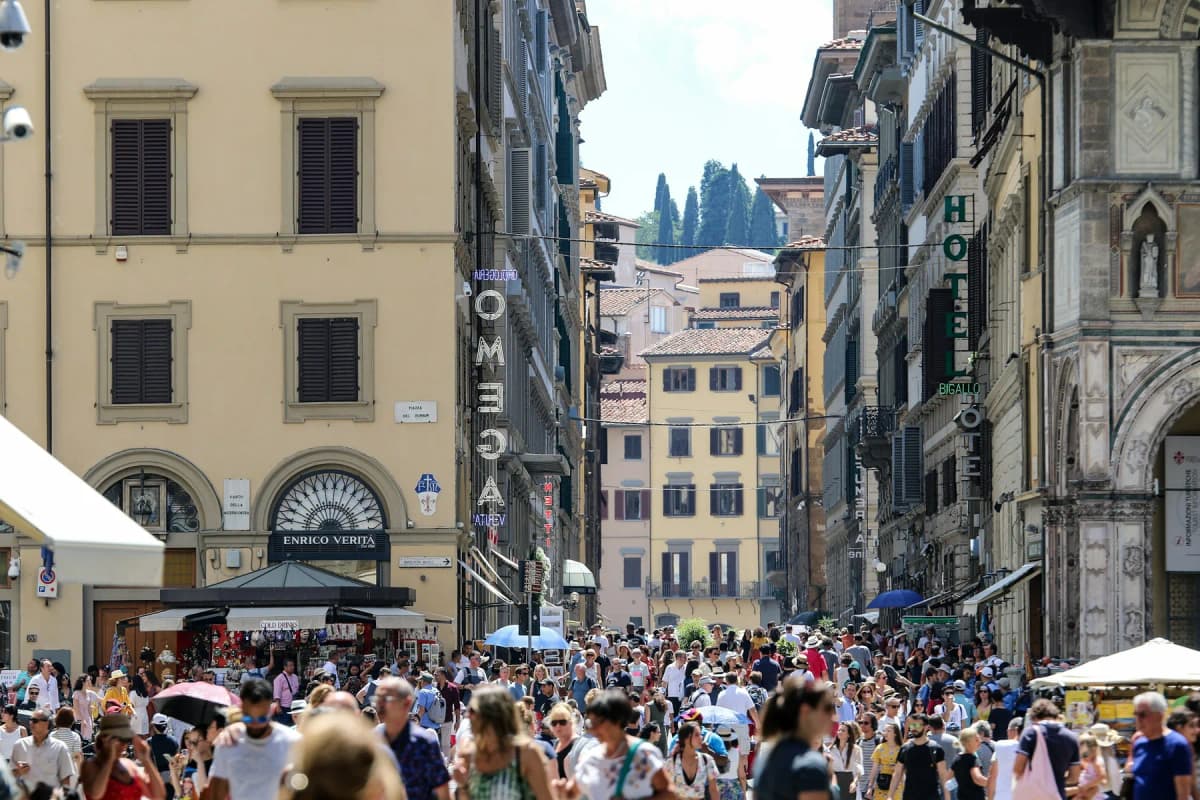 Photo: Maxime Steckle on Unsplash
North of the Duomo, San Lorenzo is the market district. The Mercato Centrale, a nineteenth-century iron and glass hall, has food stalls on the ground floor and a large food court upstairs, and the surrounding streets are lined with leather and souvenir stalls. Further north, San Marco is a student area around the university and the Accademia Gallery, where Michelangelo's David is displayed.
These streets hold many of Florence's cheaper hotels, hostels and guest houses, and they are a five to ten minute walk from both the station and the cathedral. The market area is busy and a little chaotic by day. San Marco, around Piazza della Santissima Annunziata, is calmer and one of the most handsome corners of the centre.
- Good for: lower prices in a central location, food markets, an early Accademia slot.
- Less good for: anyone who wants quiet, picturesque streets right outside.
- Where to look: between Piazza San Marco and Piazza della Santissima Annunziata for calm, or near the Mercato Centrale for convenience.
4. Santa Croce and Sant'Ambrogio: best for restaurants and evenings
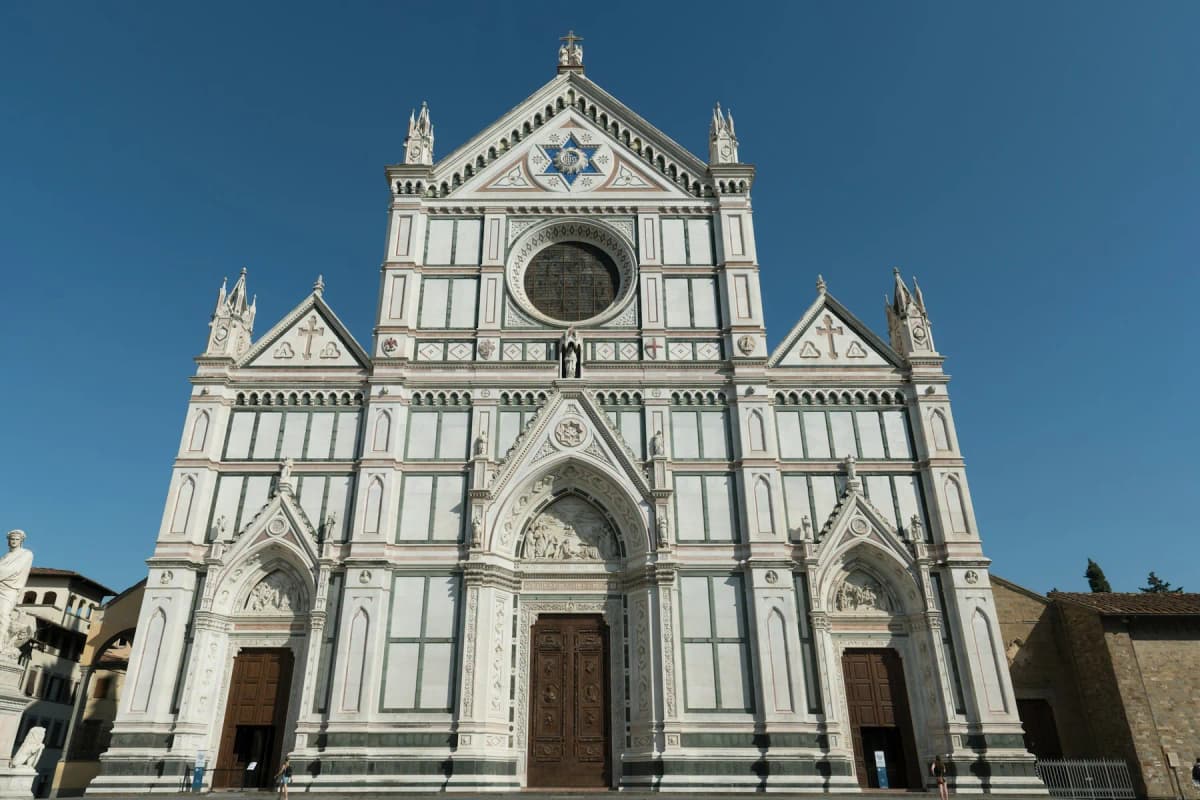 Photo: Joshua Sellke on Unsplash
East of Piazza della Signoria, the Santa Croce district spreads out around the basilica where Michelangelo, Galileo and Machiavelli are buried. It is a mix of visitor Florence and resident Florence: leather workshops, small bars, some of the city's best-regarded trattorias and, at its eastern end, the Sant'Ambrogio market, where locals do their food shopping.
It is about ten minutes on foot to the Duomo and the same to the Uffizi. Prices tend to be a little lower than in the very centre, and there is more going on after dark, which is also the catch. The streets around Via dei Benci and Piazza Santa Croce attract students and a late bar crowd, particularly at weekends.
- Good for: eating and drinking, a neighbourhood feel within reach of the sights, second visits.
- Less good for: light sleepers on the main bar streets, anyone needing to be close to the station.
- Where to look: towards Sant'Ambrogio and Piazza dei Ciompi for a more residential feel, or the streets north of the basilica.
5. Oltrarno, Santo Spirito: best for a local feel
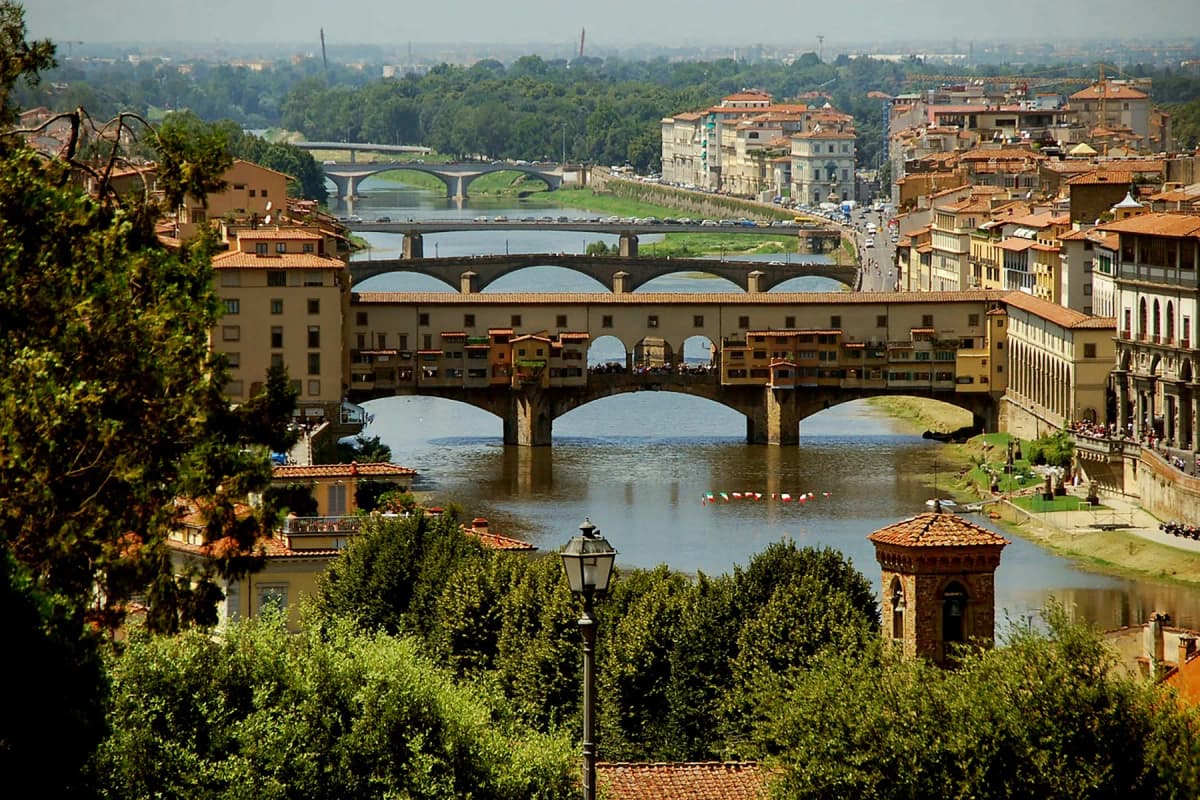 Photo: Ilse Orsel on Unsplash
Oltrarno means "beyond the Arno", and it covers the south bank of the river. The Santo Spirito quarter begins at the far end of the Ponte Vecchio and centres on Piazza Santo Spirito, a tree-shaded square with a Brunelleschi church, a small morning market and bars that fill up in the evening. The Pitti Palace and the Boboli Gardens are here, along with the workshops of furniture restorers, bookbinders and goldsmiths that the district is known for.
You are about 15 minutes' walk from the Duomo and five from the Uffizi over the bridge. The area feels less like a museum than the north bank and has excellent places to eat. Piazza Santo Spirito itself is noisy late at night in the warmer months, so pick a street a block or two away.
- Good for: atmosphere, artisan shops, restaurants, the Pitti Palace and Boboli Gardens.
- Less good for: the earliest trains, or anyone who wants to be next to the cathedral.
- Where to look: around Via Maggio and Via Romana, or the lanes between the Ponte Vecchio and the Pitti Palace.
6. Oltrarno, San Frediano: best for quiet and longer stays
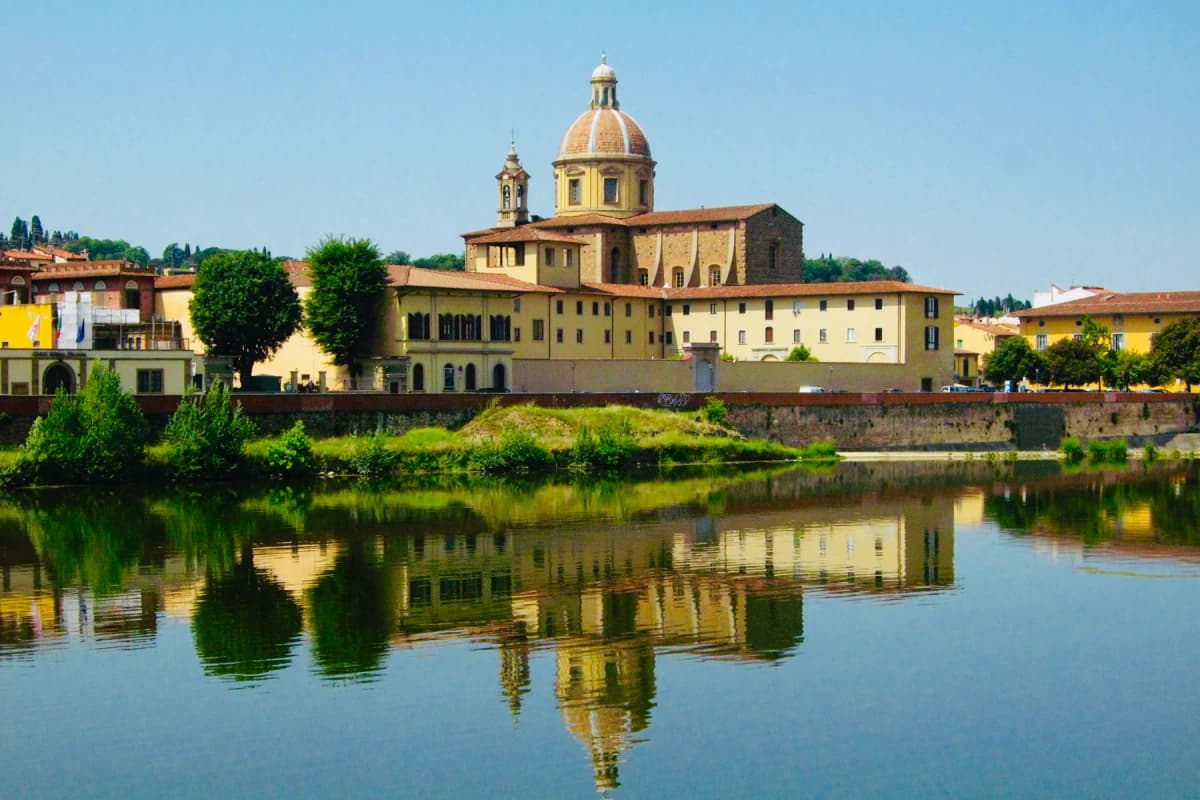 Photo: James Wainscoat on Unsplash
West of Santo Spirito, San Frediano is the more residential half of the Oltrarno, a district of low houses, workshops and neighbourhood bars around Borgo San Frediano and Piazza del Carmine. The Brancacci Chapel, with its early Renaissance frescoes by Masaccio, is here. Otherwise there are few major sights, and far fewer visitors.
That is the appeal. Rooms and apartments cost less than across the river, restaurants cater mainly to residents, and the streets are quiet at night. The Duomo is about 20 minutes away on foot and the station about 15 to 20 over the Ponte alla Carraia. It suits a stay of four nights or more, when being in the thick of things matters less.
- Good for: longer stays, apartments, lower prices, a quieter base.
- Less good for: one or two night visits where every minute counts.
- Where to look: between Piazza del Carmine and the river, or along Borgo San Frediano.
7. San Niccolò: best for views and calm
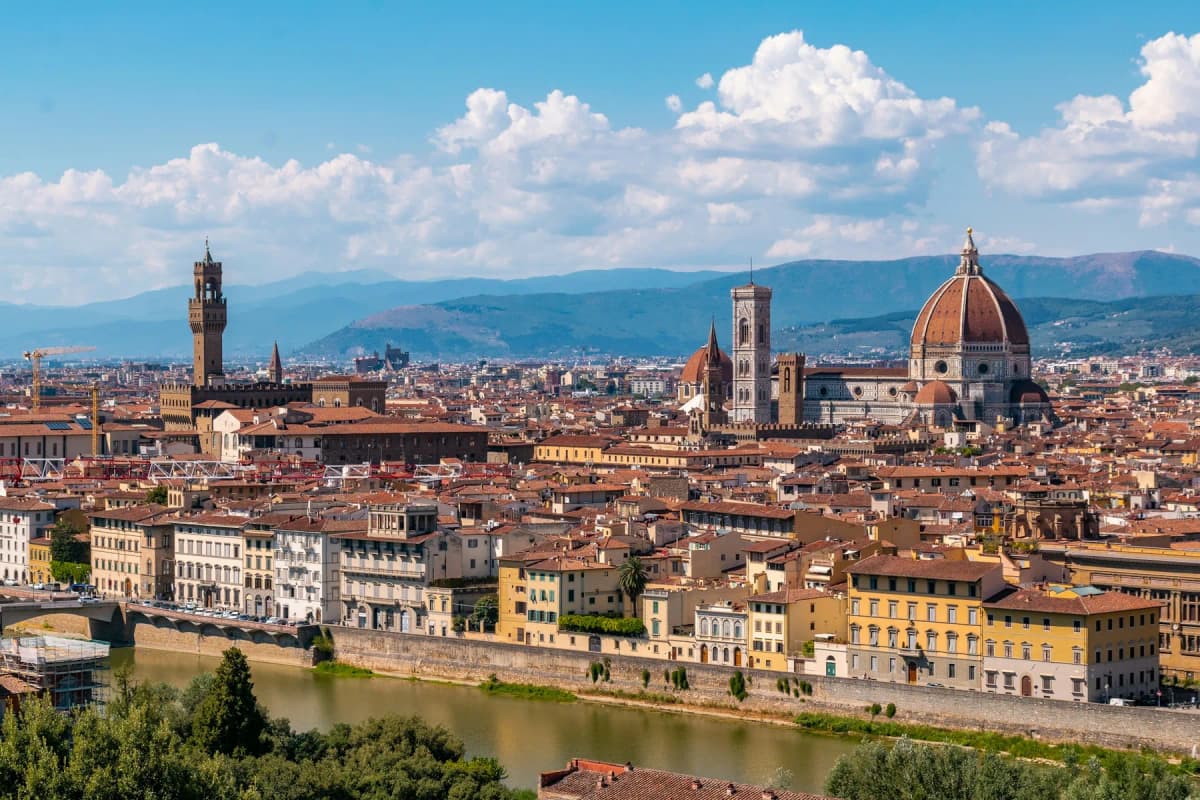 Photo: Tom Podmore on Unsplash
San Niccolò is a small quarter at the eastern end of the Oltrarno, tucked between the river and the hill that leads up to Piazzale Michelangelo. It has a village feel, with one main street, a medieval gate tower, a few wine bars and restaurants, and stairs and lanes that climb to the best-known viewpoint over the city and to the church of San Miniato al Monte above it.
It is the calmest of the central areas and popular with couples. The trade-off is distance: about 20 minutes on foot to the Duomo and half an hour to the station, so you will want a taxi on arrival. There are fewer places to stay here than in any other area in this guide, and they book up early.
- Good for: a quiet, romantic base, sunset at Piazzale Michelangelo, walkers.
- Less good for: short stays, travellers with a lot of luggage, anyone on a tight budget.
- Where to look: along Via di San Niccolò and Via dei Renai near the river.
What does it cost to stay in Florence?
Florence is a small city with a great many visitors, and room prices in the centre reflect that. As a rough guide for a double room in a decent, central property:
| Category | Low season (roughly November to February, outside holidays) | High season (roughly April to June, September, October) |
|---|---|---|
| Hostel dorm bed | About €25 to €40 | About €40 to €70 |
| Budget hotel or guest house | About €70 to €110 | About €110 to €170 |
| Mid-range hotel (3 to 4 star) | About €110 to €170 | About €170 to €280 |
| Luxury hotel (5 star) | From about €350 | From about €600 |
These are indications drawn from typical listed prices, not quotes. Easter, the long weekends in late April and early May, and big trade fairs such as Pitti Uomo in January and June push prices up sharply. July and August are hot and somewhat cheaper than spring and autumn.
Florence tourist tax
Florence charges a tourist tax (imposta di soggiorno) per person, per night, paid at the property and almost never included in the price shown online. The rates below have applied since February 2025 and were reported as unchanged for 2026.
| Accommodation | Tax per person, per night |
|---|---|
| 5 star hotel | €8 |
| 4 star hotel | €7 |
| 3 star hotel | €6 |
| 2 star hotel | €4.50 |
| 1 star hotel | €3.50 |
| B&Bs, guest houses and short-term rental apartments | €6 |
| Historic residences | €7 |
| Hostels and holiday homes | €4 |
The tax applies for a maximum of seven consecutive nights, and children under 12 are exempt. Two adults in a four star hotel for three nights will pay €42 on top of the room rate. Check the amount on your booking confirmation, as the city can revise the rates.
The ZTL: why you should not drive to your hotel
Most of the historic centre is a limited traffic zone (zona a traffico limitato). Cameras at each entry point photograph number plates, and vehicles without a permit are fined automatically. Rental companies pass the fine on, with an administration fee, often months later.
The zone is generally active on weekdays from 7:30 to 20:00 and on Saturdays from 7:30 to 16:00, with additional night-time restrictions on some evenings in summer. Hotels inside the zone can usually register a guest's number plate for a short window to unload luggage or reach an affiliated garage, but you must arrange this with the hotel in advance and follow the route they give you.
The simplest approach is not to have a car in Florence at all. If your trip includes a Tuscan road trip, collect the car on the day you leave the city, or drop it at an office near the airport or the edge of the centre before you check in. If you must arrive by car, the car parks beside the station and outside the zone are the safest places to leave it.
When to book
Florence's high season runs from April to October, with peaks around Easter, in May, June and September. For those months, booking three to four months ahead gives the best choice in the central areas, and San Niccolò and the better-value Oltrarno guest houses go first. From November to February, outside Christmas and New Year, you can usually book a few weeks ahead and pay noticeably less.
A rate with free cancellation is worth the small premium. It lets you secure a room early and change it if museum slots or train times end up moving your dates.
On museums: the Uffizi and the Accademia both sell timed tickets, and both are usually closed on Mondays, so avoid planning a one-night stay that leaves only a Monday for sightseeing. According to the Uffizi Galleries, a standard ticket costs €25 on the day or €29 booked in advance, with a reduced price of €16 for entry from 4 p.m. Climbing Brunelleschi's dome requires a pass with a timed slot, which sells out days or weeks ahead in season.
Getting to your hotel
From Florence airport (FLR, Peretola). The city's own airport is small and only about six kilometres from the centre.
- Tram T2: runs from the terminal to the stops beside Santa Maria Novella station in about 20 minutes, every few minutes during the day. It uses the ordinary city ticket, which local media reported rose from €1.70 to €2 on 1 August 2026. Buy from the machines at the stop or tap a contactless card on board.
- Taxi: official taxis charge a fixed fare between the airport and the centre, with supplements for luggage, nights and public holidays. It has been in the region of €25 to €30. The ride takes about 15 to 20 minutes.
From Pisa airport (PSA). Many low-cost and some long-haul flights land at Pisa, about 80 km to the west. The Pisa Mover shuttle links the terminal with Pisa Centrale station in a few minutes, and regional trains from there reach Firenze SMN in about an hour. Direct coaches also run between the airport and Florence. Allow around an hour and a half door to door. For late arrivals, families or groups, you can book a private transfer ahead at a fixed price.
By train. Frecciarossa and Italo high-speed trains take about an hour and a half from Rome, around two hours from Venice and Milan, and under 40 minutes from Bologna. All arrive at Santa Maria Novella. From the station you can walk to hotels in the SMN, San Lorenzo and Duomo areas in ten minutes or less. For Santa Croce, the Oltrarno and San Niccolò, take a taxi from the rank outside if you have luggage.
If your room is not ready, or you are only passing through for the day, luggage storage points near the station and around the centre take bags by the day.
Getting around Florence
- On foot. This covers almost everything. The centre is flat and much of it is pedestrianised.
- Buses. Small electric buses thread through the centre, and lines 12 and 13 climb to Piazzale Michelangelo if you would rather not walk up. Tickets are the same as for the tram.
- Taxis. They cannot be hailed in the street. Use a rank, such as those at the station and the main squares, or book by phone or app.
- Day trips. Pisa, Lucca, Bologna and Arezzo are easy by train from SMN. Siena is served by train and by a faster express bus from the bus station beside SMN. Staying near the station saves time if you plan several.
Areas to skip or think twice about
- Hotels sold as "Florence" that are out by the airport or the motorway. Novoli, Peretola and the area around the Firenze Nord exit are business districts. They suit drivers on a road trip, not sightseeing.
- The hills, without a car or a plan. Fiesole and the villas above the city are beautiful, but buses are infrequent in the evening and taxis add up.
- The streets right beside the station, if charm matters. Convenient and usually fine, but a few blocks south or east is far more pleasant for a similar price.
- Rooms directly on Piazza Santo Spirito or Via dei Benci. Great for an evening drink, loud until the early hours.
Before you book
- Check for a lift and air conditioning. Neither is guaranteed in a historic building.
- Add the tourist tax. Up to €8 per person, per night.
- Sort out the car before you arrive. Read the ZTL section above.
- Book the Uffizi, the Accademia and the dome early, then choose your nights around them.
- Get mobile data. An Italy eSIM from Airalo can be installed before you travel and is handy for maps and digital tickets.
- Insure the trip. EKTA travel insurance is one option to compare for cancellation and medical cover.
- Combining Florence with Rome? The cities are an hour and a half apart by train. See where to stay in Rome and our three day Rome itinerary.
Frequently asked questions
Where is the best area in Florence?
For a first visit, the historic centre between the Duomo and Piazza della Signoria, because every major sight is within ten minutes on foot. For a more local feel, many repeat visitors prefer the Oltrarno around Santo Spirito, which is 15 minutes from the cathedral and has better places to eat.
Is it better to stay near the Duomo or across the river?
Near the Duomo if you have one or two nights and want to make the most of every hour. Across the river, in the Oltrarno, if you have three nights or more, want quieter streets by day and do not mind a 15 minute walk to the main sights.
How many nights do you need in Florence?
Two nights is the minimum for the Uffizi, the Accademia, the Duomo and a walk across to the Oltrarno. Three nights is more comfortable and leaves time for the Pitti Palace or Piazzale Michelangelo at sunset. Add nights if you plan day trips to Pisa, Siena or the Chianti hills.
Is Florence a walkable city?
Yes, more than almost any other major Italian city. The historic centre is about two kilometres across, largely flat and partly closed to traffic. Most visitors do not use public transport at all apart from the airport tram.
Which convents in Florence offer stays?
Several religious houses in and around the centre rent simple guest rooms, and they can be good value. Arrangements vary: some have a curfew, some take bookings only by email or phone, and some accept only certain guests. Because these details change, we do not list individual houses here. Contact a convent directly and confirm its rules before relying on it.
Is it safe to stay near Santa Maria Novella station?
Yes. It is a busy, well-used area and thousands of visitors stay there. As around any large station, watch for pickpockets and expect it to feel less polished late at night. The streets towards Piazza Santa Maria Novella and Via de' Tornabuoni are smarter than those on the far side of the tracks.
Should I stay in Florence or in the Tuscan countryside?
For a first visit focused on art and the city, stay in Florence, where everything can be done on foot. A countryside stay works best as a separate part of the trip with a rental car, after you have left the city.
Can I drive to my hotel in Florence?
Usually only if the hotel registers your number plate in advance, because the historic centre is a camera-enforced limited traffic zone. The safest plan is to arrive without a car, or to park outside the zone.
How we researched this guide
This guide is based on desk research, not on stays at individual hotels. Museum prices come from the Uffizi Galleries official ticket page. Tourist tax rates and ZTL hours are those published by the City of Florence and reported by Feel Florence, the official tourism site; we could not open every official page while writing, so check them before you travel. The tram fare is the one reported in the Italian press from 1 August 2026 for Autolinee Toscane, and the airport taxi fare is an approximate range. Walking times were measured on maps. Price ranges are indications taken from typical listed rates in 2026 and vary by date.
Prices and rules change. If you spot something out of date, Let us know.
Planning more of Italy? Browse all our Italy guides.