Mexico City Itinerary: 3 to 5 Days for First-Timers (2026)
October 23, 2026 · Mexico
This post contains affiliate links. We may earn a commission if you book through them, at no extra cost to you. Disclaimer.
Four days is the right length for a first Mexico City itinerary. It gives you one day for the historic centre around the Zócalo, one for Chapultepec Park and the National Museum of Anthropology, one for Coyoacán and the canals of Xochimilco, and one for the pyramids of Teotihuacan. With three days, drop the day trip or Xochimilco. With five, add a slower day in Roma, Condesa and Polanco and a night of lucha libre.
Two things shape the plan more than anything else. First, most museums close on Mondays, including the Anthropology Museum, the Frida Kahlo Museum, Chapultepec Castle, Templo Mayor and Bellas Artes, so a Monday in the city needs different plans. Second, the Frida Kahlo Museum sells timed tickets online and often sells out weeks ahead, so book it before you fly. This guide sets out each day, the 2026 prices we could confirm, and how to shorten or stretch the plan.
Mexico City itinerary at a glance
| Day | Area | Main sights | Book ahead? |
|---|---|---|---|
| 1 | Centro Histórico | Zócalo, Metropolitan Cathedral, Templo Mayor, Palacio de Bellas Artes, Torre Latinoamericana | No |
| 2 | Chapultepec, Roma and Condesa | National Museum of Anthropology, Chapultepec Castle, Parque México | No |
| 3 | Coyoacán and Xochimilco | Frida Kahlo Museum, Coyoacán's squares and market, a trajinera boat | Frida Kahlo Museum: yes |
| 4 | Day trip | Teotihuacan, with the Basilica of Guadalupe on the way | Only if you want a tour |
| 5 (optional) | Polanco, Roma and Condesa | Museo Soumaya, a food market, lucha libre at Arena México | Lucha libre: a day or two ahead |
Our short version: with three days, do days 1, 2 and 3. With four, add Teotihuacan. With five, add the slower Polanco, Roma and Condesa day and see lucha libre in the evening. Whatever the length, put days 1, 2 and 3 on Tuesday to Sunday.
How we planned this itinerary
We grouped the sights by area, so each day stays in one part of a very large city and you spend less time in traffic. We checked opening days and 2026 ticket prices against INAH (the national institute that runs Mexico's archaeological sites and many of its museums), the official Frida Kahlo Museum site, and recent Mexican news reports. Where sources disagreed or we could not confirm a current figure, we say so rather than guess.
Before you start: what to book and when
The Frida Kahlo Museum
The Museo Frida Kahlo, better known as the Casa Azul (Blue House), is the house in Coyoacán where the artist was born, lived and died. Visits are by timed ticket, sold on the museum's official ticket site, and the official general price is MXN 320. Tickets regularly sell out weeks ahead, especially for weekends, so book as soon as your dates are fixed. The museum is closed on Mondays. It opens Tuesday and Thursday to Sunday from 10:00 to 18:00, and Wednesday from 11:00 to 18:00.
If the official site is sold out for your dates, a Xochimilco, Coyoacán and Frida Kahlo Museum tour includes museum entry along with transport and the boats, which covers most of day 3 in one booking.
Other things to know before you plan
- Mondays. The museums in this itinerary close on Mondays. Use a Monday for Teotihuacan (check the site's hours first), for Xochimilco, or for walking Roma and Condesa.
- Free Sundays are not for visitors. INAH museums are free on Sundays for Mexican citizens and residents only. Foreign visitors pay the normal price, and Sunday crowds are bigger, so Sunday is not a cheaper day for you.
- Altitude. Mexico City sits at about 2,240 metres. Take the first day easy, drink plenty of water, and expect to tire faster than usual on stairs and long walks.
- Where you stay matters. Roma Norte, Condesa and Juárez put you between the historic centre and Chapultepec. Our guide to where to stay in Mexico City compares eight neighbourhoods.
- Safety. The areas in this itinerary are the ones most visitors spend their time in. Our guide to whether Mexico City is safe covers the Metro, taxis and the few areas to avoid.
Day 1: the Centro Histórico
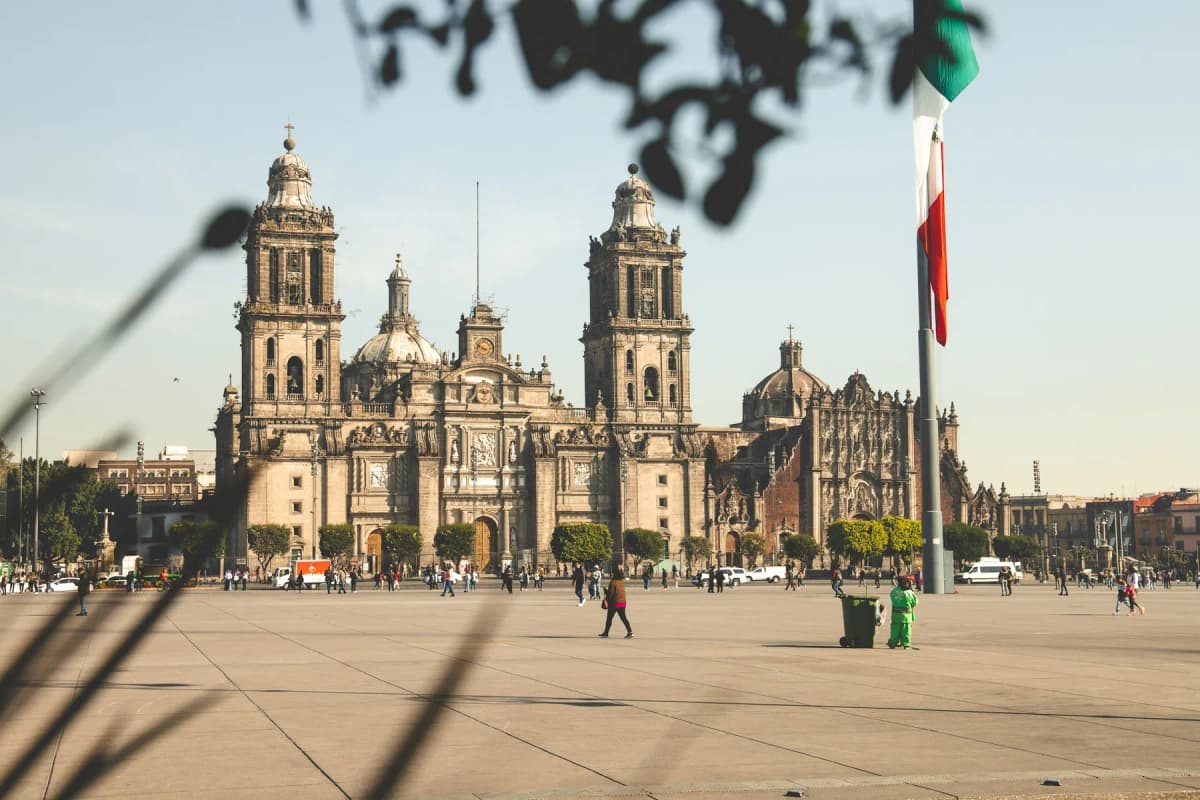 Photo: Bhargava Marripati on Unsplash
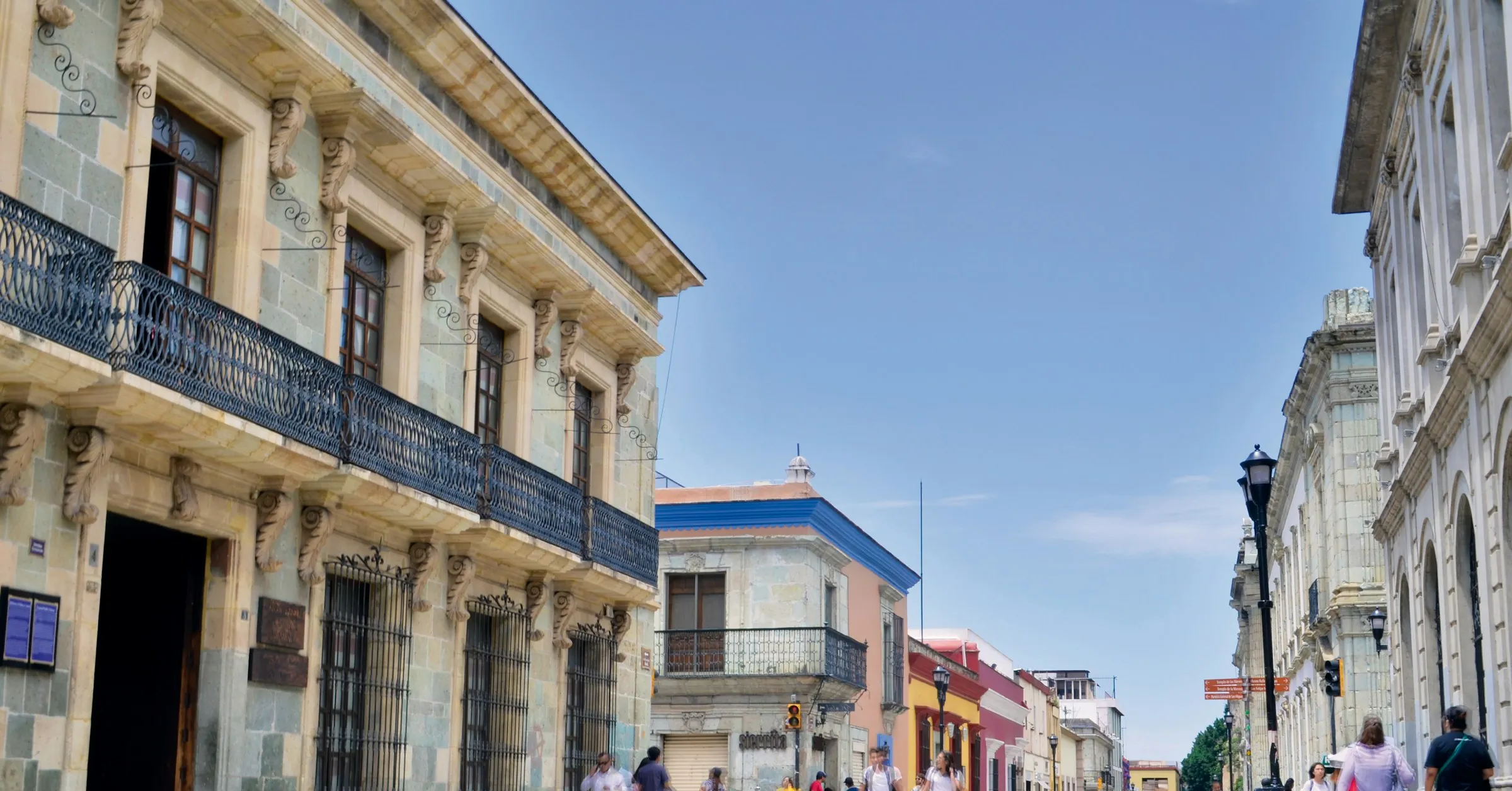
The historic centre is where Mexico City began. The Aztec capital, Tenochtitlan, stood here on an island in a lake, and the Spanish built their colonial city on top of it. The centre and Xochimilco share a UNESCO World Heritage listing. Spend the whole day on foot: everything below is within a 15-minute walk of the Zócalo.
Morning: the Zócalo and the Metropolitan Cathedral
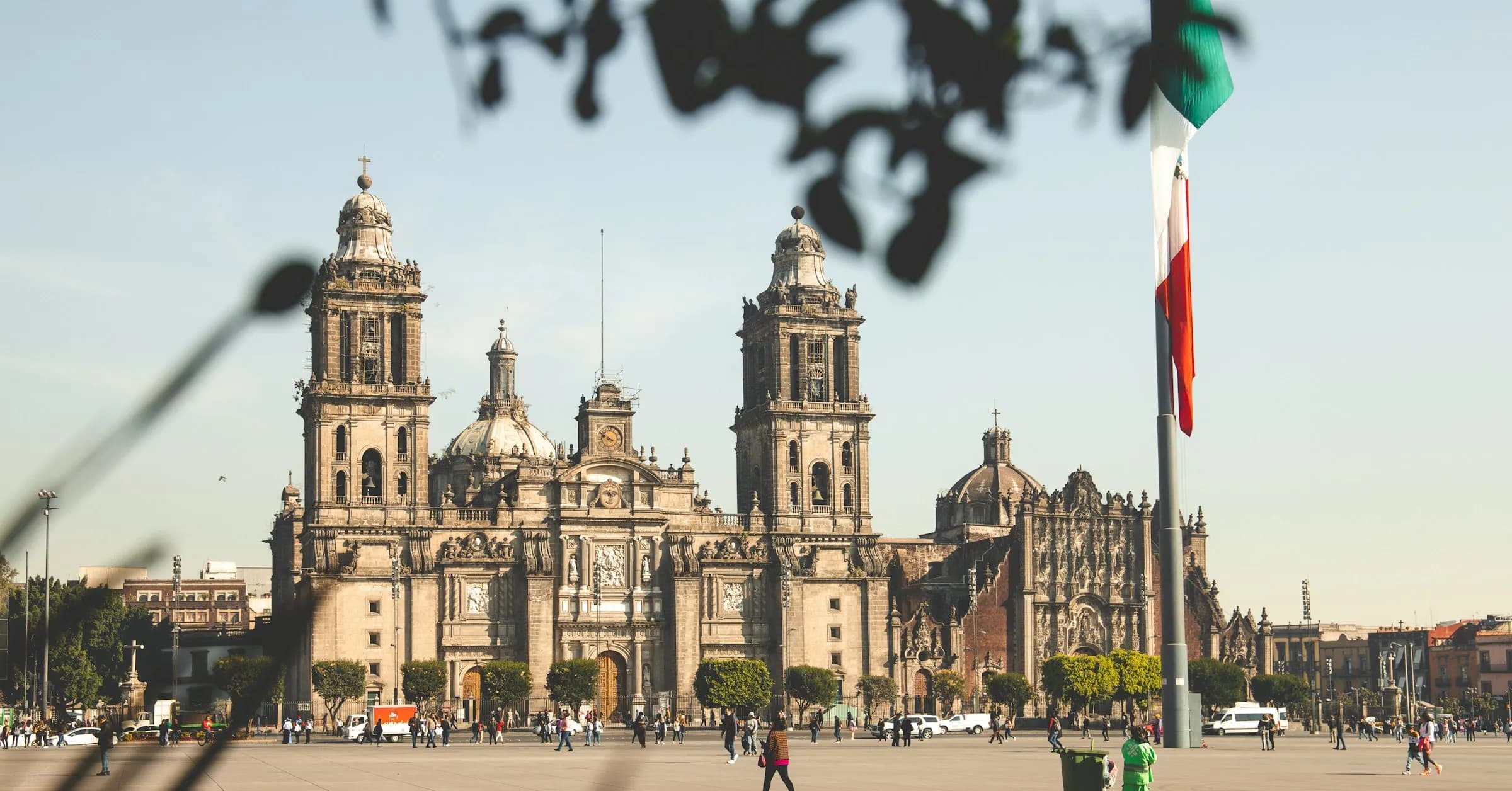
Start at the Zócalo, officially the Plaza de la Constitución, one of the largest city squares in the world. A huge Mexican flag flies in the centre on most days. On the north side stands the Metropolitan Cathedral, built over roughly two and a half centuries, which is why its facade mixes several architectural styles. Entry to the main church is free. Inside, look at the gilded altarpieces, and notice how the floor slopes in places: the cathedral has been sinking unevenly into the soft old lake bed for centuries.
On the east side of the square is the Palacio Nacional, the seat of government, with Diego Rivera's murals on the history of Mexico along its main staircase. Access for independent visitors has been restricted and changes often, so treat the murals as a bonus if the palace is open on the day, not something to plan around.
Late morning: Templo Mayor
Just north-east of the cathedral are the excavated remains of the Templo Mayor, the great twin temple at the heart of Tenochtitlan. It was rediscovered in 1978, when electricity workers found a huge carved stone disc of the moon goddess Coyolxauhqui, and the dig that followed uncovered layer after layer of temple built on temple. A walkway takes you through the ruins, and the site museum next door holds the finds, including that stone.
INAH lists the site as open Tuesday to Sunday, 9:00 to 17:00, with entry at MXN 210 for foreign visitors. Allow about two hours for the ruins and the museum together.
Lunch and the walk west
Walk west along Calle Madero, a pedestrian street lined with colonial buildings, shops and street performers. On the way you pass the Casa de los Azulejos, a colonial palace whose facade is covered in blue and white tiles. There are plenty of places to eat along Madero and the streets either side.
Afternoon: Palacio de Bellas Artes and the Alameda
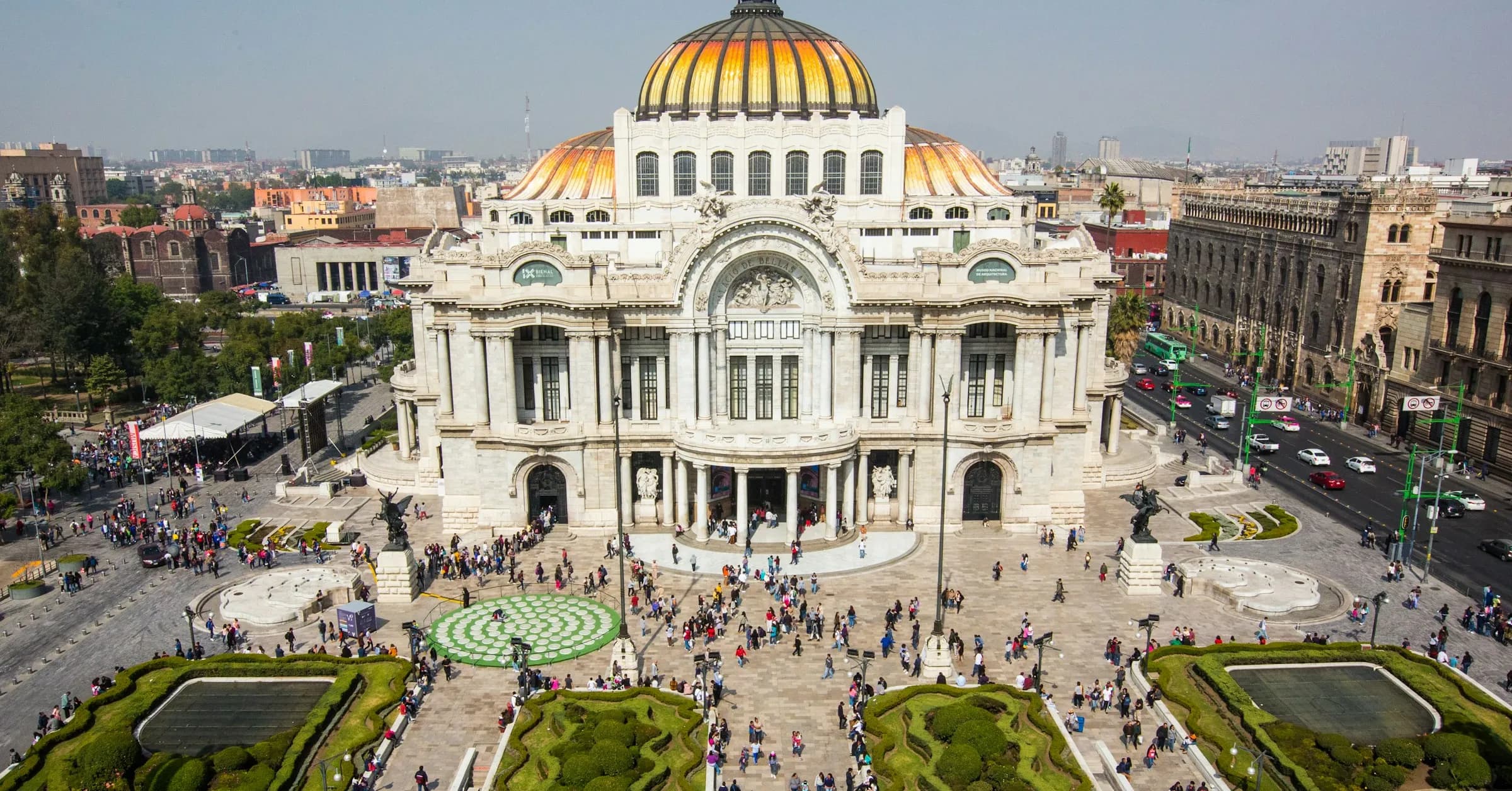
Madero ends at the Palacio de Bellas Artes, the white marble arts palace with the orange and gold dome. Its upper floors hold murals by some of Mexico's best-known painters, including Diego Rivera, José Clemente Orozco, David Alfaro Siqueiros and Rufino Tamayo. The museum is open Tuesday to Sunday, 10:00 to 17:00, and closed on Mondays. The building is also a working theatre: the Ballet Folklórico de México performs here, and tickets are sold at the box office and online.
Behind Bellas Artes, the Alameda Central, the oldest public park in the Americas, is a good place to sit for half an hour under the trees.
Late afternoon: the view from Torre Latinoamericana
For the best view of the centre, go up the Torre Latinoamericana, the 1950s skyscraper across the road from Bellas Artes. The observation deck at the top is open daily from 9:00 to 22:00. Ticket prices quoted in 2025 range from about MXN 170 to MXN 220, so check the current price at the desk. Late afternoon into dusk is the best time, when you can watch the city lights come on.
Evening
Eat in the centre, or head back to Roma or Condesa for dinner. The streets around the Zócalo get quieter after dark, and a ride-hailing app such as Uber or DiDi is the easiest way home.
Day 2: Chapultepec, the Anthropology Museum, Roma and Condesa
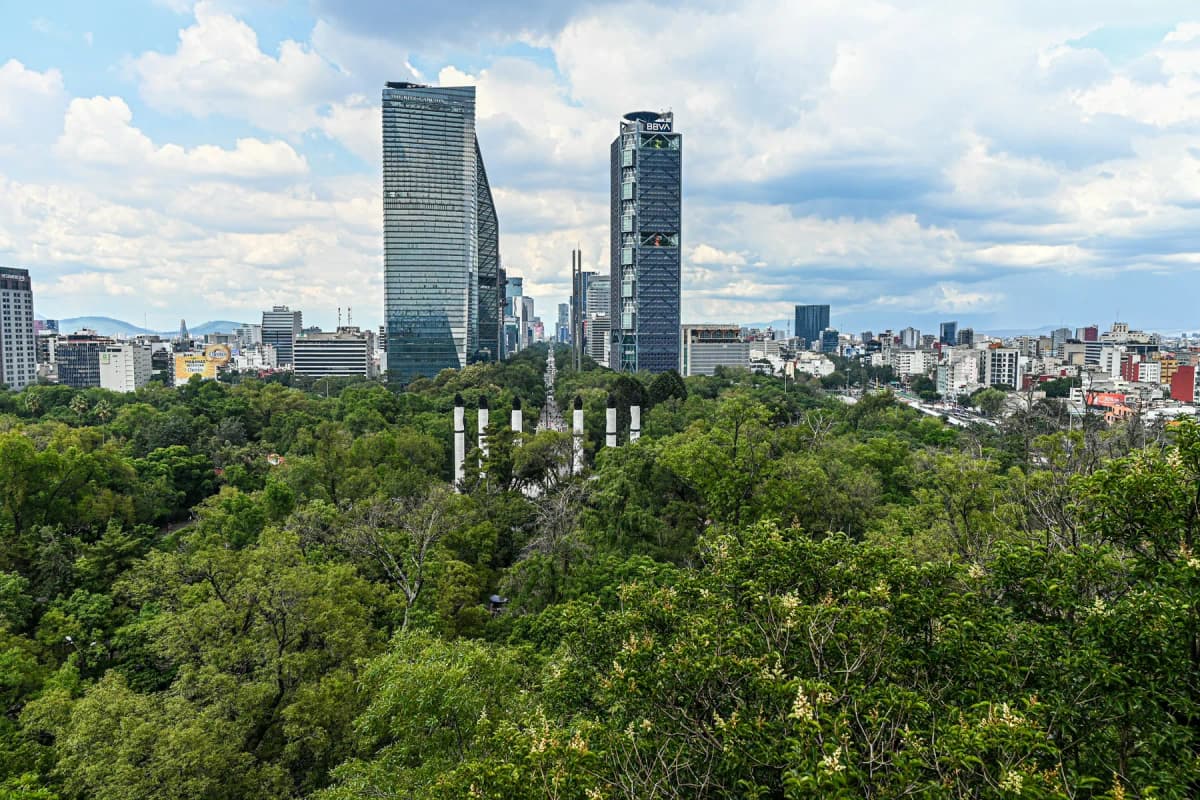 Photo: Fernando Mola-Davis on Unsplash
Bosque de Chapultepec is one of the largest city parks in Latin America, a wooded hill and lakes on the west side of the centre. Its first section holds two of the city's best sights, and you can easily spend a full day there before heading to dinner in Roma or Condesa.
Morning: the National Museum of Anthropology
The Museo Nacional de Antropología is the most important museum in Mexico, and the reason many people give Mexico City an extra day. Its galleries cover every major civilisation of ancient Mexico, arranged around a central courtyard under a giant umbrella-shaped fountain. The highlights are on the ground floor: the Aztec (Mexica) hall, with the Stone of the Sun, often called the Aztec calendar stone, and the massive statue of Coatlicue; the Teotihuacan hall; and the Maya hall, with a reconstruction of the tomb of the ruler Pakal from Palenque. The upper floor covers the Indigenous peoples of Mexico today.
General entry in 2026 is MXN 210. The museum is closed on Mondays. Opening hours have been listed differently by different sources, from 9:00 or 10:00 until 17:00 or 18:00, so check INAH's site for the current times. Arrive at opening and give it at least three hours. If you can only see a few halls, choose the Mexica, Teotihuacan and Maya rooms.
Afternoon: Chapultepec Castle
Walk through the park to Chapultepec Castle, on the hill above it. The palace was home to the emperor Maximilian and empress Carlota in the 1860s, and later to Mexican presidents. It now houses the Museo Nacional de Historia. The rooftop gardens and terraces look down Paseo de la Reforma towards the centre, and the stained-glass gallery is one of the most photographed rooms in the city.
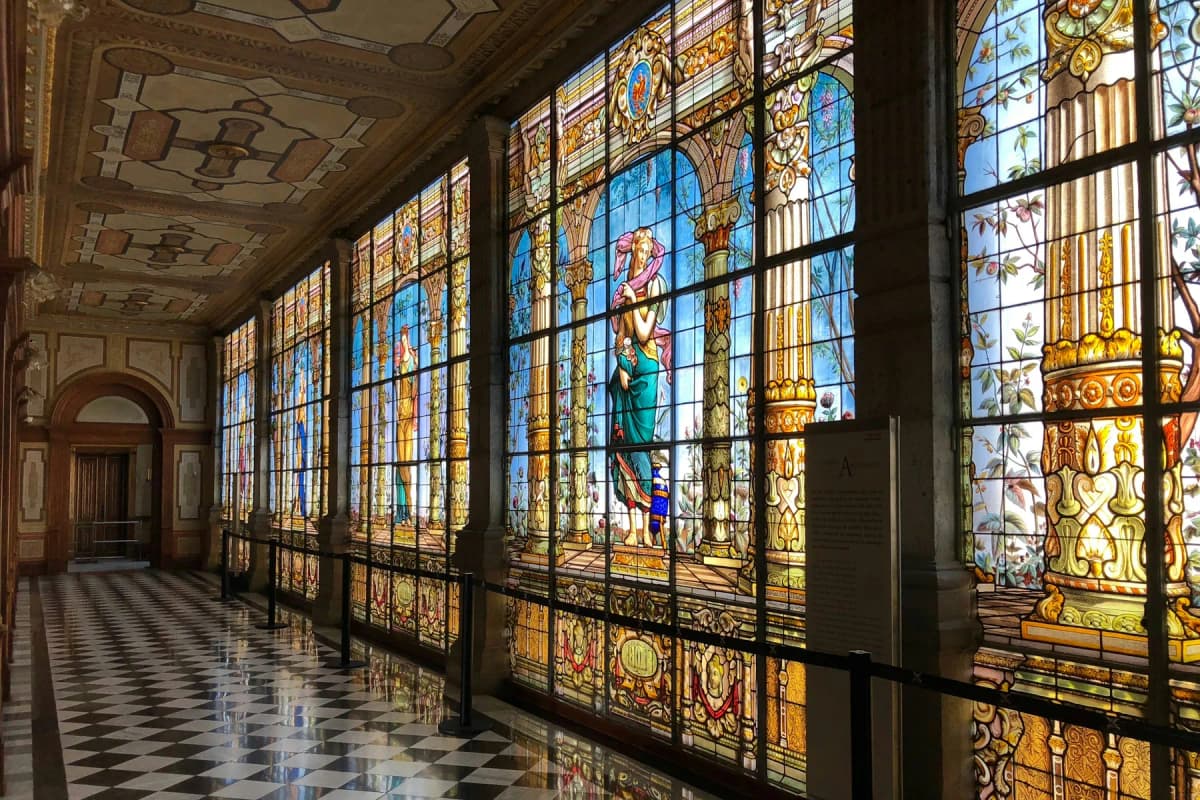 Photo: Edgar Palma on Unsplash
INAH lists the castle as open Tuesday to Sunday, 9:00 to 17:00, and closed on Mondays, with entry at MXN 210 for foreign visitors. The walk up the hill takes about 15 minutes. Go in the early afternoon, as the last entry is before closing time.
Evening: Roma and Condesa
End the day in Condesa, a short taxi ride south. Walk the oval of Avenida Amsterdam, which follows the line of a former racecourse, and the paths of Parque México, then cross into Roma Norte for dinner. These two neighbourhoods have the city's densest choice of restaurants, taquerías, bars and cafés, and they are pleasant to walk in the evening.
Day 3: Coyoacán and Xochimilco
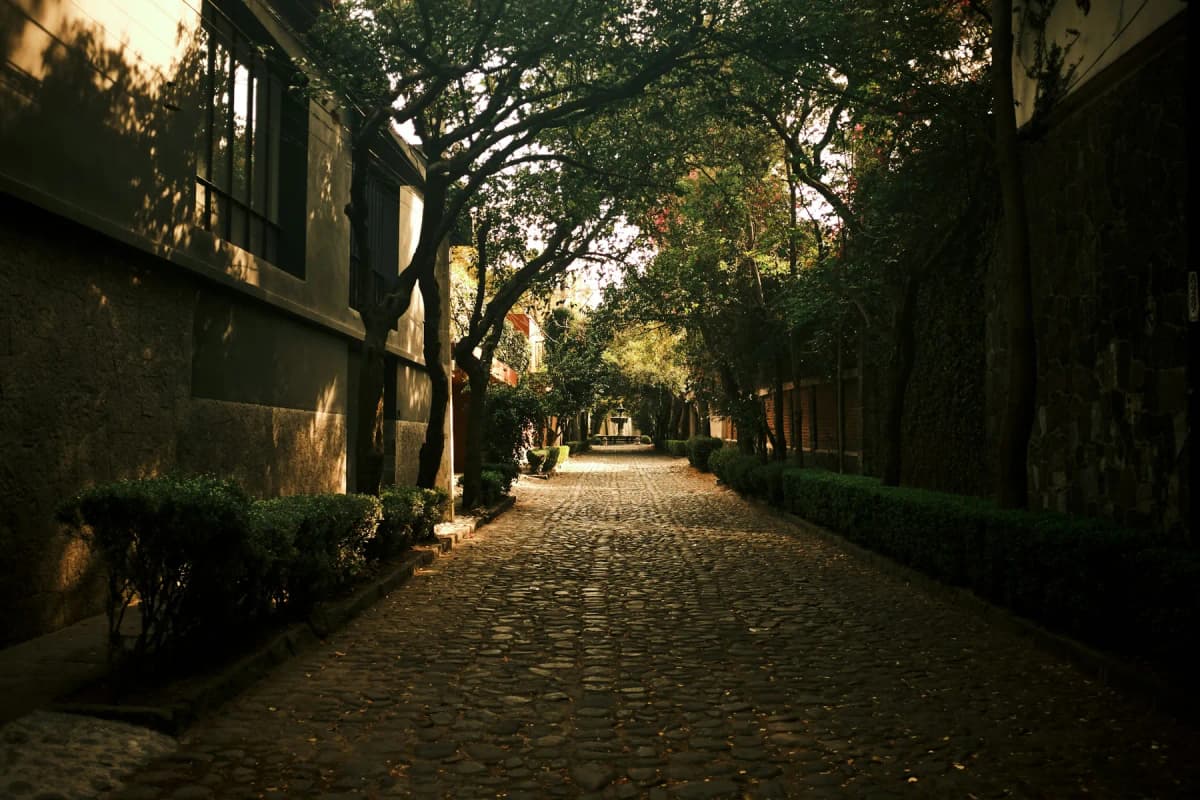 Photo: Niels Lyhne on Unsplash
The south of the city feels different from the centre: lower, greener and slower. Coyoacán was a separate town until the city grew around it, and it keeps its cobbled streets, colonial houses and village squares. Xochimilco, further south, is the last large survival of the canals that once covered the valley.
Morning: the Frida Kahlo Museum and Coyoacán
Take your booked slot at the Frida Kahlo Museum in the morning. The rooms keep Kahlo's kitchen, studio and bedroom, alongside some of her paintings, her clothes and the garden. A visit usually takes an hour to an hour and a half. Photography inside has its own rules and fees, so check them at the entrance.
Afterwards, walk to the centre of Coyoacán, about ten minutes away. The twin squares of Jardín Centenario and Plaza Hidalgo, with the church of San Juan Bautista between them, are the heart of the neighbourhood, especially at weekends. The Mercado de Coyoacán, a covered market a few blocks from the squares, is a good place for lunch. Nearby, the Museo Casa de León Trotsky is the house where the Russian revolutionary lived in exile and was killed in 1940.
Afternoon: Xochimilco
From Coyoacán, take a taxi or ride-hailing car south to Xochimilco. At the landings (embarcaderos) such as Nativitas, you hire a trajinera, a flat-bottomed boat painted in bright colours, and a boatman poles it along the canals. Mariachi bands, food boats and drink sellers come alongside. Boats are priced per boat, per hour, not per person, and the official rates are posted at the landings. Agree the price and the length of the trip before you set off.
Weekends are lively and crowded, with music and big groups. Weekdays are calmer. Two hours on the water is enough for most people. Our guide to day trips from Mexico City has the metro and light-rail route if you would rather go by public transport.
If you could not get Frida Kahlo tickets, or you would rather not organise the transport yourself, the Xochimilco, Coyoacán and Frida Kahlo Museum tour combines all three.
Day 4: Teotihuacan and the Basilica of Guadalupe
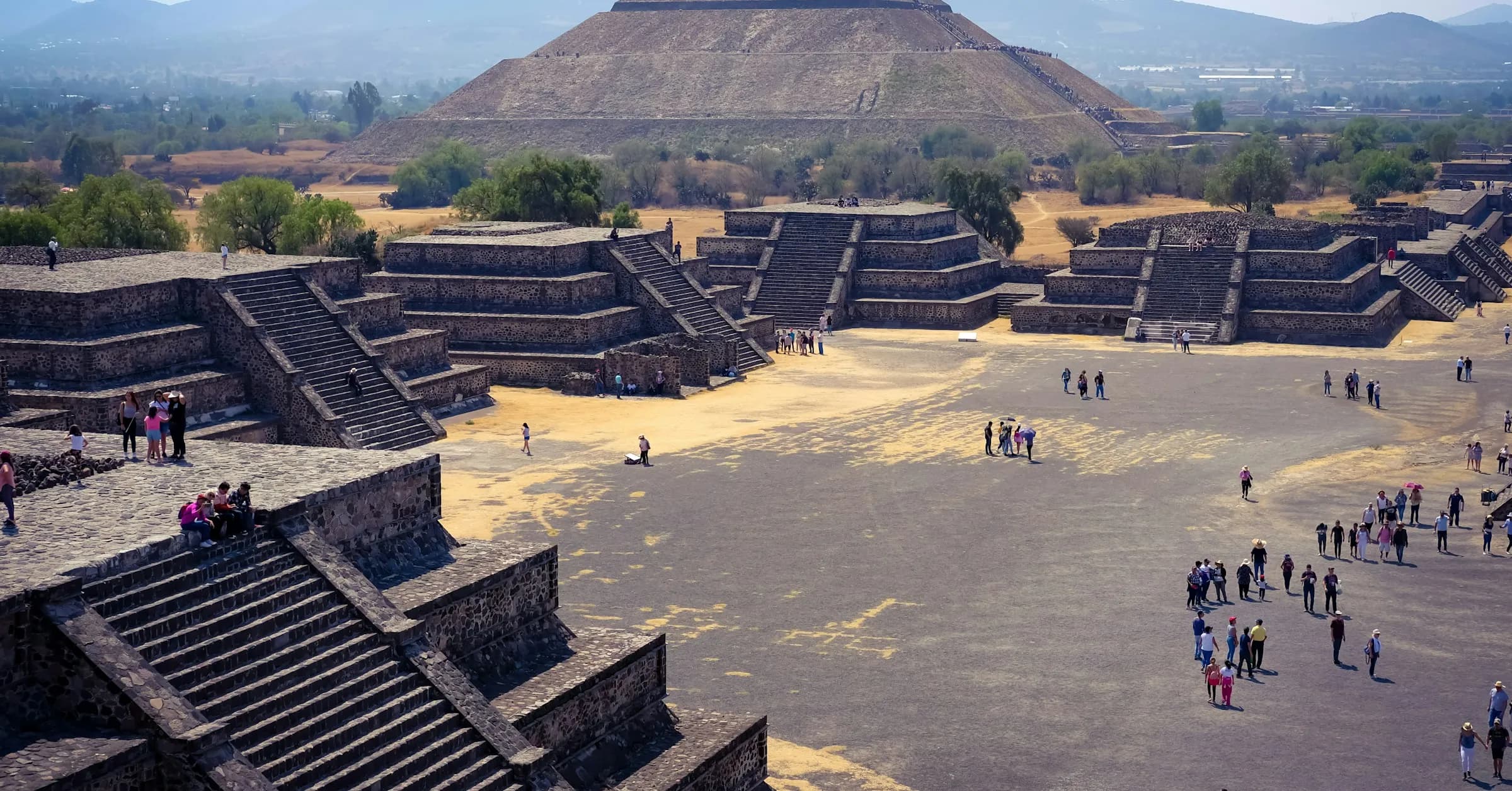
Teotihuacan, about 50 km north-east of the city, was one of the largest cities in the ancient Americas. Its Avenue of the Dead runs between the Pyramid of the Sun and the Pyramid of the Moon, with the Temple of the Feathered Serpent at the southern end. It is the most popular day trip from Mexico City, and the best use of a fourth day.
Getting there: buses run from Terminal Autobuses del Norte (Metro Line 5) to the archaeological zone in about an hour. Ask for the bus to "las pirámides". Alternatively, a morning half-day tour of Teotihuacan picks you up in the city and gets you to the site early, before the heat.
What to know in 2026: general entry is reported at MXN 210. You cannot currently climb either of the main pyramids. The Pyramid of the Sun has been closed to climbers since 2020, and the Pyramid of the Moon closed again after a gunman opened fire there on 20 April 2026, killing one visitor and injuring 13 people. The site reopened two days later with extra security, including the National Guard. Walking the Avenue of the Dead and the site museum are still the main experience. Check the current hours and access with INAH before you go.
There is very little shade, and the sun at this altitude is strong, so bring a hat, sunscreen and plenty of water. Many tours also stop at the Basilica of Our Lady of Guadalupe in the north of the city, Mexico's most important Catholic shrine, on the way back.
Teotihuacan is one of nine trips covered in our guide to the best day trips from Mexico City. If you have already been, or want a change from ruins, Puebla and Cholula or the mountain village of Tepoztlán work just as well as a day 4.
Day 5: Polanco, a food market and lucha libre
The last day is for slowing down. Pick and choose from the options below.
Morning: Polanco and the Museo Soumaya
Polanco, on the north side of Chapultepec, is the city's most upmarket neighbourhood. In its newer northern section, the Museo Soumaya, a building wrapped in silvery hexagonal tiles, holds a large private art collection, and entry is free. The Museo Jumex, a contemporary art museum, is across the plaza. Then walk south through Polanco's tree-lined streets towards Avenida Presidente Masaryk and its designer shops.
Afternoon: back to Roma and Condesa
Spend the afternoon on foot in Roma and Condesa, with time for the cafés, bookshops and galleries you passed on day 2. If you want one more museum, the Museo de Arte Popular near the Alameda covers Mexican folk art and crafts, and the Monumento a la Revolución has a lift to a viewing platform under its dome.
Evening: lucha libre at Arena México
Lucha libre, Mexican professional wrestling, is theatrical, loud and great fun even if you have never watched wrestling. The main venue is Arena México in the Doctores neighbourhood, home of the CMLL promotion, which holds regular shows on Tuesday at 7:30pm, Friday at 8:30pm and Sunday at 5pm. A show lasts about two hours. Buy tickets from CMLL or Ticketmaster a day or two ahead. Doctores is one of the areas where visitors are advised to take care, so take a ride-hailing car to the door and back rather than walking.
How to shorten or extend this itinerary
Mexico City in 2 days
Do day 1 in the Centro Histórico, then the Anthropology Museum and Chapultepec Castle on day 2, with dinner in Roma or Condesa. You will miss Coyoacán and Xochimilco, so if the Frida Kahlo Museum matters to you, swap the castle for a Coyoacán afternoon.
Mexico City in 3 days
Follow days 1 to 3. This covers the three essential areas of the city, and with a fourth day you can add Teotihuacan.
Mexico City in 4 days
Follow days 1 to 4. If your trip includes a Monday, make that the Teotihuacan day, as the museums are closed.
Mexico City in 5 days or more
Follow all five days. With a sixth or seventh day, add a second day trip to Puebla and Cholula or Tepoztlán, or spend a night in San Miguel de Allende. Our day trips guide compares the options.
Getting to Mexico City
Most international flights land at Mexico City International Airport (MEX), also called Benito Juárez or AICM, east of the centre. It is fairly close to the main neighbourhoods, though traffic can make the ride slow at busy times.
Practical extras: if you land late or with a lot of luggage, you can pre-book a private transfer from Mexico City Airport to your hotel. For maps, ride-hailing apps and museum tickets on the go, a Mexico eSIM from Airalo gets you connected from the moment you land, and travel insurance from EKTA is worth having for a trip with day trips and long days on foot.
Getting around Mexico City
- Metro: the Metro is the cheapest way to cross the city. A single ride costs MXN 5 in 2026 with free transfers between lines, and the city government has said the fare will not rise this year. Avoid the morning and evening rush hours, when carriages are packed and pickpocketing is most common.
- Metrobús: the rapid-transit buses on Paseo de la Reforma and Avenida Insurgentes are useful for Roma, Condesa, Juárez and the centre. Both the Metro and the Metrobús use the city's rechargeable transport card.
- Ride-hailing: Uber and DiDi are widely used, cheap by international standards, and the easiest way to get around at night or to places off the Metro, such as Coyoacán and Xochimilco.
- On foot: within each day of this itinerary, walking is the best way to get around. Wear comfortable shoes and remember the altitude.
Tips for your Mexico City trip
- Book the Frida Kahlo Museum first, then build the rest of the plan around the date you get.
- Keep Mondays for the outdoors. Teotihuacan, Xochimilco and walks in Roma and Condesa all work on a Monday.
- Start early. Museums are quieter at opening, and the afternoons often bring rain from June to September.
- Carry some cash. Cards are widely accepted in restaurants and museums, but markets, street food stalls and trajinera boatmen often want pesos.
- Pace yourself. The altitude, the size of the city and the traffic all make days more tiring than they look on a map.
Frequently asked questions
How many days in Mexico City is enough? Four days is enough for a first visit: one each for the historic centre, Chapultepec and the Anthropology Museum, Coyoacán and Xochimilco, and Teotihuacan. Three days covers the city itself without a day trip. Five days or more lets you slow down and add Polanco, lucha libre or a second day trip.
What should I not miss in Mexico City? The National Museum of Anthropology, the Zócalo and Templo Mayor, Bellas Artes, the Frida Kahlo Museum in Coyoacán, a trajinera on the canals of Xochimilco, and the pyramids of Teotihuacan. If you only have one day, spend it in the historic centre.
Is $1,000 enough for a week in Mexico City? It can be, but it depends almost entirely on where you sleep and how you eat. The sights themselves are good value: the biggest museum tickets in this itinerary cost MXN 210 to MXN 320, the Metro costs MXN 5 a ride, and street food and market meals are cheap. Hotels in Roma, Condesa and Polanco can be expensive, so price your accommodation first and budget the rest around it.
What is the best area to stay in for this itinerary? Roma Norte or Condesa. Both are between the historic centre and Chapultepec, close to the Metrobús, and full of places to eat. The Centro Histórico is better value and closer to the day 1 sights, but quieter at night. Our guide to where to stay in Mexico City compares all the main areas.
Which day of the week should I start? Start on a Tuesday if you can, so the museum days fall before the weekend crowds and a Monday becomes your day trip. If you arrive at the weekend, do the historic centre and Coyoacán first, and leave Teotihuacan for the Monday.
Is Mexico City safe for tourists? Millions of visitors go every year without problems, and the areas in this itinerary are the ones most of them visit. Take the usual big-city precautions, watch your phone on the Metro and in crowds, and use ride-hailing apps at night. Our guide to whether Mexico City is safe has the details.
How we researched this guide
Opening days, hours and prices for the Anthropology Museum, Templo Mayor and Chapultepec Castle come from INAH's site listings and from Chilango's report on 2026 museum prices. Frida Kahlo Museum hours and prices come from the museum's official site. Lucha libre schedules come from recent visitor guides, and the Metro fare from Mexican press reports on the city government's December 2025 announcement. The April 2026 Teotihuacan shooting and the pyramid closures come from Proceso. Sources disagreed on the Anthropology Museum's hours and the Torre Latinoamericana's price, so we have given the range and suggest checking before you go. Everything was checked in October 2026. We have not included first-hand restaurant or hotel recommendations in this guide. Spotted something out of date? Let us know.
For more on planning your trip, see our Mexico travel guides, the guide to where to stay in Mexico City, the best day trips from Mexico City and our guide to whether Mexico City is safe. Heading to the coast afterwards? See the best things to do in Tulum.