12 Best Places to Visit in Iceland (2026)
October 23, 2026 · Iceland
This post contains affiliate links. We may earn a commission if you book through them, at no extra cost to you. Disclaimer.
The best places to visit in Iceland on a first trip are Reykjavik, the Golden Circle, the South Coast as far as Vík, and the glacier country around Jökulsárlón and Skaftafell. With a week, add the Snæfellsnes Peninsula. With ten days or more, drive the Ring Road to take in the Eastfjords, Lake Mývatn and Akureyri. The Westfjords, the Highlands at Landmannalaugar and the Westman Islands reward a second trip or a summer visit with extra time.
Iceland is roughly the size of Portugal or the US state of Kentucky, but most of its people live in and around Reykjavik, and the rest of the island is waterfalls, glaciers, lava fields and small fishing towns linked by long stretches of road. That's what makes choosing where to go hard: the famous sights are spread around the coast, the weather decides a lot, and some regions are only open for a few months a year.
This guide is organised by place rather than activity. For each one you'll find what it's like, how long it deserves and how it fits into a route. Looking for specific experiences such as glacier hikes, Silfra or the northern lights? See our guide to the best things to do in Iceland. Ready to plan the days? Our Iceland itinerary has routes for 5, 7 and 10 days.
The best places to visit in Iceland at a glance
| Place | Best for | How long |
|---|---|---|
| Reykjavik | Food, museums, lagoons, a base for day trips | 1 to 2 days |
| The Golden Circle | Þingvellir, Geysir and Gullfoss in one loop | 1 day |
| The South Coast and Vík | Waterfalls, black sand beaches, a glacier walk | 1 to 2 days |
| Vatnajökull National Park | Skaftafell, Jökulsárlón and Diamond Beach | 1 to 2 days |
| The Snæfellsnes Peninsula | Kirkjufell, lava fields and coastal villages | 1 day |
| The Reykjanes Peninsula | The Blue Lagoon and geothermal landscapes near the airport | Half a day |
| The Eastfjords | Quiet fjords, Seyðisfjörður and the Stuðlagil canyon | 1 to 2 days |
| Lake Mývatn and Dettifoss | Lava formations, steaming vents and a huge waterfall | 1 to 2 days |
| Akureyri and Húsavík | The north's main town and whale watching | 1 to 2 days |
| The Westfjords | Remote fjords, Dynjandi and seabird cliffs | 3 to 5 days |
| Landmannalaugar | Coloured rhyolite mountains and a natural hot spring | 1 day, summer only |
| The Westman Islands | A volcanic island town and puffins | 1 day |
Our short version: with 4 or 5 days, stay in the southwest: Reykjavik, the Golden Circle, the South Coast and, if you can, one night near Jökulsárlón. With a week, add Snæfellsnes. With 10 days or more in summer, drive the full Ring Road. Save the Westfjords for a trip when you have at least three extra days.
1. Reykjavik
Almost every trip to Iceland starts in Reykjavik. Keflavík International Airport is about 50 kilometres away on the Reykjanes Peninsula, and the drive or airport bus takes roughly 45 minutes. If you'd rather book ahead, a private transfer from Keflavík to Reykjavik takes you straight to your hotel.
The city is small and easy to cover on foot. Hallgrímskirkja, the tall concrete church that dominates the skyline, has a tower lift with views over the colourful rooftops. From there, walk down Skólavörðustígur to the shopping streets around Laugavegur, then on to the waterfront for the Harpa concert hall, the Sun Voyager sculpture and the Old Harbour, where whale watching boats leave. The city also has a strong museum and food scene and a long tradition of public swimming pools heated by geothermal water.
Just outside the centre, Sky Lagoon in Kópavogur has an infinity edge facing the ocean and a multi-step ritual of hot and cold pools and a sauna. This Sky Lagoon pass includes the ritual.
How long: one or two days, plus several nights if you use the city as a base for day trips, which works well in winter, when long drives in the dark are less appealing.
2. The Golden Circle
The Golden Circle is the most popular route in Iceland, a loop of roughly 230 to 300 kilometres from Reykjavik depending on the stops you add. It links three sights:
- Þingvellir National Park, a UNESCO World Heritage Site where you can walk through a rift between the North American and Eurasian tectonic plates. It's also where Iceland's parliament, the Althing, met in the open air for centuries.
- Geysir and Strokkur, a geothermal area where Strokkur erupts every few minutes. The original Geysir, which gave its name to geysers everywhere, is mostly quiet now.
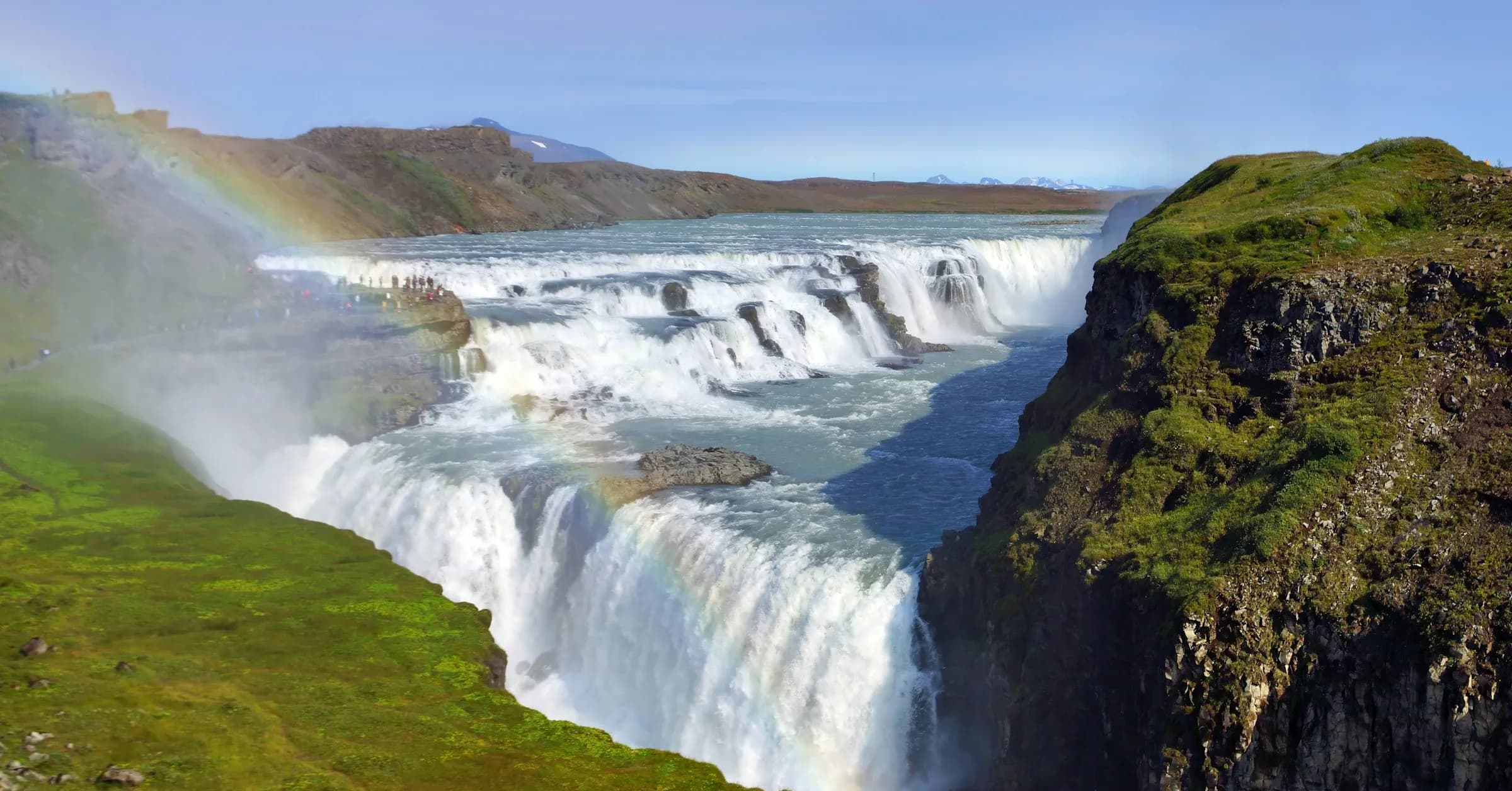
- Gullfoss, a powerful two-tier waterfall dropping into a narrow canyon.
Popular extra stops include the Kerið crater lake and the Secret Lagoon in Flúðir, an old natural hot pool. If you don't want to drive, this Golden Circle and Kerið Crater day tour covers the main sights.
How long: a full day. It's easy to do from Reykjavik, or as the first leg of a trip along the South Coast.
3. The South Coast and Vík
The stretch of Route 1 from Reykjavik to Vík packs in more famous sights than anywhere else in the country, which is why it's on almost every first itinerary:
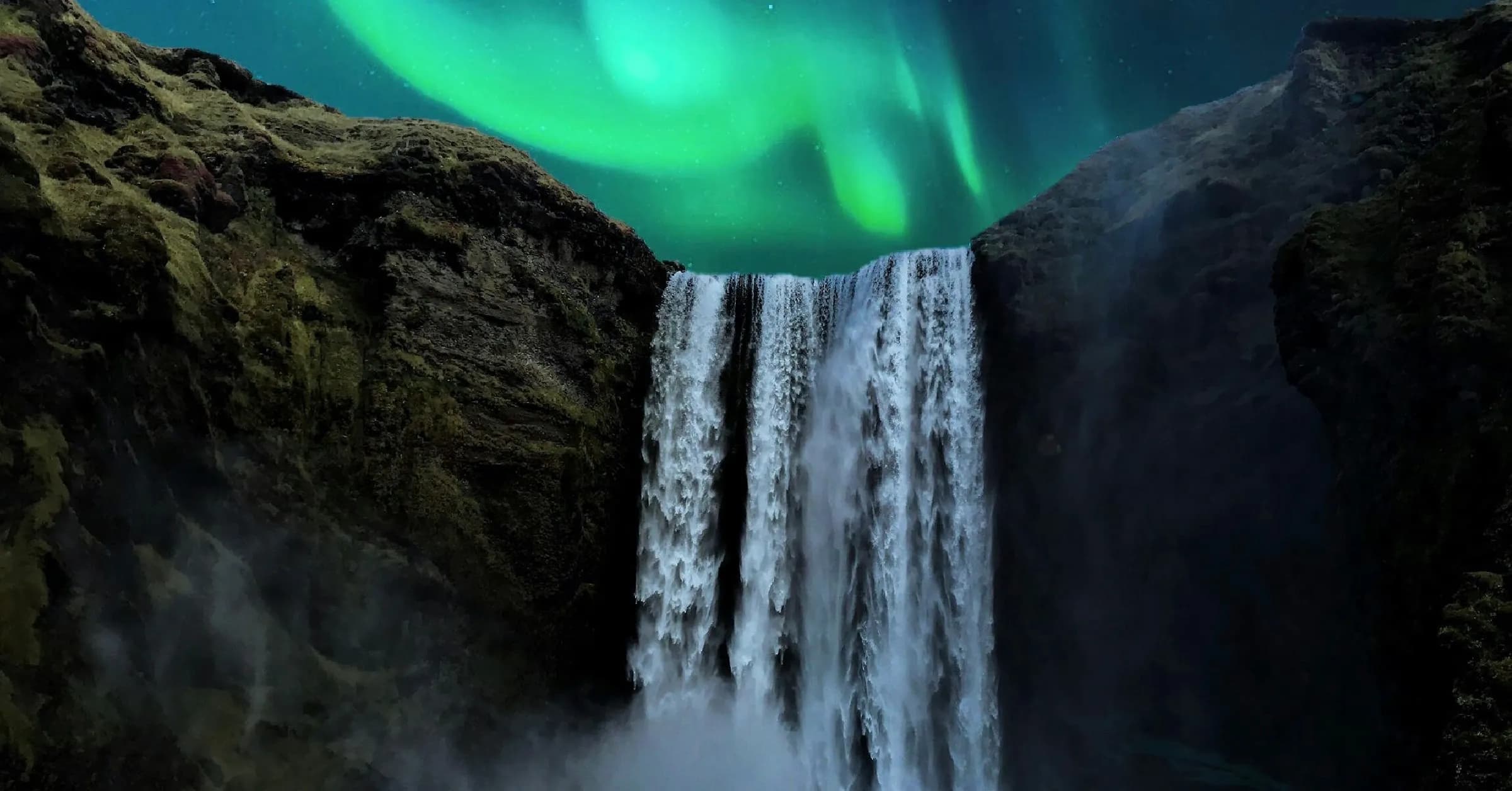
- Seljalandsfoss, about two hours from Reykjavik, where a path leads behind the falling water. A short walk away, Gljúfrabúi is half hidden inside a narrow gorge.
- Skógafoss, a broad, 60 metre waterfall with a staircase up the side to a viewpoint.
- Sólheimajökull, a glacier tongue where guided hikes take you onto the ice. This glacier hike on Sólheimajökull includes transport from Reykjavik.
- Dyrhólaey, a headland with a natural arch and views along the coast.
- Reynisfjara, the black sand beach with basalt columns and the Reynisdrangar sea stacks. Dangerous "sneaker waves" have swept people into the sea here, so stay well back from the water's edge.
Vík itself is a small village with a hilltop church, a handful of hotels and restaurants, and a useful position for an overnight stop. To see the highlights in a single day without driving, this South Coast guided tour covers Seljalandsfoss, Skógafoss and Reynisfjara.
How long: one long day as a round trip from Reykjavik, or two days with a night in or near Vík, which is far more relaxed.
4. Vatnajökull National Park: Skaftafell, Jökulsárlón and Diamond Beach
East of Vík, the road crosses vast black sand plains before reaching Vatnajökull, Iceland's largest ice cap. Much of the area is protected as Vatnajökull National Park, which UNESCO added to the World Heritage List in 2019.
- Skaftafell is the park's main hiking hub. A popular trail leads to Svartifoss, a waterfall framed by dark basalt columns, and guided glacier hikes leave from here. In winter, this ice cave and glacier hike from Skaftafell combines both.
- Jökulsárlón is a glacier lagoon where icebergs break off the glacier and drift slowly towards the sea. Seals often swim among them, and boat tours run in the warmer months.
- Diamond Beach, across the road, is where chunks of ice wash up on the black sand.
Natural ice caves can only be visited with a guide, and the season usually runs from around mid-November to March, depending on conditions. Jökulsárlón is roughly five hours' drive from Reykjavik, so it's best with an overnight stay nearby. If you're short on time, this Jökulsárlón and Diamond Beach day trip does it from Reykjavik in one very long day.
How long: one to two days, with at least one night in the area.
5. The Snæfellsnes Peninsula
Snæfellsnes is often called "Iceland in miniature", and it earns the name: in a single day you can see moss-covered lava, fishing harbours, both dark and pale sand beaches, and Snæfellsjökull, the ice-capped volcano at its western tip. It starts about two and a half hours from Reykjavik. It's a good alternative to the South Coast if you've already done it, or if you want somewhere quieter.
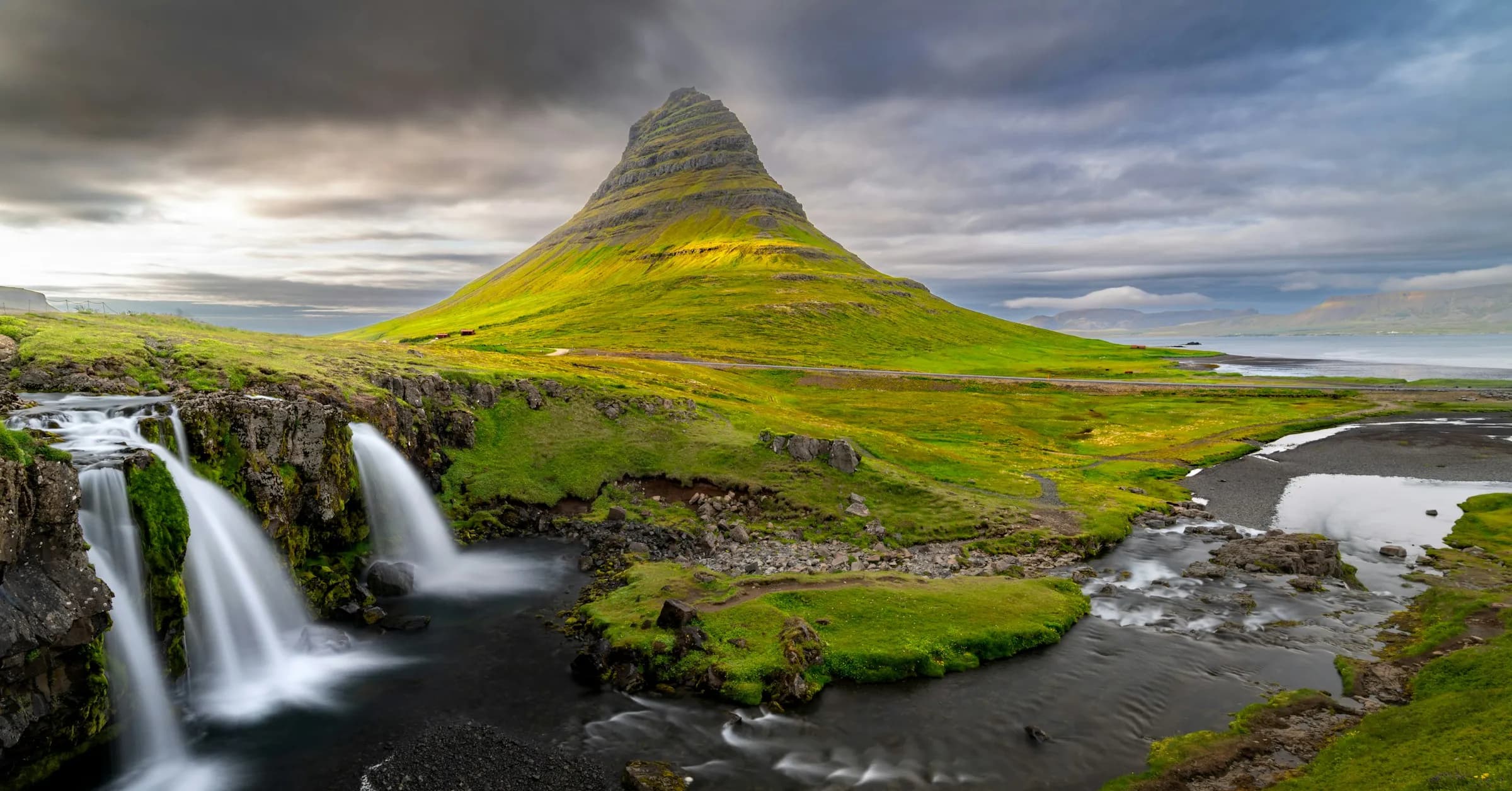
The best-known stop is Kirkjufell, the steep, cone-shaped mountain near Grundarfjörður, usually photographed with the Kirkjufellsfoss waterfall in front. Further west, Snæfellsjökull National Park protects the area around the volcano, with the black pebble beach at Djúpalónssandur and the coastal walk between the villages of Arnarstapi and Hellnar. The small black church at Búðir is another favourite. This Snæfellsnes Peninsula day tour covers the main stops from Reykjavik.
How long: one day, or two with a night in Grundarfjörður or Stykkishólmur.
6. The Reykjanes Peninsula
The Reykjanes Peninsula is where you land, so it's easy to see on the way in or out. The famous Blue Lagoon sits in a lava field about 20 minutes from Keflavík Airport, which makes it a popular first or last stop. This Blue Lagoon package with transfer includes the bus.
Beyond the lagoon, the peninsula has a raw, volcanic landscape: the Bridge Between Continents near Sandvík spans a fissure between the two plates, Gunnuhver is a powerful steam vent with boiling mud pools, and the Seltún geothermal area at Krýsuvík has boardwalks between bubbling pools.
Since late 2023, a series of volcanic eruptions near Grindavík has closed roads, parts of the town and, at times, the Blue Lagoon itself. Check the latest updates from Safetravel before you go, and never enter a closed area.
How long: half a day, ideally on your arrival or departure day.
7. The Eastfjords
The Eastfjords are the quietest stretch of the Ring Road: long fjords, steep mountains and small fishing villages, with far fewer visitors than the south. Egilsstaðir is the main town and service centre.
Seyðisfjörður, about 30 minutes over a mountain pass from Egilsstaðir, is the region's best-known village, with colourful wooden houses and a painted rainbow street leading to a blue church. It's also where the ferry from Denmark arrives. Inland, the Stuðlagil canyon is lined with basalt columns along a glacial river. Its colour is at its best in late summer, when the water level is lower.
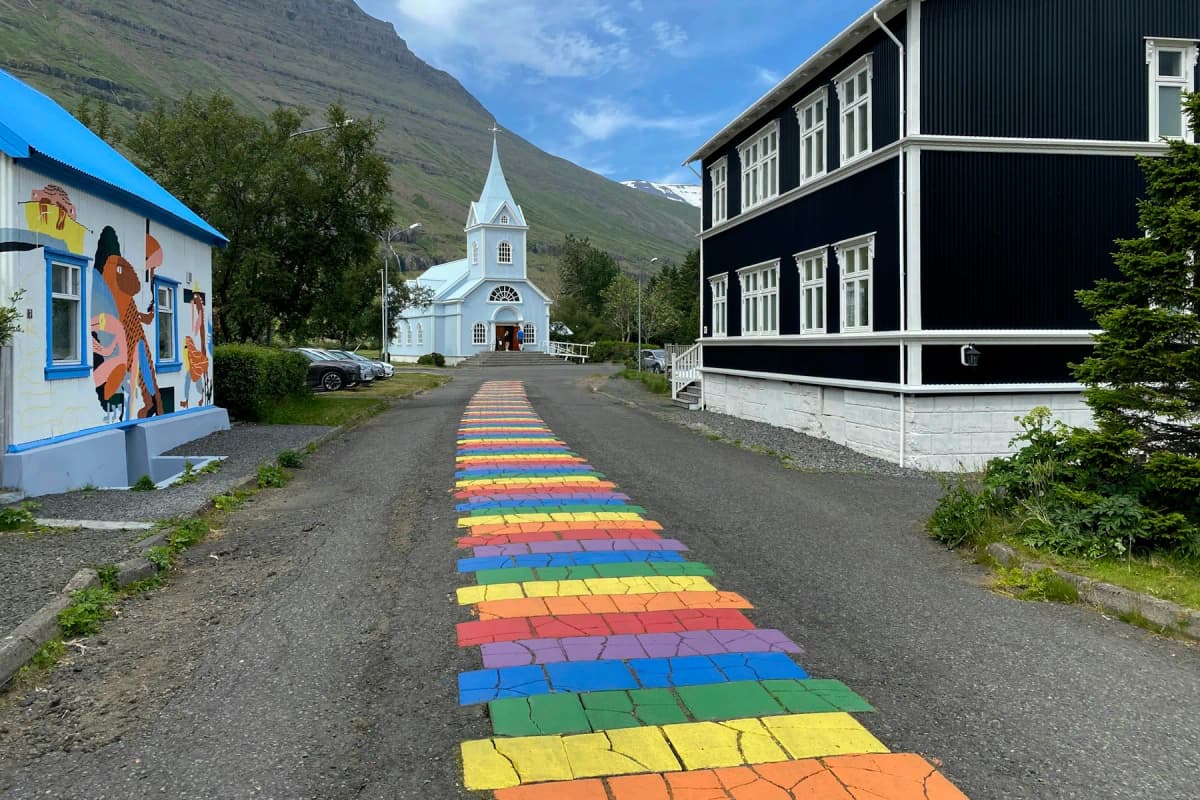 Photo: Freysteinn G. Jonsson on Unsplash
How long: one to two days as part of a Ring Road trip. The Eastfjords are too far from Reykjavik for a short visit.
8. Lake Mývatn and Dettifoss
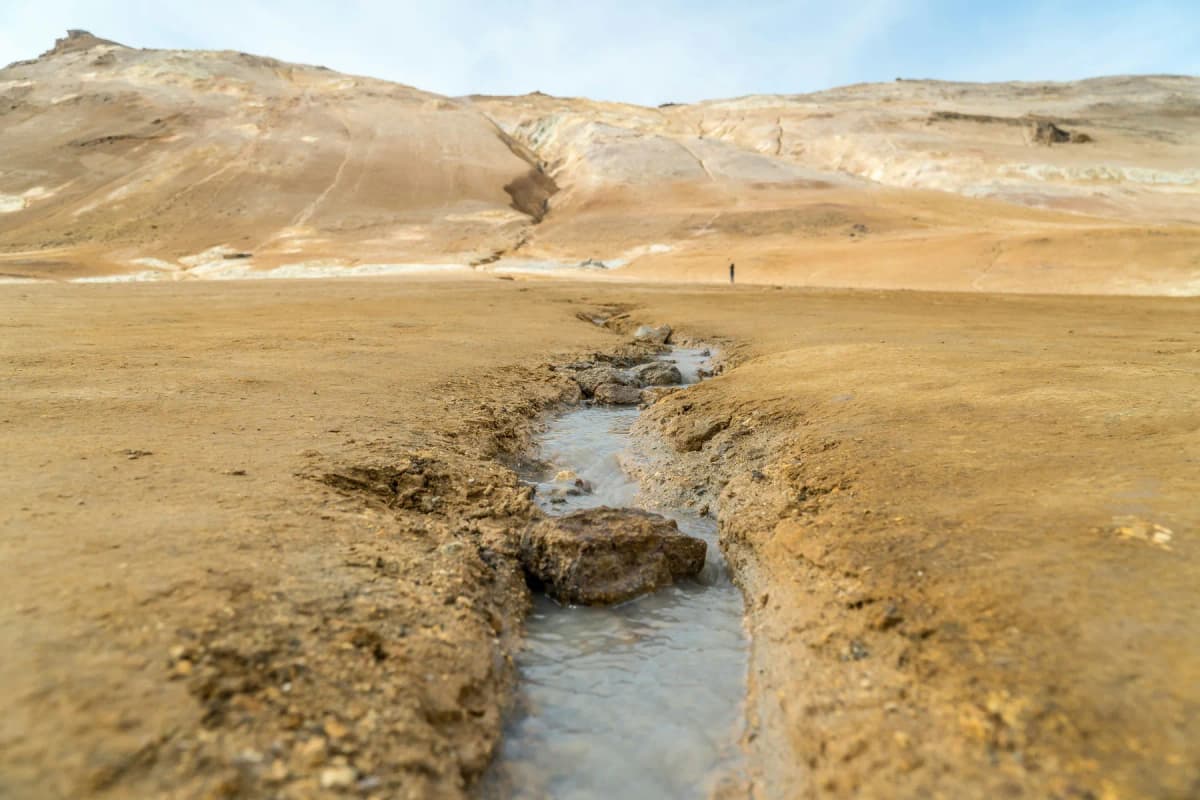 Photo:
The area around Lake Mývatn in the north was shaped by volcanic activity, and it shows. Within a short drive you can see:
- Hverir, a geothermal field of steaming vents and bubbling mud pots below the Námafjall ridge, with an ochre and orange landscape that feels nothing like the rest of Iceland.
- Dimmuborgir, a maze of strange lava pillars and arches with marked walking trails.
- The pseudo-craters at Skútustaðir, formed when lava flowed over wetland.
- The Mývatn Nature Baths, a quieter alternative to the Blue Lagoon.
About an hour's drive to the north-east, Dettifoss is often described as one of the most powerful waterfalls in Europe, a thundering wall of grey glacial water. Goðafoss, the "Waterfall of the Gods", sits on the Ring Road between Mývatn and Akureyri.
How long: one to two days. Base yourself around the lake or in Akureyri.
9. Akureyri and Húsavík
Akureyri is the largest town in the north, set at the head of the long Eyjafjörður fjord. It has a compact centre, a botanical garden, good restaurants and a ski area in winter, which makes it a comfortable base for exploring the region. You can fly there from Reykjavik in under an hour or drive it in around five.
About an hour away, the fishing town of Húsavík on Skjálfandi Bay is known as one of the best places in Iceland for whale watching, with boat tours running mainly from spring to autumn. It's also home to a whale museum.
How long: one to two days, combined with Mývatn.
10. The Westfjords
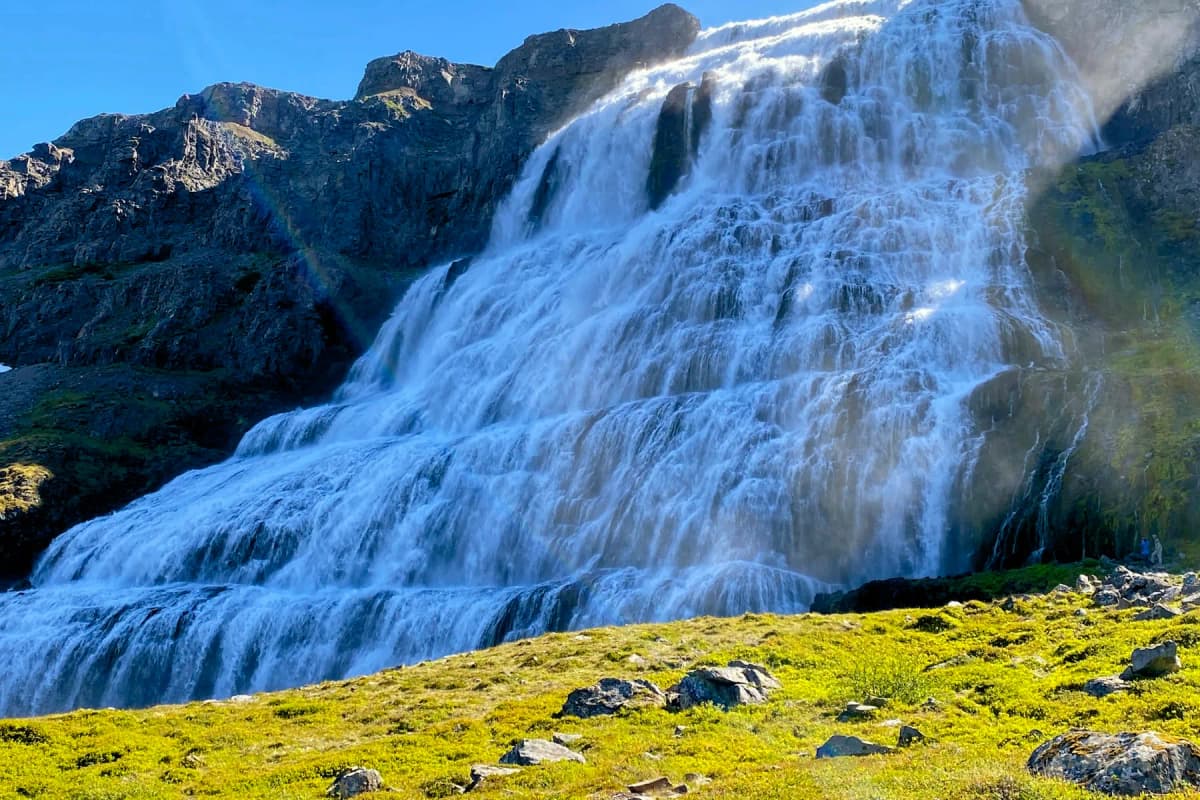 Photo: Freysteinn G. Jonsson on Unsplash
The Westfjords are Iceland's wildest and least visited region, a giant claw of land in the north-west that isn't part of the Ring Road. Roads wind around deep fjords and over high passes, and towns are small and far apart.
The highlights include Dynjandi, a broad waterfall that fans out down a mountainside like a bridal veil, and Látrabjarg, a long line of sea cliffs often described as Europe's largest bird cliff, where puffins nest from roughly June to mid-August. Ísafjörður is the main town and a base for boat trips to the remote Hornstrandir Nature Reserve.
Getting there takes effort. The drive from Reykjavik is roughly 5 to 7 hours depending on your route, the Baldur car ferry crosses Breiðafjörður from Stykkishólmur on Snæfellsnes, and flights to Ísafjörður take around 40 minutes. The best time to visit is from mid-June to mid-August, as some mountain roads can close in winter.
How long: three to five days. It's not worth rushing.
11. Landmannalaugar and the Highlands
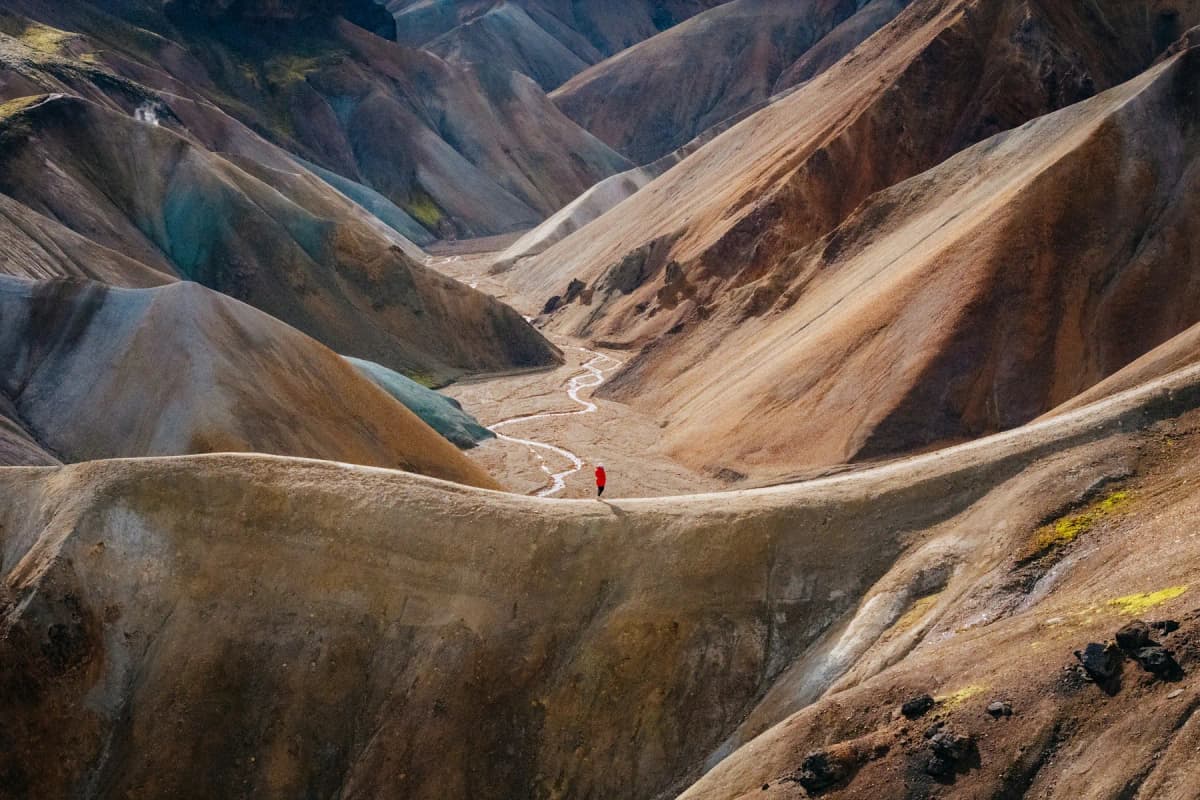 Photo: Karsten Winegeart on Unsplash
Landmannalaugar, in the southern Highlands, is famous for mountains streaked in shades of red, yellow, green and blue, formed from rhyolite rock. It has short and long hiking trails, a natural hot spring where you can bathe, and it's the starting point of the Laugavegur trail, a multi-day hike of about 55 kilometres to Þórsmörk.
The catch is access. Landmannalaugar is reached on mountain F-roads, which usually open from around mid-June and close in autumn. F-roads need a 4x4, and some include unbridged river crossings that are only safe in a suitable vehicle. Many visitors take a summer highland bus from Reykjavik instead, which takes around four and a half hours each way. Check opening dates with the Icelandic Road and Coastal Administration before planning a visit.
How long: one day, or longer if you want to hike. Summer only.
12. The Westman Islands
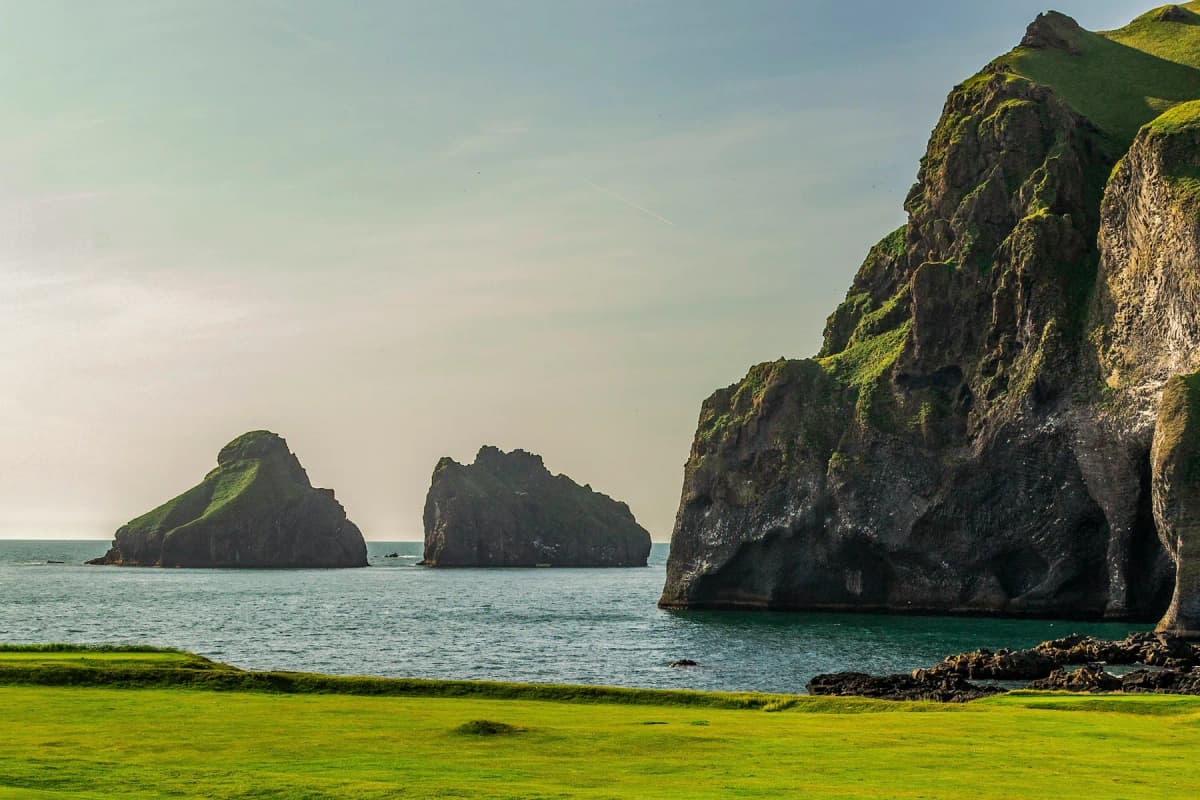 Photo: Hector John Periquin on Unsplash
The Westman Islands (Vestmannaeyjar) are a cluster of volcanic islands off the South Coast. Only the largest, Heimaey, is inhabited. In 1973 an eruption of the Eldfell volcano buried part of the town in lava and ash, and you can now climb the volcano and visit a museum built around the excavated houses. The islands are also known for large puffin colonies in summer.
The Herjólfur ferry from Landeyjahöfn, about two hours from Reykjavik, takes around 35 to 45 minutes. In winter and in rough seas, sailings often move to Þorlákshöfn, which takes around three hours, and some are cancelled, so check the timetable before you set off.
How long: one day, or a night if you want to see the island quietly after the day visitors leave.
If you have more time
- Þórsmörk: a mountain valley between glaciers, reached by highland bus or tour, popular for hiking.
- Borgarfjörður: an easy trip north of Reykjavik for the Hraunfossar falls, which pour out of a lava field, and Deildartunguhver, a powerful hot spring.
- Grímsey: a small island off the north coast that the Arctic Circle crosses, reached by ferry from Dalvík or by a short flight from Akureyri.
- The northern lights: not a place, but a reason to visit between roughly September and April. Get away from city lights on a clear night, or join this northern lights tour from Reykjavik.
How to combine these places
How many of these places you can see depends on how long you have and when you travel:
- 4 to 5 days: Reykjavik, the Golden Circle, the South Coast and the Reykjanes Peninsula, with a night in Vík if you can.
- 7 days: add Jökulsárlón and Skaftafell, plus a day on Snæfellsnes.
- 10 days or more in summer: drive the full Ring Road, adding the Eastfjords, Mývatn, Dettifoss and Akureyri.
- Two weeks or more: add the Westfjords, Landmannalaugar or the Westman Islands.
For day-by-day plans, see our Iceland itinerary.
Getting around Iceland
A hire car gives you the most freedom, and most places on this list are on or near paved roads. The speed limit is generally 90 km/h on paved roads outside towns, and you'll often need to fill up in advance in remote areas. Highland roads marked with an F need a 4x4 and are only open in summer.
If you'd rather not drive, Reykjavik is the base for most guided day tours, including the Golden Circle, the South Coast, Snæfellsnes and Jökulsárlón. Domestic flights connect Reykjavik with Akureyri, Egilsstaðir and Ísafjörður, which can save long drives.
Before setting off each day, check road conditions on road.is, the weather forecast on vedur.is and travel alerts on Safetravel. Wind can be strong enough to damage car doors, so open them carefully.
Best time to visit Iceland
- June to August: long daylight, the warmest weather and the only time the Highlands and most Westfjords roads are reliably open. It's also the busiest and most expensive season.
- May and September: fewer crowds and lower prices, with most of the island accessible. September brings the first chance of the northern lights.
- October to April: short days, snow and ice, and the best months for the northern lights and ice caves. Stick to the southwest and the South Coast unless you're experienced with winter driving.
Practical tips for a first trip
- Don't over plan: distances look short on a map, but stops, weather and daylight add up. Leave buffer time.
- Book early in summer: accommodation outside Reykjavik is limited, especially around Vík and Jökulsárlón.
- Stay connected: an Iceland eSIM makes it easier to check road conditions and the weather on the go.
- Get travel insurance: cover that includes medical treatment is worth having, particularly if you plan to hike or go onto a glacier.
- Respect closures: ropes and signs at beaches, cliffs and geothermal areas are there for good reason.
Frequently asked questions
What is the most beautiful place in Iceland?
It depends what you like, but Jökulsárlón, with its icebergs drifting towards the sea, and Kirkjufell on Snæfellsnes are two of the most photographed. For colour, Landmannalaugar in summer is hard to beat.
What is the best part of Iceland for a first visit?
The southwest. Reykjavik, the Golden Circle and the South Coast are close together, open all year and include many of the country's best-known sights.
Can you see the best of Iceland without driving the Ring Road?
Yes. With a week based in the south and west, you can see the Golden Circle, the South Coast, Jökulsárlón and Snæfellsnes. The Ring Road adds the north and east, but needs at least 7 days and ideally 10.
Is the Westfjords worth visiting?
Yes, if you have time and are visiting in summer. It's remote and scenic, with few visitors, but needs at least three days on top of a standard trip.
Can you visit Landmannalaugar in winter?
Not independently. The F-roads that lead there usually close from autumn to around mid-June, so plan a visit for summer.
How we researched this guide
We compared this guide with information from Visit Iceland, Visit Vatnajökull, the Icelandic Road and Coastal Administration, Safetravel, the Herjólfur ferry and highland bus operators, as well as the UK government's travel advice for Iceland, all checked in October 2026. Driving times are approximate and assume good conditions. Volcanic activity on the Reykjanes Peninsula and seasonal road closures can change access at short notice, so check before you go. Found something out of date? Let us know.
Planning more of Iceland? Browse all our Iceland guides, choose your experiences from our list of things to do in Iceland, or follow our day-by-day Iceland itinerary.