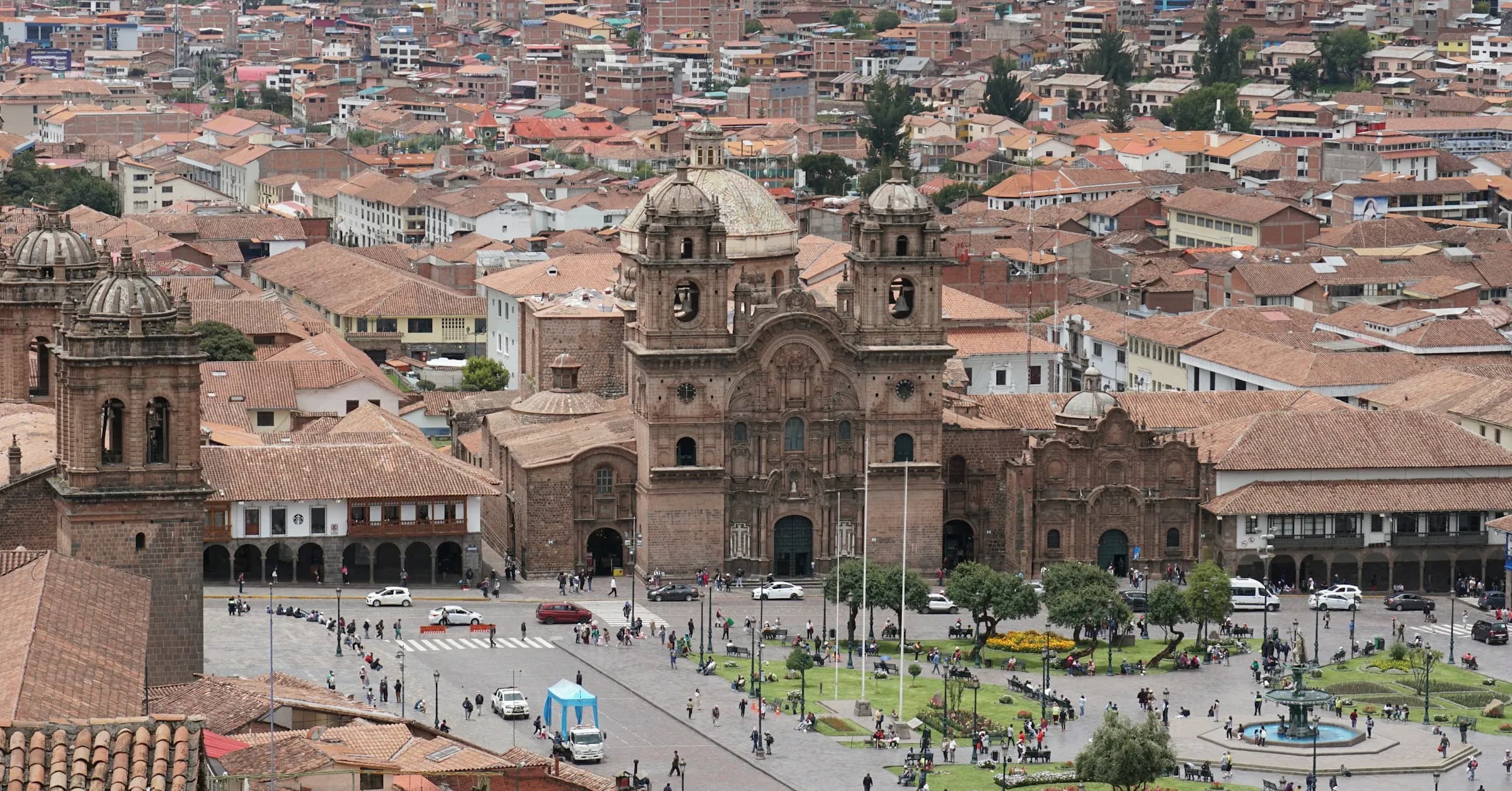
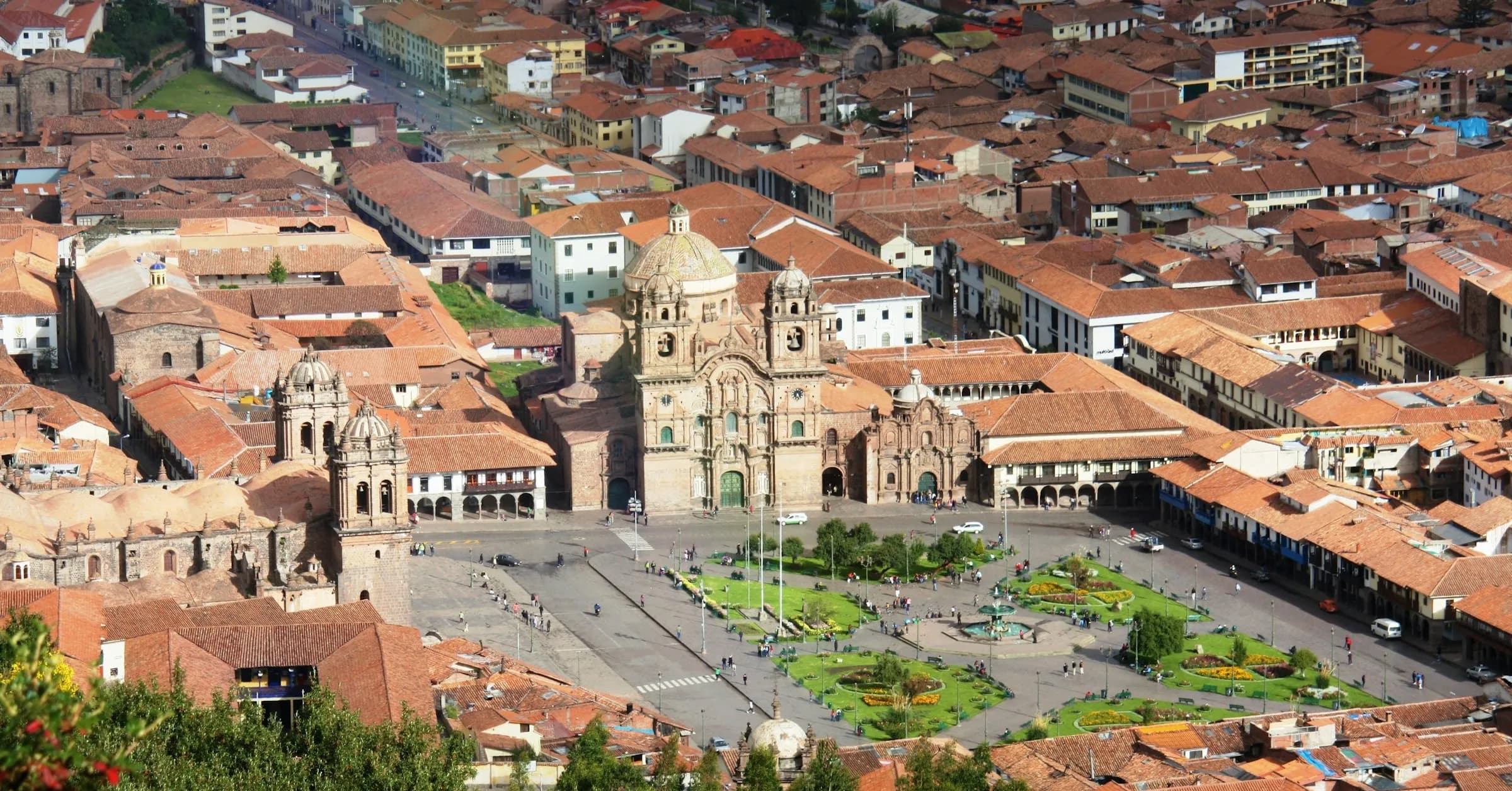
12 Best Day Trips from Cusco, Peru (2026 Guide)
October 23, 2026 · Peru
This post contains affiliate links. We may earn a commission if you book through them, at no extra cost to you. Disclaimer.
The best day trips from Cusco are Machu Picchu, the Sacred Valley with Pisac and Ollantaytambo, the Maras salt pans and the Moray terraces, and the high-altitude hikes to Rainbow Mountain, Palccoyo and Humantay Lake. For something quieter, the South Valley is less than an hour away, and the Inca rope bridge at Q'eswachaka makes a long but memorable day out.
Cusco is one of the best bases in South America for day trips, but it's also one of the most demanding. The city sits at about 3,400 m, several of the classic trips climb to between 4,000 and 5,000 m, and many tours leave before dawn. Which day trips you choose, and the order you do them in, matter as much as where you go. This guide covers 12 of the best, with the travel time, the highest point, how to get there and who each one suits, so you can plan your days around the altitude rather than against it.
Day trips from Cusco at a glance
| Day trip | Travel time each way | Highest point (approx.) | Tour or independent? | Best for |
|---|---|---|---|---|
| Machu Picchu | 3.5 to 4 hours by road and train | About 2,430 m (lower than Cusco) | Either | The Inca citadel |
| Sacred Valley tour | About 1 hour to Pisac | 3,500 m at Moray | Tour | Seeing several sites in one day |
| Pisac | 45 to 60 minutes | About 3,400 m at the ruins | Independent | Ruins, terraces and a market |
| Ollantaytambo | 1.5 to 2 hours | About 2,800 m in town | Independent | An Inca town and fortress |
| Maras and Moray | About 1.5 hours | About 3,500 m | Either | Salt pans and circular terraces |
| Chinchero | About 45 minutes | About 3,750 m | Independent | Weaving and a Sunday market |
| Rainbow Mountain | About 3 hours | Over 5,000 m | Tour | A tough, famous hike |
| Palccoyo | 2.5 to 4 hours | About 4,900 m | Tour | An easier rainbow mountain |
| Humantay Lake | About 3 hours | About 4,200 m | Tour | A turquoise glacier lake |
| South Valley | 30 to 60 minutes | About 3,500 m | Either | Quiet Inca and Wari sites |
| Q'eswachaka and the Four Lagoons | 3 to 4 hours | About 3,800 m | Tour | A living Inca tradition |
| Waqrapukara | 3 to 4 hours | About 4,100 m | Tour | A remote ruin with few visitors |
Our short version: if you only have time for a few, choose Machu Picchu, one full day in the Sacred Valley and one mountain hike. Pick Rainbow Mountain if you're fit and well acclimatised, Palccoyo if you want the colours with less effort, or Humantay Lake if you'd prefer a glacier lake to striped hills.
Before you go: altitude and timing
The single most useful thing to know about day trips from Cusco is that altitude should decide the order. The Sacred Valley and Machu Picchu are both lower than Cusco, so they make good first trips while you adjust. Save Rainbow Mountain, Palccoyo and Humantay Lake for later in your stay, after at least two or three days at altitude. Some visitors sleep in the Sacred Valley for their first nights for the same reason.
A few other things to plan around:
- Early starts: the mountain hikes usually pick you up between about 3am and 5am, so you reach the trail before the clouds and the crowds. Machu Picchu day tours also leave before dawn.
- Cash: community entrance fees, colectivos and the salt pans at Maras are usually paid in cash, in soles. Small notes help.
- The Boleto Turístico: Pisac, Ollantaytambo, Moray, Chinchero, Tipón and Pikillaqta are all covered by Cusco's combined tourist ticket. The general version costs 130 soles for foreign visitors and is valid for 10 days, and a partial ticket for the Sacred Valley sites costs 70 soles. It doesn't cover Machu Picchu or Maras. Our guide to things to do in Cusco explains the circuits in more detail.
- Weather: the dry season from about May to September brings the clearest mountain views. In the rainy season, roughly December to March, trails are muddier and views are often lost in cloud by late morning.
The 12 best day trips from Cusco
1. Machu Picchu: best for the Inca citadel
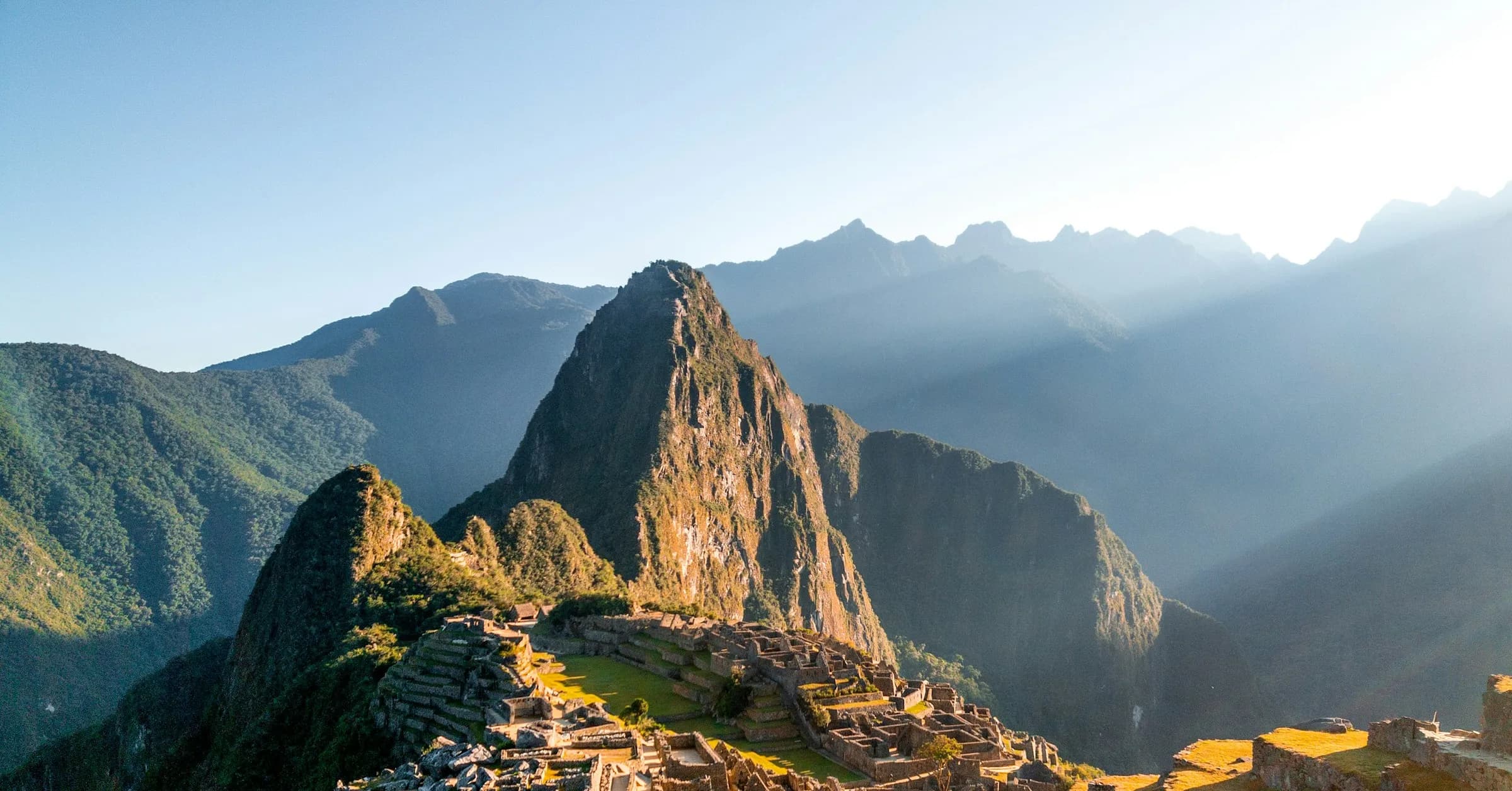
Machu Picchu is the trip most visitors come to Cusco for. The Inca citadel sits on a ridge high above the Urubamba River, and it can be done as a day trip from Cusco, although it's a long one. It's also lower than Cusco, at around 2,430 m, so the altitude is not a problem.
How to get there: the usual route is by road from Cusco to Ollantaytambo, about 1.5 to 2 hours, then by train to Aguas Calientes (Machu Picchu Pueblo), then by bus up the mountain to the site. The buses take around 25 minutes, and you can book a Machu Picchu shuttle bus ticket in advance. Trains have also run from stations near Cusco at times, but services have been disrupted repeatedly in 2026: PeruRail suspended operations earlier in the year and announced a progressive restart from August, and landslides and protests have caused other stoppages. Check with PeruRail or Inca Rail close to your travel date.
Tickets: entry tickets for foreign adults cost around 163 soles in 2026, including a new surcharge, and must be bought for a set time and circuit. Buy them from the official tuboleto.cultura.pe site as early as you can, especially for June to August.
Day trip or overnight? A day trip means leaving Cusco before dawn and getting back late in the evening, with only a few hours at the site. If you're short on time, an organised Machu Picchu day trip from Cusco handles the transport, tickets and guide in one booking. If you can spare an extra day, a night in Aguas Calientes or Ollantaytambo makes the visit far more relaxed. A two-day overland trip to Machu Picchu is the budget alternative: it goes most of the way by road, then follows the railway on foot for the last stretch, usually from the station at Hidroeléctrica.
Best for: everyone, but book well ahead and allow for disruption.
2. A full Sacred Valley tour: best for seeing several sites in one day
The Sacred Valley of the Incas follows the Urubamba River north of Cusco, with Inca terraces, ruined fortresses and market towns strung along the valley floor. A full-day tour is the easiest way to see the highlights without arranging transport between sites, and it's a good first trip because the valley is several hundred metres lower than Cusco.
Most tours combine Pisac and Ollantaytambo, sometimes with Chinchero, and stop for a buffet lunch in Urubamba. Others swap Pisac for Maras and Moray. Read the itinerary carefully, because the stops vary a lot. This full-day Sacred Valley tour with Maras and Moray covers the valley's best-known sites, and this Sacred Valley and Maras salt mine tour is another option.
Most tours don't include the Boleto Turístico or the Maras fee, so check what's covered and bring cash.
Best for: a first trip out of Cusco, and anyone who wants to see a lot in a single day.
3. Pisac: best for ruins, terraces and a market
Pisac is the closest of the Sacred Valley towns to Cusco and the easiest to visit on your own. The town is known for its market, which spreads across the main square and nearby streets and is busiest on Sundays, while the Inca site above the town has some of the most impressive terraces in the valley, curving around the mountainside, along with temples, a ceremonial area and tombs cut into the cliffs.
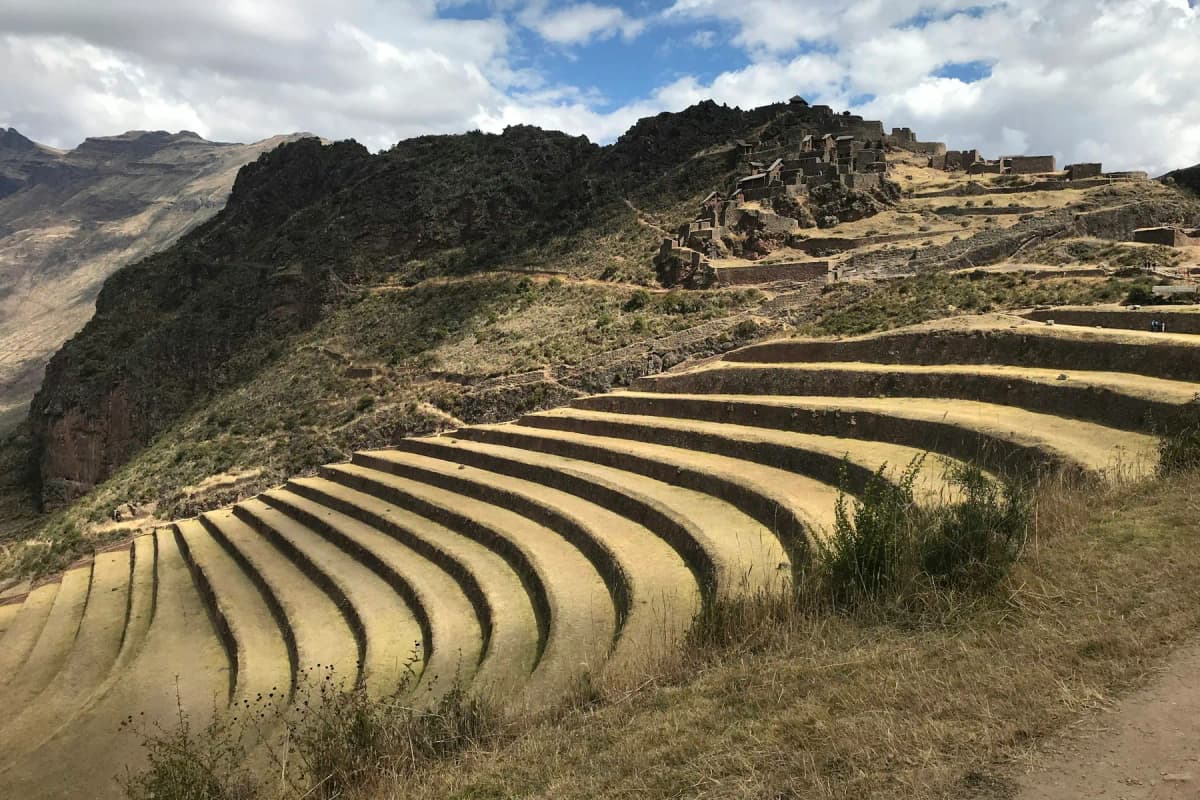 Photo:
How to get there: colectivos (shared minibuses) for Pisac leave from the top of Calle Puputi in Cusco, near the roundabout with the Garcilaso monument. They depart when full, run from early morning until early evening, and take about 45 to 60 minutes. Fares reported in 2026 were around 4 to 6 soles. From Pisac town, a taxi up to the top of the ruins saves a steep climb, and you can then walk back down through the terraces to the town, which takes a couple of hours with stops.
The ruins are on the Boleto Turístico, so buy the ticket before you go or at the entrance.
Best for: an easy independent day trip, photographers and market lovers.
4. Ollantaytambo: best for an Inca town and fortress
Ollantaytambo sits at the western end of the Sacred Valley and is one of the few towns in Peru that still follows its original Inca street plan, with narrow stone lanes and water channels running beside the houses. Above the town, a steep flight of terraces climbs to a temple area built from huge pink granite blocks, and across the valley you can see Inca storehouses built into the cliff.
How to get there: colectivos for Ollantaytambo, and for Urubamba on the way, leave from Calle Pavitos in Cusco. They depart when full. Urubamba is about an hour away, and Ollantaytambo about 1 hour 45 minutes, with fares reported at around 10 to 15 soles. You can also take a colectivo to Urubamba and change there.
Ollantaytambo is also the main station for trains to Machu Picchu, so many people visit on the way there or back rather than as a separate day trip. If you're staying overnight, climb the fortress early in the morning, before the tour groups arrive from Cusco.
Best for: history lovers, independent travellers and anyone on the way to Machu Picchu.
5. Maras and Moray: best for salt pans and circular terraces
The Maras salt pans and the Moray terraces are two of the most photographed sights in the Sacred Valley, and they're close enough to visit together. At Maras, thousands of small salt pools have been cut into a steep hillside and fed by a salty spring since before the Incas, and local families still harvest the salt by hand. Visitors have not been allowed to walk among the pools since 2019, but the viewpoints and paths around them give you a good look. Entry is around 20 soles, paid separately as it isn't on the Boleto Turístico.
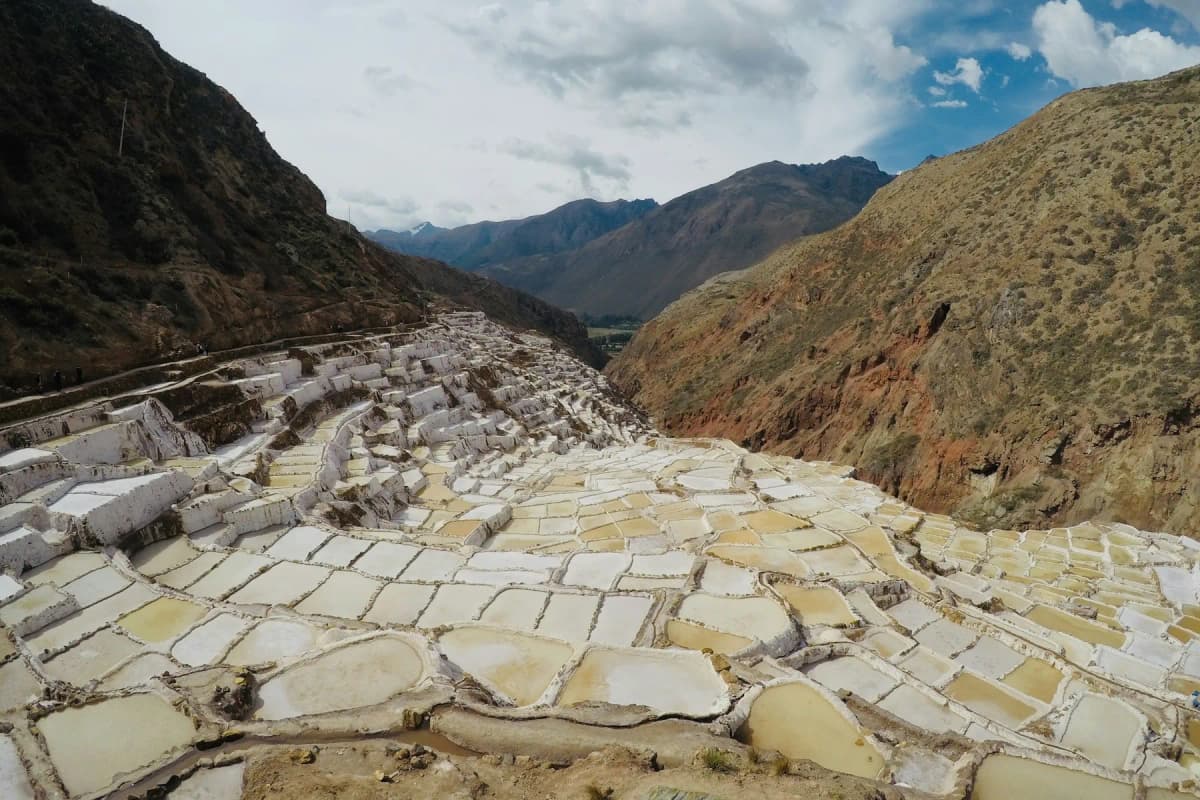 Photo: Gabriel Rojas on Unsplash
Moray is a group of huge circular terraces sunk into the ground like an amphitheatre. Many researchers think the Incas used them to experiment with crops at different temperatures, because each level has its own microclimate. Moray is on the Boleto Turístico.
How to get there: there's no direct public transport to either site, so most people go on a tour, often combined with Chinchero or Ollantaytambo. Independently, you can take a colectivo towards Urubamba, get off at the turning for Maras and hire a taxi from there to both sites. Cyclists and hikers sometimes walk or ride down from Moray to the salt pans and on to the valley floor.
Best for: photographers and anyone interested in Inca farming.
6. Chinchero: best for weaving and a Sunday market
Chinchero is a high Andean town on the plateau between Cusco and the Sacred Valley, and it's one of the best places in the region to see traditional weaving. Several weaving centres show how wool is washed with natural soap, dyed with plants and minerals and woven on backstrap looms. The town also has a colonial church built on top of Inca walls, Inca terraces and a market that is busiest on Sundays.
At about 3,750 m, Chinchero is higher than Cusco, so it isn't the best first trip. It's usually combined with Maras and Moray or a Sacred Valley tour, and it's on the Boleto Turístico. You'll also see construction work for the new Chinchero airport nearby; Peru's transport ministry has said it expects operations to begin at the end of 2027 or in early 2028.
Best for: textiles, a quieter town and combining with Maras and Moray.
7. Rainbow Mountain (Vinicunca): best for a tough, famous hike
Vinicunca, better known as Rainbow Mountain, is a ridge striped in red, yellow, green and purple by layers of minerals, south-east of Cusco. It's one of the most popular day trips from the city, and also one of the hardest. The drive takes about three hours each way, tours typically leave Cusco around 4am, and the viewpoint is at over 5,000 m. The walk from the car park takes around one and a half to two hours uphill.
Tours we found ranged from about US$40 to US$100, usually with breakfast and lunch; this Rainbow Mountain full-day tour is one example. Local communities have charged entry fees, so ask what's included and carry cash in soles. Horses can be hired for much of the climb.
Only attempt Rainbow Mountain once you've spent a few days at altitude, and turn back if you feel dizzy, confused or very short of breath. The site is busiest from mid-morning, so an early start makes a real difference.
Best for: fit, well-acclimatised hikers who want the famous view.
8. Palccoyo: best for an easier rainbow mountain
Palccoyo is a quieter alternative to Vinicunca, with several striped rainbow ridges and a forest of rock spires near the top. The big advantage is the walk: from the car park, which is already at about 4,700 m, the trail to the highest viewpoint, at around 4,900 m, is only about 3 km and takes roughly two hours there and back at a gentle pace. It's still high, but it's a far easier day than Rainbow Mountain.
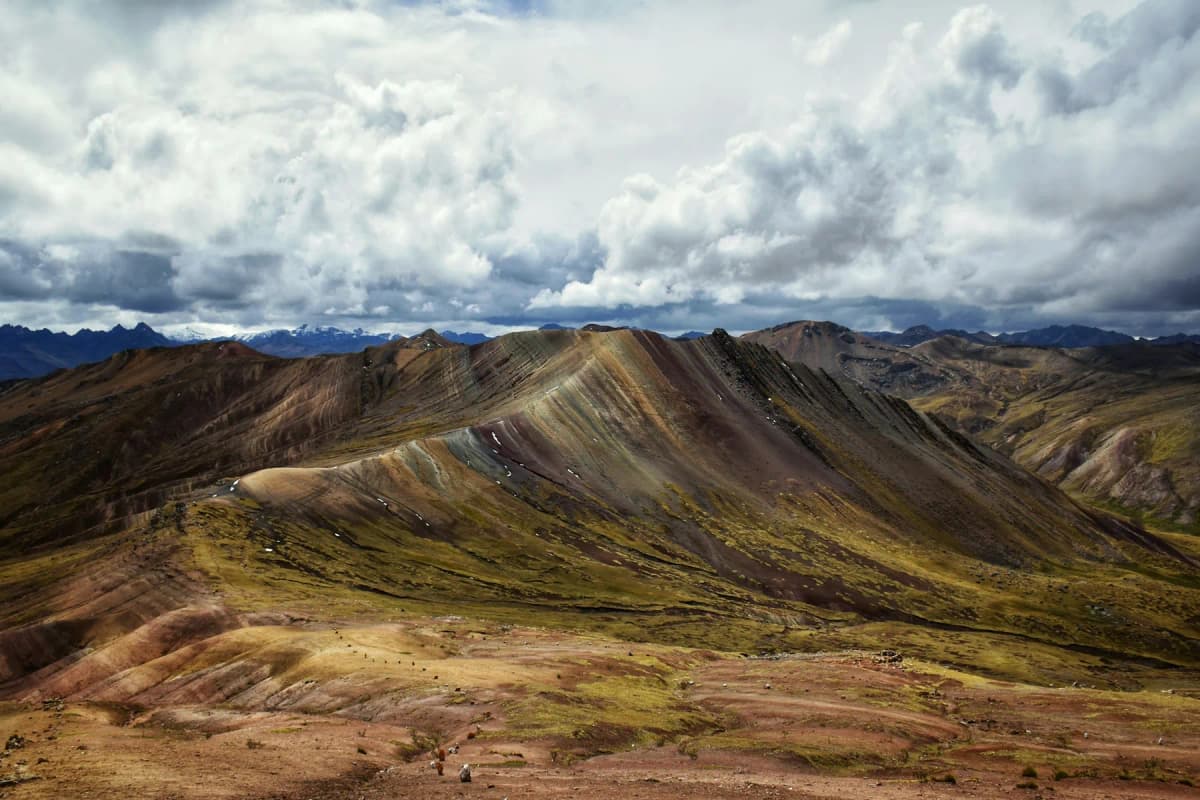 Photo: Jean Vella on Unsplash
The drive takes about 2.5 to 4 hours each way, depending on the road and the stops, so it's still a long day. A local community entrance fee, reported at around 20 soles, is usually paid in cash at the site. This Palccoyo Rainbow Mountain hike includes transport from Cusco.
Best for: families, less experienced hikers and anyone who wants rainbow mountain colours without the crowds.
9. Humantay Lake: best for a turquoise glacier lake
Humantay Lake is a startlingly turquoise lake beneath the glaciers of Humantay peak, near the start of the Salkantay trek. Tours drive about three hours from Cusco, usually via the town of Mollepata, to the trailhead at Soraypampa. From there, the hike is about 7 km there and back and climbs to around 4,200 m. It's steep in places but shorter and less extreme than Rainbow Mountain.
Most visitors go on a day tour, which starts very early and often includes breakfast in Mollepata; this Humantay Lake day trip is one option. Tour listings mention a community entry fee of around 20 soles, paid in cash, so check whether it's included. Horses can be hired for part of the climb.
Best for: hikers who want a lake and glaciers rather than coloured hills.
10. The South Valley: best for quiet Inca and Wari sites
The South Valley, east of Cusco, gets far fewer visitors than the Sacred Valley, and that's part of its appeal. Tipón is a set of Inca terraces with fountains and water channels that still flow today. Pikillaqta is a large walled city built by the Wari culture, centuries before the Incas. Nearby, the small church at Andahuaylillas is covered inside with colonial murals and gilded altars, which has earned it the nickname "the Sistine Chapel of the Andes".
Tipón is about 30 to 40 minutes from Cusco, and the three sites together make a comfortable half day or a relaxed full day. Tipón and Pikillaqta are on the Boleto Turístico, while the church charges separately. You can piece the trip together with local buses and taxis, or book a South Valley tour.
Best for: a gentle first day, repeat visitors and anyone tired of crowds.
11. Q'eswachaka and the Four Lagoons: best for a living Inca tradition
The Q'eswachaka bridge is the last Inca rope bridge still in use, slung across a gorge of the Apurímac River in the province of Canas. Every year, usually in June, the local Quechua communities take down the old bridge and weave a new one from grass rope in a ceremony that lasts several days, a tradition recognised by UNESCO in 2013. Visitors can usually walk across, if they have a head for heights.
 Photo: Jean Vella on Unsplash
The bridge is about three to four hours from Cusco, so it's a long day, typically 8 to 13 hours in total. Most tours combine it with the Four Lagoons route (Pomacanchi, Acopia, Asnacocha and Pampamarca), a string of high lakes surrounded by farmland and small villages. An entrance fee, reported at around 20 soles, is collected at the bridge. If you want to see the rebuilding ceremony, check the dates carefully, as they're set each year.
Best for: culture lovers and travellers who want to see the countryside beyond the tourist circuit.
12. Waqrapukara: best for a remote ruin with few visitors
Waqrapukara is a ruin built around a rock formation shaped like a pair of horns, high above the Apurímac canyon south of Cusco. It's one of the most dramatic sites in the region, and one of the least visited, because getting there takes effort. Tours drive three to four hours from Cusco, then hike to the site, which sits at around 4,100 m. Reports of the hike distance vary a lot depending on the route and where the vehicle stops, so ask your operator how far you'll walk.
Expect a very early start, often between 4am and 5am, and a long day. It suits experienced hikers who have already acclimatised and want something away from the crowds.
Best for: adventurous hikers on a longer stay.
Which day trips should you choose?
- Your first day or two: the South Valley, Pisac or a full Sacred Valley tour. They're lower or similar in altitude to Cusco and not too long.
- If you only have time for one: Machu Picchu, ideally with a night in Aguas Calientes or Ollantaytambo.
- For hikers: Humantay Lake for scenery, Rainbow Mountain for the challenge, or Waqrapukara for solitude. Leave them until you've acclimatised.
- For families and less active travellers: Palccoyo instead of Rainbow Mountain, and the Sacred Valley rather than the high hikes.
- For culture: Chinchero for weaving, Q'eswachaka for the rope bridge, and the Andahuaylillas church in the South Valley.
- On a budget: Pisac and Ollantaytambo by colectivo, with the Boleto Turístico, cost far less than any tour.
Sample plans for 3, 5 and 7 days
- 3 days: one easy day in Cusco to adjust, a full Sacred Valley tour, then Machu Picchu as a long day trip.
- 5 days: add Maras and Moray, and spend a night in Ollantaytambo or Aguas Calientes so Machu Picchu isn't rushed.
- 7 days or more: add the South Valley early on, then Humantay Lake or Palccoyo once you've acclimatised, and Rainbow Mountain or Q'eswachaka if you still have the energy.
Tours or independent travel?
Colectivos make it cheap and easy to reach Pisac, Urubamba, Ollantaytambo and Chinchero on your own. They leave when full, run from early morning until early evening, and only take cash. Taxis can fill the gaps, such as getting from the main road to Maras and Moray, and you can agree a price with a driver for a whole day.
For the mountain hikes (Rainbow Mountain, Palccoyo, Humantay Lake, Q'eswachaka and Waqrapukara), a tour is far more practical. The trailheads are hours away on rough roads with little or no public transport, and most tours include breakfast, lunch and a driver who knows the route. Check what's included before you book, especially entrance fees, and confirm the pick-up time and place the evening before.
Tips for day trips from Cusco
- Acclimatise first: spend at least two or three days in Cusco or the Sacred Valley before any trip above 4,000 m. Drink plenty of water, go easy on alcohol and see a doctor if your symptoms get worse.
- Dress in layers: mornings at altitude are freezing, but the sun is strong by midday. Bring a warm jacket, a hat, gloves, sunglasses and high-factor sun cream.
- Carry cash and snacks: many sites only take cash, and there's little to buy on the trails.
- Book Machu Picchu first: tickets and trains sell out, so fix your Machu Picchu date and plan the other trips around it.
- Stay connected: a Peru eSIM makes it easier to use maps and contact your tour operator, though mountain areas often have no signal.
- Get travel insurance: cover that includes medical treatment is worth having, especially for high-altitude hikes. Check that it covers the heights you plan to reach.
If you still need somewhere to stay, compare hotels in Cusco and the Sacred Valley here:
Frequently asked questions
What is the best day trip from Cusco? For most visitors, Machu Picchu. If you've already booked it as an overnight trip, a full day in the Sacred Valley is the best day trip, followed by Humantay Lake or Palccoyo for a mountain hike.
Can you do Machu Picchu as a day trip from Cusco? Yes, but it's a very long day, leaving before dawn and returning late in the evening, with only a few hours at the site. Trains have also been disrupted at times in 2026. A night in Aguas Calientes or Ollantaytambo makes the visit much more relaxed.
Is Palccoyo better than Rainbow Mountain? Palccoyo is easier, quieter and has several striped ridges, so it suits families and less experienced hikers. Rainbow Mountain (Vinicunca) is the more famous view, but the hike is harder and the viewpoint is higher, at over 5,000 m. Both are very high, so acclimatise first.
Can you visit the Sacred Valley without a tour? Yes. Colectivos run from Cusco to Pisac, Urubamba and Ollantaytambo, and you can buy the Boleto Turístico at the sites. A tour is easier if you want to combine several places in one day, especially Maras and Moray, which have no direct public transport.
Which day trips from Cusco are good for acclimatising? The Sacred Valley, Pisac, Ollantaytambo, the South Valley and Machu Picchu are all lower than Cusco or at a similar height, so they're good choices for your first few days. Leave Rainbow Mountain, Palccoyo and Humantay Lake until later.
How many days do you need in Cusco for day trips? Allow at least three days for the city, the Sacred Valley and Machu Picchu, and five to seven days if you also want to add one or two mountain hikes, with time to acclimatise first.
How we researched this guide
We compared routes, travel times and prices using Cusco travel guides from several travel publishers, tour operators' route descriptions, PeruRail's 2026 service notices, Peru's official Machu Picchu ticket site and the UK government's travel advice for Peru, all checked in October 2026. We haven't done every trip ourselves. Altitudes and hike distances are approximate and vary between sources, and entrance fees and colectivo fares change often, so confirm them locally. Trains to Machu Picchu in particular have been disrupted several times in 2026, so check the latest information with PeruRail or your tour operator before you travel. Found something out of date? Let us know.
Ready to plan? Compare the best areas in our guide to where to stay in Cusco, see the best things to do in Cusco, or browse all our Peru guides.