27 Best Things to Do in Lima, Peru (2026 Guide)
October 23, 2026 · Peru
This post contains affiliate links. We may earn a commission if you book through them, at no extra cost to you. Disclaimer.
The best things to do in Lima are to walk the clifftop Malecón in Miraflores, climb the adobe pyramid of Huaca Pucllana, cross the Puente de los Suspiros in arty Barranco and see the colonial Plaza Mayor and the bone-filled catacombs of San Francisco in the historic centre. Lima is also one of the best food cities in the world, so leave room for ceviche at lunchtime, a pisco sour at sunset and, if your budget allows, a tasting menu at one of its famous restaurants.
Many travellers treat Lima as a stopover on the way to Cusco and Machu Picchu, but Peru's capital deserves a few days of its own. It was founded by the Spanish in 1535, its historic centre is a UNESCO World Heritage Site, and it's built on cliffs above the Pacific, with surf beaches below and ancient adobe pyramids scattered between the apartment blocks. This guide covers 27 things worth doing, area by area, with the 2026 prices we could confirm and the practical tips that make each one easier.
Things to do in Lima: the quick list
| # | Thing to do | Type | Cost in 2026 |
|---|---|---|---|
| 1 | The Malecón de Miraflores | Clifftop walk | Free |
| 2 | Parque del Amor | Park | Free |
| 3 | Paragliding over the Costa Verde | Adventure | About US$54 to US$89 |
| 4 | Huaca Pucllana | Adobe pyramid | 15 soles by day |
| 5 | Parque Kennedy | Park | Free |
| 6 | Larcomar | Clifftop shopping centre | Free to walk around |
| 7 | Puente de los Suspiros and the Bajada de Baños | Bridge and walkway | Free |
| 8 | Barranco's murals and museums | Street art and museums | Free to small fees |
| 9 | Barranco after dark | Bars and food | Pay as you go |
| 10 | Plaza Mayor and the changing of the guard | Square | Free |
| 11 | Lima Cathedral | Church | Paid entry |
| 12 | San Francisco Monastery and catacombs | Church and catacombs | Around 30 soles |
| 13 | Casa Aliaga | Colonial mansion | Paid, often on a tour |
| 14 | Barrio Chino and chifa | Neighbourhood and food | Pay for what you eat |
| 15 | A walking tour of the centre | Tour | Tip-based or paid |
| 16 | Larco Museum | Museum | Around 35 to 50 soles |
| 17 | MALI, the Lima Art Museum | Museum | Around 30 soles |
| 18 | Ceviche at a cevichería | Food | Varies |
| 19 | Mercado de Surquillo | Market | Pay for what you eat |
| 20 | A tasting menu at a top restaurant | Food | Expensive, book ahead |
| 21 | Pisco sours | Drink | Varies |
| 22 | Circuito Mágico del Agua | Fountain park | 5 soles |
| 23 | El Olivar and Huaca Huallamarca | Park and pyramid | Free to small fee |
| 24 | La Punta and Callao Monumental | Seafront and street art | Free |
| 25 | Swimming with sea lions at the Palomino Islands | Boat trip | About US$69 to US$100 |
| 26 | Pachacamac | Archaeological site | Around 15 soles |
| 27 | Paracas, the Ballestas Islands and Huacachina | Day trip | Tour from about US$100 |
Lima's neighbourhoods in brief
Lima is huge and its traffic is famously slow, so it helps to know which district is which before you plan your days.
- Miraflores is the main base for visitors, with clifftop parks, hotels, restaurants and Huaca Pucllana.
- Barranco, just south, is the bohemian district, with old mansions, galleries, murals and the best nightlife.
- The Centro Histórico, or historic centre, is around 30 to 60 minutes north of Miraflores by road, depending on traffic, and holds the colonial churches, the Plaza Mayor and the big museums.
- San Isidro is the business district, with a quiet olive grove and another restored pyramid.
- Callao, the port to the west, is home to the airport, the seaside peninsula of La Punta and the boats to the Palomino Islands.
Most visitors stay in Miraflores or Barranco and visit the centre as a day trip.
In Miraflores
Miraflores sits on the edge of tall, crumbling cliffs above the Pacific. It's the easiest part of Lima to explore on foot, and most of the things below are within a long walk of each other.
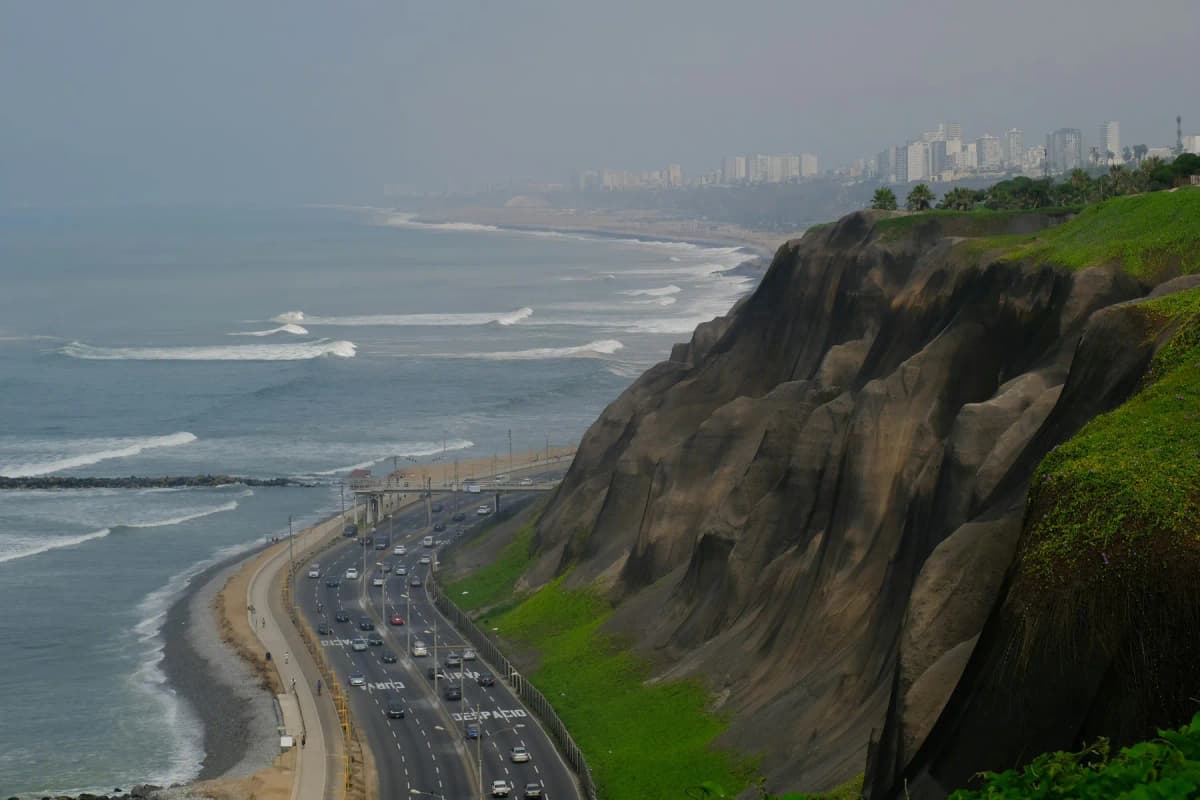 Photo: Simone Dinoia on Unsplash
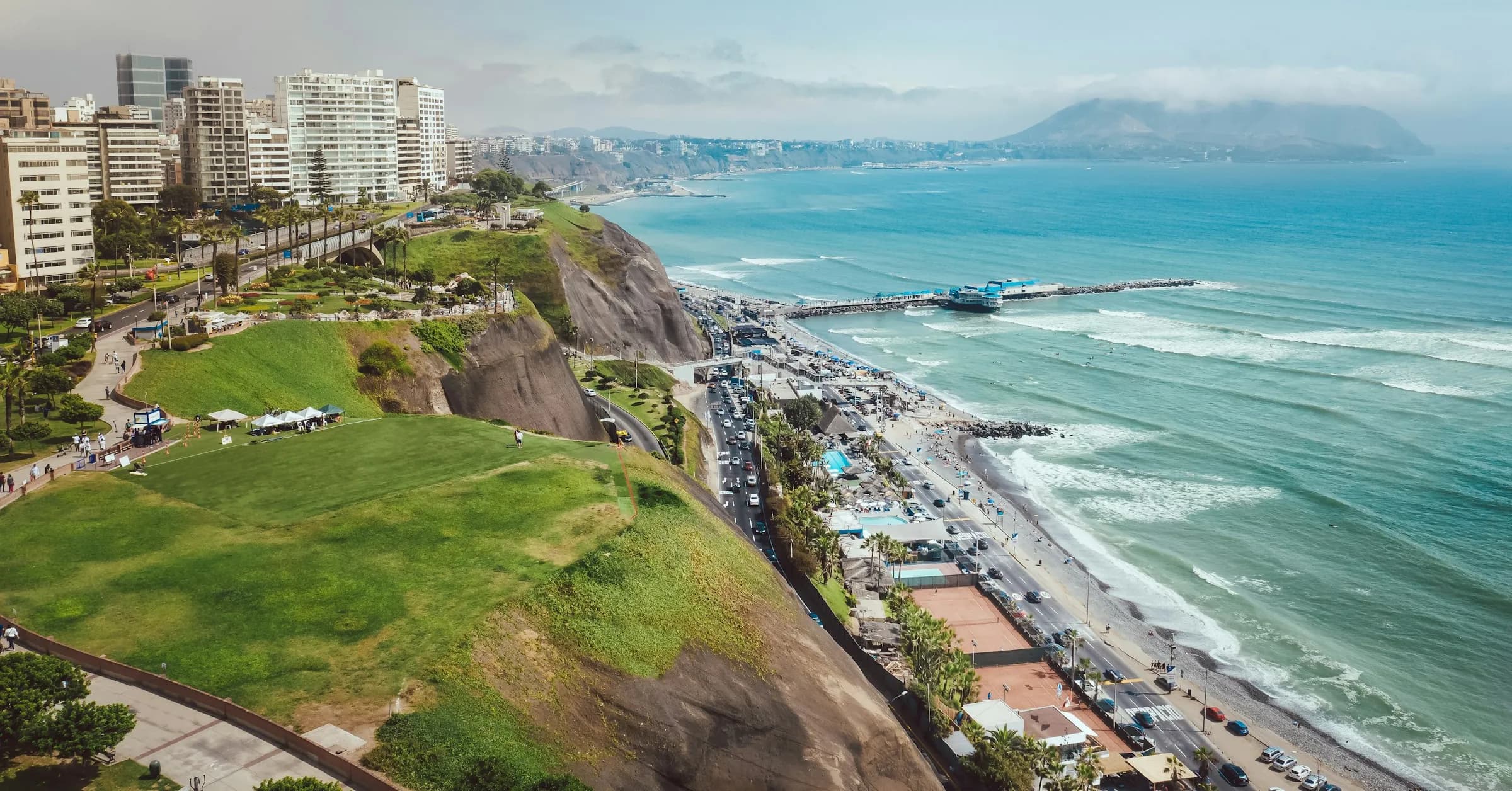
1. The Malecón de Miraflores
The Malecón is a chain of clifftop parks, paths and viewpoints that runs for several kilometres along the top of the cliffs, linking Miraflores with Barranco to the south and San Isidro to the north. Below you is the Costa Verde, the coastal highway, with pebbly beaches and surf breaks beyond it. On clear days you can see right along the bay to the headland of Chorrillos.
It's free and it's the best introduction to the city. Walk, jog or rent a bike in the morning, then come back in the late afternoon to watch the sun drop into the Pacific. In winter the sky is often grey, but the paths are still pleasant, and the cliffs are full of locals walking their dogs.
2. Parque del Amor
The Parque del Amor, or Park of Love, is the most famous stretch of the Malecón. Its centrepiece is El Beso, a large sculpture of a couple kissing by the Peruvian artist Víctor Delfín, surrounded by curving walls covered in colourful mosaics with lines of love poetry, in a style that recalls Gaudí's Park Güell in Barcelona.
It's free, it's at its best at sunset and it's one of the easiest places in Lima to get a photo of the ocean. Expect couples, wedding shoots and paragliders taking off from the clifftop nearby.
3. Paragliding over the Costa Verde
On most days, tandem paragliders float back and forth along the cliffs of Miraflores, using the wind that rises off the ocean. Flights take off from a launch area along the Malecón near Parque Raimondi, and you fly with an instructor, so you don't need any experience.
A tandem flight usually lasts about 10 to 15 minutes and costs around US$54 to US$89 in 2026, depending on the operator and whether you want photos or video. Flights depend on the wind, so be ready to wait or come back another day, and check that your operator is registered and gives you a proper safety briefing.
4. Huaca Pucllana
Huaca Pucllana is a large adobe pyramid right in the middle of Miraflores, surrounded by apartment buildings and traffic. It was built by the Lima culture between roughly 200 and 700 AD, centuries before the Incas, using millions of handmade mud bricks stacked upright like books on a shelf, a technique thought to help the structure survive earthquakes.
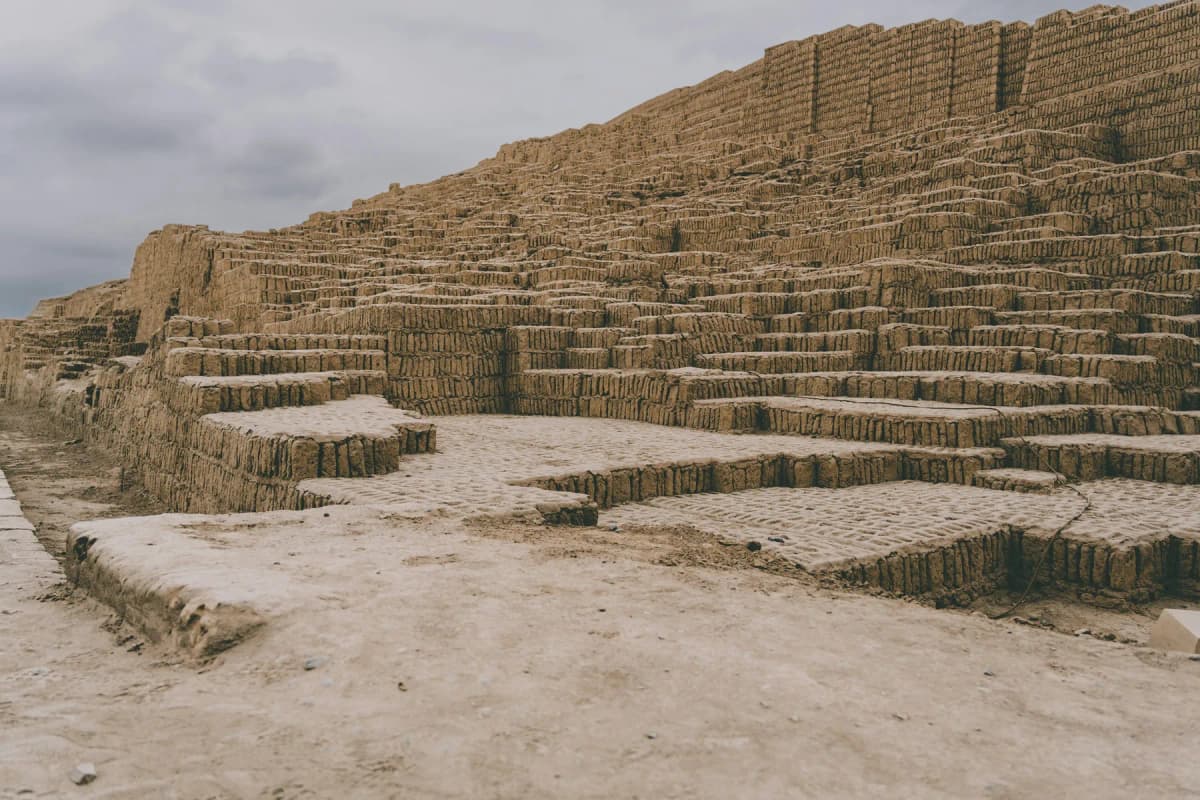 Photo: Emmanuel Cassar on Unsplash
Visits are by guided tour, included in the ticket, and take about an hour. Entry was 15 soles by day and 17 soles for the night visit in recent listings, with reduced prices for students. The site is usually open from 9:00 to 17:00 and closed on Tuesdays, so plan around that. There's also a well-known restaurant on the site where you can eat with a view of the lit-up ruins in the evening.
5. Parque Kennedy
Parque Kennedy, also called the Parque Central de Miraflores, is the busy heart of the district, next to the Iglesia Virgen Milagrosa. It's best known for its cats: dozens of them live in the park and are fed and looked after by local volunteers.
It's free, and it's a good place to sit with an ice cream and watch Lima go by. In the evenings you'll often find craft stalls, street performers and couples dancing nearby. The streets around it are full of restaurants, bars and cafés, and the area is busy late into the night.
6. Larcomar
Larcomar is a shopping centre built into the side of the cliff at the end of Avenida Larco. That doesn't sound like a sight, but its open-air terraces have some of the best ocean views in the city, and it's a handy place for a coffee, a drink or a meal looking over the Pacific.
It's free to walk around, it's well lit and busy in the evenings, and it's a short walk from Parque del Amor and the paragliding launch area.
In Barranco
Barranco was a seaside resort for wealthy Limeños in the 19th and early 20th centuries, and it still has many of their old mansions, painted in bright colours. Today it's Lima's bohemian quarter, with galleries, street art, small museums, bars and some of the city's best restaurants.
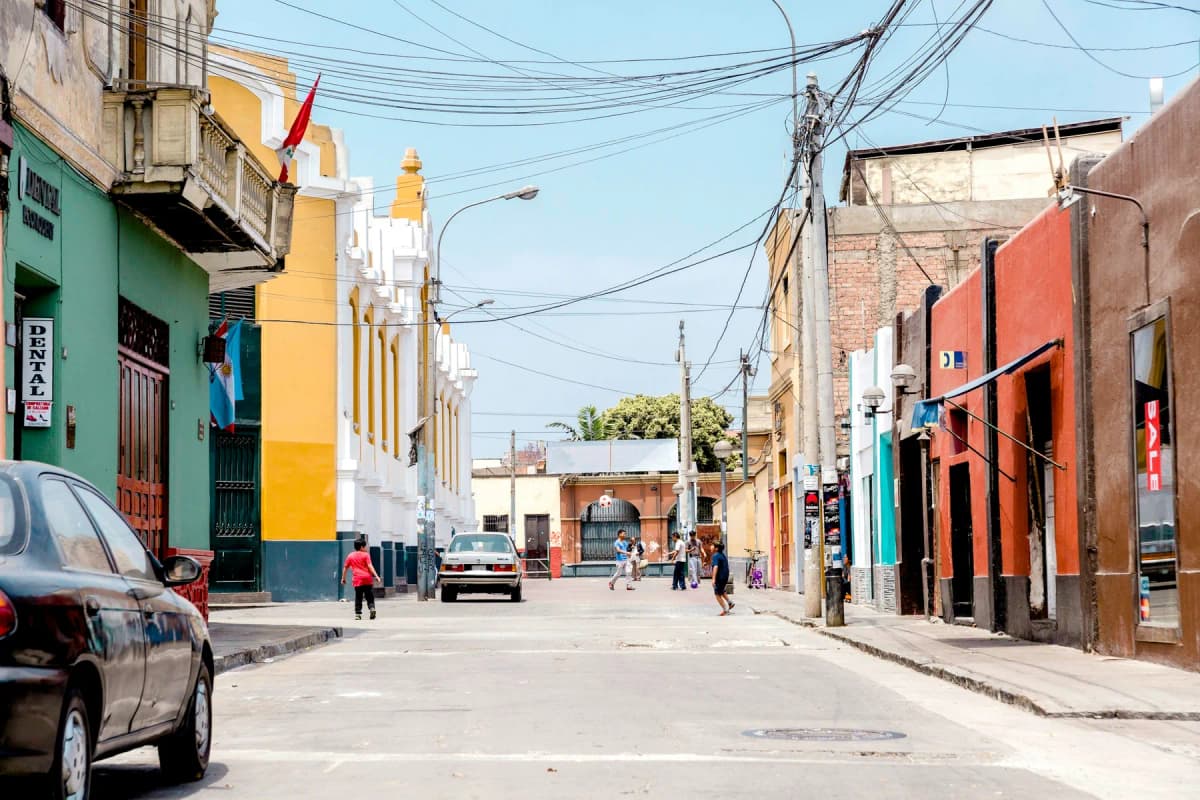 Photo: Andres Urena on Unsplash
7. Puente de los Suspiros and the Bajada de Baños
The Puente de los Suspiros, or Bridge of Sighs, is a small wooden bridge over a leafy path called the Bajada de Baños, which leads down towards the sea. Local legend says that if you hold your breath and make a wish as you cross it for the first time, your wish will come true.
It's free and it's the centre of Barranco life. Walk down the Bajada de Baños, past old houses and small restaurants, to the clifftop viewpoints and the beach below, then come back up for a drink at sunset. The Iglesia La Ermita, a ruined church next to the bridge, makes a good photo.
8. Barranco's murals and museums
Barranco is the best place in Lima for street art. Large murals cover walls along many of its streets, especially around the main square and the streets leading down to the sea, and the district is easy to explore on foot.
There are also several small museums. MAC Lima, the contemporary art museum, is on the main avenue, and the Museo Pedro de Osma displays colonial art, silver and furniture in a grand old mansion with gardens. The photographer Mario Testino also opened a gallery here, called MATE. Entry fees for these are usually modest, but they change, so check before you go.
9. Barranco after dark
Barranco is where much of Lima goes out at night. Its old mansions now house bars, live music venues and peñas, where you can hear Afro-Peruvian and criollo music, and the streets around the main square are lively until late, especially at weekends.
If you'd rather eat your way through the district, the Barranco food tour on Klook takes you to local spots with a guide and was priced from about US$114 when we checked. As anywhere, keep an eye on your phone and bag in busy streets at night, and take an app taxi back to your hotel.
In the historic centre
Lima's Centro Histórico was the capital of the Spanish viceroyalty, which once governed most of South America, and it has some of the finest colonial architecture on the continent. It's busier and grittier than Miraflores, but it's well worth a full day.
10. Plaza Mayor and the changing of the guard
The Plaza Mayor, also called the Plaza de Armas, is where Francisco Pizarro founded Lima in 1535. It's surrounded by the Government Palace, the cathedral, the Archbishop's Palace, with its carved wooden balconies, and the Municipal Palace. A bronze fountain from the 17th century stands in the middle.
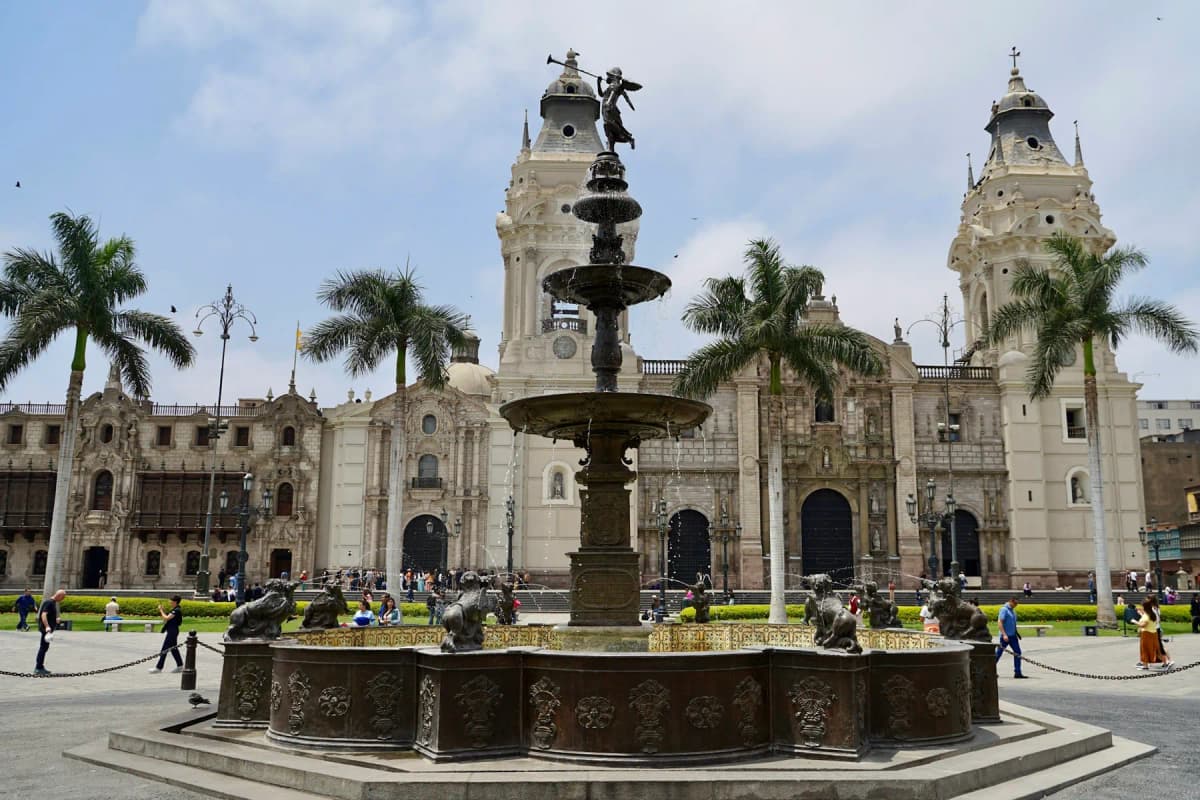 Photo: Mark Kuiper on Unsplash
It's free to visit. The changing of the guard takes place in front of the Government Palace, usually around midday, with a band and soldiers in ceremonial uniform; you watch from outside the railings. Times can change, and the ceremony is sometimes cancelled for official events or protests, so ask at your hotel. Police presence in the square is heavy, and parts of it are sometimes fenced off.
11. Lima Cathedral
The Cathedral of Lima on the east side of the square has been rebuilt several times after earthquakes. Inside are carved choir stalls, side chapels full of colonial art and the tomb of Francisco Pizarro, the Spanish conquistador who founded the city.
There's an entry fee for visitors, which usually includes the small religious art museum attached to the cathedral. Opening hours change around services, so check at the door, and dress respectfully. Allow about an hour.
12. San Francisco Monastery and catacombs
The Basilica and Convent of San Francisco, a few blocks from the Plaza Mayor, is one of the most popular sights in Lima. Visits are by guided tour and take you through cloisters lined with painted tiles, a historic library full of old books and down into the catacombs, where the bones of thousands of people were once laid to rest beneath the church, some of them now arranged in circular patterns.
Entry was around 30 soles for foreign adults according to recent tour listings, though some sources quote lower prices, so check at the door. Photos aren't allowed in the catacombs. If you'd like a guide for the whole centre, the Lima city walking tour with San Francisco Monastery on Klook includes the monastery and was priced at about US$69 when we checked.
13. Casa Aliaga
Casa Aliaga, just off the Plaza Mayor, is a colonial mansion said to have been lived in by the same family since the 16th century, when the land was granted to one of Pizarro's companions. Its rooms are full of period furniture, paintings and carved wood, and it gives you a rare look inside one of the old houses of the centre.
Visits are usually arranged in advance or as part of a tour rather than by walking in, and the price changes, so check the latest details before you go.
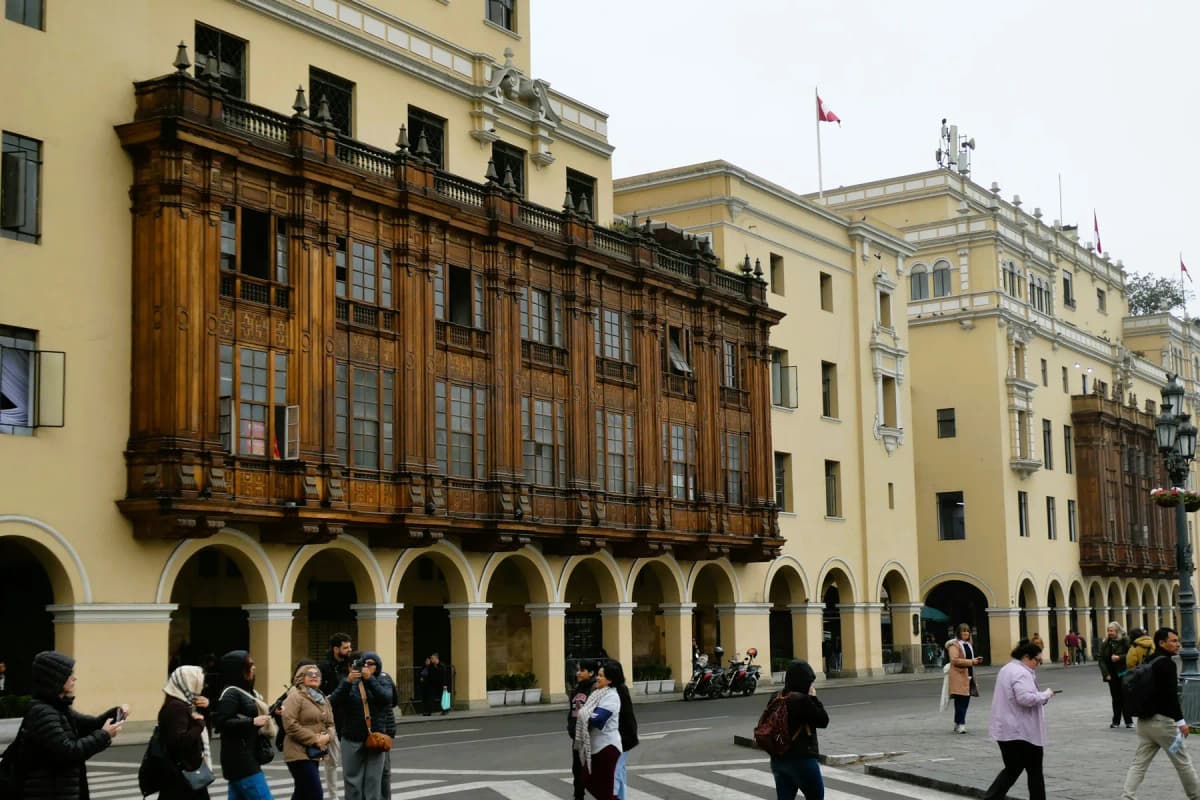 Photo: A. L. Brown on Unsplash
14. Barrio Chino and chifa
Lima's Barrio Chino, or Chinatown, near the Mercado Central, grew up after large numbers of Chinese workers arrived in Peru in the 19th century. Their cooking mixed with Peruvian ingredients to create chifa, Peruvian-Chinese food, which is now eaten all over the country. Look for arroz chaufa, Peru's take on fried rice, and lomo saltado, a stir-fry of beef, onions, tomatoes and chips that is one of the country's most popular dishes.
Walk through the arch on Jirón Ucayali, browse the food shops and stop for lunch at one of the chifas. The area is very crowded, so keep a close eye on your belongings.
15. A walking tour of the centre
The historic centre can feel confusing and busy on a first visit, and a guide helps with both the history and the safest routes. Free walking tours, where you tip the guide at the end, leave from the centre most days. If you'd rather book ahead, the Lima historical half-day small-group tour on Klook covers the centre and Miraflores with transport and was priced at about US$45 when we checked.
Museums
Lima has the best museums in Peru, and they're a great way to understand the cultures that came before the Incas.
16. Larco Museum
The Museo Larco, in the Pueblo Libre district, displays a huge private collection of pre-Columbian art in an 18th-century mansion with flower-filled gardens. The galleries cover thousands of years of Peruvian history, with ceramics, textiles and gold and silver jewellery, and the museum is also known for its gallery of erotic pottery. You can also walk through the storerooms, where thousands of pots are lined up on shelves.
Entry prices quoted in 2025 and 2026 range from around 35 to 50 soles for foreign adults, and some sources say it's slightly cheaper online, so check the museum's own website. The garden café is a pleasant place for lunch, and the museum usually stays open into the evening. Allow two hours.
17. MALI, the Lima Art Museum
The Museo de Arte de Lima, known as MALI, is in a grand 19th-century building in the Parque de la Exposición. Its collection runs from pre-Columbian textiles and ceramics through colonial painting to modern and contemporary Peruvian art, so it gives you a good overview of the country's history in one place.
General entry was around 30 soles in the most recent prices we found, with reduced prices for Peruvian residents, and older reports mention free entry on some afternoons. Check the museum's website before you go.
Eating and drinking in Lima
Lima is famous for its food, and for many visitors eating well is the main reason to stay a few days. In 2026 the city is also hosting the World's 50 Best Restaurants awards for the first time, on 4 November.
18. Ceviche at a cevichería
Ceviche is Peru's national dish: raw white fish "cooked" in lime juice with red onion, chilli, salt and coriander, usually served with sweet potato and large kernels of Andean corn. The leftover juice, called leche de tigre, is often served in a glass on its own.
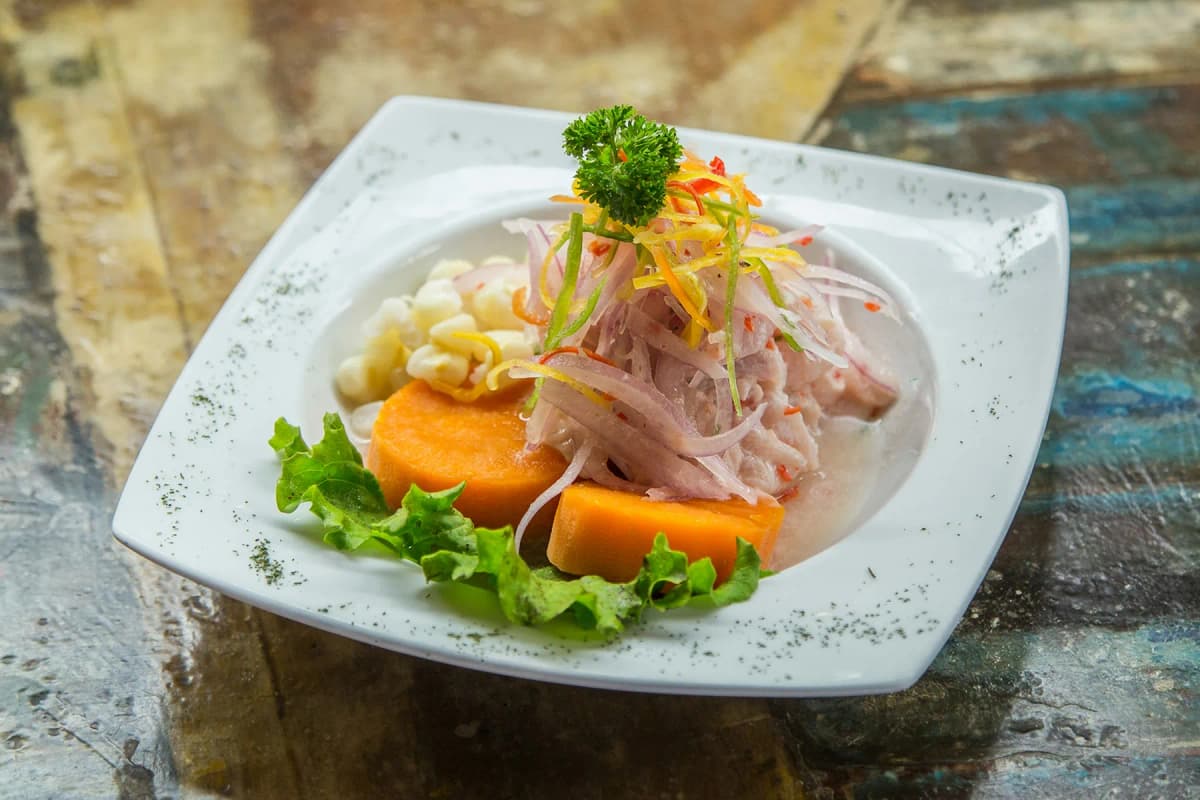 Photo: Pirata Studio Film on Unsplash
Limeños eat ceviche at lunchtime, when the fish is freshest, and many cevicherías close by late afternoon. Prices range from cheap neighbourhood places to smart restaurants in Miraflores and Barranco. For a guided introduction, the half-day Lima food tour with wine tasting on Klook was priced at about US$58 when we checked.
19. Mercado de Surquillo
The Mercado No. 1 de Surquillo, just across the Paseo de la República from Miraflores, is one of the best markets in the city for visitors. It's packed with tropical fruit, piles of potatoes and chillies, fish stalls and small counters selling ceviche and juices.
It's free to wander, and it's a good place to try fruits you might not know, such as lúcuma, chirimoya and granadilla. Go in the morning, when it's busiest, and carry small notes.
20. A tasting menu at a top restaurant
Lima has some of the most celebrated restaurants in the world. Central was named the World's Best Restaurant in 2023 and Maido in 2025, and Kjolle, Mayta and Mérito were also on the 2025 list. Most serve long tasting menus built around Peruvian ingredients from the coast, the Andes and the Amazon.
These meals are expensive and the best-known places book up weeks or months ahead, especially around the awards in November 2026, so reserve as early as you can. For something more relaxed, many top chefs also run cheaper sister restaurants, and the set lunch menus at ordinary local restaurants are excellent value.
21. Pisco sours
The pisco sour is Peru's favourite cocktail, made with pisco (a grape brandy), lime juice, sugar syrup and egg white, finished with a few drops of bitters. Order one at a historic bar in the centre, at a clifftop terrace in Miraflores or in one of Barranco's old mansions. Bars also serve the chilcano, a lighter mix of pisco, ginger ale and lime.
Around the city
22. Circuito Mágico del Agua
The Circuito Mágico del Agua, in the Parque de la Reserva, is a park full of illuminated fountains, including tunnels of water you can walk through and fountains that shoot water high into the air. In the evenings there's a show of music, lights and images projected onto a screen of water.
General entry was 5 soles in early 2026, with free entry for young children, and tickets can be bought online. It usually opens in the afternoon and stays open into the evening, but check the latest hours, as parts of the park sometimes close for maintenance. Go after dark for the light show.
23. El Olivar and Huaca Huallamarca
In San Isidro, the Bosque El Olivar is a quiet park full of old olive trees, some of them said to date back to the colonial era. It's free and makes a calm break from the traffic. Nearby, Huaca Huallamarca is another restored adobe pyramid, smaller than Huaca Pucllana, with a small site museum. Check the latest opening days and entry fee before you go.
24. La Punta and Callao Monumental
Callao is Lima's port city. At its western tip, La Punta is a narrow peninsula with a seafront promenade, old wooden houses and views across to the islands offshore. In the old centre of Callao, Callao Monumental is a block of restored historic buildings full of galleries, murals and cafés.
Parts of Callao have high crime rates, so visit La Punta and Callao Monumental by taxi or with a tour, during the day, and don't wander beyond the main streets.
25. Swimming with sea lions at the Palomino Islands
The Palomino Islands, off the coast of Callao, are home to a large colony of sea lions, along with Humboldt penguins and seabirds. Boat trips leave from Callao, sail past the islands and, when the sea allows, give you the chance to get in the water with a wetsuit while the young sea lions swim around you.
Tours cost around US$69 to US$100 in 2026, depending on the operator and whether transport from Miraflores is included. Trips can be cancelled when the sea is rough, so leave some flexibility in your plans, and expect cold water even in summer.
Day trips from Lima
26. Pachacamac
Pachacamac is a large archaeological site in the desert south of Lima, roughly 30 to 45 kilometres from Miraflores depending on the route. For more than a thousand years it was one of the most important religious centres on the coast, home to a famous oracle, and it was later taken over by the Incas, who built a Temple of the Sun there. Today you can walk among adobe pyramids and temples, with views over the Pacific.
Entry was around 15 soles for foreign adults in recent listings, and the site has a modern museum. Check the latest opening days before you go. Many half-day tours from Miraflores include transport and a guide, which is easier than taking public buses through the city's southern suburbs.
27. Paracas, the Ballestas Islands and Huacachina
Paracas, several hours south of Lima by road, is the base for boat trips to the Ballestas Islands, often called "the poor man's Galápagos" for their sea lions, penguins and huge colonies of seabirds. Further south, Huacachina is a small oasis surrounded by giant sand dunes, where you can ride a dune buggy and try sandboarding.
You can visit both in a long day from Lima, starting very early and getting back late. The Paracas and Huacachina full-day tour on Klook was priced at about US$100 and rated 4.8 out of 5 when we checked. If you have more time, staying a night in Paracas or Ica makes the trip far more relaxed.
How much do things cost in Lima?
| What | Price in 2026 |
|---|---|
| Huaca Pucllana | 15 soles by day, 17 soles at night |
| Larco Museum | Around 35 to 50 soles |
| MALI | Around 30 soles |
| San Francisco Monastery and catacombs | Around 30 soles |
| Pachacamac | Around 15 soles |
| Circuito Mágico del Agua | 5 soles |
| Tandem paragliding flight | About US$54 to US$89 |
| Palomino Islands sea lion tour | About US$69 to US$100 |
| Airport Express Lima bus | From around 15 soles |
| Paracas and Huacachina day tour | From about US$100 |
Many places in Lima take cards, but markets, small restaurants and some museums prefer cash, so carry soles in small notes. Students with a valid card often get reduced prices at museums and archaeological sites.
How many days do you need in Lima?
- One day is enough for the Malecón, Huaca Pucllana and a ceviche lunch in Miraflores, plus sunset in Barranco.
- Two days lets you add the historic centre, with the Plaza Mayor, San Francisco and Barrio Chino, and a museum such as Larco.
- Three or four days gives you time for a day trip to Pachacamac or the Palomino Islands, a big dinner and a slower look at Barranco. Add another day for Paracas and Huacachina.
Lima has almost no rain all year, but its weather is split into two clear seasons. Summer, roughly December to April, is sunny and warm, with temperatures of about 21 to 30°C and busy beaches. Winter, roughly June to October, brings a grey sea mist called the garúa, with cool, damp days of around 14 to 19°C and very little sun. The city is worth visiting in any season, but pack a light jacket for the winter months.
Getting to and around Lima
- By air: Lima's Jorge Chávez International Airport moved into a new terminal in June 2025. It's in Callao, about 17 kilometres from Miraflores, and the drive can take anything from 40 minutes to well over an hour in traffic.
- From the airport: the Airport Express Lima bus runs to Miraflores from around 15 soles. Otherwise, use an official taxi booked inside the terminal or a ride-hailing app, and don't accept rides from people who approach you in the arrivals hall.
- Around the city: taxis booked through an app are the easiest and safest way to get between districts. The Metropolitano bus rapid transit system links Barranco and Miraflores with the historic centre and avoids some traffic, but it gets very crowded at rush hour and doesn't go to the airport.
- On foot: Miraflores and Barranco are walkable, and the Malecón links them. In the historic centre, stick to the main streets around the Plaza Mayor and the Jirón de la Unión.
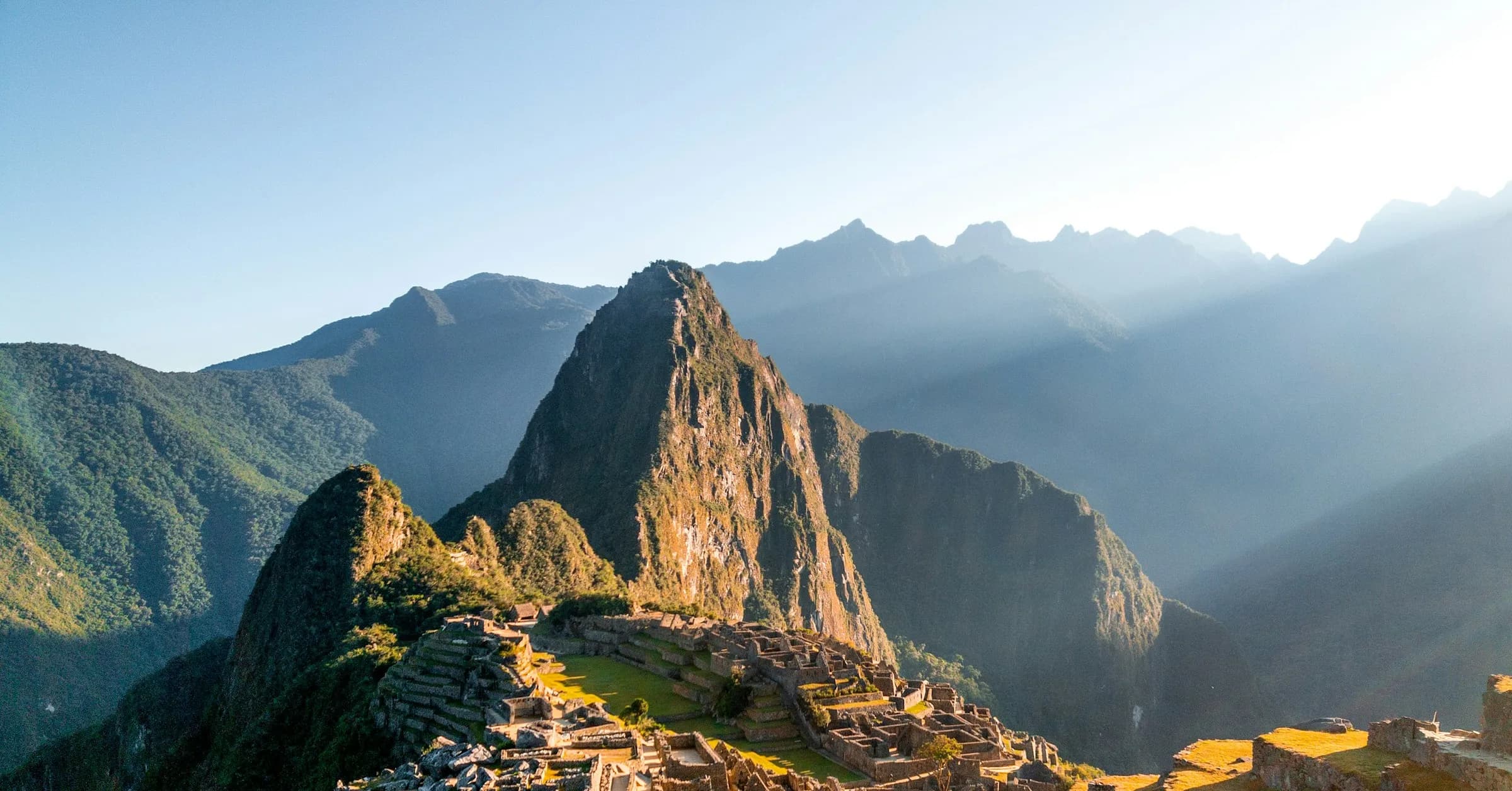
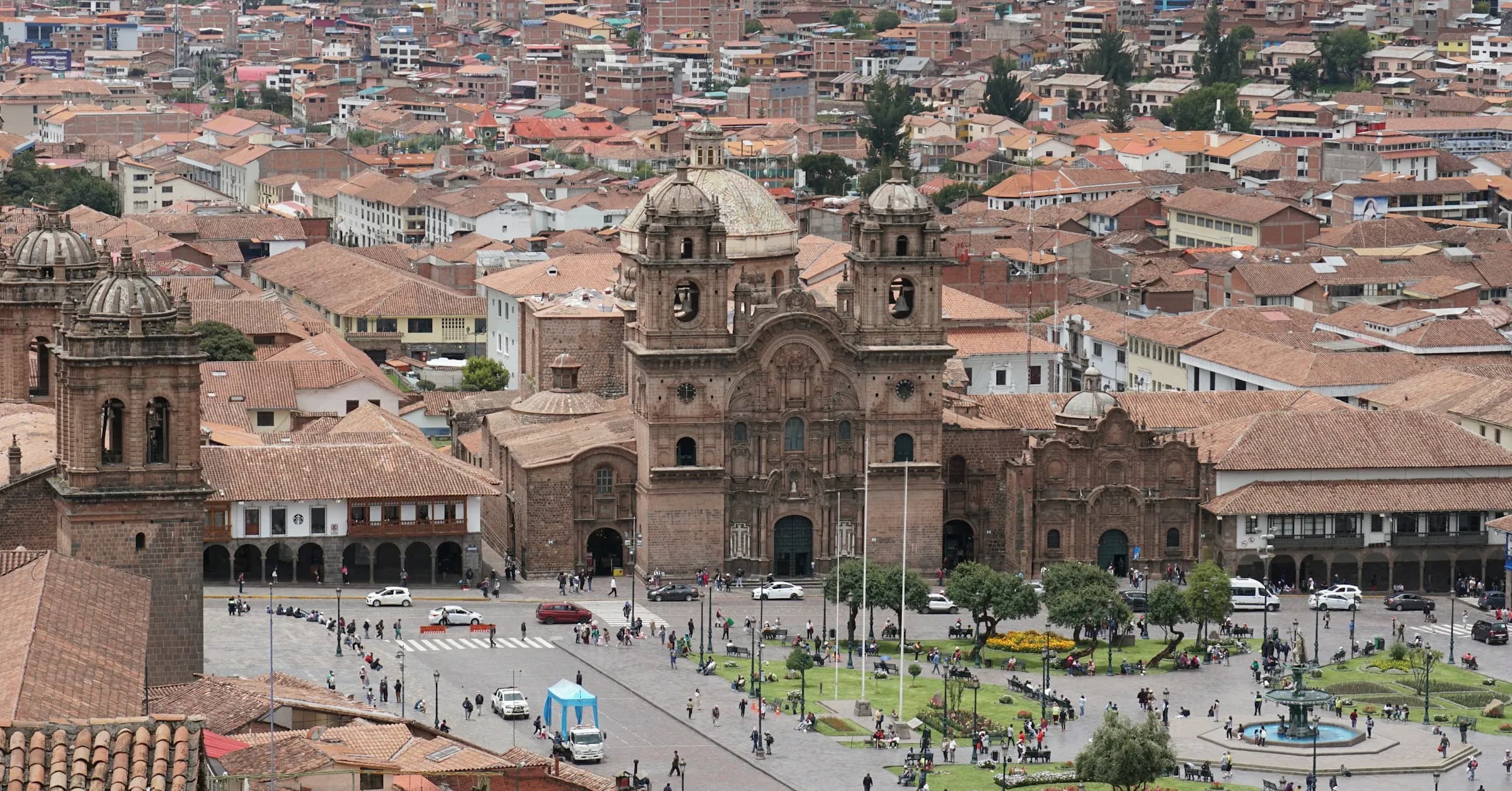
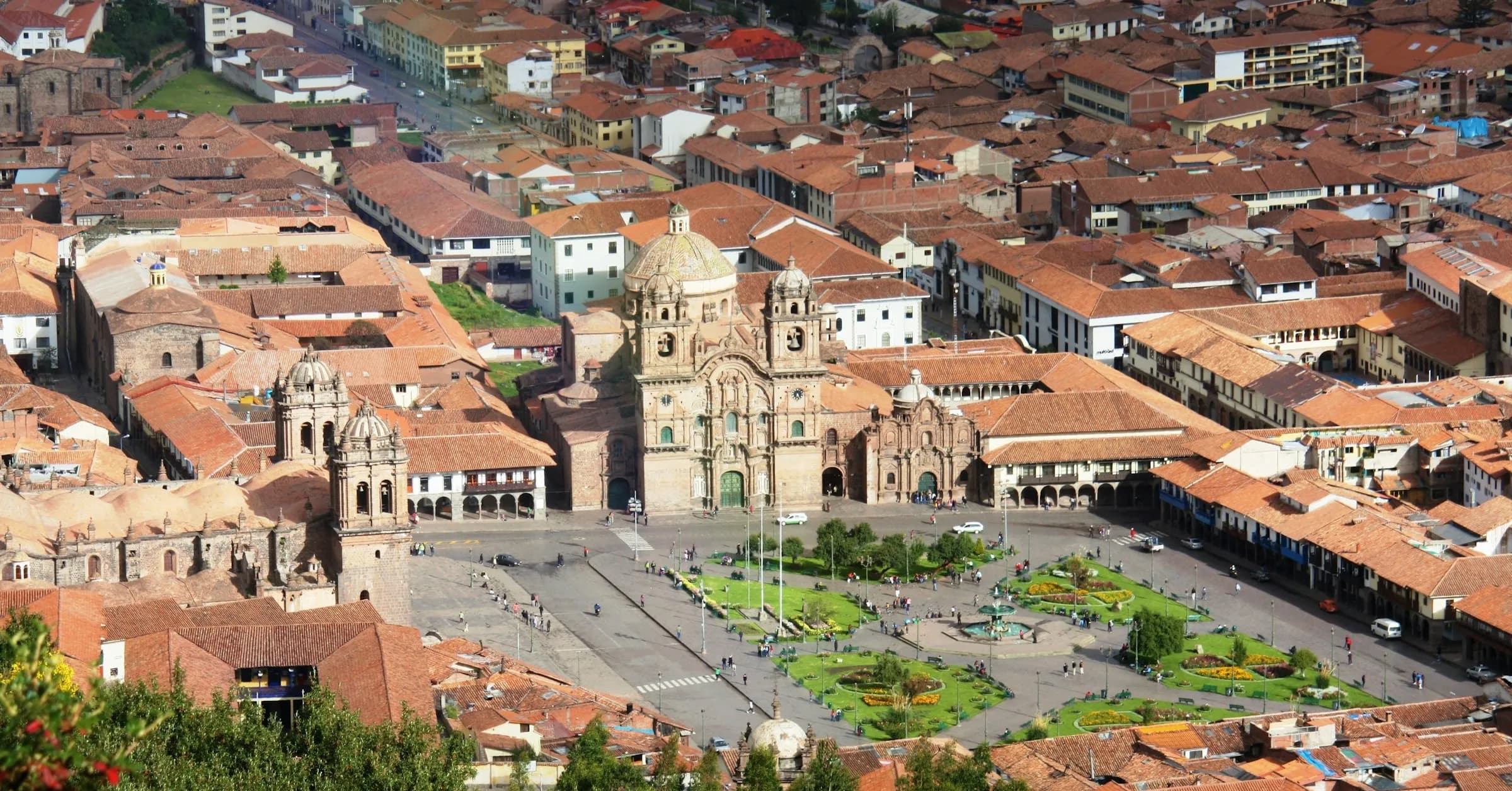
- Onwards to Cusco: most people fly, as the bus takes more than 20 hours. See our guide to the best things to do in Cusco for what to do when you get there.
- Stay connected: a Peru eSIM is useful for maps, translations and ride apps from the moment you land.
Practical tips
- Use app taxis: don't hail taxis on the street, especially at night or from the airport. Robberies involving unofficial taxis have been reported, and app rides also avoid haggling over the fare.
- Watch your belongings: pickpocketing and phone snatching happen in the historic centre, Miraflores and Barranco, especially in crowded places and in the evenings. Keep your phone away from the kerb, and don't leave bags on the backs of chairs. The US State Department rates Peru as a whole at Level 2, "exercise increased caution".
- Keep an eye on your drink in busy bars and clubs, and never leave it unattended.
- Check the news for protests: demonstrations sometimes take place in the historic centre, and the area around the Plaza Mayor can be closed off at short notice.
- Plan around the traffic: journeys between districts often take longer than you'd expect, so group your sightseeing by area rather than criss-crossing the city.
- Protect yourself from the sun: even on grey winter days, the UV can be strong.
- Drink bottled or filtered water, not tap water.
- Get travel insurance: cover that includes medical treatment is worth having, especially if you're paragliding, surfing or travelling on to high-altitude Cusco.
Frequently asked questions
What is Lima best known for? Lima is best known for its food, especially ceviche and its world-famous restaurants, for its colonial historic centre, which is a UNESCO World Heritage Site, and for its clifftop setting above the Pacific. It also has ancient adobe pyramids, such as Huaca Pucllana, in the middle of the modern city.
Is Lima worth visiting? Yes. Many people only pass through on the way to Cusco, but Lima has excellent museums, some of the best food in South America, a lively nightlife in Barranco and easy day trips to ancient sites and wildlife. Two or three days is enough to see the highlights.
How many days do you need in Lima? Two days is enough for Miraflores, Barranco, the historic centre and a museum. Allow three or four days if you want a day trip to Pachacamac, the Palomino Islands or Paracas and Huacachina.
Where should you stay in Lima? Most visitors stay in Miraflores, which has the widest choice of hotels, restaurants and clifftop walks, or in Barranco, which is smaller, more bohemian and better for nightlife. San Isidro is quieter and popular with business travellers.
Is Lima safe for tourists? Most visits to Lima pass without problems, but petty crime is common. Use app taxis, keep your phone and bag secure, avoid quiet streets at night and stick to well-known areas, especially in the historic centre and Callao. The US State Department rates Peru as a whole at Level 2, "exercise increased caution".
When is the best time to visit Lima? December to April is Lima's sunny summer, best for the beaches and clifftop walks. June to October is cooler and often grey because of the garúa sea mist, but it rarely rains, and the museums, food and nightlife are just as good. Lima is a year-round destination.
What food should you try in Lima? Start with ceviche, then try lomo saltado, ají de gallina (a creamy, spicy chicken stew), causa (layered potato with fillings), anticuchos (grilled skewers, usually of beef heart) and chifa, Peruvian-Chinese food. Finish with a pisco sour.
How we researched this guide
Huaca Pucllana's prices and hours come from a Lima tourism guide and recent visitor listings, and the Circuito Mágico del Agua price from a January 2026 report in the Peruvian newspaper Perú21. Prices for the Larco Museum, MALI, the San Francisco catacombs and Pachacamac come from tour operators, travel guides and older official notices, and sources disagree on some of them, so treat them as a guide. Paragliding and Palomino Islands prices are based on 2026 operator listings. Restaurant rankings come from The World's 50 Best Restaurants. Safety advice draws on the German Foreign Office's travel advice for Peru and the US State Department advisory. We have not visited every place listed ourselves, and prices and opening hours change often, so check before you go. Found something out of date? Let us know.
Ready to plan? Read our guide to the best things to do in Cusco for the next stop on most Peru trips, or browse all our Peru guides.