9 Best Day Trips from Mexico City (2026): Times and Transport
October 23, 2026 · Mexico
This post contains affiliate links. We may earn a commission if you book through them, at no extra cost to you. Disclaimer.
The best day trips from Mexico City are Teotihuacan for its giant pyramids, Puebla and Cholula for colonial streets and food, Tepoztlán for a mountain village with a hilltop temple, and Xochimilco for a boat ride on the old canals. Teotihuacan is about an hour away by bus, Tepoztlán about an hour and a half, and Puebla two to two and a half hours. Xochimilco is inside the city limits, so it is the easiest of all.
This guide ranks nine day trips from Mexico City by how well they work in a single day, with journey times, which bus terminal to use, and an honest note on which trips are better with a tour or an overnight stay. Mexico City has four main long-distance bus terminals, one for each direction, and knowing which one you need is half the planning.
Day trips from Mexico City: the quick answer
| Day trip | Travel time (one way) | How to get there | Best for |
|---|---|---|---|
| Teotihuacan | About 1 hour | Bus from Terminal Norte | Pyramids, balloon flights |
| Xochimilco | 45–90 min | Metro and light rail | Canal boats, a lively afternoon |
| Puebla | 2–2.5 hours | ADO bus from TAPO | Colonial centre, food, talavera |
| Cholula | About 2.5 hours | Via Puebla, or on a tour | The world's largest pyramid by volume |
| Tepoztlán | About 1h20 | Bus from Terminal Sur | Village, hike to a hilltop temple |
| Valle de Bravo | 2–3 hours | Bus from Terminal Poniente | Lake town, monarch butterflies in winter |
| Grutas Tolantongo | About 4 hours | Tour, or bus and local transport | Hot spring pools in a canyon |
| Querétaro and Peña de Bernal | About 3 hours | Bus from Terminal Norte | Colonial city and a giant rock |
| San Miguel de Allende | 3.5–4 hours | Bus from Terminal Norte | Best as an overnight stay |
Our short version: if you only have time for one, go to Teotihuacan. With two free days, add Puebla and Cholula (a full day, best done together) or Tepoztlán (smaller, greener and more relaxed). Xochimilco fits into an afternoon. Tolantongo, Querétaro and San Miguel de Allende are possible in a day, but they are long days, and each is better with a night away.
How we ranked these day trips
Most lists of Mexico City day trips name the same places. What differs is how practical each one is on the day. We ranked them on three things:
- Door-to-door time. Mexico City traffic can add an hour to any trip, so anything with more than three hours of travel each way sits lower on the list.
- How easy it is without a car. A frequent direct bus from a central terminal beats a journey with two changes.
- How much there is to do on arrival. Puebla fills a day and still leaves things unseen. Tepoztlán is easy to see in an afternoon.
We have not listed exact bus fares, because they change with the operator, the class of bus and how far ahead you book. Buy tickets at the terminal or on the operators' own websites, and expect first-class coaches (such as ADO and ETN) to cost more than second-class services.
1. Teotihuacan: the best day trip from Mexico City
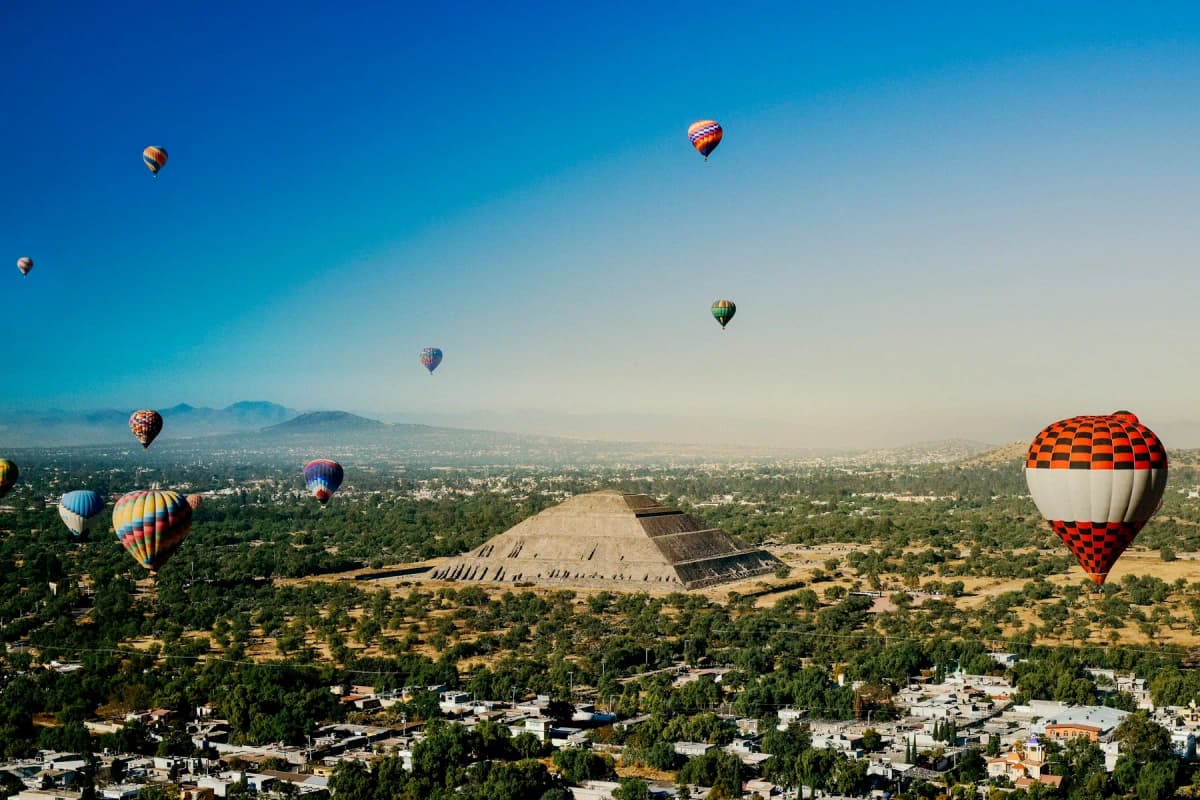 Photo: Juliana Barquero on Unsplash
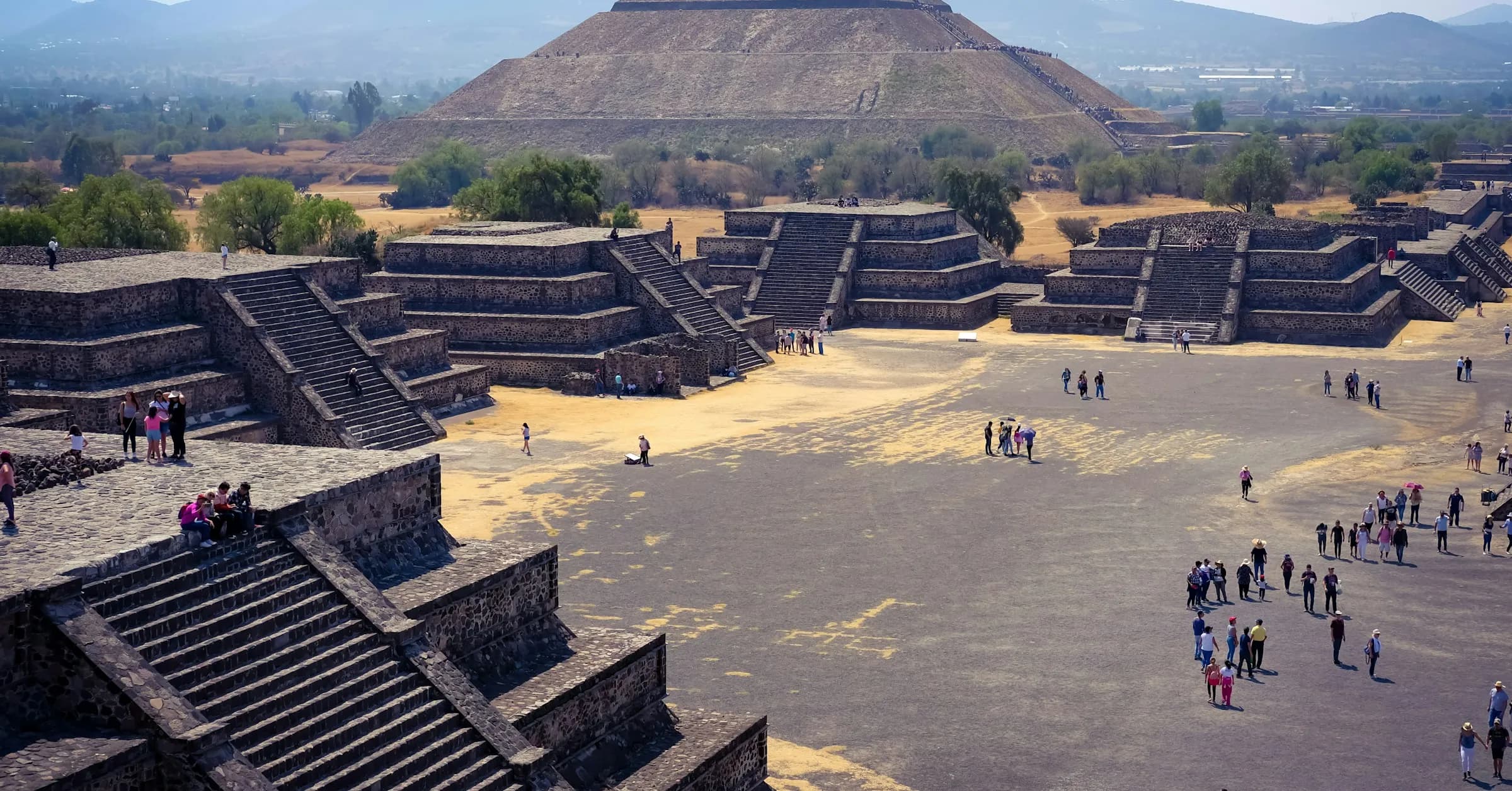
Teotihuacan was one of the largest cities in the ancient Americas, built centuries before the Aztecs, who later gave it the name it carries today. Its scale is the reason to come: the Avenue of the Dead runs for kilometres between temple platforms, with the Pyramid of the Sun on one side and the Pyramid of the Moon closing the view at the northern end. The site is a UNESCO World Heritage site.
Getting there: Autobuses Teotihuacán runs buses from Terminal Autobuses del Norte (Metro Line 5, Autobuses del Norte station) to the archaeological zone in about an hour. Buses leave regularly through the morning; ask for the bus to "las pirámides" rather than the town of San Juan Teotihuacán. Coming back, catch the return bus from the gates you entered by or from the road outside.
What to see:
- Avenue of the Dead: the main axis of the city, lined with platforms and temple bases.
- Pyramid of the Sun: the largest structure on the site and one of the largest pyramids in the Americas.
- Pyramid of the Moon: smaller, but with the best view straight down the Avenue of the Dead.
- The Citadel and the Temple of the Feathered Serpent: at the southern end, with carved serpent heads on the temple facade.
Climbing and security: you cannot currently climb either of the main pyramids. The Pyramid of the Sun has been closed to climbers since 2020. The Pyramid of the Moon reopened for climbing in 2025, but closed again after a gunman opened fire there on 20 April 2026, killing one visitor and injuring 13 people. The archaeological zone reopened two days later with extra security, including the National Guard, and walking the Avenue of the Dead and visiting the site museum are still possible. Check with INAH whether climbing has resumed before you go.
How to plan the day: the site has reportedly opened from 8am to 5pm, but check the current hours with INAH, the national institute that runs it, before you go. Arrive at opening. There is very little shade, the altitude is high, and the midday sun is fierce, so bring a hat, sunscreen and plenty of water.
Balloon flights: several operators fly hot-air balloons over the valley at sunrise, which means a pre-dawn pickup from Mexico City. It is the most popular splurge in the area, and the view of the pyramids in the early light is the image you will see on every postcard.
Tours: if you would rather not deal with buses, a morning half-day tour of Teotihuacan from Mexico City handles transport and gets you to the site early. Many full-day tours also stop at the Basilica of Our Lady of Guadalupe in the north of the city, Mexico's most important Catholic shrine, which sits on the way.
2. Xochimilco: the easiest day trip from Mexico City
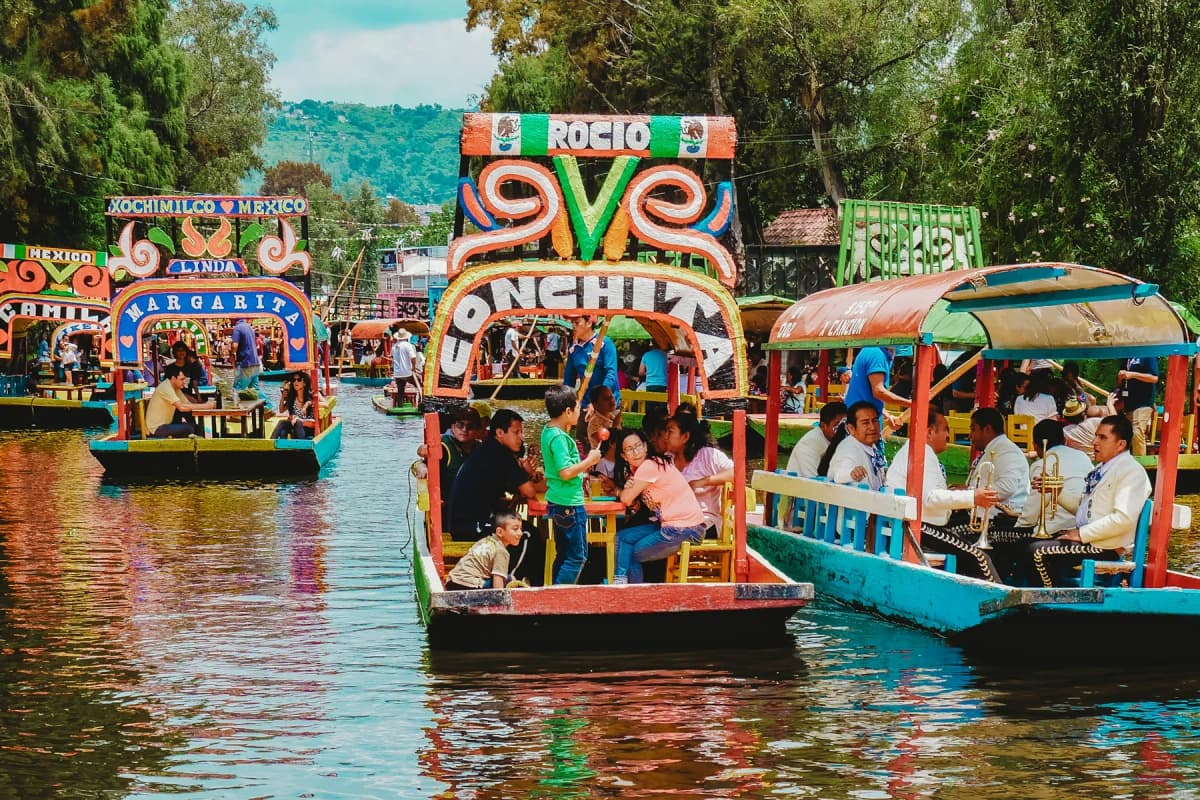 Photo: Roberto Carlos Román Don on Unsplash
Xochimilco is in the far south of Mexico City, a network of canals and chinampas (farming plots built up from the lake bed) that survive from the lake system the Aztec capital once stood on. It is part of the same UNESCO World Heritage listing as the historic centre. Most visitors come for the trajineras, the flat-bottomed boats painted in bright colours, which are poled slowly along the canals while mariachi bands, food boats and drink sellers pull up alongside.
Getting there: take Metro Line 2 to Tasqueña, then the Tren Ligero (light rail) to its last stop, Xochimilco. From there it is a short walk or taxi ride to the embarcaderos (boat landings) such as Nativitas. Allow 45 minutes to an hour and a half from central neighbourhoods, depending on traffic and where you start.
Paying for a boat: trajineras are priced per boat, per hour, not per person, so the trip is cheaper in a group. The official rates are posted at the landings. Agree the price and the length of the trip with the boatman before you set off, and pay at the end.
When to go: weekends are loud, crowded and festive, with groups of friends and families on almost every boat. Weekday mornings are quieter and better if you want to see the chinampas and the birdlife.
A Xochimilco, Coyoacán and Frida Kahlo Museum tour combines the boats with the southern neighbourhoods. Tickets for the Frida Kahlo Museum (the Casa Azul) sell out days ahead, so a tour or an advance booking is the safest way to get in.
3. Puebla: colonial streets and the best food near the capital
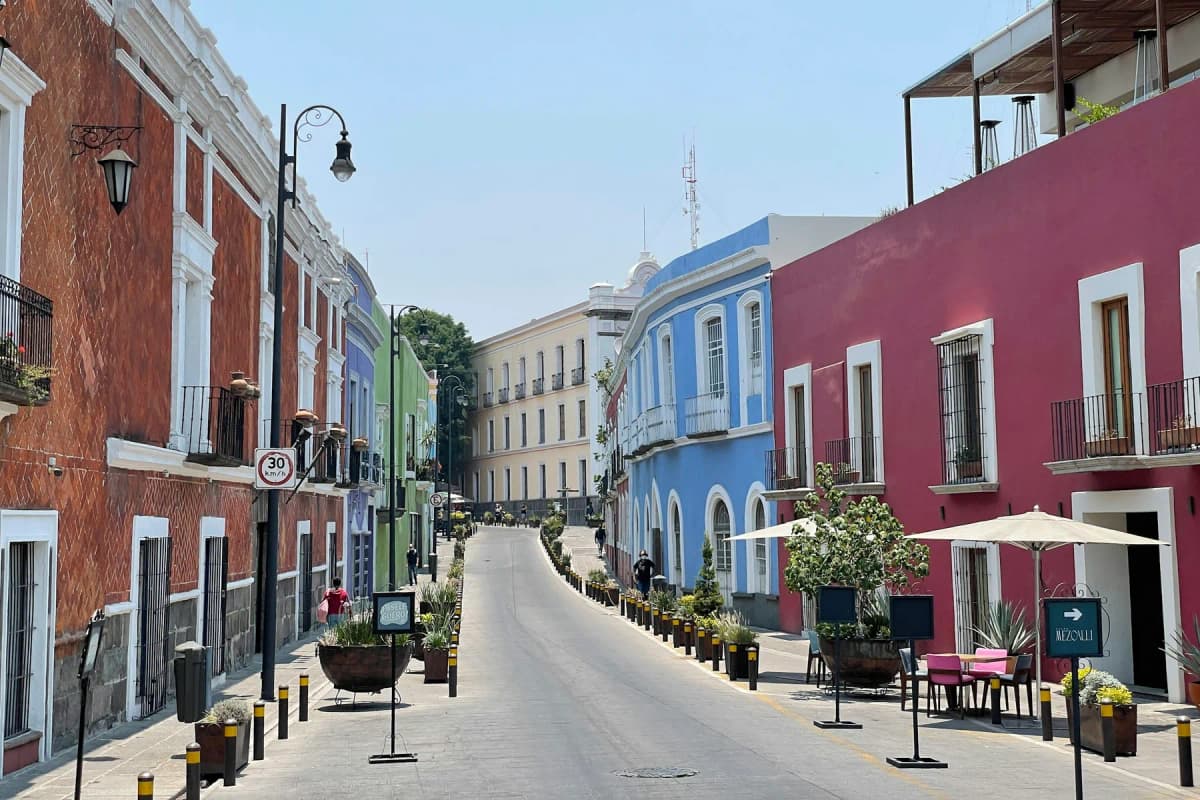 Photo: Anil Wasif on Unsplash
Puebla is one of Mexico's largest cities and has one of its best-preserved colonial centres, a UNESCO World Heritage site with a grid of streets lined with churches, tiled facades and painted houses. It is also a food city: mole poblano and chiles en nogada both come from here.
Getting there: ADO runs frequent first-class buses from TAPO (Terminal de Autobuses de Pasajeros de Oriente, next to San Lázaro Metro) to Puebla in about 2 to 2.5 hours. Buses also run from Terminal Norte and from the airport.
What to see:
- Puebla Cathedral on the main square, the zócalo.
- The Rosary Chapel inside the Church of Santo Domingo, covered in gilded plasterwork.
- The Biblioteca Palafoxiana, often described as the first public library in the Americas.
- Talavera pottery: the hand-painted blue and white ceramics Puebla is famous for, sold in workshops and shops around the centre.
- Callejón de los Sapos: a small area of antique shops and cafes, busiest at weekends.
Food: try mole poblano, the dark, rich sauce made with chillies, spices and chocolate, and cemitas, a large sandwich on a sesame roll. Chiles en nogada are a seasonal dish, mostly served in late summer.
How to plan the day: Puebla works well on its own, but most visitors combine it with Cholula, a short drive away. A Puebla, Cholula and Tonantzintla guided tour covers all three without the bus, which is the easiest way to see both in one day.
4. Cholula: a church on top of the world's largest pyramid
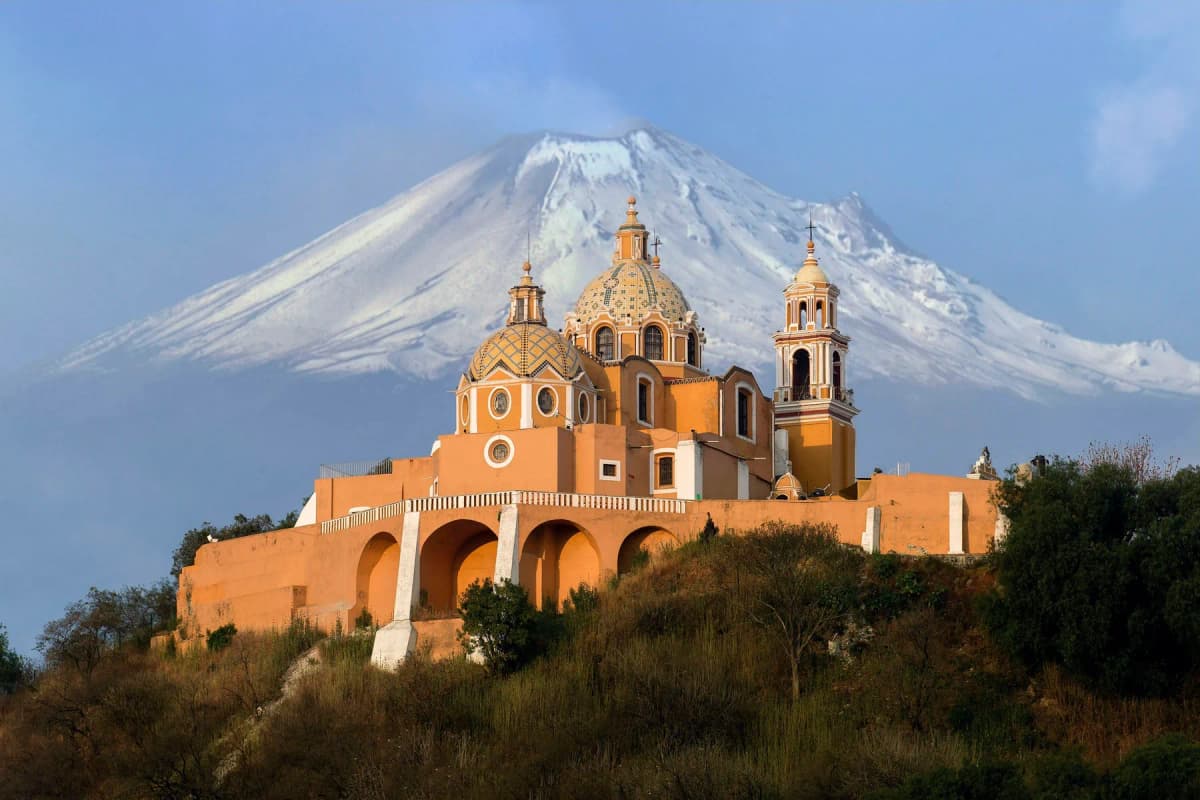 Photo: Pedro Lastra on Unsplash
San Pedro Cholula sits just outside Puebla, and from a distance its pyramid looks like a hill with a church on top. That is more or less what it is. The Great Pyramid of Cholula (Tlachihualtepetl) was built up in stages over many centuries and later overgrown, and the Spanish built the Santuario de la Virgen de los Remedios on its summit. Guinness World Records lists it as the largest pyramid in the world by volume.
Getting there: Cholula is about 120 km from Mexico City. Most people travel via Puebla, then take a taxi or local bus for the last short stretch. On a tour, it is usually paired with Puebla.
What to see:
- The climb to the church, with views over the town. On a clear day the volcano Popocatépetl stands behind it.
- The archaeological zone at the base of the pyramid, where excavated platforms show how it was built.
- The tunnels dug by archaeologists through the pyramid. Access has varied over the years, so check with INAH whether they are open when you visit.
- Santa María Tonantzintla: a small church nearby, known for its interior covered in painted and gilded figures in an Indigenous-influenced baroque style.
Cholula is also a university town, with a lively evening scene, which makes it a good place to stay the night if you want to see Puebla and Cholula at a slower pace.
5. Tepoztlán: a mountain village and a hilltop temple
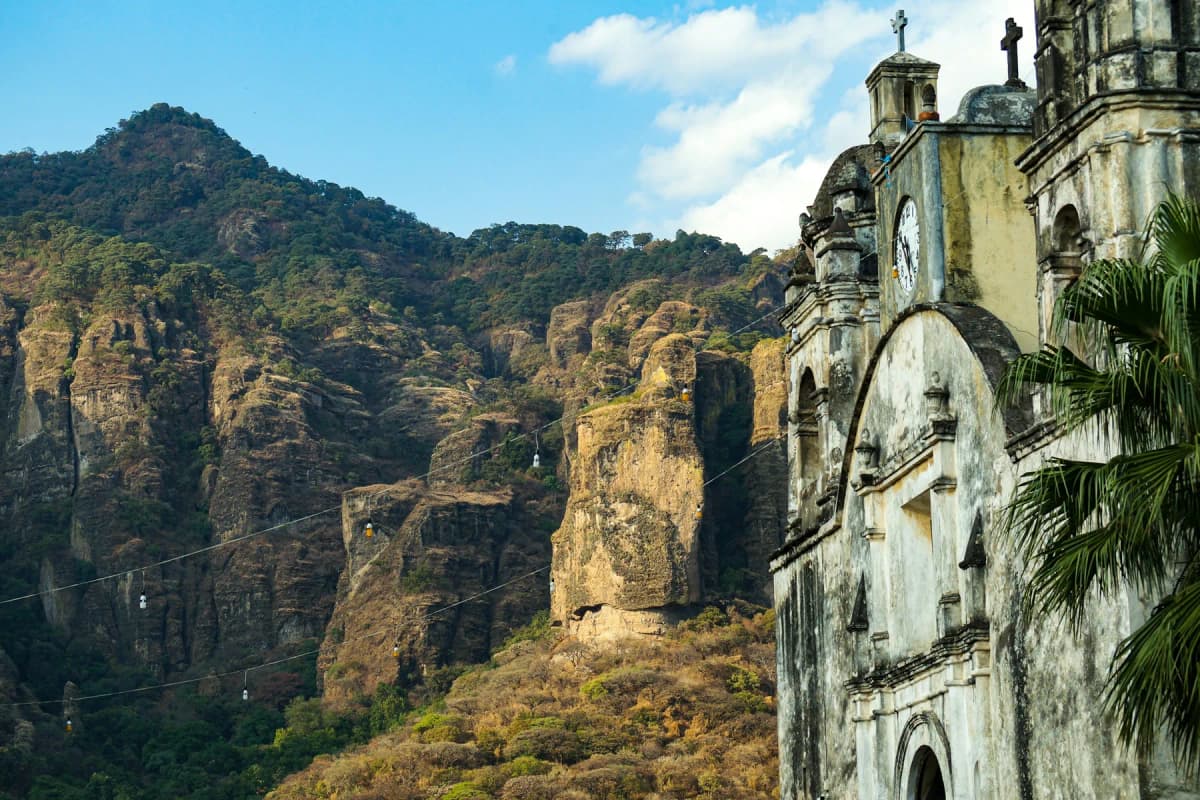 Photo: Enrique Amaya on Unsplash
Tepoztlán is a small town in the state of Morelos, south of the capital, surrounded by steep, green cliffs. It is one of Mexico's Pueblos Mágicos (towns recognised for their culture and heritage), with a market, a large former convent and a long main street of cafes, ice cream shops and craft stalls.
Getting there: buses leave from Terminal Sur (Tasqueña, Metro Line 2) roughly every 15 to 20 minutes, and the trip takes about 1 hour 20 minutes when traffic is light. Weekend traffic out of the city can make it much slower.
What to see:
- El Tepozteco: a small Aztec-era temple on top of the cliffs above town. The trail is steep and rocky, with many stone steps, and takes most people 40 to 60 minutes to climb. The view from the top is the reward. The site sometimes closes without notice, so check locally before you start, and keep your food away from the coatis that live around the summit.
- The Ex-Convento de la Natividad: a 16th-century convent in the centre of town.
- The market: busiest at weekends, with food stalls and crafts.
How to plan the day: start the hike early, before the heat and the crowds, then spend the afternoon in town. Tepoztlán is busy at weekends, when many people from Mexico City come for the day, so a weekday visit is calmer.
6. Valle de Bravo: a lake town and the monarch butterflies
Valle de Bravo is a lakeside town in the State of Mexico, west of the capital, with white-walled houses, red-tiled roofs and a large reservoir used for sailing. It is also a well-known paragliding area.
Getting there: Autobuses Zinacantepec runs buses from Terminal Poniente (Observatorio) in roughly 2 to 3 hours, with departures about every two hours. It is a long day, so leave early.
The monarch butterflies: from roughly November to March, millions of monarch butterflies spend the winter in the forests of central Mexico. The Piedra Herrada sanctuary is the nearest one to Valle de Bravo, and is a common stop for butterfly tours from Mexico City. It involves an uphill walk (or a horse ride) at high altitude to the trees where the butterflies cluster. Visit on a sunny day if you can, since the butterflies are most active when it is warm.
Outside butterfly season, Valle de Bravo is a pleasant weekend escape, but it is not as rewarding as Puebla or Tepoztlán for a one-day visit.
7. Grutas Tolantongo: hot spring pools in a canyon
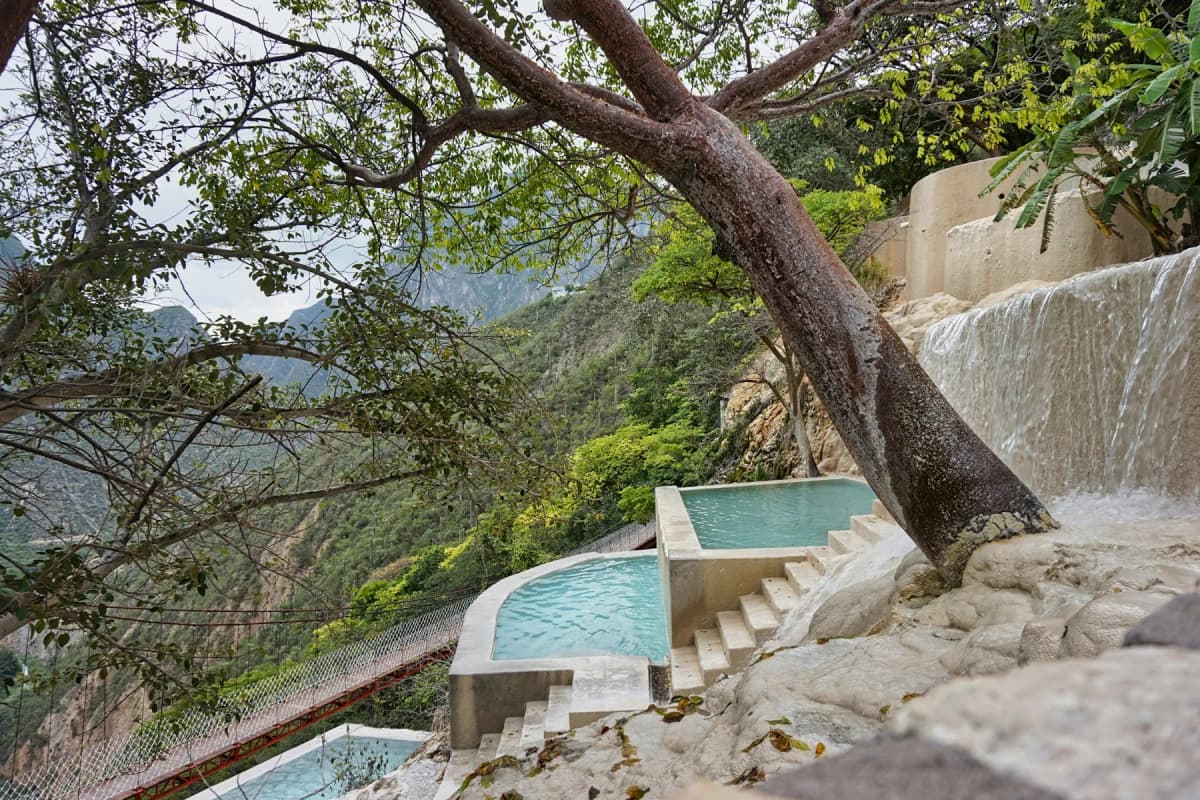 Photo: Marie Volkert on Unsplash
Grutas Tolantongo, in the state of Hidalgo, is a privately run complex of hot springs in a deep canyon: a warm, turquoise river, a cave and tunnel with thermal water pouring from the rock, and a famous set of small pools built into the cliff face. It is one of the most photographed places in central Mexico.
Getting there: Tolantongo is roughly four hours from Mexico City. It is possible by bus (to Ixmiquilpan from Terminal Norte, then local transport), but it is slow, and you would have only a few hours there. Most people either stay overnight in the hotels on site or join a small-group day tour to Grutas Tolantongo, which handles the drive.
Tips: bring water shoes for the river and the rocks, cash for food and entry, and a waterproof bag for your phone. Weekends and Mexican holidays are very busy, so go on a weekday if you can.
8. Querétaro and Peña de Bernal
Querétaro is a prosperous colonial city north-west of the capital, with a UNESCO-listed historic centre, an 18th-century aqueduct and pedestrian streets full of plazas and churches. About an hour beyond it is Peña de Bernal, a huge rock rising above the small town of Bernal, often described as one of the largest monoliths in the world.
Getting there: buses run from Terminal Norte to Querétaro in about three hours. For Bernal, Flecha Amarilla and Flecha Azul buses leave from Querétaro's bus station (Terminal B) and take about an hour. Organised tours from Mexico City usually go straight to Bernal, which is roughly two and a half hours by road.
What to do in Bernal: walk up the trail on the lower slopes of the rock for views over the valley. The hiking area has reportedly been open from around 8am to 5pm, with a small entry fee; check locally for the current hours. Only experienced climbers with guides go beyond the main trail to the summit. Back in town, try the gorditas and look for the sweet shops and wool weavers.
Doing both Querétaro and Bernal in one day from Mexico City is too much. Pick one, or stay a night in Querétaro and see both properly.
9. San Miguel de Allende: better as an overnight stay
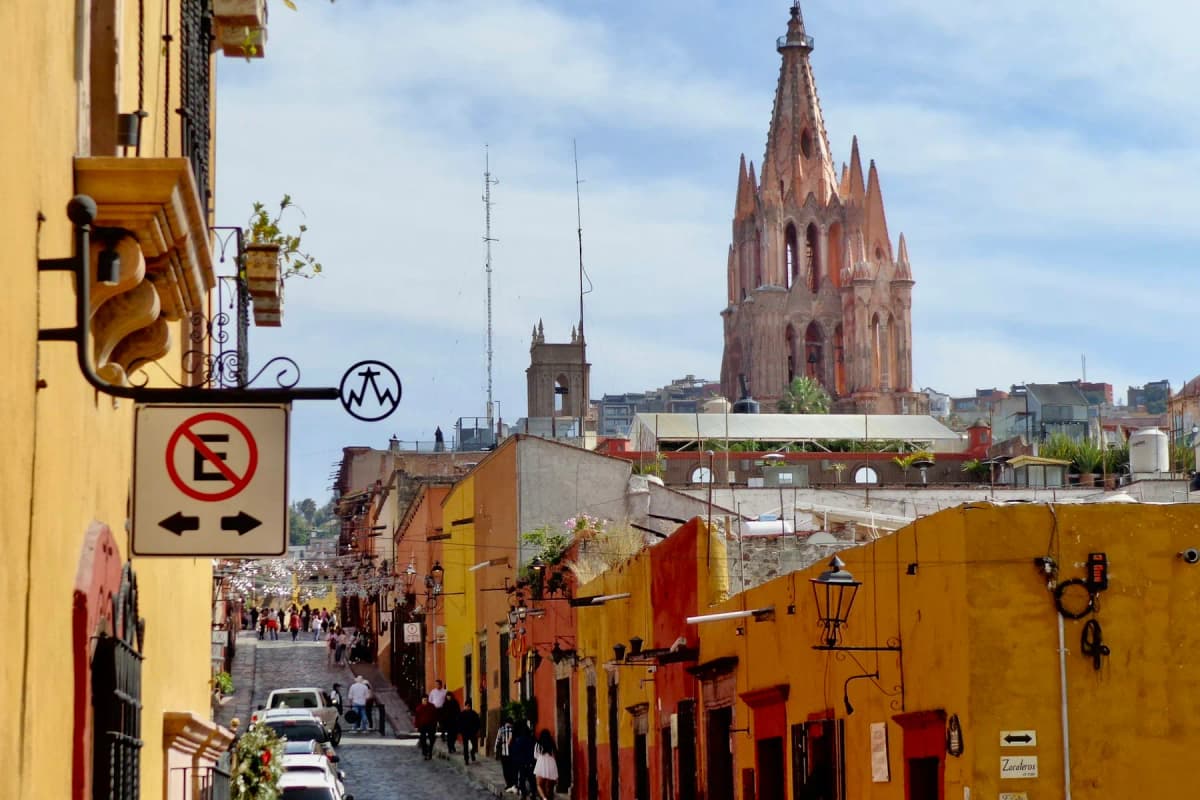 Photo: Jorge L. Valdivia on Unsplash
San Miguel de Allende, in the state of Guanajuato, is one of the most beautiful towns in Mexico: cobbled streets, ochre and red houses, and the pink Gothic-style spire of the Parroquia de San Miguel Arcángel rising over the main square. The town is a UNESCO World Heritage site and has a large community of artists and foreign residents.
Getting there: ETN, Primera Plus and Flecha Amarilla run buses from Terminal Norte, with a journey time of about 3.5 to 4 hours. That makes for seven or eight hours on a bus in one day.
Our advice: treat San Miguel as an overnight trip, not a day trip. If your time is limited and you still want to see it, a San Miguel de Allende guided tour from Mexico City at least handles the driving, and some itineraries also stop in Querétaro on the way.
Day trips to think twice about
Two places appear on many older lists of Mexico City day trips, but we have left them out of the main ranking:
- Taxco: the silver town is beautiful, but it is in the state of Guerrero, which the US State Department rates at Level 4, "Do not travel", in its current advisory for Mexico. Read the latest advisories from your own government before you consider it, and check whether your travel insurance would cover you there.
- Nevado de Toluca: the volcano with lakes in its crater has been closed to visitors since August 2025. Check for news of reopening before you plan around it.
Which day trips from Mexico City can you combine?
- Teotihuacan and the Basilica of Guadalupe: yes. The basilica is on the way, and many tours include both.
- Puebla and Cholula: yes, and this is the classic pairing. Most tours add Tonantzintla.
- Xochimilco and Coyoacán: yes. They are both in the south of the city.
- Querétaro and Peña de Bernal: only with a night in Querétaro.
- Teotihuacan and Puebla: no. They are in different directions from the city.
Getting around: the four bus terminals
| Terminal | Metro station | Main day trips |
|---|---|---|
| Terminal Norte (Autobuses del Norte) | Autobuses del Norte, Line 5 | Teotihuacan, Querétaro, San Miguel de Allende, Tolantongo |
| TAPO (East) | San Lázaro, Lines 1 and B | Puebla |
| Terminal Sur (Tasqueña) | Tasqueña, Line 2 | Tepoztlán |
| Terminal Poniente (Observatorio) | Observatorio, Line 1 | Valle de Bravo |
Ride-hailing apps are widely used in Mexico City and are often the easiest way to reach a terminal with luggage, especially early in the morning.
Flying into Mexico City? Compare dates before you lock in your plans:
Practical extras: if you land late or with a lot of luggage, you can pre-book a private transfer from Mexico City Airport to your hotel. For bus times, maps and ride-hailing apps on the go, a Mexico eSIM from Airalo means you are connected from the moment you land, and travel insurance from EKTA is worth having for any trip with long road journeys and outdoor activities.
Tips for day trips from Mexico City
- Start early. Traffic leaving the city gets worse through the morning, and sites like Teotihuacan are best before the midday heat.
- Know your terminal. Each direction has its own bus station. Going to the wrong one can cost you an hour or more.
- Allow for traffic on the way back. Return journeys on Sunday afternoons, when the whole city comes home, can take much longer than the timetable suggests.
- Respect the altitude and sun. Mexico City sits at about 2,240 metres, and the sun is strong. Carry water, sunscreen and a hat, especially at Teotihuacan and on the Tepozteco hike.
- Carry cash. Small vendors, boat landings and local transport often do not take cards.
- Check opening days. Many archaeological sites and museums in Mexico close one day a week, often Monday.
Frequently asked questions
What is the best day trip from Mexico City? Teotihuacan. It is an hour away by a frequent bus, it is one of the most important archaeological sites in the Americas, and it is easy to do independently or on a tour. If you have already been, Puebla and Cholula make the best second trip.
What should I see outside Mexico City? For a first visit: Teotihuacan for history, Puebla and Cholula for colonial architecture and food, and Tepoztlán for a small town in the mountains. With more time, spend a night or two in San Miguel de Allende or Querétaro.
How far are the pyramids from Mexico City? The pyramids of Teotihuacan are about 50 km north-east of the city centre, and about an hour by bus from Terminal Norte. Traffic can make the trip longer, especially on the way back.
Is Taxco a good day trip from Mexico City? It is close enough, but Taxco is in Guerrero, which the US State Department currently rates at Level 4, "Do not travel". We do not recommend it as a day trip. Read your own government's advice before you decide.
Are day trips from Mexico City safe? The places in our main ranking are popular with visitors and are visited every day by organised tours. As in any large country, use common sense: travel in daylight, use official buses and registered taxis or ride-hailing apps, and keep an eye on your belongings in crowds. Our guide to whether Mexico City is safe covers the main risks.
Do you need a car for day trips from Mexico City? No. Teotihuacan, Puebla, Tepoztlán, Valle de Bravo, Querétaro and San Miguel de Allende all have direct buses, and Xochimilco is on the metro and light rail. Driving in and out of Mexico City is slow and stressful, so most visitors are better off with the bus or a tour.
Can you visit Puebla and Cholula in one day? Yes. They are close together, and a long day lets you see the centre of Puebla and the pyramid at Cholula. A tour makes it easier, since you do not need to arrange the transfer between the two.
How we researched this guide
Journey times come from the bus operators' published routes and from recent travel guides, checked in October 2026, and they vary with traffic and the time of day. The April 2026 Teotihuacan shooting and the pyramid closures come from Proceso. Site details for the Great Pyramid of Cholula and the closure of Nevado de Toluca come from their Wikipedia entries and recent news reports, and the Taxco advisory level comes from the US State Department's travel advisory for Mexico. We could not confirm current bus fares, trajinera rates or entry prices directly with the operators, so we have left those figures out rather than guess. We have not included first-hand restaurant or hotel recommendations in this guide. Spotted something out of date? Let us know.
For more, browse all our Mexico guides, plan your days in the city with our Mexico City itinerary, choose a base with where to stay in Mexico City, read up on whether Mexico City is safe, or head to the coast with our guide to the best things to do in Tulum.