Best Time to Visit Uzbekistan: Month by Month (2026)
October 18, 2026 · Uzbekistan
This post contains affiliate links. We may earn a commission if you book through them, at no extra cost to you. Disclaimer.
The best time to visit Uzbekistan is April to May and September to October. In those months Samarkand, Bukhara and Khiva are warm and sunny, with daytime highs of roughly 20 to 30 °C, cool evenings and very little rain. Summer (June to August) is dry but very hot, often above 35 °C in the afternoon, and winter (December to February) is cold, quiet and cheap.
If you can only pick one month, make it late September to mid-October: the heat has broken, the skies are clear, the bazaars are full of melons, grapes and pomegranates, and the light on the tiled domes is at its best. Late April to May is just as good for weather, with greener countryside, but it's also the busiest time for tour groups and the hardest time to get train tickets.
Best time to visit Uzbekistan at a glance
| If you want | Go in | Why |
|---|---|---|
| The best all-round weather | April, May, September, October | Highs of about 20 to 30 °C, little rain |
| Fewer crowds with good weather | Early April or late October | Shoulder weeks, still pleasant |
| Navruz celebrations | Around 21 March | Spring New Year, a national holiday |
| The lowest prices | November to February | Low season, cold but sunny spells |
| The Silk and Spices Festival | Early June (Bukhara) | Crafts, music and food in the old town |
| Mountains near Tashkent | June to September for walking, December to March for skiing | Cooler air at altitude |
| Avoid | July and August in the desert cities | Heatwaves above 40 °C in Bukhara and Khiva |
Our short version: go in late September or October if you can. Choose late April or May if those dates suit you better, and book your trains the day they go on sale. Go in winter only if you're happy to trade cold days and shorter opening hours for empty monuments and lower prices.
Uzbekistan weather by month (Samarkand)
These are the official 1991 to 2020 climate normals for the Samarkand weather station, published by the World Meteorological Organization through the US National Oceanic and Atmospheric Administration (NOAA). Samarkand sits in the middle of the classic Silk Road route, so it's a good guide to what most visitors will feel.
| Month | Average high | Average low | Rainfall | Days with 1 mm+ |
|---|---|---|---|---|
| January | 7.4 °C | -1.3 °C | 41 mm | 14 |
| February | 9.6 °C | -0.1 °C | 52 mm | 13 |
| March | 15.3 °C | 4.7 °C | 73 mm | 15 |
| April | 21.5 °C | 9.8 °C | 63 mm | 13 |
| May | 27.1 °C | 14.2 °C | 40 mm | 11 |
| June | 32.5 °C | 18.1 °C | 7 mm | 5 |
| July | 34.5 °C | 19.6 °C | 2 mm | 2 |
| August | 33.3 °C | 18.0 °C | 2 mm | 2 |
| September | 28.7 °C | 13.5 °C | 3 mm | 2 |
| October | 22.0 °C | 7.8 °C | 16 mm | 6 |
| November | 14.5 °C | 3.3 °C | 40 mm | 10 |
| December | 9.2 °C | -0.1 °C | 39 mm | 12 |
Three things stand out. First, the swing between seasons is huge: about 27 °C between the average high in January and July. Second, the rain falls almost entirely between November and May, with March the wettest month, while June to October is close to bone dry. And third, Samarkand is very sunny: the same data set records over 370 hours of sunshine in July, and around 120 even in the darkest months.
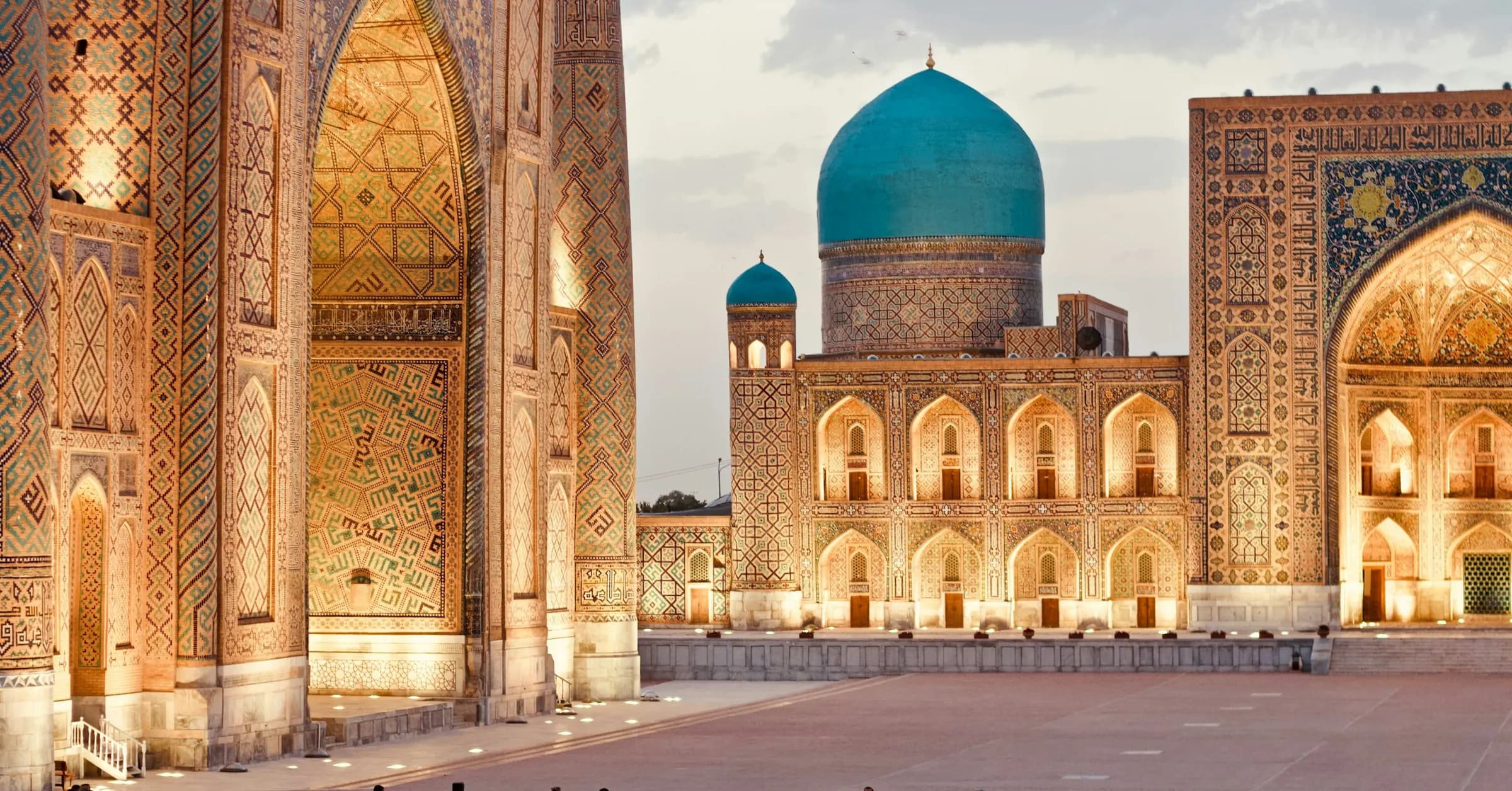
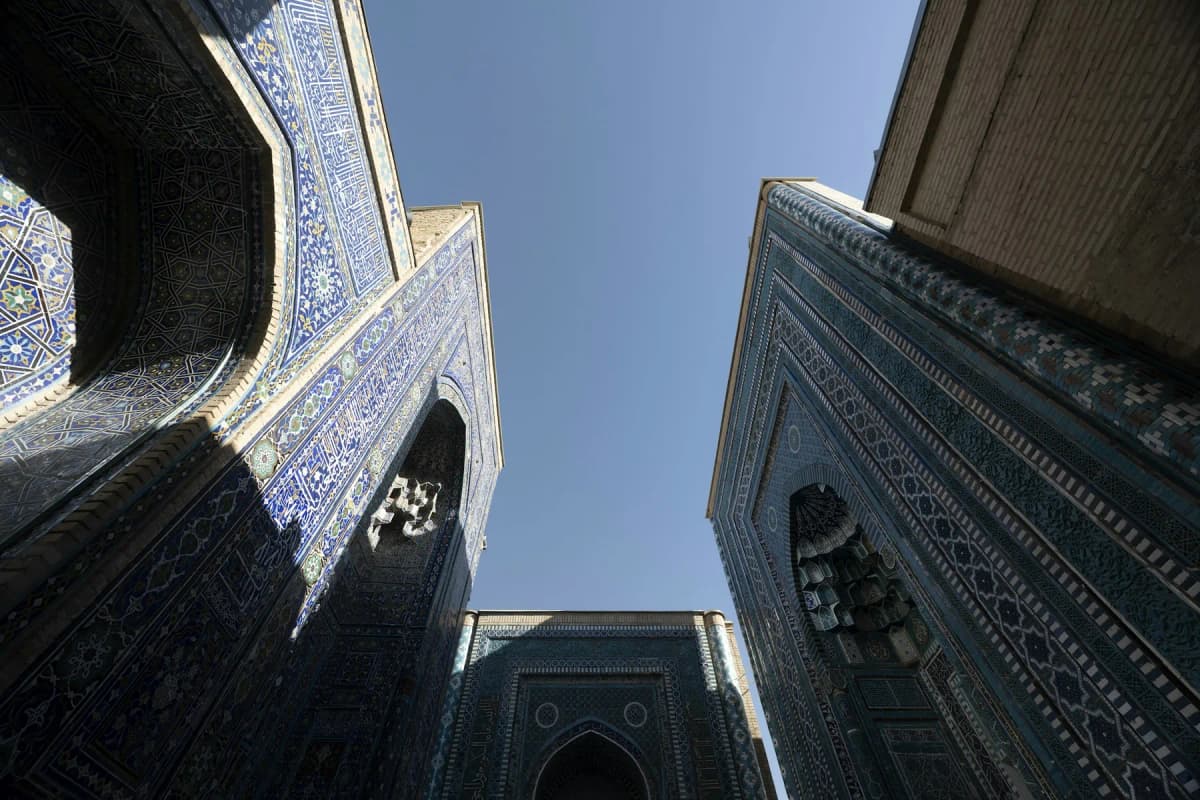 Photo: Dave Meckler on Unsplash
How the weather differs between Tashkent, Samarkand, Bukhara and Khiva
Uzbekistan is a big country, and the cities on a typical route don't share the same climate. Bukhara and Khiva are on the edge of the Kyzylkum Desert, so they're hotter in summer, colder in winter and much drier than Tashkent and Samarkand.
| City | Average high in January | Average high in April | Average high in July | Average high in October | Rain per year |
|---|---|---|---|---|---|
| Tashkent | 7.3 °C | 22.3 °C | 36.0 °C | 22.2 °C | 458 mm |
| Samarkand | 7.4 °C | 21.5 °C | 34.5 °C | 22.0 °C | 378 mm |
| Bukhara | 7.0 °C | 24.4 °C | 37.3 °C | 22.9 °C | 132 mm |
| Khiva (Urgench station) | 2.7 °C | 22.4 °C | 35.9 °C | 20.3 °C | 123 mm |
Source: WMO 1991 to 2020 climate normals via NOAA. Khiva has no station of its own; Urgench is about 30 km away.
What that means in practice:
- Bukhara is the hottest stop. It averages over 30 °C as early as May and 37 °C in July, so if you're travelling in late spring or early autumn, plan the hottest hours of your Bukhara days indoors.
- Khiva is the coldest in winter. January nights in Urgench average -5.7 °C, and Khiva's guesthouses and cafés can feel very quiet in the depths of winter.
- Tashkent and Samarkand get the most rain, mostly from November to April. In Bukhara and Khiva, a rainy day is rare at any time of year.
Spring: March to May
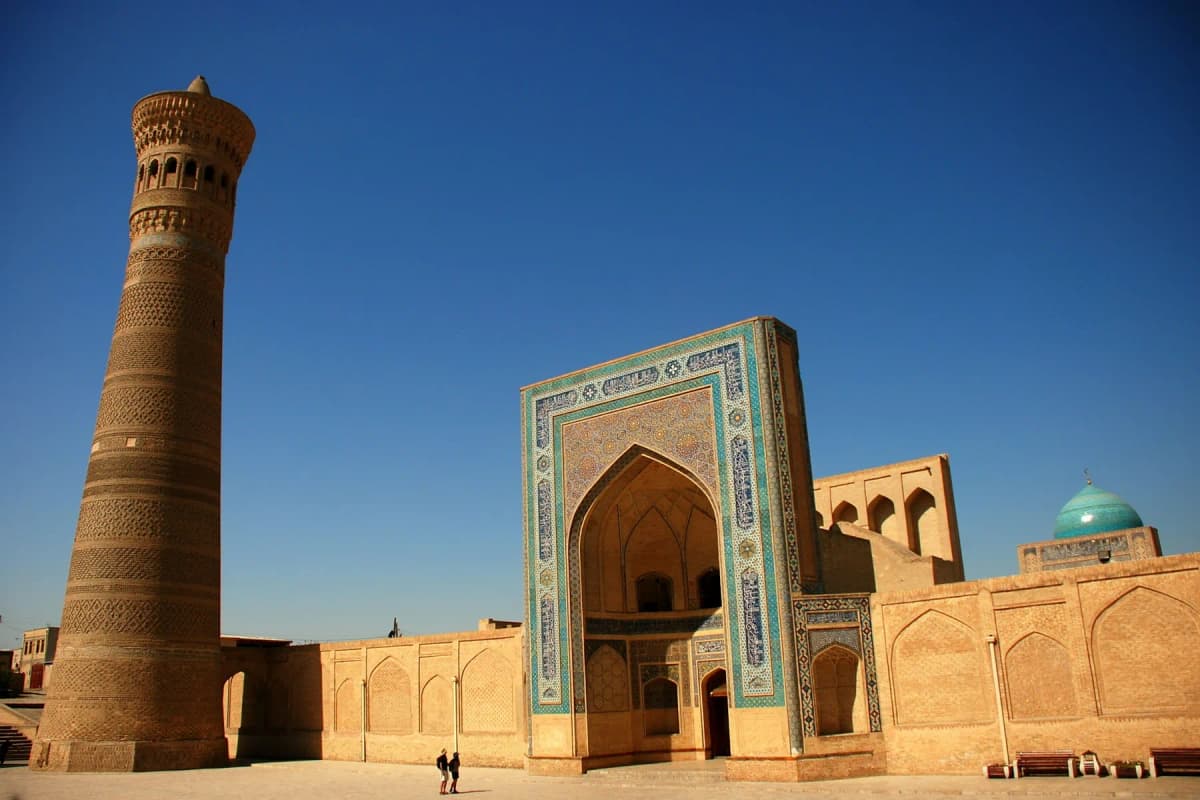 Photo:
 Spring is one of the two best seasons for Uzbekistan. The countryside turns green, fruit trees blossom, and the temperature climbs quickly from cool to warm.
- March: mild days (around 15 °C in Samarkand) but the wettest month of the year in the east, with cold nights. The big event is Navruz, the spring New Year, on 21 March. It's a public holiday with family gatherings, music and sumalak (a sweet wheat paste cooked overnight). It's a lovely time to be in the country, but trains and hotels fill up with domestic travellers, so book ahead.
- April: the season really starts. Highs reach the low 20s in Samarkand and Tashkent and the mid 20s in Bukhara, with some showers early in the month. Late April is excellent.
- May: warm to hot, with highs of 27 °C in Samarkand and over 30 °C in Bukhara by the end of the month. Rain is less frequent, the days are long, and it's peak season for European tour groups.
Pack layers in spring. Evenings in early April can still drop below 10 °C, and a sunny afternoon in Bukhara can feel like summer.
Summer: June to August
Summer is hot, dry and bright. In Samarkand the average high is 34.5 °C in July, in Bukhara 37.3 °C, and heatwaves above 40 °C are common in the desert cities. It barely rains at all from June to September.
That doesn't mean you can't go. Summer has some real advantages: trains are easier to book, many hotels are cheaper outside the main European holiday weeks, and the evenings are warm and lively, with families out in the squares and parks until late. To make it work:
- Sightsee early and late. Start at 7 or 8 am, rest from about 1 to 5 pm, and go back out for sunset and the evening light on the Registan or Po-i-Kalyan.
- Use the mountains. The Chimgan and Amirsoy area, about two hours by road from Tashkent, is far cooler than the plains and good for walking in summer.
- Expect shorter queues at the big sights in July and August, apart from weekends and holidays.
June is the best of the summer months, with long days and the Silk and Spices Festival in Bukhara. Uzbekistan's national tourism site, Uzbekistan.travel, describes it as an annual festival; the 2025 edition ran from 6 to 8 June, with craft fairs, silk and spice markets and music in the old town. Dates for the next edition are usually announced a few weeks ahead.
Autumn: September to November
Autumn is our favourite time to visit Uzbekistan. The summer heat eases through September, the skies stay clear, and the markets are full of the harvest.
- September: still hot early in the month (around 29 °C in Samarkand, 30 °C in Bukhara), but almost no rain and pleasantly warm evenings. Independence Day on 1 September is a public holiday. Late September is ideal.
- October: the sweet spot. Highs of around 22 °C, cool nights, very little rain and golden light. Along with May, it's the hardest month to get Afrosiyob train seats between Samarkand and Bukhara, so book early.
- November: a clear step down. Highs fall to around 14 °C in Samarkand, the rain returns, and nights get close to freezing, especially in Khiva. It's quiet and cheap, and on a sunny day it's still a good month for sightseeing.
Samarkand's biggest cultural event, the Sharq Taronalari international music festival, is traditionally held in late August. The 13th edition ran from 26 to 30 August 2024, after a five-year break, according to Kun.uz. It isn't held every year, so check before you plan a trip around it.
Winter: December to February
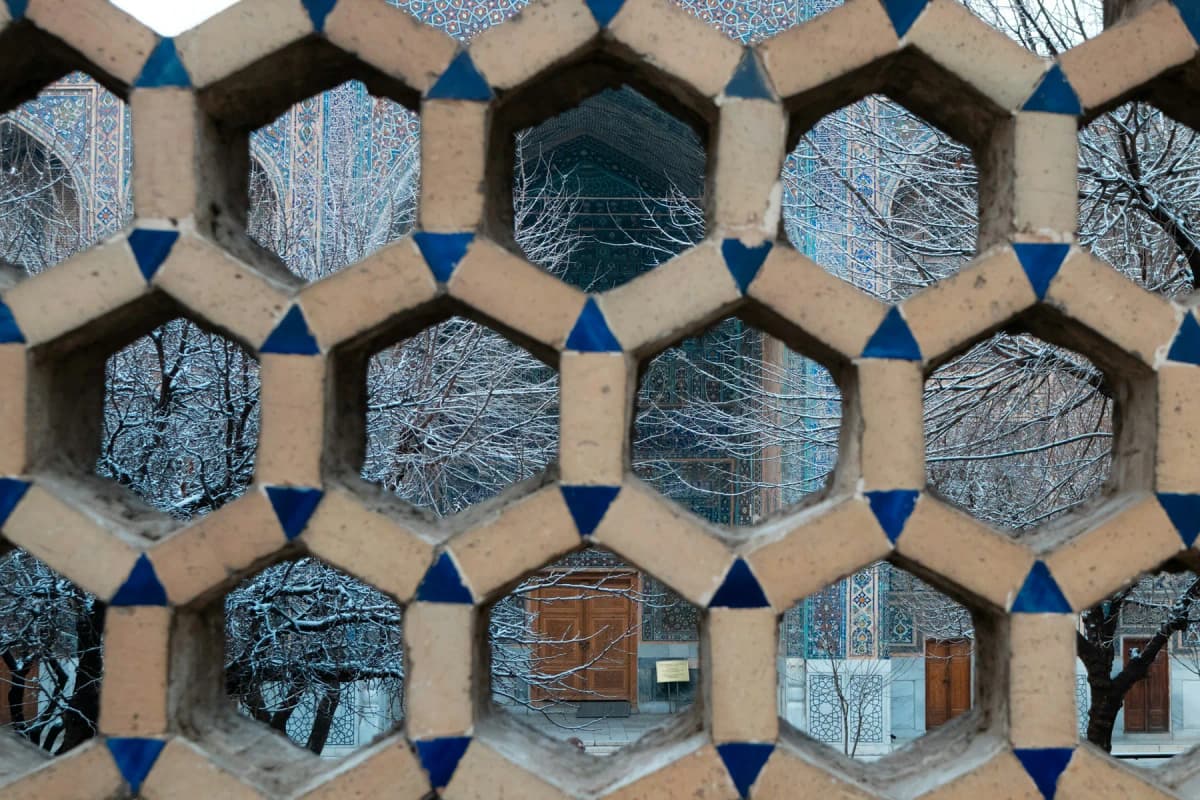 Photo:
 Uzbekistan's winter is cold. Average highs are around 7 °C in Tashkent, Samarkand and Bukhara and under 3 °C in Khiva in January, and nights are below freezing. Snow falls some years, and a light dusting on the blue domes of Samarkand is beautiful, but it rarely lasts long in the cities.
Winter suits travellers who want the monuments almost to themselves and the lowest hotel prices of the year. The downsides are real, though:
- Short days. The sun sets at around 5 pm in December, so you get fewer sightseeing hours.
- Cold interiors. Many madrasas, museums and small guesthouses are not well heated.
- Quieter towns. Some guesthouses and craft workshops in Khiva and Bukhara close or reduce their hours in the low season.
- Ski season. The upside of the cold is skiing in the mountains east of Tashkent, roughly from December to March, depending on the snow.
Festivals, holidays and Ramadan
These are the dates most likely to affect your trip. Public holidays bring crowds and full trains, so book transport early if your dates overlap.
| Event | When | What to expect |
|---|---|---|
| Navruz (spring New Year) | 21 March | Public holiday, celebrations across the country, busy trains |
| Silk and Spices Festival (Bukhara) | Early June (6 to 8 June in 2025) | Crafts, food, music in the old town |
| Sharq Taronalari (Samarkand) | Late August, not every year (26 to 30 August in 2024) | International music festival |
| Independence Day | 1 September | Public holiday, concerts and fireworks |
| Ramadan | About 8 February to 9 March 2027 (dates follow the moon) | Business as usual for visitors in most places |
| Ramazon Hayit (Eid al-Fitr) | End of Ramadan, about 9 or 10 March 2027 | Public holiday, family visits |
| Qurbon Hayit (Eid al-Adha) | About 16 May 2027 | Public holiday, busy roads and trains |
Ramadan has little effect on most trips. Restaurants, cafés and hotels stay open in the cities, and many Uzbeks don't fast. Still, be respectful around mosques and in more traditional areas. Islamic holiday dates move about 11 days earlier each year and are only confirmed close to the date.
When is the cheapest time to visit Uzbekistan?
The cheapest time to visit Uzbekistan is November to early March, outside Navruz. Hotels and guesthouses drop their prices, train tickets are easy to find, and the most popular sights are quiet. Prices are highest in April, May, September and October, and in those months the best boutique hotels in Samarkand, Bukhara and Khiva can be fully booked weeks ahead.
We haven't quoted specific hotel prices because they vary widely by city, season and booking site. If you're flexible, compare flights a few weeks either side of your dates:
Booking trains in peak season
The single biggest planning problem in the best months is getting seats on the Afrosiyob high-speed train, which links Tashkent, Samarkand and Bukhara. Tickets go on sale on the official Uzbekistan Railways site, eticket.railway.uz, and in April, May, September and October the most convenient departures can sell out within hours.
- Book the day sales open for any spring or autumn date. Our guide to getting from Tashkent to Samarkand explains the booking window, fares and backup options.
- Avoid travel days around Navruz and the Eid holidays, when Uzbeks head home to their families.
- Have a plan B. Slower Sharq trains and shared taxis still run when the Afrosiyob is full, and you can pre-book a private transfer from Tashkent to Samarkand if you'd rather not deal with the station.
For Khiva, the long leg from Bukhara is covered in our Bukhara to Khiva guide, including the newer fast train.
The best time for what you want to do
The Silk Road cities
Late April to May and late September to October. These months have the most comfortable temperatures for long days on foot in Samarkand, Bukhara and Khiva, and the best light for photography. Our Uzbekistan itinerary for 7, 10 and 14 days maps out the classic route.
Hiking in the mountains
June to September. The Chimgan and Ugam mountains east of Tashkent are much cooler than the plains in summer. Higher trails can hold snow into late spring.
The desert and yurt camps
April to May and September to October. Yurt camps near Lake Aydarkul in the Kyzylkum, between Samarkand and Bukhara, are at their best in spring and autumn. Summer days in the desert are fiercely hot, and winter nights are freezing.
Bazaars and food
August to October for fruit: melons, grapes, figs, pomegranates and persimmons pile up in Tashkent's Chorsu Bazaar and Samarkand's Siab Bazaar. Plov, the national rice dish, is good all year.
Photography
October for soft, golden light and clear air; spring for green fields and blossom around the cities.
Skiing
December to March in the mountains east of Tashkent, when there's snow.
When not to go to Uzbekistan
There's no month to avoid entirely, but some trips suit some months badly:
- Long walking days in July and August, especially in Bukhara and Khiva. The heat is draining, and there's little shade in the old towns.
- A Khiva-heavy trip in January or February. It's the coldest place on the main route, and the town can feel shut.
- Last-minute trips in May or October. Trains and the best hotels are booked up early.
- Travelling over Navruz without bookings. It's a wonderful time to be there, but transport fills up fast.
What to wear in Uzbekistan by season
Uzbekistan is a relaxed, mostly secular Muslim country, and in Tashkent and the tourist centres you'll see locals in all kinds of clothing. When visiting mosques, mausoleums and shrines, cover your shoulders and knees, and women should bring a light scarf for the head where it's asked for.
- Spring and autumn: light layers, a warm top for the evening, comfortable walking shoes and a light rain jacket for March and April.
- Summer: loose, light, breathable clothing that covers your shoulders, a hat and plenty of sunscreen.
- Winter: a proper warm coat, hat and gloves, especially for Khiva and early-morning trains.
How many days do you need in Uzbekistan?
Seven to ten days is enough for Tashkent, Samarkand, Bukhara and Khiva at a steady pace. Ten days to two weeks lets you add a desert yurt camp, Shahrisabz or the Fergana Valley. In summer, allow a little more time so that you can rest in the hottest hours; in winter, the shorter days mean less sightseeing per day.
Whenever you go, a few things are worth sorting before you leave: an Uzbekistan eSIM for Yandex Go and train tickets on the move, a fixed-price Tashkent airport transfer if you land late at night, and travel insurance with medical cover, which matters more in the summer heat.
Frequently asked questions
What is the best month to visit Uzbekistan? October is the best month for most people: highs of around 22 °C in Samarkand, almost no rain, clear skies and harvest season in the bazaars. May is a close second, with warmer days and green countryside, but it's busier.
Is it too hot to visit Uzbekistan in summer? It's very hot but not impossible. July highs average about 35 °C in Samarkand and 37 °C in Bukhara, with heatwaves above 40 °C. If you go, sightsee early and late, rest in the afternoon and drink plenty of water.
Is Uzbekistan worth visiting in winter? Yes, if you don't mind the cold. The monuments are quiet, hotels are cheaper and trains are easy to book. Expect daytime highs of around 7 °C, freezing nights, short days and some closed guesthouses, especially in Khiva.
When is the rainy season in Uzbekistan? Most rain falls between November and May, with March the wettest month in Samarkand and Tashkent. June to October is almost completely dry. Bukhara and Khiva are dry all year, with only about 120 to 130 mm of rain annually.
When is Navruz in Uzbekistan? Navruz, the spring New Year, is on 21 March and is a public holiday. Expect celebrations, special food and busy transport around the date.
Is Uzbekistan tourist friendly? Yes. Since the late 2010s Uzbekistan has opened up to tourism, with high-speed trains, an English-language railway booking site and plenty of guesthouses in the main cities. Many nationalities can now visit without a visa for a set period; check the current rules for your passport before you book.
How we researched this guide
Monthly temperatures, rainfall and rainy-day counts are the official World Meteorological Organization 1991 to 2020 climate normals for the Tashkent, Samarkand, Bukhara and Urgench stations, published by NOAA's National Centers for Environmental Information. Festival dates come from Uzbekistan.travel, the national tourism site (Silk and Spices Festival 2025), and Kun.uz, citing the Ministry of Culture (Sharq Taronalari 2024). Islamic holiday dates for 2027 are estimates that depend on the sighting of the moon. Train booking advice comes from Uzbekistan Railways and our own route guides. Advice on cheaper and busier months is based on seasonal demand, not on specific prices. Found something out of date? Let us know.
Ready to plan? Start with the 15 best things to do in Samarkand and the 15 best things to do in Bukhara, or browse all our Uzbekistan guides.