Bukhara to Khiva: Train, Taxi or Private Car? (2026 Times & Prices)
September 30, 2026 · Uzbekistan
This post contains affiliate links. We may earn a commission if you book through them, at no extra cost to you. Disclaimer.
Bukhara to Khiva is the longest leg of the classic Uzbekistan route, and until recently it was also the hardest. The two cities are about 450–520 kilometres apart, depending on the route, with almost nothing in between except the Kyzylkum desert and a long stretch of the Amu Darya river. For years the choice was a slow train that didn't run every day or a full day in a car.
That changed in May 2026, when Uzbekistan's new high-speed train, the Jaloliddin Manguberdi, started running all the way from Tashkent to Khiva, cutting Bukhara to Khiva to just over three hours. It only runs three days a week, though, so you still need a plan B. This guide covers every option in both directions, with the timetables we checked in September 2026.
Bukhara to Khiva: the quick answer
| Option | Journey time | Runs | Best for |
|---|---|---|---|
| Jaloliddin Manguberdi fast train | About 3h20 | Tue, Thu, Sat (Khiva to Bukhara: Wed, Fri, Sun) | Anyone whose dates match |
| Day train (CRRC, no. 706) | About 4h40 | 6 days a week | Days without the fast train |
| Overnight trains (nos. 56 and 125) | About 5h40 | Most days, early morning from Bukhara | Early risers and tight budgets |
| Private car | 6h30–7h30 | Any day | Groups, flexible dates, desert fortresses |
| Shared taxi (via Urgench) | 7–8h plus waiting | Most days | Last resort |
Our recommendation: plan your days in Bukhara so you leave on a Tuesday, Thursday or Saturday and take the Jaloliddin Manguberdi. If that doesn't work, take the daily afternoon train. Drive only if you want to stop at the desert fortresses on the way, or if every train is full.
How far is Khiva from Bukhara?
Khiva is north-west of Bukhara, in the Khorezm region near the Turkmen border. By road it's roughly 450–520 kilometres depending on the route, most of it on a single highway across the Kyzylkum ("red sand") desert. There are a few roadside cafés and fuel stops, and for a stretch the road runs close to the Amu Darya, but for most of the drive there's nothing but scrub and sand in every direction.
The railway follows a similar line. It was extended from Urgench, the regional capital, to a new station in Khiva in 2018, which is what made direct trains, and now the fast train, possible.
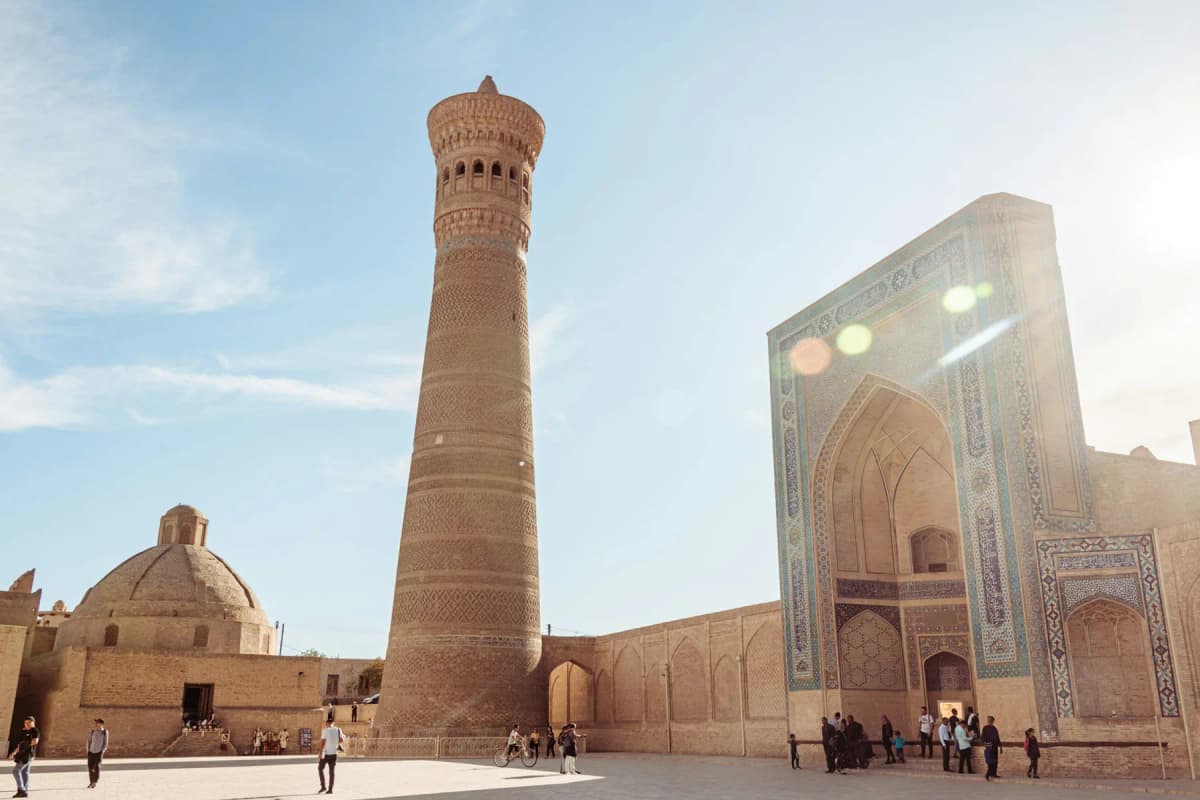 Photo: Zuyet Awarmatik on Unsplash
Option 1: the Jaloliddin Manguberdi fast train
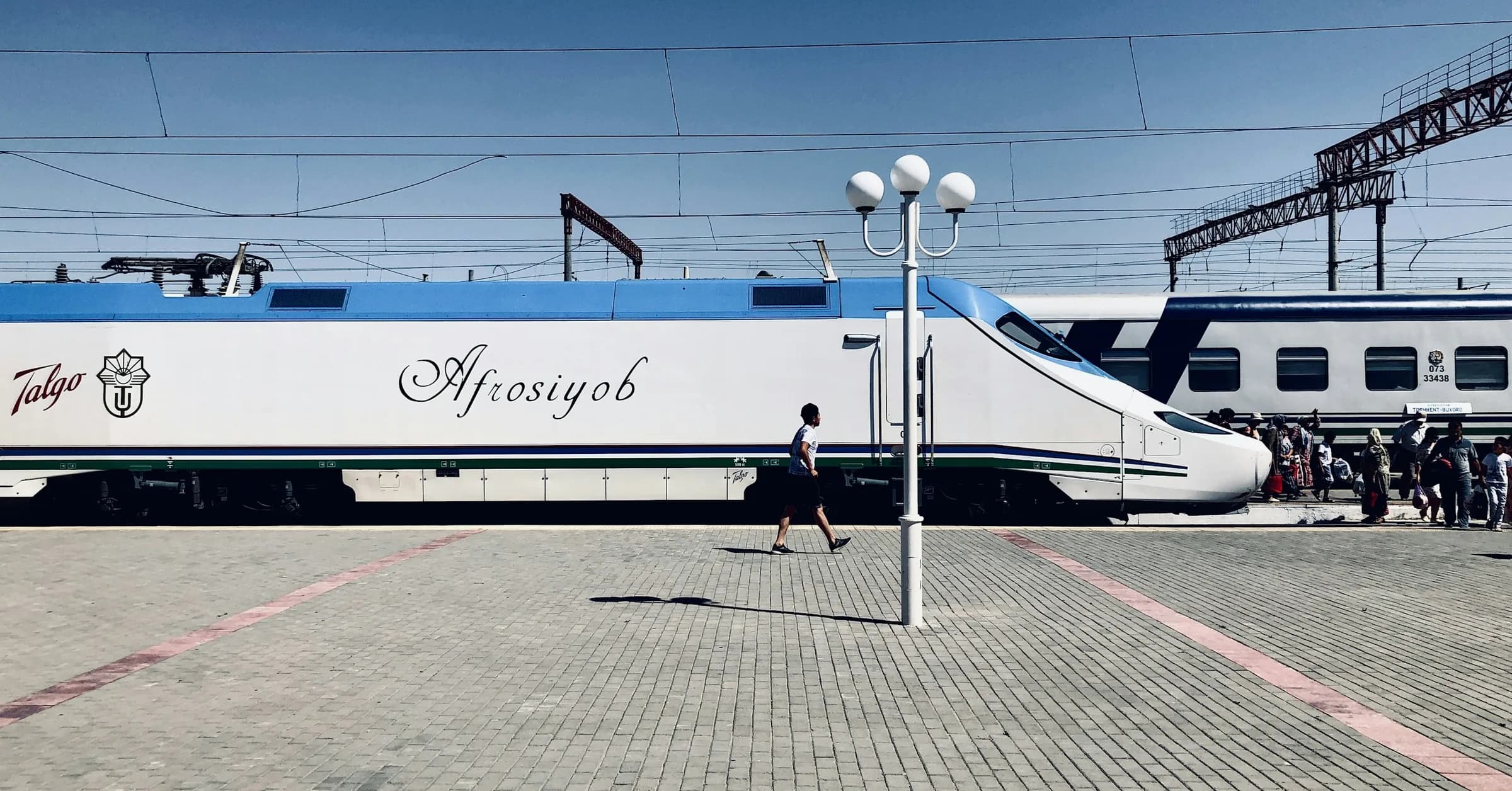
The Jaloliddin Manguberdi is a Hyundai Rotem high-speed train, named after a 13th-century ruler of Khorezm, which entered service on 5 May 2026. It runs the full length of the country, from Tashkent to Khiva via Samarkand, Bukhara and Urgench, and has Economy, Business and VIP classes, air-conditioning and a bistro car.
Timetable (September 2026):
- Bukhara to Khiva: leaves Bukhara around 11:00 on Tuesdays, Thursdays and Saturdays and arrives in Khiva at 14:31, stopping at Urgench at about 14:06. Sources give the Bukhara departure as 10:54 or 11:14, so check the time on your ticket.
- Khiva to Bukhara: leaves Khiva at 07:20 on Wednesdays, Fridays and Sundays, calls at Urgench at 07:45 and reaches Bukhara between 10:37 and 10:57, before continuing to Samarkand and Tashkent.
The journey takes about 3 hours 20 minutes, less than half the time it takes by road. Agencies list seats from about $40. For comparison, the full Tashkent to Khiva run costs 780,000 som (about $65) in Economy according to The Man in Seat 61. Fares vary by class and date, so check the exact price when you book.
The catch is the schedule. With only three trains a week in each direction and fewer than 400 seats, it fills up quickly in spring and autumn. Book as soon as sales open on eticket.railway.uz, exactly as you would for the Afrosiyob (our Tashkent to Samarkand guide explains how booking works).
Option 2: the daily trains
On the other four days, you still have good train options, just slower ones.
- Day train no. 706 (CRRC): leaves Bukhara at about 15:45 and arrives in Khiva at about 20:25 (about 4h40), six days a week (every day except Monday). It's a modern, air-conditioned train with Economy seats only. In the other direction, no. 707 leaves Khiva at about 09:55 and arrives in Bukhara at about 14:32, every day except Tuesday.
- Overnight train no. 125 (Andijan to Khiva): passes through Bukhara at about 07:12 every day and reaches Khiva at about 12:47.
- Overnight train no. 56 (Tashkent to Khiva): passes through Bukhara at about 05:29 on Wednesdays, Thursdays, Saturdays and Sundays and reaches Khiva at about 11:10.
The two overnight trains have sleeper carriages: platzkart (open-plan bunks), kupe (four-berth compartments) and, on some services, two-berth SV. From Bukhara you only ride the last few hours of their journey, so you'll be getting on in the dark. Agencies list Bukhara to Khiva train fares from about $32. As with every Uzbek train, you need your passport to buy a ticket and to board.
Timetables change, especially since the new fast train arrived. The times above come from agency timetables checked in September 2026 (Advantour and OrexCA). Always confirm on eticket.railway.uz before you plan your days around them.
Getting to Bukhara station
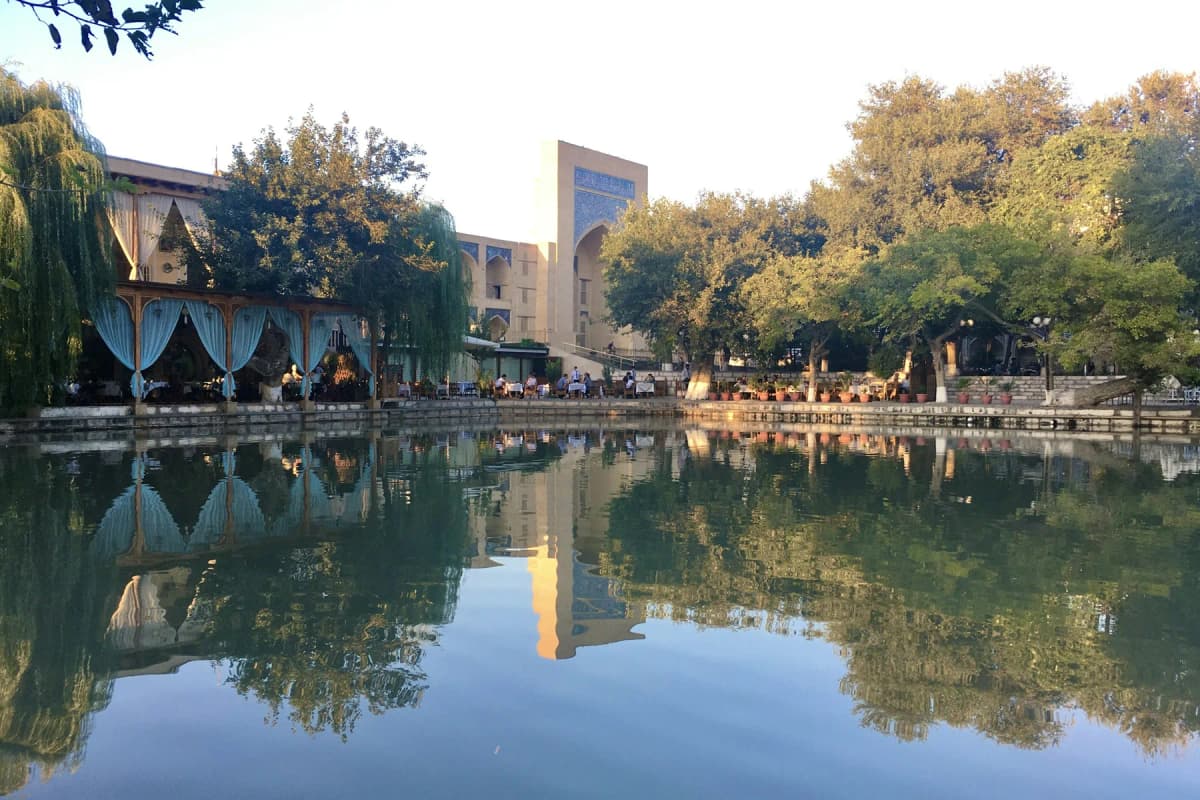 Photo:
 Bukhara's main station, Bukhara 1, isn't in Bukhara at all. It's in the town of Kagan, about 12–15 kilometres south-east of the old city. Allow 20–30 minutes for the drive, plus 30–45 minutes at the station for the ticket and passport checks and the bag scanner.
The easiest way to get there is a Yandex Go ride from your guesthouse near Lyabi-Hauz. It shows the fare up front and is much cheaper than hailing a taxi in the old town. For the early-morning overnight trains, book the car the night before or ask your guesthouse to arrange a driver, as there's little traffic, and few cars, before 5am.
Arriving in Khiva
Khiva's station opened in 2018 and is just outside the modern town, roughly a 30-minute walk from the walls of Itchan Kala, the old inner city. With luggage, a taxi or Yandex Go ride takes a few minutes. Most guesthouses are inside or just outside the walls, and Itchan Kala itself is compact and car-free, so once you're there you'll walk everywhere.
If your train terminates at Urgench instead, you're still about 35 kilometres from Khiva. Shared taxis and minibuses run between the two, or a Yandex Go ride takes about 40 minutes.
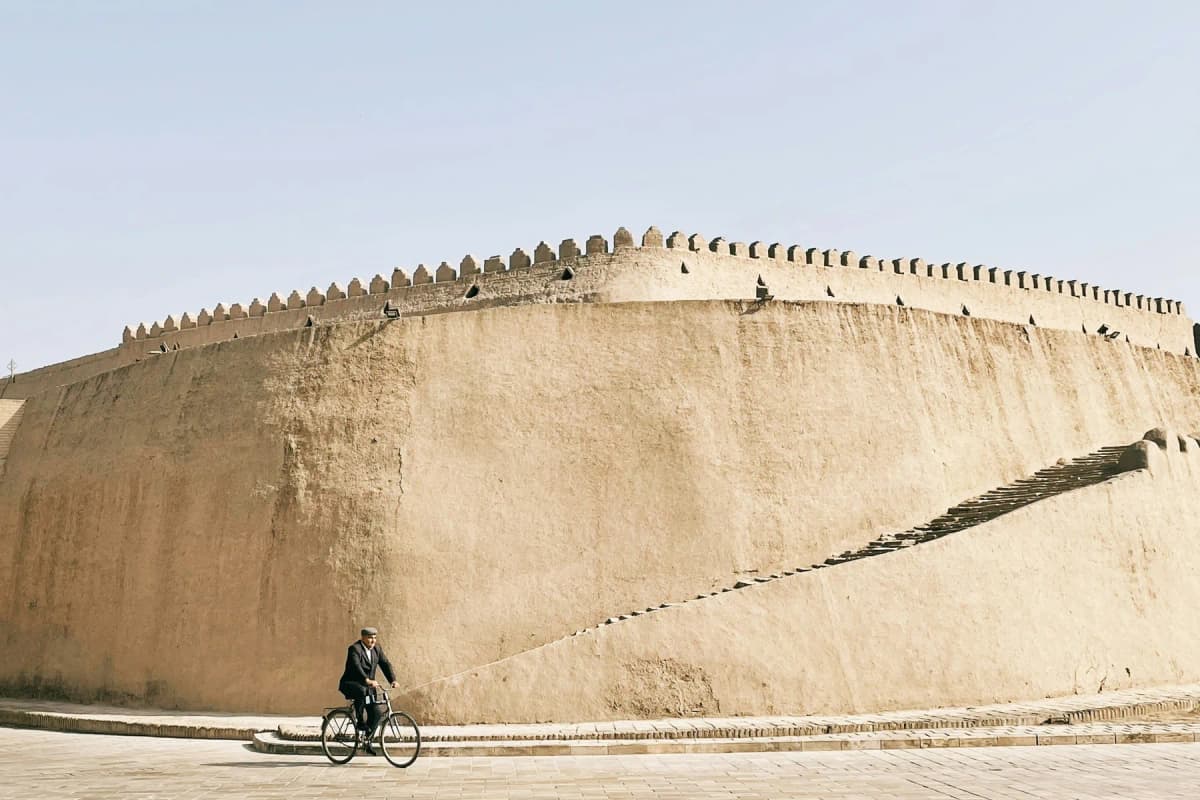 Photo: Luna Zhang on Unsplash
Option 3: private car across the Kyzylkum
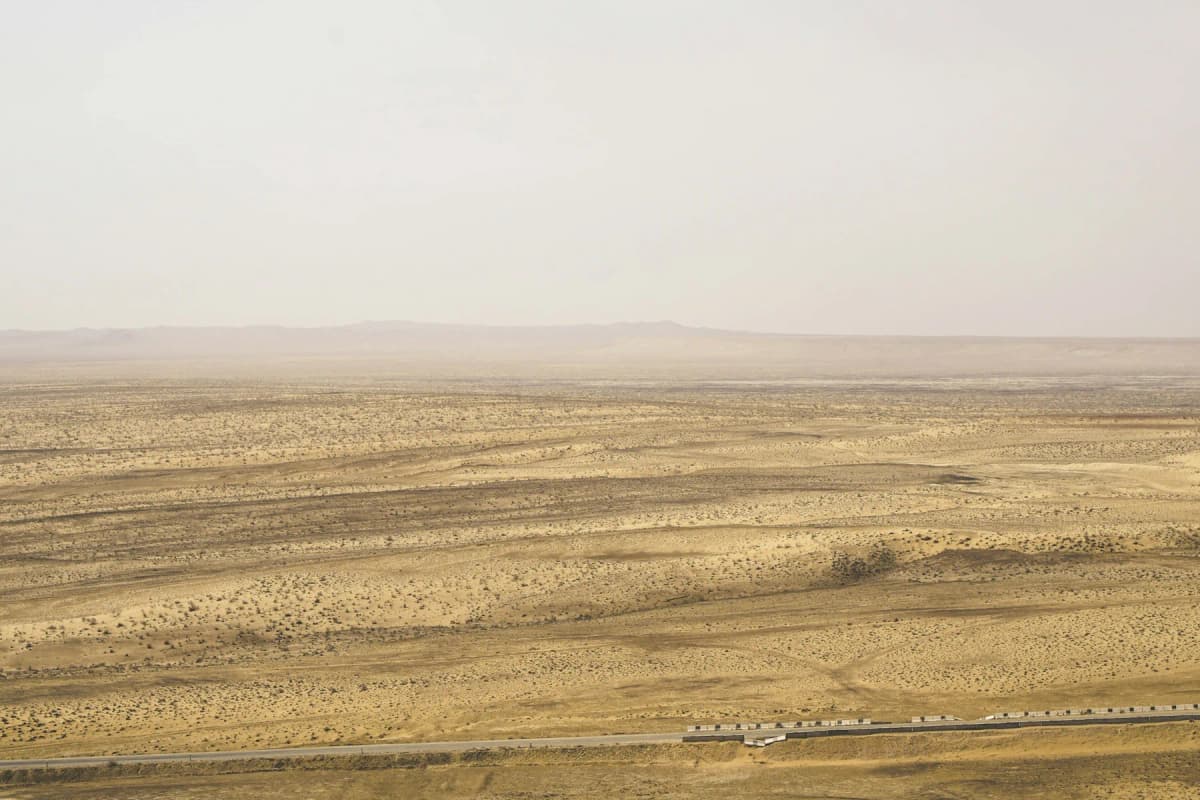 Photo: Artem Asset on Unsplash
A private car takes 6h30 to 7h30 from Bukhara to Khiva, including a lunch stop. The road has improved a lot in recent years, but it's still a long, hot drive, and in summer the car's air-conditioning makes a real difference.
Prices vary a lot depending on how you book:
- Local drivers arranged through your guesthouse or a Bukhara agency usually quote from about $120 per car for up to three or four people.
- International booking platforms cost more but give you a fixed price and a set pick-up time. A pre-booked Bukhara to Khiva transfer starts at about $390 for a four-seat minivan.
The best reason to drive is the desert fortresses of ancient Khorezm, known locally as Elliq Qala ("fifty fortresses"). The best known, such as Ayaz Kala and Toprak Kala, are mud-brick ruins on the edge of the desert north-east of Khiva. They're a detour from the direct road, so agree the route and extra time with your driver before you set off, and expect to pay more. You can also visit them on a half-day trip from Khiva.
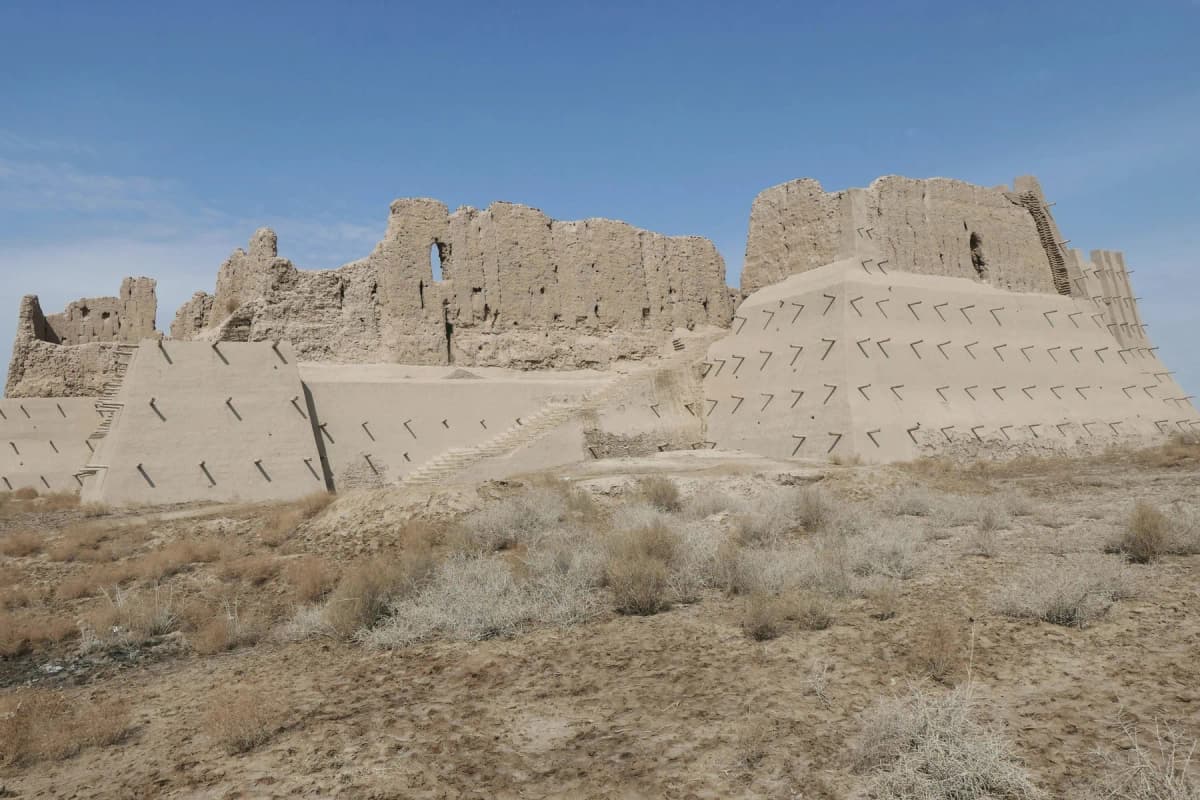 Photo: Tim Broadbent on Unsplash
Option 4: shared taxi
There are no direct shared taxis between Bukhara and Khiva. Shared cars run between Bukhara and Urgench, leaving from Bukhara's bus station area once all four seats are sold. Expect to pay around $15–20 per seat for a 7–8 hour drive, then take another shared taxi or a Yandex Go ride from Urgench to Khiva.
It's the cheapest way to go, but also the least comfortable and the least predictable. The waiting time can be long, drivers may not leave in the afternoon heat, and in summer you'll spend the hottest hours of the day in a car without much air-conditioning. We learned about Bukhara's shared-taxi timetable the hard way, standing by Lyabi-Hauz with a ticket for a car that didn't exist (the whole story is on our About page). If you do go by shared taxi, set off early in the morning, agree the price per seat before you get in, and pay at the end.
Can you fly from Bukhara to Khiva?
The nearest airport to Khiva is Urgench, about 35 kilometres away. When we checked, we couldn't find a regular direct flight between Bukhara and Urgench, so flying usually means going back through Tashkent. That makes flying slower and more expensive than the train. Flights only make sense if you're heading home from Khiva: Urgench has direct flights to Tashkent and a handful of international routes.
Khiva to Bukhara: the return journey
Most travellers do Khiva last and fly home from Urgench, but plenty go the other way or return to Bukhara to continue to Samarkand. The options are the same in reverse:
- Jaloliddin Manguberdi: Khiva 07:20 on Wednesdays, Fridays and Sundays, arriving in Bukhara at about 10:40–11:00 and continuing to Samarkand and Tashkent.
- Day train no. 707: Khiva about 09:55, Bukhara about 14:30, every day except Tuesday.
- Overnight trains nos. 56 and 126: leave Khiva in the afternoon and reach Bukhara in the evening, around 21:00–23:00, before continuing overnight.
- Private car or shared taxi: the same 6h30–8 hours as outbound; leave early to avoid the heat.
How many days in Khiva?
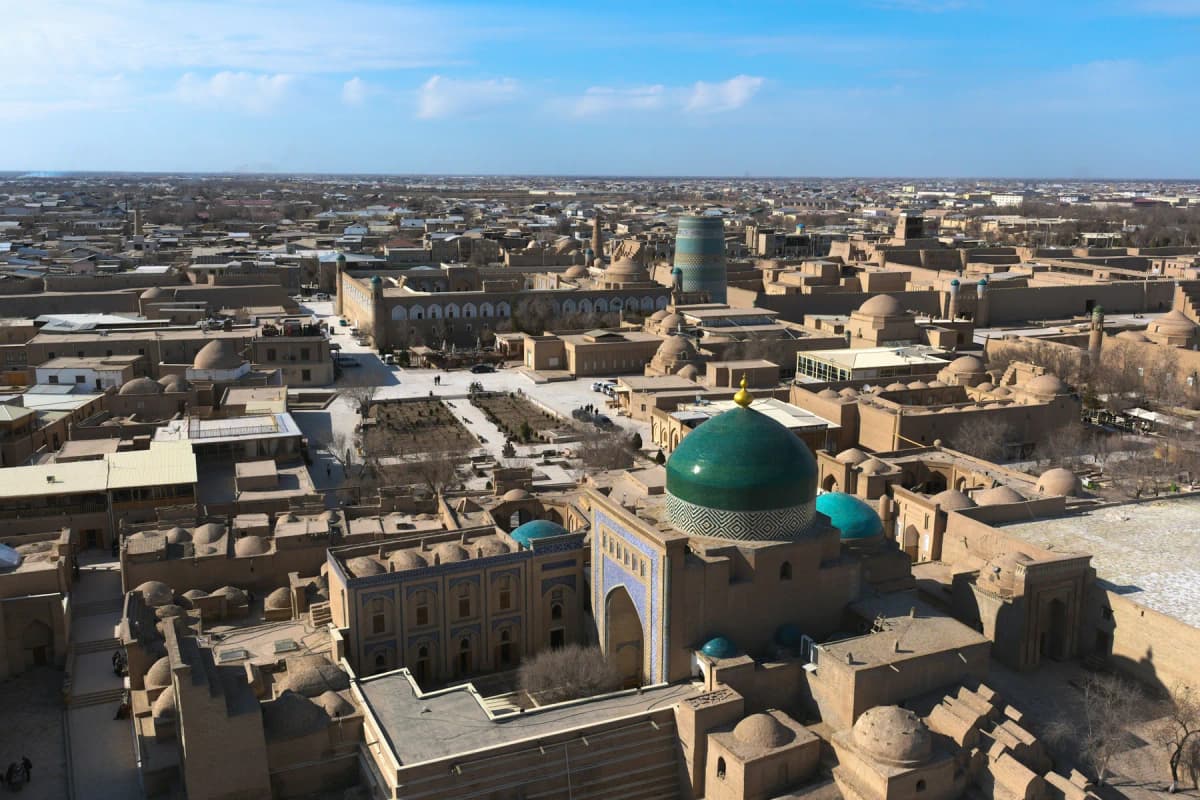 Photo:
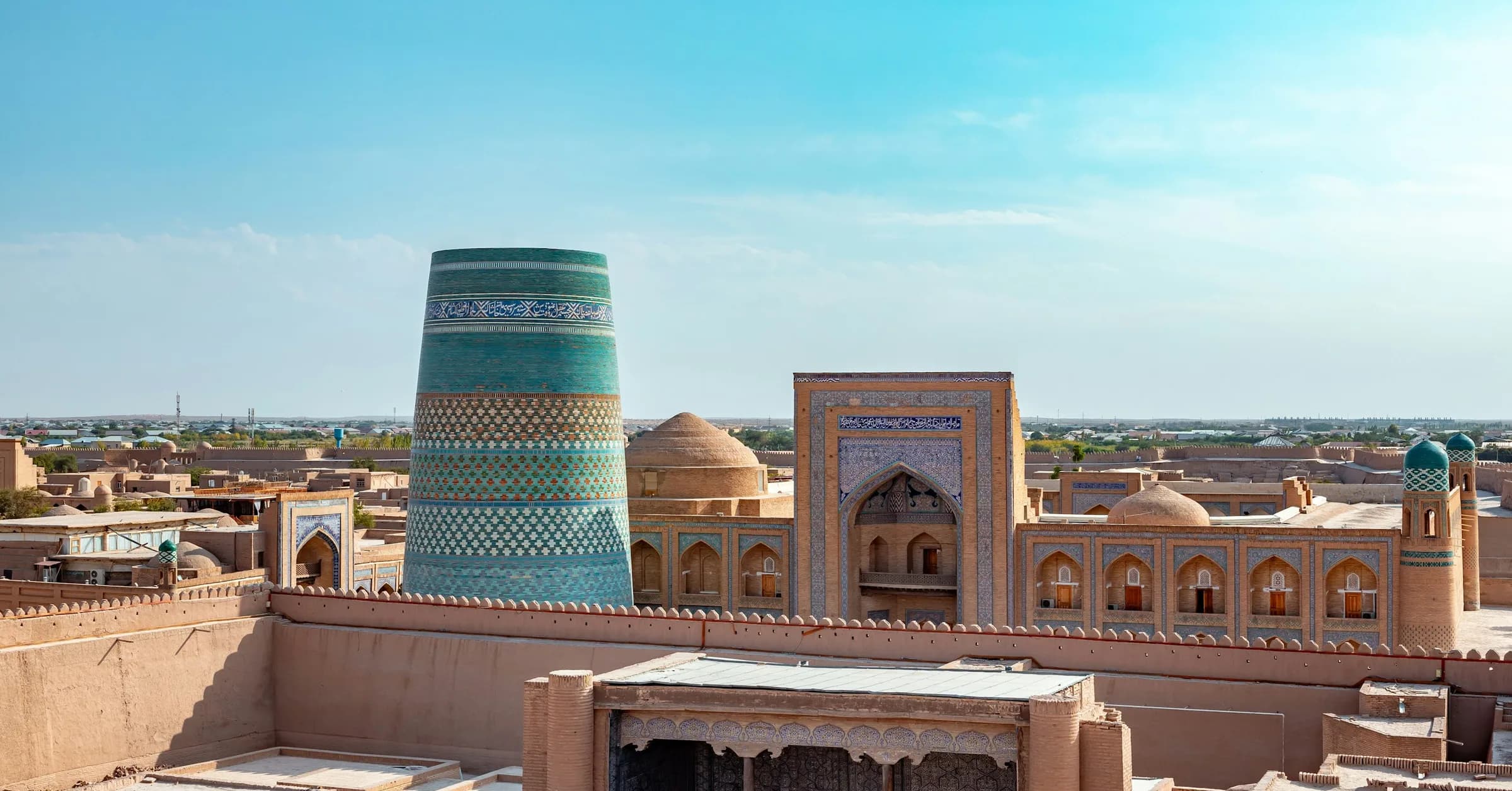
 Itchan Kala is small enough to walk across in 15 minutes, so one full day covers the main sights: the Kalta Minor minaret, the Kunya Ark fortress, the Juma Mosque with its forest of carved wooden columns, and the Islam Khodja minaret, which you can climb for the best view over the rooftops. Stay two nights so you can see the walls at sunset and early morning, when the day-trippers have gone, and add a half-day trip to the desert fortresses if you didn't stop on the drive.
Tips for the Bukhara to Khiva journey
- Plan your Bukhara days around the fast train. If you arrive in Bukhara from Samarkand on a Saturday, staying until Tuesday gives you three nights in Bukhara and a 3-hour train to Khiva instead of a 7-hour drive.
- Book early for spring and autumn. April, May, September and October are peak season, and the new fast train has fewer than 400 seats.
- Carry water and snacks, especially by car or shared taxi. Cafés along the desert road are few and far between.
- Have mobile data. You'll need it for Yandex Go at both ends and to show e-tickets. An Uzbekistan eSIM from Airalo works as soon as you land, or buy a local SIM with your passport.
- Avoid midsummer afternoons on the road. In July and August, the desert regularly passes 40°C. If you drive, leave at dawn.
To compare flights into Tashkent or home from Urgench, use the search below.
Frequently asked questions
Is there a direct train from Bukhara to Khiva?
Yes. The Jaloliddin Manguberdi fast train runs from Bukhara to Khiva on Tuesdays, Thursdays and Saturdays in about 3 hours 20 minutes. A slower day train (about 4h40) runs six days a week, and two overnight trains from Tashkent and Andijan stop in Bukhara early in the morning on their way to Khiva.
How long does it take to get from Bukhara to Khiva?
About 3h20 by the fast train, 4h40–5h40 on the other trains, 6h30–7h30 by private car, and 7–8 hours or more by shared taxi via Urgench.
How much does it cost to get from Bukhara to Khiva?
Agencies list train fares from about $32 on the slower trains and about $40 on the Jaloliddin Manguberdi. A shared-taxi seat costs around $15–20, a local private driver from about $120 per car, and a pre-booked international transfer from about $390.
Is it better to take the train or drive from Bukhara to Khiva?
Take the train if your dates match: it's faster, cheaper and much more comfortable. Drive only if you want to stop at the Elliq Qala desert fortresses on the way, or if every train is full.
How many days do you need in Khiva?
One full day covers Itchan Kala's main sights. Two nights is better, so you can see the old town early and late without the crowds and add a half-day trip to the desert fortresses.
Should I visit Khiva before or after Bukhara?
Most people travel west from Tashkent, visiting Samarkand, then Bukhara and ending in Khiva, and then fly home from Urgench via Tashkent. That way you don't cross the desert twice. If you're arriving overland from Turkmenistan, do it in reverse.
How we researched this guide
This guide is based on timetables from Uzbekistan Railways (eticket.railway.uz), The Man in Seat 61 (updated June 2026), the Advantour and OrexCA timetables, and coverage of the Jaloliddin Manguberdi's launch by Kun.uz. Shared-taxi and driver prices come from recent traveller reports, and transfer prices from the booking platforms themselves. Everything was checked in September 2026. Timetables have changed a lot since the new train arrived, so always confirm before you travel. Found something out of date? Let us know.
Planning the rest of the trip? Start with Tashkent to Samarkand or browse all our Uzbekistan guides.