Where to Stay in Istanbul: 8 Best Areas Compared (2026)
October 18, 2026 · Turkey
This post contains affiliate links. We may earn a commission if you book through them, at no extra cost to you. Disclaimer.
The best area to stay in Istanbul for a first visit is Sultanahmet, the old city, where Hagia Sophia, the Blue Mosque and Topkapı Palace are all within a few minutes' walk. If you care more about food, nightlife and atmosphere than about being next door to the monuments, stay in Karaköy or Galata, just across the Golden Horn and a short tram ride from Sultanahmet. For a more local, relaxed base with great food, choose Kadıköy on the Asian side.
Istanbul is enormous, and the wrong base can mean an hour in traffic each way. The good news is that the areas most visitors need are all close together around the Golden Horn and linked by the T1 tram, the funicular and the ferries. This guide compares the eight best areas to stay in Istanbul, who each one suits, and the trade-offs: noise, hills, transport, and how each area feels at night.
Where to stay in Istanbul: the quick answer
| Area | Best for | Feel at night | Transport | Walk to Hagia Sophia |
|---|---|---|---|---|
| Sultanahmet | First-timers, short stays, sightseeing | Quiet after dinner | T1 tram | 0 to 10 minutes |
| Sirkeci and Eminönü | Value near the sights, ferries | Quiet, busy by day | T1 tram, Marmaray, ferries | 10 to 15 minutes |
| Karaköy | Food, cafés, design hotels | Lively, restaurants and bars | T1 tram, ferries | Tram, about 15 minutes |
| Galata | Atmosphere, views, couples | Lively, steep streets | T1 tram, M2 metro, funicular | Tram, about 20 minutes |
| Beyoğlu and Taksim | Nightlife, shopping, transport | Busy until late | M2 metro, funicular, airport buses | 30 minutes or more |
| Kadıköy and Moda | Local life, food, longer stays | Lively bars, seafront | Ferries, Marmaray, M4 metro | Ferry and tram |
| Beşiktaş and Ortaköy | Bosphorus views, student buzz | Lively, local | Ferries, buses | 30 minutes or more |
| Balat and Fener | Character, photography | Quiet, residential | Buses, ferries | 30 minutes by bus or taxi |
Our short version: for two or three nights, stay in Sultanahmet if seeing the monuments is your priority, and in Karaköy if you want to eat and drink well and don't mind a short tram ride. For a week or more, or a second visit, try Kadıköy.
How to choose where to stay in Istanbul
- Decide how much time you'll spend in the old city. Most of the big sights in our guide to the best things to do in Istanbul are in Sultanahmet. If you plan to spend most of your days there, staying there saves time. If you want evenings with more life, cross the Galata Bridge.
- Stay near the T1 tram or a ferry pier. The T1 tram runs from Sultanahmet through Eminönü and Karaköy to Kabataş, and the ferries cross to the Asian side. Being near either matters more than the distance on a map, because Istanbul's traffic is heavy.
- Check the hills. Galata, Cihangir and parts of Beyoğlu are on steep slopes with cobbled streets and stairs. That's charming without luggage and hard work with it.
- Think about noise. Taksim, İstiklal Avenue and the bar streets of Karaköy and Kadıköy are loud late into the night at weekends. Rooms near mosques will also hear the call to prayer before dawn.
- Match the area to your airport. Istanbul has two main airports: Istanbul Airport (IST) on the European side, far to the north, and Sabiha Gökçen (SAW) on the Asian side. If you fly into SAW, Kadıköy is the most convenient base.
The 8 best areas to stay in Istanbul
1. Sultanahmet: best for first-timers and sightseeing
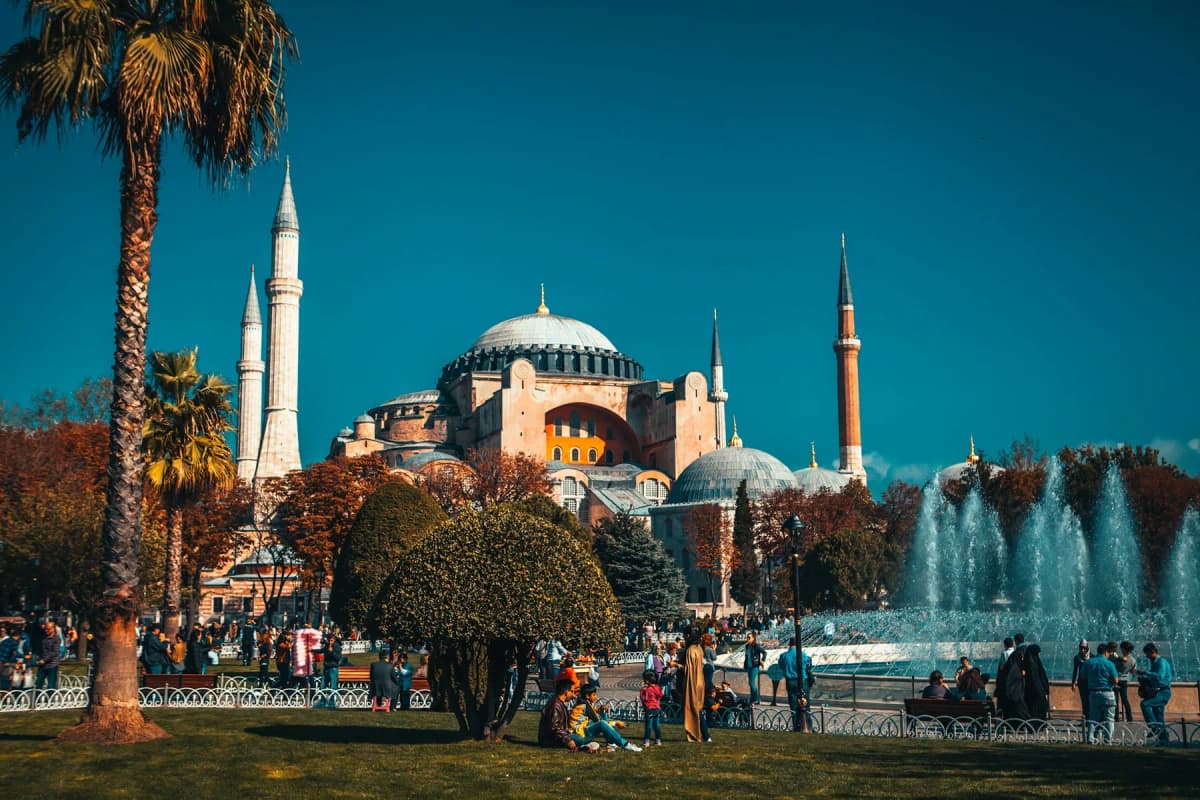 Photo: Raimond Klavins on Unsplash
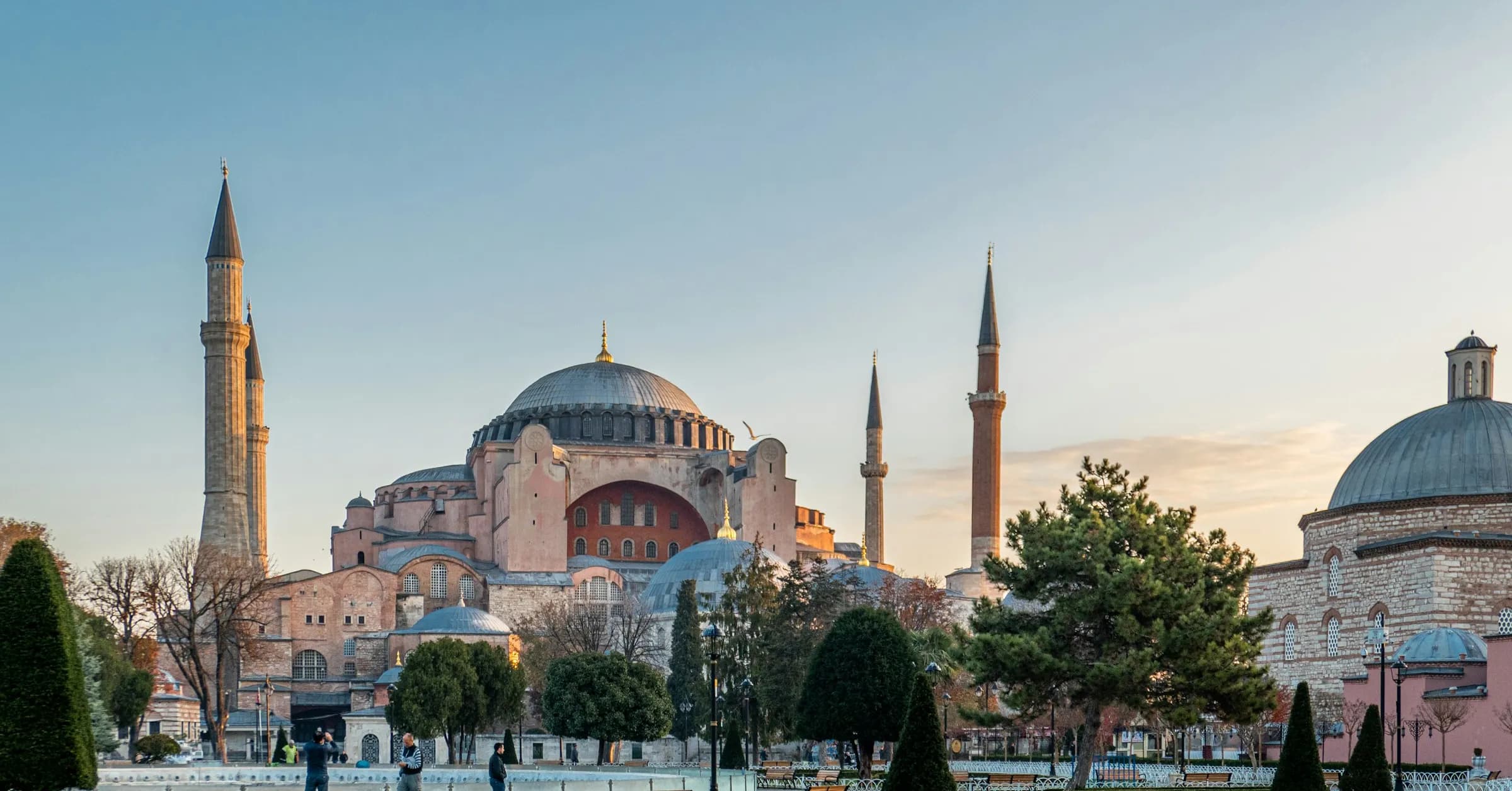
Sultanahmet is the historic heart of the old city, where you can walk out of your hotel and be at Hagia Sophia, the Blue Mosque, the Basilica Cistern and Topkapı Palace in minutes. Many hotels are small, family-run places in restored wooden houses, and plenty have roof terraces with views of the domes or the Sea of Marmara.
- Pros: unbeatable for sightseeing, especially for early-morning visits before the crowds; easy T1 tram connection to Eminönü, Karaköy and Kabataş; a good choice for shorter stays.
- Cons: it's a tourist district, so restaurants around the main squares are overpriced, carpet sellers are persistent, and it's quiet in the evenings. Many hotels have small rooms.
- Best for: first visits of two to four nights, families, and travellers who want to see the monuments early.
- Where exactly: the quieter streets downhill from the Blue Mosque towards the Sea of Marmara, and around the Arasta Bazaar and Cankurtaran, are calmer than the main squares.
2. Sirkeci and Eminönü: best for value near the sights
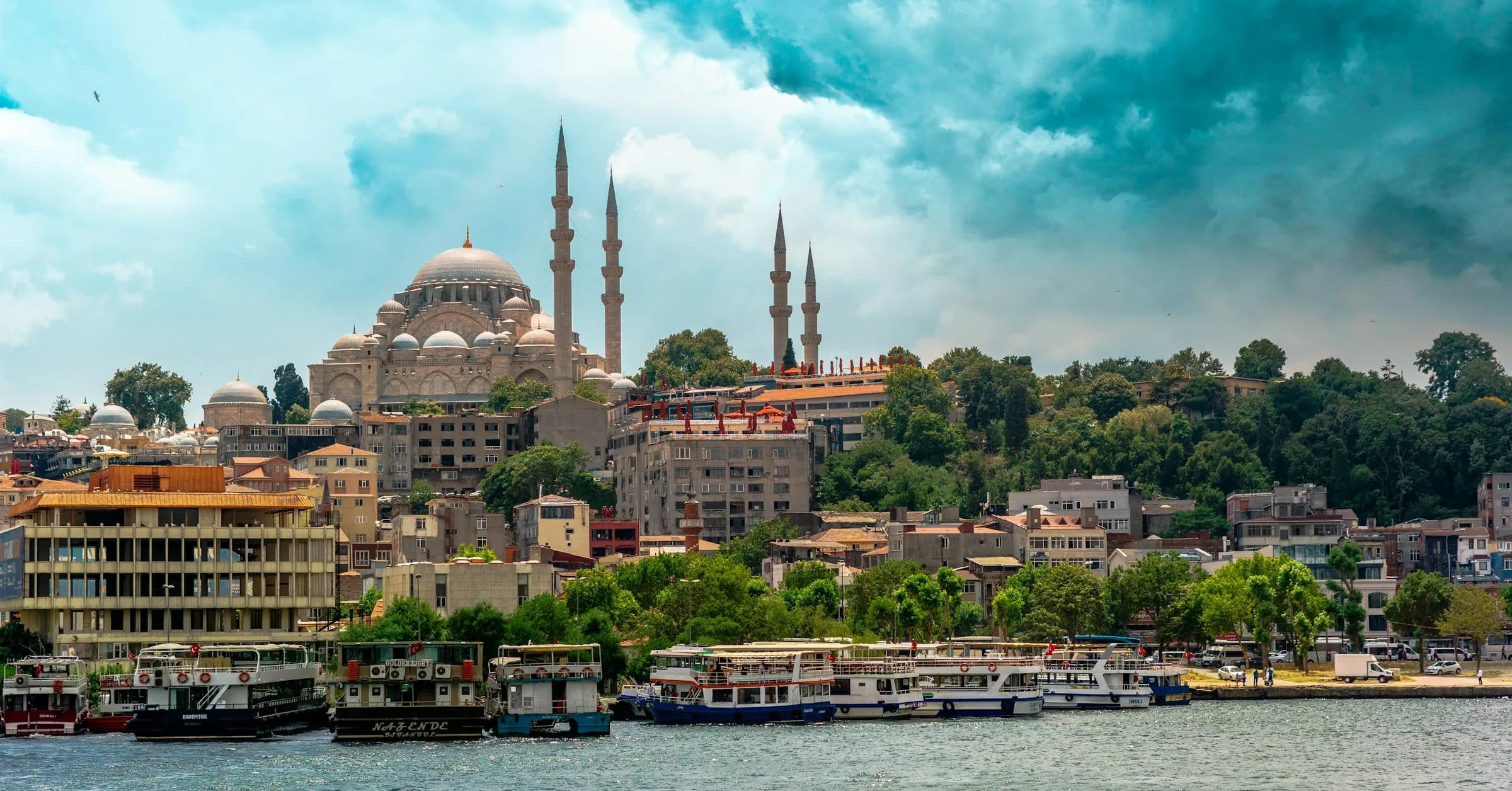
Just downhill from Sultanahmet, Sirkeci has the old train station and plenty of mid-range hotels, and Eminönü is the busy waterfront with the ferry piers, the Spice Bazaar and the New Mosque. It's 10 to 15 minutes' walk to Hagia Sophia, and often better value than Sultanahmet itself.
- Pros: very central; the T1 tram, Marmaray rail line and ferries to the Asian side and the Bosphorus are all on the doorstep; close to the Spice Bazaar and the Galata Bridge.
- Cons: crowded, noisy and chaotic by day, and quiet and a little dull at night.
- Best for: travellers who want to be central on a budget and plan to use the ferries.
3. Karaköy: best for food, cafés and design hotels
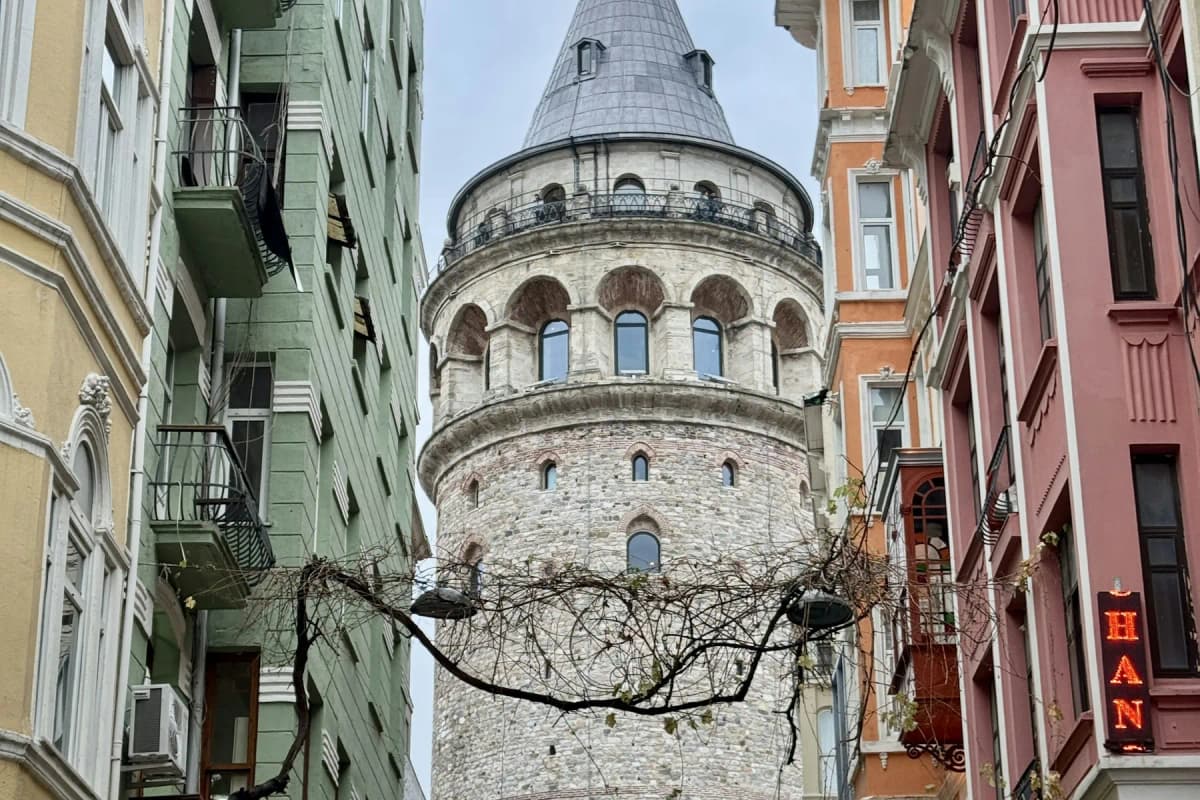 Photo: Dan Cristian on Unsplash
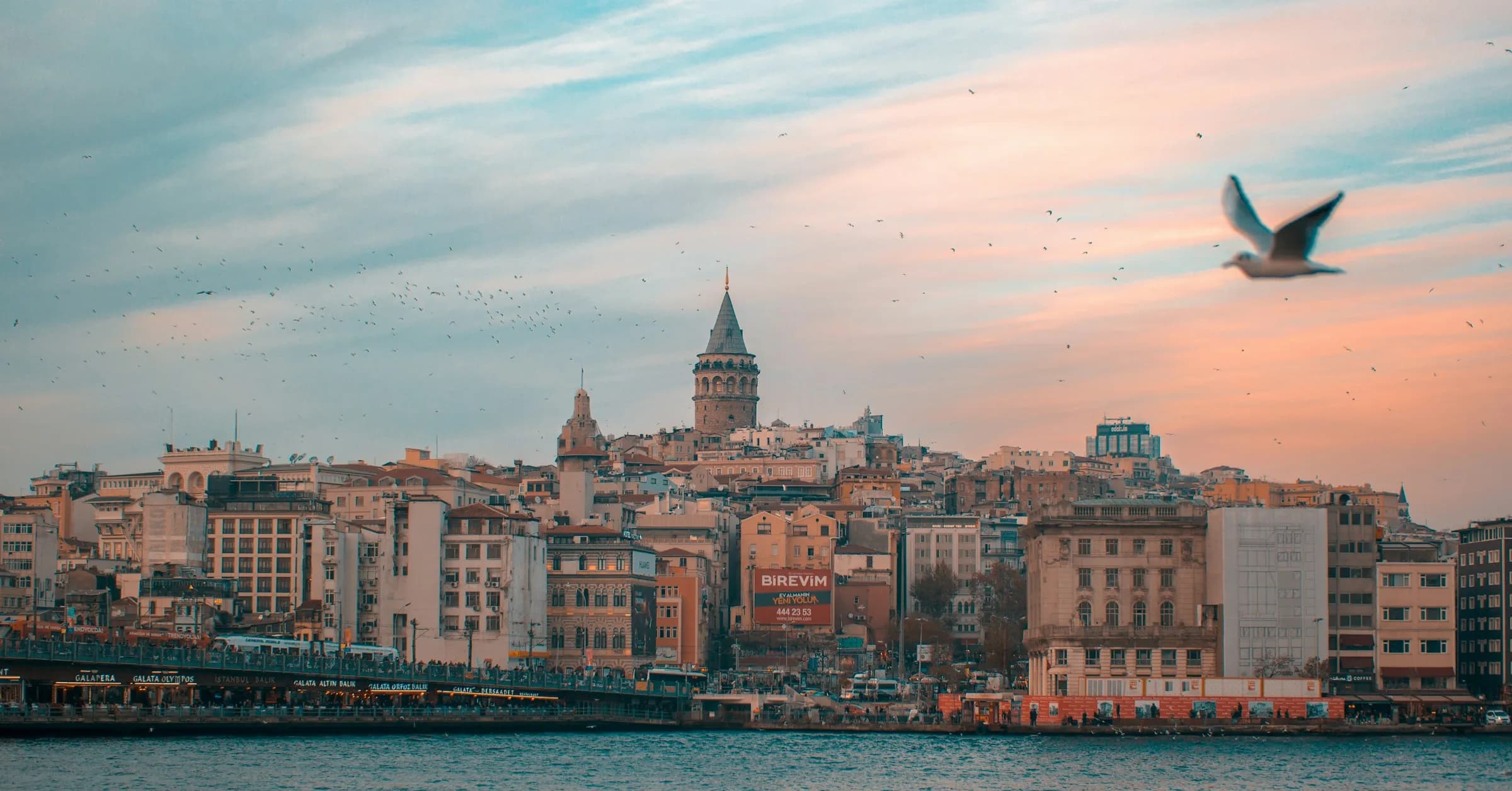
Across the Galata Bridge, Karaköy has turned from an old port district into one of Istanbul's best areas for food and coffee, with boutique hotels in old merchant buildings, the Istanbul Modern art museum and the Galataport waterfront. It's flat by the water, so it's easier with luggage than Galata, and the T1 tram and the ferries make Sultanahmet and Kadıköy easy to reach.
- Pros: excellent restaurants, bakeries and cafés; walkable to Galata and the waterfront; very good transport links; a great balance between sightseeing and evenings out.
- Cons: some streets are busy with traffic and building work; the bar streets can be noisy at weekends; hotels can be expensive.
- Best for: couples, food lovers and second-time visitors.
4. Galata: best for atmosphere and views
Up the hill from Karaköy, around the Galata Tower, steep cobbled lanes are lined with nineteenth-century buildings, small hotels, apartments and cafés. Next door, Cihangir is a leafy, bohemian residential area with views over the Bosphorus.
- Pros: one of the most atmospheric parts of the city; many rooms and terraces with views; close to İstiklal Avenue and Karaköy; the M2 metro at Şişhane and the historic Tünel funicular down to Karaköy.
- Cons: steep hills and stairs everywhere; the area around the tower is crowded; some apartment rentals are on noisy streets.
- Best for: couples and travellers who want character and don't mind hills.
5. Beyoğlu and Taksim: best for nightlife and transport
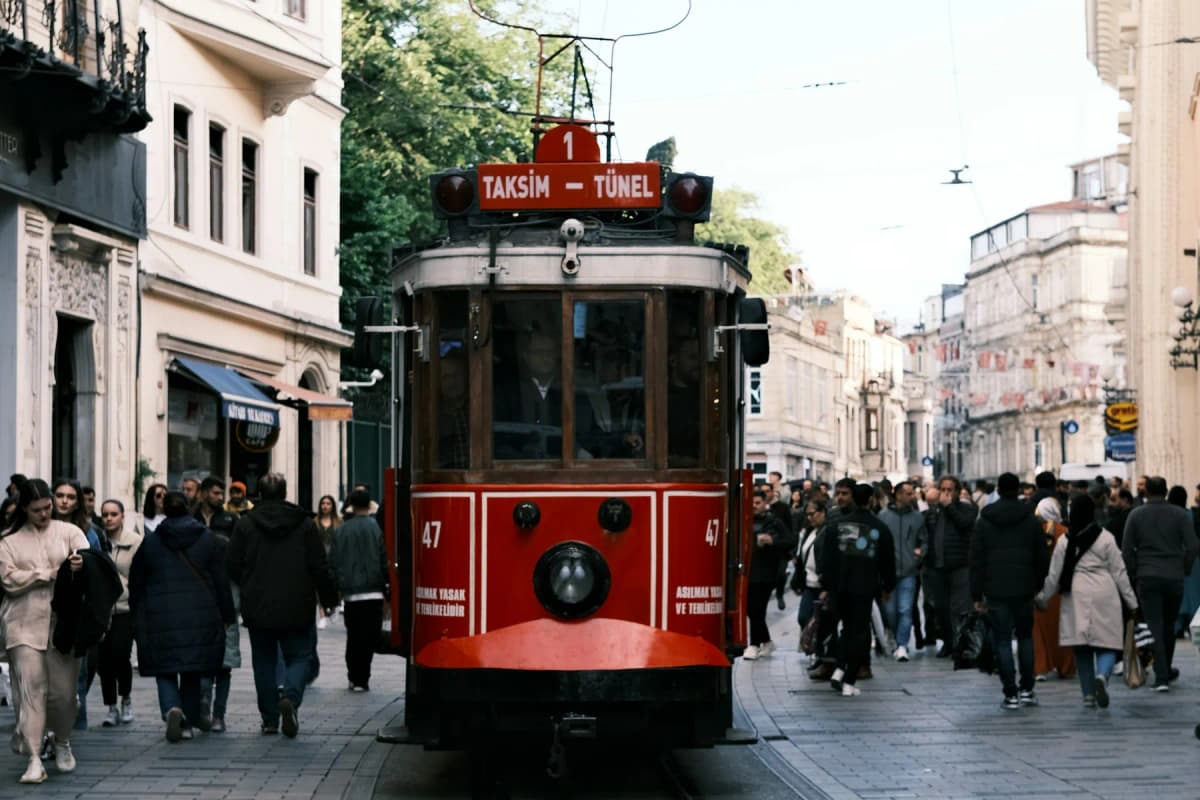 Photo:
 Beyoğlu is the area around İstiklal Avenue, the long pedestrian street from Taksim Square down to Tünel, with shops, restaurants, bars, live music and meyhanes (traditional taverns). Taksim Square at its top is a major transport hub, with the M2 metro, the funicular down to Kabataş and buses to the airports. There are hotels of every size, including many large international chains.
- Pros: the liveliest area at night; lots of choice and good-value hotels; easy connections, including airport buses.
- Cons: crowded and noisy; Sultanahmet is 30 minutes or more away by funicular and tram; the side streets west of Taksim, around Tarlabaşı, feel rougher at night.
- Best for: nightlife, shopping and travellers who want lots of transport options.
6. Kadıköy and Moda: best for local life and longer stays
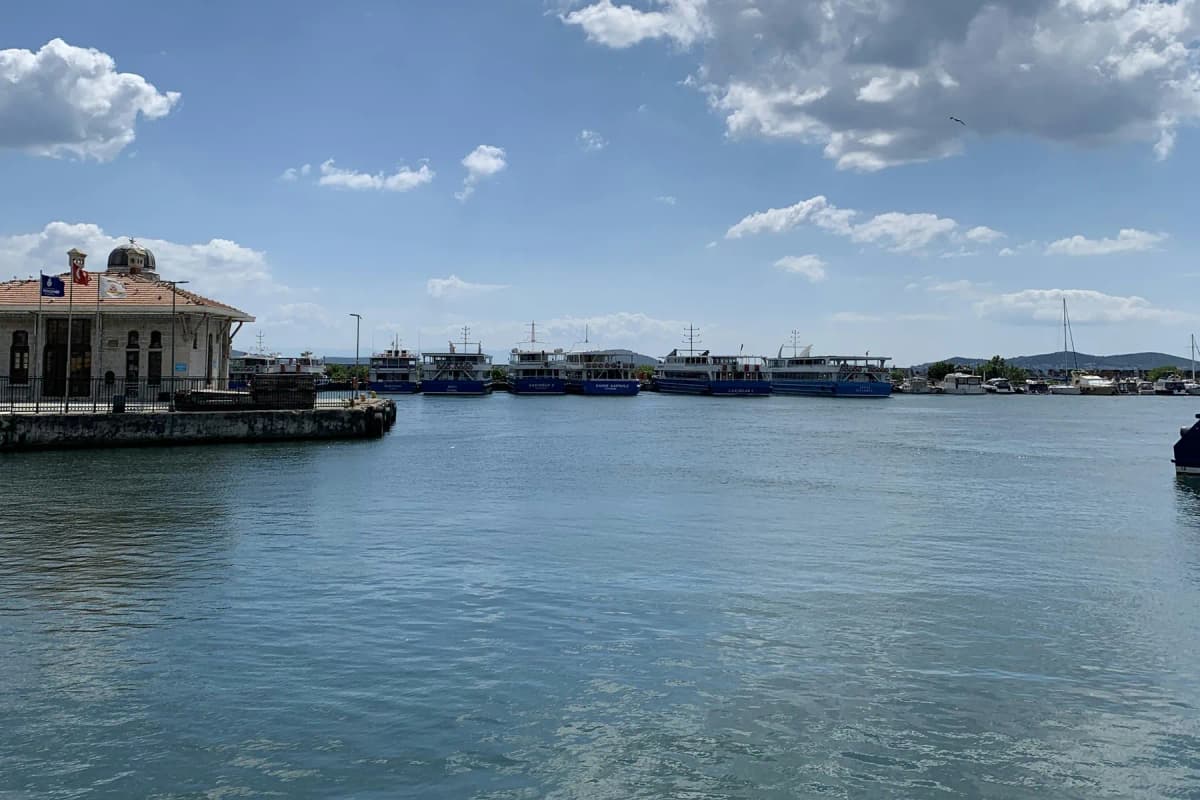 Photo:
 On the Asian side, Kadıköy is where many Istanbul locals go out, and it has some of the best food in the city: the market streets are full of fishmongers, delis and small restaurants, and the bar streets are busy every night. Moda, just to the south, is quieter and leafy, with a seafront park perfect for sunset. A public ferry to Eminönü or Karaköy takes around 20 minutes.
- Pros: real neighbourhood life, great food at local prices, fewer touts, and a beautiful ferry commute; good for Sabiha Gökçen Airport.
- Cons: fewer hotels than the European side; you'll take a ferry every day to reach the main sights; ferries stop in the late evening.
- Best for: longer stays, return visitors and anyone who wants to see a less touristy Istanbul.
7. Beşiktaş and Ortaköy: best for Bosphorus views
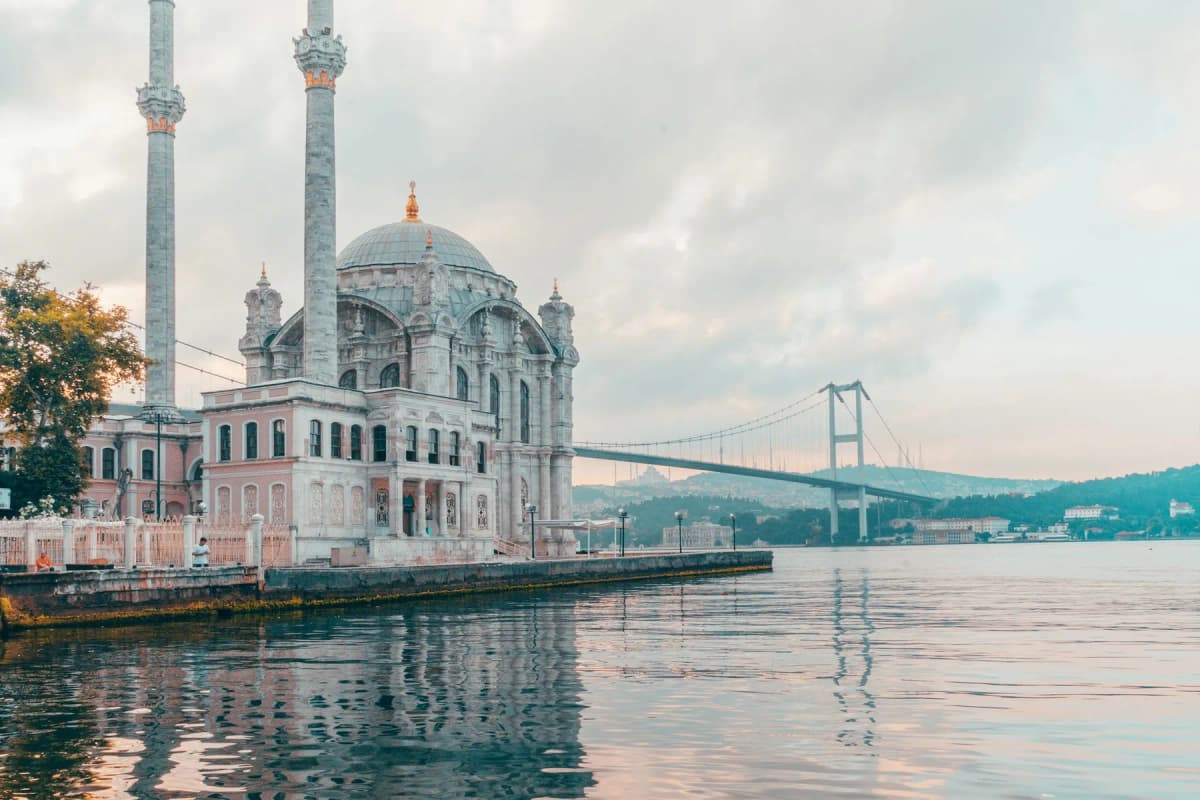 Photo: Meriç Dağlı on Unsplash
Along the Bosphorus north of Kabataş, Beşiktaş is a lively student and football neighbourhood with a busy market and ferry pier, next to Dolmabahçe Palace. Ortaköy, a little further up the shore, has its famous waterfront mosque under the Bosphorus Bridge. Some of Istanbul's grandest luxury hotels are on the water along this stretch.
- Pros: Bosphorus views; local bars and cafés; ferries to the Asian side; close to Dolmabahçe.
- Cons: far from Sultanahmet, and the coast road is often jammed with traffic; there's no tram along the shore.
- Best for: luxury stays on the water and travellers who've already seen the old city.
8. Balat and Fener: best for character
On the Golden Horn, Balat and Fener are old neighbourhoods of colourful houses, steep streets, antique shops and small cafés, with churches, synagogues and mosques side by side. There are a few small guesthouses and apartments.
- Pros: full of character and great for photography; a glimpse of everyday Istanbul; good value.
- Cons: few hotels; it's a conservative residential area; transport to the main sights is by bus, taxi or ferry, not tram.
- Best for: repeat visitors and travellers who prefer a neighbourhood stay.
Where to avoid staying in Istanbul
There are no areas tourists must avoid entirely, but some are less pleasant bases:
- Laleli and Aksaray: close to the old city on paper, but these are busy wholesale and traffic districts with little charm, and some streets feel uncomfortable at night.
- Tarlabaşı: the area just west of Taksim and İstiklal Avenue is run-down in parts, and many travellers prefer not to walk there late at night.
- Near the airports: Istanbul Airport sits far north of the city, roughly an hour's drive from Sultanahmet in normal traffic, so only stay near it for a very early flight.
- Far-out "bargains": a cheap hotel in a distant district can cost you hours a day in traffic. Check the nearest tram, metro or ferry stop before you book.
Getting from the airport to your hotel
From Istanbul Airport (IST): the M11 metro connects the airport to Gayrettepe, where you can change to the M2 for Taksim and Şişhane, and Havaist airport buses run to the main districts, including Taksim, Sultanahmet and Kadıköy. Allow about an hour or more to the centre by road, depending on traffic. If you arrive late, have heavy luggage, or are staying in Sultanahmet's narrow streets, a pre-booked fixed-price transfer takes you straight to the door.
From Sabiha Gökçen Airport (SAW): on the Asian side, it's closest to Kadıköy. Airport buses and the metro link it to the city, and a taxi or transfer to the European side can take a long time in traffic, especially across the Bosphorus bridges.
Whichever airport you use, buy an Istanbulkart for the trams, metro, buses and ferries. In 2026 a standard single ride costs around 42 TL.
Tips before you book a hotel in Istanbul
- Read the location, not just the name. Many hotels use "Sultanahmet", "Taksim" or "Galata" in their names even when they're some distance away. Check the map.
- Ask about stairs and lifts. Old buildings in Sultanahmet and Galata often have narrow stairs and no lift.
- Check the view claim. A "sea view" room may be a glimpse from the roof terrace only.
- Look at the transport. The nearest tram stop or ferry pier matters more than a few minutes on a map.
- Book early for spring and autumn. April, May, September and October are the busiest months, and the best small hotels fill up.
- Carry your passport. Hotels register your passport at check-in, and the UK Foreign Office notes that Turkish law requires visitors to carry photo ID.
- Get insured. Travel insurance that covers cancellations and medical costs is worth having for a city trip, too.
Frequently asked questions
What are the best areas to stay in Istanbul? Sultanahmet is best for first-timers who want to walk to Hagia Sophia, the Blue Mosque and Topkapı Palace. Karaköy and Galata are best for food, atmosphere and nightlife, and Kadıköy on the Asian side is best for local life and longer stays.
Is it better to stay in Sultanahmet or Taksim? For a first visit focused on the monuments, Sultanahmet, because you can walk to the main sights. Taksim is better for nightlife, shopping and transport connections, but it's 30 minutes or more from the old city. Karaköy, between the two, is a good compromise.
Is Istanbul a walkable city? Its central districts are, but the city as a whole is not. Sultanahmet, Eminönü, Karaköy and Galata are walkable and close together, though Galata and Beyoğlu are hilly. For anything further, use the tram, metro, funicular or ferries.
Where should I avoid staying in Istanbul? Many travellers avoid Laleli and Aksaray, which are busy wholesale districts, and Tarlabaşı, west of Taksim, which can feel rough at night. Also avoid cheap hotels far from a tram, metro or ferry stop, as traffic can eat hours of your day.
What are the coolest neighbourhoods in Istanbul? Karaköy, Galata and Cihangir on the European side, and Kadıköy and Moda on the Asian side, are where you'll find the best cafés, restaurants and bars. Balat and Fener are the most photogenic old neighbourhoods.
Is it better to stay on the European or Asian side of Istanbul? For a first visit, the European side, because the main sights, most hotels and the T1 tram are there. The Asian side, especially Kadıköy, is a good choice for longer stays, return visits, or flights from Sabiha Gökçen Airport.
How we researched this guide
This guide compares Istanbul's neighbourhoods using official transport information from the city's public transport operator, Metro Istanbul, and Istanbul's public ferry network, along with the location of the main sights covered in our guide to the best things to do in Istanbul. Safety and ID advice comes from the UK Foreign Office. We haven't quoted hotel prices because they change often with the season and the lira; compare current rates before you book. Found something out of date? Let us know.
Ready to plan? Read our guide to the best things to do in Istanbul, find out whether Istanbul is safe for Americans, or browse all our Turkey guides.