24 Best Things to Do in Oaxaca, Mexico (2026 Guide)
October 23, 2026 · Mexico
This post contains affiliate links. We may earn a commission if you book through them, at no extra cost to you. Disclaimer.
The best things to do in Oaxaca are to walk the colonial centre around the Templo de Santo Domingo, eat your way through the Mercado 20 de Noviembre and its smoky grill hall, and climb the Zapotec ruins of Monte Albán on a hilltop above the city. Beyond the city, see the stone fretwork at Mitla, the mineral cliffs of Hierve el Agua, the Sunday market at Tlacolula and the villages where rugs, black pottery and mezcal are made.
Oaxaca City (officially Oaxaca de Juárez) is the capital of Oaxaca state in southern Mexico, set at about 1,550 metres in a wide valley ringed by mountains. Its historic centre and Monte Albán are a UNESCO World Heritage Site, and the city is known across Mexico for its food, its markets and its Indigenous cultures, especially Zapotec and Mixtec. This guide covers 24 things most worth doing, grouped by area, with the 2026 prices we could confirm and the practical tips that make each one easier.
Things to do in Oaxaca: the quick list
| # | Thing to do | Type | Cost in 2026 |
|---|---|---|---|
| 1 | Templo de Santo Domingo | Church | Free |
| 2 | Museo de las Culturas de Oaxaca | Museum | Around 100 pesos |
| 3 | Jardín Etnobotánico | Garden | Guided tours only, fee charged |
| 4 | Andador Macedonio Alcalá | Street | Free |
| 5 | The Zócalo and the cathedral | Square | Free |
| 6 | Mercado 20 de Noviembre and the Pasillo de Humo | Market | Pay for what you eat |
| 7 | Mercado Benito Juárez | Market | Free to browse |
| 8 | Oaxacan hot chocolate | Food | A few dozen pesos |
| 9 | Barrio de Jalatlaco | Neighbourhood | Free |
| 10 | The city's smaller museums | Museums | Fees vary |
| 11 | Basílica de la Soledad and a nieve | Church and ice cream | Free, plus ice cream |
| 12 | Oaxacan food: moles, tlayudas and more | Food | Varies |
| 13 | A cooking class | Experience | Varies by school |
| 14 | Monte Albán | Zapotec ruins | 210 pesos for foreign visitors |
| 15 | Árbol del Tule | Ancient tree | Small fee, or free from outside |
| 16 | Teotitlán del Valle | Weaving village | Free |
| 17 | Tlacolula Sunday market | Market | Free |
| 18 | Mezcal in Santiago Matatlán | Mezcal | Tastings vary |
| 19 | Mitla | Zapotec ruins | Entry fee charged |
| 20 | Hierve el Agua | Mineral springs | Small community fee, cash |
| 21 | San Bartolo Coyotepec and San Martín Tilcajete | Craft villages | Free |
| 22 | Hike in the Sierra Norte | Mountains | Varies |
| 23 | The Guelaguetza, Día de Muertos and Noche de Rábanos | Festivals | Mostly free |
| 24 | Head to the coast | Beaches | Flight or bus |
In the historic centre
Most of Oaxaca's sights in the city are within a 15-minute walk of each other, so the centre is easy to explore on foot. Start early, as the streets are calmer and the sun is gentler in the morning.
1. Templo de Santo Domingo
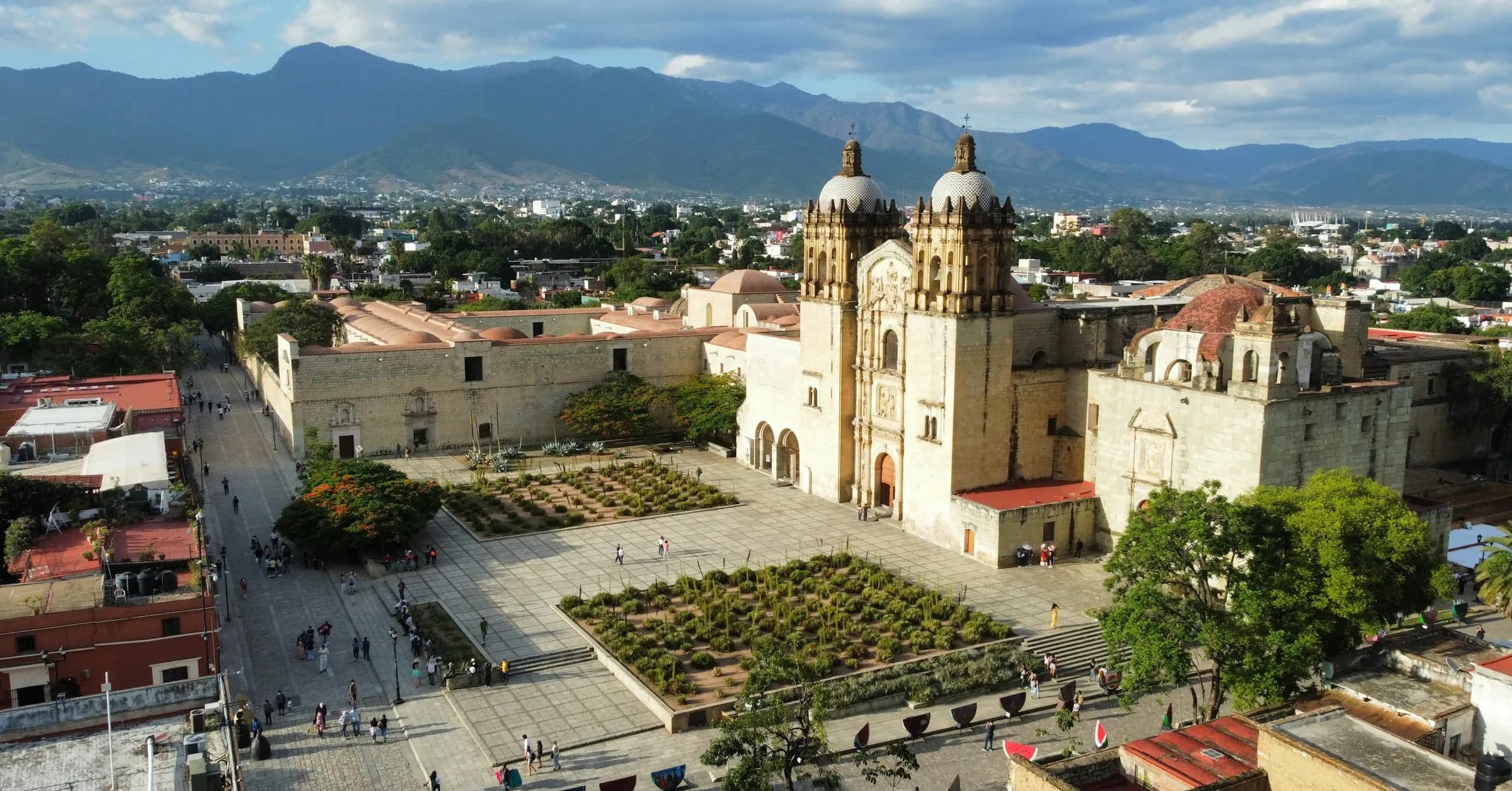
The Templo de Santo Domingo de Guzmán is the city's most famous building and the place most visitors start. The Dominicans built the church and its convent between the 16th and 18th centuries, and the stone façade, flanked by two bell towers, faces a wide plaza planted with agaves. Inside, the walls and ceiling are covered in gilded and painted decoration, including a family tree of the Dominican order on the ceiling just inside the entrance.
The church is still a place of worship, so dress modestly, keep quiet during services and check whether a wedding or mass is on before you wander in. The plaza in front is one of the best places in the city for photos at golden hour.
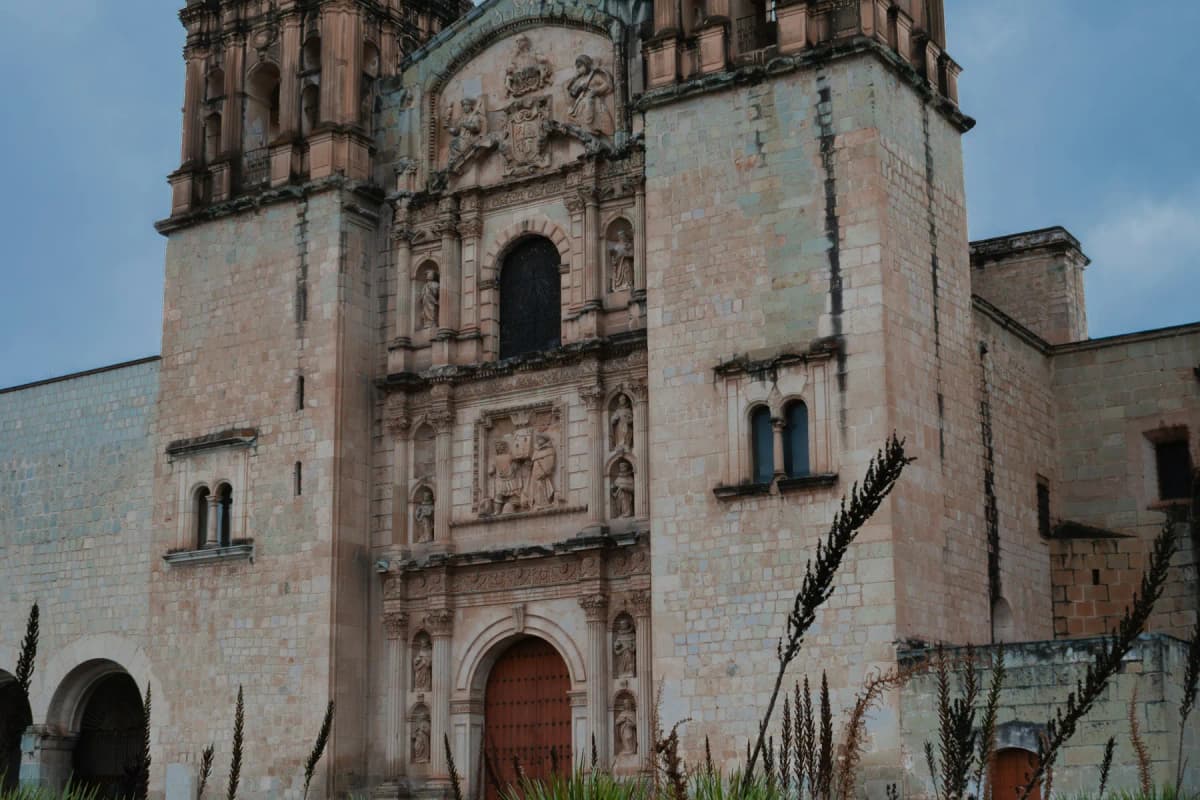 Photo: Jonathan Tesmaye Salvador on Unsplash
2. Museo de las Culturas de Oaxaca
The former convent next to the church now houses the Museo de las Culturas de Oaxaca, run by INAH, Mexico's national institute of anthropology and history. Its rooms follow the region's history from pre-Hispanic times to the present, and its best-known treasure is the Mixtec gold and jewellery from Tomb 7 at Monte Albán, found by the archaeologist Alfonso Caso in 1932. The building itself, with its cloisters and long vaulted corridors, is worth the visit on its own.
INAH listed the museum's hours as Tuesday to Sunday, 9am to 5pm, with entry at 100 pesos in 2025. Allow two to three hours, and look out from the upper floors over the Ethnobotanical Garden below.
3. Jardín Etnobotánico
Behind Santo Domingo, the Jardín Etnobotánico de Oaxaca fills the old convent grounds with plants from across the state: columnar cacti, agaves, trees used for dyes and medicine, and crops that have been grown in Oaxaca for thousands of years. You can only visit on a guided tour, and you can't book tickets in advance. Tours have been offered in English on some days of the week, at around 100 pesos per person, but the schedule has changed several times, so check at the garden's entrance a day or two before you want to go.
4. Andador Macedonio Alcalá
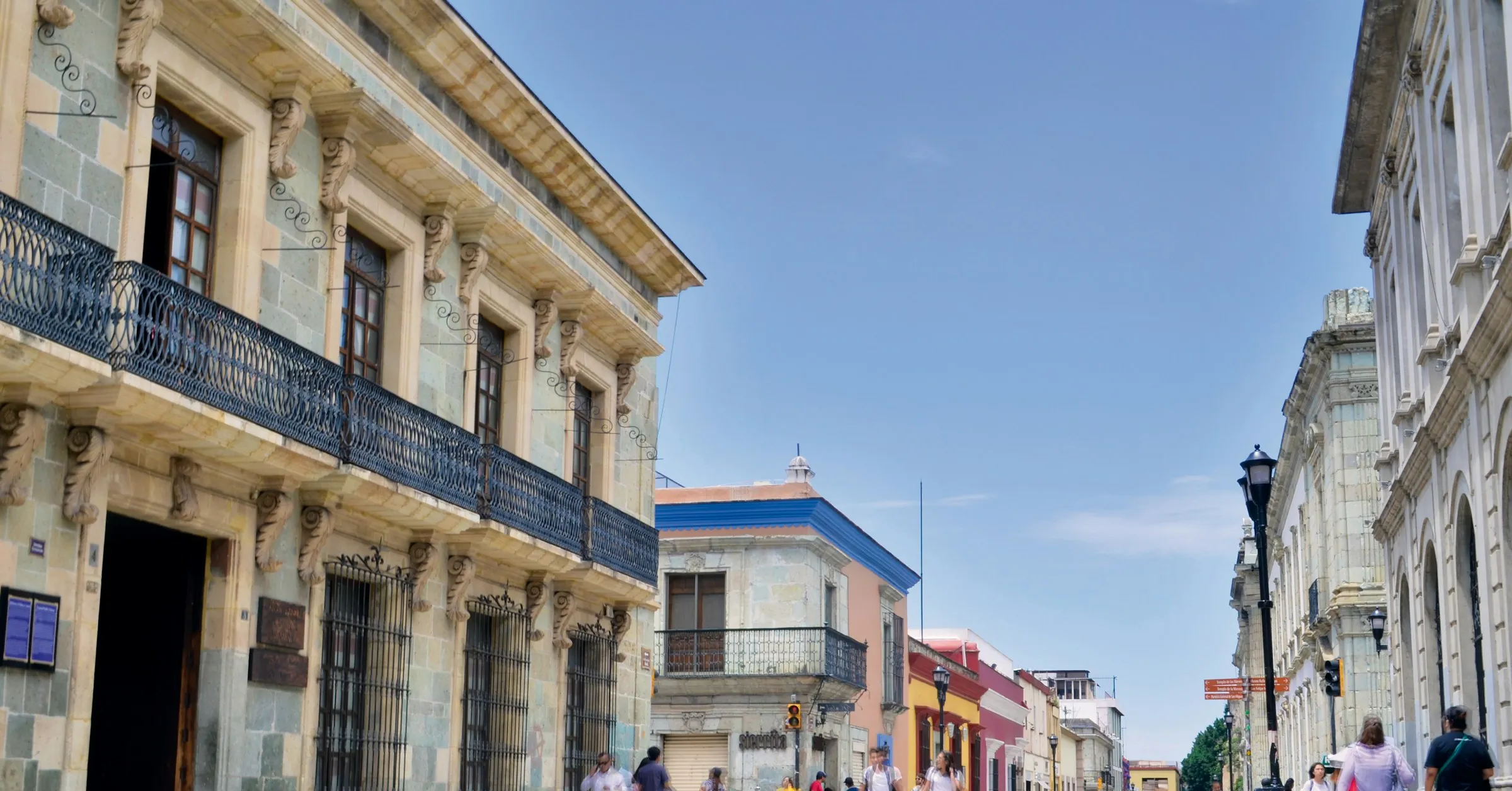
The Andador Macedonio Alcalá is the pedestrian street that runs from Santo Domingo down to the Zócalo. It's lined with restored colonial houses painted in soft pinks, greens and yellows, with galleries, mezcal shops, cafés and craft stores in between. It's at its liveliest in the evening, when street musicians, vendors and families come out. Wander the side streets too: Oaxaca's grid makes it hard to get lost, and some of the nicest courtyards are a block or two off the main route.
5. The Zócalo and the cathedral
Oaxaca's main square, the Zócalo, is shaded by tall trees and surrounded by arcades with café terraces. Next to it, the Alameda de León fronts the Catedral de Nuestra Señora de la Asunción, built of the pale green stone used across the centre. The square is the city's living room, with balloon sellers, shoe shiners and marimba bands, and it's also where most protests and sit-ins gather, so expect to find stalls or banners at times. Our guide to whether Oaxaca is safe explains how protests and blockades can affect a trip.
6. Mercado 20 de Noviembre and the Pasillo de Humo
Two blocks south of the Zócalo, the Mercado 20 de Noviembre is the city's best-known food market. Its highlight is the Pasillo de Humo, the "smoke corridor", a hall lined with butchers and wood-fired grills. You choose your meat, usually tasajo (thin, salt-cured beef), cecina enchilada (pork rubbed with chilli) and chorizo, and it's grilled in front of you. Then you add tortillas, onions, chillies, guacamole and salsa from the vendors around you and find a seat at the shared tables.
The rest of the market is lined with small comedores, family-run kitchens serving mole, soups and tamales. Go at lunchtime for the full experience, and bring cash in small notes.
7. Mercado Benito Juárez
Across the street, the Mercado Benito Juárez is a maze of stalls selling almost everything Oaxaca is known for: quesillo (the state's stringy cheese), dried chillies, mole pastes, bread, flowers, leather sandals, textiles, mezcal and chapulines, toasted grasshoppers seasoned with chilli, lime and salt. Chapulines are a classic Oaxacan snack, so try a small bag even if you're unsure. Keep an eye on your phone and bag in the crowded aisles.
8. Oaxacan hot chocolate
Oaxaca is one of Mexico's great chocolate regions. In the shops on and around Calle Mina, near the markets, you can watch cacao being ground with sugar, cinnamon and sometimes almonds, then buy it in bars or blocks to take home. In cafés and market stalls, it's served as hot chocolate, made with water or milk and frothed until foamy, usually with a sweet egg bread called pan de yema for dunking. A cup is one of the cheapest and best breakfasts in the city.
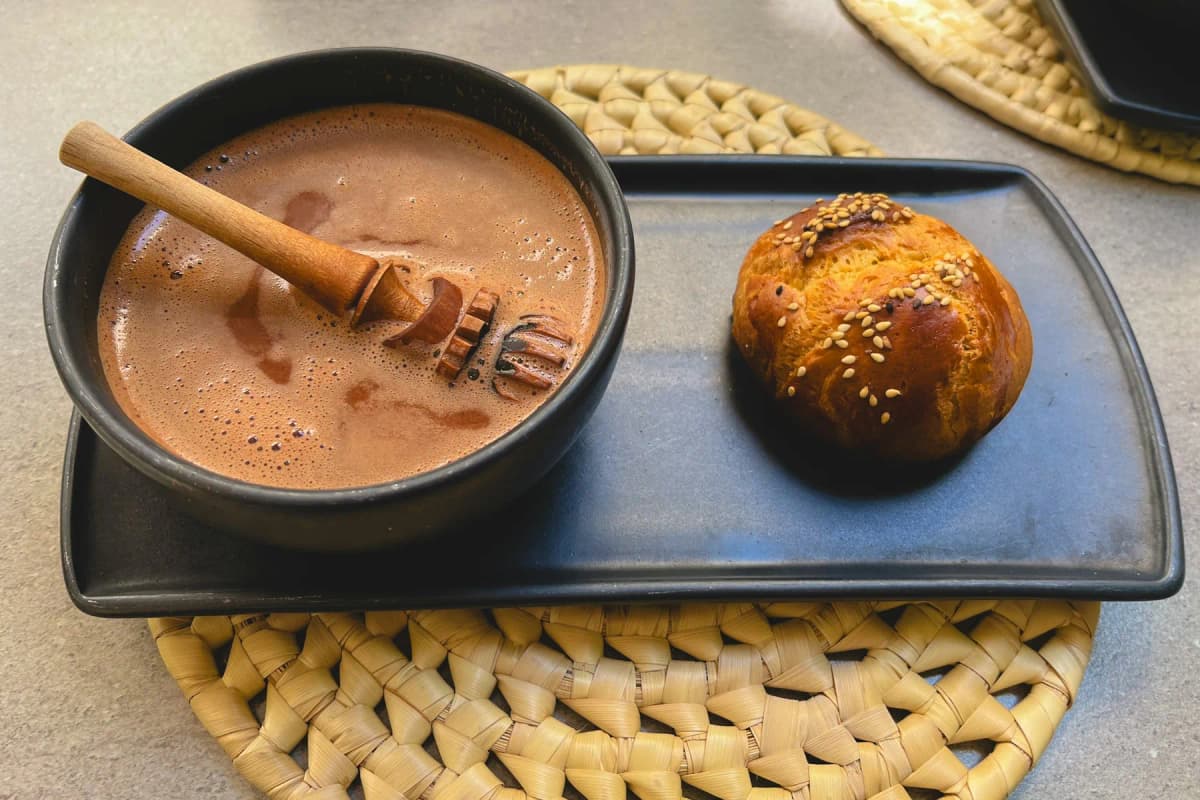 Photo:
9. Barrio de Jalatlaco
Jalatlaco, a short walk east of the centre, is one of Oaxaca's oldest neighbourhoods. Its cobbled lanes are lined with low, brightly painted houses, murals and street art, and it has filled up in recent years with small cafés, bakeries, guesthouses and restaurants. It's a pleasant place for a slow morning walk and coffee, and many visitors choose to stay here for a quieter base than the main streets.
10. The city's smaller museums
Oaxaca has a handful of smaller museums that are easy to fit between meals. The Museo de Arte Prehispánico de México Rufino Tamayo shows pre-Hispanic pieces from across Mexico collected by the Oaxacan painter Rufino Tamayo, displayed in a colonial house in the centre. The Museo Textil de Oaxaca, close to the Alcalá, holds exhibitions on weaving and embroidery from the state and beyond, and is a good primer before you visit the weaving villages. Check opening hours locally, as many museums close on Mondays.
11. Basílica de la Soledad and a nieve
West of the Zócalo, the Basílica de Nuestra Señora de la Soledad is home to the image of the Virgin of Solitude, Oaxaca's patron. Below the church, stalls sell nieves, Oaxaca's traditional water-based ice creams, in flavours from burnt milk and mezcal to prickly pear and lime. A scoop in the shade after visiting the basilica is a classic Oaxacan afternoon.
12. Oaxacan food: moles, tlayudas and more
Food is one of the main reasons people visit Oaxaca, and it deserves its own item. These are the dishes to look for:
- Mole: Oaxaca is often called the land of the seven moles, the rich sauces made with chillies, spices and sometimes chocolate. The seven usually listed are negro, rojo, coloradito, amarillo, verde, chichilo and manchamanteles.
- Tlayudas: a large, thin, crisp tortilla spread with asiento (unrefined pork lard), beans and quesillo, often topped with tasajo or chorizo. They're a popular late-night meal, usually cooked over charcoal.
- Memelas: thick handmade tortillas topped with asiento, beans and cheese, a common breakfast.
- Tejate: a cold, frothy, pre-Hispanic drink of maize and cacao, sold in markets from large clay bowls.
- Mezcal: sipped slowly, often with orange slices and sal de gusano, a salt mixed with chilli and ground agave worm.
Oaxaca also has a strong restaurant scene, from market stalls to well-known chefs' tasting menus. Popular places book up, especially around Día de Muertos, so reserve ahead if there's somewhere you particularly want to eat.
13. A cooking class
A cooking class is one of the best ways to understand Oaxacan food. Many classes start with a visit to a market to buy ingredients, then cover a mole, salsas ground on a stone metate or molcajete, tortillas and a drink. Classes are offered in the city and in nearby villages, often in English, and many can adapt to vegetarian diets. Compare reviews and check what's included, as the length and price vary.
Around the Central Valleys
The valleys around the city are full of ruins, markets and craft villages, and most are under an hour away. The road east, towards Tlacolula and Mitla, has the most to see, and many day tours combine several stops. If you'd like a guide, this Oaxaca City highlights tour is one option for getting your bearings on the first day.
14. Monte Albán
Monte Albán was the capital of the Zapotec people for well over a thousand years, built from around 500 BC on a mountaintop that was flattened to make room for it. Its huge Gran Plaza is lined with temple platforms, a ball court and an observatory, and the views over the three valleys around it are among the best in Oaxaca. Look out for the Danzantes, carved stone slabs showing human figures, and the small site museum near the entrance.
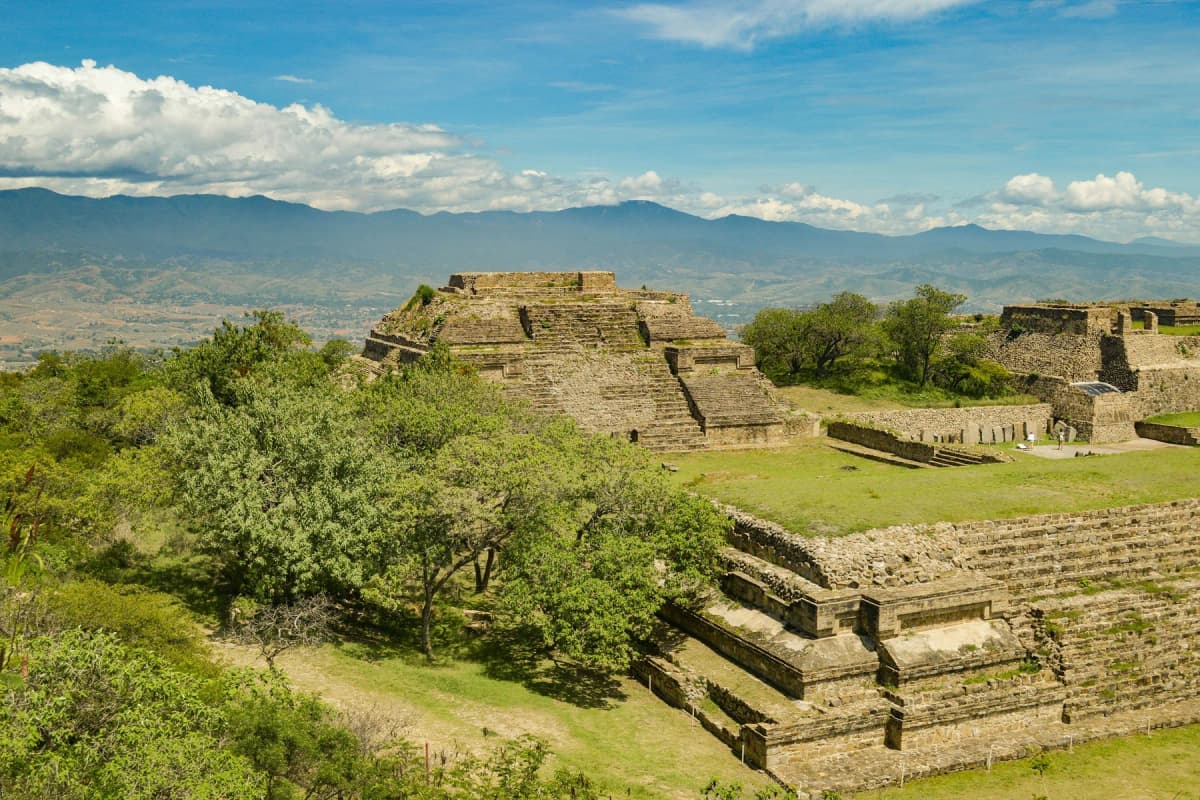 Photo: Matthew Essman on Unsplash
According to INAH, Monte Albán is open daily from 8am to 5pm, with last entry at 4pm, and entry is 210 pesos for foreign visitors in 2026 (105 pesos for Mexican nationals and residents). The site is about 8 to 10 km from the centre, around 20 to 30 minutes by road. Tourist shuttles leave from Calle Mina, near the Hotel Rivera del Ángel, for around 120 to 150 pesos return, according to a September 2026 report; confirm the return times when you buy your ticket. There's very little shade, so go early with water, sunscreen and a hat. A half-day Monte Albán tour with a guide and transport is a simple way to visit.
15. Árbol del Tule
In the village of Santa María del Tule, on the road east towards Mitla, the Árbol del Tule is a Montezuma cypress with one of the widest trunks of any tree in the world. It stands in the churchyard of the village church, and you can see it from outside the fence for free or pay a small fee to walk around it. It's a quick stop, usually combined with Mitla or Hierve el Agua.
16. Teotitlán del Valle
Teotitlán del Valle is a Zapotec village known for its wool rugs and textiles, woven on foot looms and coloured with natural dyes such as cochineal (made from an insect that lives on prickly pear cactus), indigo and plants. Many families welcome visitors into their workshops to show how the wool is carded, spun and dyed. There's no obligation to buy, but if you do, buying directly from the weavers means more of the money stays with them. Ask about the dyes, as some rugs on sale in the region use synthetic colours.
17. Tlacolula Sunday market
Every Sunday, the town of Tlacolula de Matamoros, east of the city, holds one of the biggest and oldest markets in the Central Valleys. It fills up to around 12 blocks of the town centre with more than a thousand vendors, many of them women from nearby villages, selling produce, live animals, baskets, pottery, textiles, barbacoa and mezcal. It's a working market for local people rather than a tourist show, so be respectful with your camera and ask before photographing people. Combine it with Teotitlán or Mitla on a Sunday.
18. Mezcal in Santiago Matatlán
Mezcal is made across Oaxaca, but Santiago Matatlán, about 45 minutes to an hour east of the city, calls itself the world capital of mezcal. The road into town is lined with palenques, small distilleries where agave hearts are roasted in earth pits, crushed (sometimes by a stone wheel pulled by a horse or donkey), fermented and distilled. Many offer short tours and tastings. Visit with a driver or on a tour so nobody has to drive after tasting, and keep the tasting measures small, as mezcal is strong.
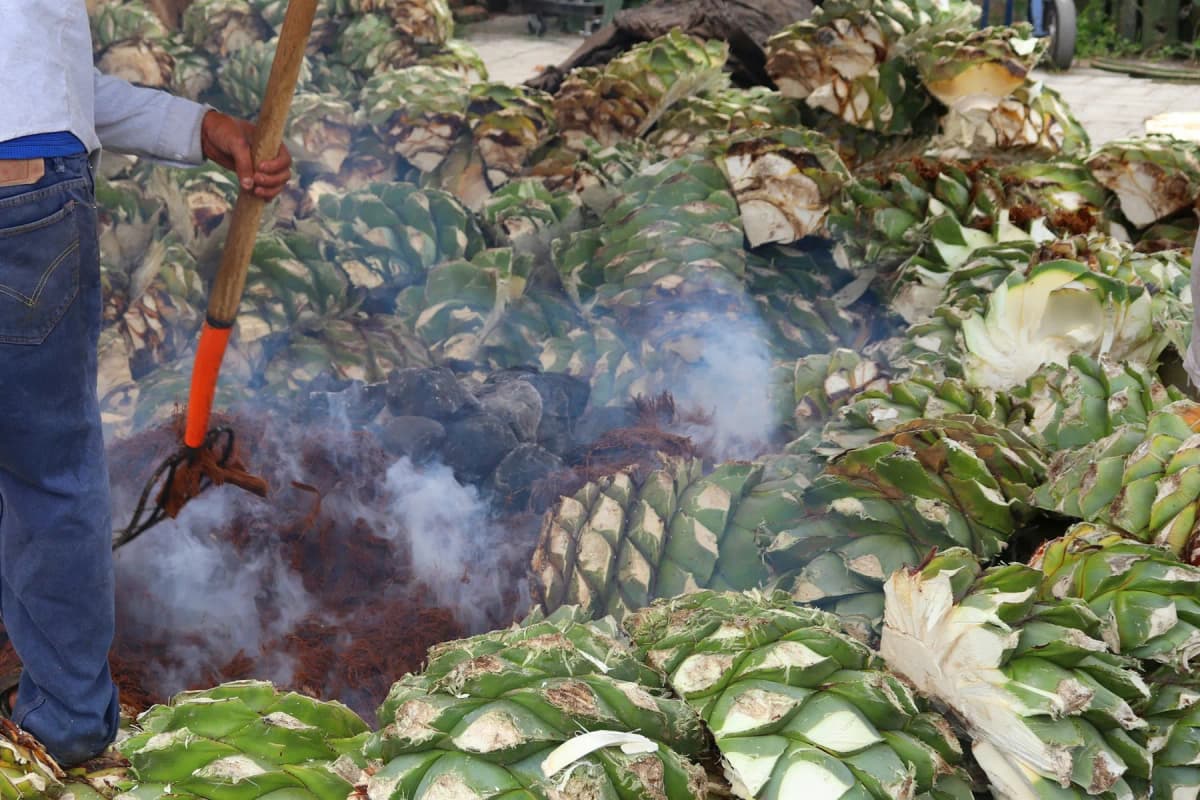 Photo: analuisa gamboa on Unsplash
19. Mitla
Mitla, around 45 km south-east of the city, was an important Zapotec religious centre and is quite different from Monte Albán. Instead of great plazas and pyramids, its buildings are decorated with intricate geometric mosaics, panels of zigzags and spirals made from thousands of small cut stones fitted together without mortar. A colonial church stands on top of part of the old complex. The site is compact, so an hour is usually enough. INAH charges an entry fee; check the current price at the ticket office or on INAH's website.
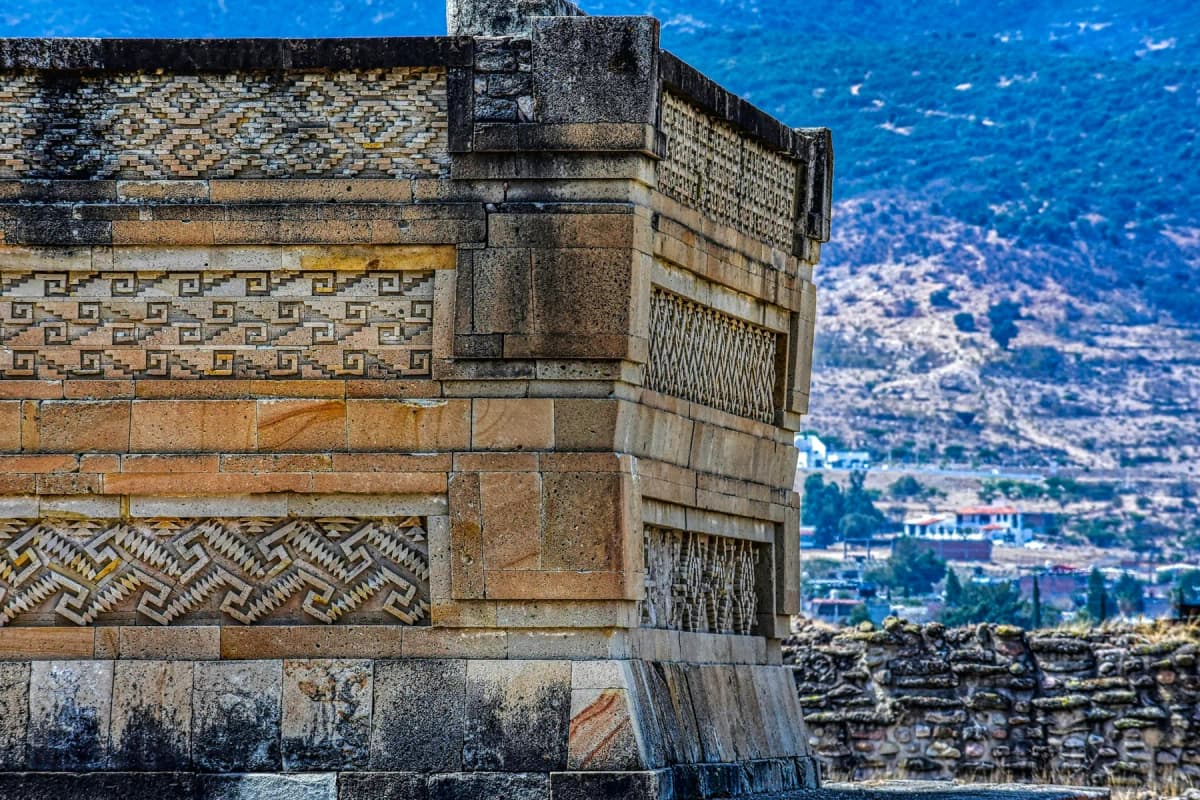 Photo: Sergio Mena Ferreira on Unsplash
20. Hierve el Agua
Hierve el Agua, about 70 km east of the city in the mountains above Mitla, is one of Oaxaca's most photographed places. Mineral-rich springs have built up white rock formations over thousands of years that look like waterfalls frozen in stone, and on the cliff edge, natural pools look out over the valley. You can swim in the pools, and a trail leads down to the base of the larger "waterfall" for the best view of it.
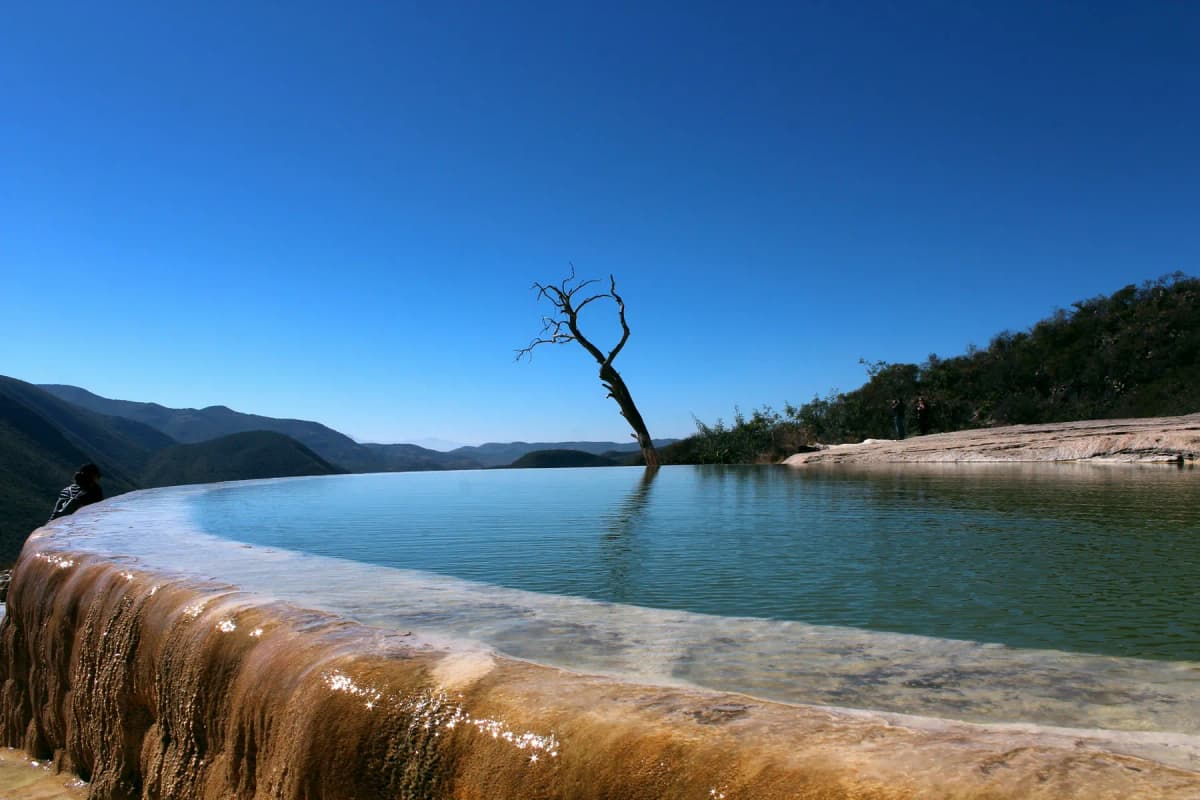 Photo:
Local communities run the site and collect a small entry fee in cash; recent reports put it at around 60 to 70 pesos, plus parking or road tolls if you drive. In 2021 the site was closed for months during a dispute between neighbouring communities, so check it's open before you set off. The road up is winding and the last stretch is steep, which is why many visitors go on a tour, such as this Hierve el Agua and Mitla day trip, which usually also stops at the Árbol del Tule, a weaving village and a mezcal palenque.
21. San Bartolo Coyotepec and San Martín Tilcajete
South of the city, two villages are known for crafts you'll see all over Oaxaca. San Bartolo Coyotepec is the home of barro negro, the glossy black pottery made from local clay and polished by hand before firing. Workshops and the artisans' market are around and behind the village church, and some potters demonstrate how the pieces are made.
Further south, San Martín Tilcajete is one of the villages known for alebrijes, carved wooden figures of real and imaginary animals painted in intricate, brightly coloured patterns. Families work in home workshops, and you can watch the carving and painting. San Antonio Arrazola, west of the city near Monte Albán, is another alebrije village. A good alebrije takes days to finish, so prices reflect the work involved.
Further afield
22. Hike in the Sierra Norte
North-east of the city, the pine-covered mountains of the Sierra Norte are a cool, green contrast to the valleys. The Pueblos Mancomunados, a group of eight Zapotec villages including Cuajimoloyas, Benito Juárez and Latuvi, have run a community ecotourism project there since 1998, with cabins, local guides and trails between the villages. Cuajimoloyas sits at about 3,200 metres, so nights are cold. The communities' own operator, Expediciones Sierra Norte, organises guided hikes and stays. Go with a local guide, as the trails cross community land and paths aren't always clearly marked.
23. The Guelaguetza, Día de Muertos and Noche de Rábanos
Oaxaca's festivals are some of the best in Mexico, and they're worth planning a trip around:
- The Guelaguetza, in July, brings together dancers and musicians from Oaxaca's eight regions. Its main shows, the Lunes del Cerro, are held at the Auditorio Guelaguetza on the Cerro del Fortín on two Mondays in late July; in 2026, they were on 20 and 27 July. Tickets for the closest sections sell out early, while the upper sections were free in 2026.
- Día de Muertos, the Day of the Dead, centres on 31 October to 2 November. Families build altars and keep vigils in the cemeteries, and the city fills with comparsas, satirical costumed parades with brass bands. Hotels book up months ahead, and visitors should treat the cemeteries as places of mourning, asking before taking photos.
- Noche de Rábanos, the Night of the Radishes, on 23 December, is a competition where carvers turn giant radishes into detailed scenes displayed in the Zócalo.
24. Head to the coast
Oaxaca's Pacific coast is a short flight or several hours by road over the mountains from the city. Puerto Escondido is known for surfing and the big waves at Zicatela, with calmer beaches such as Carrizalillo nearby. Mazunte and Zipolite are smaller, laid-back beach villages, and Huatulco has a string of quieter bays. Ocean currents on this coast can be strong, so read the warnings in our guide to whether Oaxaca is safe before you swim.
How much do things cost in Oaxaca?
| What | Price in 2026 |
|---|---|
| Monte Albán | 210 pesos for foreign visitors, 105 pesos for Mexican nationals and residents |
| Monte Albán shuttle from the centre | Around 120 to 150 pesos return |
| Museo de las Culturas de Oaxaca | Around 100 pesos (2025 price) |
| Jardín Etnobotánico guided tour | Around 100 pesos |
| Hierve el Agua | Around 60 to 70 pesos, cash, plus parking if you drive |
| Árbol del Tule | Small fee, or free from outside |
| Guelaguetza, upper sections | Free in 2026 |
Prices at community-run sites and small museums change often, and many places only take cash, so carry pesos in small notes. INAH sites such as Monte Albán and Mitla are free for Mexican nationals and residents on Sundays, which makes them busier that day.
How many days do you need in Oaxaca?
- Three days is enough for the highlights: one day in the centre (Santo Domingo, the Ethnobotanical Garden, the markets), one day for Monte Albán and a craft village, and one day east to the Árbol del Tule, Mitla and Hierve el Agua.
- Five days lets you add the Tlacolula Sunday market, Teotitlán del Valle, a mezcal palenque, a cooking class and some time to simply wander and eat.
- A week or more gives you time for a night or two in the Sierra Norte or a trip to the coast.
The dry season, roughly from October or November to April, is the most popular time to visit, with sunny days and cool nights. The rainy season, from around June to September, usually brings afternoon showers rather than all-day rain, and the valleys turn green. Book well ahead for the Guelaguetza in July and Día de Muertos at the start of November.
Getting to and around Oaxaca
- By air: Oaxaca International Airport has direct flights from Mexico City and several other Mexican cities, and some international routes. The flight from Mexico City takes about an hour.
- By bus: first-class buses connect Oaxaca with Mexico City and the coast. The journey from Mexico City takes around six to seven hours.
- Around the city: the centre is best on foot. Use authorised taxis or app-based rides at night, and agree on the fare first if the taxi has no meter.
- Around the valleys: colectivos (shared taxis) and local buses go to most villages, but tours or a hired driver save a lot of time, especially if you want to combine several stops in one day.
- Stay connected: a Mexico eSIM is useful for maps, translations and ride apps from the moment you land.
Practical tips
- Take the first day easy: the city sits at about 1,550 metres, so drink plenty of water and go gently on the mezcal at first.
- Carry cash: markets, community-run sites, colectivos and many small restaurants only take pesos. Use ATMs inside banks or shopping centres during the day.
- Start early: Monte Albán and Hierve el Agua are hotter and busier from late morning.
- Watch for blockades: protests sometimes close roads, including the road to the airport. Allow extra time on travel days and ask your hotel about the latest situation.
- Drink bottled or purified water, not tap water.
- Dress for the temperature swing: days are warm, but evenings can be cool, especially in winter and in the mountains.
- Get travel insurance: cover that includes medical treatment is worth having, especially if you're hiking in the Sierra Norte or heading to the coast.
Frequently asked questions
What is Oaxaca famous for? Oaxaca is famous for its food, especially its moles, tlayudas and chocolate, and for mezcal. It's also known for its Indigenous cultures and crafts, the Zapotec ruins of Monte Albán and Mitla, the Guelaguetza festival and its Day of the Dead celebrations.
Is 3 days enough in Oaxaca? Three days is enough to see the centre, Monte Albán and the main sights east of the city, such as the Árbol del Tule, Mitla and Hierve el Agua. With five days you can add the Tlacolula Sunday market, the craft villages and a cooking class at a more relaxed pace.
Is Oaxaca worth visiting? Yes. Oaxaca combines a walkable colonial city, some of Mexico's best food, important archaeological sites and living craft traditions within an hour of each other. It's also cheaper and calmer than many of Mexico's beach resorts.
Is Oaxaca affected by cartels? Most visitors to Oaxaca City, the Central Valleys and the main beach towns don't encounter cartel violence. The US State Department rates Oaxaca at Level 2, "exercise increased caution", and serious violence is concentrated in areas visitors rarely go, such as parts of the Isthmus of Tehuantepec. Our guide to whether Oaxaca is safe covers the risks in detail.
How much does it cost to visit Monte Albán? Foreign visitors pay 210 pesos in 2026, and Mexican nationals and residents pay 105 pesos. The site is open daily from 8am to 5pm, with last entry at 4pm.
Can you swim at Hierve el Agua? Yes, you can swim in the natural pools on the cliff edge. The water is mineral-rich and usually cool. Bring cash for the entry fee and check the site is open before you go.
When is the best time to visit Oaxaca? The dry season, from around October or November to April, is the most popular time. Late October and early November are busiest because of Día de Muertos, and July is busy for the Guelaguetza.
How we researched this guide
The Monte Albán hours and 2026 fees come from INAH's official Monte Albán page, which we checked in October 2026, and the Monte Albán shuttle details from a September 2026 report by ADN40. The Museo de las Culturas price and hours are from a May 2025 INAH bulletin, and the Guelaguetza 2026 dates and ticket details from Por Esto and México Desconocido. Prices for Hierve el Agua, the Árbol del Tule and the Ethnobotanical Garden come from recent Mexican press and visitor reports, not official sources, so treat them as a guide. Details on the Tlacolula market and the Pueblos Mancomunados come from regional guides and Mexican press reports. We have not visited every place listed ourselves, and prices and opening hours change often, so check before you go. Found something out of date? Let us know.
Ready to plan? Read our guide to whether Oaxaca is safe, add the capital with our Mexico City itinerary and the best day trips from Mexico City, or browse all our Mexico guides.