Where to Stay in Seoul: 9 Best Areas Compared (2026)
October 23, 2026 · South Korea
This post contains affiliate links. We may earn a commission if you book through them, at no extra cost to you. Disclaimer.
The best area to stay in Seoul for a first visit is Myeongdong, in the city centre, where you're surrounded by shops and street food and close to the palaces, Namsan and two subway lines. For a more traditional feel, stay in Insadong and Jongno, or in a hanok guesthouse in Bukchon. Choose Hongdae for nightlife and better value, Gangnam for a polished, upmarket base south of the river, and Seoul Station if you want the easiest airport and rail connections.
Seoul is a huge city, split in two by the Han River, and the main historic sights are almost all north of it, in the old centre between the palaces and Namsan. The subway is fast, clean and cheap, so you won't be stuck wherever you choose, but a base near the centre can save you an hour or more of travel every day. This guide compares the nine areas most visitors choose, who each one suits and the trade-offs for each.
Where to stay in Seoul: the quick answer
| Area | Best for | Feel at night | Nearest subway | Time to the palaces |
|---|---|---|---|---|
| Myeongdong | First visits, shopping, street food | Busy until late evening | Myeongdong (Line 4), Euljiro 1-ga (Line 2) | Short subway ride |
| Insadong and Jongno | Culture, tea houses, palaces | Fairly quiet | Anguk (Line 3), Jongno 3-ga (Lines 1, 3, 5) | Walkable |
| Bukchon | Hanok stays, a traditional setting | Very quiet | Anguk (Line 3) | Walkable |
| Hongdae | Nightlife, students, value | Very lively | Hongik University (Line 2, AREX) | 20 to 30 minutes |
| Gangnam | Upmarket hotels, shopping, business | Lively | Gangnam (Line 2, Shinbundang Line) | 30 minutes or more |
| Itaewon | International food, bars | Lively | Itaewon (Line 6) | 20 to 30 minutes |
| Seoul Station | Airport trains, KTX, short stays | Quiet | Seoul Station (Lines 1, 4, AREX) | Short subway ride |
| Dongdaemun | Late-night shopping, value | Busy | Dongdaemun History & Culture Park (Lines 2, 4, 5) | Short subway ride |
| Seongsu | Cafés, design shops, pop-ups | Fairly lively | Seongsu (Line 2) | 25 to 35 minutes |
Our short version: for most first-time visitors, Myeongdong or Insadong and Jongno is the easiest choice, as you can walk or take a short subway ride to the palaces, markets and Namsan. Book a night or two in a Bukchon hanok if you want something more traditional. If you're coming mainly for nightlife, K-pop or shopping, Hongdae or Gangnam may suit you better.
How to choose where to stay in Seoul
Before you look at specific hotels, think about four things:
- North or south of the river: the palaces, Insadong, Bukchon, Myeongdong and most of the historic sights are north of the Han River. Gangnam, COEX and Jamsil are south of it. If your trip is about sightseeing, staying north saves time.
- Distance to a subway station: Seoul is very spread out, and the walk from the station can matter more than the area itself. Look for a hotel within about five minutes of an exit, and check which lines that station serves.
- Airport connections: most international flights land at Incheon, about an hour west of the city. The AREX airport railway runs to Seoul Station via Hongdae, and limousine buses stop at many big hotels. If you have an early flight, a base on the AREX line makes life easier.
- Hills: parts of Bukchon, Itaewon and the streets below Namsan are steep. If you have heavy luggage or limited mobility, check the terrain around the hotel on a map first.
The 9 best areas to stay in Seoul
1. Myeongdong: best for a first visit
Myeongdong is central Seoul's main shopping district, a grid of pedestrian streets packed with cosmetics shops, fashion brands, cafés and restaurants, between City Hall and the foot of Namsan. In the late afternoon and evening, street-food stalls set up along the main lanes, selling everything from tteokbokki to grilled lobster. At the top of the district is Myeongdong Cathedral, one of the oldest Catholic churches in Korea.
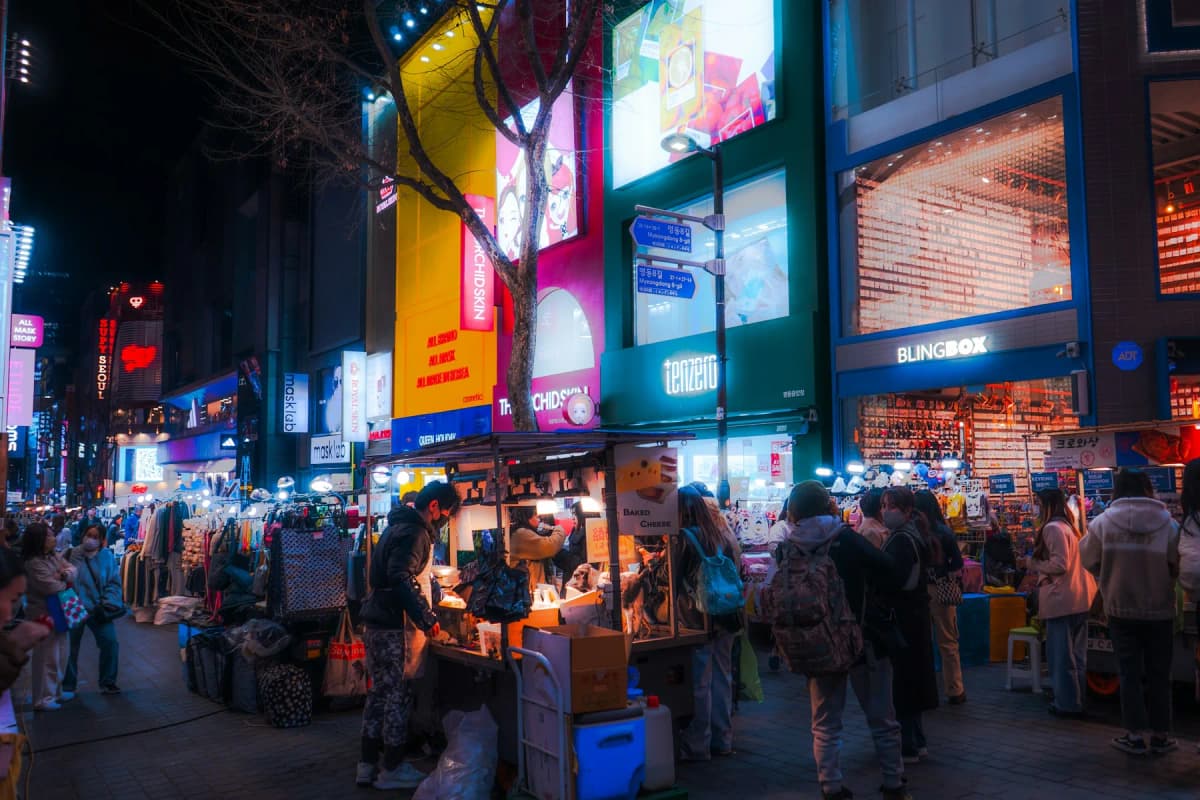 Photo: Nathan Park on Unsplash
Pros: it's central, with two subway lines and a huge choice of hotels at every price, plus airport limousine buses that stop nearby. You can walk to Namdaemun Market, Deoksugung Palace and the cable car up Namsan to N Seoul Tower, and the palaces are a short subway or taxi ride away. Cons: it's very crowded, especially in the evening and at weekends, and it can feel built entirely around shopping. Restaurants on the main streets are aimed at visitors, so walk a few blocks for local places.
Best for: first-time visitors, short stays, shoppers and anyone who wants plenty of food on the doorstep.
2. Insadong and Jongno: best for culture and the palaces
Insadong is a short street and a web of alleys known for galleries, antique shops, traditional tea houses and craft stores, including the spiral Ssamziegil complex. It sits in Jongno, the historic heart of the city, within walking distance of Gyeongbokgung and Changdeokgung palaces, the Jogyesa temple and Ikseon-dong, a small hanok neighbourhood that's now full of cafés and restaurants.
Pros: you can walk to the main palaces and the best of old Seoul, and the area has a more traditional feel than Myeongdong without being far from it. There's a good mix of mid-range hotels, guesthouses and a few upmarket options, and Gwangjang Market is a short walk or ride east. Cons: Insadong itself is quiet after the shops close, and the main street is aimed squarely at visitors. Nightlife is limited compared with Hongdae or Itaewon.
Best for: culture lovers, couples, first-time visitors who want to sightsee on foot, and anyone who prefers a calmer base.
3. Bukchon: best for a hanok stay
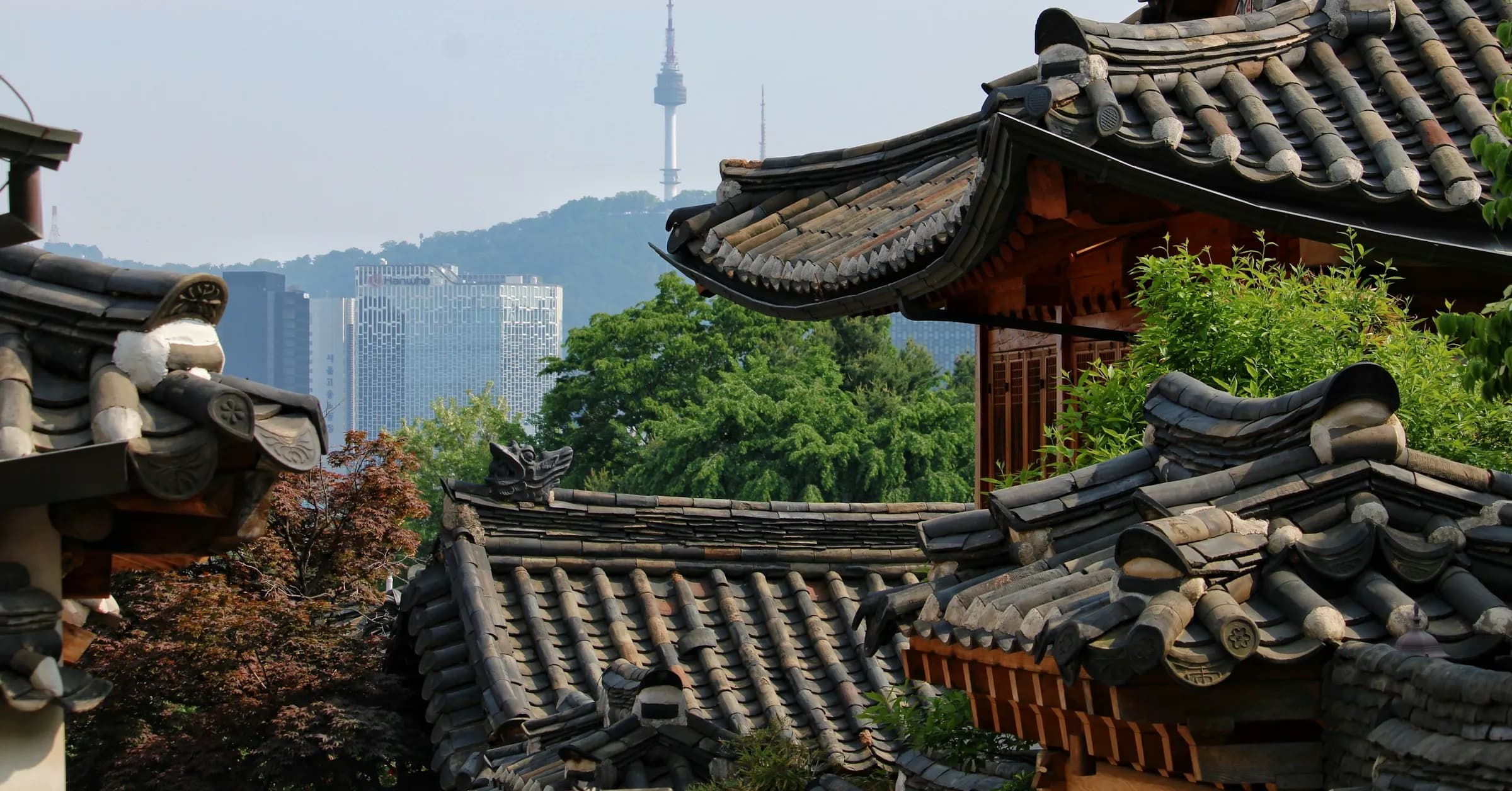
Bukchon Hanok Village is a hillside neighbourhood of traditional Korean houses, or hanok, between Gyeongbokgung and Changdeokgung. Its narrow lanes, tiled roofs and views across to N Seoul Tower make it one of the most photographed places in the city, and a number of the houses are now small guesthouses where you can sleep on a heated floor in a traditional room.
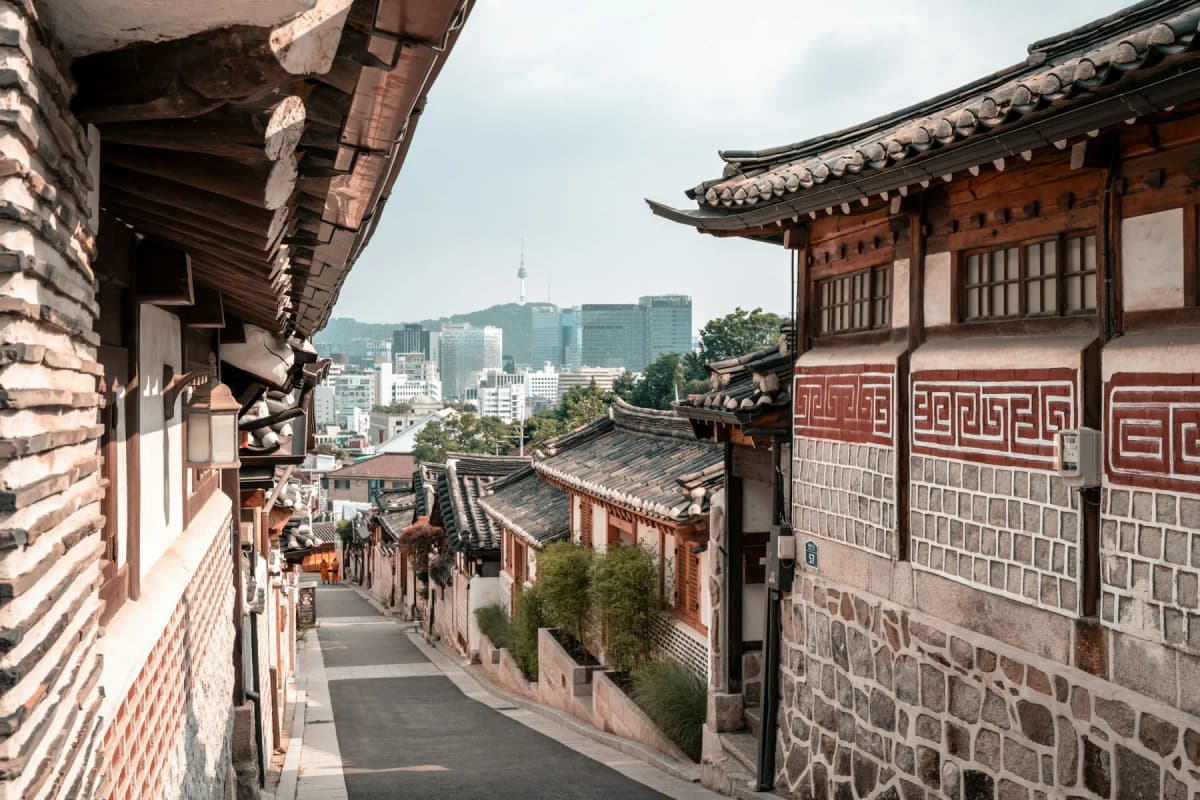 Photo:
Bukchon is also a residential area, and since 1 March 2025 the local district has limited sightseeing visits to the busiest part, the Red Zone, to between 10am and 5pm, with fines for visitors found there outside those hours. The rules are aimed at tourists, and guests staying in the area are allowed in, but check the details with your guesthouse before you book, and be quiet in the lanes, especially early and late.
Pros: a hanok stay is a memorable experience, the lanes are lovely in the early morning before the day visitors arrive, and you can walk to two palaces, Insadong and Samcheong-dong's cafés. Cons: choice is limited and the best hanok stays book up early. Rooms can be small, with shared bathrooms in some cheaper places, and many involve sleeping on mats on the floor. The streets are steep, and taxis can't always reach the door.
Best for: couples, culture lovers and anyone who wants one or two nights somewhere special.
4. Hongdae: best for nightlife and value
Hongdae is the area around Hongik University, an art and design school in the west of the city. It's Seoul's best-known student and nightlife district, with clubs, live-music bars, karaoke rooms, street performers, vintage shops and cheap places to eat. Next door, Yeonnam-dong and the Gyeongui Line Forest Park are quieter, with cafés and restaurants along a long, narrow park built on an old railway line.
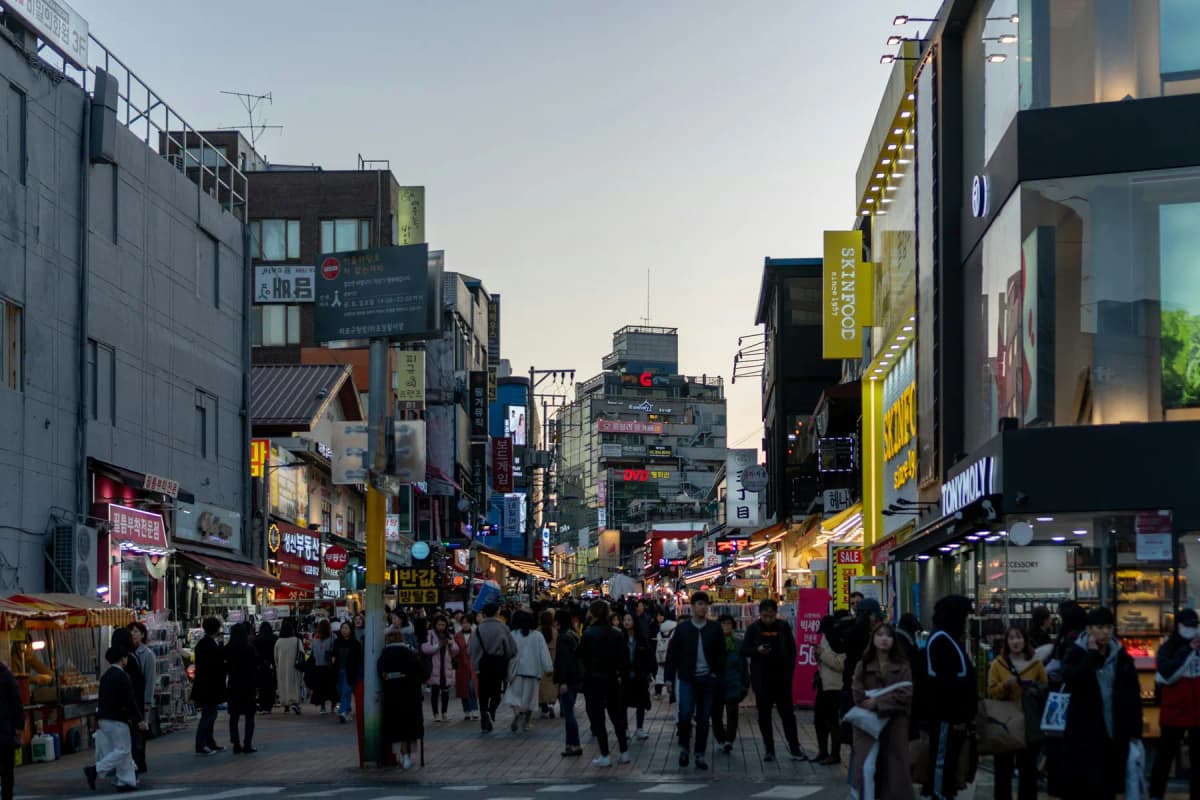 Photo:
Pros: it's young, fun and full of things to do in the evening, and accommodation is often cheaper than in Myeongdong or Gangnam, with lots of hostels and guesthouses. Hongik University station is on the AREX all-stop line from Incheon and Gimpo airports, as well as Line 2. Cons: it's loud and crowded late at night, especially at weekends, and it's a 20- to 30-minute subway ride to the palaces. If you're a light sleeper, stay on the Yeonnam-dong side rather than near the clubs.
Best for: solo travellers, groups of friends, students and anyone who wants nightlife on the doorstep.
5. Gangnam: best for upmarket hotels and shopping
Gangnam, south of the Han River, is the newer, wealthier side of Seoul, made famous worldwide by the song Gangnam Style. It's a business district of towers and wide roads, but it also has some of the city's best shopping and dining, from the boutiques of Apgujeong and Cheongdam to the tree-lined Garosu-gil in Sinsa. Further east, the COEX centre has the huge Starfield Library and an aquarium, and Bongeunsa temple sits right opposite.
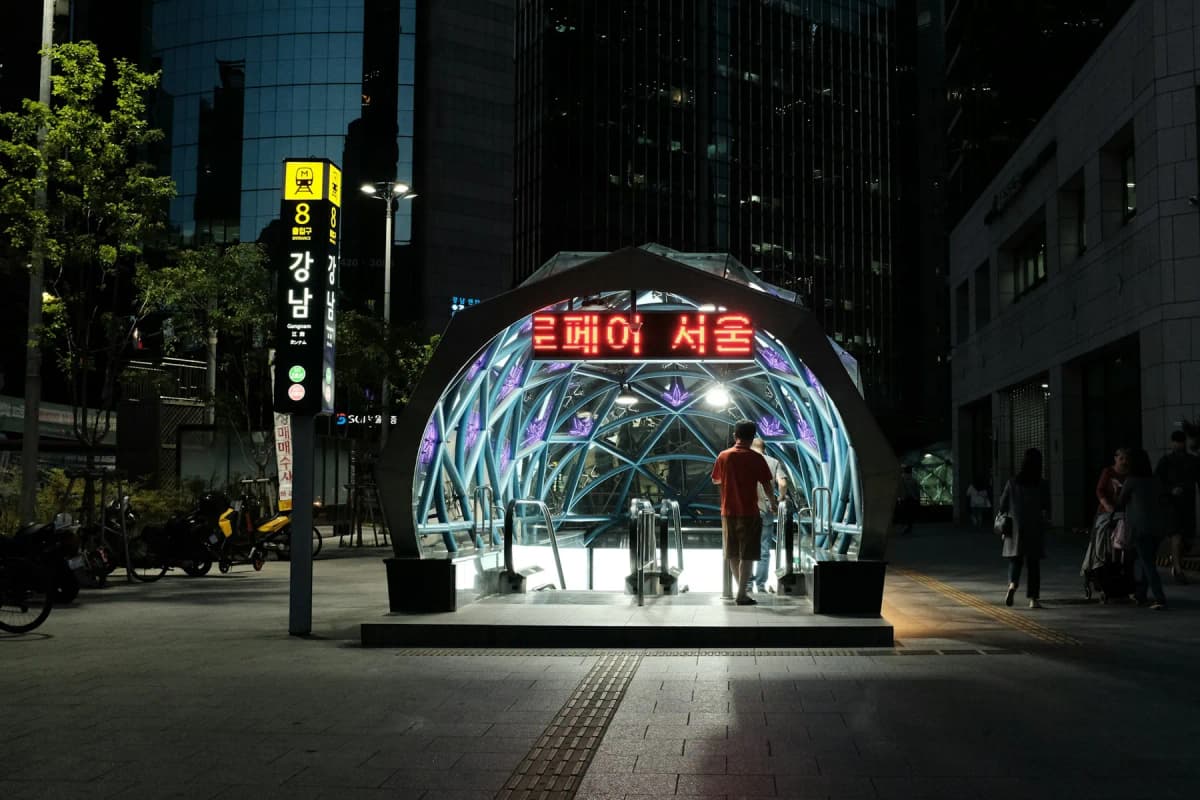 Photo:
Pros: it has many international and luxury hotels, polished shopping and restaurants, and lively nightlife around Gangnam station and Sinsa. It's the most convenient area for K-pop agencies in and around Cheongdam and for business trips. Cons: it's a long way from the palaces and old Seoul, at least half an hour by subway each way, and it feels more like a modern business district than a historic city. Prices are higher than in most areas north of the river.
Best for: business travellers, luxury stays, shoppers, K-pop fans and repeat visitors.
6. Itaewon: best for international food and bars
Itaewon sits between Namsan and the Han River, close to the former US army base at Yongsan. For decades it was Seoul's international district, and it still has the widest range of foreign restaurants in the city, along with bars, clubs, the Seoul Central Mosque and the antique shops along its side streets. The nearby lanes of Gyeongnidan-gil and Haebangchon have small restaurants, cafés and views of Namsan.
Pros: it's easygoing, English is widely spoken, and it has some of the most varied food in Seoul. The Leeum art museum is within walking distance. Cons: it's on Line 6, which is less convenient than Lines 2 or 4 for most sights, and many streets are steep. The main strip is loud late at night at weekends.
Best for: food lovers, bar-goers, longer stays and travellers who want an international feel.
7. Seoul Station: best for airport trains and the KTX
Seoul Station is the city's main railway hub, where the AREX express from Incheon Airport ends and KTX high-speed trains leave for Busan and other cities. The area around it has a number of large hotels and business hotels, and it's a short walk to Namdaemun Market and the Seoullo 7017 skywalk, a raised garden walkway built on an old highway overpass.
Pros: it's the easiest base for arriving and leaving, with the AREX express taking around 43 minutes from Incheon Terminal 1, and it's ideal if you're heading on to Busan by KTX. You're one or two stops from Myeongdong and City Hall. Cons: it's a transport hub rather than a neighbourhood, and the streets around the station are quiet in the evening, with fewer good restaurants than central areas.
Best for: short stays, early flights and anyone travelling on by train.
8. Dongdaemun: best for late-night shopping and value
Dongdaemun grew up around the old East Gate of the city wall and is known for its wholesale fashion markets, some of which stay open until the early hours. Its landmark is the curving Dongdaemun Design Plaza (DDP), designed by Zaha Hadid, which hosts exhibitions and lights up at night. Gwangjang Market, one of Seoul's best food markets, is a short walk west.
Pros: it's well connected, with three subway lines at Dongdaemun History & Culture Park, and hotels are often good value. You're close to the city wall trail, Naksan Park and the food stalls of Gwangjang Market. Cons: it's busy and can feel hectic around the markets, and it has less charm than Insadong or Bukchon. Some wholesale areas are only really busy late at night, and quiet during the day.
Best for: budget travellers, shoppers and night owls.
9. Seongsu: best for cafés, design shops and pop-ups
Seongsu-dong, east of the centre on the north bank of the Han River, was once an area of shoe factories and workshops. Many of those buildings have been turned into cafés, galleries, concept stores and brand pop-ups, and the area is often compared to Brooklyn. Seoul Forest, a large park, sits at its western edge.
Pros: it's one of the most fashionable parts of the city, with great cafés and restaurants, and it feels more local than Myeongdong. It's on Line 2, which loops around both sides of the river. Cons: there are fewer hotels than in the central areas, it's 25 to 35 minutes by subway to the palaces, and the busiest streets near Seongsu station can be crowded at weekends.
Best for: repeat visitors, design and coffee lovers and anyone who wants a more local feel.
Which area should you choose?
- First visit and you want to sightsee: Myeongdong, or Insadong and Jongno.
- A traditional setting: a hanok stay in Bukchon or Ikseon-dong.
- Nightlife: Hongdae, Itaewon or Gangnam.
- Budget: Hongdae or Dongdaemun.
- Luxury and shopping: Gangnam, especially around Apgujeong, Cheongdam or COEX.
- Families: Myeongdong or Seoul Station for convenience, or Jamsil, south of the river, for Lotte World and its theme park.
- Early flights or onward trains: Seoul Station, or Hongdae for the AREX all-stop line.
- Cafés and a local feel: Seongsu or Yeonnam-dong.
If you're staying a week or more, you could split your time, for example a few nights in Myeongdong or Insadong for sightseeing, then a few in Hongdae or Seongsu. Seoul's other main business district, Yeouido, on an island in the Han River, is also worth a look for good-value business hotels in spring, when its cherry trees are in bloom.
Types of hotel in Seoul
Seoul has accommodation at every level, from capsule-style hostels to five-star towers. International chains are concentrated in Myeongdong, around City Hall and in Gangnam, while business hotels with small, modern rooms are common near Seoul Station and Dongdaemun and are usually good value.
Hanok stays are traditional Korean houses run as guesthouses, mostly in Bukchon, Ikseon-dong and nearby lanes. Expect a courtyard, heated floors and, in many, bedding on the floor rather than a raised bed. If you'd find that uncomfortable, ask before you book. Seoul also has many guesthouses and hostels, especially in Hongdae and around Insadong.
If you're thinking of a holiday rental, check that the listing is properly registered. Korea has tightened its rules on short-term rentals, and Airbnb has been removing Korean listings whose hosts haven't provided a business registration.
Areas to think twice about
Seoul is generally a safe city for visitors, but some areas are less practical as a base:
- Far from a subway station: a cheap hotel 15 minutes' walk from the nearest station can cost you a lot of time, especially in summer heat or winter cold.
- The outer districts: areas near the edge of the city can look like a bargain, but they're a long way from the sights, and you may spend more than an hour a day on the subway.
- Right by the clubs: in Hongdae, Itaewon and around Gangnam station, the streets nearest the clubs are noisy late into the night. Ask for a high or back-facing room if you're a light sleeper.
- Steep backstreets: the upper lanes of Bukchon, Itaewon and the slopes of Namsan are lovely to walk, but hard work with suitcases.
As with any city, check the exact location on a map and read recent reviews before you book.
Getting from the airport to your hotel
Most international flights land at Incheon International Airport (ICN), on an island about 50 km west of central Seoul. Some flights from Japan, China and Taiwan use Gimpo Airport (GMP), which is much closer to the city. Your main options are:
- AREX express train: non-stop from Incheon to Seoul Station in about 43 minutes from Terminal 1 and about 51 minutes from Terminal 2. You can buy an AREX express ticket in advance.
- AREX all-stop train: slower, at about an hour, but much cheaper, and it also stops at Gimpo, Digital Media City and Hongik University (for Hongdae) before Seoul Station. You can pay with a T-money transport card.
- Airport limousine buses: these stop at many big hotels and areas such as Myeongdong, Gangnam and Jamsil, so they're handy if your hotel isn't near Seoul Station.
- Taxi or private transfer: easiest with luggage or late at night. A private transfer from Incheon or Gimpo meets you in arrivals and takes you straight to your hotel.
Tips before you book a hotel in Seoul
- Check your entry requirements: many nationalities, including UK and US citizens, are exempt from the K-ETA travel authorisation until the end of 2026, but rules change, so check the official K-ETA website before you travel.
- Book early for spring and autumn: cherry blossom season in early April and the autumn colours of October and November are the busiest times. Big concerts and K-pop events can also fill hotels in particular areas.
- Get a T-money card: this rechargeable card works on the subway, buses and many taxis, and you can buy and top it up at convenience stores and stations.
- Mind the last train: the subway runs from early morning until around midnight, depending on the line. After that, you'll need a taxi or a night bus.
- Stay connected: a South Korea eSIM makes it easier to use maps and translation apps. Many visitors use Naver Map or KakaoMap, which work better in Korea than Google Maps.
- Get travel insurance: cover that includes medical treatment is worth having for any trip abroad.
Frequently asked questions
What is the best area to stay in Seoul for first-time visitors? Myeongdong is the most popular choice, as it's central, has a huge choice of hotels and is close to the palaces, Namsan and two subway lines. Insadong and Jongno are a good alternative if you'd prefer a quieter, more traditional base within walking distance of the palaces.
Is it better to stay in Myeongdong or Hongdae? Myeongdong is better for sightseeing, as it's closer to the palaces and old Seoul. Hongdae is better for nightlife and budget stays, and it has a direct train from the airport, but it's further from the main historic sights.
Is Gangnam a good place to stay in Seoul? It's a good choice for luxury hotels, shopping, business trips and K-pop fans, but it's south of the river and a long way from the palaces and old Seoul. For a first visit focused on sightseeing, an area north of the river is usually more convenient.
Can you stay overnight in Bukchon Hanok Village? Yes. A number of hanok in Bukchon are run as guesthouses. Visiting hours for tourists in the busiest part of the village are limited to 10am to 5pm, but guests staying in the area are allowed in. Check the details when you book.
How many nights should I stay in Seoul? Four or five nights is enough to see the palaces, markets and main neighbourhoods, with a day trip to the DMZ or Suwon. With a week, you can explore more slowly and take extra day trips.
Is Seoul safe at night? Seoul is generally considered a safe city, and central areas stay busy until late. Take the usual care with your belongings in crowded places, and use official taxis or a ride-hailing app late at night.
How we researched this guide
We compared each area using Seoul travel guides from several travel publishers, official transport information for the AREX airport railway, Korean press reports on the Bukchon visiting hours and the UK government's travel advice for South Korea, all checked in October 2026. We haven't stayed in every area ourselves, and we don't quote hotel prices, as they change often and vary a lot by season. Train times and entry rules can also change, so check the latest information before you travel. Found something out of date? Let us know.
Ready to plan? See the best things to do in Seoul and the best day trips from Seoul, browse all our South Korea guides, or if you're combining Seoul with Japan, compare the best areas in our guide to where to stay in Tokyo.