12 Best Day Trips from Seoul, South Korea (2026 Guide)
October 23, 2026 · South Korea
This post contains affiliate links. We may earn a commission if you book through them, at no extra cost to you. Disclaimer.
The best day trips from Seoul are the DMZ, the border zone with North Korea, the walled city of Suwon, the tree-lined paths of Nami Island, and a hike up Bukhansan, the granite mountain on the city's northern edge. For a longer day, the KTX high-speed train puts the hanok rooftops of Jeonju and the coffee shops and beaches of Gangneung within about two hours.
Seoul is an easy base for day trips. The subway reaches well beyond the city limits, the national rail network is fast and punctual, and many of the most popular places are less than 90 minutes away. Some of them work best with a tour, especially the DMZ, while others are simple to do on your own with a transport card and a map app. This guide covers 12 of the best, with the travel time, how to get there, whether a tour is worth it and who each trip suits.
Day trips from Seoul at a glance
| Day trip | Travel time each way (approx.) | How to get there | Tour or independent? | Best for |
|---|---|---|---|---|
| The DMZ | About 1 to 1.5 hours | Tour bus | Tour | Korean War history and the border |
| Suwon Hwaseong Fortress | About 1 hour | Subway or train | Independent | A walled city and a palace |
| Korean Folk Village | About 1.5 hours | Train and shuttle or tour | Either | Traditional houses and performances |
| Nami Island | About 1.5 hours | ITX train, then a ferry | Either | Tree-lined paths and seasonal colours |
| Garden of Morning Calm and Petite France | About 1.5 to 2 hours | Bus, train or tour | Tour is easiest | Gardens and photo stops near Nami |
| Everland | About 1 hour | Bus or subway | Independent | Korea's biggest theme park |
| Bukhansan | About 1 hour to the trailhead | Subway and bus | Independent | A mountain hike with city views |
| Namhansanseong | About 1 hour | Subway and bus | Independent | A quiet UNESCO-listed fortress |
| Incheon | About 1 hour | Subway Line 1 | Independent | Chinatown and a murals village |
| Jeonju | About 1.75 to 2.5 hours | KTX | Independent | Hanok streets and bibimbap |
| Gangneung | About 2 hours | KTX | Independent | Beaches and coffee by the sea |
| Seoraksan | About 2.5 to 3 hours | Express bus or tour | Either | Dramatic peaks and autumn colours |
Our short version: if you only have time for a few, choose the DMZ for history, Suwon for an easy independent trip and Nami Island for scenery. Add Bukhansan if you like hiking, or take the KTX to Jeonju if you want to see a more traditional side of Korea than Seoul offers.
Before you go: getting around
Most day trips from Seoul start on the subway, so a T-money card is the first thing to sort out. You can buy one and top it up at convenience stores and subway stations, and it works on subway lines, city buses and many regional buses. For longer trips, the KTX high-speed trains leave from Seoul Station, Yongsan and Cheongnyangni, and tickets can be bought from Korail's website, its app or the station. Book ahead for weekends and public holidays, when trains fill up.
A few other things to plan around:
- Map apps: Naver Map and KakaoMap give much better public transport directions in Korea than Google Maps, including bus stop locations and live arrival times.
- Weekends: Nami Island, the Folk Village, Everland and Bukhansan are all much busier on Saturdays and Sundays. Go on a weekday if you can.
- Seasons: spring blossom (around April) and autumn colours (around October and November) are the most popular times for Nami Island, Bukhansan and Seoraksan. Summer is hot and humid, with heavy rain during the monsoon, usually from late June to July.
- Passports: you must carry your passport on a DMZ tour. Some other tours also ask for passport details in advance.
The 12 best day trips from Seoul
1. The DMZ: best for Korean War history and the border
The Demilitarized Zone is the strip of land that has divided North and South Korea since the armistice in 1953, and visiting its southern edge is the most popular day trip from Seoul. It's sobering rather than scenic: the sites tell the story of the Korean War and the division that followed, and the border is still heavily guarded.
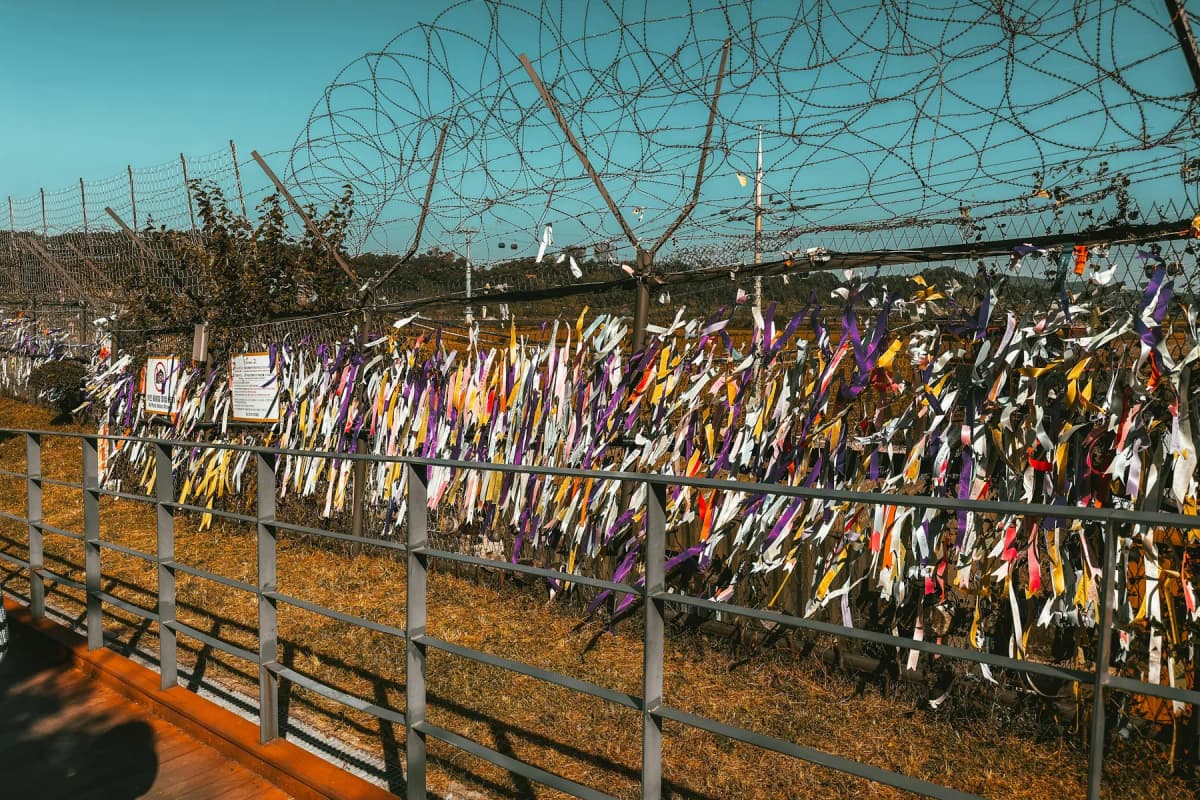 Photo: Christopher Pap de Pestény on Unsplash
A standard DMZ tour usually visits Imjingak, a park just outside the restricted zone where visitors tie ribbons with messages to the fence; the Third Infiltration Tunnel, dug from the North and discovered in 1978; the Dora Observatory, where on a clear day you can look across into North Korea; and sometimes Camp Greaves, a former US Army base, or the Peace Gondola over the Imjin River.
How to get there: you can reach Imjingak by train, but most of the restricted area can only be visited on an organised tour, which arranges the security clearance for you. Tours pick up in central Seoul, and the drive takes around an hour to an hour and a half. This DMZ tour from Seoul is one example. You must bring your passport, because it's checked by the military, and tour operators usually need your details a day or more in advance.
What about the JSA? The Joint Security Area at Panmunjom, with the blue conference buildings that straddle the border, is a separate and much more restricted visit. Tours there have been suspended and restarted several times since 2023, and when they run, places are very limited. Don't plan your trip around it, and treat a JSA visit as a bonus if one becomes available.
Best for: anyone interested in history. Tours don't usually run on some public holidays, and sites can close at short notice for military reasons.
2. Suwon Hwaseong Fortress: best for a walled city and a palace
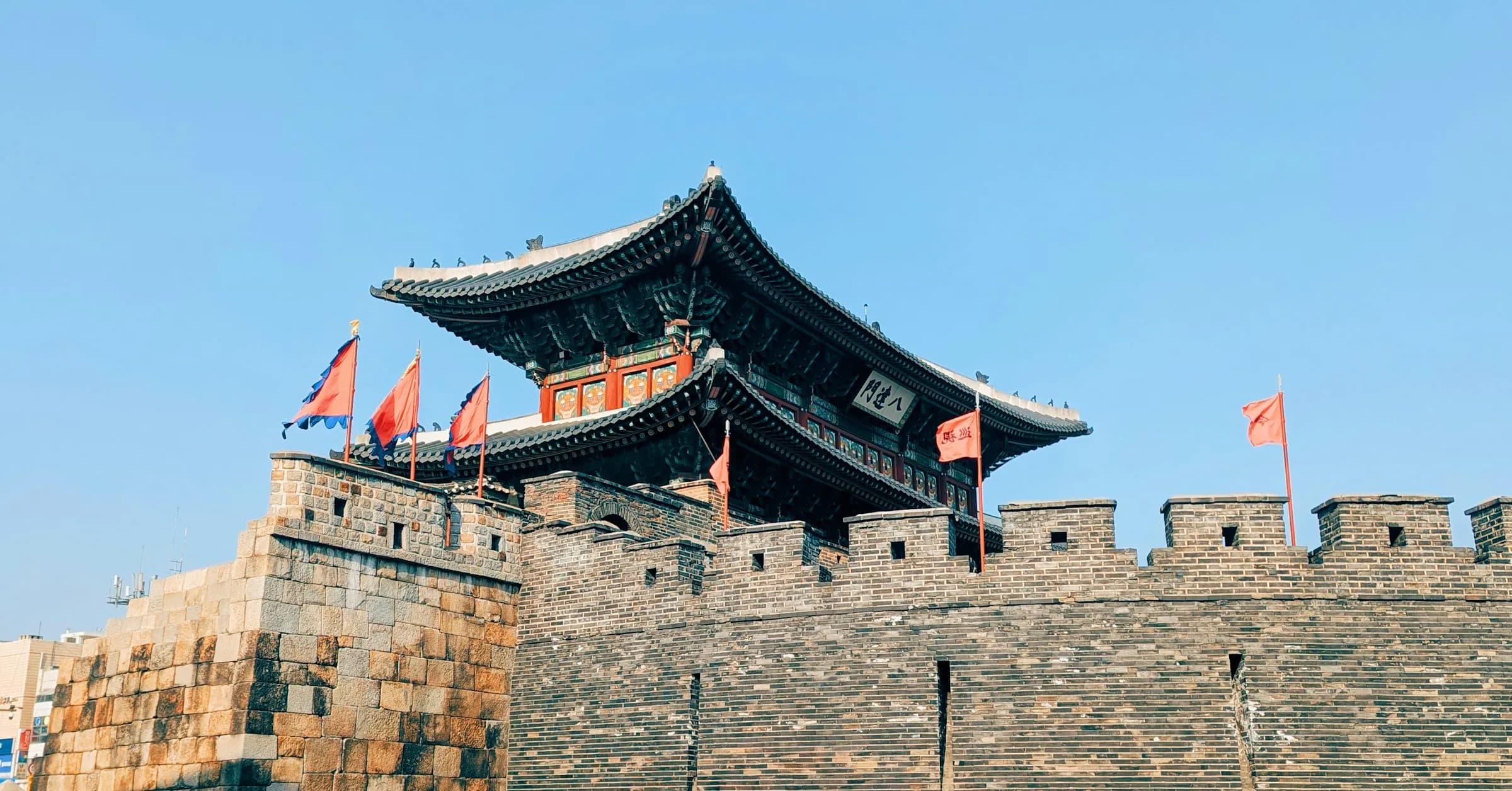
Suwon, just south of Seoul, is built around Hwaseong Fortress, a UNESCO World Heritage Site completed in the 1790s. Its walls run for about 5.7 km around the old city, past gates, watchtowers, pavilions and a floodgate over a stream, and walking the whole circuit takes around two to three hours. Inside the walls is Hwaseong Haenggung, the palace where the king stayed on his visits.
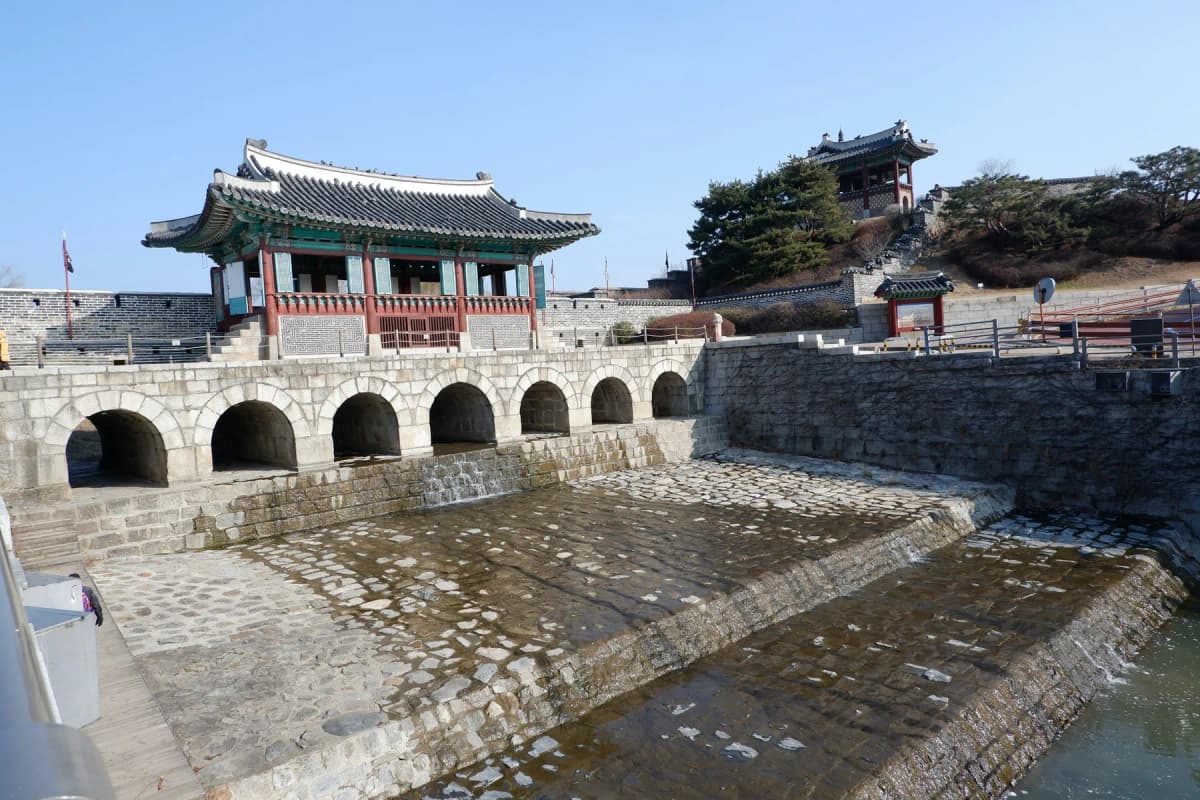 Photo: Arinal Izzah on Unsplash
How to get there: Suwon Station is on Subway Line 1 and the mainline railway, about an hour from central Seoul by subway or less by train. From the station, a short bus or taxi ride takes you to Paldalmun Gate or the palace. Recent guides report that walking the main fortress wall has been free since 2025, while the palace and some museums charge small entry fees, and people wearing hanbok have often been admitted free.
Tips: start at Paldalmun or Janganmun, walk a section of the wall rather than the whole circuit if you're short on time, and stay into the evening if you can, when the walls are lit. The archery experience near Yeonmudae has been popular with visitors. This Suwon Hwaseong and Haenggung Palace tour includes transport from Seoul if you'd rather not navigate.
Best for: an easy, rewarding day out without a tour.
3. The Korean Folk Village: best for traditional houses and performances
The Korean Folk Village in Yongin is an open-air museum of traditional Korean houses, from thatched farmhouses to the homes of the yangban nobility, with workshops, a market street and daily performances such as farmers' dances and tightrope walking. It's been used as a set for many historical dramas, and it has an amusement area for children.
How to get there: the village is about 1.5 hours from central Seoul. Guides describe a shuttle bus from near Suwon Station, so it combines easily with Suwon, but check the current timetable before you go. Ticket prices and opening hours vary between sources, so confirm them on the official website. Many visitors book a combined trip, such as this Korean Folk Village and Suwon Hwaseong tour, which covers both in a day.
Best for: families and anyone who wants to see traditional Korea in one place.
4. Nami Island: best for tree-lined paths and seasonal colours
Nami Island is a small, half-moon-shaped island in the Bukhan River, about 60 km north-east of Seoul. Its avenues of metasequoia, ginkgo and pine trees became famous after the 2002 drama Winter Sonata was filmed there, and they're at their best in autumn, when the leaves turn gold and red. The island is car-free, with cafés, sculptures and bike hire.
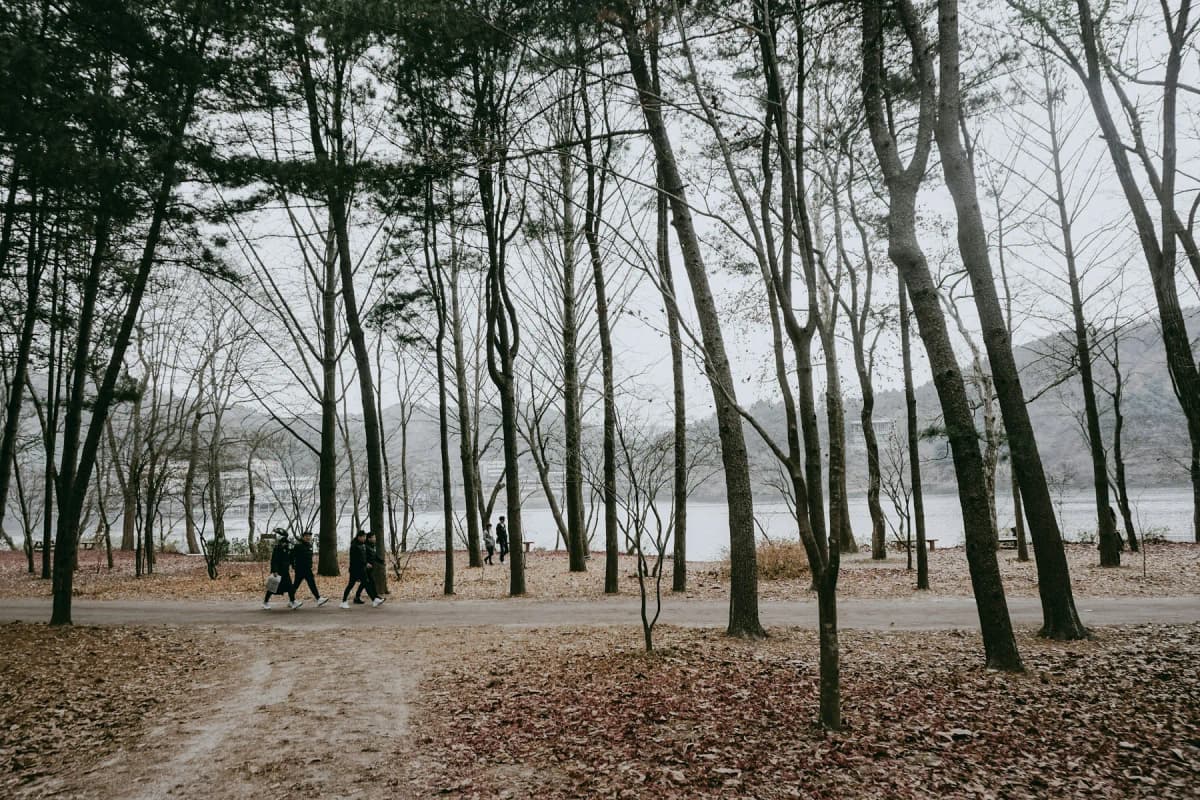 Photo: Ammar Zainal on Unsplash
How to get there: take the ITX-Cheongchun train from Yongsan (about an hour) or Cheongnyangni (about 40 minutes) to Gapyeong Station, then a short taxi, a local bus or a 20-minute walk to the ferry wharf. The ferry crossing takes a few minutes, and the round-trip ferry is included in the island's entry ticket. A direct shuttle bus has also run from central Seoul. Reseller prices for adult entry with the ferry were about ₩16,000 in 2026, but check the official site for the current rate.
Combine it with: Petite France and the Garden of Morning Calm (below), or the Gangchon rail bike. This Nami Island day tour from Seoul combines Nami with other sights in the area.
Best for: scenery, photos and a relaxed day. Go early or on a weekday, because it's very busy at weekends and in autumn.
5. The Garden of Morning Calm and Petite France: best for gardens near Nami
Two more sights in the Gapyeong area are often combined with Nami Island. The Garden of Morning Calm is a large private garden with themed areas, ponds and Korean-style landscaping, best known for its winter lighting festival, when the gardens are covered in coloured lights. Petite France is a small themed village of French-style buildings, popular with fans of Korean dramas filmed there.
How to get there: both are spread out, and public transport between them is limited. The easiest way to see them is on a tour that combines them with Nami Island, or with the local Gapyeong city tour bus from Gapyeong Station.
Best for: photographers and couples, and for a winter visit to the lights.
6. Everland: best for Korea's biggest theme park
Everland, in Yongin, is South Korea's largest theme park, with roller coasters, a zoo and safari, seasonal festivals and gardens that are especially colourful during the spring tulip festival. Its wooden roller coaster, T Express, is one of the best known in Asia.
How to get there: shuttle buses and regular buses run from central Seoul and Gangnam, taking about an hour, or you can take the subway and the Everland Line light rail. Book an Everland ticket in advance to skip the ticket queue. If you'd rather stay in the city, Lotte World is Seoul's indoor alternative.
Best for: families and thrill-seekers. Weekdays outside school holidays are much quieter.
7. Bukhansan: best for a mountain hike with city views
Bukhansan National Park sits right on the northern edge of Seoul, and its highest peak, Baegundae, at about 836 m, has one of the best views over the city. The granite ridges, fortress walls and Buddhist temples make it one of the most popular hiking areas in Korea, and the park is free to enter.
How to get there: a popular route to Baegundae starts at Bukhansanseong. Take Subway Line 3 to Gupabal Station, then bus 34, 704 or 8772 to the Bukhansanseong stop, about 15 to 20 minutes away. The round trip from there is about 8 km and takes five to six hours, with a steep final section where you climb granite slabs with the help of steel cables and railings. Shorter routes start near Bukhansan Ui Station.
Tips: start early, bring plenty of water and wear proper hiking shoes, because the rock can be slippery. Night hiking is prohibited, and trails close in the afternoon. Weekends, and especially autumn weekends, are extremely busy.
Best for: active travellers who want a proper hike without leaving the city.
8. Namhansanseong: best for a quiet UNESCO-listed fortress
Namhansanseong is a mountain fortress south-east of Seoul, built as an emergency capital for the Joseon kings and listed as a UNESCO World Heritage Site in 2014. Its walls follow the ridgeline for several kilometres through pine forest, and the circuit is a gentler walk than Bukhansan, with fine views towards the city.
How to get there: take Subway Line 8 to Sanseong Station, then bus 9, 9-1 or 52 up to the fortress, about 10 to 20 minutes. The walls and trails are free to walk. The restored Haenggung (temporary palace) has charged about ₩2,000 for adults and has been closed on Mondays, so check before you go.
Best for: a half-day of walking and history, with far fewer visitors than Suwon.
9. Incheon: best for Chinatown and a murals village
Incheon, Seoul's port city, makes an easy and cheap half-day or full-day trip. Opposite Incheon Station is the gate to Chinatown, the country's oldest Chinese community, where jajangmyeon (black bean noodles) is said to have been invented, and where the Jajangmyeon Museum tells the story. A short walk away, the Songwol-dong Fairy Tale Village has streets painted with characters from children's stories, and you can continue to the waterfront at Wolmido.
How to get there: Incheon Station is at the end of Subway Line 1, about 70 minutes from Seoul Station without a change. The Fairy Tale Village is free to enter.
Best for: food lovers and a low-cost day out.
10. Jeonju: best for hanok streets and bibimbap
Jeonju, in the south-west, has the country's largest concentration of traditional houses: the Jeonju Hanok Village has around 700 or more hanok, many of them now guesthouses, cafés, craft shops and restaurants. Nearby are Gyeonggijeon, a shrine first built in 1410 that holds a portrait of King Taejo, the founder of the Joseon dynasty, and the Romanesque Jeondong Cathedral. Jeonju is also famous for its food, and it's often called the home of bibimbap.
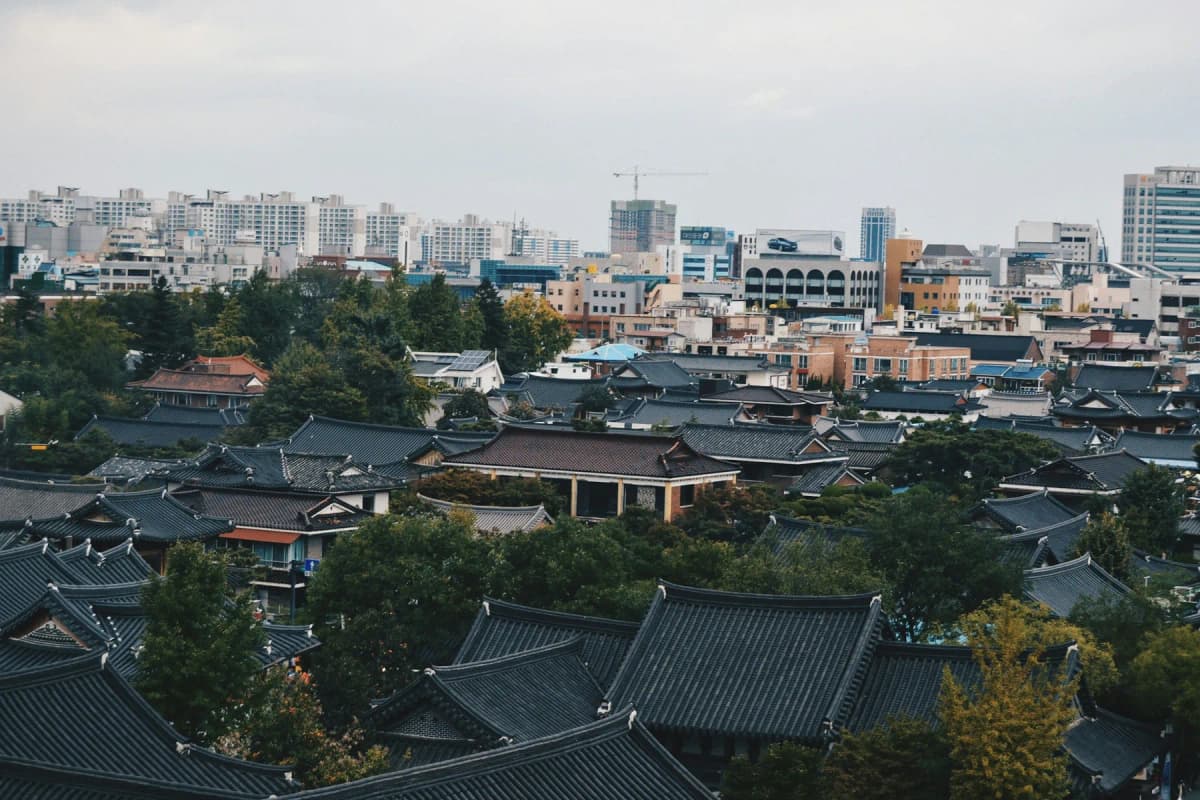 Photo:
How to get there: the KTX from Yongsan takes about 1 hour 45 minutes on the fastest trains, and longer on others, to Jeonju Station. From there, it's a short taxi or bus ride to the Hanok Village.
Tips: it's a long day, so take an early train. Renting a hanbok and walking around the village is popular, and a night in a hanok guesthouse turns it into a relaxed overnight trip.
Best for: anyone who wants a slower, more traditional side of Korea.
11. Gangneung: best for beaches and coffee by the sea
Gangneung, on the east coast, has been within easy reach of Seoul since a high-speed line opened before the 2018 Winter Olympics. It's known for Anmok Beach, whose seafront is lined with coffee shops, Gyeongpo Beach and lake, the historic Ojukheon house and the sunrise views at Jeongdongjin.
How to get there: the KTX from Seoul Station or Cheongnyangni takes about 1 hour 45 minutes to 2 hours. Cheongnyangni usually has more departures. Local buses and taxis connect the station with the beaches.
Best for: a beach day, seafood and coffee. Summer weekends are busy.
12. Seoraksan: best for dramatic peaks and autumn colours
Seoraksan National Park, near Sokcho on the north-east coast, is the most dramatic mountain scenery within reach of Seoul, with jagged granite peaks, waterfalls and the temple of Sinheungsa. A cable car climbs towards the rocky summit of Gwongeumseong, so you can enjoy the views without a long hike. Park entry has been free since 2023, although the cable car and parking are charged.
How to get there: express buses from Seoul to Sokcho take about 2 hours 10 minutes to 2 hours 30 minutes, plus traffic, then a local bus (routes 7 and 7-1) or taxi takes you to the park entrance. Full-day tours from Seoul take around three hours each way.
Best for: autumn colours and mountain scenery. It's a very long day, so consider staying a night in Sokcho if you can.
Which day trips should you choose?
- For history: the DMZ, Suwon and Namhansanseong.
- For scenery: Nami Island, Bukhansan and Seoraksan.
- For families: Everland, the Korean Folk Village and Nami Island.
- Without a tour: Suwon, Incheon, Bukhansan, Namhansanseong, Jeonju and Gangneung are all easy on public transport.
- When a tour helps: the DMZ (essential for the restricted area), and Nami Island with the Garden of Morning Calm and Petite France, which are spread out.
Tours or independent travel?
Public transport in and around Seoul is cheap, frequent and well signposted, so most of these trips are easy to do on your own. The main exception is the DMZ, where a tour is the only practical way to visit the restricted sites. Tours also make sense when you want to combine several places that are hard to link by public transport, such as Nami Island with the Garden of Morning Calm, or the Korean Folk Village with Suwon. They usually include pick-up from central Seoul, so check where the meeting point is before you book.
If you still need somewhere to stay, compare hotels in Seoul here:
Tips for day trips from Seoul
- Stay near a good station: a base near Seoul Station, Yongsan or a major subway interchange makes early departures much easier. Our guide to where to stay in Seoul compares the best areas.
- Book trains ahead: KTX and ITX trains sell out on weekends and holidays, especially during Chuseok and Seollal (Lunar New Year).
- Carry some cash: cards are widely accepted, but small sums in won are useful for buses in rural areas and for market stalls.
- Stay connected: a South Korea eSIM makes it easier to use Naver Map, KakaoMap and translation apps on the move.
- Get travel insurance: cover that includes medical treatment is worth having for any trip abroad, especially if you plan to hike.
- Check the air quality: fine dust can be high in spring, so check a forecast app before a mountain day.
Frequently asked questions
What is the best day trip from Seoul? For most first-time visitors, the DMZ, because there is nothing else like it. If you'd rather avoid a tour, Suwon's Hwaseong Fortress is the best independent day trip, and Nami Island is the most popular for scenery.
Can you visit the DMZ without a tour? You can reach Imjingak and its park by public transport, but the Third Tunnel, Dora Observatory and other sites inside the restricted area can only be visited on an organised tour. Bring your passport.
Can you visit the JSA in 2026? Possibly, but don't count on it. Tours to the Joint Security Area at Panmunjom have been suspended and restarted several times in recent years, and places are very limited when they run. Check with tour operators close to your travel date.
How do you get from Seoul to Nami Island? Take the ITX-Cheongchun train from Yongsan or Cheongnyangni to Gapyeong, then a taxi, bus or short walk to the ferry wharf. The ferry is included in the island's entry ticket. Shuttle buses and tours from central Seoul are the alternatives.
Is Busan a good day trip from Seoul? It's possible, as the KTX takes around 2.5 to 3 hours each way, but it's a long and expensive day. Busan deserves at least one night, so we'd treat it as a separate stop rather than a day trip.
What is the best day trip from Seoul in winter? The Garden of Morning Calm for its lighting festival, Nami Island in the snow, or a ski resort in Gangwon province. Indoor options include Lotte World in Seoul and the museums in Suwon.
How we researched this guide
We compared routes, travel times and prices using Seoul travel guides from several travel publishers, tour operators' route descriptions, Korean national park and tourism listings, Korail timetables and the UK government's travel advice for South Korea, all checked in October 2026. We haven't done every trip ourselves. Travel times are approximate, and entry fees, opening hours and shuttle timetables change often, so confirm them before you go. DMZ and JSA access in particular can change at short notice. Found something out of date? Let us know.
Ready to plan? See the best things to do in Seoul itself, compare the best areas in our guide to where to stay in Seoul, or browse all our South Korea guides.